
Asphalt Paving and Compaction Guide: Mix Types, Laydown Temperatures, and Quality Testing | Projul
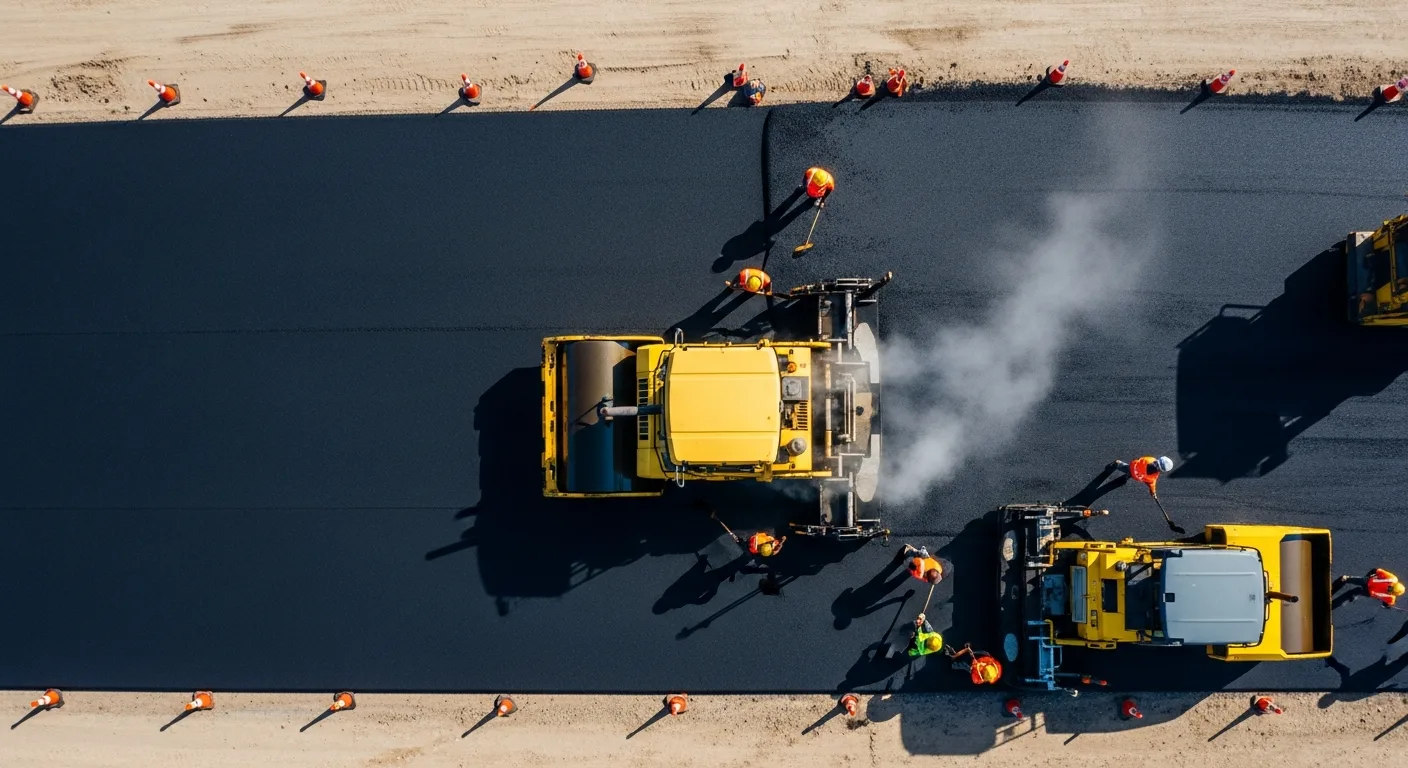
Asphalt paving looks straightforward from a distance. A truck dumps material, the paver lays it down, and rollers compress it. But anyone who has actually run a paving crew knows the reality is much more demanding. The difference between a pavement that lasts 20 years and one that starts cracking in 2 comes down to mix design, temperature management, compaction technique, and quality control.
This guide covers the essentials of asphalt paving from a contractor’s perspective: what you need to know about mix types, how to manage temperatures through the paving process, how to get proper compaction, and how to verify quality.
Asphalt Mix Types
Not all asphalt is the same. The mix design determines the performance characteristics of the finished pavement, and choosing the wrong mix for the application is a mistake that no amount of good workmanship can fix.
Hot Mix Asphalt (HMA)
HMA is the industry standard for most paving applications. It is produced at temperatures between 300°F and 350°F by heating aggregate and mixing it with liquid asphalt binder (asphalt cement).
HMA mix designs are classified by their intended use:
Surface Course (Wearing Course): The top layer that contacts traffic. Surface mixes use smaller aggregate (typically 3/8” to 1/2” nominal maximum) for a smooth, dense surface. Common designations include Superpave 9.5mm or 12.5mm mixes.
Binder (Intermediate) Course: Placed between the base and surface courses. Binder mixes use larger aggregate (3/4” to 1” nominal maximum) and are designed to distribute loads. Common designations include Superpave 19.0mm or 25.0mm mixes.
Base Course: The lowest asphalt layer, placed on prepared aggregate base or subgrade. Base mixes use the largest aggregate sizes and are designed primarily for load distribution and structural support.
Warm Mix Asphalt (WMA)
WMA uses additives (waxes, chemical surfactants, or water-based foaming) to reduce the viscosity of the asphalt binder at lower temperatures. This allows production and placement temperatures 30 to 100 degrees below traditional HMA.
Benefits of WMA:
- Lower fuel consumption at the plant (15% to 30% reduction)
- Reduced emissions and fumes during placement
- Extended paving season (can work in cooler weather)
- Longer haul distances because the mix stays workable longer
- Improved compaction in some cases
WMA has become increasingly common and is accepted by most state DOTs. On many projects, the contractor can substitute WMA for HMA without a specification change.
Stone Matrix Asphalt (SMA)
SMA is a gap-graded mix with a high coarse aggregate content, modified asphalt binder, and fiber stabilizers (typically cellulose or mineral fibers). The stone-on-stone contact in SMA creates a strong, rut-resistant surface.
SMA is commonly specified for high-traffic roads, intersections, and heavy-load applications. It costs more than conventional HMA but lasts significantly longer under heavy traffic.
Open-Graded Friction Course (OGFC)
OGFC is a porous asphalt surface layer designed to allow water to drain through the pavement surface. This reduces hydroplaning, splash and spray, and tire noise. OGFC uses a uniform, open-graded aggregate with high air voids (15% to 20%).
OGFC is primarily used on highways and is not suitable for parking lots or low-speed applications where the pores can clog with debris.
Porous Asphalt
Similar in concept to OGFC but designed as a full-depth permeable pavement system. Porous asphalt is used for parking lots and low-traffic areas where stormwater management is a priority. Water drains through the pavement into a stone reservoir base and infiltrates into the soil below.
Asphalt Binder Grades
The asphalt binder (the liquid petroleum product that holds the aggregate together) is graded using the Superpave Performance Grade (PG) system. A PG grade consists of two numbers:
- First number: The high-temperature grade (the maximum seven-day pavement temperature the binder can handle without rutting)
- Second number: The low-temperature grade (the minimum pavement temperature the binder can handle without cracking)
For example, PG 64-22 is designed for maximum pavement temperatures up to 64°C and minimum temperatures down to -22°C.
Binder selection is based on climate, traffic level, and pavement depth. Heavy traffic, slow-moving vehicles (intersections, bus stops), and high temperatures may require a stiffer binder or polymer-modified binder (designated with an “M” or “H” suffix, such as PG 76-22M).
Your local DOT specifies the appropriate PG grade for your area. Using the wrong grade is a recipe for premature rutting or cracking.
Temperature Management: From Plant to Mat
Temperature is everything in asphalt paving. The binder viscosity, workability, and ability to achieve proper compaction all depend on keeping the material within the right temperature range at every stage.
Plant Temperature
HMA is typically produced at 300°F to 350°F, depending on the binder grade and mix design. The plant monitors discharge temperature continuously. Material that leaves the plant too hot can damage the binder. Material that leaves too cool will not compact properly.
Haul and Delivery
Every minute in the truck costs you temperature. Factors that affect heat loss during hauling:
- Haul distance and time: Longer hauls mean lower delivery temperatures. Plan your trucking to minimize wait times at the paver.
- Ambient conditions: Cold, windy, or rainy weather accelerates heat loss. Tarping loads is required in most specs and makes a real difference.
- Truck bed preparation: Release agents prevent the mix from sticking to the truck bed. Use approved release agents only. Diesel fuel damages the asphalt binder and is prohibited.
Laydown Temperature
The temperature of the mat immediately behind the paver screed is the starting point for compaction. Typical target laydown temperatures:
- HMA: 275°F to 300°F
- WMA: 220°F to 275°F
If the mat temperature drops too low before you finish rolling, you cannot achieve density. This is called the cessation temperature, and for most mixes it is around 175°F to 200°F. Below this point, the binder is too stiff for the rollers to move the aggregate into a denser configuration.
The Temperature Window
The time between laydown and cessation temperature is your compaction window. On a warm, calm day with a thick lift, you might have 15 to 20 minutes. On a cold, windy day with a thin overlay, you might have 5 to 8 minutes.
Everything in your rolling pattern must happen within this window. If you cannot get the required passes completed before the mat cools, you need to adjust your operation: shorter rolling patterns, more rollers, faster paver speed, or a different time of day.
Compaction: The Most Important Part of Paving
You can have a perfect mix design, ideal delivery temperatures, and a flawless paver setup, and still end up with a failing pavement if compaction is wrong. Density is the single most important factor in asphalt pavement performance.
Low density (high air voids) leads to:
- Water infiltration that strips binder from aggregate
- Accelerated oxidation and aging of the binder
- Rutting under traffic loads
- Raveling of the surface
- Reduced pavement life (some studies show that every 1% of air voids above the optimal level reduces pavement life by 10%)
Target Density
Most specifications require a minimum of 92% to 93% of theoretical maximum density (TMD), which translates to 7% to 8% air voids. Some specs call for 94% or higher on surface courses.
The theoretical maximum density (also called Rice density, from ASTM D2041) is determined in the lab from a loose sample of the mix. Field density is compared to this lab value as a percentage.
Roller Types
Vibratory Steel Drum Rollers: The primary breakdown roller. The vibrating drum delivers impact forces that push aggregate particles into a denser arrangement. Vibratory rollers are most effective on thick lifts (1.5 inches or more) and should be used while the mat is still hot.
Vibration settings matter. Too much amplitude on a thin lift can crack the mat. Too little amplitude on a thick lift will not achieve density. General guidelines:
- Lifts under 1.5 inches: static mode or low amplitude
- Lifts 1.5 to 3 inches: low to medium amplitude
- Lifts over 3 inches: medium to high amplitude
Pneumatic (Rubber Tire) Rollers: Use 7 to 11 smooth rubber tires to knead the asphalt surface. Pneumatic rollers seal the surface by closing surface voids and improving the aggregate interlock in the upper portion of the mat. They work best as an intermediate roller after the breakdown roller.
Static Steel Drum Rollers: A steel drum roller operating without vibration. Used as a finish roller to remove roller marks and smooth the surface. Finish rolling happens as the mat approaches cessation temperature.
Rolling Patterns
A standard rolling pattern uses three phases:
-
Breakdown rolling: Start behind the paver as soon as the mat can support the roller without shoving or cracking. Typically 3 to 5 passes with a vibratory steel drum roller. Roll in a consistent pattern, starting from the low side of the mat and working toward the high side. This pushes material toward the unsupported edge and prevents displacement.
-
Intermediate rolling: Follow the breakdown roller with a pneumatic roller for 2 to 4 passes. This phase seals the surface and continues to increase density.
-
Finish rolling: 2 to 3 passes with a static steel drum roller to remove marks and create a smooth surface.
Keep rollers moving at a consistent speed (typically 2 to 3 mph for vibratory rollers, 3 to 5 mph for pneumatic and finish rollers). Stop the roller gradually. Sudden stops and sharp turns create marks and displacement in the mat.
Common Compaction Mistakes
Waiting too long to start rolling. Every degree of temperature you lose before the breakdown roller starts is density you cannot get back. The breakdown roller should be as close behind the paver as the operation allows.
Rolling too fast. Higher roller speed means fewer passes over a given section in the available time. Slow down and get the right number of passes.
Inconsistent rolling patterns. Skipping areas or changing patterns mid-run creates variable density across the mat. Set a pattern and stick to it.
Over-compaction. Yes, this is a thing. Too many vibratory passes on a thin lift can fracture aggregate and create a crushed zone that fails prematurely. Watch for checking (small surface cracks) as a sign of over-compaction.
Ignoring mat temperature. Use an infrared thermometer or thermal camera to monitor mat temperature during rolling. Do not guess.
Quality Testing
Quality testing verifies that the mix design, placement, and compaction all met the project requirements.
Density Testing
Nuclear density gauge: The most common field method. A gauge containing a small radioactive source is placed on the compacted mat. It measures density by detecting how much radiation passes through the material. Nuclear gauges give results in seconds and can be used throughout the rolling process to track density in real time.
Nuclear gauge operators must be licensed and follow radiation safety protocols (NRC or state regulations).
Non-nuclear density gauge: An alternative that uses electromagnetic sensing instead of radiation. No licensing required. Accuracy is comparable to nuclear gauges for most applications.
Core samples: The definitive density test. A diamond-tipped core drill cuts a cylindrical sample from the finished pavement. The core is measured in the lab for height, density, and air voids. Cores are the standard for acceptance testing on most DOT projects.
Mix Verification
Plant tickets: Every load of asphalt comes with a ticket showing the mix design, production temperature, truck number, and quantity. Check these on every load.
Field sampling: Loose mix samples collected at the paver for lab testing. The lab checks gradation, binder content, and volumetric properties against the job mix formula.
Temperature monitoring: Record the mat temperature behind the paver for every truckload. Specs typically require temperatures within a specified range (often +/- 25°F of the target).
Smoothness Testing
Straightedge: A 10-foot straightedge placed on the finished surface reveals high and low spots. Most specs allow a maximum deviation of 1/4 inch under the straightedge for surface courses.
Profilograph or inertial profiler: Used on highway projects to measure ride quality over longer distances. Results are reported as an International Roughness Index (IRI) value. Lower IRI means a smoother ride.
Subgrade and Base Preparation
The best asphalt in the world will not perform over a poor base. Before paving:
- Subgrade: Must be compacted to specification (typically 95% of standard Proctor density). Proof-roll with a loaded truck to identify soft spots. Address any areas that deflect or pump.
- Aggregate base: Compact to specification (typically 98% to 100% of standard or modified Proctor density). Verify thickness and grade with survey measurements.
- Tack coat: Apply a thin layer of emulsified asphalt between existing pavement and new overlay, or between asphalt layers, to create a bond. Without proper tack, layers can slip and delaminate. Apply at the rate specified (typically 0.03 to 0.05 gallons per square yard residual). Let the tack break (turn from brown to black) before paving over it.
- Prime coat: Apply to unbound aggregate base before the first asphalt lift to penetrate and stabilize the surface. Not all specs require prime coat, but it helps prevent the base from absorbing binder from the first lift.
Managing Paving Operations
Running an efficient paving crew takes coordination. The paver should run at a consistent speed, trucking should be timed so the paver never stops, rollers should stay in their designated zones, and the whole operation needs to move as a unit.
Breaks in paving create construction joints that are potential weak points. If you must stop, make a clean transverse joint by cutting back the tapered end of the mat to full depth with a vertical face.
Construction management software can help you track production rates, material quantities, and quality testing results across multiple paving projects. With Projul, your field team can log daily production, record test results, and upload photos from their phones. Project managers can see the data in real time instead of waiting for end-of-day reports.
See how Projul works for paving contractors or check pricing for your team.
Key Takeaways
Successful asphalt paving depends on getting the details right at every step:
- Select the right mix design for the application, traffic, and climate
- Manage temperatures from plant to mat with disciplined trucking and laydown practices
- Compact within the temperature window using the correct roller sequence and pattern
- Test density throughout the process, not just at the end
- Prepare the subgrade and base properly before laying any asphalt
- Document everything for quality assurance and dispute resolution
Pavement is only as good as the process that builds it. Take the time to get it right, and the surface will perform for decades. Cut corners, and you will be back with a milling machine in two years.
Frequently Asked Questions
What temperature should asphalt be when it arrives on-site?
What is the minimum temperature for placing asphalt?
How many roller passes does asphalt need?
What is the difference between HMA and WMA?
What causes asphalt to ravel?
How thick should an asphalt parking lot be?
What is a nuclear density gauge used for?
How soon can you drive on new asphalt?
Related Articles

BIM Clash Detection: How to Catch Conflicts Before They Cost You on the Jobsite
BIM Clash Detection: How to Catch Conflicts Before They Cost You on the Jobsite Every contractor has a story about the...
Read More →
Construction Jobsite Wi-Fi & Connectivity Guide: Setting Up Reliable Internet in the Field
A practical guide to getting reliable internet on construction job sites. Learn about cellular hotspots, mesh networks,...
Read More →
Construction Punch List Walkthrough Tips: A Contractor's Field Guide
A punch list walkthrough can make or break your project closeout. Learn how to prepare, run a systematic walkthrough,...
Read More →