
Construction Bid Day Management Guide
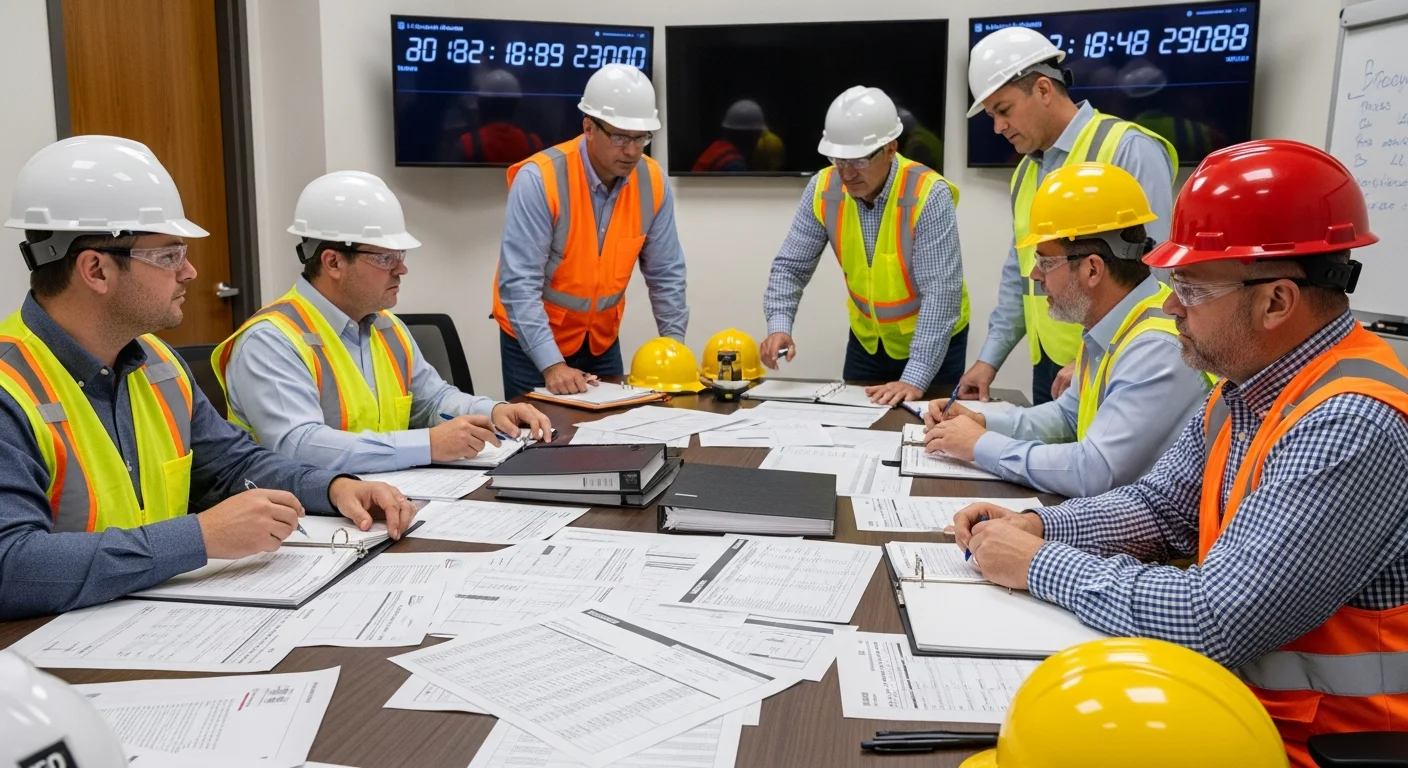
Bid day can feel like controlled chaos. You have been working on an estimate for weeks, chasing subcontractor quotes, running takeoffs, and putting together numbers that need to be airtight. Then bid day arrives and everything compresses into a few frantic hours where a single mistake can cost you the job or, worse, win you a job at a loss.
I have watched contractors run bid day from a folding table covered in sticky notes and fax printouts. I have also seen teams run it like a well-oiled machine with clear roles, solid systems, and a calm confidence that comes from preparation. The difference between those two scenarios is not talent or luck. It is process.
This guide walks through the six stages of bid day management so you can show up prepared, submit on time, and follow up in a way that keeps you in the running even when you do not land the low number.
1. Pre-Bid Preparation: Setting the Stage Weeks Before Bid Day
Bid day success starts long before the actual day. If you are scrambling to identify subcontractor scopes on the morning of the deadline, you are already behind. The work you do in the two weeks leading up to submission determines whether bid day is manageable or a disaster.
Start with a thorough plan review. Go through every sheet of the drawings and every section of the specifications. Build your scope list early so you know exactly which trades you need quotes for. Missing a scope is one of the most common and most expensive bid day mistakes. If you skip the mechanical insulation scope because it was buried in Division 23, you might be $80,000 short on your number.
Send bid invitations early. Get your subcontractor bid invitations out at least 10 days before the deadline. Include the project name, bid date and time, scope descriptions, plan access information, and any special requirements like prevailing wage or specific insurance limits. The earlier you reach out, the more competitive quotes you will receive. Subs who get your invite three days before bid day will either skip it or rush through it, and neither outcome helps you.
Confirm your bid bond capacity. Call your surety agent the moment you decide to bid a project. Bid bonds are not instant. Your surety needs to review the project size, your backlog, and your financials. If you wait until the day before to request a bond, you might find out your bonding capacity is maxed out and you just wasted two weeks of estimating effort.
Set up your bid day workspace. Whether you run bid day from a conference room or a home office, get the physical and digital space ready. Print your scope breakdown. Set up your tabulation spreadsheet. Make sure your team knows who is responsible for what. Assign someone to answer phones, someone to log quotes, and someone to run final numbers.
For a deeper look at the full estimating process that feeds into bid day, check out our guide on how to bid construction jobs.
2. Managing Last-Minute Subcontractor Quotes
Here is the reality of bid day: most subcontractor quotes arrive in the final two hours before your deadline. Some show up in the final 30 minutes. A few brave souls will call you with a number five minutes before you need to submit. This is not going to change. It is how the industry works, and your system needs to account for it.
Why do subs wait so long? It is not laziness. Many subcontractors are bidding to multiple general contractors on the same project. They hold their numbers until the last possible moment to avoid having their price shopped around. Others are genuinely finishing their takeoff. Either way, you need a plan for handling a flood of quotes in a short window.
Designate a quote receiver. This person does nothing else on bid day morning except answer the phone, check the fax machine (yes, some subs still fax), and monitor the bid email inbox. Their job is to capture every quote that comes in, confirm the scope it covers, and hand it off to the tabulation team. They should not be doing math, making coffee, or taking calls from the office. Receiving quotes is a full-time bid day job.
Verify scope before you plug in a number. A subcontractor quote is only useful if it covers what you need it to cover. Before you swap a new quote into your bid, check the inclusions and exclusions. Does the HVAC quote include controls? Does the electrical number include the generator? A lower price with major exclusions will wreck your bid. Keep your scope checklist handy and compare every quote against it.
Have backup subs lined up. For every critical trade, you should have quotes from at least two or three subcontractors. If your preferred plumbing sub ghosts you on bid day, you need a fallback. Building and maintaining strong subcontractor relationships throughout the year is what makes this possible. You cannot build a reliable sub list on bid day. That work happens months and years in advance.
Document everything. Log the time each quote arrives, who it came from, what scope it covers, and the total price. If there is a dispute later about what was included, you want a clear record. This also helps with post-bid analysis when you are reviewing which subs gave you the best numbers and which ones never bothered to respond.
3. Bid Tabulation: Organizing the Numbers That Win or Lose the Job
Bid tabulation is where the real work happens. This is the process of taking all your subcontractor quotes, material pricing, self-performed work estimates, and general conditions and pulling them together into a single, accurate bid number. Get this wrong and everything else is irrelevant.
Build your tabulation sheet before bid day. Do not create your spreadsheet on the morning of the bid. Set it up a week in advance with every scope of work listed, columns for each sub who might quote, and formulas that automatically pull in your selected numbers. The less manual entry you need to do on bid day, the fewer mistakes you will make.
Organize by CSI division or scope. Structure your tab sheet so it mirrors the project specifications. This makes it easy to verify you have coverage for every trade and simplifies the process of swapping in new quotes as they arrive. Most experienced estimators use a format they have refined over years. If you are newer to this, start with the 50-division MasterFormat structure and simplify from there.
Watch for scope gaps and overlaps. This is the most dangerous part of tabulation. Scope gaps happen when two subs each assume the other is covering a particular item, and neither one prices it. Scope overlaps happen when both subs include the same item, and you end up double-counting it in your bid. Neither is good. Gaps lose you money after you win. Overlaps make your bid too high and you do not win at all.
Apply your markup carefully. Once your direct costs are tabulated, add your general conditions, overhead, profit, and any contingency. This is where your bidding strategy comes into play. Are you bidding to win, or are you bidding to stay visible with this owner? Your markup decision should be intentional, not a gut feeling you land on at 1:55 PM.
Run a final sanity check. Before you finalize your number, divide your total bid by the square footage or some other unit of measure and see if it makes sense. If similar projects bid at $180 per square foot and your number comes in at $120, you probably have a hole. If you are at $250, you might be double-counting something. This five-second check has saved more contractors from catastrophic errors than any other single practice.
For more on tracking costs accurately across projects, take a look at our piece on construction cost tracking and budget variance.
4. Bid Bond Preparation: The Paperwork That Cannot Be Late
Projul is trusted by 5,000+ contractors. See their reviews to find out why.
A bid bond is your promise, backed by a surety company, that you will honor your bid price and enter into the contract if you are the successful bidder. On public projects and many large private jobs, no bid bond means no bid. Period.
Understand the requirements early. Read the bid documents carefully to determine the bond amount (usually 5% or 10% of the bid price), the acceptable surety companies, and the specific forms required. Some owners require bonds on their own form. Others accept the AIA A310 or a similar standard. Using the wrong form can get your bid rejected on a technicality.
Get your surety involved early. Your surety agent needs time to review the project and confirm your bonding capacity. For large projects, they may need to send the request to an underwriter, which can take several days. Do not wait until the last minute. A good rule is to notify your surety the same day you decide to bid and provide them with the project details, your estimated bid range, and the deadline.
Prepare the bond with a blank amount. Since your final bid number will not be locked until shortly before submission, most surety agents will prepare the bond document with the amount left blank or with a “not to exceed” figure. You fill in the exact amount once your bid is final. Make sure you know your surety’s process for this. Some agents want a phone call to confirm the final number. Others are fine with you filling it in and sending a copy after submission.
Double-check the details. Verify that the bond lists the correct project name, owner, and your company’s legal name. A misspelled company name or incorrect project title can create problems. These are easy details to overlook when you are rushing, which is exactly why you should prepare the bond the day before and only fill in the final dollar amount on bid day.
Keep a signed, scanned copy ready for electronic submission. More and more owners accept or require electronic bid submission. Having your bond scanned and ready to upload saves precious minutes. If you are submitting a hard copy, have the bond in a sealed envelope, labeled, and ready to go before you finalize your number.
Our full guide on construction bid bonds covers surety relationships, costs, and common mistakes in much more detail.
5. Electronic Bid Submission: Hitting the Button on Time
The shift toward electronic bid submission has changed bid day logistics significantly. Instead of racing across town to hand-deliver a sealed envelope, you are now uploading PDFs to a portal and hitting submit. This is faster and more convenient, but it comes with its own set of risks.
Know the platform ahead of time. Public agencies use platforms like BidExpress, Bid2Win, PlanetBids, and various state-specific portals. Private owners might use Building Connected, Procore, or their own system. Do not wait until bid day to create an account or figure out how the upload process works. Log in a week early, explore the interface, and do a test upload if the system allows it.
Prepare your documents in advance. Most electronic submissions require specific documents: bid form, bid bond, subcontractor listing, non-collusion affidavit, and sometimes additional certifications. Convert everything to PDF, name the files clearly, and organize them in a single folder. On bid day, you should only need to update the bid form with your final number, re-save the PDF, and upload.
Watch the clock carefully. Electronic systems lock at the deadline. They do not care if you were 30 seconds late because your internet was slow. Build in a buffer. Aim to submit at least 15 minutes before the deadline. If something goes wrong with the upload, you have time to troubleshoot or try a different computer or internet connection.
Have a backup plan. Internet outages happen. Servers crash. Portals freeze. Know the backup submission method before bid day. Some agencies accept email submissions as a backup. Others have a physical drop-off location. If you are relying entirely on an electronic portal with no backup plan and the site goes down at 1:58 PM, you are out of luck.
Confirm your submission. After you hit submit, verify that you received a confirmation email or a confirmation number from the portal. Take a screenshot of the confirmation page. If there is ever a dispute about whether your bid was received, you want proof. Do not just close the browser and assume everything went through.
Keep your estimating data organized. Whether you are tracking bids in a spreadsheet or using construction estimating software, make sure the bid you submitted matches the final number in your records. It sounds obvious, but in the rush of bid day, it is possible to submit one number and record a different one. That kind of discrepancy causes real headaches during contract negotiations.
6. Post-Bid Follow-Up: What Happens After You Hit Submit
Submitting your bid is not the finish line. What you do in the hours and days after submission can determine whether you win the project, get invited to bid next time, or learn something that makes your next bid better.
Attend the bid opening. On public projects, bids are typically opened and read aloud at a specific time. Be there, either in person or on the call. Write down every bidder’s name and number. This information is gold. It tells you where you stand relative to the competition and helps you calibrate your pricing for future bids.
Analyze the results. After the bid opening, sit down with your estimating team and review the numbers. Were you the low bidder? How close were the other bids? If you were significantly higher, figure out why. Did you have a scope that others might have missed? Were your sub quotes higher than what others received? Were you too aggressive with markup, or not aggressive enough?
Follow up with the owner. Whether you won or lost, send a thank-you note or email to the owner or their representative. If you lost, ask for feedback. Many owners and construction managers will tell you where your bid was relative to the field and may share insights about why another contractor was selected. This feedback is invaluable for sharpening your approach on future projects.
Debrief with your subcontractors. Let your subs know the outcome. If you won, they need to know quickly so they can hold their pricing and start planning. If you lost, a quick call or email telling them the result maintains that relationship. Subs remember which GCs keep them in the loop and which ones go silent after bid day. That reputation affects whether they give you their best price next time.
For more on building those relationships, read our guide on managing subcontractors effectively.
Update your bid history. Keep a running log of every project you bid, your number, the winning number, and any notes about what happened. Over time, this database becomes one of your most valuable business assets. You will spot trends in your pricing, identify which types of projects you win most often, and see which estimators on your team are most accurate. If you are serious about making data-backed decisions, our article on data-driven bidding breaks that process down further.
Handle the win correctly. If you are the apparent low bidder, do not celebrate just yet. Review your bid one more time to make sure you did not make an error. Check your sub quotes, your tabulation, and your bond. If you find a mistake, you need to address it immediately. Depending on the jurisdiction and the project, you may be able to withdraw your bid before award, but the window is narrow and the process is specific. A bid bond claim because you tried to walk away from a number you botched is an expensive lesson nobody wants to learn.
Pulling It All Together
Bid day is not something that should surprise you. Every deadline, every subcontractor quote, every form and upload portal should be anticipated and planned for long before the clock starts ticking. The contractors who win consistently are not necessarily the ones with the lowest overhead or the cheapest subs. They are the ones who run bid day with a clear plan, assigned roles, and systems that prevent the kind of mistakes that turn a winning bid into a losing project.
Build your checklist. Assign your team. Prep your bonds and documents. Test your submission portal. And when bid day arrives, trust the process you built.
Try a live demo and see how Projul simplifies this for your team.
If you are looking for a tool that helps you keep all of this organized, from estimating through project completion, Projul was built by contractors who have lived through every kind of bid day. We get it because we have been there.
Frequently Asked Questions
How early should I start preparing for bid day?
What is bid tabulation and why does it matter?
How do I handle subcontractors who send quotes at the last minute?
What is a bid bond and do I always need one?
Can construction management software help with bid day?
Related Articles

How to Implement Construction Software Without Losing Your Mind
Most construction software rollouts fail. Not because the software is bad, but because the rollout was rushed. Here are...
Read More →
How Selections Can Pay for Themselves in Three Easy Steps
Most contractors lose thousands each year on wrong material orders, slow client decisions, and missed upsell chances....
Read More →
3 Free Concrete Estimate Templates for Every Pour Type (2026)
Three ready-to-use concrete estimate templates with realistic line items, material costs, labor rates, and markup...
Read More →