
Construction Business Continuity Plan Guide
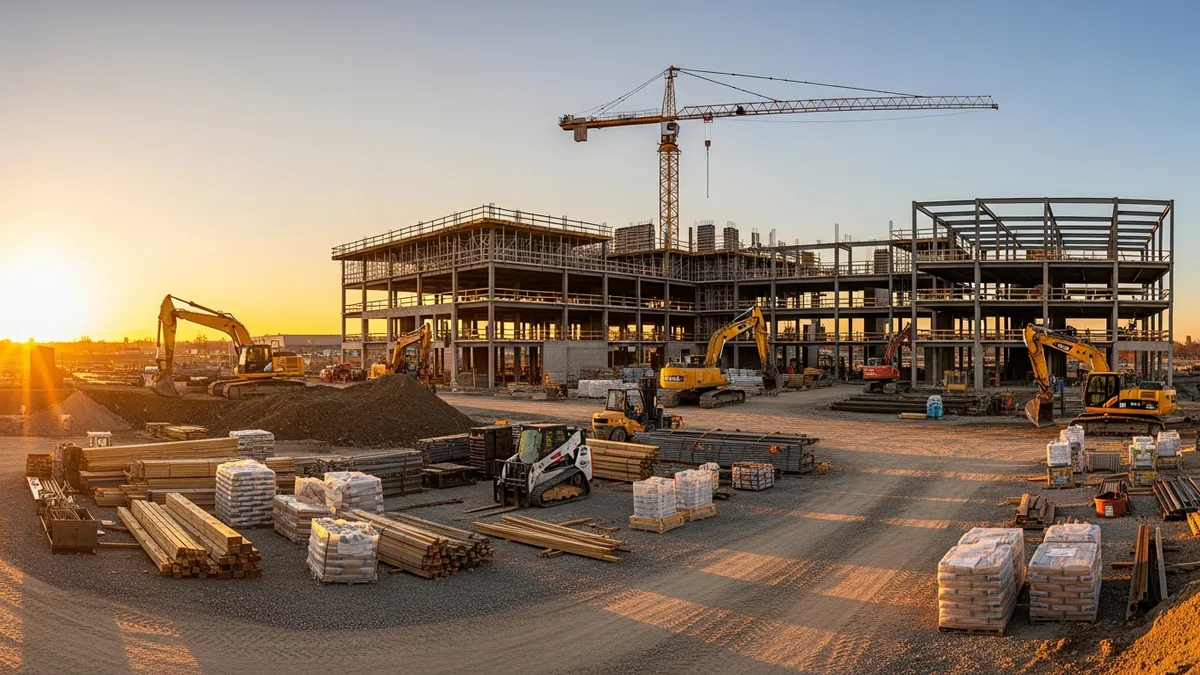
Every contractor has a story about the job that almost sank them. A hurricane that wiped out three active sites. A recession that killed the pipeline overnight. A foreman who walked out and took half the crew with him. The question is never whether something will go wrong. It is when, and whether you are ready for it.
A business continuity plan (BCP) is your playbook for keeping the doors open when things go sideways. It is not a binder that sits on a shelf collecting dust. Done right, it is a living document that gives your team clear direction during the worst moments of running a construction company.
This guide walks you through building one from scratch, step by step.
Why Construction Companies Need a Business Continuity Plan
Construction is one of the most disruption-prone industries out there. You are exposed to weather, material prices, labor shortages, regulatory changes, and economic cycles that are mostly outside your control. And unlike a software company where people can work from their couches, your work happens on physical jobsites with heavy equipment, perishable materials, and hard deadlines.
Here is what makes construction particularly vulnerable:
- Thin margins. Most contractors run on single-digit profit margins. A few weeks of lost revenue can create a cash crisis fast.
- Long project timelines. A disruption mid-project means you are burning overhead with no billings coming in.
- Skilled labor dependency. Losing key people hurts more when it takes months to find replacements.
- Physical asset exposure. Equipment, materials on site, and partially completed structures are all at risk from weather, theft, and vandalism.
- Complex supply chains. One delayed shipment can cascade across an entire project schedule.
According to FEMA, roughly 40% of small businesses never reopen after a disaster. For construction companies specifically, the failure rate during economic downturns is consistently higher than the national average across industries. Having a plan does not make you immune to these threats, but it dramatically improves your odds of getting through them. Our construction disaster recovery guide covers the tactical steps for getting your operations back online after a major event.
If you have not already mapped out your broader risk picture, start with our construction risk management guide to understand the full landscape before building your continuity plan.
Step 1: Identify Your Critical Business Functions
Before you can plan for disruptions, you need to know what actually keeps your business running day to day. Not everything is equally important. The goal here is to figure out which functions, if they stopped tomorrow, would hurt the most and fastest.
For most construction companies, critical functions fall into a few buckets:
Revenue-generating operations
- Active project work and crew deployment
- Estimating and bidding on new jobs
- Client communication and change order processing
Financial operations
- Invoicing and accounts receivable
- Payroll (miss one cycle and you will lose people fast)
- Job costing and budget tracking
Administrative backbone
- Contracts and legal documentation
- Insurance and bonding
- Licensing and permits
Communication and coordination
- Project scheduling and crew dispatch
- Subcontractor coordination
- Client and architect communication
For each function, ask two questions: How long can this be down before it causes serious damage? And what does it take to get it running again?
Your scheduling system and job costing tools are usually near the top of the list. If you cannot track costs or coordinate crews, everything else falls apart quickly.
Write all of this down in a simple table with three columns: the function, the maximum acceptable downtime, and the resources needed to restore it. This becomes the backbone of your entire plan.
Step 2: Assess Your Biggest Risks
Now that you know what matters most, figure out what is most likely to break it. This is your risk assessment, and it needs to be specific to your company, not generic.
Start with these categories and get specific about each one:
Natural disasters and weather events. What is your region prone to? If you are in Florida, hurricanes are top of the list. In California, wildfires and earthquakes. In the Midwest, tornadoes and flooding. Think about what a major event would do to your active jobsites, your office, your equipment yard, and your crew’s ability to get to work.
Economic downturns. Construction is cyclical. When the economy contracts, new projects dry up, existing clients slow-pay or cancel, and suddenly you are competing with fifteen other contractors for every small job. How long could you operate at 50% revenue? At 25%?
Don’t just take our word for it. See what contractors say about Projul.
If you want to stress-test your financial resilience, our cash flow forecasting guide walks through the numbers you need to run.
Key employee loss. Think about the people in your company who carry knowledge that nobody else has. Your lead estimator who has every supplier relationship in their head. Your project manager who runs your three biggest jobs. Your office manager who is the only person who knows the accounting system inside out. What happens if any of them leave, get hurt, or retire tomorrow?
For a deeper dive on preparing for leadership transitions, check out our construction succession planning guide.
Supply chain disruptions. The pandemic taught everyone this lesson the hard way. What happens when your primary lumber supplier cannot deliver for eight weeks? When lead times on electrical panels go from four weeks to four months? When concrete plants ration output?
Cyber threats and data loss. More construction companies are getting hit by ransomware and phishing attacks every year. If someone encrypts your project files, estimating data, and accounting records tomorrow morning, can you recover?
Equipment failure or loss. Major equipment going down on a critical-path activity can blow a schedule apart. Theft from jobsites is another real risk.
For each risk, rate the likelihood (how probable is this in the next two years?) and the impact (how badly would this hurt?). Focus your planning energy on the risks that score high on both.
Step 3: Build Your Response Procedures
This is where the plan gets practical. For each high-priority risk, write out exactly what happens when it hits. Who does what, in what order, and with what resources.
Keep it simple. If your response procedures read like a legal contract, nobody will follow them in a crisis. Use plain language, short steps, and clear ownership.
Here is an example for a natural disaster scenario:
Trigger: Hurricane warning issued for your operating area (48 hours out)
Immediate actions (0-24 hours):
- Project managers secure all active jobsites: tie down materials, protect exposed work, move equipment to high ground
- Office manager backs up all digital files to cloud storage and secures physical documents
- Owner/GM contacts all active clients to communicate timeline impacts
- Superintendent documents site conditions with photos and daily logs
- HR contacts all employees with safety instructions and check-in procedures
During event:
- All crews stand down, safety first
- Owner monitors conditions and maintains communication via text chain
- Designated point person coordinates with insurance company
Recovery (24-72 hours post-event):
- Safety assessment of all jobsites before anyone returns
- Photo documentation of all damage for insurance claims
- Project managers assess schedule impacts and develop recovery timelines
- Estimator prices repair/restoration work
- Owner communicates updated timelines to all clients
Keeping detailed daily logs and photo documentation during a disruption event is not just good practice. It is often the difference between a successful insurance claim and a denied one.
Build similar response procedures for each of your top risks. They do not all need this level of detail, but the high-impact scenarios deserve it.
Step 4: Protect Your Financial Resilience
Cash kills more construction companies than hurricanes do. Your continuity plan needs a financial component that goes beyond “have money in the bank,” although that is certainly part of it.
Build a cash reserve. The standard advice is three to six months of operating expenses. For construction, aim for the higher end. Your overhead does not stop when projects do. Rent, insurance, loan payments, and key salaries keep hitting whether you are billing or not. If a six-month reserve sounds impossible right now, start with one month and build from there.
Establish a line of credit before you need it. The time to set up a credit line is when your financials look good, not when you are in crisis mode. Banks are not eager to extend credit to a company that just lost its three biggest projects. Get a line in place, keep it unused, and it will be there when you actually need the lifeline.
Diversify your revenue streams. If 80% of your revenue comes from one client or one type of work, you are one phone call away from a catastrophe. Spread across multiple clients, project types, and if possible, geographic areas.
Review your insurance coverage. Make sure your policies actually cover the scenarios in your risk assessment. Business interruption insurance, builder’s risk, inland marine for equipment, and general liability all play different roles. Read our construction insurance guide for a detailed breakdown of what coverage you actually need.
Tighten your job costing. During good times, sloppy cost tracking is an annoyance. During a downturn, it is fatal. If you do not know your true costs on every job, you cannot make smart decisions about which work to pursue and which to walk away from.
Manage your receivables aggressively. Tighten payment terms where you can. Follow up on invoices the day they are due, not thirty days later. In a downturn, the contractors who survive are the ones who get paid first.
Step 5: Document and Distribute the Plan
A plan that lives only in the owner’s head is not a plan. It is a liability. Your BCP needs to be written down, accessible to your key people, and stored where a disaster cannot destroy it.
What to include in the written document:
- Emergency contact list (employees, key clients, subcontractors, insurance agents, bankers, attorneys)
- Critical vendor and supplier list with backup options for each
- Response procedures for each identified risk scenario
- Financial information: bank accounts, credit lines, insurance policy numbers
- IT recovery procedures: backup locations, login credentials (stored securely), software vendor contacts
- Key project information: active contracts, client contacts, schedule status
- Communication templates for clients, employees, and subcontractors
Where to store it:
Keep at least three copies: one digital in cloud storage that your leadership team can access from anywhere, one printed copy at your office, and one printed copy at a secondary location (the owner’s home is fine). If a fire takes out your office and your only copy of the plan was in a filing cabinet, you are back to square one.
Who gets access:
At minimum, your ownership group, project managers, office manager, and anyone else who has a role in the response procedures. Do not keep the plan secret from the people who need to execute it. Walk them through it. Make sure they know where to find it and what their responsibilities are.
Test the plan.
Run a tabletop exercise at least once a year. Pick a scenario, sit your key people around a table, and walk through it step by step. You will find gaps, confusion, and outdated information every single time. That is the whole point. Fix those gaps before a real crisis exposes them.
Keeping Your Plan Current
Writing the plan is the hard part. Keeping it current is the part most people skip, and it is just as important.
Set a recurring calendar reminder to review the plan every six months. During each review, check for:
- Personnel changes. Did someone leave who had a key role in the plan? Did you hire someone who should be added?
- New risks. Did you expand into a new region with different weather risks? Take on a new type of work? Start relying on a new supplier?
- Financial changes. Is your cash reserve where it should be? Did your insurance coverage change at renewal?
- Technology changes. Did you switch project management software? Change your backup procedures? Move to new communication tools?
- Lessons learned. Did you go through any actual disruptions since the last review? What worked? What did not?
The companies that weather storms, literal and figurative, are not the ones with the most resources. They are the ones who thought ahead, wrote it down, and kept it current. A business continuity plan is not exciting work. Nobody gets into construction because they love writing emergency procedures. But it is the kind of boring, behind-the-scenes discipline that separates the contractors who are still around in ten years from the ones who became a cautionary tale.
Start with your top three risks. Write simple response procedures. Build your cash reserve. Get your key people involved. You do not need a perfect plan on day one. You need a good-enough plan that you actually follow and improve over time.
Ready to stop guessing and start managing? Schedule a demo to see Projul in action.
Your future self, the one dealing with the crisis you did not see coming, will thank you for it.
Frequently Asked Questions
What is a business continuity plan in construction?
How often should I update my construction business continuity plan?
What are the biggest threats to construction business continuity?
Do small contractors need a business continuity plan?
How much does it cost to create a business continuity plan?
Related Articles
Construction Exit Strategy: How to Sell Your Construction Company
What buyers look for in a construction company and how to get yours ready to sell at the right price.
Read More →
How to Grow a Construction Business: From $500K to $5M Revenue
Growing a construction company past $500K is a different challenge than starting one. Every revenue milestone demands...
Read More →
Construction Contract Types Explained: Fixed Price, T&M, Cost Plus, and More
Every contract type explained in plain English so you pick the right one for each job.
Read More →