
Financing Your Construction Business: Loans, Lines of Credit, and Cash Flow Strategies | Projul
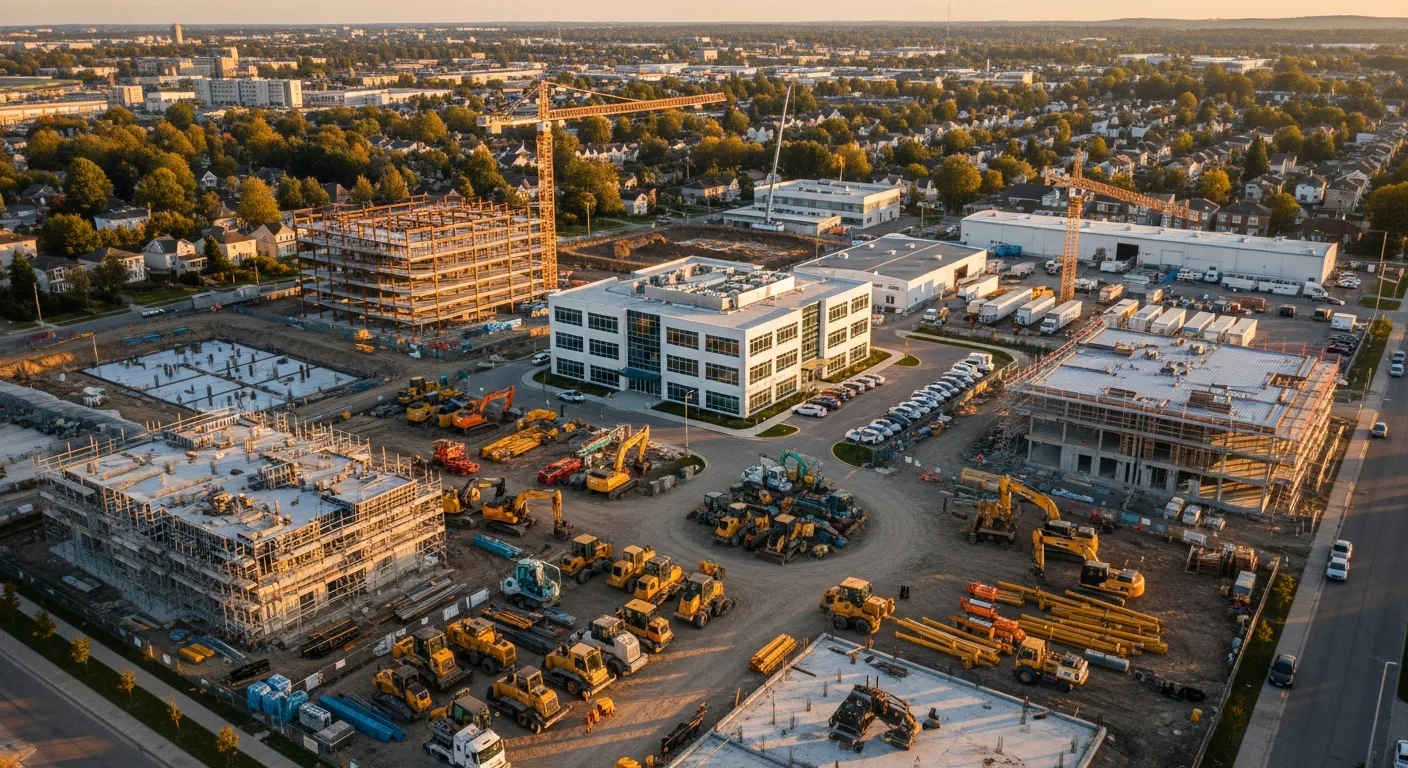
Cash flow is the number one killer of construction businesses. Not bad work. Not lack of projects. Cash flow.
You can be booked solid with profitable jobs and still run out of money on a Tuesday because your receivables are 60 days out and your payroll is due Friday. It happens to contractors of every size, from one-truck operations to companies doing $50 million a year.
The difference between contractors who survive cash crunches and those who do not usually comes down to access to capital. The right financing in place before you need it, a line of credit you can draw on when receivables are slow, equipment financing that does not drain your operating account, and enough working capital to weather the gaps.
This guide covers the financing options available to construction businesses, how to qualify for them, and the cash flow strategies that keep your business healthy between payments.
Why Construction Businesses Need Financing
Construction has a unique cash flow problem that most other industries do not face. You spend money long before you collect it.
Think about a typical project cycle:
- You bid the job and win it. No money yet.
- You mobilize, buy materials, and start work. Money going out.
- You submit your first pay application 30 days into the project. Still no money in.
- The architect reviews your pay app over 2 weeks. Still waiting.
- The owner processes payment. Maybe another 2 weeks.
- You finally get paid 45 to 60 days after you started spending.
Now multiply that by five or ten projects running simultaneously, and you can see why even profitable contractors run into cash problems.
Financing bridges these gaps. It gives you the capital to pay your crew, buy materials, and keep operations running while you wait for payments to arrive.
The Growth Trap
Here is the cruel irony of construction: the more you grow, the worse your cash flow gets. Each new project requires upfront spending before it generates revenue. Each new employee adds to your weekly payroll obligation. Each new piece of equipment ties up capital.
Many contractors have gone bankrupt not because they ran out of work, but because they grew faster than their cash flow could support. Proper financing is what lets you grow without breaking.
SBA Loans for Construction Companies
Small Business Administration (SBA) loans are some of the best financing options available to construction businesses. The SBA does not lend money directly. Instead, it guarantees a portion of the loan, which reduces risk for the lender and results in better terms for you.
SBA 7(a) Loans
The SBA 7(a) is the most common SBA loan program. It can be used for:
- Working capital
- Equipment purchases
- Business acquisition
- Debt refinancing
- Real estate (owner-occupied)
Loan amounts: Up to $5 million
Terms: Up to 10 years for working capital and equipment. Up to 25 years for real estate.
Interest rates: Variable rates based on the prime rate plus a margin (typically prime + 2.25% to 2.75% for loans over $50,000).
Down payment: Typically 10% to 20%.
SBA 504 Loans
The 504 program is specifically designed for purchasing fixed assets like real estate and major equipment. It involves two lenders: a traditional bank provides 50% of the financing, a Certified Development Company (CDC) provides 40%, and you put down 10%.
Best for: Buying your own office, shop, or yard. Purchasing major equipment.
Loan amounts: CDC portion up to $5.5 million.
Terms: 10 years for equipment, 20 to 25 years for real estate.
Interest rates: Fixed rate on the CDC portion, which can be very attractive.
What You Need to Qualify
SBA loans have strict qualification requirements:
- Time in business. At least 2 years, though some lenders prefer 3 or more.
- Personal credit score. 680 or higher, with 700+ preferred.
- Revenue and profitability. You need to show consistent revenue and a history of profitability.
- Financial statements. Two to three years of business and personal tax returns, balance sheet, income statement, and cash flow statement.
- Business plan. Some lenders require a formal business plan, especially for larger loans.
- Collateral. SBA loans may require collateral, though the SBA prohibits declining a loan solely due to lack of collateral.
- Personal guarantee. Anyone owning 20% or more of the business must provide a personal guarantee.
The Application Process
SBA loans take time. Expect the process to take 30 to 90 days from application to funding. Start the process well before you need the money.
- Gather your financial documents (tax returns, financial statements, business plan).
- Find an SBA-preferred lender. These lenders can approve loans faster because they have delegated authority from the SBA.
- Submit your application and supporting documents.
- Respond to lender questions quickly. Every day of delay extends the process.
- Close the loan and receive funding.
Equipment Financing
Equipment is one of the largest capital needs in construction. Fortunately, it is also one of the easiest things to finance because the equipment itself serves as collateral.
How Equipment Financing Works
An equipment loan works like a car loan. The lender provides the purchase price (minus any down payment), you make monthly payments over a fixed term, and the equipment serves as collateral. If you default, the lender can repossess the equipment.
Typical terms:
- Loan amounts: From $10,000 to several million dollars.
- Down payment: 0% to 20%, depending on your credit and the lender.
- Terms: 2 to 7 years, typically matched to the useful life of the equipment.
- Interest rates: 4% to 15%, depending on credit, age of equipment, and lender.
Equipment Leasing
Leasing is an alternative to buying. With a lease, you make monthly payments for the use of the equipment but do not own it at the end of the term (unless the lease includes a purchase option).
Benefits of leasing:
- Lower monthly payments compared to a loan
- Potential tax advantages (lease payments may be fully deductible as an operating expense)
- Easier to upgrade to newer equipment at the end of the lease
- Less cash required upfront
Drawbacks:
- You do not build equity in the equipment
- Total cost over the lease term may exceed the purchase price
- Restrictions on modifications or excessive wear
- You must return the equipment or buy it at the end
New vs. Used Equipment Financing
Financing for new equipment is straightforward. Lenders like new equipment because it has a clear value, manufacturer warranty, and a long useful life ahead of it.
Used equipment financing is available but may come with:
- Higher interest rates
- Shorter loan terms
- Larger down payment requirements
- Lower maximum loan amounts
If you are buying used equipment, get it inspected by a qualified mechanic before closing the financing. Lenders may require an appraisal for high-value used machines.
Tax Benefits of Equipment Purchases
The tax code offers significant incentives for equipment purchases:
Section 179 deduction. Allows you to deduct the full purchase price of qualifying equipment in the year of purchase, up to the annual limit (check current limits with your accountant).
Bonus depreciation. Allows additional first-year deductions on new equipment. The percentage has been phasing down in recent years, so check the current rate.
Interest deduction. The interest on equipment loans is tax-deductible as a business expense.
These deductions can significantly reduce the effective cost of equipment purchases. Plan your purchases with your accountant to maximize the tax benefit.
Lines of Credit
A business line of credit is arguably the most important financing tool for a construction company. It provides flexible access to capital that you can draw on when you need it and pay back when cash comes in.
How a Line of Credit Works
A line of credit gives you access to a set amount of money (your credit limit). You can draw funds as needed, and you only pay interest on the amount you have drawn. As you repay, the available balance goes back up, and you can draw again.
Think of it like a checking account with a negative balance option. When cash is short, you draw from the line. When a big payment comes in, you pay it back.
Types of Lines of Credit
Unsecured line of credit. No collateral required, but harder to qualify for and typically smaller limits ($50,000 to $250,000). Interest rates are higher.
Secured line of credit. Backed by collateral such as equipment, real estate, accounts receivable, or a blanket lien on business assets. Higher limits and lower interest rates.
Asset-based line of credit. Borrowing capacity is tied directly to the value of specific assets, usually accounts receivable. As your receivables grow, your available credit grows. These are common for larger construction companies.
What Lenders Look For
To qualify for a business line of credit, lenders typically evaluate:
- Cash flow. They want to see that your business generates enough cash to service the line plus your other obligations.
- Working capital. Your current assets minus current liabilities. Lenders want to see a positive, healthy working capital position.
- Accounts receivable aging. How old are your outstanding invoices? A lot of receivables over 90 days is a red flag.
- Debt-to-equity ratio. How much debt do you have relative to the owner’s equity in the business? Lower is better.
- Personal credit and guarantee. Most lines of credit for small businesses require a personal guarantee from the owner.
How Much Line of Credit Do You Need?
A common guideline is to have a line of credit equal to one to two months of operating expenses. If your monthly overhead (payroll, rent, insurance, materials, sub payments) is $200,000, you want a line of credit of at least $200,000 to $400,000.
Some contractors maintain larger lines for seasonal businesses or to support rapid growth.
Bonding Capacity and Financing
If you do bonded work (public projects, institutional clients), your bonding capacity is a critical financial metric. And it is directly affected by your financing decisions.
What is Bonding Capacity?
Your bonding capacity is the maximum dollar amount of bonded work a surety company will guarantee for you. It has two components:
Single job limit. The largest individual project you can bond.
Aggregate limit. The total amount of bonded work you can have in progress at any time.
How Bonding Capacity is Determined
Surety companies evaluate your:
- Working capital. The most important factor. More working capital equals more bonding capacity. A common rule of thumb is that your bonding capacity is 10 to 20 times your working capital.
- Equity. Owner’s equity in the business shows financial stability and commitment.
- Track record. Your history of completing projects on time and within budget.
- Financial statements. Sureties require CPA-prepared financial statements, often reviewed or audited.
- Personal finances. The owner’s personal financial strength and credit history.
- Bank relationships. An established line of credit shows financial backing.
How Financing Affects Bonding
This is where it gets tricky. Taking on debt can either help or hurt your bonding capacity:
Helpful debt:
- Equipment loans that are properly matched to the asset’s useful life
- Real estate loans for business property
- A line of credit (having access to capital shows financial strength)
Harmful debt:
- Short-term debt used to cover operating losses
- Over-borrowing that pushes your debt-to-equity ratio too high
- Maxed-out lines of credit (shows you are stretched thin)
- Personal debt that weakens your personal financial statement
Before taking on significant new debt, discuss the impact on your bonding capacity with your surety agent.
Cash Flow Management Strategies
Financing gives you access to capital, but good cash flow management reduces how much you need to borrow. Here are strategies that keep money moving through your business.
Bill Promptly and Accurately
The single most impactful thing you can do for cash flow. Every day you delay billing is a day you delay getting paid.
- Submit pay applications on the earliest possible date
- Make them complete and accurate so they do not get kicked back
- Follow up within a week to confirm receipt and approval
- Track every invoice from submission to payment
Collect Aggressively
Polite but persistent follow-up on outstanding invoices makes a big difference:
- Send statements at 30, 60, and 90 days
- Call before sending to collections
- Know your lien rights and use them when necessary
- Consider offering a small discount for early payment (2% net 10 is common)
Negotiate Supplier Terms
Your suppliers can be a source of short-term financing:
- Ask for net-30 or net-45 payment terms instead of COD
- Negotiate volume discounts for buying in bulk
- Set up accounts with multiple suppliers so you have options
- Pay on time consistently to build credit and qualify for better terms
Require Deposits
For private work, require a deposit or mobilization payment before starting. This is standard practice and helps offset your upfront costs. Common deposit structures:
- 10% to 20% of the contract value as a deposit
- Materials deposit equal to the cost of materials needed for the first phase
- Mobilization payment to cover initial setup costs
Manage Your Overhead
Every dollar of overhead is a dollar that has to come from project revenue or borrowing:
- Review your overhead costs quarterly and cut what is not producing results
- Avoid long-term commitments (leases, subscriptions) that lock you into costs during slow periods
- Consider whether you can share resources (office space, equipment) to reduce fixed costs
- Differentiate between overhead that supports growth and overhead that just adds cost
Use Technology to Speed Up Cash Flow
Construction management software like Projul helps with cash flow in several ways:
- Faster invoicing. Generate and send invoices from the field as soon as work is complete.
- Better tracking. Know exactly where every dollar is, which invoices are outstanding, and which projects are generating cash.
- Accurate job costing. Catch cost overruns early before they become cash flow problems.
- Reduced admin time. Less time processing paperwork means more time building and billing.
Alternative Financing Options
Beyond traditional loans and lines of credit, several alternative financing options are available to construction businesses:
Invoice Factoring
Factoring lets you sell your outstanding invoices to a third party (the factor) at a discount. You get cash immediately (usually 80% to 90% of the invoice value), and the factor collects from your customer. When the customer pays, the factor sends you the remaining balance minus their fee.
Pros: Fast access to cash, no debt added to your balance sheet, approval based on your customer’s creditworthiness rather than yours.
Cons: Expensive (fees typically range from 1% to 5% per month), your customers interact with the factor, and it can signal financial distress.
Merchant Cash Advances
A merchant cash advance provides a lump sum in exchange for a percentage of your future revenue. Repayment is typically made daily or weekly as a fixed percentage of your income.
Warning: Merchant cash advances are the most expensive form of financing available. Effective annual rates can exceed 50% to 100%. Use only as a last resort, and understand the total cost before signing.
Crowdfunding and Peer-to-Peer Lending
Online platforms offer loans funded by individual investors rather than banks. Rates and terms vary widely. These can be an option for contractors who do not qualify for traditional bank financing but should be compared carefully against other options.
Building Your Financing Strategy
Do not wait until you need money to start looking for it. Lenders want to lend to companies that are doing well, not companies that are desperate. Build your financing relationships when your business is strong.
Step 1: Establish Banking Relationships
Open a business checking account and build a relationship with a local bank or credit union. Local lenders understand construction and are more likely to work with you than national banks.
Step 2: Get a Line of Credit Before You Need It
Apply for a line of credit when your financials look good. Having it in place, even if you do not use it, shows financial strength and gives you a safety net.
Step 3: Plan Equipment Purchases
Instead of reacting to equipment needs, plan your purchases 6 to 12 months in advance. This gives you time to shop for the best financing terms and take advantage of tax benefits.
Step 4: Build Your Financial Statements
Sureties and lenders base decisions on your financial statements. Invest in:
- CPA-prepared financial statements (reviewed or audited for bonded work)
- Clean books with accurate job costing
- Regular financial reviews with your accountant
Step 5: Protect Your Credit
Your personal credit score directly affects your ability to get business financing:
- Pay all obligations on time
- Keep credit card balances low
- Monitor your credit report regularly
- Resolve any errors promptly
Red Flags That Signal Trouble
Watch for these warning signs that your financing strategy needs attention:
- Line of credit is consistently maxed out. This means your cash flow gap is structural, not temporary.
- Borrowing from one project to fund another. This is a dangerous spiral that often ends badly.
- Paying suppliers late consistently. This damages relationships and credit, making future financing harder.
- Personal funds going into the business regularly. Occasional capital contributions are fine. Constant infusions signal a problem.
- Growing revenue but shrinking cash. This usually means you are growing faster than your cash flow supports, or your margins are eroding.
If you see these signs, talk to your accountant and your banker before the situation becomes critical. Early action gives you more options.
Wrapping Up
Financing is not a sign of weakness. It is a tool that smart contractors use to manage cash flow, fund growth, and take on bigger opportunities. The key is to have the right financing in place before you need it, use it strategically, and maintain the financial discipline that keeps lenders and sureties confident in your business.
Start with a line of credit and a good banking relationship. Add equipment financing as your fleet grows. Consider SBA loans for major investments. And through it all, focus on the cash flow fundamentals: bill fast, collect aggressively, and keep your overhead in check.
The contractors who thrive are not always the ones with the most work. They are the ones who manage their money well enough to keep building through the ups and downs. Tools like Projul help you stay on top of your project finances so you can make better decisions about when and how to use the capital available to you.
Frequently Asked Questions
What is the best type of loan for a construction business?
How do I qualify for an SBA loan as a contractor?
What is a construction line of credit and how does it work?
How does bonding capacity relate to financing?
What credit score do I need to get a business loan for my construction company?
Should I finance equipment or pay cash?
What is the difference between a term loan and a line of credit?
How can I improve my cash flow without borrowing money?
Related Articles

BIM Clash Detection: How to Catch Conflicts Before They Cost You on the Jobsite
BIM Clash Detection: How to Catch Conflicts Before They Cost You on the Jobsite Every contractor has a story about the...
Read More →
Asphalt Paving and Compaction Guide: Mix Types, Laydown Temperatures, and Quality Testing
Asphalt paving looks straightforward from a distance. A truck dumps material, the paver lays it down, and rollers...
Read More →
Construction Jobsite Wi-Fi & Connectivity Guide: Setting Up Reliable Internet in the Field
A practical guide to getting reliable internet on construction job sites. Learn about cellular hotspots, mesh networks,...
Read More →