
Tenant Improvement Projects: A GC's Guide
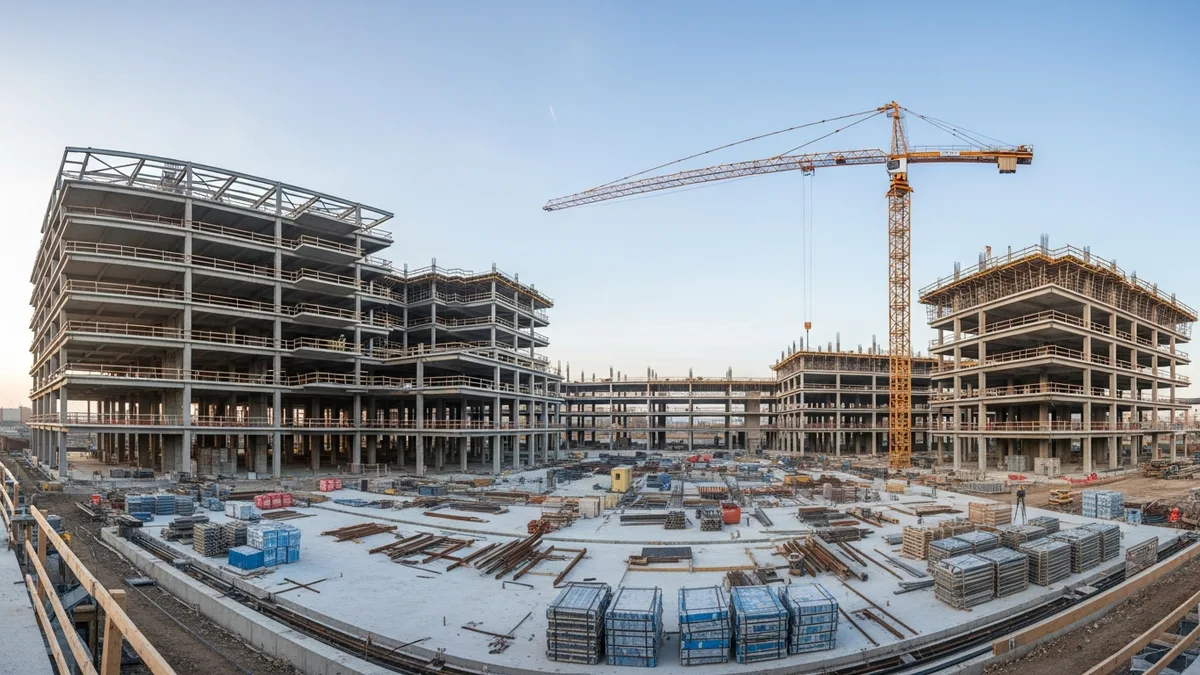
If you have been in commercial construction for any length of time, you have probably done tenant improvement work. TI projects are the bread and butter of a lot of GCs, especially in markets where new ground-up construction slows down but lease activity keeps moving. Every time a new tenant signs a lease or an existing tenant decides to reconfigure their space, somebody needs to build it out. That somebody is usually us.
But TI work is its own animal. It is not the same as building a new shell, and it is definitely not the same as residential remodeling. The timelines are compressed, the stakeholders multiply fast, and the margin for error on scheduling and budgets is razor thin. If you are a GC looking to break into TI work or tighten up your existing process, this guide covers the major pieces you need to get right.
Understanding the TI Project Structure
Before you swing a hammer on any tenant improvement job, you need to understand how these projects are structured financially and contractually. The setup on a TI job is different from most other commercial work, and getting it wrong early will cost you later.
Most TI projects involve three parties: the landlord (or property management company), the tenant, and you as the GC. The landlord typically provides a TI allowance as part of the lease, which is a set dollar amount per square foot that covers buildout costs. The tenant might also contribute funds above that allowance for upgrades they want. Your contract could be with either party, and sometimes you end up answering to both, which is where things get interesting.
Understanding who controls the budget and who has final approval on design decisions will save you a lot of wasted time. On some jobs, the tenant’s interior designer is driving the bus. On others, the landlord’s property manager is reviewing every change order. Get this sorted out at the kickoff meeting and document it. You want one clear decision maker for approvals, or at minimum a defined process that does not require chasing three people for a signature on a $500 change.
The scope on TI work can range wildly. On one end, you have a “warm shell” buildout where the base building systems are already in place and you are adding partition walls, doors, ceiling grid, and finishes. On the other end, you have a full gut renovation where you are tearing everything back to the deck and starting over. Most jobs fall somewhere in between, and the ones that cause the most headaches are the ones where the scope creeps from one end toward the other after you have already signed a contract.
If you are coming from residential work and looking to move into commercial TI projects, our guide on transitioning from residential to commercial construction covers the business side of making that jump.
Scoping and Estimating TI Work
This is where TI projects are won or lost. Get the scope right and your estimate tight, and the job will run. Miss something in the existing conditions, and you are eating costs or fighting over change orders for the next three months.
Every TI estimate should start with a thorough site walk. And I mean thorough. Pop ceiling tiles and look above. Open electrical panels. Check the condition of existing HVAC equipment. Look at the plumbing risers. Document everything with photos. You are not just pricing what the architect drew on paper. You are pricing the gap between what exists today and what the drawings show as the finished product.
Here is a list of things that will bite you if you miss them during your site walk:
- Existing conditions above the ceiling. Old framing, abandoned ductwork, fire sprinkler lines that do not match the new layout, and wiring that has been spliced six times since 1985. All of this has to be dealt with, and none of it shows up on the architectural plans.
- Base building systems capacity. Does the existing electrical panel have enough capacity for the new tenant’s needs? Is the HVAC tonnage sufficient for the new layout? If the tenant is adding a server room or a commercial kitchen, the existing systems probably will not cut it.
- ADA compliance gaps. If the space has not been renovated recently, there is a good chance the restrooms, doorways, and common areas do not meet current ADA requirements. The cost to bring these up to code can be significant and is often missed in early budgets.
- Hazardous materials. In older buildings, you may be dealing with asbestos in floor tiles, pipe insulation, or ceiling texture. Lead paint is another possibility. Abatement costs need to be in the budget before you start demo.
A solid estimating process is critical for TI work because the margin between winning the job and losing money on it is often only a few percentage points. Break your estimate into clear categories: demolition, framing and drywall, MEP rough-in, ceiling and flooring, finishes, and specialty items. Carry contingency for unknowns, and be upfront with your client about what that contingency covers.
Read real contractor reviews and see why Projul carries a 4.9/5 on G2.
One more thing on estimating. If you are bidding competitively against other GCs, resist the temptation to cut your contingency to sharpen your number. The GC who wins a TI job with a razor-thin contingency and then has to submit change orders for every surprise is the GC who does not get invited back. Landlords and property managers remember that.
Scheduling and Phasing the Work
Time is money on every construction project, but on TI work, it is especially true. Tenants are paying rent on a space they cannot occupy. Landlords want their building generating income. Everyone wants the job done yesterday.
The typical TI project timeline looks something like this:
- Pre-construction (2 to 6 weeks). Design finalization, permitting, material procurement, and subcontractor buyout. This phase is often compressed or overlapped with early construction activities.
- Demolition and rough-in (2 to 4 weeks). Demo existing finishes, frame new walls, run MEP rough-ins. This is where you discover all the surprises hiding behind the walls.
- Finishes (2 to 4 weeks). Drywall finishing, paint, ceiling grid, flooring, millwork, and specialty finishes.
- Final MEP and inspections (1 to 2 weeks). Trim out electrical, plumbing, and HVAC. Fire alarm and sprinkler testing. Final inspections and punch list.
The key to keeping a TI project on schedule is managing the handoffs between trades. In a confined space with a compressed timeline, your electrician, plumber, HVAC crew, and drywall team are all going to be on top of each other. If your framing crew falls behind by two days, that delay cascades through every trade behind them.
Good scheduling tools make a real difference here. You need to be able to see the critical path clearly and communicate schedule changes to subs in real time. Weekly schedule updates are not enough on a fast-track TI job. You should be looking at the schedule daily and communicating with your supers and subs constantly.
Phasing is another consideration, especially on occupied buildings. If you are building out one suite while the tenant next door is running a business, you need to plan your noisy work, demo, concrete cutting, core drilling, around their operating hours. Same goes for any work that affects building-wide systems like fire alarms or elevators. Coordinate with the property manager and give adjacent tenants advance notice. A little communication goes a long way toward avoiding complaints and keeping the landlord happy.
For multi-phase TI projects, consider breaking the work into zones that can be completed and turned over independently. This lets the tenant start occupying finished areas while you complete the rest. It adds complexity to your scheduling, but tenants love it and it can be a real differentiator when you are competing for work.
MEP Coordination on TI Projects
If there is one thing that separates a smooth TI job from a disaster, it is MEP coordination. In commercial tenant improvement work, the mechanical, electrical, and plumbing systems are where most of the complexity lives. Getting these trades coordinated early and keeping them aligned throughout the project is critical.
On a typical office TI, you are dealing with:
- HVAC modifications. Relocating or adding diffusers, extending ductwork to new offices or conference rooms, and adjusting the controls to accommodate the new layout. If the tenant has specific temperature requirements for server rooms or specialized equipment, you may need supplemental cooling units.
- Electrical distribution. New circuits for workstations, dedicated circuits for break rooms or kitchens, data and communications cabling, and lighting layouts that match the new floor plan. LED retrofit is common on TI jobs and can be a selling point for energy-conscious tenants.
- Plumbing. Break room sinks, additional restrooms, and any specialty plumbing for the tenant’s business. Retail TI projects for restaurants or salons will have significantly more plumbing scope than a standard office buildout.
- Fire protection. Anytime you move walls, you are probably moving sprinkler heads. The fire sprinkler contractor needs to be involved early because their work affects ceiling layout, and inspection scheduling can hold up your certificate of occupancy. Check out our fire protection guide for more on this.
The biggest mistake GCs make on TI MEP coordination is waiting too long to get the trades talking to each other. Do not wait until rough-in starts. Get your mechanical, electrical, plumbing, and fire protection subs together during pre-construction to review the drawings and work out conflicts on paper instead of in the field.
Ceiling space is usually the battleground. In a commercial building with an 8 to 9 foot finished ceiling, you have limited space above the grid for ductwork, piping, conduit, cable tray, and sprinkler lines. If everyone just goes and installs according to their own shop drawings without coordinating, you end up with conflicts that cost time and money to resolve.
For a deeper dive into managing trade coordination, our MEP coordination guide covers the full process from pre-construction through final inspections.
Common Pitfalls and How to Avoid Them
After running enough TI projects, you start to see the same problems show up again and again. Here are the ones that catch GCs most often, along with what you can do about them.
Scope creep from the tenant. This is the number one issue on TI work. The tenant walks the job site, sees their space taking shape, and starts asking for changes. “Can we add a door here?” “What if we upgraded the flooring in the lobby?” “We decided we actually need two more offices.” Each of these changes individually might be small, but they add up fast. The fix is a clear change order process documented in your contract, with defined turnaround times for pricing and written approval required before any additional work starts. Do not do extra work on a handshake.
Long lead materials killing the schedule. Custom millwork, specialty light fixtures, certain flooring products, and glass partitions can have lead times of 6 to 10 weeks or more. If you do not identify these items early and get them ordered during pre-construction, they will blow up your schedule. Build a procurement log during estimating and flag anything with a lead time over two weeks.
Permitting delays. Every jurisdiction is different, and some are painfully slow. If your project requires plan review, factor in realistic review times based on your experience in that area. Some GCs submit for permits before the design is 100% complete, issuing addenda for final details later. This is risky but can save weeks on a tight schedule. Know your local process and plan accordingly.
Underestimating demo and existing conditions. I mentioned this in the estimating section, but it is worth repeating. The single most common source of budget overruns on TI work is discovering conditions during demo that were not visible during the site walk. Carry adequate contingency and set expectations with your client upfront about the possibility of hidden conditions.
Not managing the building relationship. On TI work, you are a guest in someone else’s building. The property manager controls access, loading dock schedules, elevator usage, and after-hours HVAC. If you do not build a good working relationship with the building management team, your project will suffer. Get their rules and procedures in writing at the start of the job, share them with your subs, and follow them. A property manager who trusts you will make your life much easier on the current job and help you land future work in the same building.
Ignoring the close-out process. TI projects often have specific close-out requirements from the landlord, including as-built drawings, equipment manuals, warranty documentation, and lien waivers from every sub. Do not wait until the last week of the job to think about close-out. Start compiling documents as you go. A clean, timely close-out is one of the best ways to build your reputation with landlords and property managers.
Building a Repeatable TI Operation
If you want TI work to be a consistent revenue stream for your company, and it should be because it tends to be more recession-resistant than new construction, you need to build a repeatable process around it.
That starts with standardizing your pre-construction workflow. Create templates for your site walk checklists, estimating spreadsheets, and proposal formats. Every TI job is different in the details, but the overall process should be the same. When you can move from initial site walk to submitted proposal in 5 to 7 business days instead of three weeks, you win more work.
Build relationships with a core group of subcontractors who understand TI work. The subs who are great at ground-up commercial construction are not always the right fit for TI projects. TI work requires subs who can work in occupied buildings, handle smaller scopes efficiently, and adapt to schedule changes quickly. Find the ones who get it and keep them busy.
Invest in systems that support fast-moving projects. Spreadsheets and email work fine when you are running one or two jobs. When you have five or six TI projects going at once in different phases, you need better tools for tracking budgets, schedules, and communication. Projul’s project management platform is built for contractors who need to keep multiple projects organized without spending half their day on admin work.
Develop your estimating database over time. Every TI job you complete gives you better data on actual costs per square foot for different types of buildouts in your market. Track your estimates against actual costs and refine your numbers. After 20 or 30 TI projects, your estimating accuracy will be significantly better than a GC who is starting fresh.
Finally, focus on repeat business. The best TI contractors are not constantly chasing new clients. They are getting called back by the same landlords, property managers, and tenants who had a good experience the first time. This means delivering on your promises, communicating proactively when problems come up, handling change orders fairly, and finishing the close-out process without being chased for documents.
TI work is not glamorous. You are not going to see your tenant improvement project on the cover of a construction magazine. But it is steady, it is profitable when managed well, and it builds long-term relationships that lead to more work. For GCs who take the time to build a real system around it, tenant improvement construction can be the most reliable part of your business.
Book a quick demo to see how Projul handles this for real contractors.
Managing TI Budgets and Controlling Costs in the Field
Budget management on a TI project is a different game than tracking costs on new construction. The dollar amounts are smaller, the margins are tighter, and one bad week of surprises behind the walls can wipe out your profit on the entire job. You have to stay on top of costs daily, not monthly.
The first thing to understand is how TI allowances work from the contractor’s perspective. When a landlord offers a tenant $45 per square foot in TI allowance on a 5,000 square foot space, that is $225,000 for the entire buildout. Sounds like a decent budget until you start pricing it out. By the time you account for demolition, framing, drywall, MEP, ceilings, flooring, paint, doors and hardware, and fire protection, you are often right at the edge of that number. If the tenant wants anything beyond basic builder-grade finishes, the allowance gets blown through fast.
Your job as the GC is to help both the landlord and tenant understand where that money goes. A clear, detailed estimate broken into line items makes this conversation much easier. When a tenant asks for upgraded tile in the restrooms, you can point to the budget and show them exactly what the standard allowance covers and what the upgrade will cost above that. This is not about being difficult. It is about giving them the information they need to make good decisions early, before you are halfway through the job and the money is already spent.
Cost tracking in the field requires discipline from your project managers and superintendents. Every material delivery should be checked against the purchase order. Every subcontractor invoice should be reviewed against the contracted scope before it gets approved. On TI work, it is tempting to let small overages slide because the individual amounts seem insignificant. But a $200 overage here and a $350 extra there, across fifteen different line items, adds up to real money on a job where your profit margin might only be $15,000 to $20,000.
Change orders deserve special attention on TI projects. Because the tenant is often on site and emotionally invested in the space, verbal requests for changes happen constantly. Your superintendent needs to understand that no additional work happens without a written, approved change order. This is not about being rigid. It is about protecting yourself and giving the client a clear record of what was requested, what it costs, and when it was approved. If you are using a tool like Projul’s change order tracking, this process becomes almost automatic because the documentation follows the approval workflow and nothing falls through the cracks.
One cost control strategy that experienced TI contractors use is value engineering during pre-construction. Instead of waiting for the budget to blow up during construction, sit down with the architect and tenant during the design phase and identify areas where cost savings are possible without compromising the end result. Maybe a different ceiling tile saves $2 per square foot. Maybe the millwork design can be simplified to use standard profiles instead of custom ones. These conversations are much easier and much cheaper to have before construction starts.
Finally, track your actual costs against your estimate on every single TI job you do. Build a spreadsheet or use your project management software to compare estimated versus actual on every line item. After ten or fifteen jobs, you will start to see patterns. Maybe you are consistently underestimating electrical on office buildouts, or maybe your drywall numbers are always coming in under budget. This data is gold. It makes your next estimate better, which makes your next bid more competitive, which wins you more work.
Working With Architects, Designers, and Building Owners
On TI projects, you are not just managing a construction crew. You are navigating relationships with architects, interior designers, building owners, property managers, and sometimes the tenant’s own representatives. How you handle these relationships directly affects how smoothly the job runs and whether you get called back for the next one.
The architect or designer on a TI project is usually hired by the tenant. Their job is to create a space that meets the tenant’s functional needs and brand aesthetic. Your job is to build what they designed, on budget and on schedule. These two goals do not always align perfectly, and that is where your experience matters.
The best approach with architects on TI work is to get involved early if you can. Design-assist and design-build delivery methods are becoming more common in the TI world because they reduce the back-and-forth that happens when the design is completed in a vacuum and then handed to the contractor to price. If you can review drawings during the design phase and flag constructability issues or cost concerns before the plans are finalized, everyone wins. The architect gets practical input, the tenant gets a design that fits their budget, and you get a set of plans that you can actually build without a stack of RFIs.
When you are working with an interior designer who does not have a lot of construction experience, patience goes a long way. They may specify materials or details that are difficult or expensive to execute in the field. Rather than just saying no or pricing it with a huge markup, explain why it is challenging and offer alternatives that achieve a similar look for less money and less time. Designers appreciate this because it makes them look good to their client. And it builds a working relationship where they start consulting you on future projects before the design is finalized.
Building owners and property managers are a different dynamic. They are thinking about the long-term value of the building, not just this one tenant’s space. They care about things like keeping base building systems intact, not disrupting other tenants, and making sure the buildout meets their standards for quality and code compliance. Some property management companies have detailed tenant construction manuals that spell out exactly what you can and cannot do, what materials are approved, what hours you can work, and what insurance requirements apply. Read these documents carefully before you bid the job. The requirements in them can add real cost that you need to account for.
One thing that catches newer TI contractors off guard is the inspection process with the building owner. On top of your standard city or county inspections, many landlords require their own representatives to inspect the work at various stages. This might be a third-party engineer, the property manager, or the landlord’s in-house construction team. These inspections can hold up progress if you do not schedule them in advance and build them into your timeline. Add them to your project schedule just like you would any municipal inspection.
Communication is the thread that holds all of these relationships together. Weekly owner-architect-contractor (OAC) meetings are standard on most TI jobs, and they are worth the time even on smaller projects. Use them to review schedule status, open RFIs, pending submittals, change order requests, and any issues that need decisions. Send meeting minutes within 24 hours so everyone has a written record of what was discussed and decided. It sounds like basic stuff, and it is, but you would be amazed at how many problems could have been avoided if someone had just written it down and shared it.
The GCs who build the best reputations in TI work are the ones who make every stakeholder’s life easier. Answer the architect’s RFI quickly. Give the property manager a heads-up before you do anything that might affect other tenants. Keep the tenant informed about schedule progress without overwhelming them with details they do not need. This kind of proactive communication takes effort, but it is what separates the GCs who get one job from the ones who get ten.
Navigating Permits, Inspections, and Code Compliance for TI Work
Permitting and code compliance on TI projects can be surprisingly complex, especially for contractors who are used to new construction where everything is built to the latest code from the ground up. With tenant improvements, you are often working in older buildings where the existing conditions may not meet current codes, and the question of what triggers a full code upgrade versus what can be grandfathered in varies by jurisdiction.
The general rule in most areas is that your new work must comply with current building codes, but the existing portions of the building that you are not touching can remain as they are, provided they do not create a life safety hazard. However, there are important exceptions. If your renovation exceeds a certain percentage of the building’s assessed value (often 50 percent), many jurisdictions require the entire space to be brought up to current codes. This is sometimes called a “substantial improvement” or “substantial renovation” threshold, and it can dramatically increase the scope and cost of the project.
Energy code compliance is another area that has gotten more strict in recent years. If you are replacing lighting, HVAC equipment, or building envelope components, you may be required to meet current energy code requirements even if the rest of the building does not. In some jurisdictions, any lighting renovation triggers a requirement for daylight harvesting controls, occupancy sensors, or minimum efficiency levels that go well beyond just swapping out old fixtures for new ones.
Accessibility requirements under the ADA and state equivalents are a major consideration on TI work. When a space is being renovated, you are generally required to bring the path of travel from the building entrance to the tenant’s space into ADA compliance. This can include upgrades to restrooms, hallways, entrances, signage, and parking areas. The cost of these improvements is supposed to be capped at a percentage of the overall project cost (often 20 percent under the ADA), but in practice, most landlords and tenants want to do the right thing and meet current standards. Budget for it early and include it in your initial estimate so there are no surprises.
Fire and life safety codes get particular attention in TI work because changes to wall layouts, ceiling configurations, and occupancy counts directly affect fire protection and egress requirements. Moving a wall might mean you need to add a sprinkler head, reconfigure an exit pathway, or add emergency lighting. Your fire protection sub and fire alarm contractor need to be involved from the design phase, not brought in after the walls are framed. Fire marshal inspections can be some of the most time-consuming to schedule and pass, so build extra time into your schedule for these.
Here is a practical approach to managing the permit and inspection process on TI jobs:
- During pre-construction, meet with the local building department to discuss the project scope and understand their specific requirements and review timeline. Some jurisdictions offer expedited plan review for commercial TI projects, which can save weeks.
- Submit permit applications as early as possible. If the design is not 100 percent finalized, ask whether your jurisdiction allows phased permits, where you get approval for demolition and rough framing first while detailed MEP plans are still under review.
- Maintain a running inspection schedule that aligns with your construction schedule. Know which inspections are required at each phase and schedule them at least a few days in advance. Failed inspections cost time and money, so make sure the work is actually ready before you call for the inspection.
- Keep a code compliance log that documents every code-related decision, interpretation, or variance. If an inspector questions something six weeks after the decision was made, you want to be able to pull up the documentation immediately.
- Build relationships with your local inspectors. They are not the enemy. They are doing their job, and the good ones can actually help you avoid problems if you communicate with them openly. If you are unsure about a code interpretation, call and ask before you build it wrong.
For contractors working across multiple jurisdictions, code requirements can vary significantly from one city or county to the next. What passes inspection in one jurisdiction might get flagged in the one next door. Keep notes on the specific requirements and quirks of each jurisdiction you work in, and make sure your project managers have access to that information. Over time, this institutional knowledge becomes one of your biggest competitive advantages.
Retaining Clients and Growing Your TI Portfolio
Getting your first few TI projects is the hard part. Keeping the work flowing is actually easier once you understand how the commercial real estate ecosystem works and where the repeat business comes from.
The commercial TI market runs on relationships more than almost any other segment of construction. Landlords own multiple buildings. Property management companies manage portfolios of dozens or even hundreds of properties. Tenant rep brokers handle lease negotiations for multiple clients every year. If you do good work for any one of these people, you have access to a pipeline of future projects through that single relationship.
Start by identifying the key property management companies and commercial real estate brokers in your market. These are the people who control the flow of TI work. They are the ones who get called when a new tenant signs a lease and needs a buildout, and they are the ones who recommend contractors. Get in front of them. Bring a project portfolio showing your completed TI work. Show them you understand the unique requirements of working in occupied commercial buildings. Emphasize your track record of finishing on time, because in the commercial real estate world, a delayed buildout means delayed rent, and nobody forgets that.
Tenant rep brokers are an often-overlooked source of referrals. These brokers represent tenants in lease negotiations, and they are frequently asked for contractor recommendations. A broker who trusts you to deliver a quality buildout on budget becomes a reliable source of new projects. Stay in touch with them even between jobs.
Another growth strategy is to become the go-to TI contractor for a specific building or property management company. Some of the most successful TI contractors in the country are not the biggest or the cheapest. They are the ones who do every buildout in a particular office park or retail center because the building owner trusts them completely. This kind of relationship takes time to build, but it creates a steady, predictable workload that is hard to beat.
Tracking your completed projects and maintaining an updated portfolio is important for winning new TI work. Keep professional photos of your finished buildouts, and include project details like square footage, scope of work, timeline, and budget performance. When a property manager is deciding between three GCs for their next TI project, the one with a polished portfolio and solid references from other property managers in the area has a real advantage.
Do not underestimate the value of a fast, reliable estimating process as a business development tool. In the TI world, speed matters. When a property manager needs a budget number for a prospective tenant, the GC who can turn around a preliminary estimate in 48 hours is going to get the call more often than the one who takes two weeks. Having your estimating process dialed in and your cost data organized means you can respond quickly without sacrificing accuracy.
Finally, think about how you handle warranty and post-completion service. TI tenants will occasionally have issues after move-in: a door that does not latch right, an HVAC zone that is too warm, an outlet that stopped working. How you handle these calls matters more than you think. The GC who shows up the next day to fix a minor issue is the GC who gets the next $200,000 buildout in that building. The one who takes two weeks to respond loses that relationship permanently.
The TI market rewards consistency, reliability, and communication above almost everything else. Build your business around those principles and the work will compound over time.
The contractors who do this work well are the ones who treat every 3,000 square foot office buildout with the same attention to process and detail that they would give a $10 million project. The scope is smaller, but the fundamentals are exactly the same: know your numbers, manage your schedule, coordinate your trades, communicate with your client, and close out clean. Do that consistently, and the work will keep coming.
Frequently Asked Questions
What is a tenant improvement (TI) project in construction?
How long does a typical tenant improvement buildout take?
Who pays for tenant improvements, the landlord or the tenant?
What permits are required for tenant improvement work?
How do GCs estimate tenant improvement projects accurately?
Related Articles

School and Education Facility Construction Guide for Contractors
Education facility construction is one of the most demanding and rewarding sectors in commercial building. Between...
Read More →
Brewery, Distillery, and Winery Construction Guide for Contractors
Brewery, distillery, and winery construction is a growing niche with strong margins, but the builds are nothing like...
Read More →
Religious and Worship Facility Construction Guide for Contractors
Worship facility construction comes with unique challenges that most commercial contractors never see on other job...
Read More →