
Construction Company Software: How to Pick the Right Tool for Your Business | Projul
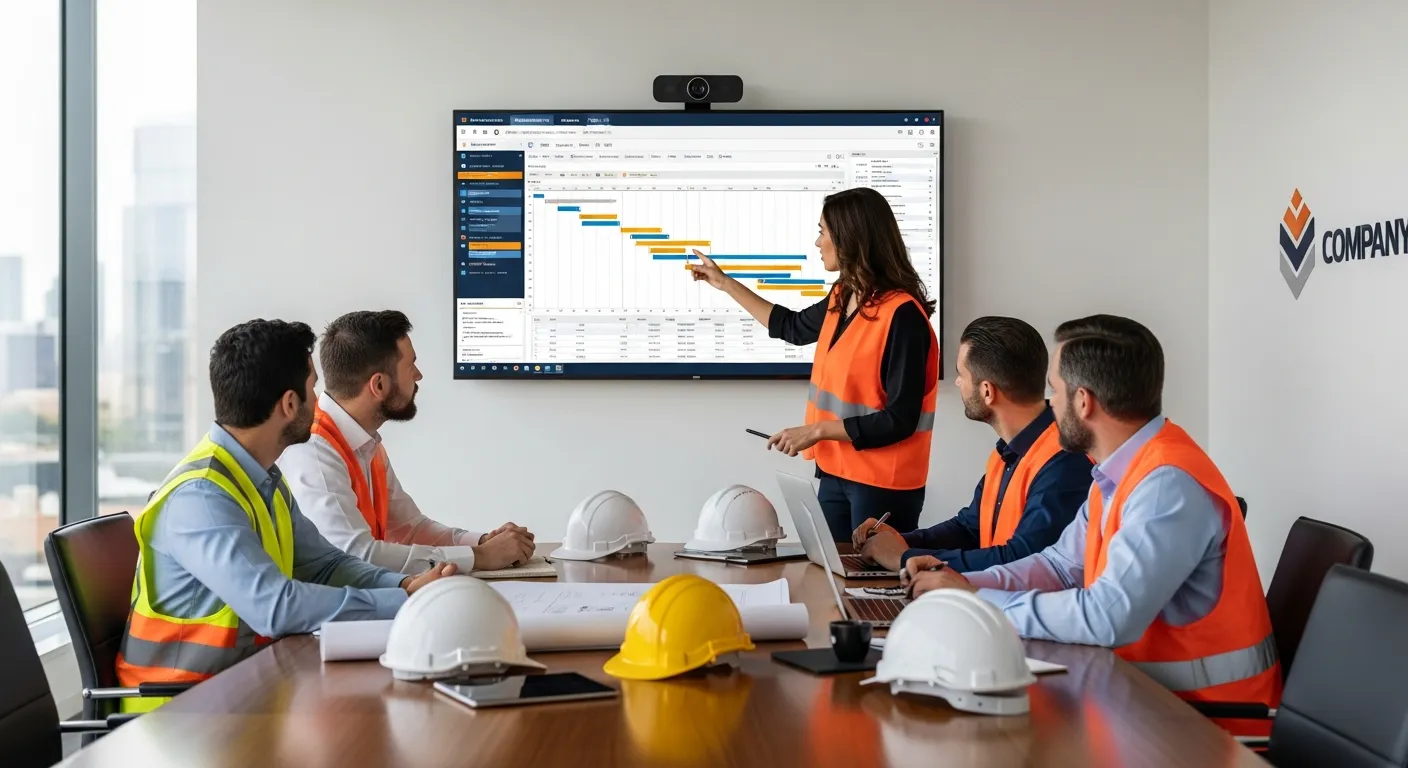
If you have been running your construction business on spreadsheets, texting, and a handful of apps that do not talk to each other, you are not alone. Most contractors start that way. And for a while, it works fine.
But there is a point where the duct-tape system starts costing you real money. Missed change orders. Crews showing up at the wrong site. Friday nights spent punching numbers into Excel instead of being home with your family. That is when most contractors start Googling “construction company software” and wondering what is out there.
The problem is that there are dozens of options, and they all claim to be the best. So how do you actually figure out what your business needs? This guide breaks it down in plain English, no sales pitch, just the stuff that matters.
Why Generic Tools Do Not Work for Contractors
Before we talk about what to look for, let’s talk about what does not work.
A lot of contractors try to run their business on tools like Monday, Asana, Trello, or Basecamp. These are great platforms for tech companies and marketing teams. They are not great for construction.
Here is why: generic project management tools have no idea what a change order is. They do not understand cost codes, job phases, or sub scheduling. They cannot track material costs against a budget in real time. They cannot push a schedule update to your crew’s phones at 6 AM.
So what happens? You end up building workarounds. A spreadsheet for job costing. A calendar app for scheduling. A group text for crew communication. QuickBooks for invoicing. And suddenly you are managing five tools instead of managing your projects.
According to a 2023 survey by the Construction Financial Management Association, contractors using disconnected systems spend an average of 35% of their office time on data entry and manual coordination. That is more than a third of your admin hours burned on busy work.
The right construction company software eliminates that problem by putting everything in one place.
What to Look for in Construction Company Software
Not every platform is built the same. Some are designed for billion-dollar infrastructure firms. Some are designed for one-person handyman operations. And some are built for the contractors in between, the ones running multiple active projects with crews that need to stay coordinated.
Here is what actually matters when you are evaluating your options.
Job Costing That Updates in Real Time
This is the single most important feature for any construction company. If you cannot see where you stand financially on a job right now, today, you are flying blind.
Too many contractors do not find out a job lost money until weeks after it is done. By then, the damage is baked in and there is nothing you can do about it.
Look for software that tracks costs against your budget as expenses come in. Not at the end of the month. Not when your bookkeeper reconciles everything. In real time.
Projul’s live job costing does exactly this. You can pull up any active project and see your budget, actual costs, and remaining margin on your phone in about 30 seconds. One contractor told us he caught a $7,000 material overrun mid-project because the system flagged it automatically. With his old setup, he would not have known until the final invoice.
Scheduling That Reaches the Field
Your schedule is only useful if the people who need to follow it can actually see it. A spreadsheet or whiteboard schedule in the office does not help your crew at 6:30 AM when they are deciding where to go.
Good construction company software pushes schedule updates directly to your team’s phones. When you move a job, reassign a crew, or add a task, everyone sees it immediately. No phone trees. No group texts that get buried.
Projul’s scheduling tools were built for this exact problem. Drag and drop in the office, instant updates in the field. Multiple GCs have told us this feature alone saves them from two or three scheduling disasters per month. That is wasted labor, wasted fuel, and frustrated clients they no longer have to deal with.
Estimating That Connects to Everything Else
Here is something that drives contractors crazy: you spend hours building a detailed estimate, you win the bid, and then you have to re-enter all of that information into your scheduling and budgeting tools. It is the same data typed three times.
The best platforms let your estimate flow directly into your project budget, schedule, and cost tracking. You win the job, and the system is ready to go. No duplication. No re-entry errors.
With Projul’s estimating and change order tools, your estimate becomes the foundation for the entire project. A custom home builder using Projul cut their project setup time from two days to two hours because the data just carried forward automatically.
A Mobile App Built for the Job Site
This one matters more than most contractors realize upfront. If your field crew will not use the software, it does not matter how many features it has. You are dead in the water.
A lot of construction platforms have a mobile app that is basically a shrunken version of the desktop. Tiny buttons, slow loading, confusing navigation. Your guys try it once, hate it, and go back to texting.
Look for an app that was designed for people wearing gloves and squinting at a screen in the sun. Fast. Simple. Does not require a training seminar.
Projul’s mobile app was built field-first. Crews can check their schedule, log time, upload job photos, and view project details without calling the office. The real test? Multiple contractors have told us Projul is the first software their crews actually adopted on their own.
Everything in One System
The biggest win of good construction company software is not any single feature. It is the fact that everything works together.
When your estimating, scheduling, job costing, time tracking, client communication, and document management all live in one platform, you stop losing information between systems. You stop entering the same data three times. You stop paying for four separate subscriptions that do not talk to each other.
One system. One login. One source of truth for your entire operation.
Red Flags to Watch For
Just as important as knowing what to look for is knowing what to avoid. Here are some warning signs that a platform is not the right fit.
“Built for all industries.” If the software serves construction, healthcare, real estate, and event planning, it was not built for any of them. You need tools designed specifically for how contractors work.
No mobile app or a bad one. If you cannot demo the mobile experience before buying, that is a red flag. Ask to see it on a phone, not a sales deck.
Long-term contracts required. Be cautious of platforms that lock you into annual or multi-year contracts before you have had a chance to fully evaluate them. Good software earns your loyalty. It does not trap you.
Implementation takes months. If the onboarding process requires a dedicated IT team and three months of setup, the platform is probably more complex than a typical contractor needs. You should be up and running in weeks, not quarters.
No live support. When you are on a job site and something is not working, you need to talk to a human. Not read a knowledge base article. Not submit a ticket and wait three days. Actual support from people who understand construction.
The Real Cost of Not Having the Right Software
Let’s talk numbers, because this is where a lot of contractors get stuck. They see the monthly subscription cost and think, “I can do this with spreadsheets for free.”
But spreadsheets are not free. They cost you time. And time is money.
A contractor managing five or more active projects on spreadsheets typically spends 10 to 15 hours per week on manual data entry, schedule updates, and report building. At a loaded labor rate of $45 per hour, that is roughly $28,000 per year in admin labor alone.
Now add the costs that are harder to see:
- Missed change orders: One unbilled change order per quarter at $3,000 each is $12,000 per year walking out the door.
- Scheduling conflicts: One crew mix-up per month that idles two workers for half a day adds up to roughly $5,400 per year.
- Slow estimates: If it takes you three days to turn around an estimate instead of three hours, you are losing bids to the contractor who responded first.
- Margin leaks: Without real-time job costing, budget overruns go unnoticed until the project is done. Industry data suggests contractors without live cost tracking lose 3% to 5% of revenue to untracked expenses.
Add it all up and the cost of not having the right software easily exceeds $50,000 per year for a mid-size contractor. The software itself typically runs $3,000 to $8,000 annually. The math is not close.
How to Make the Switch Without Losing Your Mind
The number one reason contractors stay on bad systems is fear of the transition. You have active jobs. You have crews in the field. You cannot shut down for a week to learn new software.
That fear is valid. It is also not as big of a deal as you think.
Here is how smart contractors make the switch:
Start with your biggest pain point. You do not have to roll out every feature on day one. If scheduling is your biggest headache, start there. If job costing keeps you up at night, start there. Get comfortable with one piece before expanding.
Pick a platform with real onboarding support. Projul’s onboarding team handles data migration, account setup, and training for your whole team, including field crews. Most contractors are fully running within one to two weeks. You do not need to be a tech person.
Run both systems for a week or two. Some contractors keep their old spreadsheets going in parallel for a short overlap period, just for peace of mind. That is fine. But most stop going back within a few days because the new system is already giving them better information faster.
Give it 30 days. The first week will feel slower. That is normal. You have been using your old system for years and know where everything is. By week three, most contractors are faster in the software than they ever were in spreadsheets.
What Changes When You Get It Right
Contractors who have been on the right software for six months or more all say the same things.
They found money they did not know they were losing. Real-time job costing reveals margin leaks that spreadsheets hide. One roofing contractor discovered he had been consistently under-billing for material waste. The fix was simple. The impact was an extra $2,000 to $3,000 per job, which across 40 jobs a year meant six figures in recovered revenue.
The office stopped being a fire station. Before proper software, the office phone rang 30 times a day with crews asking basic questions. Where am I supposed to be? Did the inspection pass? Where is the spec sheet? After the switch, that information lives in the app. Calls dropped to a handful per day.
Estimates went out faster. Contractors using Projul’s estimating tools report cutting their turnaround time dramatically. More bids going out means more jobs won, without working extra hours. A painting contractor went from sending three estimates a week to eight.
Owners got their weekends back. Not because there was less work, but because the chaos that used to eat evenings and weekends disappeared. When your systems work, you do not have to be the system.
Client relationships improved. When you can send a client an accurate project update in two minutes instead of scrambling to pull data from four places, you look like a pro. Clients notice. Referrals follow.
Ready to See What Projul Can Do?
If any of this sounds like your situation, it might be time to take a closer look. Projul was built by contractors, for contractors. It covers estimating, scheduling, job costing, time tracking, client communication, and more in one platform that your whole team can actually use.
No long-term contracts. Real onboarding support. A mobile app your crews will not hate.
Book a free demo and see the difference for yourself. The contractors who made the switch will tell you the same thing: their only regret is not doing it sooner.
Frequently Asked Questions
What is construction company software?
How much does construction company software cost?
Do I need construction software if I only run a few projects at a time?
Can my field crew actually use construction software?
How long does it take to set up construction company software?
Related Articles

Why a Real Mobile App Matters for Construction Companies
Your crew lives on their phones. If your construction management software does not have a real mobile app, you are...
Read More →
7 Benefits of Construction Estimating Software (That Spreadsheets Can't Match)
Still using spreadsheets for construction estimates? Here are 7 benefits of construction estimating software that Excel...
Read More →
Best Construction Software (2026): 7 Options Compared
We compared 7 of the most popular construction software platforms to help you find the right fit for your business.
Read More →