
Concrete Batch Plant Operations: Setup, Quality Control, and Production Management | Projul
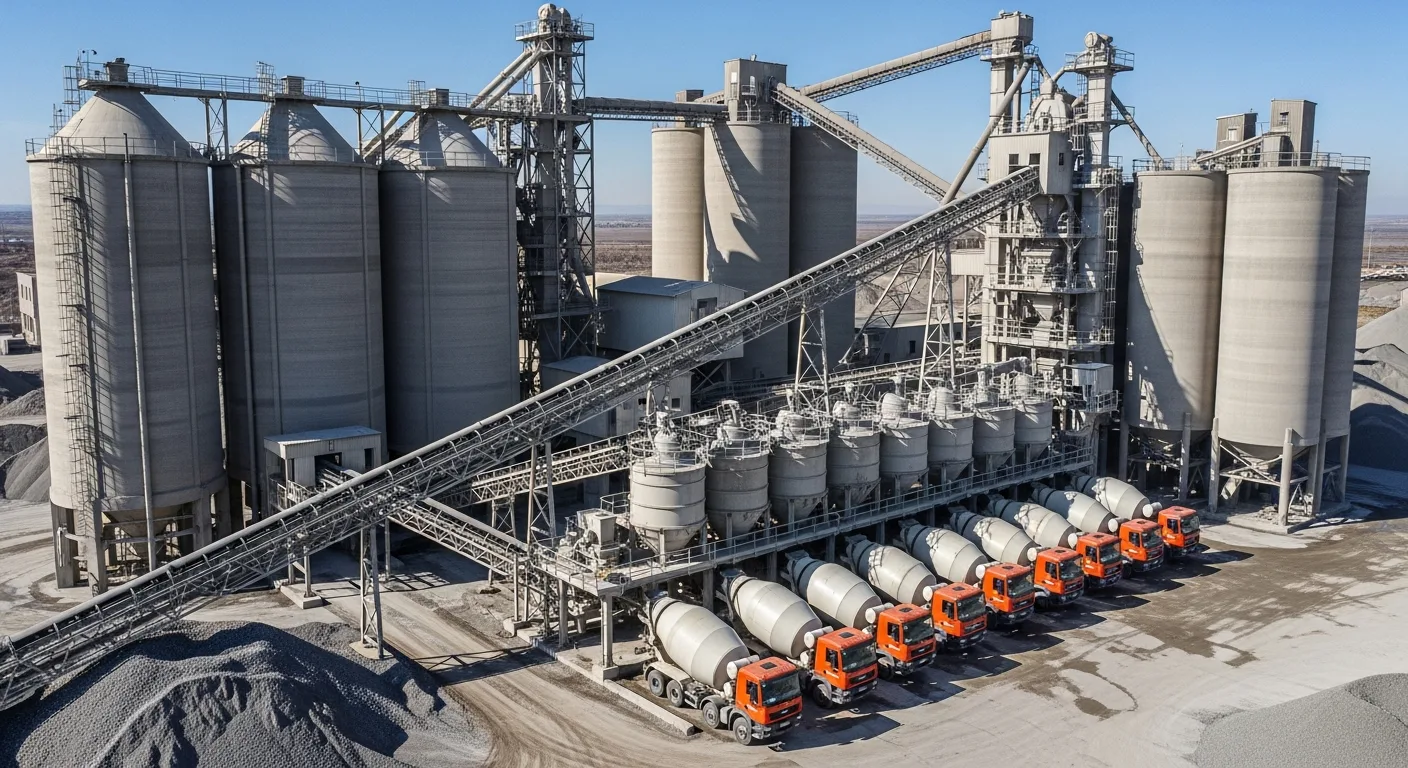
Not every project can rely on commercial ready-mix trucks showing up on schedule. Large pours, remote locations, and tight placement windows sometimes make it necessary to bring the batch plant to the site. Even when you are buying concrete from a commercial supplier, understanding how batch plants work helps you troubleshoot delivery problems, evaluate mix quality, and make better decisions about your concrete operations.
This guide covers concrete batch plant types, site setup, mix design management, quality control, logistics, and the environmental and permitting requirements that come with operating or hosting a plant.
When Does a Job-Site Batch Plant Make Sense?
Most construction projects buy ready-mix from a local supplier. That works fine when the plant is within 30 to 45 minutes, the daily volumes are moderate, and the schedule has flexibility. A job-site batch plant becomes worth considering when:
- Daily volumes are large. Projects requiring 500 or more cubic yards per day may overwhelm a commercial supplier’s truck fleet, especially if other customers are competing for the same trucks.
- The site is remote. Long haul distances increase the risk of concrete arriving out of spec (too much slump loss, too hot, too cold) and drive up per-yard costs through truck time charges.
- Placement schedules are critical. Mass concrete pours, continuous slip-form operations, and projects with tight cold-joint time limits need guaranteed concrete availability without waiting for the next truck.
- The project duration justifies the investment. A dam, highway, or large commercial development lasting 12 or more months can amortize the plant setup cost across enough volume to beat ready-mix pricing.
- Quality control requirements are stringent. Having your own plant gives you direct control over every batch, every mix adjustment, and every quality test.
Types of Batch Plants
Central Mix (Wet Batch) Plants
In a central mix plant, all ingredients (cement, aggregates, water, and admixtures) are combined and mixed in a stationary mixer at the plant. The fully mixed concrete is then discharged into a truck for delivery.
Advantages:
- Highly consistent mix quality because mixing conditions are controlled
- Faster load times (2 to 3 minutes per truck)
- Better control over water content, since water is metered precisely at the plant
- The truck mixer operates as a transport vehicle, not a mixing vessel, reducing wear
Disadvantages:
- Higher equipment cost
- More complex setup and maintenance
- The concrete is already mixed when loaded, so transit time before placement is more critical
Dry Batch (Transit Mix) Plants
A dry batch plant weighs and loads the raw materials into the truck mixer drum, and the truck does the mixing during transit. Water may be added at the plant, at the job site, or both.
Advantages:
- Simpler equipment with lower initial cost
- Mixing in the truck gives more time before the concrete begins to set
- Water can be adjusted at the point of delivery for final slump control
Disadvantages:
- Mix consistency depends on the truck mixer’s condition and mixing speed
- Longer load times
- Truck drum wear is higher since the drum is doing all the mixing
- Less precise control over the total water in the mix
Mobile and Portable Plants
Mobile batch plants are designed to be transported and set up quickly at job sites. They range from trailer-mounted units producing 30 to 60 cubic yards per hour to larger modular systems producing 150 or more cubic yards per hour.
These plants trade some production capacity and features for portability. Setup can take anywhere from a few days to a few weeks depending on the plant size and site conditions.
Setting Up a Job-Site Batch Plant
Site Selection and Layout
The plant location on site needs to account for:
- Access for material delivery trucks. Cement tankers, aggregate trucks, and admixture deliveries need clear routes in and out that do not conflict with other construction traffic.
- Truck circulation. Mixer trucks need a loop road that allows continuous flow without backing up. A truck loading, leaving, and returning should not block the next truck waiting to load.
- Aggregate storage. Stockpiles need a hardened surface (compacted gravel or concrete) with dividers between aggregate sizes to prevent contamination. Storage capacity should hold at least 2 to 3 days of production.
- Cement silo placement. Silos are tall, heavy, and need solid foundations. They must be accessible to cement tanker trucks for filling. Multiple silos may be needed for projects using different cement types.
- Water supply. The plant needs a reliable water source capable of delivering the required volume and pressure. Municipal water, wells, or on-site storage tanks are common sources.
- Power supply. Batch plants require significant electrical power for conveyors, mixers, controls, and lighting. A dedicated power supply or generator is typically needed.
- Drainage and washout. All water that contacts concrete (washout water, mixer rinse, runoff from the loading area) must be contained. Plan the grading and drainage to direct all process water to settling ponds or reclaiming systems.
Equipment Installation
Setting up the plant involves:
- Foundation work. Concrete pads for the mixer, silos, and control tower. Compacted base for aggregate bins and truck scales.
- Erecting the plant structure. The batching tower, mixer (if central mix), conveyors, and silos are assembled and connected.
- Installing the batching controls. Modern batch plants use computerized controls that store mix designs, meter materials by weight, and record each batch for quality documentation.
- Calibrating equipment. Every scale (aggregate, cement, water, admixture) must be calibrated before production begins and recalibrated at regular intervals.
- Testing the system. Trial batches verify that the plant produces concrete matching the approved mix designs.
Permitting
Batch plant permitting varies by jurisdiction but typically requires:
- Air quality permit. Cement handling generates dust. Silo filling, conveyor transfers, and truck loading all need dust control. Baghouse filters on silos and water spray on conveyors are standard.
- Stormwater permit. An NPDES permit or equivalent is needed for stormwater discharge. The site needs an erosion and sediment control plan and stormwater management practices.
- Zoning approval. Even temporary plants on construction sites may need a special use permit or variance from the local planning department.
- Water discharge permit. If any process water leaves the site, it must meet discharge standards. Most plants use closed-loop washout systems to avoid this requirement.
- Noise permits. Plants operating near residential areas may face noise restrictions that limit operating hours.
Start the permitting process 3 to 6 months before you need the plant running. Permit delays are the most common reason for batch plant schedule problems.
Mix Design Management
A batch plant may produce dozens of different mix designs on a single project: different strengths, different aggregate sizes, mixes with and without air entrainment, high-early-strength mixes, and specialty mixes for mass concrete or self-consolidating applications.
Mix Design Development
Each mix design starts with the project specifications and is developed through trial batching:
- Review specifications. Identify required compressive strength, maximum water-cement ratio, air content range, aggregate size limits, and any special requirements (shrinkage limits, chloride restrictions, etc.).
- Select materials. Choose cement type, aggregate sources, and admixtures. Materials must meet ASTM standards and be approved through submittals.
- Proportion the mix. Using ACI 211 methods or the plant’s historical data, calculate the proportions of each ingredient per cubic yard.
- Trial batch. Produce a small batch and test it for slump, air content, unit weight, and workability. Cast cylinders for strength testing.
- Adjust and verify. Based on trial batch results, adjust proportions as needed. Once the mix meets all specified requirements, it becomes the approved production mix.
Batching Controls
Modern batch plant control systems store every approved mix design with the exact weights of each ingredient. When the operator selects a mix and enters the volume, the system automatically:
- Opens aggregate gates to load the specified weight of each size
- Meters the cement by weight from the silo
- Adds water to the specified weight (adjusted for aggregate moisture content)
- Doses admixtures by volume or weight
The system records every batch with a time-stamped ticket showing actual weights versus target weights for each ingredient. These records are critical quality documentation.
Aggregate Moisture Management
Aggregates hold varying amounts of water depending on weather, stockpile drainage, and aggregate type. Since aggregate moisture becomes part of the mix water, the batch plant must adjust the added water to compensate.
Most plants measure aggregate moisture using probes in the bins or conveyors. The control system automatically adjusts the batch water based on the moisture reading. Accurate moisture correction is one of the biggest factors in maintaining consistent slump and strength from batch to batch.
Quality Control at the Batch Plant
Fresh Concrete Testing
Fresh concrete is tested at the plant and at the point of delivery:
- Slump (ASTM C143). Measures workability. Tested at the plant before loading and at the job site upon delivery.
- Air content (ASTM C231 or C173). Critical for freeze-thaw durability. Tested at the plant and verified at the point of placement.
- Temperature (ASTM C1064). Concrete temperature affects set time and strength gain. Most specifications limit placement temperature to between 50 and 90 degrees Fahrenheit.
- Unit weight (ASTM C138). Confirms that the actual yield matches the design. Low unit weight may indicate excess air or water.
- Cylinder casting (ASTM C31). Standard 4x8 or 6x12 cylinders are cast for compressive strength testing at 7 and 28 days (and sometimes 3 days, 56 days, or 90 days depending on the specification).
Testing Frequency
Project specifications typically require testing at minimum every 150 cubic yards or every day of placement, whichever is more frequent. For critical structural elements like post-tensioned slabs or columns, testing frequency may increase.
Equipment Calibration
Batch plant scales must be calibrated regularly:
- Full calibration at plant setup and at least annually thereafter (more often on high-volume projects)
- Daily zero checks to verify that scales read zero when empty
- Periodic verification using known test weights
The batching control system should alert the operator when a batch weight falls outside the allowable tolerance (typically plus or minus 1% for cement and water, plus or minus 2% for aggregates).
Delivery Logistics
Getting concrete from the plant to the point of placement on time and in spec requires careful logistics planning.
Truck Fleet Management
The number of trucks needed depends on:
- Plant production rate (cubic yards per hour)
- Haul distance and travel time (round trip)
- Time at the job site for unloading and washout
- Loading time at the plant
A simple calculation: if the plant produces 100 cubic yards per hour with 10-yard trucks, you need 10 loads per hour. If the round trip takes 30 minutes, you need at minimum 5 trucks in the cycle. Add 1 to 2 trucks as buffer for delays, breakdowns, and traffic.
Timing and Coordination
Concrete has a limited working life. Most specifications require placement within 90 minutes of batching (or 300 drum revolutions, whichever comes first). In hot weather, this window shrinks.
Coordination between the plant, the truck dispatcher, and the placement crew is constant. The pump operator or placement superintendent communicates the rate they can accept concrete, and the plant adjusts production accordingly. Sending trucks faster than the crew can place creates a line of trucks with aging concrete. Sending trucks too slowly creates gaps that risk cold joints.
Washout and Truck Maintenance
Mixer trucks need washout after each delivery to prevent concrete buildup inside the drum. On-site washout areas must contain all rinse water and solids. Reclaiming systems that separate the water for reuse and the solids for disposal are standard on larger operations.
Environmental and Community Considerations
Dust Control
Cement dust is the primary air quality concern. Controls include:
- Baghouse filters on cement silo vents (required during filling)
- Enclosed conveyors and transfer points
- Water spray on aggregate handling equipment
- Paved or stabilized truck routes within the plant area
- Speed limits for trucks on unpaved areas
Noise
Batch plants generate noise from mixers, conveyors, compressors, trucks, and backup alarms. If the plant is near residential or occupied areas, noise mitigation measures may include:
- Sound barriers or walls around the loudest equipment
- Restricted operating hours
- Use of broadband (white noise) backup alarms instead of tonal beepers
- Regular equipment maintenance to reduce noise from worn components
Water Management
All water that contacts concrete is highly alkaline (pH 11 to 13) and must be managed. Settling ponds allow solids to drop out and pH to neutralize before any discharge. Many plants use closed-loop systems where all water is recycled, eliminating discharge entirely.
Stormwater from the plant area that does not contact concrete must still be managed under the site’s stormwater pollution prevention plan (SWPPP).
Managing Batch Plant Operations with Software
Running a batch plant adds significant operational complexity to a construction project. Tracking production volumes, delivery schedules, quality test results, equipment maintenance, material inventory, and regulatory compliance requires more than a whiteboard and a phone.
Projul gives contractors a single platform to manage project schedules, coordinate deliveries, track quality documentation, and keep the production side of the operation organized alongside the placement crews and other trades.
Common Batch Plant Mistakes
Underestimating setup time. Between permitting, site prep, equipment delivery, assembly, calibration, and trial batching, plan for 3 to 6 months of lead time.
Ignoring aggregate moisture. Failure to correct for aggregate moisture is the most common cause of inconsistent concrete from a job-site plant.
Insufficient truck fleet. Running short on trucks creates gaps in placement and cold joint risks. Always have buffer trucks available.
Poor washout management. Dumping washout water into a ditch guarantees an environmental violation and a shutdown order.
Skipping calibration. Scales drift over time. A 3% error on cement content means the concrete does not meet the mix design, and strength tests will reflect it.
Wrapping Up
Concrete batch plant operations are a major undertaking, but they give contractors control over one of the most critical materials on a construction project. Whether you are running your own plant or managing a commercial supplier relationship, understanding how batch plants work, what drives quality, and where things go wrong puts you in a stronger position to deliver good concrete on schedule and on budget.
Get the setup right, keep the quality controls tight, and manage the logistics with discipline. The rest follows.
Frequently Asked Questions
What is the difference between a central mix plant and a dry batch plant?
How much does it cost to set up a temporary batch plant on a construction site?
What permits are required for a concrete batch plant?
How do you maintain concrete quality at a batch plant?
What is the typical production capacity of a portable batch plant?
How much water does a concrete batch plant use?
What environmental controls are required at a batch plant?
Related Articles

BIM Clash Detection: How to Catch Conflicts Before They Cost You on the Jobsite
BIM Clash Detection: How to Catch Conflicts Before They Cost You on the Jobsite Every contractor has a story about the...
Read More →
Asphalt Paving and Compaction Guide: Mix Types, Laydown Temperatures, and Quality Testing
Asphalt paving looks straightforward from a distance. A truck dumps material, the paver lays it down, and rollers...
Read More →
Construction Jobsite Wi-Fi & Connectivity Guide: Setting Up Reliable Internet in the Field
A practical guide to getting reliable internet on construction job sites. Learn about cellular hotspots, mesh networks,...
Read More →