
Decorative Concrete: A Complete Guide to Stamped, Stained, and Polished Finishes | Projul
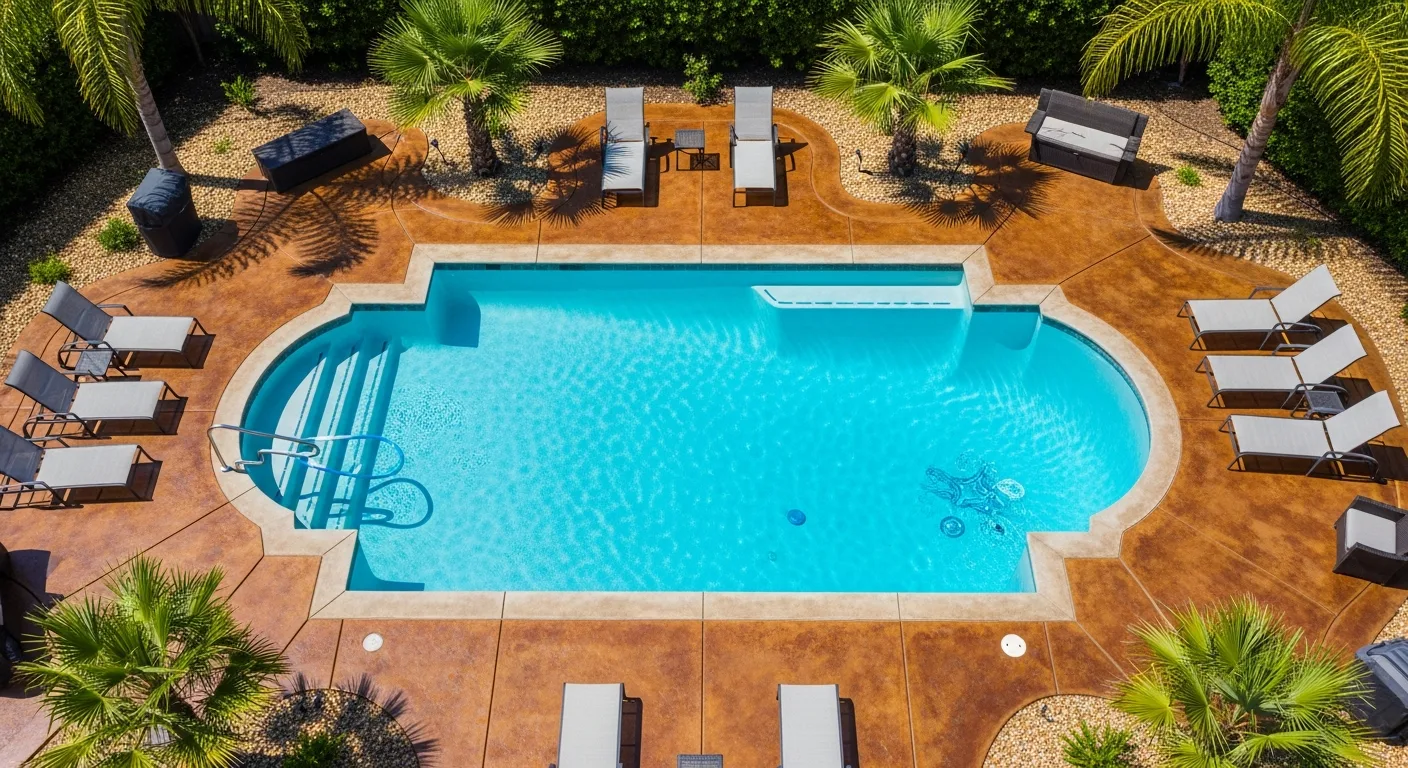
What Is Decorative Concrete?
Decorative concrete takes a material most people think of as gray and boring and turns it into something worth looking at. Through coloring, texturing, polishing, or applying thin overlays, concrete can mimic the appearance of natural stone, brick, tile, or even hardwood, at a fraction of the material and labor cost.
For contractors, decorative concrete represents a high-margin specialty that sets your work apart from the competition. A plain concrete patio might earn you $6 per square foot. The same patio with stamping and integral color brings $12 to $18 per square foot, with material cost increases that are far smaller than the price increase. That margin difference adds up fast across a season of projects.
This guide covers the major decorative concrete methods, installation techniques, material selection, pricing, and the common mistakes that trip up contractors who are new to decorative work.
Stamped Concrete
How Stamping Works
Stamped concrete gets its texture from large polyurethane or rubber mats pressed into freshly placed concrete. The mats have patterns cast into them, anything from random stone and cobblestone to wood plank and tile patterns. The process requires precise timing because the concrete needs to be firm enough to support a person’s weight on the stamps but soft enough to take a clear impression.
The basic stamping sequence:
Place and screed the concrete to the desired grade and thickness, typically 4 inches for patios and walkways, 6 inches for driveways. The mix design should include fiber reinforcement and have a slump of 4 to 5 inches, slightly stiffer than a typical slab to hold the stamp impression.
Apply integral color to the concrete during batching if using colored concrete, or broadcast a color hardener on the surface after screeding. Color hardener is a dry-shake product that adds both color and surface hardness. It gets floated into the surface with a bull float or fresno trowel.
When the concrete is ready for finishing (firm enough to walk on with minimal footprints), broadcast a release agent over the surface. The release agent prevents the stamps from sticking to the concrete and adds a secondary color that highlights the texture. Release agents come in powder form (antiquing release) or liquid form.
Press the stamps into the concrete surface, working across the slab in a consistent pattern. Tamp the stamps with a hand tamper to drive the pattern into the concrete. Each stamp mat interlocks with the adjacent one to create a continuous pattern.
After the concrete has set (typically the next day), wash off the excess release agent with a pressure washer. This reveals the base color with the release agent remaining in the low spots and texture lines, creating a realistic stone or brick appearance.
Apply a sealer within a few days of the wash. Sealers protect the color, add sheen, and improve the surface’s resistance to water absorption, staining, and UV degradation.
Pattern and Color Selection
The pattern and color choices drive the project’s visual impact and should match the architectural style of the surrounding structures.
Popular patterns include:
Ashlar slate: A random rectangular stone pattern that works with almost any architectural style. It is the most forgiving pattern for beginners because slight misalignment is less noticeable in a random layout.
Cobblestone: Small, rounded stone shapes that work well for borders, bands, and European-style designs.
Herringbone brick: A classic pattern for driveways and traditional home designs. Requires careful alignment to maintain straight bond lines.
Wood plank: Mimics the look of wood decking in a concrete surface. Growing in popularity for pool decks and covered patios.
Large flagstone: Irregular large stone shapes with wide grout lines. Works well for pool decks and casual outdoor living spaces.
Color considerations:
Integral color (mixed into the concrete) provides consistent color through the full slab depth. If the surface chips or wears, the color remains visible. However, integral color alone tends to look flat without the secondary color from a release agent.
Color hardener (broadcast on the surface) provides richer, more intense color and a harder wearing surface. It only colors the top 1/8 to 3/16 inch, so deep chips will show gray concrete underneath.
Most stamped concrete jobs use a combination: integral color or color hardener for the base tone, plus an antiquing release in a contrasting shade to highlight the texture.
Common Stamping Mistakes
Stamping too late. If the concrete gets too firm, the stamps will not make a clear impression. You will see faint pattern lines and rounded edges instead of crisp, deep texture. In hot weather, you may have only 20 to 30 minutes of workable stamping time.
Inconsistent release agent application. Too little release agent causes the stamps to stick and pull the surface. Too much leaves a heavy residue that can be difficult to wash off and may interfere with sealer adhesion. Apply release agent evenly and consistently.
Misaligned pattern joints. When stamp mats do not line up correctly, the pattern looks obviously fake. Take the time to align each mat carefully, especially at the beginning of each row.
Skipping the touch-up. After washing, joints and edges often need hand tooling with a chisel, jointing tool, or texture skin to clean up imperfections. Skipping this step leaves visible stamp mat edges and rough joint lines.
Wrong sealer. Using a sealer that is too thick, applied too heavy, or incompatible with the release agent creates a cloudy, peeling mess. Always follow the sealer manufacturer’s recommendations for application rate and compatibility.
Concrete Staining
Acid Staining (Reactive Stains)
Acid stains create color through a chemical reaction between metallic salts in the stain and calcium hydroxide in the cured concrete. The result is a permanent, translucent color that becomes part of the concrete rather than sitting on top of it.
The color palette for acid stains is limited to earth tones: tans, browns, terracottas, greens (from copper compounds), blue-greens, and blacks. The exact color depends on the concrete’s composition, age, moisture content, and porosity. Two slabs stained with the same product can look noticeably different. This variability is part of the appeal, but it also means you cannot guarantee an exact color match.
Application process:
Clean the concrete surface thoroughly. Any contaminant (oil, paint, adhesive, curing compound) will block the chemical reaction and leave a visible spot. Mechanical cleaning (grinding, shot-blasting) is more reliable than chemical cleaning for heavily contaminated surfaces.
Mask off any areas you do not want stained. Acid stain is permanent and will color any cementitious surface it contacts, including adjacent walls, curbs, and grout lines.
Apply the stain with a pump sprayer in thin, overlapping passes. Avoid puddling. The reaction begins within minutes, showing as a fizzing or bubbling on the surface. Allow the stain to react for 4 to 24 hours depending on the product and desired color intensity.
Neutralize the acid residue with a baking soda and water solution or ammonia and water. Scrub the surface to remove the reaction residue (a chalky film).
Rinse thoroughly and allow the surface to dry completely. Apply a sealer to protect the color and provide the desired sheen level.
Multiple colors can be applied in layers or in specific zones to create complex patterns. Resist techniques (wax, tape, or chemical resist agents) can block stain from certain areas to create designs.
Water-Based Stains
Water-based concrete stains use polymer-suspended pigments that penetrate the concrete surface without a chemical reaction. They offer several advantages over acid stains:
A much wider color range including blues, reds, bright greens, whites, and custom-mixed colors. More consistent and predictable results because color does not depend on the concrete’s chemistry. Easier to apply, with less safety equipment needed (no acid splash hazard). Can be layered, blended, and diluted for artistic effects.
Water-based stains do not produce the mottled, variegated look that acid stains create naturally. If that organic, “stone-like” appearance is the goal, acid stain is the better choice. For solid, consistent color or artistic designs, water-based stain excels.
Application is similar to acid stain but without the neutralization step. Clean the surface, apply in thin coats with a sprayer, brush, or roller, allow to dry between coats, and seal.
Dyes
Concrete dyes are a third coloring option, distinct from both stains. Dyes use very fine pigment particles (often solvent-carried) that penetrate deeply into the concrete. They produce vivid, intense colors and dry quickly, making them popular for commercial polished concrete floors.
Dyes are not UV-stable and will fade in direct sunlight, so they are primarily used for interior applications. For exterior work, stick with stains.
Polished Concrete
The Polishing Process
Polished concrete is achieved by grinding the concrete surface with progressively finer diamond abrasives, similar to how a gemstone is polished. The process typically involves:
Grinding phase (coarse diamonds, 30 to 100 grit): This step removes surface imperfections, coatings, or thin toppings and exposes the aggregate to the desired level. The amount of grinding determines the aggregate exposure: a light grind reveals fine sand-sized particles (cream polish), medium grinding exposes small stone aggregate (salt-and-pepper), and heavy grinding exposes the full coarse aggregate.
Honing phase (200 to 400 grit): This step begins to develop sheen and closes the surface pores.
Densifier application: Between honing and polishing, a chemical densifier (lithium silicate or sodium silicate) is applied. The densifier reacts with the calcium hydroxide in the concrete to form calcium silicate hydrate, a hard crystalline structure that fills the pores, increases surface hardness, and enables a higher polish.
Polishing phase (800 to 3,000 grit): This produces the final shine. The higher the grit, the glossier the finish. 800 grit produces a satin finish. 1,500 grit produces a semi-gloss. 3,000 grit produces a high-gloss, mirror-like surface.
Guard application: A thin topical guard protects the polished surface from staining and makes maintenance easier.
When Polished Concrete Makes Sense
Polished concrete is primarily an interior flooring option for commercial, retail, warehouse, and residential spaces. It works well when:
The existing concrete slab is in reasonable condition (no severe structural cracks, heavy spalling, or deep coatings). The floor will receive regular maintenance (daily dust-mopping, weekly wet-mopping). The project budget falls between basic sealed concrete and high-end tile or stone. The space benefits from the floor’s light reflectivity (polished concrete can reduce lighting requirements by 30 percent due to its reflective surface).
Polished concrete does not work well outdoors (the glossy surface is slippery when wet and UV degrades dyes), on slabs with radiant heat tubing too close to the surface, or on extremely porous or soft concrete that will not hold a polish.
Pricing Polished Concrete
Polished concrete costs vary based on the existing slab condition and the desired finish level:
Basic grind and seal (no polishing, just a clean surface with a sealer): $2 to $4 per square foot. Cream polish (minimal aggregate exposure, medium sheen): $3 to $6 per square foot. Salt-and-pepper polish (fine aggregate exposure, high sheen): $5 to $8 per square foot. Full aggregate exposure with high-gloss polish and dye: $8 to $15 per square foot.
The biggest variable is the existing floor condition. A clean, flat, newly placed slab is straightforward. A slab with multiple coatings, adhesive residue, or significant surface damage requires more grinding at the coarse stages, adding time and cost.
Decorative Overlays
When to Use an Overlay
Decorative overlays are thin cementitious coatings (1/16 to 3/4 inch thick) applied over existing concrete to refresh or change its appearance. They are the solution when:
The existing concrete is cosmetically damaged (surface stains, discoloration, minor spalling) but structurally sound. The customer wants a decorative finish but the existing slab cannot be removed due to cost or structural constraints. You want to add stamped texture to an existing slab (stampable overlays). The interior floor needs a smooth, colored, or textured surface over an existing slab that is too rough for polishing.
Types of Overlays
Micro-toppings are the thinnest overlays (1/16 to 1/8 inch), applied with a squeegee, trowel, or sprayer. They create a smooth, colored surface that can be stained, scored, or stenciled. Micro-toppings are popular for commercial and retail interior floors.
Stampable overlays are thicker (3/8 to 3/4 inch), self-leveling or trowel-applied coatings that are thick enough to accept stamp impressions. They allow you to add a stamped concrete appearance to an existing slab.
Spray-texture overlays are applied with a hopper gun to create a textured, knockdown finish commonly seen on pool decks and patios. The texture provides slip resistance and covers minor surface defects.
Overlay Preparation
The single most important factor in overlay success is surface preparation. The overlay bonds to the existing concrete, and any contamination, weak surface layer, or moisture issue will cause delamination.
Minimum preparation includes: Mechanically profiling the surface with a grinder, shot-blaster, or scarifier to create a rough texture for bonding. Removing all sealers, coatings, adhesives, and curing compounds. Repairing cracks and spalls in the substrate before applying the overlay. Moisture-testing the slab to ensure it is not transmitting excessive moisture vapor (which causes overlay failure).
Business Considerations for Decorative Concrete
Pricing Your Work
Decorative concrete commands premium pricing, but you need to bid accurately because the work is more labor-intensive and time-sensitive than standard concrete.
Track your actual costs on the first several projects in each category. Decorative work has a learning curve, and your production rates will improve as your crew gains experience. Bidding your tenth stamped patio based on the production rates from your first one will leave money on the table.
Include contingency for callbacks. Decorative concrete has more variables than standard work (color matching, texture consistency, sealer appearance), and customer expectations are higher because the surface is meant to look good. Budget 5 to 10 percent for callbacks, touch-ups, and warranty work until your crew’s quality is consistently high.
Marketing Decorative Services
Decorative concrete sells visually. Invest in quality photos of every completed project. Before-and-after comparisons are particularly effective for overlay and staining work. A portfolio of finished projects is your most powerful sales tool.
Sample boards showing your available patterns, colors, and finish levels help customers make decisions and set realistic expectations. Keep a set of 12 by 12-inch sample panels in your truck or showroom.
Managing Decorative Projects
Decorative concrete projects require more detailed planning and communication than standard flatwork. Color selections, pattern layouts, control joint locations, and finish expectations need to be agreed upon with the customer before work begins. Documenting these decisions prevents disputes about “that is not what I expected.”
Projul helps decorative concrete contractors manage the details that make or break these projects. From storing approved color selections and design sketches in the project file to scheduling the precise crew and material delivery timing that stamped concrete demands, Projul keeps your decorative jobs running on time and on budget. When the customer signs off on the color and pattern in your system, there is no ambiguity about what was agreed upon.
Frequently Asked Questions
What is the difference between stamped concrete and pavers?
How much does stamped concrete cost per square foot?
How long does stamped concrete last?
What is the difference between acid stain and water-based concrete stain?
Can you stamp or stain existing concrete?
How do you maintain decorative concrete?
What causes white discoloration on stamped concrete?
Is polished concrete slippery when wet?
Related Articles

BIM Clash Detection: How to Catch Conflicts Before They Cost You on the Jobsite
BIM Clash Detection: How to Catch Conflicts Before They Cost You on the Jobsite Every contractor has a story about the...
Read More →
Asphalt Paving and Compaction Guide: Mix Types, Laydown Temperatures, and Quality Testing
Asphalt paving looks straightforward from a distance. A truck dumps material, the paver lays it down, and rollers...
Read More →
Construction Jobsite Wi-Fi & Connectivity Guide: Setting Up Reliable Internet in the Field
A practical guide to getting reliable internet on construction job sites. Learn about cellular hotspots, mesh networks,...
Read More →