
Construction Demolition Safety: Planning, Hazmat, Dust Control, and Best Practices | Projul
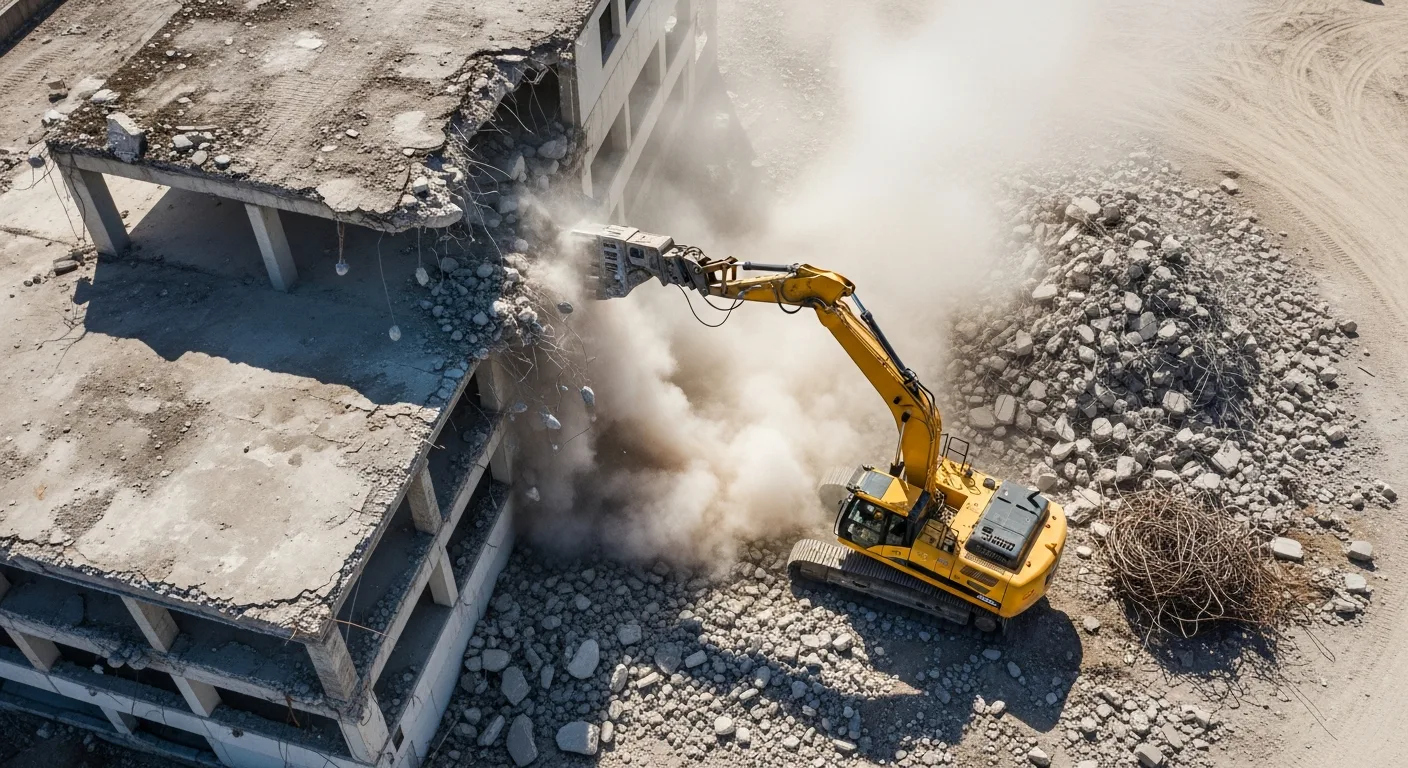
Tearing down a building is never as simple as showing up with an excavator. Demolition work carries serious risks, and the planning that goes into a safe, successful demo job often takes longer than the physical work itself. From structural surveys to hazmat clearance to protecting the neighbors, every step matters.
This guide covers the full scope of demolition safety for commercial and residential projects. Whether you are a general contractor managing a demo subcontractor or a demolition firm running your own crews, these are the procedures and requirements you need to know.
Why Demolition Safety Planning Matters
Demolition is consistently one of the most dangerous activities in construction. OSHA data shows that struck-by incidents, falls, and structural collapses account for the majority of demolition fatalities. The difference between a controlled takedown and a disaster usually comes down to how much planning happened before the first piece of equipment touched the building.
Good demolition planning protects your crew, your neighbors, the public, and your bottom line. A collapse that damages an adjacent building or injures a worker can result in lawsuits, OSHA citations, project shutdowns, and criminal liability. None of that is worth skipping a structural survey.
The Pre-Demolition Engineering Survey
OSHA 29 CFR 1926.850(a) requires that an engineering survey of the structure be conducted by a competent person before demolition begins. In practice, most projects bring in a licensed structural engineer to perform this assessment.
What the Survey Covers
The engineering survey examines the building’s structural system and identifies:
- Load-bearing walls and columns. Removing these in the wrong sequence can trigger progressive collapse.
- Post-tensioned elements. PT slabs and beams contain high-tension cables that can release violently if cut without proper de-tensioning procedures.
- Structural connections. Welded, bolted, and embedded connections behave differently during demolition. The survey identifies connection types so crews know what tools and methods to use.
- Existing damage or deterioration. Fire damage, water infiltration, corroded steel, and cracked concrete all change how a structure will behave when you start taking it apart.
- Basement and foundation conditions. Below-grade spaces create collapse hazards if upper floors are removed without proper shoring.
- Adjacent structure connections. Shared walls, party walls, and buildings that lean on each other need special attention.
Using the Survey to Build a Demolition Sequence
The engineer’s findings directly inform the demolition sequence, which is the step-by-step order for taking the building apart. A proper sequence works from the top down, removes non-structural elements before structural ones, and maintains stability at every stage.
The sequence should address temporary bracing requirements, where equipment can be positioned safely, and at what point the remaining structure becomes self-supporting versus needing external support.
Hazardous Material Abatement
Federal law requires that all hazardous materials be identified and removed before demolition. This is not optional, and violations carry heavy penalties.
Common Hazardous Materials in Demolition
Asbestos is the most frequently encountered hazmat in demolition. It shows up in floor tiles, pipe insulation, fireproofing spray, roofing materials, mastic, and dozens of other building products manufactured before the mid-1980s. The National Emission Standards for Hazardous Air Pollutants (NESHAP) requires a thorough asbestos inspection before any demolition of a commercial or public building.
Lead-based paint is common in buildings constructed before 1978. Demolition that disturbs lead paint creates lead dust, which is both an air quality hazard and a soil contamination issue. EPA’s Renovation, Repair, and Painting (RRP) rule and OSHA’s lead standard (1926.62) both apply.
PCBs (polychlorinated biphenyls) are found in older electrical transformers, fluorescent light ballasts, and some caulking compounds. PCB-containing equipment must be removed and disposed of according to EPA’s TSCA regulations.
Refrigerants in HVAC systems must be recovered by certified technicians before demolition under Section 608 of the Clean Air Act.
Mercury is found in thermostats, switches, and fluorescent lamps. Universal waste regulations govern its handling and disposal.
The Abatement Process
Abatement follows a strict sequence:
- Survey and testing. A certified inspector collects samples and laboratory analysis confirms what is present and where.
- Abatement plan. A licensed abatement contractor develops work plans specific to each material type and location.
- Containment. Work areas are sealed with polyethylene sheeting, negative air pressure is established, and air monitoring begins.
- Removal. Trained and licensed workers remove hazardous materials using wet methods, HEPA vacuums, and other controls specific to the material.
- Clearance testing. An independent testing firm confirms that the area meets clearance standards before demolition can proceed.
- Disposal. Hazardous materials are transported to licensed disposal facilities with proper manifesting.
This entire process often takes weeks or months, and it must be complete before any structural demolition begins. Budget and schedule your projects accordingly.
Utility Disconnection and Verification
Before demolition starts, every utility serving the building must be disconnected at the source and verified dead. This includes:
- Electrical power. Contact the utility company to disconnect service at the transformer or meter. Have a qualified electrician verify that all circuits are de-energized. Do not rely on simply turning off breakers.
- Natural gas. The gas utility must cap and disconnect the service line at the main. Purge any remaining gas from interior piping.
- Water. Disconnect water service at the main valve or curb stop. Note that fire suppression systems may need to remain active until specific stages of demolition, depending on local fire department requirements.
- Sewer. Cap sewer connections to prevent debris and runoff from entering the municipal system.
- Telecommunications. Disconnect all phone, data, and cable lines.
- Steam, chilled water, or district heating. In urban areas, buildings may be connected to district utility systems that require coordination with the utility provider.
Document all disconnections with photographs and written confirmation from each utility provider. Keep these records on site throughout the project.
Dust Control and Air Quality
Demolition generates enormous quantities of dust, and controlling it is both a health requirement and a regulatory obligation. Silica dust from concrete and masonry is a particular concern under OSHA’s silica standard (1926.1153).
Dust Control Methods
Water application is the primary dust control method for demolition. This means continuous misting at the point of demolition using hose lines, spray nozzles mounted on equipment, or dedicated misting cannons. The goal is to wet the material before, during, and after it is broken apart.
Perimeter controls include dust fencing, wind screens, and building wrap. For occupied buildings nearby, sealed scaffolding with debris netting provides a physical barrier.
Debris chutes should be enclosed and discharge into covered dumpsters or containers. Open chutes that dump debris freely from upper floors create massive dust clouds.
Water trucks on haul roads and staging areas keep vehicle traffic from generating additional dust.
Air monitoring using particulate monitors at the site perimeter tracks real-time dust levels. Many jurisdictions require this monitoring, and it provides documentation that your controls are working.
Silica Exposure Control
Concrete, brick, mortar, and stone all contain crystalline silica. When these materials are broken, cut, or crushed, respirable silica dust is released. OSHA’s permissible exposure limit (PEL) for respirable crystalline silica is 50 micrograms per cubic meter over an 8-hour time-weighted average.
For demolition, Table 1 of the silica standard provides specified controls for certain equipment and tasks. Where Table 1 does not apply, you must conduct exposure assessments and implement controls to keep workers below the PEL. Respiratory protection is required when engineering controls alone are not sufficient.
Protecting Neighboring Structures
In urban and suburban settings, demolition often happens right next to occupied buildings. Protecting these structures, and proving you did, is critical.
Pre-Construction Condition Surveys
Before demolition starts, hire a qualified firm to document the existing condition of every adjacent structure. This survey includes:
- Photographs and video of all exterior facades, with close-ups of any existing cracks, settlement, or damage
- Interior condition documentation if the neighbor grants access
- Elevation surveys of foundations and floor levels
- Documentation of any shared structural elements
This survey establishes a baseline. If the neighbor later claims your demolition caused damage, you have documentation showing whether that condition existed before your work started.
Vibration Monitoring
Ground vibration from demolition equipment, particularly hydraulic breakers and wrecking balls, can damage adjacent structures. Vibration monitors (seismographs) placed on neighboring foundations continuously record peak particle velocity (PPV) during demolition.
Most jurisdictions and project specifications set vibration limits, typically between 0.5 and 2.0 inches per second PPV depending on the neighboring structure’s type and condition. Your demolition plan should establish these thresholds, identify who is monitoring, and define stop-work triggers when limits are approached.
Physical Protection Measures
- Catch platforms along the face of the demolition nearest to neighbors prevent debris from reaching adjacent properties.
- Protective netting contains small debris and fragments.
- Covered walkways protect pedestrians on adjacent sidewalks.
- Barricades and fencing keep the public out of the fall zone.
Demolition Methods and Equipment
The method you choose depends on the structure type, site constraints, and proximity to neighbors.
Mechanical Demolition
This is the most common approach. Excavators equipped with hydraulic attachments do the work:
- Shears cut through steel beams, columns, and rebar.
- Breakers (hammers) break up concrete slabs, walls, and foundations.
- Grapples and thumbs grab and sort debris for loading.
- Pulverizers (crushers) reduce concrete on site for recycling.
High-reach excavators with extended booms can take down structures up to about 200 feet tall. Standard excavators handle most buildings up to 60 or 70 feet.
Selective (Interior) Demolition
When you need to strip a building’s interior while preserving the structure, selective demolition uses hand tools, small equipment, and careful sequencing. This is common in renovation projects and adaptive reuse.
Implosion
Explosive demolition is used for large structures where mechanical methods would be too slow, too expensive, or too risky. It requires licensed blasting contractors, extensive engineering, and coordination with local authorities. The actual implosion takes seconds, but months of preparation go into the placement and timing of charges.
Deconstruction
Deconstruction is the careful disassembly of a building to salvage reusable materials. It is slower and more labor-intensive than demolition, but it diverts waste from landfills and can generate tax deductions for donated materials. Some jurisdictions now require deconstruction for certain building types.
Debris Management and Recycling
Demolition generates massive volumes of debris, and managing it efficiently affects both cost and schedule.
Sorting and Recycling
Most demolition debris can be recycled:
- Concrete and masonry are crushed on site or at a recycling facility and reused as aggregate for road base, fill, or new concrete.
- Steel and metals go to scrap recyclers. Steel recycling is typically a revenue source rather than an expense.
- Wood can be chipped for mulch, biomass fuel, or reused if in good condition.
- Asphalt is recycled into new asphalt paving.
Sorting materials on site, rather than sending mixed loads to a landfill, saves significant disposal costs and may be required by local construction waste ordinances.
Hauling and Disposal
For materials that cannot be recycled, licensed haulers transport debris to permitted disposal facilities. Maintain waste manifests and disposal receipts for all loads. These records demonstrate compliance with waste regulations and are often required by the permit.
Safety Program and Training Requirements
Every demolition project needs a site-specific safety plan that covers:
- Competent person designation. OSHA requires a competent person on site who can identify hazards and has authority to take corrective action.
- Daily safety briefings. Before each shift, review the day’s planned activities, sequence, and specific hazards.
- Fall protection. Workers at heights above 6 feet need fall protection per OSHA 1926 Subpart M. On demolition sites, this often means personal fall arrest systems, guardrails on work platforms, or safety nets.
- Personal protective equipment. Hard hats, safety glasses, high-visibility vests, steel-toed boots, hearing protection, and respirators as required by exposure conditions.
- Emergency action plan. Procedures for structural collapse, fire, medical emergencies, and evacuation. Include the location of the nearest hospital and emergency contact numbers.
- Equipment inspections. Daily pre-operation inspections of all excavators, cranes, and attachments. Document these inspections.
Managing Demolition with Project Management Software
Demolition projects involve dozens of moving parts: abatement schedules, utility coordination, equipment logistics, permit timelines, and subcontractor management. Keeping all of this organized on paper or in spreadsheets creates gaps that lead to delays and safety issues.
Projul gives contractors a central place to manage demolition project schedules, track inspections and permits, coordinate crews and equipment, and maintain the documentation that regulators and insurance companies require. Having your demo plan, daily reports, and safety records in one system means nothing falls through the cracks.
Common Mistakes in Demolition Projects
Skipping the structural survey. This is the single most dangerous shortcut. Without understanding the load paths, crews make assumptions that lead to collapses.
Underestimating hazmat timelines. Abatement always takes longer than you think. Build buffer into your schedule.
Inadequate dust control. Air quality complaints from neighbors can shut down your project. Invest in proper controls from day one.
Poor utility verification. Hitting a live gas line or energized electrical conduit during demolition is a life-threatening event. Verify every disconnection personally.
Ignoring vibration limits. Damage to neighboring structures creates liability that can exceed the value of your entire contract.
Insufficient insurance. Demolition requires specific insurance coverages, including pollution liability for hazmat and builder’s risk for adjacent properties. Confirm your coverage before starting.
Wrapping Up
Demolition safety is not about checking boxes on a form. It is about understanding the building you are taking apart, protecting everyone around it, and executing a plan that accounts for the things that can go wrong. The time and money you invest in proper surveys, abatement, dust control, and monitoring pays for itself many times over in avoided incidents, citations, and lawsuits.
Take demolition planning seriously, and the actual teardown becomes the easy part.
Frequently Asked Questions
What is a pre-demolition structural survey and why does it matter?
When is a hazmat abatement required before demolition?
How do you control dust during demolition?
What OSHA standards apply to demolition work?
How do you protect neighboring buildings during demolition?
What is the difference between mechanical demolition and implosion?
Do you need a demolition permit?
How long does a typical commercial demolition take?
Related Articles

BIM Clash Detection: How to Catch Conflicts Before They Cost You on the Jobsite
BIM Clash Detection: How to Catch Conflicts Before They Cost You on the Jobsite Every contractor has a story about the...
Read More →
Asphalt Paving and Compaction Guide: Mix Types, Laydown Temperatures, and Quality Testing
Asphalt paving looks straightforward from a distance. A truck dumps material, the paver lays it down, and rollers...
Read More →
Construction Jobsite Wi-Fi & Connectivity Guide: Setting Up Reliable Internet in the Field
A practical guide to getting reliable internet on construction job sites. Learn about cellular hotspots, mesh networks,...
Read More →