
Drywall Finish Levels 0 Through 5: When to Use Each and What to Expect | Projul
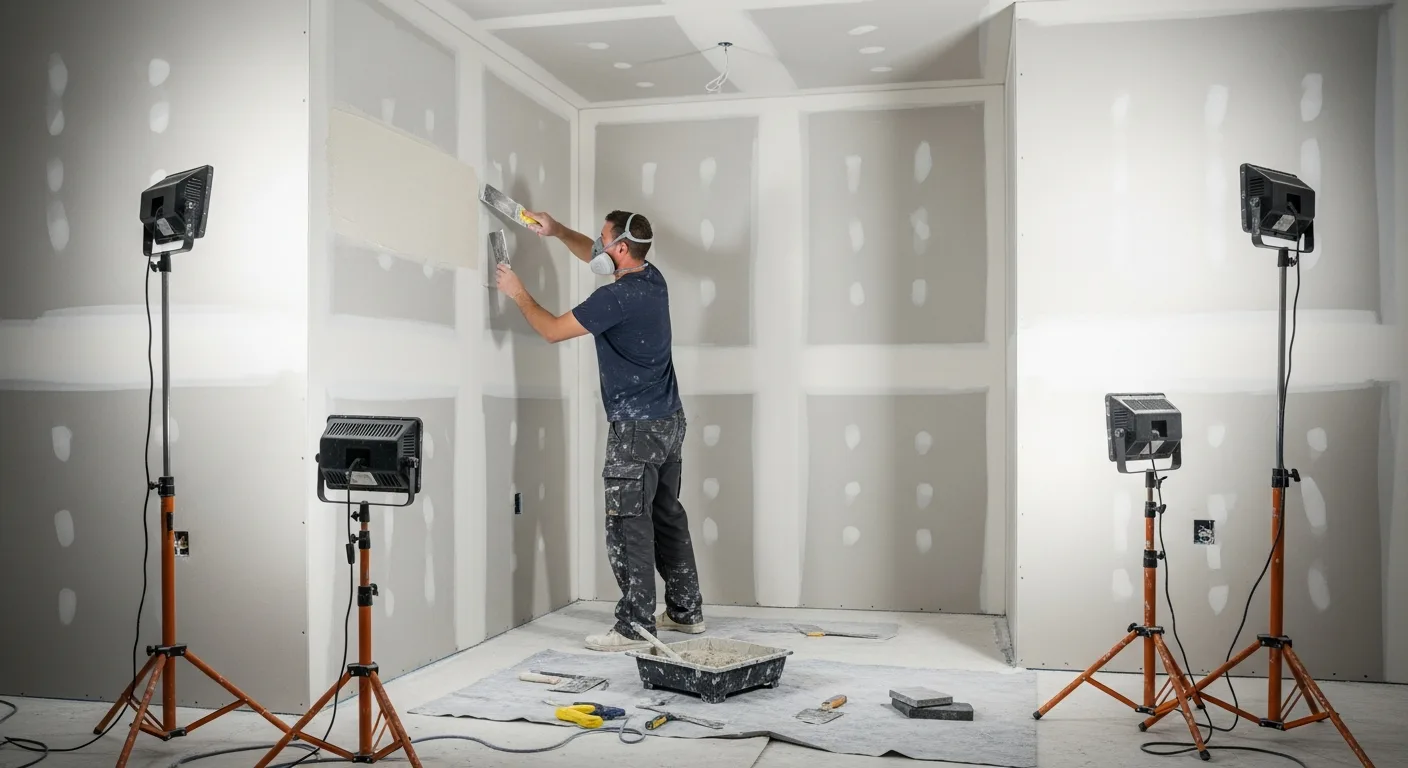
Ask five different drywall guys what “finished” means and you will get five different answers. That is exactly why the industry developed a formal system of finish levels. Levels 0 through 5 give everyone on the project, from the architect to the painter to the GC, a common language for what the walls should look like when the taping crew is done.
If you are a contractor bidding drywall work, you need to know these levels cold. They affect your labor hours, your material costs, and whether the finished product meets the spec. Get it wrong and you are either leaving money on the table by over-finishing, or getting called back to do rework because the walls are not up to standard.
Here is what each level actually means, when to use it, and what it takes to get there.
The Finish Level System
The Gypsum Association published the industry standard for drywall finish levels in their document GA-214, “Recommended Levels of Gypsum Board Finish.” This system has been adopted across the construction industry and is referenced in specs and architectural drawings nationwide.
The levels are cumulative. Each level includes everything from the previous level plus additional work.
Level 0: No Finishing
What it is: Drywall is hung. That is it. No tape, no compound, no anything.
What it looks like: You see every joint, every fastener, every edge. The boards are up on the framing and nothing else has been done.
When to use it:
- Temporary construction (walls that will be removed before final occupancy)
- Areas above ceilings that are not visible and do not require a fire rating
- When future finishing plans are undetermined
When not to use it:
- Any area requiring a fire-rated assembly (untaped joints do not meet fire ratings)
- Any occupied or visible space
Cost factor: Lowest. You are just paying for hang labor and materials.
Level 0 is uncommon in finished construction. If you see it specified, it usually means the area is either temporary or will be finished later as a separate scope.
Level 1: Fire Tape
What it is: All joints and interior angles are taped with joint compound embedded in the tape. Excess compound is removed, but no additional coats are applied. Fastener heads and accessories are not covered.
What it looks like: Rough. Tape ridges are visible. Tool marks and compound edges are left as-is. The surface is clearly unfinished to anyone who looks at it.
When to use it:
- Above ceilings (plenums, attic spaces) where a fire or smoke barrier is required but the surface is not visible
- Mechanical rooms and utility chases where fire rating is needed but aesthetics are not
- Parking garages and similar spaces
When not to use it:
- Any space that will be painted, textured, or visible to occupants
What the spec requires: The tape must be properly embedded in compound with no bubbles, loose edges, or dry spots. Even though it looks rough, the tape must be functional for fire rating purposes.
Cost factor: Minimal additional cost over Level 0. One pass with tape and compound on joints and angles only.
Level 2: One Coat Over Tape and Fasteners
What it is: Everything from Level 1, plus one coat of compound over the tape, one coat over fastener heads, and one coat over accessories (corner bead, trim).
What it looks like: Better than Level 1, but still clearly unfinished. You can see the joint compound bands and there are likely tool marks and ridges. The surface has a rough, uneven texture.
When to use it:
- Garages (both residential and commercial)
- Warehouses and storage areas
- Behind tile in bathrooms and kitchens (the tile covers the wall, so heavy finishing is wasted effort)
- Areas that will receive heavy texture
- Substrate for water-resistant backing board
When not to use it:
- Smooth painted surfaces
- Light textures
- Any area where wall quality is visible and matters to the client
Cost factor: Moderate. One coat over all joints, fasteners, and accessories. This is a common spec for utility and behind-the-scenes spaces.
Level 3: Two Coats Over Tape, One Over Fasteners
What it is: Everything from Level 2, plus an additional coat of compound over the embedded tape at joints and angles. Fastener heads and accessories get one additional coat (two coats total on accessories, but the spec is focused on getting the joints smoother).
What it looks like: Getting closer to finished. The joints are smoother and wider (the second coat feathers out the compound for a flatter transition). Fastener spots are visible but covered. There may still be some tool marks and slight surface variation.
When to use it:
- Surfaces that will receive heavy or medium texture (knockdown, orange peel, skip trowel)
- Areas where the texture will hide minor surface imperfections
- Commercial spaces with textured finishes
When not to use it:
- Smooth walls with no texture
- Flat or eggshell paint on untextured surfaces
- Any wall where critical lighting conditions exist
Important note: Level 3 is often where builders try to save money on residential work by specifying it for smooth walls. This is a mistake. Without texture to hide the surface variation, Level 3 walls will show joint banding and fastener spotting, especially under raking light conditions (like a window at the end of a hallway). The callbacks and rework will cost more than doing Level 4 from the start.
Cost factor: Moderate to medium. The second coat on joints is the main additional labor.
Level 4: Three Coats, Sanded Smooth
What it is: Everything from Level 3, plus a third coat of compound on the tape joints. All joints, fastener heads, and accessories receive a final sanding to produce a smooth surface free of tool marks and ridges.
What it looks like: Smooth, even walls that are ready for primer and paint. When you run your hand across the surface, you should not feel any ridges, bumps, or transitions between compound and paper. Under moderate lighting, the surface looks uniform.
When to use it:
- Standard residential construction (this is the default for most homes)
- Commercial office spaces with flat or eggshell paint
- Any smooth wall that will receive flat, matte, or eggshell paint
- Light textures
When not to use it:
- Walls with gloss or semi-gloss paint in critical lighting conditions (use Level 5)
- Large open spaces with significant natural light from one direction (use Level 5)
The reality of Level 4: This is the workhorse finish level. The vast majority of residential drywall in the country is finished to Level 4. It looks good under normal lighting and performs well with standard paint finishes. However, it has a limitation: the joint compound and the drywall paper have different textures and porosity. Under harsh lighting or with glossy paint, this difference can show through as joint banding.
Cost factor: This is the baseline cost that most people think of when they price drywall finishing. Three coats, sanding, and cleanup.
Level 5: Skim Coat Over Entire Surface
What it is: Everything from Level 4, plus a thin skim coat of joint compound (or a specially formulated Level 5 primer/surfacer) applied over the entire wall surface.
What it looks like: A perfectly uniform surface. There is no visible difference between joint areas and the rest of the wall. Under any lighting condition, including harsh side lighting, the surface reads as one consistent plane of the same texture and porosity.
When to use it:
- Semi-gloss and gloss paint finishes
- Large open spaces with significant natural or directional lighting
- Long hallways lit from one end
- Commercial lobbies, conference rooms, and executive suites
- Any area where the architect or owner demands the highest quality finish
- Dark paint colors (which show surface imperfections more than light colors)
How to achieve Level 5:
There are two main approaches:
-
Full skim coat: Apply a thin (1/32 to 1/16 inch) coat of joint compound over the entire wall surface using a wide taping knife, a paint roller and knock-down knife, or a spray rig. This is labor-intensive but gives the best result.
-
Level 5 primer/surfacer: Products like USG Sheetrock Brand Level 5 Primer/Surfacer are designed to be rolled or sprayed on and sanded lightly. They fill the texture difference between compound and paper without the labor of a full skim coat. This method is faster and less expensive than a traditional skim coat.
Cost factor: Highest. The full skim coat method can add 30 to 50 percent to the finishing cost. The primer/surfacer method is less, usually 15 to 25 percent above Level 4, but requires the specialized product.
Choosing the Right Finish Level
Here is a practical decision framework for choosing the right level.
Consider the Final Finish
- No finish (temporary space): Level 0
- Not visible, fire rated: Level 1
- Behind tile or heavy texture: Level 2
- Medium to heavy texture (knockdown, orange peel): Level 3
- Flat or eggshell paint, smooth walls: Level 4
- Gloss or semi-gloss paint, critical lighting: Level 5
Consider the Lighting
Lighting is the single biggest factor in whether surface imperfections show. Rooms with:
- Balanced, overhead lighting: Level 4 is usually fine
- Large windows on one side casting raking light across the walls: Consider Level 5
- Recessed can lights close to the wall: Consider Level 5 on the adjacent walls
- Dark rooms with minimal natural light: Level 4 is usually fine
Consider the Paint Color
Dark colors show surface imperfections more than light colors. If the homeowner is planning a deep navy accent wall in a room with a big window, that wall probably needs Level 5 even if the rest of the room is fine at Level 4.
Consider the Budget
Level 5 costs real money. On a 2,500-square-foot home, the difference between Level 4 and Level 5 throughout might be $2,000 to $4,000. On a single accent wall, it might be $200 to $400. Talk with your client about where Level 5 actually matters rather than applying it everywhere.
Tools and Materials for Each Level
Compound Types
- All-purpose compound: Works for all coats but is heavier and harder to sand. Good for first coats.
- Lightweight compound: Easier to sand, less shrinkage. Preferred for second and third coats.
- Topping compound: Formulated for the final coat. Sands very smoothly. Used for Level 4 and Level 5 work.
- Setting compound (hot mud): Chemical-setting compound that hardens in a set time (20, 45, 90 minutes). Used for first coats, especially in high-production environments, because you can recoat the same day without waiting for air drying.
Tape Types
- Paper tape: The standard. Requires compound to be applied first (bedding coat), then the tape is embedded. Strongest at joints and corners.
- Mesh tape: Self-adhesive fiberglass mesh. Faster to apply because it sticks directly to the board. Must be used with setting compound for first coat. Not recommended for inside corners.
Knives and Trowels
- 6-inch knife: First coat on joints and fasteners
- 8-inch knife: Second coat on joints
- 10 to 12-inch knife: Third coat, feathering out the compound
- Inside corner knife: Angles and corners
- Hawk and trowel: For skim coating (Level 5)
Sanding Equipment
- Pole sander with 150-grit screen: Standard for Level 4 final sanding
- Hand sanding block: Detail work and tight areas
- Vacuum sander: Reduces dust dramatically. Worth the investment for interior work
- Wet sanding sponge: For light touch-up without dust. Not suitable for heavy sanding
Quality Control and Common Problems
Joint Banding (Photographing)
This is the most common complaint on drywall jobs. The joints show through the paint as bands of slightly different color or sheen. Causes include:
- Under-finishing (Level 3 on a smooth wall that needed Level 4 or 5)
- Skipping primer (primer equalizes porosity between compound and paper)
- Using low-quality primer that does not seal properly
- Applying gloss paint over Level 4 finish
Prevention: Use the correct finish level for the application and always use a quality drywall primer before painting.
Nail Pops
Fastener heads pushing through the compound, usually due to lumber shrinkage. Not a finishing problem per se, but the finishing crew will need to repair them if they occur. Using screws instead of nails reduces this issue.
Cracking
Cracks at joints, especially at corners and around windows and doors. Can be caused by building settlement, lumber shrinkage, or improper taping technique. Paper tape is more resistant to cracking than mesh tape at these locations.
Bubbles Under Tape
Caused by insufficient bedding compound under the tape. The tape lifts away from the board and creates a bubble. The fix is to cut out the affected tape and retape.
Over-Sanding
Sanding through the paper face of the drywall or through the tape. This creates a rough, fuzzy surface that absorbs paint unevenly. The fix is to skim coat the damaged area and re-sand carefully.
Bidding Drywall Finishing Work
When you are estimating drywall finishing, the finish level directly affects your labor hours and material quantities.
Rough rules of thumb for labor (per 1,000 square feet of wall area):
- Level 1: 4 to 6 hours
- Level 2: 6 to 10 hours
- Level 3: 10 to 16 hours
- Level 4: 16 to 24 hours
- Level 5 (skim coat): 24 to 36 hours
- Level 5 (primer/surfacer): 20 to 28 hours
These numbers vary widely based on crew skill, room layout (lots of corners and small rooms are slower), ceiling height, and access conditions.
When you bid a job, make sure the finish level is clearly specified in the contract. If the spec says “Level 4” and the client later wants Level 5 on certain walls, that is a change order. Having the level documented protects both you and the client.
Projul’s estimating and job costing tools make it easy to break out drywall finishing by level and track actual costs against your estimate as the work progresses. Knowing your real numbers for each finish level makes your future bids more accurate and more profitable.
Working With Painters
Good communication between the drywall finisher and the painter prevents most quality complaints. Here is what both sides need to agree on:
- Finish level: Both parties need to understand what was specified and what was delivered.
- Primer responsibility: Who is priming? The drywall crew or the paint crew? Unclear scope here leads to either double-priming (waste) or no priming (problems).
- Touch-up expectations: Some minor imperfections only show up after the first coat of paint. A reasonable touch-up pass by the drywall crew after primer is standard practice on quality jobs.
- Lighting walk-through: Before the painter starts, do a walk-through with work lights (or wait for fixtures to be installed) to check for imperfections under the actual lighting conditions.
Wrapping It Up
Drywall finish levels are not just bureaucratic specifications. They are a practical system that helps everyone on the project agree on what “done” looks like. Understanding the levels helps you bid more accurately, set the right expectations with your clients, and deliver work that holds up under inspection and daily living.
For most residential work, Level 4 is your default. Use Level 5 where lighting, paint finish, or client expectations demand it. Use Level 2 or 3 for utility spaces and textured surfaces. And always, always document the finish level in your contract.
Want to track your drywall costs, schedule your crews, and keep your finishing projects running on time? Check out Projul and see how contractors like you are managing their projects from bid to final punch list.
Frequently Asked Questions
What is the most common drywall finish level for residential homes?
What is the difference between Level 4 and Level 5 drywall finish?
Do I need Level 5 finish in every room?
Can you paint over Level 3 drywall?
How much does Level 5 drywall finish cost compared to Level 4?
What is joint banding and how do you prevent it?
Who establishes the drywall finish level standards?
Is Level 2 finish acceptable for a garage?
Related Articles

BIM Clash Detection: How to Catch Conflicts Before They Cost You on the Jobsite
BIM Clash Detection: How to Catch Conflicts Before They Cost You on the Jobsite Every contractor has a story about the...
Read More →
Asphalt Paving and Compaction Guide: Mix Types, Laydown Temperatures, and Quality Testing
Asphalt paving looks straightforward from a distance. A truck dumps material, the paver lays it down, and rollers...
Read More →
Construction Jobsite Wi-Fi & Connectivity Guide: Setting Up Reliable Internet in the Field
A practical guide to getting reliable internet on construction job sites. Learn about cellular hotspots, mesh networks,...
Read More →