
Construction Employee Handbook Guide + Template
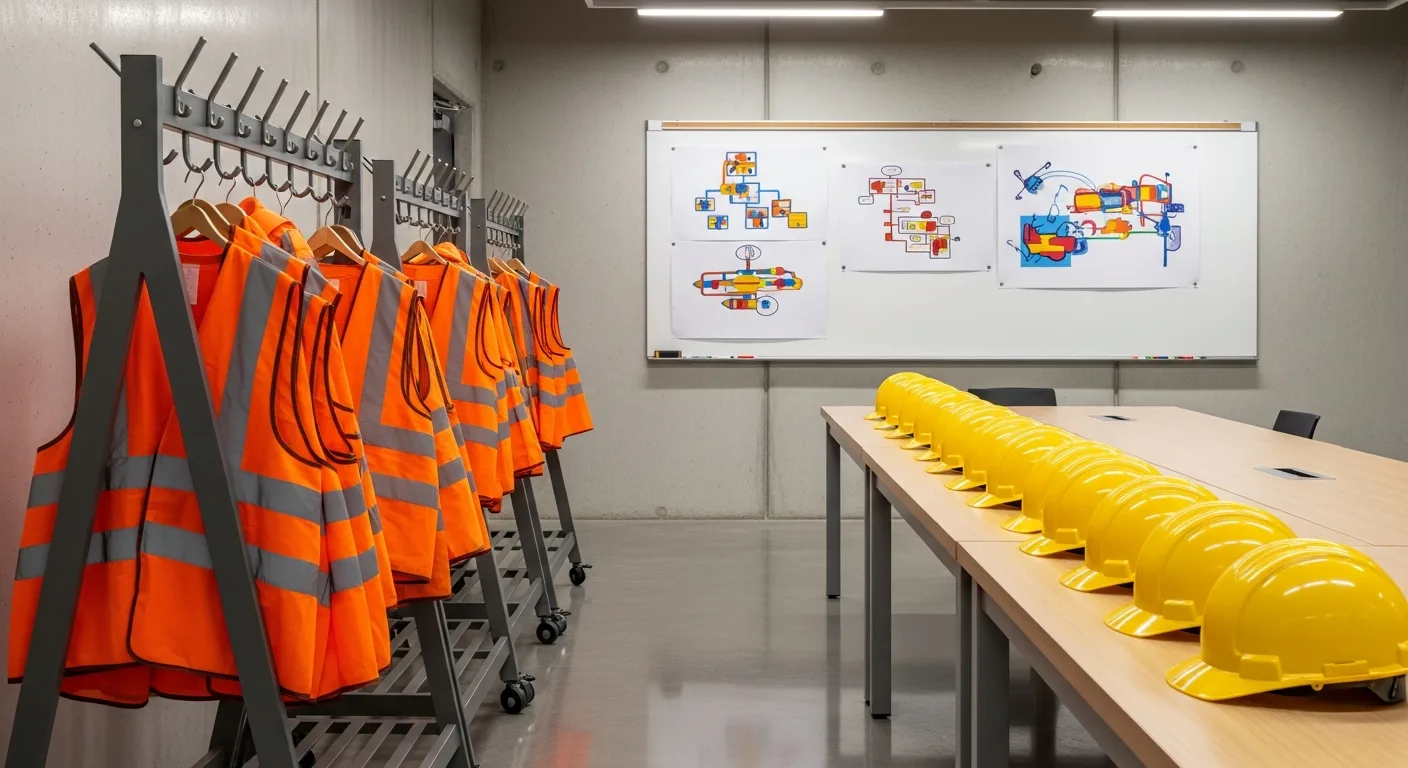
Let us be honest. Most construction employee handbooks are terrible. They are 80 pages of legal jargon written by an attorney who has never set foot on a jobsite, printed on cheap paper, handed to new hires on their first day, and immediately stuffed in a truck glovebox where they collect dust until the employee quits or gets fired.
Then, when something goes wrong (and something always goes wrong), the handbook is either too vague to help or so buried in legalese that nobody knows what it actually says.
It does not have to be this way. A good construction employee handbook is short, clear, and written in language that real people actually understand. It protects your company legally, sets expectations for your crew, and gives everyone a reference point when questions come up about policies, benefits, or procedures.
This guide walks you through building a handbook that your construction team will actually read, covering everything from the required legal stuff to the practical policies that keep your crew safe and your company out of trouble.
Why Your Construction Company Needs a Handbook
Before we get into the content, here is why a handbook matters:
Legal protection. If you ever need to terminate an employee, defend against a discrimination claim, or prove that you communicated a safety policy, your handbook is evidence. Without one, it is your word against theirs.
Consistency. When policies are written down, every supervisor enforces them the same way. Without a handbook, one foreman lets guys leave early on Fridays and another writes them up for it. Inconsistency breeds resentment and legal risk.
Onboarding efficiency. A good handbook answers 90% of the questions new hires have during their first week. Where do I park? How does PTO work? What happens if I am late? When do I get paid?
Culture setting. Your handbook is one of the first documents a new employee reads. It sets the tone for what kind of company you run.
Section 1: Welcome and Company Overview
Start with a brief introduction that tells employees who you are, what you do, and what kind of company you are building. Keep it to one page.
Include:
- Company history (brief, 2 to 3 paragraphs)
- Mission statement or core values (keep it real, skip the corporate fluff)
- Organizational structure (who reports to whom)
- A welcome message from the owner or president
This section is your chance to set the tone. If your company values hard work, safety, and treating people right, say so. But keep it genuine. Construction workers can smell corporate nonsense from a mile away.
Section 2: Employment Basics
This section covers the foundational terms of employment. It is heavily legal but critically important.
At-Will Employment
If you operate in an at-will state (most states are), include a clear statement that employment is at-will, meaning either party can end the relationship at any time, for any legal reason, with or without notice.
This is the single most important legal statement in your handbook. Have your attorney review the language.
Equal Employment Opportunity
State your commitment to equal employment opportunity and list the protected categories (race, color, religion, sex, national origin, age, disability, genetic information, and any additional categories required by your state).
Anti-Harassment and Anti-Discrimination
Include a clear policy prohibiting harassment and discrimination. Cover:
- What constitutes harassment (with specific examples relevant to construction)
- The reporting process (who to contact, multiple reporting options)
- A statement that retaliation against anyone who reports harassment is prohibited
- Investigation procedures
Construction jobsites can be rough environments. Your policy needs to make clear that certain behavior is not acceptable, period.
Immigration and Work Authorization
State that you comply with federal immigration law and require all employees to complete Form I-9 and provide valid work authorization documents.
Section 3: Safety Policies
Safety is where construction handbooks differ most from every other industry. This section should be detailed, specific, and taken seriously.
General Safety Rules
Lay out your baseline safety expectations:
- All employees must follow OSHA regulations and company safety rules
- PPE requirements (hard hats, safety glasses, high-vis vests, steel-toed boots, gloves as required)
- Housekeeping standards (clean work areas, clear access paths)
- Prohibition on working under the influence of drugs or alcohol
- Requirement to report all injuries, no matter how minor
- Right to refuse unsafe work without retaliation
Specific Safety Protocols
Depending on your trade and project types, address:
- Fall protection. When fall protection is required, types of systems acceptable, training requirements.
- Trenching and excavation. Competent person requirements, sloping and shoring rules, access and egress.
- Scaffolding. Erection and inspection requirements, load limits, access rules.
- Electrical safety. Lockout/tagout procedures, working near energized systems, GFCI requirements.
- Confined space. Entry procedures, permits, rescue plans.
- Hot work. Welding and cutting permits, fire watch requirements.
- Heavy equipment. Operator certification requirements, pre-operation inspections, ground personnel procedures.
- Hazard communication. Right to know, SDS access, chemical labeling.
Incident Reporting
Detail your incident reporting process:
- Secure the scene and provide first aid
- Notify the supervisor immediately
- Complete an incident report within 24 hours
- Investigate root causes
- Implement corrective actions
Include your company’s policy on seeking medical attention and workers’ compensation procedures.
Safety Training
Describe your training requirements:
- New hire safety orientation (before starting work)
- Weekly toolbox talks
- Task-specific training (equipment operation, fall protection, confined space)
- Annual refresher training
- Documentation and record-keeping
Section 4: Drug and Alcohol Policy
Construction has one of the highest rates of substance abuse of any industry. A clear drug and alcohol policy protects your employees and your company.
What to Include
Prohibited conduct. Clearly state that employees may not use, possess, distribute, or be under the influence of illegal drugs or alcohol while on company property, jobsites, or company vehicles.
Prescription medications. Employees taking prescription medications that may affect their ability to work safely must notify their supervisor. You are not asking them to disclose the condition, just whether their medication could impair their ability to operate equipment or work safely.
Testing types. Specify when testing occurs:
- Pre-employment testing
- Random testing (if applicable)
- Reasonable suspicion testing (when a supervisor observes signs of impairment)
- Post-accident testing
- Return-to-duty testing
Consequences. State the consequences of a positive test or refusal to test. Most construction companies treat a positive test as grounds for immediate termination, but some offer a one-time opportunity for rehabilitation.
Marijuana considerations. Even in states where marijuana is legal, you can still prohibit its use. Federal law still classifies marijuana as a controlled substance, and federal contractors must maintain drug-free workplaces. Be explicit about your position.
DOT vs. Non-DOT Testing
If any of your employees hold CDLs or operate commercial motor vehicles, they are subject to DOT drug and alcohol testing regulations, which are separate from and in addition to your company policy. Make this distinction clear.
Section 5: Equipment Use
Construction employees use everything from hand tools to heavy equipment worth hundreds of thousands of dollars. Your handbook should set clear expectations.
Company Equipment
- Employees are responsible for equipment assigned to them
- Report damage or malfunction immediately
- Do not modify equipment without authorization
- Return all equipment in good condition upon separation
- Personal use of company equipment is prohibited (or specify what is allowed)
Company Vehicles
- Valid driver’s license required (specify class if applicable)
- MVR checks conducted annually
- Seatbelts required at all times
- No cell phone use while driving (hands-free devices allowed or not)
- No unauthorized passengers
- Report accidents immediately regardless of severity
- No personal use (or specify personal use limits)
Personal Tools
If employees are expected to provide their own hand tools, specify:
- What tools the company provides versus what employees must supply
- Company policy on tool replacement or reimbursement
- Tool theft or loss reporting procedures
Technology and Communication Devices
If you provide company phones, tablets, or other devices:
- Acceptable use policy
- Expectation of privacy (or lack thereof)
- Social media policy as it relates to company devices
- Return requirements upon separation
Section 6: Attendance and Work Hours
Work Schedule
Define your standard work schedule:
- Normal work hours (e.g., 7:00 AM to 3:30 PM)
- Work week definition (important for overtime calculations)
- Reporting time and expectations
- Break and lunch periods
Overtime
Explain your overtime policy:
- How overtime is authorized (must be approved by a supervisor)
- Overtime pay rates (time and a half after 40 hours, or whatever your state requires)
- Any daily overtime rules (some states require overtime after 8 hours in a day)
Attendance
Lay out your expectations:
- How to report an absence (who to call, how early)
- No-call/no-show policy
- Tardy policy and point system (if applicable)
- Consequences of excessive absences
Be specific. “Excessive absenteeism” means different things to different people. Define it with numbers: “Three unexcused absences in a 30-day period will result in a written warning.”
Inclement Weather
Construction is an outdoor business. Address what happens when the weather does not cooperate:
- Who makes the decision to shut down or delay
- How employees are notified
- Whether employees are paid for weather delays
- Expectations for showing up in marginal conditions
Section 7: Compensation and Benefits
Pay Practices
- Pay frequency (weekly, biweekly)
- Payday schedule
- Direct deposit availability
- How to report time (timesheets, time clock, app)
- Prevailing wage information (if applicable)
Benefits Overview
Provide a summary of available benefits:
- Health insurance (eligibility, waiting period, enrollment)
- Dental and vision
- Retirement plan (401k, match percentage)
- Life insurance
- Workers’ compensation
- Short-term and long-term disability
Do not put all the details of every benefit plan in the handbook. Reference the full plan documents and tell employees where to find them.
PTO and Leave Policies
Paid Time Off:
- How PTO is accrued
- Accrual rates by tenure
- Maximum accrual caps
- Request and approval process
- Blackout periods (if any)
- Payout of unused PTO upon separation
Holidays:
- List of paid holidays
- Holiday pay for those who must work on holidays
Other Leave:
- FMLA (required if you have 50+ employees)
- Bereavement leave
- Jury duty
- Military leave
- Personal leave of absence
Section 8: Conduct and Discipline
Code of Conduct
Set baseline behavioral expectations:
- Treat coworkers, customers, and the public with respect
- Follow all company policies and procedures
- Maintain a professional appearance
- Protect company property and confidential information
- No fighting, threats, or weapons on company property or jobsites
Progressive Discipline
Most construction companies use some form of progressive discipline:
- Verbal warning. Documented conversation about the issue.
- Written warning. Formal written notice describing the problem, expected improvement, and consequences of continued issues.
- Final written warning or suspension. Last chance to correct behavior before termination.
- Termination. End of employment.
Make clear that serious offenses (theft, violence, working under the influence, serious safety violations) can result in immediate termination without progressive steps.
Termination Procedures
Address both voluntary and involuntary termination:
Voluntary resignation:
- Two-week notice requested (not required in at-will employment, but appreciated)
- Return of company property, equipment, keys, and badges
- Final paycheck timing (varies by state)
- Benefits continuation information (COBRA)
Involuntary termination:
- Company reserves the right to terminate at any time for any legal reason
- Final paycheck timing
- Return of company property
- Exit procedures
Section 9: Complaint and Grievance Procedures
Employees need a clear path to raise concerns. Include:
- Who to contact first (usually their direct supervisor)
- Alternative contacts if the complaint involves the supervisor
- HR contact information
- Open-door policy statement
- Anti-retaliation commitment
- Timeline for addressing complaints
Making Your Handbook Actually Readable
Now that you know what to include, here is how to make it something people will actually open:
Write Like a Human
Ditch the legalese. Instead of “Employees shall be expected to maintain regular and punctual attendance in accordance with the parameters established herein,” write “Show up on time. Every day. If you cannot make it, call your foreman before your shift starts.”
Your attorney will need to review the final product, but the first draft should be written in plain language.
Keep It Short
Every page you add reduces the chance that anyone reads it. Be concise. If a policy can be explained in two paragraphs instead of two pages, use two paragraphs.
Use Headers and Bullet Points
Nobody reads long blocks of text. Break everything up with clear headings, subheadings, and bullet points. Make it easy to scan.
Make It Accessible
- Print copies for everyone, but also make it available digitally
- Consider a mobile-friendly version that employees can access on their phones
- Provide Spanish-language versions if needed
- Include it in your onboarding process with time to actually read it
Review It Regularly
Laws change. Your company changes. Your handbook should change with them. Review it annually and update it whenever significant changes occur.
Common Handbook Mistakes to Avoid
Overpromising. Do not include language that could be interpreted as a guarantee of continued employment or specific benefits.
Inconsistent enforcement. If you have a three-strike policy for tardiness but only enforce it for some employees, you have a discrimination lawsuit waiting to happen.
Ignoring state law. Employment law varies significantly by state. A handbook written for Texas may not comply with California law. If you operate in multiple states, have the handbook reviewed for each state.
No acknowledgment process. If employees do not sign an acknowledgment, you cannot prove they received the handbook. This undermines its legal value.
Set it and forget it. An outdated handbook can be worse than no handbook at all if it references obsolete policies or does not comply with current law.
Using Technology to Support Your Handbook
Modern construction management software can reinforce your handbook policies digitally:
- Time tracking. Automated time tracking through a tool like Projul enforces your attendance and overtime policies by creating accurate records.
- Safety documentation. Digital safety checklists and incident reports tie directly to your handbook’s safety requirements.
- Equipment tracking. Assign equipment to employees digitally, creating a record of who has what.
- Communication. Push policy updates and announcements to the whole team through one platform.
When your handbook and your daily tools work together, policies become part of the workflow instead of words on a page that nobody remembers.
Wrapping Up
Your employee handbook is not just a legal document. It is a communication tool that tells your team what you expect, what they can expect from you, and how things work at your company.
The best construction handbooks are short, clear, and written in language that actual construction workers will read. They cover the legal requirements without drowning in legal language. And they are living documents that get updated, referenced, and enforced consistently.
Take the time to build a handbook that works for your company. Your future self will thank you the first time it saves you from a misunderstanding, a safety incident, or an employment dispute.
Frequently Asked Questions
Is an employee handbook legally required for construction companies?
How long should a construction employee handbook be?
Should my handbook be different for field and office employees?
How often should I update my employee handbook?
Can an employee handbook create a binding contract?
Should I require employees to sign an acknowledgment?
What is the biggest mistake contractors make with their handbooks?
Do I need a Spanish-language version of my handbook?
Related Articles

How Construction Teams Use AI to Cut Admin Time
Most contractors lose a full day every week to paperwork. AI now handles the repetitive admin work that used to eat...
Read More →
Concrete Tilt-Up Construction: A Contractor's Complete Field Guide
Tilt-up construction accounts for roughly 15 percent of all industrial and commercial buildings in North America. This...
Read More →
How to Implement Construction Software Without Losing Your Mind
Most construction software rollouts fail. Not because the software is bad, but because the rollout was rushed. Here are...
Read More →