
Construction Equipment Management: Track, Maintain, and Maximize Your Fleet | Projul
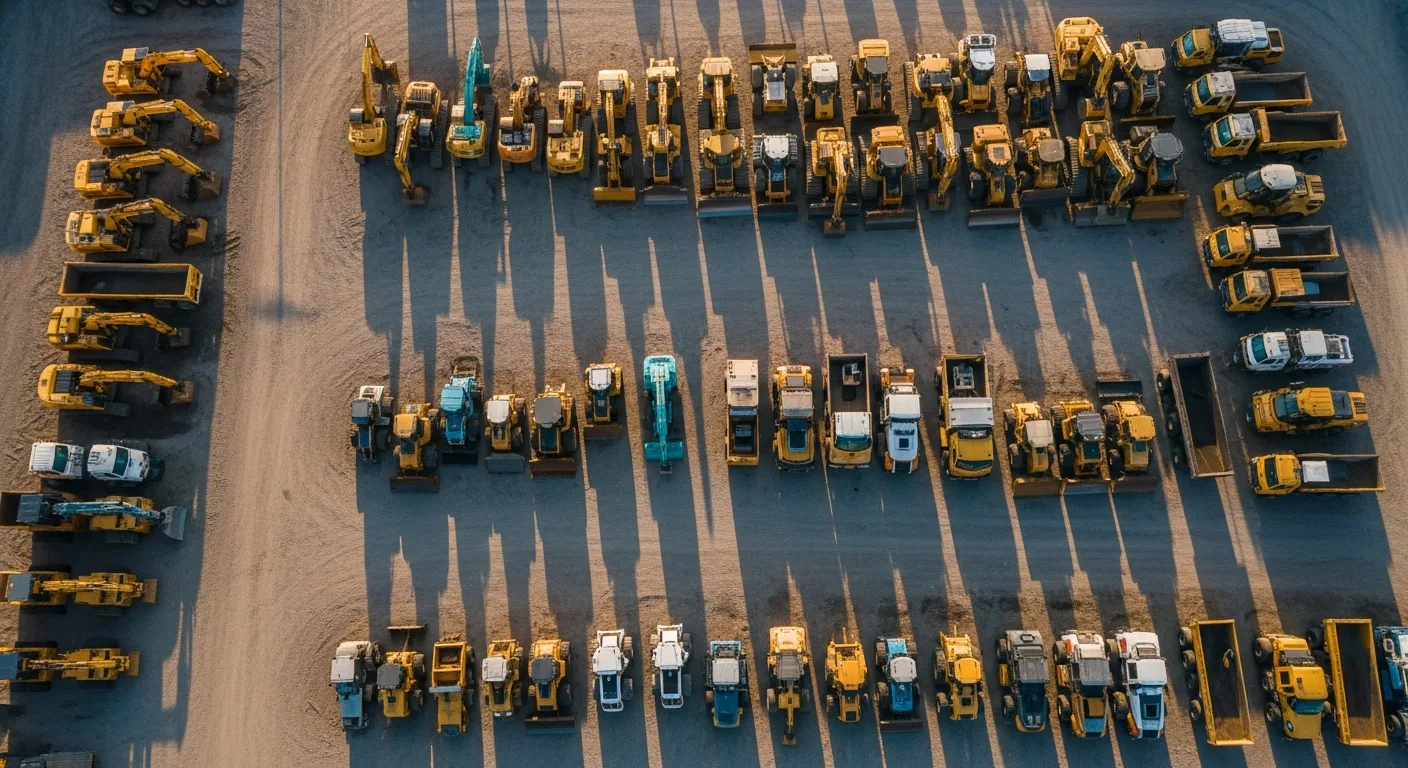
Your equipment fleet is probably the second-largest expense in your construction business, right behind labor. And yet, most contractors manage their equipment with a combination of memory, sticky notes, and hope.
That approach works when you have three trucks and a skid steer. It falls apart fast when you are running multiple crews across several jobsites with dozens of machines, trailers, and small tools scattered everywhere.
Good equipment management is not just about knowing where your stuff is (though that matters). It is about making smart financial decisions on every piece of equipment you own or rent, keeping machines running when you need them, and getting rid of them before they become money pits.
This guide covers the practical side of construction equipment management, from tracking and maintenance to the rent-versus-own decision that every growing contractor faces.
Why Equipment Management Matters More Than You Think
Here is a scenario that plays out every week at construction companies across the country:
A superintendent calls the office. He needs a plate compactor on his jobsite tomorrow. Nobody knows where the company’s plate compactor is. Maybe it is on the Johnson project. Maybe it got returned to the yard last week. Nobody wrote it down.
So the office rents one for $150 a day. Three days later, someone finds the company’s plate compactor sitting behind the trailer on a different job, unused.
Multiply that scenario across a year, and you are looking at thousands of dollars in unnecessary rental costs, not to mention the downtime and frustration.
Equipment management solves this problem and many others:
- Reduced downtime. Machines that are properly maintained break down less often. When a critical piece of equipment goes down mid-project, the cost is not just the repair. It is the idle crew, the delayed schedule, and the angry owner.
- Better job costing. When you know exactly what it costs to operate each piece of equipment per hour, you can bid jobs more accurately and identify projects that are losing money.
- Lower total cost of ownership. Tracking maintenance, utilization, and repair history tells you when a machine is costing more to keep than it is worth.
- Theft prevention. Construction equipment theft costs the industry billions every year. GPS tracking and proper security measures protect your investment.
Building Your Equipment Inventory
Before you can manage your fleet, you need to know exactly what you have. This sounds obvious, but many contractors cannot produce a complete, accurate list of their equipment on demand.
What to Track for Every Asset
For each piece of equipment, record:
- Asset ID or number. Your internal tracking number.
- Description. Make, model, year, and type.
- Serial number. Critical for warranty claims, insurance, and theft recovery.
- Purchase date and cost. For depreciation and replacement planning.
- Current location. Which jobsite, yard, or storage facility.
- Assigned operator or crew. Who is responsible for it.
- Condition. Current operating status (active, needs repair, out of service).
- Insurance and registration. Policy numbers, expiration dates.
- Warranty status. Coverage details and expiration.
Categorize Your Equipment
Organize your inventory into categories that match how you use and manage them:
- Heavy equipment. Excavators, bulldozers, loaders, cranes, graders.
- Vehicles. Trucks, vans, trailers, fuel trucks.
- Small equipment and tools. Compactors, generators, pumps, saws, lasers.
- Attachments. Buckets, blades, forks, hammers.
- Safety equipment. Fall protection, confined space gear, trench boxes.
Each category may have different tracking needs. You probably do not need GPS on every hand tool, but you absolutely need it on your excavators and trucks.
Fleet Tracking: Knowing Where Everything Is
GPS tracking has gotten cheap enough that there is no good excuse for not knowing where your major equipment is at all times. Modern GPS trackers cost as little as $15 to $30 per month per unit, and the information they provide is worth far more than that.
What GPS Tracking Gives You
- Real-time location. Know exactly where every tracked asset is, right now.
- Geofencing. Set boundaries around jobsites and get alerts when equipment moves outside them (after hours, weekends, or unauthorized times).
- Movement history. See where equipment has been, which helps settle disputes about usage and billing.
- Engine hours. Many trackers record engine run time, which feeds directly into your maintenance scheduling.
- Idle time monitoring. Find out how much time machines spend idling versus working. Excessive idle time wastes fuel and adds wear.
Tracking Small Tools and Equipment
For smaller items like generators, compressors, and power tools, Bluetooth-based asset tags (like those from Milwaukee or DeWalt for their tool lines) provide basic location tracking at a much lower cost than GPS.
The key is having a checkout system. When a tool leaves the shop, someone records who took it, which job it went to, and when it is expected back. This can be as simple as a sign-out sheet or as sophisticated as a barcode scanning system.
Maintenance: The Money You Spend to Save Money
Skipping maintenance is the most expensive decision a contractor can make with their equipment. A $200 oil change that gets skipped can turn into a $15,000 engine rebuild. A $50 hydraulic filter that gets ignored can destroy a $5,000 hydraulic pump.
Building a Maintenance Schedule
Every piece of equipment should have a maintenance schedule based on the manufacturer’s recommendations. Here is a typical schedule for a mid-size excavator:
Daily (Pre-Operation Checks)
- Walk-around inspection for leaks, damage, loose parts
- Check engine oil level
- Check hydraulic fluid level
- Check coolant level
- Inspect tracks or tires
- Test all controls and safety devices
- Clean cab windows and mirrors
Every 250 Hours
- Change engine oil and filter
- Change fuel filters
- Grease all fittings
- Inspect air filter (replace if needed)
- Check battery connections
- Inspect belts and hoses
Every 500 Hours
- All 250-hour items plus:
- Change hydraulic oil filter
- Inspect hydraulic hoses and connections
- Check and adjust track tension
- Inspect undercarriage wear
- Test all safety systems
Every 1,000 Hours
- All 500-hour items plus:
- Change hydraulic oil
- Inspect and adjust valve clearances
- Replace air filter
- Full electrical system check
- Inspect swing bearing and gears
Every 2,000 Hours
- All 1,000-hour items plus:
- Full coolant system flush and refill
- Transmission service
- Complete undercarriage inspection and measurement
- Consider paint and body touch-up for rust prevention
Tracking Maintenance
Paper maintenance logs get lost, damaged, and ignored. Digital tracking is the way to go. At minimum, you need:
- A record of every service event with date, hours, work performed, and parts used
- Automated alerts when service is due based on hours or calendar time
- The ability to see maintenance history for any machine at a glance
Construction management software like Projul can tie equipment maintenance to your project schedules, so you can plan service around project demands instead of discovering a machine needs service right when you need it most.
The Rent vs. Own Decision
Every contractor faces this question eventually: should I buy this machine or rent it? The answer depends on several factors, and getting it wrong can cost you tens of thousands of dollars.
When Buying Makes Sense
- High utilization. If you will use the machine 60% or more of available time, owning is usually cheaper than renting.
- Long-term need. If you need the same type of equipment on project after project, buying avoids ongoing rental costs.
- Tax advantages. Section 179 and bonus depreciation allow you to deduct a significant portion (or all) of the purchase price in the year of purchase.
- Revenue generation. Some contractors rent out their own equipment to other contractors during slow periods, turning an asset into a revenue stream.
When Renting Makes Sense
- Low utilization. If you only need a machine for a few weeks or months per year, renting is almost always cheaper.
- Specialized equipment. Cranes, pile drivers, and other specialized machines that you use occasionally are better rented.
- Cash flow preservation. Renting avoids the large upfront cost of purchasing and keeps your cash available for other needs.
- Maintenance avoidance. Rental companies handle maintenance, which saves you time and money on machines you do not use often.
- Project-specific needs. When a project requires a specific size or type of machine that you would not use again, rent it.
The Break-Even Calculation
To compare owning versus renting, calculate the total monthly cost of ownership:
Monthly Ownership Cost:
- Monthly depreciation (purchase price minus salvage value, divided by useful life in months)
- Monthly insurance
- Average monthly maintenance and repair costs
- Monthly storage cost (if applicable)
- Monthly financing cost (interest on loan)
Monthly Rental Cost:
- Rental rate
- Delivery and pickup charges (amortized monthly)
- Fuel (same for both, so it cancels out)
If your monthly ownership cost is lower than the monthly rental cost for the expected usage period, buying makes financial sense. If rental is cheaper, rent.
A Real Example
A contractor is deciding whether to buy or rent a skid steer.
Purchase option:
- Purchase price: $55,000
- Useful life: 7 years (84 months)
- Salvage value: $12,000
- Monthly depreciation: $512
- Monthly insurance: $85
- Monthly maintenance (average): $150
- Monthly financing (5% on $55,000): $188
- Total monthly cost of ownership: $935
Rental option:
- Monthly rental rate: $2,200
- Delivery/pickup per month (amortized): $100
- Total monthly rental cost: $2,300
In this case, owning is significantly cheaper if the contractor will use the skid steer consistently. The break-even point is somewhere around 40% utilization. Below that, renting starts to make more sense because you can return the machine when you are not using it.
Utilization Rates: Are Your Machines Earning Their Keep?
Utilization rate is the single most important metric for equipment management. It tells you whether a machine is earning enough to justify its cost.
How to Calculate Utilization
Utilization Rate = Actual Hours Used / Available Hours x 100
Available hours are typically based on a standard work month. If your crews work 22 days per month at 8 hours per day, available hours are 176 per month.
If an excavator ran 130 hours last month: 130 / 176 = 73.9% utilization.
Target Utilization Rates
- Above 70%. Excellent. This machine is earning its keep.
- 50% to 70%. Acceptable for most equipment. Keep an eye on it.
- 30% to 50%. Questionable. Consider whether you really need to own this machine.
- Below 30%. This machine is costing you money. Sell it, rent it out, or replace owned with rented.
What Low Utilization Tells You
Low utilization does not always mean you should sell the machine. It might indicate:
- Seasonal work patterns. A paving crew’s equipment might sit idle in winter months, which is normal.
- Scheduling problems. The machine is available but not being deployed efficiently. Better scheduling could improve utilization.
- Fleet imbalance. You might have too many of one type of machine and not enough of another.
- Growth opportunity. If utilization on all your machines is consistently above 80%, you might need to add equipment to avoid overworking what you have.
Depreciation: Understanding the Numbers
Equipment depreciates from the moment you buy it. Understanding how depreciation works helps you make better purchasing decisions and plan for replacements.
Straight-Line Depreciation
The simplest method. Subtract salvage value from purchase price, then divide by useful life.
Example: A loader purchased for $120,000 with a $20,000 salvage value and an 8-year useful life.
Annual depreciation: ($120,000 - $20,000) / 8 = $12,500 per year
MACRS Depreciation
For tax purposes, most construction equipment falls under MACRS with a 5-year or 7-year recovery period. MACRS front-loads the depreciation, giving you larger deductions in the early years.
Section 179 and Bonus Depreciation
These tax provisions allow you to deduct a large portion (or all) of the equipment cost in the year of purchase. As of recent tax law:
- Section 179 allows you to deduct up to a specified limit (check current year limits with your accountant) of qualifying equipment purchases.
- Bonus depreciation allows additional first-year deduction on qualifying assets.
These provisions can significantly reduce your tax liability in the year you purchase equipment. Work with your accountant to plan equipment purchases for maximum tax benefit.
When to Replace Equipment
Track these metrics to know when a machine is past its prime:
- Increasing repair frequency. If repairs are happening more often and costing more each time, the trend is clear.
- Declining reliability. If a machine is breaking down on the job and causing project delays, the indirect costs (idle labor, schedule delays) may exceed the repair costs.
- Rising operating costs. Older machines typically consume more fuel and require more expensive parts.
- Parts availability. When replacement parts become hard to find or require long lead times, it is time to move on.
- Technology gap. Newer machines with GPS, telematics, and emissions compliance may provide enough productivity gains to justify replacement.
A good rule of thumb: when annual repair costs exceed 50% of the machine’s current market value, start shopping for a replacement.
Theft Prevention: Protecting Your Investment
The National Equipment Register estimates that construction equipment theft costs $300 million to $1 billion per year in the United States. Recovery rates are low, and the real cost goes beyond the value of the machine. It includes project delays, rental costs for replacement equipment, and increased insurance premiums.
Practical Theft Prevention Steps
- GPS tracking on all major equipment. This is your best tool for recovery if theft occurs. Some trackers can send alerts for unauthorized movement.
- Kill switches and fuel shutoffs. Make it harder to start and move your machines.
- Remove keys. This sounds obvious, but keys left in machines are the number one enabler of theft.
- Secure the jobsite. Fencing, locked gates, lighting, and security cameras all deter thieves.
- Park strategically. Position large equipment so it blocks access to smaller, more easily stolen items. Park machines in well-lit, visible areas.
- Record everything. Serial numbers, photos, unique identifying marks. If equipment is stolen, this information is critical for police reports and insurance claims.
- Mark your equipment. Stencil your company name and phone number in large, visible letters. Engrave serial numbers on multiple components. Thieves prefer anonymous machines.
- Insurance review. Make sure your inland marine or equipment floater policy covers all your assets at replacement cost, not depreciated value.
Putting It All Together: Your Equipment Management System
A solid equipment management system does not need to be complicated. It needs to be consistent. Here is what a good system looks like:
Daily: Operators perform pre-operation inspections and report issues immediately.
Weekly: Field supervisors verify equipment locations and conditions match your tracking system.
Monthly: Review utilization rates, maintenance schedules, and repair costs for every major asset.
Quarterly: Evaluate your fleet against current and upcoming project needs. Identify machines to add, sell, or rent.
Annually: Review total cost of ownership for every major asset. Plan capital equipment purchases and disposals. Update insurance and registration.
Construction management platforms like Projul help you track equipment across projects, schedule maintenance, and allocate costs to specific jobs. When your equipment data lives alongside your project data, you get a complete picture of what each machine is contributing to your bottom line.
The contractors who manage their equipment well spend less, bid more accurately, and avoid the costly surprises that come from neglecting their fleet. It is not glamorous work, but it is the kind of disciplined management that separates profitable contractors from the ones always scrambling to make payroll.
Frequently Asked Questions
What is construction equipment management?
How do I calculate equipment utilization rate?
When should I rent equipment instead of buying?
How often should construction equipment be serviced?
What is the best way to prevent equipment theft on construction sites?
How do I track depreciation on construction equipment?
Should I track equipment costs by project?
What equipment records should I keep?
Related Articles

BIM Clash Detection: How to Catch Conflicts Before They Cost You on the Jobsite
BIM Clash Detection: How to Catch Conflicts Before They Cost You on the Jobsite Every contractor has a story about the...
Read More →
Asphalt Paving and Compaction Guide: Mix Types, Laydown Temperatures, and Quality Testing
Asphalt paving looks straightforward from a distance. A truck dumps material, the paver lays it down, and rollers...
Read More →
Construction Jobsite Wi-Fi & Connectivity Guide: Setting Up Reliable Internet in the Field
A practical guide to getting reliable internet on construction job sites. Learn about cellular hotspots, mesh networks,...
Read More →