
Field Productivity Tracking for Contractors
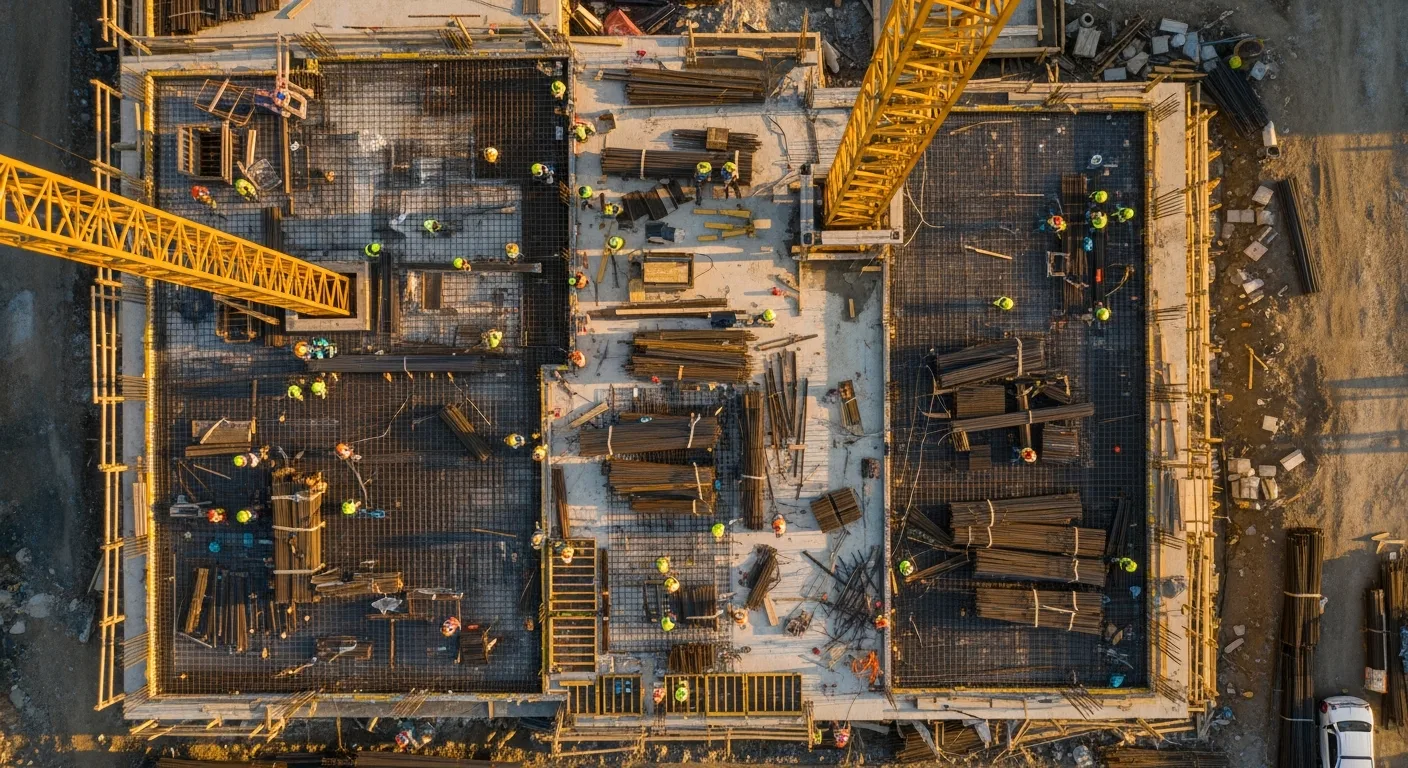
Here is a question that separates contractors who grow from contractors who stay stuck: do you actually know how productive your crews are in the field?
Not a feeling. Not “they seemed busy.” Real numbers. Units installed per hour. Square footage completed per day. Labor hours burned versus what you estimated.
Most contractors skip this entirely. They bid a job, send the crew out, and hope it comes in somewhere close to the estimate. When it does not, they chalk it up to “a tough job” and move on. The problem is that without tracking field productivity, you are guessing at the most expensive part of your business: labor.
Labor typically eats 40 to 60 percent of every construction dollar. If your crews are producing 20 percent less than what you estimated, that gap is coming straight out of your margin. And if you are not measuring it, you will never know where the leak is.
This guide is going to walk you through how to measure crew output, what good benchmarks look like by trade, how to spot the things dragging your productivity down, and how to tie all of that data back to your bottom line.
What Field Productivity Tracking Actually Means
Field productivity tracking is the practice of measuring how much work your crews complete relative to the labor hours they put in. It is a simple ratio: output divided by input.
Output might be measured in square feet of drywall hung, linear feet of pipe installed, outlets wired, or any other unit that makes sense for the work being done. Input is always labor hours.
The formula looks like this:
Productivity Rate = Units of Work Completed / Total Labor Hours
If your tile crew sets 200 square feet of tile in a 10-hour day with two workers (20 labor hours), their productivity rate is 10 square feet per labor hour. If you estimated 12 square feet per labor hour when you bid the job, you are behind by about 17 percent.
That 17 percent is not abstract. It is real money. On a $50,000 tile job where labor was budgeted at $20,000, a 17 percent productivity gap means you are spending roughly $3,400 more than planned. Multiply that across a dozen jobs per year and you start to see why some contractors are always “busy but broke.”
Field productivity tracking is different from just tracking hours. Time tracking tells you how long people were on the clock. Productivity tracking tells you what they actually got done during those hours. You need both, but the second one is where the real insight lives.
How to Measure Crew Output Per Day
Measuring crew output does not need to be complicated, but it does need to be consistent. Here is a practical approach that works for most trades:
Step 1: Define Your Units of Measure
Pick the unit that makes sense for each type of work. Some examples:
- Framing: linear feet of wall or square feet of floor/roof
- Electrical: number of devices (outlets, switches, fixtures) or linear feet of conduit
- Plumbing: number of fixtures or linear feet of pipe
- Concrete: cubic yards poured or square feet of flatwork
- Painting: square feet of surface covered
- Roofing: squares (100 square feet per square)
- Drywall: sheets hung or square feet finished
Step 2: Record Daily Output
Your foreman or lead should log what was completed each day. This does not have to be a 30-minute report. A quick note at the end of the day works: “Hung 48 sheets of drywall, second floor bedrooms, 3-man crew.”
Step 3: Match Output to Labor Hours
Pull the hours from your time tracking system for that crew on that day. If three guys worked 8 hours each, that is 24 labor hours. Forty-eight sheets of drywall in 24 labor hours gives you 2 sheets per labor hour.
Step 4: Compare to Your Estimate
When you bid the job, you assumed a certain production rate. Maybe you figured 2.5 sheets per labor hour for drywall hanging. Your actual rate of 2.0 sheets per hour means you are running about 20 percent slower than planned. Now you have a real number to investigate instead of just a vague sense that the job is running long.
Step 5: Track It Over Time
One day’s data is just a snapshot. Track productivity across weeks and across jobs to see patterns. Maybe your crew always starts slow on the first day at a new site. Maybe productivity drops every Friday afternoon. Maybe one crew consistently outperforms another on the same type of work. These patterns are gold for future planning.
The key is keeping the process simple enough that your field leaders will actually do it. If you ask a foreman to fill out a 20-field form at the end of a long day, it is not going to happen. Short, consistent entries beat detailed occasional ones every time.
Productivity Benchmarks by Trade
Knowing your own numbers is important, but it helps to have a frame of reference. Here are rough productivity benchmarks for common residential and commercial trades. These are averages and your actual numbers will vary based on job conditions, crew skill, and complexity.
Framing
- Wood frame walls: 400 to 500 SF per crew per day (3-person crew)
- Roof trusses: 15 to 25 trusses set per day (with crane support)
- Subfloor sheathing: 1,500 to 2,000 SF per day (3-person crew)
Electrical
- Rough-in devices: 8 to 12 per electrician per hour
- Panel installation: 1 to 2 panels per electrician per day
- Finish trim (devices and covers): 20 to 30 per hour
Plumbing
- Rough-in (residential): 1 full bathroom per plumber per day
- Water line: 60 to 100 linear feet per day
- Drain/waste/vent: 40 to 60 linear feet per day
Drywall
- Hanging: 2 to 3 sheets per labor hour (standard conditions)
- Finishing (tape, mud, sand): 200 to 300 SF per hour depending on level of finish
Painting
- Interior walls (brush and roll): 300 to 400 SF per hour
- Spray application: 800 to 1,200 SF per hour
- Trim and detail work: 80 to 150 linear feet per hour
Concrete
- Flatwork forming: 50 to 80 linear feet per day per carpenter
- Pouring and finishing flatwork: 1,000 to 1,500 SF per day (4-person crew)
Roofing
- Asphalt shingles: 3 to 5 squares per roofer per day
- Tear-off: 5 to 8 squares per person per day
Don’t just take our word for it. See what contractors say about Projul.
These benchmarks come from industry data and contractor reporting. Your local conditions, labor rates, and material systems will affect the numbers. The point is not to hit someone else’s benchmark exactly. The point is to know what your benchmark is and track whether you are hitting it.
If your crews are consistently below industry averages, that is a flag worth investigating. If they are above average, that is a competitive advantage you should protect and factor into your bids.
The Biggest Productivity Killers on Construction Sites
When productivity drops, contractors often blame the crew. But in most cases, the crew is not the problem. The systems around them are. Here are the most common productivity killers and what they actually cost:
1. Waiting on Materials
Nothing burns labor dollars faster than a crew standing around because materials did not show up. If a four-person crew earning $35 per hour each waits 90 minutes for a delivery, that is $210 in labor with zero output. Do that twice a week across a few jobs and you are burning thousands per month.
The fix is not complicated. It requires someone to verify material deliveries 24 hours ahead and have a backup plan when things go sideways. Good scheduling means thinking about material staging, not just crew assignments.
2. Unclear Scope and Missing Information
When a crew shows up and does not know exactly what they are supposed to do, they either make assumptions (which leads to rework) or they call the office and wait for answers. Both kill productivity.
A five-minute morning huddle with clear daily goals and a foreman who has reviewed the plans before the crew arrives will prevent most of these delays. Your crew management process should include making sure every crew lead has what they need before the day starts.
3. Rework
Rework is the most expensive productivity killer because you are paying twice for the same work. Industry studies estimate that rework consumes 5 to 15 percent of total project costs. The biggest causes are miscommunication between trades, incomplete plans, and rushing through work without checking it.
4. Excessive Travel and Site Logistics
If your crews are spending 30 to 45 minutes at the start and end of each day moving tools, finding materials on site, or traveling between areas of a large project, that is 5 to 7.5 hours per week per person of non-productive time. On a 10-person site, that adds up to 50 to 75 lost hours per week.
Good site layout and tool/material staging are not glamorous, but they pay off every single day.
5. Too Many Crew Changes
Every time you shuffle people between crews or jobs, you lose time to the learning curve. A worker who has been on a job for a week knows where everything is, understands the plan, and works faster than someone who just showed up. Frequent crew changes can drop productivity by 15 to 25 percent during the adjustment period.
6. Lack of Daily Planning
The difference between a planned day and an unplanned day is enormous. Crews with a clear list of what to accomplish, materials staged, and obstacles pre-cleared can produce 20 to 30 percent more than crews that figure it out as they go.
This is where the foreman makes or breaks your productivity. Your best foremen are not just skilled tradespeople. They are planners who think one or two days ahead.
Using Technology to Track Field Productivity
Pen-and-paper tracking works in theory but falls apart in practice. Forms get lost, data entry gets delayed, and by the time you realize a job ran over budget, it is too late to do anything about it.
Construction management software changes this by connecting the data points automatically. When your crews clock in and out through a digital time tracking system and your foremen log daily output through an app, the math happens on its own.
Here is what a good technology setup looks like for productivity tracking:
Digital Time Tracking with GPS
Your crews clock in and out on their phones with location verification. This eliminates buddy punching, captures actual site time versus travel time, and feeds directly into your job costing system. You should not have to ask “how many hours did we spend on that phase?” The answer should be sitting in your software.
Daily Logs with Production Data
Your foreman opens an app at the end of the day, selects the job, and logs what was completed. “Installed 12 windows, second floor” or “Poured 800 SF of basement slab.” This takes two minutes and gives you the output side of the productivity equation.
Automated Job Cost Reports
When time data and production data live in the same system, you can generate reports that show cost per unit for every type of work. Cost per square foot of framing. Cost per fixture for plumbing rough-in. Cost per square for roofing. These reports tell you exactly where you are making money and where you are losing it.
Real-Time Dashboards
Instead of waiting until a job is done to see how it went, real-time dashboards let you check productivity mid-job. If framing is running 15 percent over budget in week two of a four-week frame, you have time to make adjustments. Maybe you need a different crew. Maybe materials are not getting staged properly. Maybe the plans had issues that caused rework.
The technology does not have to be expensive or complicated. Projul, for example, connects time tracking, scheduling, and job costing in one platform so your field data automatically flows into your financial reports. The goal is to make tracking so easy that it actually happens, not to create a complex system that your team ignores.
What to Avoid
Do not try to track everything at once. Start with your highest-cost trades or your most common job types. Get your foremen comfortable with the process on a few jobs before rolling it out company-wide. And do not punish crews for low numbers before you understand why the numbers are low. Productivity tracking is a diagnostic tool, not a weapon.
Connecting Productivity Data to Profitability
Productivity data on its own is interesting. Productivity data connected to your financials is powerful. Here is how to make the connection:
Build Your Cost-Per-Unit Database
As you track productivity across jobs, you will build a database of what each type of work actually costs per unit. Not what RSMeans says. Not what you assumed five years ago. What your crews, in your market, with your materials, actually produce.
This database becomes your most valuable estimating asset. When you bid the next job, you are not guessing. You are using real data from real jobs. Your estimates get tighter, your margins get more predictable, and you stop being surprised by job results.
Identify Your Most and Least Profitable Work
When you can see cost per unit by trade and by job type, patterns emerge quickly. Maybe your concrete work is consistently profitable because you have a great crew, but your finish carpentry always runs over because you are subbing it out to unreliable crews. That is actionable information.
You might decide to bid concrete work more aggressively because you know you can hit the numbers. You might adjust your finish carpentry pricing to account for the reality of your production rates. Or you might invest in building an in-house finish crew.
Calculate Your True Labor Burden
Productivity data reveals your true labor burden, which is what each labor hour actually costs when you factor in non-productive time. If your crews average 6.5 productive hours out of an 8-hour day (accounting for breaks, travel, setup, and cleanup), your effective labor rate is not $35 per hour. It is closer to $43 per hour. Failing to account for this in your estimates is one of the top reasons contractors leave money on the table.
Set Productivity Targets and Track Improvement
Once you have baseline data, set realistic improvement targets. If your drywall crew averages 2.0 sheets per labor hour and the industry benchmark is 2.5, you do not need to close that gap overnight. Set a target of 2.2 for next quarter. Identify the specific things holding them back (material staging, site access, crew composition) and address them one at a time.
Track the improvement over time. When you see the numbers move in the right direction, share the wins with your crews. Most field workers want to do good work and appreciate knowing that their effort is being measured fairly.
Use Productivity Data in Your Bids
The ultimate payoff is in your estimating. When you know with confidence that your framing crew produces 450 SF of wall per day, you can bid accordingly. You are no longer padding estimates “just in case” or lowballing because you have no idea what the work actually costs.
Contractors who bid from real productivity data win more work at better margins. They are not the cheapest bid and they are not the most expensive. They are the most accurate, and accuracy is what keeps you profitable over the long haul.
Getting Started: A 30-Day Plan
If you are not currently tracking field productivity, here is a simple plan to start:
Week 1: Pick one trade or one job to track. Define your units of measure and create a simple daily log (digital or paper). Make sure your time tracking captures hours by job phase.
Week 2: Start collecting data. Have your foreman log output daily. Compare actuals to your original estimate at the end of each week.
Week 3: Review the data. Look for patterns. Where are you on track? Where are you behind? Talk to your foremen about what they are seeing in the field.
Week 4: Use what you learned to adjust your process. Maybe you need to stage materials differently. Maybe your estimates were off. Maybe one crew needs additional support. Make one or two changes and keep tracking.
After 30 days, you will have real productivity data for at least one part of your business. That is more than most of your competitors have. From there, expand the tracking to additional trades, additional jobs, and eventually your entire operation.
Book a quick demo to see how Projul handles this for real contractors.
The contractors who measure their field productivity do not just run better jobs. They bid better, hire better, schedule better, and make more money on the same volume of work. That is the real return on tracking what your crews actually produce every day.
Frequently Asked Questions
What is field productivity tracking in construction?
How do I calculate construction crew productivity?
What are common productivity benchmarks for construction trades?
What kills field productivity on construction jobs?
Can construction management software help track field productivity?
Related Articles

Concrete Tilt-Up Construction: A Contractor's Complete Field Guide
Tilt-up construction accounts for roughly 15 percent of all industrial and commercial buildings in North America. This...
Read More →
How to Implement Construction Software Without Losing Your Mind
Most construction software rollouts fail. Not because the software is bad, but because the rollout was rushed. Here are...
Read More →
How Selections Can Pay for Themselves in Three Easy Steps
Most contractors lose thousands each year on wrong material orders, slow client decisions, and missed upsell chances....
Read More →