
Fire Sprinkler Installation Guide
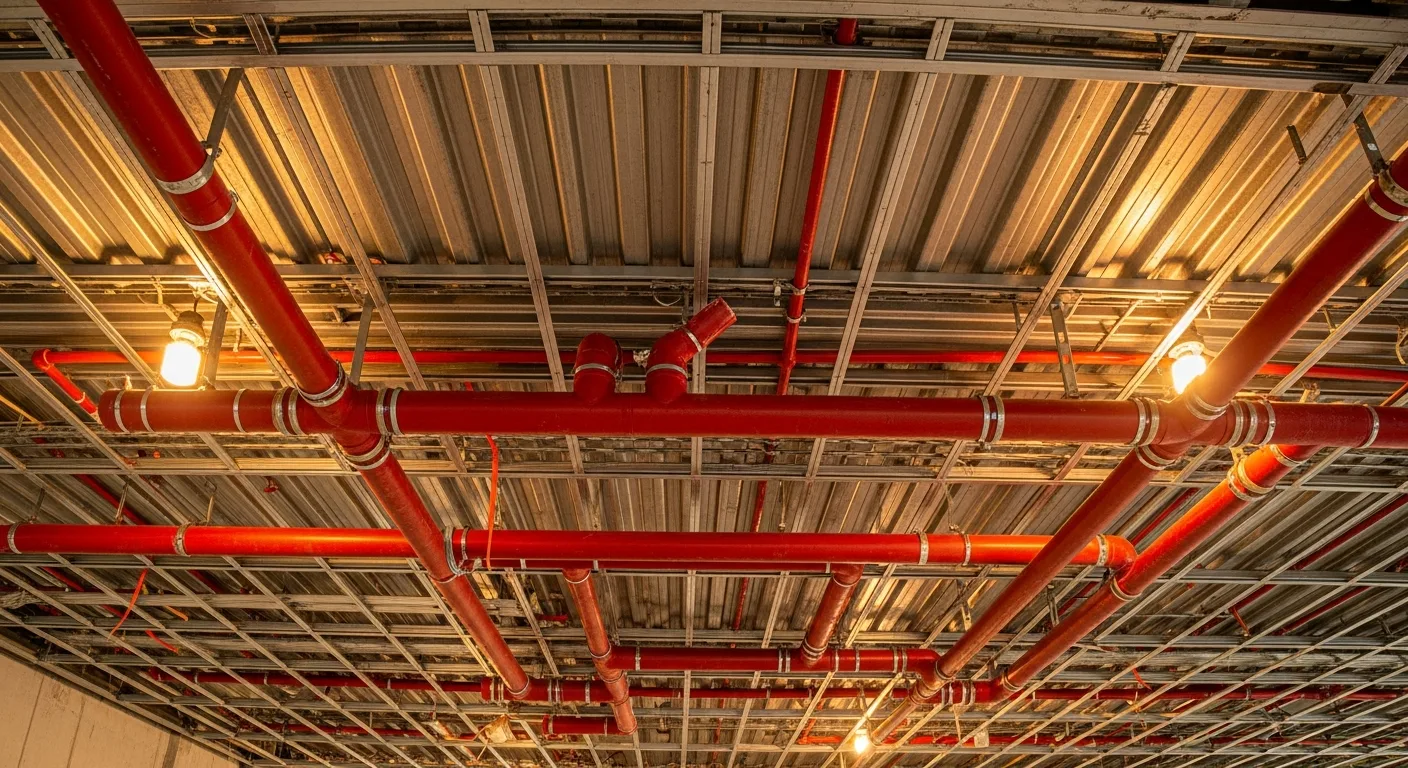
Fire sprinkler systems are one of those building components that nobody thinks about until they are needed. But for contractors, getting the installation right is a big deal. Sprinkler work touches structural framing, mechanical systems, electrical coordination, and fire code compliance all at once. A mistake during installation can mean a failed inspection, a flooded building, or worse.
Whether you are a general contractor coordinating with a fire protection sub, or a fire protection contractor looking for a refresher, this guide walks through the essentials: system types, pipe sizing, code requirements, and the real-world mistakes that cause problems on job sites.
Understanding Fire Sprinkler System Types
There are four main types of fire sprinkler systems. Each one fits different building conditions and hazard levels.
Wet Pipe Systems
Wet pipe systems are the most common type, making up roughly 70% of all installations. The piping is filled with pressurized water at all times. When a sprinkler head reaches its activation temperature, the heat-sensitive element (a glass bulb or fusible link) breaks, and water flows immediately.
Best for: Heated and climate-controlled spaces, offices, retail stores, apartments, schools, and most commercial buildings.
Advantages:
- Simplest design and lowest installation cost
- Fastest response time since water is already at the head
- Fewest mechanical components to maintain
- Most reliable system type overall
Limitations:
- Cannot be used where pipes might freeze
- Not suitable for areas where accidental water discharge would cause serious damage to sensitive equipment
Dry Pipe Systems
Dry pipe systems use pressurized air or nitrogen in the piping instead of water. When a head activates, the air pressure drops, which opens a dry pipe valve that floods the system with water.
Best for: Unheated warehouses, parking garages, loading docks, freezer buildings, and any space where temperatures drop below 40 degrees Fahrenheit.
Advantages:
- No risk of frozen, burst pipes in cold environments
- Can protect spaces that are impractical to heat
Limitations:
- Slower response time (up to 60 seconds for water to reach the head)
- More expensive to install and maintain
- Requires an air compressor or nitrogen generator
- Dry pipe valve and air maintenance equipment need regular service
- Maximum system size is limited (typically 750 gallons)
Pre-Action Systems
Pre-action systems are a hybrid. The pipes are dry, but the system requires two triggers before water flows: first, a detection system (smoke or heat detector) activates and opens the pre-action valve to fill the pipes; then, an individual sprinkler head must also activate.
Best for: Data centers, museums, libraries, telecom rooms, and any space where accidental water discharge would be catastrophic.
Advantages:
- Double-interlock reduces the chance of accidental discharge to near zero
- Pipes are dry, so a broken pipe does not cause flooding
Limitations:
- Most expensive and complex system type
- Requires both sprinkler and detection systems
- More components to maintain and test
Deluge Systems
Deluge systems have open sprinkler heads (no heat-sensitive element). All heads are connected to a deluge valve that is held closed by a detection system. When the detection system triggers, the valve opens and water flows from every head simultaneously.
Best for: High-hazard areas where fire can spread extremely fast, like chemical storage, aircraft hangars, and power generation facilities.
Advantages:
- Applies water across the entire protected area instantly
- Can handle fast-spreading, high-intensity fires
Limitations:
- Massive water demand requires large supply mains
- All heads discharge at once, which means significant water damage
- Complex detection and valve systems
Pipe Sizing Fundamentals
Getting pipe sizes right is critical. Undersized pipes will not deliver enough water to control a fire. Oversized pipes waste money and take up valuable space above the ceiling.
Hydraulic Calculations
Modern sprinkler systems are designed using hydraulic calculations rather than pipe schedule methods (though pipe schedule is still allowed for small, simple systems under NFPA 13). Hydraulic calculations determine the exact pipe sizes needed based on:
- Design density: The amount of water per square foot required by the hazard classification (measured in gallons per minute per square foot)
- Design area: The assumed area of sprinkler operation (typically 1,500 to 5,000 square feet depending on hazard)
- Friction loss: Pressure lost as water moves through pipes, fittings, and valves
- Available water supply: What the municipal main or fire pump can deliver
A qualified designer runs these calculations using specialized software. The output is a set of pipe sizes that ensures every head in the design area gets its required flow and pressure.
Common Pipe Materials
- Steel (black or galvanized): The traditional choice. Schedule 10 and Schedule 40 are most common. Galvanized is used in wet systems to reduce corrosion.
- CPVC: Approved for light hazard occupancies in certain configurations. Lighter, easier to install, and does not corrode. Cannot be used in concealed spaces above ceilings without specific listings.
- Copper: Used in some residential applications. Expensive but corrosion-resistant.
Typical Pipe Sizes
For most light and ordinary hazard commercial systems:
- Branch lines (feeding individual heads): 1 inch to 1-1/2 inches
- Cross mains (feeding branch lines): 2 inches to 3 inches
- Feed mains and risers: 3 inches to 6 inches
- Underground supply: 6 inches to 8 inches
These are general ranges. Your hydraulic calculations determine the actual sizes.
Pipe Hanging and Support
NFPA 13 has detailed requirements for how sprinkler pipe must be supported:
- Hangers must be within 12 inches of each change of direction
- Maximum hanger spacing varies by pipe size (typically 12 to 15 feet for steel pipe)
- Pipe must be braced for seismic loads in seismic zones
- Hangers must be attached to structural members, not to other building systems like ductwork or electrical conduit
Seismic bracing is a major cost factor in earthquake-prone regions. Four-way bracing of mains and two-way bracing of branch lines adds significant labor and material.
NFPA Code Requirements You Need to Know
Fire sprinkler codes are detailed and specific. Here are the key standards and requirements that affect installation work.
NFPA 13: Standard for the Installation of Sprinkler Systems
This is the primary standard for commercial and industrial sprinkler systems. Key provisions include:
- Hazard classification: Buildings are classified as Light Hazard, Ordinary Hazard (Group 1 or 2), or Extra Hazard (Group 1 or 2). This classification drives everything from head spacing to water supply requirements.
- Coverage area per head: Light hazard allows up to 225 square feet per standard spray head. Ordinary hazard allows up to 130 square feet.
- Obstruction rules: Sprinkler heads must be positioned so that obstructions (ductwork, beams, light fixtures) do not block the spray pattern. The standard includes specific distance and deflector requirements.
- Head clearance: Standard spray heads need 1 to 12 inches of clearance between the deflector and the ceiling. Sidewall heads have different rules.
- System riser requirements: Each system needs an accessible riser with a main drain connection, inspector’s test connection, and water flow alarm.
NFPA 13R: Residential Occupancies Up to Four Stories
NFPA 13R is a more relaxed standard for apartments, condos, hotels, and other residential buildings up to four stories. It allows omitting sprinklers in certain areas like bathrooms, closets, and attics where fire risk is lower.
NFPA 13D: One- and Two-Family Dwellings
NFPA 13D is the simplest standard, designed for houses and small residential buildings. It allows the use of the domestic water supply (no fire pump or dedicated main needed in most cases), multipurpose piping, and smaller pipe sizes.
NFPA 25: Inspection, Testing, and Maintenance
While not an installation standard, NFPA 25 defines ongoing requirements. Understanding these requirements during installation ensures the system can be properly maintained. Key points:
- Install inspector’s test connections at the hydraulically most remote point
- Provide accessible main drain connections
- Label all valves and control points
- Ensure test drains discharge to visible, safe locations
Local Amendments
Here is the critical thing: your local Authority Having Jurisdiction (AHJ), usually the fire marshal, may adopt modified versions of NFPA standards. They can add requirements, change spacing rules, or mandate specific products. Always verify local amendments before starting design work.
The Installation Process: Step by Step
1. Design and Plan Review
Before any pipe goes in, the system must be designed by a qualified designer (NICET Level III or IV, or a licensed fire protection engineer) and submitted to the AHJ for plan review. The submittal includes:
- Floor plans with head locations
- Riser diagrams
- Hydraulic calculations
- Product data sheets for all components
- Water supply test data
Plan review can take 2 to 6 weeks depending on the jurisdiction. Build this into your project schedule.
2. Water Supply Testing
Before design begins, test the available water supply. This means a flow test on the nearest hydrant or a test of the building’s fire pump. The test gives you static pressure, residual pressure at a known flow, and the supply curve. Without accurate water supply data, the hydraulic calculations are meaningless.
3. Rough-In Coordination
Sprinkler rough-in happens alongside other MEP trades. Coordination is critical because:
- Sprinkler mains need clear paths through the building
- Head locations must account for HVAC ductwork, electrical conduit, and lighting
- Seismic bracing needs structural attachment points
- Pipe routing affects ceiling heights and plenum space
In a well-run project, the GC coordinates all MEP trades through a combined ceiling plan or BIM model. In a poorly run project, the sprinkler fitter shows up and finds ductwork in the way.
4. Pipe Installation
Install risers first, then feed mains, cross mains, and branch lines. Key installation practices:
- Support all pipe per NFPA 13 hanger requirements
- Install seismic bracing as you go
- Use proper joint methods (threaded, grooved, or solvent-welded for CPVC)
- Keep pipe interiors clean; debris in the pipe can clog heads
- Install drain points at all low spots in the system
5. Head Installation
Sprinkler heads go in after the ceiling grid is in place (for concealed and recessed heads) or during rough-in (for exposed heads). Important details:
- Use the correct head type and temperature rating for each location
- Maintain proper clearance from the ceiling
- Do not paint sprinkler heads (paint can prevent activation)
- Protect heads from construction damage with head guards or covers
- Verify that no obstructions block the spray pattern
6. Hydrostatic Testing
Before the system goes live, fill it with water and pressurize it to 200 PSI (or 50 PSI above working pressure, whichever is higher) for two hours. No leaks allowed. This test must be witnessed by the AHJ or their representative.
7. Final Inspection and Acceptance
The fire marshal or AHJ inspector will check:
- Head placement and spacing against approved plans
- Hanger and brace installation
- Valve accessibility and labeling
- Inspector’s test and main drain function
- Alarm activation (flow switch triggers the fire alarm)
- As-built drawings match the installation
Common Installation Mistakes
Installing Heads Too Close to Obstructions
A sprinkler head that is too close to a beam, duct, or light fixture will have a blocked spray pattern. NFPA 13 includes specific tables for minimum distances from obstructions. Ignoring these tables is one of the top reasons inspectors reject systems.
Wrong Temperature Rating
Standard heads are rated at 155 degrees Fahrenheit, but areas near heat sources (skylights, unit heaters, kitchens, attics) need higher-rated heads (200 to 286 degrees). Using the wrong temperature rating means the head either activates too easily or not at all.
Missing Escutcheon Plates
Every head that passes through a ceiling needs an escutcheon plate (the decorative ring). Missing plates are a code violation because they affect the head’s spray pattern and allow fire to pass through the ceiling.
Inadequate Freeze Protection
Wet pipe in an unheated attic or loading dock will freeze and burst. Either use a dry system, insulate the pipe with heat trace, or ensure the space is heated to at least 40 degrees. Freeze-related pipe breaks are among the most expensive sprinkler failures.
Poor Coordination With Other Trades
When the sprinkler contractor installs pipe based on plans, but the HVAC contractor moves a duct after the fact, you end up with heads that are obstructed or pipe that does not fit. This is a project management problem, not a sprinkler problem.
Tracking Sprinkler Installation on Your Projects
Fire sprinkler work involves long lead times for plan review, precise coordination with other trades, scheduled inspections, and detailed documentation. Losing track of any piece means delays.
Projul’s scheduling and project management tools help you coordinate sprinkler rough-in with other trades, track inspection dates, store approved plans and test reports, and keep everyone on the same page from design through final acceptance.
If you are managing construction projects and want to see how Projul handles multi-trade coordination, book a demo or check pricing.
Quick Reference: Fire Sprinkler Installation Checklist
- Verify local code requirements and AHJ amendments
- Complete water supply flow test
- Submit design for plan review (allow 2 to 6 weeks)
- Coordinate pipe routing with all MEP trades
- Install risers, mains, and branch lines per approved plans
- Support and brace all pipe per NFPA 13
- Install heads with correct type, temperature rating, and clearance
- Perform hydrostatic test at 200 PSI for 2 hours
- Test alarm connections (flow switch to fire alarm panel)
- Schedule and pass final inspection with AHJ
- Provide as-built drawings and maintenance instructions to owner
Estimating and Bidding Fire Sprinkler Jobs
Pricing fire sprinkler work is different from most other trades. The variables are specific, the margins are tight, and missing one detail during takeoff can eat your entire profit on a job. Here is how experienced fire protection contractors approach estimating.
Understanding Cost Drivers
The biggest factors that affect sprinkler installation cost are building type, hazard classification, system type, and local labor rates. But beyond those obvious ones, there are several cost drivers that trip up newer contractors:
Water supply upgrades. If the existing municipal water main does not provide enough pressure and flow for the sprinkler system, somebody has to pay for a new tap, a larger service line, or a fire pump. On some projects, the water supply upgrade costs more than the sprinkler system itself. Always get a current flow test before you price the job. A flow test from two years ago is not reliable because municipal systems change as new buildings tap into the same mains.
Seismic bracing. In seismic design categories C through F, expect seismic bracing to add 15 to 25 percent to your labor and material costs. Four-way braces on mains require structural attachment points that may not exist where you need them, which means additional coordination with the structural engineer and possibly adding steel to the building.
Ceiling type and height. Drop ceilings with accessible tiles are the easiest and cheapest scenario. Hard lids (drywall ceilings) mean concealed heads with cover plates, which cost more per head and take longer to install. High ceilings above 20 feet require special head types (ESFR or large-drop heads) that have different spacing rules, higher water demand, and more expensive components.
Retrofit vs. new construction. Retrofitting a sprinkler system into an existing building is significantly harder than new construction. You are working around existing walls, ceilings, and utilities. Routing pipe through finished spaces often means opening walls and ceilings, then patching them after. Budget 30 to 50 percent more for retrofit work compared to similar new construction.
Plan review and permit fees. Some jurisdictions charge flat fees, others charge by square foot or by system. In major metro areas, plan review fees alone can run several thousand dollars. Do not forget to include these in your bid.
Per-Square-Foot Pricing Ranges
While every job is different, here are general ranges that contractors use for ballpark estimates:
- Residential (NFPA 13D): $1.50 to $3.00 per square foot. These systems use the domestic water supply, smaller pipes, and fewer heads per area.
- Multi-family residential (NFPA 13R): $2.00 to $4.00 per square foot. More heads than 13D, but still allows omitting coverage in some areas.
- Light hazard commercial (NFPA 13): $2.50 to $5.00 per square foot. Offices, retail, schools.
- Ordinary hazard commercial: $3.50 to $6.00 per square foot. Warehouses with moderate storage, manufacturing.
- Extra hazard / high-piled storage: $5.00 to $10.00+ per square foot. Requires ESFR or in-rack sprinklers, large water supplies, and heavy pipe.
These numbers include design, materials, labor, and testing but typically exclude fire pump installation, underground piping, and any structural modifications. Use them for preliminary estimates only. Detailed takeoff with hydraulic calculations is the only way to produce an accurate bid.
The Takeoff Process
A solid takeoff starts with scaled floor plans and the hydraulic calculation results. Count every component:
- Number and type of sprinkler heads
- Linear feet of each pipe size
- Number of fittings by type and size (elbows, tees, reducers, couplings)
- Hangers and hanger rods by size and type
- Seismic braces (lateral and longitudinal)
- Valves (OS&Y, butterfly, check, drain)
- Fire department connection and accessories
- Flow switches and tamper switches
- Underground pipe and fittings (if in your scope)
Then apply your labor rates to each item. Experienced fitters can install more linear feet per day than newer crews, so know your team’s actual production rates. A common mistake is using published industry averages instead of your crew’s real numbers.
Material pricing changes frequently, especially for steel pipe and grooved fittings. Get fresh quotes from your suppliers for each bid rather than relying on old price lists.
If you are using construction estimating software, make sure your sprinkler assemblies and labor rates are up to date. Outdated templates are a fast path to underbidding.
Protecting Your Margins
Fire protection contracting runs on thinner margins than most people expect. A few tips from contractors who have been doing this for decades:
Qualify your bids. List every exclusion clearly. If underground is not in your scope, say so. If you are bidding to a specific set of plans and the architect revises them, your price should not hold.
Allowances for unknowns. On retrofit work especially, include allowances for concealed conditions. You will not know exactly what is behind every wall until you open it up.
Change order discipline. When the GC or owner changes the layout after you have started, that is a change order. Document every field change, no matter how small. Small changes add up fast on sprinkler work because moving one head can cascade into resizing the branch line, moving a hanger, and adjusting the hydraulic calculations.
Payment terms. Sprinkler materials (especially for large systems) represent a big upfront cost. Structure your payment schedule so you are not floating large material purchases for months. Progress billing tied to installation milestones is standard practice.
Coordinating Fire Sprinkler Work With Other Trades
If there is one theme that runs through every failed sprinkler inspection and every blown schedule on a project, it is poor coordination. Sprinkler pipe has to coexist with HVAC ductwork, electrical conduit, plumbing waste and vent lines, structural steel, and sometimes low-voltage cabling. All of these systems compete for the same space above the ceiling.
The Ceiling Space Problem
In a typical commercial building, the space between the structural deck and the finished ceiling is where everything goes. On a tight project, you might have 18 inches of usable space to fit all your utilities. When coordination breaks down, here is what happens:
The HVAC contractor installs a large rectangular duct right where the sprinkler main was supposed to go. The sprinkler fitter shows up two days later, sees the conflict, and now has to reroute pipe. Rerouting means longer pipe runs, additional fittings, more friction loss, and possibly resizing the pipe. If the reroute is significant, the hydraulic calculations no longer work, and the designer has to revise them. Meanwhile, the ceiling contractor is waiting and the project schedule is slipping.
This scenario plays out on job sites every single day. The solution is proactive coordination before any pipe or duct goes up.
BIM and Combined Ceiling Plans
On larger commercial projects, Building Information Modeling (BIM) lets all trades model their systems in 3D and run clash detection before anyone picks up a wrench. Every conflict gets resolved on screen instead of in the field. This is the gold standard for coordination.
On smaller projects where full BIM is not in the budget, a combined ceiling plan (also called a composite overlay) works well. The GC overlays the sprinkler, HVAC, plumbing, and electrical plans at the same scale to identify conflicts. It is not as precise as BIM, but it catches the major issues.
For general contractors managing these overlapping trades, having a single place to track each sub’s schedule, share updated plans, and log coordination decisions is the difference between a smooth project and a chaotic one. Project management tools built for construction let you centralize that coordination instead of relying on scattered emails and phone calls.
Sequencing and Scheduling
The installation order of MEP trades matters. On most commercial projects, the typical sequence is:
- Plumbing rough-in (especially waste and vent, which have the least flexibility in routing)
- Sprinkler mains and cross mains (these are large-diameter and need first access to primary routes)
- HVAC ductwork (large rectangular ducts need specific routing)
- Sprinkler branch lines and heads (these adapt around ductwork and fill in remaining space)
- Electrical conduit and cable tray (most flexible in routing, goes last)
This sequence is not set in stone, and every project is different. But the principle holds: the least flexible systems go in first.
On a tight schedule, multiple trades work in the same area at the same time. This requires daily or weekly coordination meetings where each foreman confirms their planned work areas and identifies any conflicts. A good GC runs these meetings religiously.
If you want to keep sprinkler rough-in on track with other trades, construction crew scheduling is worth studying. Getting the right crew in the right area on the right day prevents the pile-ups that kill schedules.
Working With the General Contractor
Fire protection subs sometimes feel like they are at the bottom of the coordination priority list. The reality is that sprinkler work has some of the strictest code requirements of any trade, and rerouting sprinkler pipe is harder than rerouting a few sticks of EMT conduit.
Good fire protection contractors communicate their routing needs early, attend coordination meetings, provide their BIM models or CAD drawings on time, and flag conflicts the moment they spot them. If the GC is not holding coordination meetings, the fire protection sub should be the one asking for them. It is in your interest to force the conversation before the ductwork goes up.
Managing Change in the Field
No matter how good the coordination is, field conditions change. Structural members are not exactly where the drawings show them. The architect moves a wall. The owner adds a server room that was not in the original plans.
Every field change to the sprinkler system needs to flow back to the designer. Unlike some trades where you can make a minor adjustment and nobody notices, sprinkler changes affect hydraulic calculations, coverage patterns, and code compliance. A head moved 3 feet might still be within code. A head moved 6 feet might create a gap in coverage that fails inspection.
Document every field change on your as-built drawings. Take photos. Send RFIs when you encounter conditions that differ from the plans. This protects you when the inspector shows up and questions why something does not match the approved drawings.
Inspection Strategies and Getting Systems Approved
Every fire sprinkler system needs to pass inspection by the local Authority Having Jurisdiction before it can go into service. For most projects, this means the fire marshal or a designated third-party inspector. Inspections can be straightforward if you prepare, or they can be a recurring source of delays and frustration if you do not.
Preparing for the Rough-In Inspection
Many jurisdictions require a rough-in inspection before the ceiling goes up. This is your chance to get the inspector’s eyes on the pipe routing, hanger spacing, head positions, and bracing while everything is still accessible. If you skip this step (or your jurisdiction does not require it), problems that are easy to fix during rough-in become very expensive to fix after the ceiling is installed.
Before calling for the rough-in inspection:
- Walk the entire system yourself. Check every head position against the approved plans. Measure clearances from ceilings, walls, and obstructions.
- Verify hanger spacing with a tape measure, not by eyeballing it. Inspectors often carry a measuring tape and check random hangers.
- Make sure all seismic bracing is installed per the seismic calculations. Missing braces are a common rejection item.
- Check that pipe is properly supported at every change of direction.
- Confirm that all penetrations through fire-rated assemblies have approved firestop materials.
- Remove any debris from inside the pipe system before you test.
The Hydrostatic Test
The hydrostatic test is the most common point of failure during the inspection process. The system must hold 200 PSI (or 50 PSI above the maximum working pressure, whichever is greater) for a full two hours with zero visible leaks.
Tips for passing the hydro test on the first try:
Fill slowly. Filling the system too fast traps air pockets. Air compresses under pressure and can mask leaks during the test, only to reveal them later. Fill from the lowest point and bleed air from the highest points.
Tighten everything before you pressurize. It sounds obvious, but missed fittings are the number one cause of hydro test failures. Have a crew member walk the entire system and visually confirm that every joint is complete before you bring it up to pressure.
Watch the gauge. A slow, steady pressure drop over the two-hour test period usually means a very small leak. Temperature changes can also cause minor pressure fluctuations, so note the water temperature at the start and end of the test. Inspectors know this and will usually accept minor fluctuations if the temperature changed.
Have repair materials on hand. If a fitting leaks, you want to fix it and retest immediately rather than scheduling a return trip. Bring extra couplings, gaskets, and thread sealant to the test.
The Final Acceptance Test
The final inspection includes everything: head placement, hanger spacing, valve labeling, alarm function, main drain test, and the inspector’s test connection. Here is how to set yourself up for a clean final:
Prepare a test package. Give the inspector a complete set of as-built drawings, hydraulic calculations, material certifications, contractor license copies, and test reports (including the hydrostatic test results). Having this packet ready shows professionalism and saves time.
Test the alarm before the inspector arrives. Open the inspector’s test connection and verify that the flow switch triggers the building fire alarm within the required time (usually 30 to 90 seconds). If the alarm does not activate, work with the fire alarm contractor to troubleshoot before the inspection.
Label everything. Every control valve needs a sign indicating what it controls. The fire department connection needs signage. The riser room needs proper identification. Missing labels are easy to fix but embarrassing to explain to an inspector.
Be present. The contractor or a qualified representative should be present during the inspection. If the inspector has questions about the installation, you want someone there who can answer them on the spot. Sending an apprentice who cannot explain a design decision is not going to go well.
Dealing With Inspection Failures
If the inspector finds deficiencies, get the written correction notice and address every item before requesting a reinspection. Do not argue with the inspector on the job site about code interpretations. If you genuinely believe the inspector is wrong, take it up through the proper appeals process with the AHJ.
Common reasons for inspection failures:
- Heads too close to obstructions or walls
- Missing or incorrect escutcheon plates
- Hanger spacing exceeding code limits
- Unsealed penetrations through fire-rated assemblies
- Alarm system not connected or not functioning
- As-built drawings that do not match field conditions
- Missing valve signage or labeling
Most of these are easy fixes if you catch them before the inspector does. That is why a thorough self-inspection before you call for the official one is so valuable.
For contractors tracking inspections across multiple active projects, keeping a centralized record of inspection dates, results, and outstanding corrections is critical. Losing track of a required reinspection can hold up a certificate of occupancy for the entire building. Using permit and inspection tracking tools keeps everything visible so nothing falls through the cracks.
Fire Sprinkler Maintenance and Service Contracts
Many fire protection contractors make as much or more money from inspection, testing, and maintenance (ITM) contracts as they do from new installations. If you are a fire protection contractor, building a service division alongside your installation work creates steady recurring revenue that smooths out the feast-or-famine cycle of project work.
NFPA 25 Requirements Overview
NFPA 25 lays out the inspection, testing, and maintenance schedule for all water-based fire protection systems. The building owner is ultimately responsible for compliance, but in practice they hire a licensed fire protection contractor to do the work.
Key recurring requirements:
Weekly/Monthly:
- Visual inspection of control valves (confirm open position)
- Check gauges on dry and pre-action systems
- Verify fire pump is running (if applicable)
Quarterly:
- Visual inspection of all sprinkler heads and piping from floor level
- Water flow alarm test
- Valve supervisory alarm test
- Fire pump test (flow and no-flow conditions)
Annually:
- Main drain test (measures waterflow through the system)
- Fire pump full-flow test
- Internal inspection of dry pipe valves and pre-action valves
- Spare head cabinet inventory (minimum six heads of each type)
- Trip test of dry pipe and deluge valves
Every 5 years:
- Internal pipe inspection (for systems with known corrosion or MIC issues)
- Obstruction investigation if any indicators are found
- Fire pump field acceptance re-test
- Gauge replacement or recalibration
Every 10 years:
- Dry system full trip test with full water flow to the inspector’s test
- Fast-response head replacement (or sample testing)
Every 20 years:
- Standard-response head replacement (or sample testing)
Building a Service Business
For contractors looking to build a maintenance and inspection business alongside installation work, here are the practical considerations:
Licensing. Most states require the same license for ITM work as for installation. Some states have separate inspection-only certifications. Check your state requirements.
Pricing service contracts. Most ITM contracts are priced annually with quarterly visits. Pricing depends on the number and type of systems, the number of heads, whether fire pumps are included, and travel distance. A typical commercial building with a single wet system and 200 heads might run $800 to $1,500 per year for quarterly inspections and annual testing.
Deficiency reports. Every inspection generates a report that lists any deficiencies found. This is where the additional revenue comes from. When you find corroded pipe, painted heads, missing escutcheons, or a faulty valve, you quote the repair work separately. A well-run service division generates significant repair revenue on top of the base contract.
Customer retention. Building owners switch fire protection contractors for two reasons: price and poor service. Being responsive when they call, delivering reports on time, and clearly explaining deficiencies (without being alarmist) keeps customers for years.
Fleet and inventory. Service work requires a stocked truck with common replacement parts: heads of various types and temperature ratings, escutcheons, wrenches, test gauges, and valve repair kits. Running back to the shop for a $4 escutcheon costs you more in drive time than the part is worth.
Scheduling efficiency. Grouping service calls by geographic area reduces windshield time. If you have 15 accounts on the east side of town, schedule them all in the same week rather than driving back and forth. Good scheduling practices apply to service work just as much as project work.
Documentation and Liability
Fire protection ITM work carries significant liability. If a system fails during a fire and the last inspection report said everything was fine, the inspection contractor is going to hear from the attorneys.
Protect yourself by:
- Documenting every deficiency, no matter how minor
- Taking photos during inspections
- Getting the building owner’s written acknowledgment of deficiencies they decline to repair
- Keeping inspection records for at least the local statute of limitations (often 10 years or more)
- Maintaining adequate professional liability insurance
This is where having organized digital records matters. Paper inspection forms stuffed in a filing cabinet are a liability. Digital records tied to each property, with photos and date stamps, hold up much better when questions arise years later. Construction business insurance is another piece of this puzzle that every fire protection contractor should understand.
Final Thoughts
Fire sprinkler installation is a specialty trade that demands precision, code knowledge, and tight coordination with every other system in the building. Whether you are a GC managing a sprinkler sub or a fire protection contractor running your own crew, understanding these fundamentals keeps your projects on track and your buildings safe.
The systems are not complicated in concept. Water goes through pipes to heads that open when they get hot. But the details of getting the right water, to the right place, at the right pressure, with the right coverage, are what make this work a true trade skill.
Get the details right, document everything, and coordinate early. Your inspections will go smoother and your buildings will be safer for it.
Frequently Asked Questions
What is the difference between wet and dry fire sprinkler systems?
How much does it cost to install a fire sprinkler system?
What NFPA standard covers fire sprinkler installation?
How far apart should fire sprinkler heads be spaced?
Do fire sprinkler pipes need to be insulated?
Who can install fire sprinkler systems?
How often do fire sprinkler systems need inspection?
Can fire sprinklers go off accidentally?
Related Articles

Best Glazier Software in 2026: 6 Options Compared for Glass Contractors
Looking for the best glazier software? We compare six top options for glass contractors, covering features, pricing,...
Read More →
Best Roofing Contractor Software in 2026: 6 Options Compared
Looking for the best roofing contractor software? We compare six top options, including pricing, roofing-specific...
Read More →
Markup vs Margin in Construction: The Math Every Contractor Gets Wrong
Ask a contractor what margin they need on a job and they'll say 30%. Then watch them estimate the job. They take their...
Read More →