
Green Building and LEED Certification Guide for Contractors | Projul
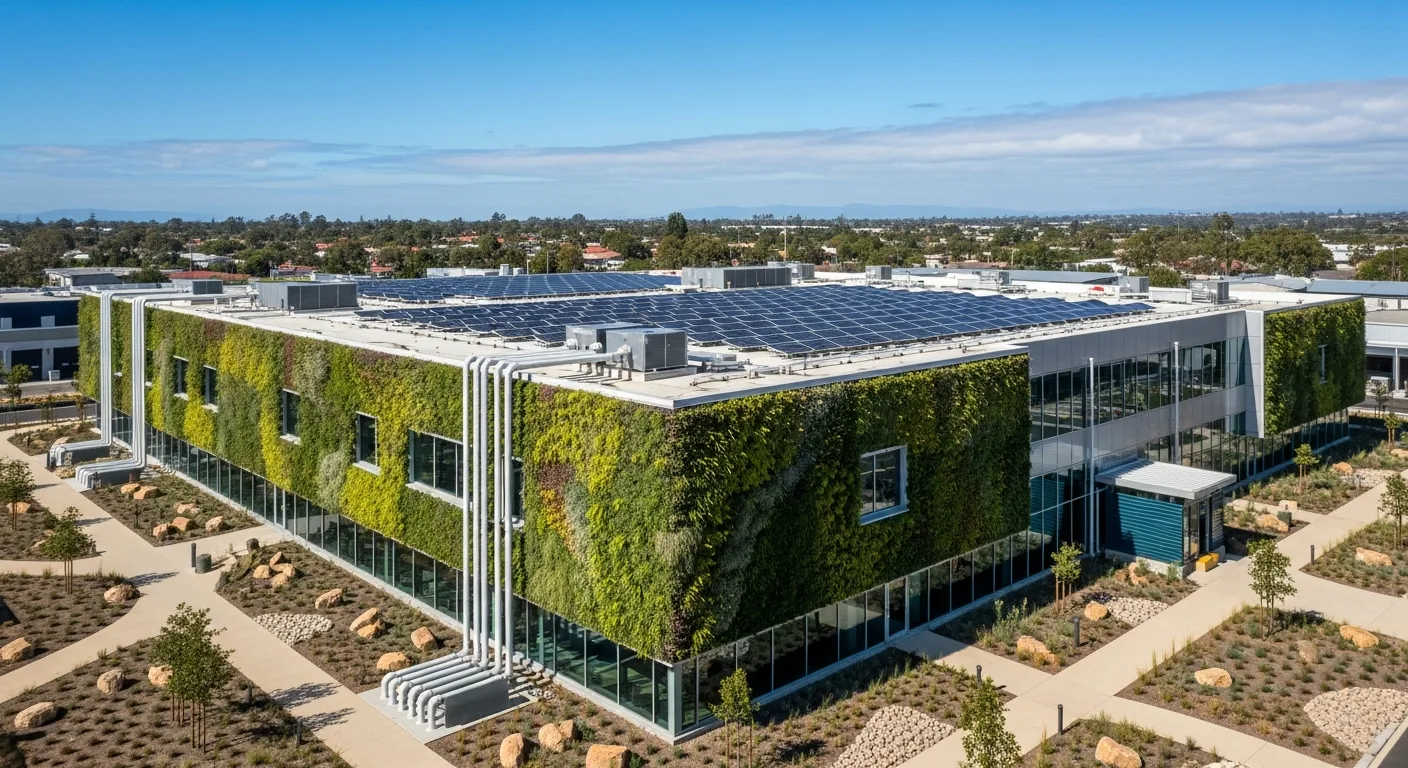
Green Building and LEED Certification Guide for Contractors
Green building is not a trend anymore. It is a standard expectation on a growing percentage of commercial, institutional, and even residential projects. If you are a general contractor or specialty contractor working in commercial construction, you will encounter LEED requirements, green building specifications, and sustainability goals on your projects. Understanding how these systems work, what they require from you, and how to manage the documentation makes you a more valuable contractor.
This guide covers the LEED rating system, the credits that affect contractors most directly, sustainable material selection, energy modeling basics, and the documentation practices that make the difference between a smooth certification and a painful one.
What Is LEED and Why Does It Matter?
LEED stands for Leadership in Energy and Environmental Design. Developed and administered by the U.S. Green Building Council (USGBC), it is the most widely recognized green building rating system in the world. Over 100,000 projects have been LEED certified across 180 countries.
LEED provides a point-based system for evaluating how sustainably a building is designed, constructed, and operated. Projects earn credits in several categories, and the total points determine the certification level:
- Certified: 40 to 49 points
- Silver: 50 to 59 points
- Gold: 60 to 79 points
- Platinum: 80 points and above
The current version, LEED v4.1, applies to new construction (LEED BD+C), existing buildings (LEED O+M), interior fit-outs (LEED ID+C), and several other project types.
Why Contractors Should Care
Even if you are not the one pursuing LEED certification (that is usually the owner or developer’s decision), you are the one who has to deliver it. The construction phase credits and prerequisites fall squarely on the contractor’s shoulders. If your team does not manage waste correctly, does not source the right materials, does not protect indoor air quality during construction, or does not provide the required documentation, the project may miss its certification target.
Contractors who understand LEED also win more work. Owners and architects prefer working with contractors who have LEED experience because it reduces risk. Having LEED AP credentials on your team and a track record of certified projects is a competitive advantage in the bidding process.
LEED Credit Categories
LEED v4.1 for new construction organizes credits into several categories. Here is what each one means for contractors.
Integrative Process (1 credit)
This credit rewards early collaboration between the design and construction teams to identify sustainability opportunities. As a contractor, your involvement in preconstruction meetings where energy, water, and material strategies are discussed contributes to earning this credit.
Location and Transportation (16 credits)
These credits are mostly determined by the project site location and are outside the contractor’s control. Credits reward dense urban locations, proximity to public transit, bicycle facilities, and reduced parking footprints. The contractor may be responsible for installing bicycle storage, shower facilities, and preferred parking for fuel-efficient vehicles.
Sustainable Sites (10 credits)
Site-related credits that affect contractors include:
Construction activity pollution prevention (prerequisite): You must implement an erosion and sedimentation control plan that meets or exceeds the EPA’s Construction General Permit requirements. This means silt fencing, inlet protection, stabilized construction entrances, dust control, and proper handling of construction chemicals. This is a prerequisite, meaning you cannot get LEED certification at all if you fail this one.
Site restoration: Restore or protect a percentage of the site with native or adapted vegetation. This affects your grading plan and landscaping scope.
Rainwater management: Design the site to manage stormwater through retention, infiltration, or reuse. Contractors may install bioswales, permeable pavement, rain gardens, or underground detention systems.
Heat island reduction: Use high-reflectance roofing materials, open-grid pavement, shade trees, or covered parking to reduce the heat island effect. The roofing and paving specifications will reflect these requirements.
Water Efficiency (11 credits)
Water efficiency credits cover both indoor and outdoor water use:
Indoor water use reduction (prerequisite and credits): Install water-efficient fixtures (low-flow faucets, dual-flush toilets, water-sense urinals) that reduce indoor water consumption by 20 percent (prerequisite) to 50 percent or more (credits). As a plumbing contractor, you will see these specifications on every LEED project.
Outdoor water use reduction: Use native landscaping, high-efficiency irrigation, or no permanent irrigation at all. The landscape contractor needs to understand these requirements.
Cooling tower water use: For commercial buildings with cooling towers, manage blow-down cycles to reduce water consumption.
Energy and Atmosphere (33 credits)
This is the largest credit category and the one that has the most impact on building performance and construction cost.
Fundamental commissioning (prerequisite): Every LEED project must have a commissioning agent who verifies that the HVAC, lighting controls, and building envelope perform as designed. The contractor must cooperate with the commissioning agent by providing access, supporting functional testing, and correcting deficiencies identified during commissioning.
Minimum energy performance (prerequisite): The building must meet or exceed ASHRAE 90.1 energy code. This is usually handled through the mechanical and electrical design, but the contractor must build what is specified. Substitutions that downgrade energy performance can jeopardize this prerequisite.
Energy modeling and performance optimization (up to 18 credits): The design team uses energy modeling software to demonstrate that the building will use less energy than a baseline code-compliant building. Credits increase with greater energy savings. The contractor’s role is to build the envelope, HVAC, and lighting systems exactly as specified and to avoid value engineering decisions that compromise energy performance without the design team’s approval.
Renewable energy (up to 5 credits): On-site renewable energy generation (solar PV, solar thermal, wind) earns credits based on the percentage of building energy offset. The contractor installs these systems per the design documents.
Refrigerant management: Use HVAC equipment with refrigerants that have low global warming potential (GWP) and ozone depletion potential (ODP). This affects equipment selection and is typically handled in the specifications, but the contractor should not substitute equipment without checking the refrigerant compliance.
Materials and Resources (13 credits)
This is where contractors have the most direct influence on LEED outcomes.
Construction and demolition waste management (prerequisite and credits): Divert at least 50 percent of construction waste from landfills (prerequisite). Earn additional credits by diverting 75 percent or more. This requires:
- A construction waste management plan identifying the waste streams (wood, metal, concrete, cardboard, drywall, etc.) and the diversion strategy for each
- Separate dumpsters or a commingled recycling hauler that sorts at the facility
- Weight tickets or volume records for every load leaving the site, documenting destination (landfill, recycler, salvage)
- A running calculation of the diversion rate
This credit is very achievable with good planning. Most construction waste is recyclable: concrete and masonry can be crushed, wood can be chipped or recycled, metal always has salvage value, and cardboard is readily recyclable. The main challenge is keeping the job site organized enough that waste streams do not get contaminated.
Building product disclosure and sourcing (multiple credits): Credits reward the use of products with:
- Environmental Product Declarations (EPDs): Manufacturer-published documents that disclose the environmental impact of a product through its life cycle
- Recycled content: Products made from post-consumer or pre-consumer recycled materials
- Regional materials: Products extracted, processed, and manufactured within a specified distance of the project site (reducing transportation impact)
- Responsible sourcing: Wood products certified by the Forest Stewardship Council (FSC) or equivalent
For contractors, tracking these material attributes is the biggest documentation burden. You need to collect EPDs, recycled content certifications, FSC certificates, and manufacturer locations for every applicable product on the project. Starting this documentation early and maintaining it throughout construction is far easier than trying to reconstruct it at the end.
Construction indoor air quality (IAQ) management (1 credit): Protect indoor air quality during construction by:
- Sealing ductwork openings during construction to prevent contamination
- Protecting stored materials from moisture damage
- Using low-VOC adhesives, sealants, paints, coatings, and flooring systems
- Performing a building flush-out before occupancy (running the HVAC system at 100 percent outside air for a specified period) or conducting IAQ testing to verify pollutant levels are below thresholds
Indoor Environmental Quality (16 credits)
Several IEQ credits affect the construction process:
Low-emitting materials: Use paints, coatings, adhesives, sealants, flooring, and composite wood products that meet specified VOC limits. The specifications will call out the required standards (CDPH v1.2, SCAQMD, Green Seal, etc.). The contractor must verify that the products delivered to the site actually meet these requirements, not just that they were specified.
Thermal comfort and lighting quality: These are primarily design credits, but the contractor must install the systems correctly for them to perform as designed.
Acoustic performance: For schools and healthcare facilities, acoustic requirements include sound isolation, background noise control, and reverberation time. The contractor must follow the acoustic design details carefully, as small gaps in sound isolation construction can ruin the performance.
Energy Modeling: What Contractors Need to Understand
You do not need to be an energy modeler, but understanding the basics helps you make better decisions during construction.
Energy modeling simulates the building’s annual energy consumption using software like EnergyPlus, eQUEST, or Trane TRACE 3D Plus. The modeler builds a virtual replica of the building, including:
- Building geometry and orientation
- Wall, roof, and floor assemblies (U-values, R-values)
- Window specifications (U-value, SHGC, visible transmittance)
- HVAC system type, capacity, and efficiency
- Lighting power density and controls
- Plug and process loads
- Local climate data (TMY weather files)
The model calculates the building’s annual energy cost and compares it to a baseline building built to minimum ASHRAE 90.1 requirements. The percentage savings determine the LEED energy credits earned.
Why This Matters to Contractors
When you value engineer a project, every change to the building envelope or mechanical systems can affect the energy model results. Switching from a specified curtain wall system to a cheaper one with a higher U-value, or substituting a less efficient chiller, can reduce the energy savings percentage and cost the project LEED credits.
Before making substitutions on a LEED project, run them past the design team and the energy modeler. A substitution that saves $50,000 in construction cost but loses 3 LEED credits may not be acceptable to the owner.
Documentation: The Make-or-Break Factor
More LEED projects fail on documentation than on actual building performance. The credits are achievable; the paperwork is where things fall apart.
Setting Up Your Documentation System
Start documentation on day one, not at the end of the project. Set up a system to collect and organize:
Waste management records: Weight tickets, hauler reports, diversion calculations updated monthly.
Material certifications: EPDs, recycled content letters, FSC chain-of-custody certificates, VOC test reports, manufacturer locations for regional materials calculations. Collect these from every supplier and subcontractor as materials are delivered.
IAQ management photos and logs: Photos of sealed ductwork, protected material storage, and filter replacement logs. Date and location-stamp everything.
Commissioning documentation: Pre-functional checklists, functional test reports, deficiency logs, and corrective action records.
Erosion control inspection logs: Weekly and post-rain inspections of erosion and sedimentation control measures with photos and corrective actions documented.
Using Project Management Software for LEED Documentation
Managing LEED documentation manually with file folders and spreadsheets works on small projects but becomes unwieldy on larger ones. Construction project management software that allows you to attach documents to specific tasks, organize files by credit category, and share documentation with the LEED consultant and design team makes the process much more manageable.
With Projul, you can create a task for each LEED credit, attach the supporting documentation as it is collected, and track the status of each credit throughout the project. When the LEED consultant needs the waste diversion reports or the IAQ management plan, they are in the system, organized and accessible.
Submitting Through LEED Online
All LEED documentation is submitted through LEED Online, the USGBC’s web-based platform. The LEED consultant or project administrator typically manages the submission, but contractors are responsible for providing the raw data and documentation that supports each credit.
Credits are submitted in two phases:
Design review: Submitted after design is complete but before construction starts. Primarily covers design-phase credits.
Construction review: Submitted after construction is complete. Covers all construction-phase credits and any design credits that were deferred.
The review process takes 20 to 25 business days. USGBC reviewers may request additional information or clarification, and you have 25 business days to respond. Having well-organized documentation from the start makes these responses straightforward.
Sustainable Material Selection
Choosing the right materials affects multiple LEED credits and the building’s long-term environmental performance. Here are the key considerations:
Recycled Content
Steel, aluminum, concrete (with fly ash or slag cement), carpet, ceiling tiles, and many other common construction materials are available with significant recycled content. Specifying and tracking recycled content is one of the simplest ways to earn material credits.
Regional Materials
Using materials sourced and manufactured near the project site reduces transportation energy and supports the local economy. Track the manufacturer’s plant location and the raw material extraction point for each product. Most LEED consultants use a 500-mile radius for regional material calculations.
FSC-Certified Wood
The Forest Stewardship Council certifies that wood products come from responsibly managed forests. Using FSC-certified lumber, plywood, and millwork earns material credits. The chain-of-custody documentation must be maintained from the FSC-certified supplier through to the project.
Low-VOC Products
Volatile organic compounds off-gas from paints, adhesives, sealants, coatings, and flooring products, degrading indoor air quality. LEED specifies maximum VOC content limits for each product category. Verify compliance by checking the product’s Safety Data Sheet (SDS) or manufacturer’s VOC test report.
Cost Considerations
The construction cost premium for LEED certification varies by project and certification level:
- Certified and Silver: 0 to 3 percent premium. Many of the credits at these levels involve better practices (waste management, IAQ protection) rather than more expensive materials or systems.
- Gold: 2 to 5 percent premium. Higher energy performance requirements may increase mechanical and envelope costs.
- Platinum: 5 to 10 percent premium. Achieving the highest certification level typically requires on-site renewable energy, advanced building systems, and premium materials.
These premiums are offset by long-term operating cost savings (energy, water, maintenance), higher property values, and in many markets, tax incentives, expedited permitting, or density bonuses.
Managing Green Building Projects
Green building projects have additional coordination requirements beyond conventional construction. The commissioning agent, LEED consultant, energy modeler, and sustainability consultant all need to interact with the construction team at various points.
Using Projul for project management helps you keep track of the sustainability requirements alongside the conventional construction activities. Schedule commissioning milestones, track material certification collection, manage waste diversion reporting, and coordinate with the LEED consultant, all in one platform.
If you are expanding into green building work and need better tools to manage the added complexity, check out Projul’s pricing or schedule a demo to see the platform in action.
Getting Started with Green Building
You do not need to jump into Platinum-level LEED projects on day one. Start by:
- Implementing waste management best practices on all your projects. Recycling construction waste is good business regardless of LEED.
- Learning the LEED credit system. Read through the LEED v4.1 BD+C scorecard and identify the credits that apply to your typical project types.
- Getting LEED AP credentials. The LEED Green Associate exam is a good starting point. The LEED AP BD+C credential demonstrates deeper expertise.
- Partnering with experienced LEED consultants on your first certified project. Their guidance will help you avoid common documentation mistakes.
- Tracking your green building experience in your company qualifications. Every LEED project you complete strengthens your resume for the next one.
Green building is here to stay, and the requirements are only getting stricter as energy codes tighten and sustainability expectations increase. Contractors who build the knowledge and systems to deliver certified projects are positioning themselves for long-term success in a market that values performance as much as price.
Frequently Asked Questions
What is LEED certification and who administers it?
How much does LEED certification cost?
What LEED credits are easiest for contractors to achieve?
Do contractors need special certification to work on LEED projects?
What is building commissioning and why does LEED require it?
How does energy modeling work for LEED certification?
What documentation does a contractor need to provide for LEED?
Is LEED certification worth it for small commercial projects?
Related Articles

BIM Clash Detection: How to Catch Conflicts Before They Cost You on the Jobsite
BIM Clash Detection: How to Catch Conflicts Before They Cost You on the Jobsite Every contractor has a story about the...
Read More →
Asphalt Paving and Compaction Guide: Mix Types, Laydown Temperatures, and Quality Testing
Asphalt paving looks straightforward from a distance. A truck dumps material, the paver lays it down, and rollers...
Read More →
Construction Jobsite Wi-Fi & Connectivity Guide: Setting Up Reliable Internet in the Field
A practical guide to getting reliable internet on construction job sites. Learn about cellular hotspots, mesh networks,...
Read More →