
HVAC Rough-In Inspection Checklist
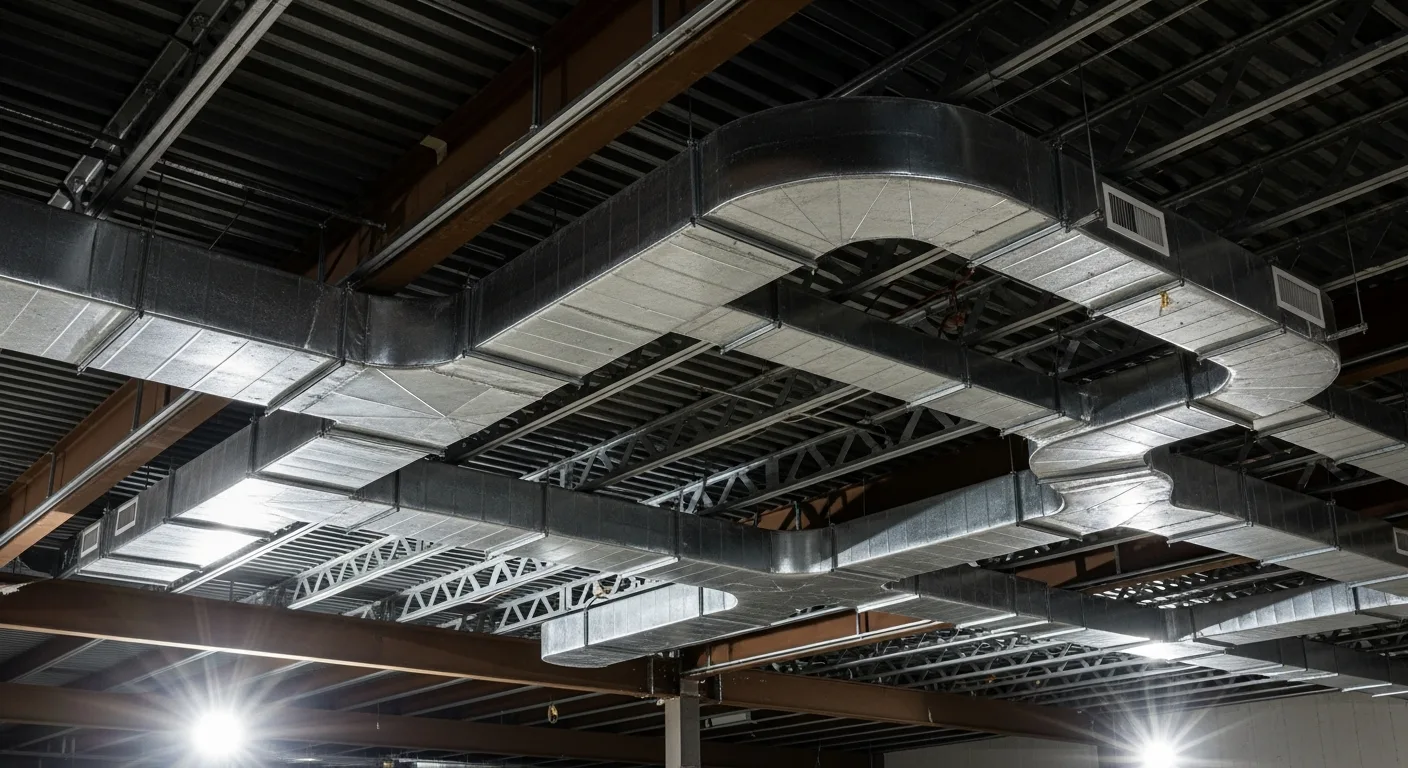
If you have been in construction long enough, you know that HVAC rough-in inspections can make or break your schedule. A failed inspection means rework, delays, and frustrated clients. The good news is that most failures are preventable if you know what inspectors are looking for and prepare accordingly.
This guide walks you through everything you need to know about HVAC rough-in inspections, from pre-inspection preparation to the specific items inspectors check, common failure points, and how to document your work so you pass the first time.
What Happens During an HVAC Rough-In Inspection
The HVAC rough-in inspection is one of several mechanical inspections required during construction. It takes place after all the ductwork, refrigerant lines, condensate drains, and control wiring are installed but before insulation and drywall go up. The purpose is simple: verify that everything meets code before it gets hidden inside walls and ceilings.
The inspector will walk the entire project, checking duct routing, connections, support methods, equipment placement, clearances, and code compliance. They will also verify that the installed system matches the approved mechanical plans.
This inspection is separate from the final HVAC inspection, which happens after the system is fully operational and tested.
Pre-Inspection Preparation: Setting Yourself Up to Pass
The single biggest factor in passing HVAC rough-in inspections is preparation. Here is what you should do before calling for the inspection.
Review the Approved Plans
Before the inspector arrives, walk the job yourself with the approved mechanical plans in hand. Compare what is installed to what was approved. Any deviations need to be documented and, in many cases, approved through a plan revision before the inspection.
Pay special attention to:
- Equipment locations and model numbers
- Duct sizing and routing
- Return air pathways
- Combustion air provisions
- Condensate drain routing
Verify All Work Is Accessible
Inspectors cannot approve what they cannot see. Make sure no insulation, drywall, or other coverings have been installed over any HVAC work. This includes areas where ducts pass through floor systems, chases, and soffits.
If your framing crew is eager to close up walls, communicate clearly that the mechanical rough-in must be inspected first. This is one of the most common scheduling conflicts on residential jobs.
Have Documentation on Site
Keep a complete set of documents on site and easily accessible:
- Approved mechanical plans
- Mechanical permit (posted visibly)
- Equipment cut sheets and specifications
- Manual J heat load calculations
- Manual D duct design calculations
- Energy code compliance documentation
- Manufacturer installation instructions
Clean Up the Work Area
A clean job site signals professionalism and makes the inspection go faster. Remove scrap material, clear pathways to all ductwork and equipment, and make sure the inspector can safely access every area they need to see.
What Inspectors Check: The Complete Breakdown
Understanding exactly what inspectors look for gives you a clear checklist to work from. Here is a detailed breakdown of every major inspection point.
Ductwork Installation
Ductwork is the backbone of any HVAC system, and it gets the most attention during rough-in inspections.
Sizing: Every duct run must match the sizes shown on the approved plans and Manual D calculations. Undersized ducts create airflow problems, noise, and comfort complaints. Oversized ducts waste material and can cause low air velocity issues.
Connections: All duct connections must be mechanically fastened and sealed. Sheet metal ducts typically require sheet metal screws at joints, plus mastic or approved tape for sealing. Flex duct connections need proper clamps and mastic at every takeoff and termination point.
Support: Ductwork must be supported at intervals specified by code. Sheet metal ducts typically need support every 10 feet for horizontal runs. Flex duct requires support every 4 to 5 feet, with no more than half an inch of sag per foot between supports. Sagging flex duct is one of the most common inspection failures.
Clearances: Maintain required clearances between ductwork and other systems, including electrical, plumbing, and gas piping. Ducts cannot restrict access to other mechanical equipment or electrical panels.
Fire dampers: Where ducts penetrate fire-rated assemblies, fire dampers must be installed per code. The inspector will verify proper damper type, installation, and accessibility for future testing. All penetrations through fire-rated walls and floors also require proper firestop installation to maintain the assembly’s rating.
Refrigerant Lines
For split system installations, refrigerant line sets get careful scrutiny.
Sizing: Suction and liquid lines must be sized per manufacturer specifications and the approved plans. Incorrect sizing causes performance problems and can damage compressors.
Support and protection: Refrigerant lines need proper support to prevent sagging and vibration damage. Lines routed through areas where they could be damaged need protection, such as nail plates where they pass through studs.
Insulation: Suction lines must be insulated with the correct thickness and type of insulation. The insulation must be continuous with no gaps at hangers or supports.
Brazing and connections: The inspector may check brazing quality on copper connections. Joints should be clean, properly fluxed (where applicable), and show good flow of brazing alloy.
Condensate Drain Lines
Condensate management is a critical inspection item because failures lead to water damage.
Slope: Drain lines must maintain a minimum slope of 1/8 inch per foot toward the termination point. The inspector will check for proper slope and any low spots where water could collect.
Traps: Most equipment requires a condensate trap. The trap must be properly sized and located per the manufacturer’s instructions. Missing or improperly installed traps are a very common failure point.
Termination: Condensate drains must terminate at an approved location. This varies by jurisdiction but typically includes the exterior of the building, a floor drain, or an approved indirect waste receptor. Drains cannot terminate where they create a trip hazard or cause erosion.
Secondary drain or safety switch: Many jurisdictions require either a secondary condensate drain or a float switch that shuts down the system if the primary drain backs up. This is especially important for equipment installed in attics or above finished spaces.
Combustion Air
For gas-fired equipment, combustion air provisions are a critical safety item.
Volume calculations: The inspector will verify that the space where the equipment is installed has adequate combustion air. This might come from the building volume itself (if the space is large enough) or from dedicated combustion air openings.
Opening sizes: If combustion air openings are required, they must meet the size requirements in the fuel gas code. Openings to the outdoors have different sizing requirements than openings to adjacent indoor spaces.
Location: Combustion air openings must be located at the correct heights. Typically, one opening is required within 12 inches of the ceiling and another within 12 inches of the floor.
Equipment Placement and Clearances
Service clearances: All equipment must have the clearances specified by the manufacturer for service access. This includes space in front of the unit for filter changes, below for drain pan access, and around the unit for airflow.
Clearance to combustibles: Gas-fired equipment requires specific clearances to combustible materials. These clearances are listed on the equipment nameplate and in the installation manual.
Platform and support: Equipment must be properly supported. Furnaces in garages must be elevated so the burner is at least 18 inches above the floor (to prevent ignition of spilled flammable liquids). Attic installations need proper platforms and walkways.
Control Wiring
Thermostat wiring: Low-voltage control wiring must be properly routed and protected. Where it passes through studs or joists, it needs protection from nail or screw penetration.
Disconnect switches: Equipment disconnect switches must be installed within sight of and readily accessible from the equipment. This is both a code requirement and a safety issue for service technicians.
Line voltage wiring: While the electrical inspector typically handles line voltage connections, the mechanical inspector may note obvious issues with power supply wiring to HVAC equipment.
Common Failure Points and How to Avoid Them
After years of working with inspectors across multiple jurisdictions, certain failure points come up again and again. Here are the most frequent ones and how to prevent them.
Flex Duct Problems
Flex duct is widely used in residential construction because it is affordable and easy to install. Unfortunately, it is also the source of many inspection failures.
Excessive length: Keep flex duct runs as short and straight as possible. Long runs with multiple bends create significant airflow resistance.
Improper support: Support flex duct at the intervals required by code. Use wide support straps rather than wire or narrow hangers that can compress the duct and restrict airflow.
Kinks and sharp bends: Flex duct should make gentle sweeping turns, not sharp bends. A kinked flex duct is essentially a blocked duct. Use rigid elbows where tight turns are unavoidable.
Connection quality: Every flex duct connection must include a mechanical clamp and mastic sealant. Simply pushing flex duct over a collar and wrapping it with tape is not acceptable in most jurisdictions.
Missing or Wrong Traps
Condensate traps seem like a small detail, but they serve an important function. Without a proper trap, the blower can pull air through the drain line instead of pushing water out. This leads to water backup and potential damage.
Every piece of equipment that produces condensate needs a trap, and the trap must be sized and configured per the manufacturer’s requirements. Some units need a trap on the positive pressure side, some on the negative pressure side, and some on both. Check the installation manual for every unit.
Inadequate Return Air
Return air is the often-neglected half of the HVAC system. Inspectors will verify that return air pathways are properly sized and that building cavities used as return air plenums meet code requirements.
If you are using panned floor joists or stud spaces as return air pathways, they must be properly sealed and lined. Many jurisdictions have moved away from allowing building cavities as return air plenums due to indoor air quality concerns.
Plan Deviations
Any time the installed work differs from the approved plans, you are at risk for a failed inspection. Field conditions sometimes require changes, and that is understandable. But those changes need to be documented and approved before the inspection.
If you need to change duct routing, equipment location, or any other detail from the approved plans, contact the designer and your building department. Get a revised plan or at minimum a field change approval in writing.
Documentation Best Practices
Good documentation protects you during inspections and after. Here is how to document your HVAC rough-in work effectively.
Photo Documentation
Take photos of all ductwork, connections, equipment placement, and support details before anything gets covered up. Include:
- Wide shots showing overall duct routing
- Close-ups of connections and sealing
- Support and hanger details
- Equipment nameplates
- Condensate drain routing and traps
- Combustion air openings
- Fire damper installations
Date-stamped photos stored in your project management software (like Projul) create a permanent record of the work as it was installed. This is invaluable if questions arise months or years later.
Inspection Records
Keep copies of all inspection reports, whether pass or fail. If you receive a correction notice, document the corrective action with photos and notes. This creates a complete record of the inspection process.
Test Results
While duct testing is typically part of the final inspection, documenting duct leakage testing results at the rough-in stage gives you an early warning of problems. If you find excessive leakage before walls are closed, you can fix it without tearing into finished surfaces.
Coordinating with Other Trades
HVAC rough-in does not happen in isolation. Coordinating with other trades is essential for a smooth inspection process.
Framing
Work with your framing crew to ensure that chases, soffits, and mechanical spaces are properly sized and located for the HVAC system. It is much easier to frame a chase correctly the first time than to modify framing after the fact.
Make sure framing members are not notched or drilled beyond code limits to accommodate ductwork. If structural modifications are needed, get engineering approval.
Plumbing
HVAC and plumbing often compete for space in wall cavities, floor systems, and chases. Coordinate routing early to avoid conflicts. The plumber’s drain lines have less flexibility in routing (due to gravity flow requirements), so HVAC work often needs to accommodate plumbing routing.
Electrical
Electrical wiring and HVAC ductwork frequently share the same spaces. Make sure ductwork does not block access to electrical panels, junction boxes, or disconnects. Maintain required clearances between ductwork and electrical components.
Insulation
Communicate clearly with your insulation crew about the inspection timeline. Insulation installed over uninspected HVAC work will need to be removed, inspected, and reinstalled. This wastes time and money for everyone.
Using Technology to Improve Inspection Results
Modern construction management tools can significantly improve your inspection pass rate.
Digital Checklists
Create a standard HVAC rough-in checklist in your project management software. Run through it before calling for the inspection. A good checklist covers every item the inspector will check, so you catch problems before they become failures.
Photo Organization
Project management platforms like Projul let you organize photos by project phase and trade. Tagging HVAC rough-in photos makes them easy to find when you need them for inspections, warranty claims, or dispute resolution.
Scheduling Integration
Track inspection dates, results, and re-inspection needs in your project schedule. This keeps the entire team informed and prevents scheduling conflicts between inspections and other work.
Regional Code Variations to Watch For
Building codes vary significantly by jurisdiction. While the International Mechanical Code (IMC) and International Residential Code (IRC) provide the baseline, local amendments can change requirements substantially.
Energy codes: Some jurisdictions require duct leakage testing at rough-in, not just at final. Know your local energy code requirements early so you can plan for testing.
Seismic requirements: In seismic zones, ductwork and equipment may need seismic bracing and restraints. These requirements add time and cost, so account for them in your estimates.
Permit requirements: Some jurisdictions require the HVAC contractor to pull their own permit, while others allow the general contractor to include mechanical work under the general building permit. Verify the local requirements before starting work.
Inspection scheduling: Lead times for scheduling inspections vary widely. In busy markets, you might need to schedule a week or more in advance. Build this into your project timeline.
When You Fail an Inspection: Next Steps
Even with careful preparation, inspections sometimes result in corrections. Here is how to handle a failed inspection professionally.
Stay calm and professional. Arguing with an inspector rarely helps. Listen to their concerns, ask clarifying questions, and take notes on every correction item.
Document everything. Record each correction item with photos and written descriptions. Note the inspector’s name and the date.
Make corrections promptly. Address all correction items as quickly as possible to minimize schedule impact. Take photos of the corrective work.
Schedule a re-inspection. Once corrections are complete, schedule a re-inspection. Have documentation of the corrections ready for the inspector.
Learn from it. If you see a pattern of similar failures, update your checklists and installation procedures. Every failed inspection is a learning opportunity.
Building a Strong Relationship with Your Inspector
Inspectors are not the enemy. They are there to verify that work meets minimum safety and performance standards. Building a professional relationship with your local inspectors makes the entire process smoother.
Be prepared. Having plans, permits, and documentation ready shows respect for the inspector’s time.
Be honest. If you know something is not right, say so. Trying to hide problems damages trust.
Ask questions. If you are unsure about a code requirement, ask before you install. Most inspectors appreciate being consulted and will give you guidance.
Be consistent. Delivering consistently high-quality work builds your reputation with local inspectors. Over time, they learn to trust your work, and inspections go faster.
Wrapping Up
HVAC rough-in inspections do not have to be a source of stress. With proper preparation, attention to detail, and good documentation, you can pass inspections consistently and keep your projects on schedule.
The key takeaways are simple: know what inspectors look for, prepare thoroughly, document everything, and communicate with other trades. Use construction management tools like Projul to keep your checklists, photos, and schedules organized, and you will find that inspections become a routine part of the process rather than a source of anxiety.
Start building your HVAC rough-in checklist today, and make your next inspection the smoothest one yet.
Frequently Asked Questions
What is an HVAC rough-in inspection?
When should I schedule the HVAC rough-in inspection?
What are the most common HVAC rough-in inspection failures?
Do I need a separate permit for HVAC rough-in work?
How long does an HVAC rough-in inspection take?
What documentation should I have ready for the HVAC rough-in inspection?
Can I insulate ductwork before the rough-in inspection?
Related Articles

Concrete Tilt-Up Construction: A Contractor's Complete Field Guide
Tilt-up construction accounts for roughly 15 percent of all industrial and commercial buildings in North America. This...
Read More →
How to Implement Construction Software Without Losing Your Mind
Most construction software rollouts fail. Not because the software is bad, but because the rollout was rushed. Here are...
Read More →
How Selections Can Pay for Themselves in Three Easy Steps
Most contractors lose thousands each year on wrong material orders, slow client decisions, and missed upsell chances....
Read More →