
Construction Site Theft Prevention Guide
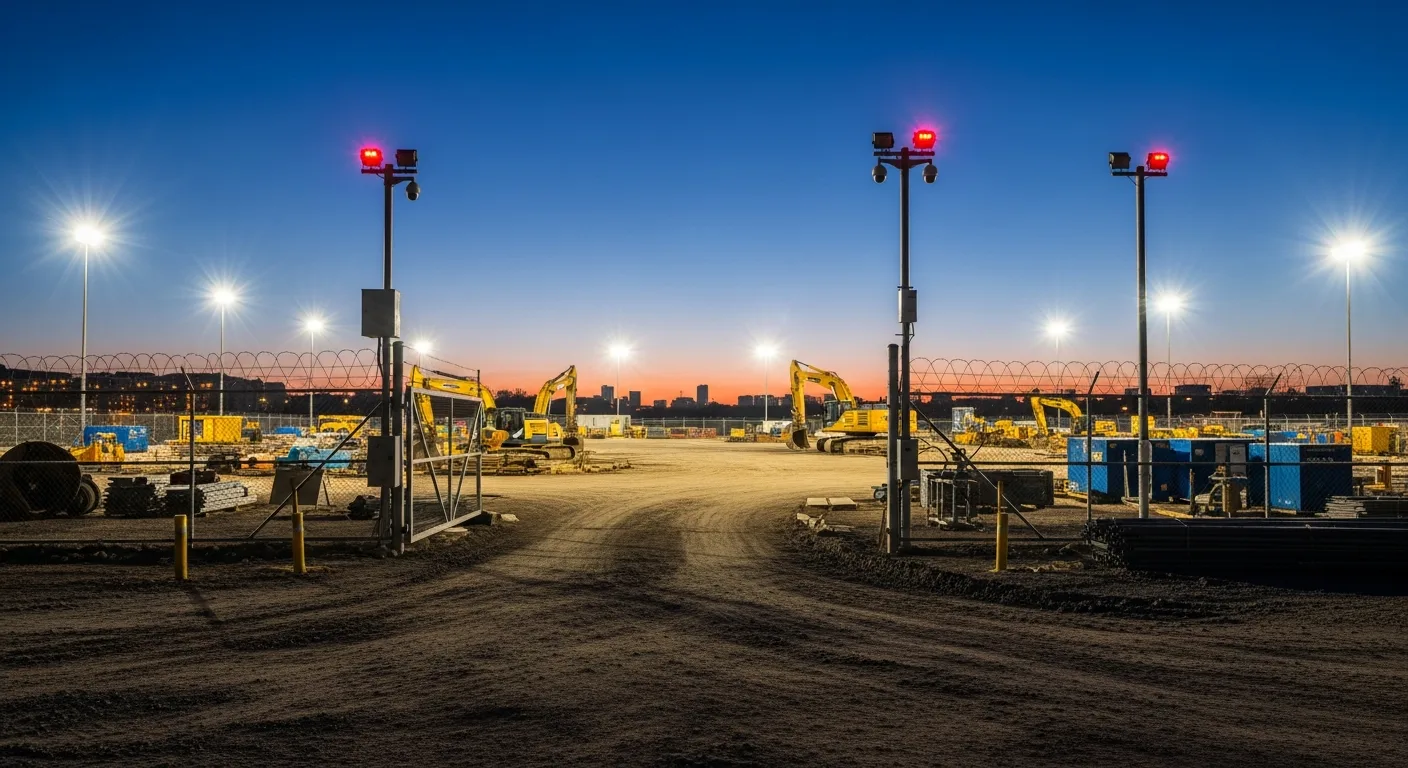
Every contractor has a story about showing up Monday morning to find something missing. Maybe it was a few hundred feet of copper wire. Maybe it was a skid steer. Either way, the sinking feeling is the same, and so is the scramble that follows: filing police reports, calling insurance, dealing with project delays, and explaining the situation to your client.
Construction site theft is not a minor inconvenience. It is a billion-dollar problem that hits contractors of all sizes, and the numbers keep climbing. The good news is that most jobsite theft is preventable with the right combination of physical barriers, technology, and common-sense procedures.
This guide covers everything you need to know about protecting your construction site, from choosing the right cameras and fencing to using GPS tracking and building a security plan that actually works.
The Real Cost of Construction Site Theft
Before we get into solutions, let’s talk about why this matters beyond the obvious. When someone steals from your jobsite, the direct cost of the stolen item is only the beginning.
Hidden costs include:
- Project delays while you source replacements
- Rush shipping fees for materials that were on a lead time
- Insurance deductibles (often $1,000 to $5,000 per claim)
- Increased insurance premiums after filing claims
- Lost labor hours from crews standing around without tools or equipment
- Administrative time spent on police reports and insurance paperwork
- Damage to your reputation if delays affect the client’s timeline
A $5,000 theft can easily balloon into a $15,000 or $20,000 problem when you add up all the ripple effects. And if you are self-insured or carrying a high deductible, that comes straight out of your margin.
Understanding Who Steals from Construction Sites
Knowing your enemy helps you build a better defense. Construction site theft generally falls into three categories:
Opportunistic thieves are people who happen to walk or drive by an unsecured site and see an easy target. They grab whatever is accessible, usually hand tools, materials, or anything small enough to carry. These thefts account for the majority of incidents and are the easiest to prevent with basic security measures.
Organized theft rings target high-value equipment and materials. They come with trailers, bolt cutters, and sometimes even flatbed trucks. They know what they are looking for and can strip a site quickly. Copper, heavy equipment, generators, and HVAC units are their primary targets.
Internal theft comes from your own crews or subcontractors. It is uncomfortable to talk about, but studies suggest that internal theft accounts for a significant portion of jobsite losses. Clear inventory procedures and accountability systems are your best defense here.
Perimeter Security: Your First Line of Defense
Fencing
A solid perimeter fence is the foundation of any site security plan. It will not stop a determined thief, but it slows them down, forces them to make noise, and clearly marks the boundary between public space and your jobsite.
Chain link fencing (six feet minimum) with privacy slats is the standard. The slats prevent people from easily seeing what is on site, which removes the temptation factor. For added security:
- Use locking gate hardware, not just padlocks that can be shimmed
- Install gates wide enough for equipment access but keep them locked after hours
- Consider double gates with chains for areas that need frequent access
- Inspect fence lines weekly for cuts or damage
Anti-climb mesh panels are a step up from chain link. The tight mesh pattern makes them much harder to climb, and the panels are more difficult to cut with standard tools.
Concrete jersey barriers work well for blocking vehicle access to specific areas. They are heavy enough that they cannot be moved without equipment, and they send a clear message that the area is off-limits.
Signage
Never underestimate the power of a good sign. Post visible security signage around your perimeter, even if your actual security system is modest. Signs that mention video surveillance, alarm monitoring, GPS tracking, and prosecution create doubt in a thief’s mind.
Place signs at every entry point and at regular intervals along the fence line. Make them large enough to read from a distance.
Security Cameras: Eyes on the Site 24/7
Camera technology has improved dramatically in the last few years, and the cost has come down just as fast. You no longer need to run power and data cables across your site to get reliable video coverage.
Types of Cameras for Construction Sites
Solar-powered wireless cameras are the go-to choice for most jobsites. They run on battery power charged by a small solar panel, connect via 4G or LTE cellular networks, and store footage in the cloud. No electrical hookup required, no Wi-Fi needed.
PTZ (pan-tilt-zoom) cameras give you remote control over the camera angle and zoom level. Mount one on a tall pole and you can cover a large area from a single unit. These are ideal for open sites with long sight lines.
Fixed bullet cameras are simpler and cheaper. They cover one specific area and are good for monitoring entry points, storage containers, and parking areas.
Time-lapse cameras serve double duty. They capture progress photos for documentation and client updates while also recording activity on site. If something goes missing, you have a visual record.
Camera Placement Strategy
Where you put your cameras matters as much as what cameras you buy. Focus on these areas:
- Entry and exit points: Every gate, door, and access road should be covered
- Material storage areas: Lumber yards, pipe racks, and container yards
- Equipment parking: Wherever you stage heavy equipment overnight
- Tool cribs and gang boxes: High-value tool storage locations
- Building interiors: Once the structure is enclosed, cover entry points from inside
Mount cameras high enough that they cannot be easily reached or tampered with. Aim for at least eight to ten feet off the ground. Use tamper-resistant mounting hardware.
Remote Monitoring and Alerts
Most modern camera systems offer smartphone apps that let you check live feeds and review recorded footage from anywhere. Motion-triggered alerts send notifications to your phone when the camera detects activity during off-hours.
Set up alert schedules so you are only notified when the site should be empty. Saturday afternoon activity on a jobsite that shuts down Friday evening is worth knowing about. Tuesday morning activity when crews are on site is not.
Lighting: Making Your Site a Hard Target
Thieves prefer darkness. A well-lit jobsite is a significant deterrent because it increases the chance of being seen by neighbors, passing vehicles, or security cameras. Security becomes even more important when you have crews doing construction night work, since the extended hours mean more time with valuable equipment and materials on an active site after dark.
Lighting Best Practices
Motion-activated LED floods are the most practical option for construction sites. They conserve energy by staying off until triggered, and the sudden activation of bright lights often scares off intruders.
Solar-powered lights eliminate the need for electrical connections and can be relocated as the project progresses. Modern solar LEDs are bright enough for security purposes and can run through the night on a full charge.
Focus lighting on key areas:
- Gates and entry points
- Material staging and storage zones
- Equipment parking areas
- Building access points (doors, window openings)
- Dark corners and blind spots
Avoid creating shadows. A single bright light with no fill creates deep shadows where someone can hide. Use multiple light sources positioned to minimize shadow zones.
GPS Tracking: Knowing Where Everything Is
GPS tracking has become one of the most effective tools for protecting construction equipment. Small, affordable trackers can be installed on virtually any piece of equipment, from excavators and skid steers down to trailers and generators.
How GPS Tracking Works for Contractors
A GPS tracker is a small device (some are no bigger than a deck of cards) that uses satellite signals and cellular networks to report its location. You access the data through a web portal or smartphone app.
Key features to look for:
- Geofencing: Set virtual boundaries around your jobsite. If a tracked asset moves outside the fence, you get an instant alert.
- Real-time tracking: See where every piece of equipment is at any moment
- Movement history: Review where equipment has been over any time period
- Ignition alerts: Know when equipment is started outside of work hours
- Battery backup: Ensures tracking continues even if the main power is disconnected
Beyond Theft Prevention
GPS tracking pays for itself even if nothing ever gets stolen. Knowing where your equipment is across multiple jobsites eliminates the guessing game when you need to move a machine. You can track utilization rates to identify underused assets. Some insurance companies offer premium discounts for GPS-tracked equipment.
You can also use GPS data to verify delivery times, confirm that rental equipment was actually on site for the hours you were billed, and settle disputes about when equipment arrived or left a project.
Alarm Systems and Sensors
Alarm systems add another layer of protection, especially for enclosed spaces like buildings under construction, storage containers, and tool cribs.
Types of Alarm Systems
Door and window sensors trigger when an opening is breached. These are simple, inexpensive, and effective for enclosed structures.
Motion sensors detect movement within a defined area. Place them inside storage containers, partially enclosed buildings, and areas with high-value materials.
Vibration sensors detect cutting or drilling on fences, containers, or walls. They are useful for detecting someone trying to break through a barrier rather than going over or around it.
Cellular-connected alarms send alerts directly to your phone and optionally to a monitoring service. They do not depend on Wi-Fi or landline connections, which makes them ideal for construction sites.
Tool and Material Security
Not all security measures are high-tech. Some of the most effective theft prevention strategies are simple, practical steps that cost almost nothing.
Locking Storage
Gang boxes and job boxes should be heavy-duty steel with puck-style locks (not standard padlocks). Bolt them to the floor or chain them to something immovable. A 500-pound gang box is worthless security if two guys can load it into a truck.
Shipping containers (conex boxes) are excellent for large material storage. They are tough, lockable, and can be placed strategically to serve as both storage and a barrier.
Inventory Management
You cannot report what is missing if you do not know what you had. Maintaining a current inventory of tools, equipment, and materials is essential for both theft prevention and recovery.
Projul’s project management features make it easy to track equipment and materials across all your projects. When everything is documented in one system, you can quickly identify discrepancies and take action.
Best practices for inventory management:
- Record serial numbers and take photos of all major tools and equipment
- Conduct weekly inventory checks on high-value items
- Require sign-out procedures for shared tools and equipment
- Set up a consistent system for tool storage and organization so you always know where things belong
- Mark all company property with engraved or etched identification
- Keep inventory records in cloud-based software so they are accessible from anywhere
Material Delivery Timing
Schedule material deliveries as close to installation time as possible. Copper pipe sitting on a jobsite over a weekend is a target. Copper pipe that arrives Monday morning and gets installed by Tuesday is not.
Coordinate with suppliers to avoid early deliveries that leave materials exposed. If early delivery is unavoidable, have a plan for securing the materials immediately.
Access Control: Who Gets In and Who Doesn’t
Controlling access to your jobsite is about more than keeping strangers out. It is also about knowing who is on site, when they arrived, and when they left.
Physical Access Control
- Limit the number of entry points. One or two controlled gates are better than four unmonitored openings.
- Issue site-specific badges or passes to authorized workers. If you want a full breakdown of badge systems and credentialing workflows, read our construction site access and security badges guide.
- Require all visitors to check in at the job trailer
- Lock all gates at the end of each workday and verify they are secured
Digital Access Logs
If you are using electronic gate locks or access cards, you automatically create a log of who entered and exited the site. This data is valuable for investigating incidents and can also help with labor tracking.
Even without electronic systems, a simple sign-in sheet at the gate creates accountability. People behave differently when they know their presence is being recorded.
Building a Jobsite Security Plan
Every project should have a written security plan that is communicated to all workers and subcontractors. The plan does not need to be complicated, but it should cover the basics.
Your security plan should include:
- Site assessment: Identify the specific risks for this project based on location, project type, and duration
- Perimeter security: What type of fencing, gates, and barriers will be used
- Surveillance: Camera locations, monitoring schedule, and who has access to footage
- Lighting: Placement and type of security lighting
- Access control: How workers, visitors, and deliveries enter and exit the site
- Tool and material security: Storage procedures, inventory management, and delivery timing
- Emergency procedures: What to do if a theft or break-in occurs
- Communication: Who is responsible for security, how issues are reported, and how the plan is communicated to the team
Review the plan at your preconstruction meeting and include security expectations in your subcontractor agreements.
Insurance Considerations
Your insurance policy is your financial backstop, but it works best when paired with active security measures.
Tips for working with your insurance on site security:
- Review your policy’s theft coverage limits and deductibles before each project
- Document your security measures. Insurers look favorably on contractors who take proactive steps.
- Keep updated equipment lists with serial numbers and valuations
- File claims promptly and provide thorough documentation including police reports, inventory records, and security footage
- Ask your insurer about premium discounts for GPS tracking, monitored alarm systems, and security cameras
Some insurers require specific security measures for coverage to apply. Know your policy requirements before you break ground.
Using Technology to Tie It All Together
The most effective security programs combine physical measures with technology and good record-keeping. Construction management software plays a central role by giving you a single platform to:
- Maintain equipment and tool inventories
- Store photos and serial numbers for all assets
- Log daily site conditions and observations
- Track who is on site and when
- Document deliveries and material receipts
- Share security protocols with your entire team
When an incident occurs, having all this information in one place makes the response faster and more effective. You can quickly verify what is missing, pull up serial numbers for police reports, and provide your insurance company with the documentation they need.
Cost-Effective Security for Small Contractors
You do not need a six-figure security budget to protect your jobsite. Here is a practical, tiered approach:
Basic (under $500):
- Quality padlocks and gang boxes
- Security signage
- Solar-powered motion lights
- Inventory documentation in your project management software
Mid-range ($500 to $2,500):
- Two to four solar-powered wireless cameras with cellular connectivity
- Perimeter fencing with locking gates
- GPS trackers on major equipment
- Door and window sensors on enclosed spaces
Full ($2,500 and up):
- Full camera system with remote monitoring
- Professional alarm system with cellular monitoring
- GPS tracking on all equipment and trailers
- Electronic access control at gates
- On-site security guard for high-risk periods
Scale your security investment to the project. A two-week bathroom remodel does not need the same setup as a 12-month commercial build. But every project, no matter how small, deserves at minimum good locks, proper lighting, and a documented inventory.
Jobsite Security Checklist
Use this checklist at the start of every project:
- Site assessment completed, risks identified
- Perimeter fencing installed with locking gates
- Security signage posted at all entry points
- Cameras positioned and tested
- Lighting installed at key areas
- GPS trackers active on all major equipment
- Gang boxes and storage containers secured
- Inventory documented with serial numbers and photos
- Security plan written and communicated to team
- Insurance coverage reviewed and confirmed
- Emergency contact list posted in job trailer
Dealing with Theft After It Happens: A Step-by-Step Recovery Plan
Even with the best security in place, theft can still happen. When it does, how you respond in the first few hours makes a huge difference in whether you recover the stolen items and how fast your project gets back on track.
The First 60 Minutes
The moment you discover something missing, stop and assess the situation before touching anything. If there is obvious damage to fencing, locks, or doors, the scene may have evidence that law enforcement can use. Take photos of the damage and the area around it before your crew starts moving things.
Call the police and file a report right away. Have serial numbers, photos, and descriptions ready to go. If you have been keeping your equipment inventory in Projul’s project management system, you can pull this information up on your phone in seconds instead of digging through filing cabinets or trying to remember details off the top of your head.
If GPS trackers are installed on the stolen equipment, check the tracking app immediately. Share the location data with police. Do not attempt to recover the equipment yourself. Confronting thieves is dangerous and not worth the risk, no matter how expensive the machine is.
Notifying the Right People
Your notification list should go beyond the police:
- Insurance company: Call them the same day. Most policies have reporting windows, and waiting too long can complicate your claim. Have your policy number, a copy of the police report number, and your inventory documentation ready.
- Equipment dealers and rental companies: Alert local dealers so they can flag the serial numbers. Stolen equipment often shows up at dealerships for service or resale within a few weeks.
- Online marketplaces: Set up alerts on Craigslist, Facebook Marketplace, and OfferUp for the stolen items. Thieves often try to sell locally and quickly.
- Your client: Be upfront. Explain what happened, what you are doing about it, and how it affects the schedule. Clients appreciate honesty, and finding out later makes it worse.
- Your team: Let your crews know what happened. They may have seen something, and they need to be aware of increased security measures going forward.
Documenting the Loss
Thorough documentation protects you with insurance and helps with recovery. For each stolen item, record:
- Full description including make, model, and year
- Serial number
- Purchase price and estimated current value
- Date of purchase and where it was bought
- Photos (ideally from before the theft, pulled from your inventory records)
- GPS tracking data showing the last known location
- Any security footage from the time of the theft
If you are running daily logs through your project management software, you already have a record of what was on site the previous day. That daily log becomes a key piece of evidence. Contractors who track their jobsite conditions with daily reports and field logs have a much easier time proving what was on site and when it went missing.
Getting Back on Schedule
Once the immediate response is handled, focus on getting the project moving again. Rent replacement equipment if purchasing will take too long. Call your suppliers to see what they have in stock. Rearrange your schedule to shift crews to work that does not require the missing tools or equipment.
This is where having a solid project schedule pays off. If you can see all your tasks, dependencies, and crew assignments in one place, you can quickly figure out what work can continue and what needs to wait. Trying to juggle that with phone calls and sticky notes while also dealing with a theft investigation is a nightmare.
After-Action Review
Once the dust settles, sit down with your team and figure out what went wrong. Was the fencing damaged? Were locks inadequate? Did someone leave a gate open? Was the camera system positioned to actually capture the area where the theft occurred?
Use what you learn to update your security plan for the current project and every project going forward. If the same type of theft keeps happening across your jobs, that is a process problem, not just bad luck.
Securing High-Value Materials: Copper, Lumber, and Specialty Items
Certain materials attract thieves more than others, and the approach to securing them differs based on what you are protecting.
Copper and Wiring
Copper theft is one of the most common and frustrating problems on construction sites. The scrap value of copper makes it a target at every stage of a project, from raw wire spools to installed plumbing and electrical runs.
Before installation, store copper in locked shipping containers or inside secured portions of the building. Do not leave spools sitting on pallets in the open. If you have a large delivery, assign someone to receive it and move it into secure storage immediately.
After installation, copper is harder to protect because it is spread throughout the building. But there are still steps you can take. Close up walls and ceilings as soon as the rough-in passes inspection. The faster copper gets buried behind drywall, the less exposed it is. Coordinate with your electricians and plumbers to get inspections done quickly so you can close up sooner.
Some contractors use copper-colored paint to mark installed copper with identifying information. It does not prevent theft, but it makes the material harder to sell at a scrap yard because legitimate scrap dealers check for markings.
Lumber and Framing Materials
Lumber prices have been volatile for years, and that makes framing materials a bigger target than they used to be. A stack of 2x4s or a pallet of plywood is easy to load onto a truck and hard to identify once it is off your site.
Schedule lumber deliveries for the day framing starts, not a week before. If you have to store lumber on site, keep it inside the fenced perimeter, as close to the center of the site as possible. Stacking lumber against the perimeter fence is basically creating a shopping display for anyone walking by.
For large commercial projects, consider having your lumber supplier deliver in stages rather than all at once. Yes, you might pay a bit more in delivery fees, but you are not leaving $40,000 worth of lumber sitting unattended over a three-day weekend.
HVAC Equipment and Appliances
HVAC condensers, furnaces, water heaters, and appliances are high-value targets that are often delivered and staged before installation. Keep these items in locked storage until the day they are going in. If the items are too large for a container, stage them inside the building and secure the entry points.
Record serial numbers for every piece of mechanical equipment and every appliance before installation. This is non-negotiable. If a condenser gets stolen off a roof, you need that serial number for the police report and insurance claim.
Fuel
Diesel and gasoline theft is common and often overlooked. Thieves siphon fuel from equipment tanks or steal portable fuel cans. Locking fuel caps are cheap insurance for equipment. Keep portable fuel containers in locked storage, and track fuel usage so you notice discrepancies.
Some contractors have switched to fuel management systems that require a code or key fob to dispense fuel. If you are running enough equipment to justify the cost, these systems pay for themselves by eliminating both theft and unauthorized use.
Subcontractor Security Expectations and Accountability
Your jobsite is only as secure as your least careful subcontractor. You can have cameras, fences, GPS trackers, and alarm systems, but if a sub props the gate open at 5 PM and leaves it that way all weekend, none of it matters.
Setting Expectations in Your Contracts
Include security requirements in your subcontractor agreements. This is not about being heavy-handed. It is about setting clear expectations so everyone is on the same page. Your sub agreements should address:
- Gate and access procedures: Subs must secure gates behind them when entering and leaving. The last sub to leave each day is responsible for locking up. Spell out who that is or how it gets determined.
- Tool and material responsibility: Each sub is responsible for securing their own tools and materials. Define what “securing” means on your site. Does it mean locked in a gang box? Inside the building? Off site?
- Incident reporting: If a sub notices damaged fencing, a broken lock, or anything suspicious, they report it immediately. Not at the end of the day. Not on Monday morning. Immediately.
- Liability for negligence: If a sub’s failure to follow security procedures contributes to a theft, your agreement should address who bears the cost. This gets into legal territory, so have your attorney review the language.
Holding the Preconstruction Meeting
Your preconstruction meeting or kick-off meeting is where you set the tone for jobsite security. Walk through the security plan with all subs present. Show them where the cameras are. Explain the gate procedures. Point out the storage areas and tell them what goes where.
This is also the time to introduce any sign-in procedures, badge requirements, or access restrictions. When subs hear the security expectations from you directly, in person, they take it more seriously than reading a clause buried on page 14 of a contract.
If you are running your preconstruction meetings through Projul’s scheduling and project management tools, you can attach the security plan as a document that every sub acknowledges. That way you have a record that the expectations were communicated.
Ongoing Accountability
Security is not a one-time conversation. Walk the site at the end of the day periodically and check that gates are locked, storage is secured, and the perimeter is intact. If you find issues, address them with the responsible party immediately.
Some general contractors assign one person as the daily “lock-up” responsible. That person does a walkthrough at the end of each day, checks all gates and storage, arms any alarm systems, and confirms the site is secured. Rotating this responsibility among your team keeps everyone aware and invested.
If you notice patterns of negligence from a specific subcontractor, address it directly. A conversation now prevents a theft later. And if the behavior continues, document it. That documentation protects you if a theft occurs and the sub’s negligence is a contributing factor.
Internal Theft: The Uncomfortable Conversation
Nobody wants to think that someone on their own team is stealing, but it happens. Internal theft is harder to detect because the people doing it have legitimate access to the site, know the routines, and know where things are stored.
Signs of internal theft include:
- Tools or materials consistently going missing despite security being intact
- Items disappearing during work hours rather than overnight or over weekends
- Employees who seem to be living beyond their means (not proof, but worth noting)
- Equipment or material quantities that do not match what was ordered or delivered
The best defense against internal theft is a combination of clear procedures and accountability. When everyone signs tools in and out, when inventory is checked regularly, and when people know that discrepancies will be investigated, the opportunity for internal theft shrinks significantly.
Install cameras inside storage areas and tool cribs, not to spy on your workers, but to create accountability. Most honest workers appreciate the cameras because it protects them from false accusations.
Seasonal and Weekend Security: Protecting Your Site During Down Time
Most construction theft happens when nobody is around. Weekends, holidays, and seasonal shutdowns are the highest-risk periods. Planning for these windows is just as important as your day-to-day security.
Weekend Lockdown Procedures
Friday afternoon lockdown should be a routine, not an afterthought. Build it into the end-of-week process:
- All loose tools go into locked gang boxes or off site
- Equipment keys are removed and stored in a locked location (not in the machine)
- Gates are locked and chains are secured
- All entry points to enclosed structures are secured
- Camera systems are confirmed operational
- Motion lights are tested
- Alarm systems are armed
- A quick perimeter walk confirms no fence damage or gaps
Assign a specific person to handle the Friday lockdown and verify it is done. Do not assume it happened. A two-minute phone call or photo confirmation goes a long way.
Holiday and Extended Shutdown Security
Long weekends and holiday breaks are prime time for jobsite theft. Thieves know that no one will check the site for three, four, or five days. During extended shutdowns:
- Move high-value portable items off site entirely if possible
- Add temporary security measures like additional lighting or a portable camera
- Arrange for someone to drive by the site at least once a day and report back
- Notify local police that the site will be unoccupied and ask for increased patrols. Many departments will add a property to their drive-by list if you ask.
- If the project is high-value or in a high-risk area, consider hiring a temporary security guard for the duration of the shutdown
Seasonal Considerations
Projects that run through winter often have extended periods of reduced activity. If crews are not on site daily, the risk goes up. During slow periods, maintain all security measures and increase your check-in frequency. It is easy to let security slide when nothing is happening on a project, but that is exactly when thieves are looking.
Seasonal weather also affects security equipment. Cold temperatures drain batteries faster on solar cameras and GPS trackers. Snow can block solar panels and reduce charging capacity. Ice and snow can obscure camera lenses. Build maintenance checks into your winter routine to make sure your security systems are actually working.
Spring startup is another vulnerability. Materials start arriving for the new season before full crews are back on site. You might have a site loaded with fresh lumber, mechanical equipment, and fixtures while only running a skeleton crew. Treat the spring ramp-up like a high-risk period and staff your security accordingly.
Wrapping Up
Construction site security is not glamorous, but it is one of those things that saves you a fortune when done right and costs you dearly when ignored. The combination of physical barriers, surveillance technology, GPS tracking, good lighting, and solid inventory procedures creates a layered defense that makes your site a hard target.
Start with the basics and build from there. Even simple measures like better locks, motion lights, and a documented inventory will reduce your risk significantly. As your projects grow in size and value, scale your security accordingly.
Want a better way to track equipment, document your jobsite, and keep your entire team on the same page? See how Projul can help or check out our pricing to find the right plan for your business.
Frequently Asked Questions
How much does construction site theft cost the industry each year?
What are the best security cameras for a construction site?
Is GPS tracking on construction equipment worth the cost?
What type of fencing works best for construction site security?
How can lighting reduce theft on a construction site?
Should I hire a security guard for my construction site?
What should I do if equipment is stolen from my jobsite?
How does construction management software help with site security?
Related Articles

Concrete Tilt-Up Construction: A Contractor's Complete Field Guide
Tilt-up construction accounts for roughly 15 percent of all industrial and commercial buildings in North America. This...
Read More →
How to Implement Construction Software Without Losing Your Mind
Most construction software rollouts fail. Not because the software is bad, but because the rollout was rushed. Here are...
Read More →
How Selections Can Pay for Themselves in Three Easy Steps
Most contractors lose thousands each year on wrong material orders, slow client decisions, and missed upsell chances....
Read More →