
Construction Meeting Management Tips | Run Better Crew Meetings | Projul
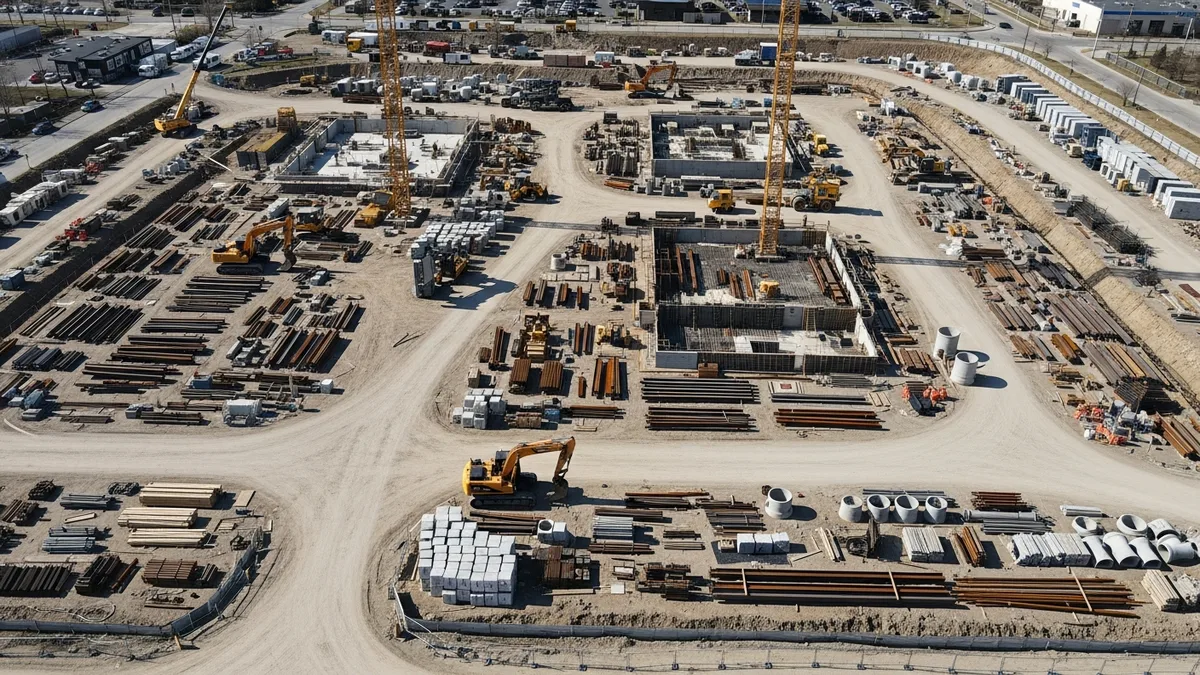
Nobody got into construction because they love sitting in meetings. But if you run a crew of any size, meetings are part of the job. The trick is making them count without eating into the hours your team should be spending on actual work.
Bad meetings are one of the biggest hidden costs in construction. A one-hour meeting with ten people is ten labor hours gone. If that meeting could have been a five-minute phone call or a quick update in your project management software, you just lit money on fire.
This guide covers how to run meetings that actually help your construction company move jobs forward, keep your crew aligned, and cut out the time-wasting fluff that makes everyone dread the conference room.
Why Most Construction Meetings Fall Flat
Before we talk about how to fix meetings, it helps to understand why they go sideways in the first place. Here are the most common problems:
No agenda. Someone calls a meeting, everyone shows up, and the conversation wanders for 45 minutes before landing on something useful. Without a clear list of topics, meetings become open-ended gripe sessions or unfocused rambles.
Too many people in the room. Not every person on your team needs to be in every meeting. When you pull a framing crew off a job site to sit through a discussion about next month’s marketing plan, you are paying them to be bored.
No follow-through. You have a great discussion, everyone agrees on next steps, and then… nothing happens. Without clear action items, owners, and deadlines, meetings become a cycle of talking about the same problems over and over.
Meetings that should have been messages. This is the big one. A lot of meetings exist because someone felt like they needed to “loop everyone in.” But a quick update in your communication tool or a note in the project file does the same thing in a fraction of the time.
Starting late and running long. If your meetings regularly start ten minutes late because people are trickling in, that is a culture problem. And if they regularly run over, your agenda is either too packed or nonexistent.
The good news is that every one of these problems has a simple fix. You do not need a management consultant or a weekend seminar. You just need a few ground rules and the discipline to stick with them.
Structuring Your Weekly Foreman Meeting
The weekly foreman meeting is the heartbeat of most construction companies. This is where your project leads sync up, surface problems before they blow up, and make sure the schedule is on track for the week ahead.
Here is a format that works well for most contractors:
Keep it to 30 minutes. If your foreman meeting regularly runs over an hour, you are trying to cover too much. Save the deep dives for one-on-one conversations after the meeting.
Same day, same time, every week. Tuesday or Wednesday morning works well for most crews because it gives you a day or two after the weekend to assess where things stand. Pick a time and do not move it unless there is a genuine emergency.
Use a standing agenda. Your weekly agenda should follow the same basic structure every time:
- Safety topic (2 minutes) - one quick item, rotate who presents it
- Schedule review (10 minutes) - walk through each active job, flag any conflicts
- Material and equipment needs (5 minutes) - what needs to be ordered, moved, or returned
- Manpower (5 minutes) - who is going where this week, any gaps to fill
- Action items review (5 minutes) - check off completed items, reassign anything that slipped
- Open floor (3 minutes) - anything not covered above, keep it brief
Assign a meeting leader. This does not have to be the owner. In fact, it works better when a project manager or senior foreman runs the meeting. The leader keeps things moving, cuts off tangents, and makes sure every agenda item gets covered.
Take notes that go somewhere. Someone should capture the key decisions and action items. These notes should be shared with the whole team afterward, ideally in your project management system so they are tied to the right jobs. If you are still tracking things on paper or in someone’s head, check out how daily logs can help you build a better paper trail.
Running Effective Job Site Huddles
The daily job site huddle is different from your weekly office meeting. This is a quick, standing check-in at the start of the work day. Think of it as a five-to-ten minute alignment session, not a sit-down meeting.
Stand up. Literally. Do not sit down for these. Standing keeps things short because nobody wants to stand around in the heat (or cold) any longer than they have to.
Cover three things. That is it. Each person or crew should answer:
- What are you working on today?
- Do you need anything to get it done?
- Is anything blocking you?
Do it at the same time every day. Right after arrival, before work starts. If your crew shows up at 7:00, the huddle is at 7:05. Do not let it drift.
Keep side conversations offline. If two people need to hash out a detail, let them do it after the huddle. The whole crew does not need to stand around while two guys debate flashing details.
Use it as a safety moment. A quick reminder about the day’s specific hazards takes 30 seconds and can prevent a lot of pain. “We are working near overhead power lines on the east side today, keep your boom heights in check.” Done.
Curious what other contractors think? Check out Projul reviews from real users.
The daily huddle is not a replacement for your weekly meeting. It is a quick sync that keeps the day running smooth. If your huddle is regularly going past ten minutes, you are covering too much or letting conversations drift.
Making All-Hands Meetings Worth the Effort
An all-hands meeting pulls everyone together, from the office staff to the field crews. Most construction companies do these monthly or quarterly. Done right, they build culture and keep everyone rowing in the same direction. Done wrong, they feel like a waste of everyone’s afternoon.
Pick the right frequency. For companies with fewer than 30 people, monthly is usually fine. Larger companies can get away with quarterly. The key is having enough news and substance to fill the time. If you are struggling to put together an agenda, you probably do not need the meeting.
Share wins first. Start with completed projects, new contracts, safety milestones, or employee shout-outs. People need to hear that their work matters. This is especially important for field crews who may not see the bigger picture from the job site.
Keep the business updates brief. Your crew does not need a 20-minute breakdown of the P&L statement. Hit the highlights: are we busy, are we growing, what is coming down the pipeline. Five minutes, tops.
Make it interactive. Open the floor for questions. If nobody asks anything, that either means everything is crystal clear or (more likely) people do not feel comfortable speaking up. Work on building that trust over time. Anonymous question submissions before the meeting can help.
Feed people. Seriously. If you are pulling your crew in for an all-hands, spring for lunch or at least coffee and donuts. It is a small gesture that signals respect for their time. A company that is growing strategically invests in its people, and sometimes that investment is a box of tacos.
End with clarity. Before anyone leaves, make sure the big takeaways are clear. What is changing? What do people need to know going forward? If someone walks out confused about why they were there, the meeting failed.
Tracking Action Items So Nothing Falls Through the Cracks
This is where most construction companies drop the ball. The meeting itself goes fine, but the follow-up is nonexistent. Action items get mentioned, heads nod around the table, and then nothing happens until the next meeting when someone says, “Wait, did we ever handle that?”
Every action item needs three things:
- An owner (one person, not “the team”)
- A deadline (a specific date, not “soon” or “when we get to it”)
- A way to track it (visible to everyone involved)
Use a shared system. Whether you use construction management software, a simple shared spreadsheet, or a whiteboard in the office, the system needs to be visible and accessible. If your action items live in one person’s notebook, they might as well not exist.
Review action items at the start of every meeting. Not the end. Starting with a review of last week’s items sets the tone: we follow through here. It also creates natural accountability because nobody wants to be the person who keeps showing up without their items done.
Keep the list short. If you are generating 20 action items per meeting, something is wrong. Either your meetings are trying to solve too many problems at once, or you are confusing “things we discussed” with “things someone needs to do.” A good meeting should produce three to seven clear action items.
Close the loop. When an action item is done, mark it done and move on. Do not keep old items lingering on the list. A clean, current list is one people actually look at. A cluttered list with three months of history gets ignored.
If you are looking for a better way to keep your field teams in the loop on tasks and follow-ups, the right field team apps can make a big difference. When your foremen can check their action items from their phone instead of waiting for the next meeting, things get done faster.
Reducing Meeting Fatigue Without Losing Alignment
Meeting fatigue is real, and it hits construction teams harder than most industries. Your people are physical workers who need to be on job sites, not stuck in chairs. Every hour they spend in a meeting is an hour they are not building, installing, or finishing.
Here is how to cut back without losing the communication that keeps your projects on track:
Audit your meeting calendar. List every recurring meeting your company holds. For each one, ask: what would happen if we skipped this meeting for two weeks? If the honest answer is “probably nothing,” cancel it or make it less frequent.
Replace status updates with async communication. A weekly email, a project update in your software, or a quick voice memo can replace a 30-minute meeting that is just people taking turns sharing updates. Save meetings for discussions, decisions, and problem-solving, not information broadcasting.
Shorten default meeting times. If your meetings are scheduled for an hour by default, try cutting them to 30 minutes. You will be surprised how much faster people get to the point when the clock is tighter. Parkinson’s Law applies: work expands to fill the time available.
Protect field time. Set a company policy that field crews are not pulled off job sites for meetings unless absolutely necessary. If a foreman needs to be in a meeting, schedule it before or after work hours, or during a natural break in the work day. Your scheduling process should account for meeting time so it does not eat into production.
Combine where you can. If you have a Monday safety meeting, a Tuesday foreman meeting, and a Wednesday project review, see if two of those can be combined into one session. Three short agenda items in one meeting beats three separate meetings with their own start-up and wind-down time.
Make attendance optional (where appropriate). Not every meeting needs every person. Send the agenda in advance and let people opt out if nothing on it affects them. They can review the notes afterward. This shows respect for your team’s time and builds trust that you are not going to waste their day.
End early when you can. If you covered everything in 20 minutes of a 30-minute meeting, give people their time back. Do not fill the remaining ten minutes with small talk just because the calendar says you have the room. Ending early builds goodwill and makes people more willing to show up next time because they know it will not drag on.
The goal is not to eliminate meetings. Communication is the backbone of every successful construction company, and face-to-face time has real value. The goal is to make every meeting earn its spot on the calendar. When your team knows that meetings are short, focused, and productive, they stop dreading them and start showing up ready to contribute.
If you are looking for more ways to keep your team communicating without constant meetings, take a look at our guide on construction client communication. A lot of the same principles that work for internal meetings also apply to keeping clients in the loop.
Putting It All Together
Here is a simple meeting framework you can start using this week:
Daily: 5-10 minute job site huddles (standing, three questions, safety moment)
Weekly: 30-minute foreman meeting (standing agenda, action items, notes shared afterward)
Monthly or quarterly: All-hands meeting (wins, brief business update, Q&A, feed people)
Always: Track action items with an owner, a deadline, and a shared system. Review them at the start of every meeting.
Cut ruthlessly: If a meeting does not need to happen, kill it. If it can be shorter, shorten it. If someone does not need to be there, let them skip it.
Your crew’s time is your most valuable resource. Every hour spent in a pointless meeting is an hour that could have been spent finishing a job, closing a deal, or just letting your people do the work they are good at. Run your meetings with the same discipline you bring to your job sites, and you will see the difference in both morale and your bottom line.
Book a quick demo to see how Projul handles this for real contractors.
The best construction companies are not the ones with the most meetings. They are the ones where every meeting has a purpose, every action item has an owner, and every person in the room knows exactly why they are there.
Frequently Asked Questions
How often should a construction company hold team meetings?
What should be on a construction meeting agenda?
How do you keep construction meetings short and productive?
What is the best way to track action items from construction meetings?
How do you reduce meeting fatigue in a construction company?
Related Articles

BIM Clash Detection: How to Catch Conflicts Before They Cost You on the Jobsite
BIM Clash Detection: How to Catch Conflicts Before They Cost You on the Jobsite Every contractor has a story about the...
Read More →
Asphalt Paving and Compaction Guide: Mix Types, Laydown Temperatures, and Quality Testing
Asphalt paving looks straightforward from a distance. A truck dumps material, the paver lays it down, and rollers...
Read More →
Construction Jobsite Wi-Fi & Connectivity Guide: Setting Up Reliable Internet in the Field
A practical guide to getting reliable internet on construction job sites. Learn about cellular hotspots, mesh networks,...
Read More →