
Pre-Engineered Metal Building Erection Guide: Foundation to Finish for Contractors | Projul
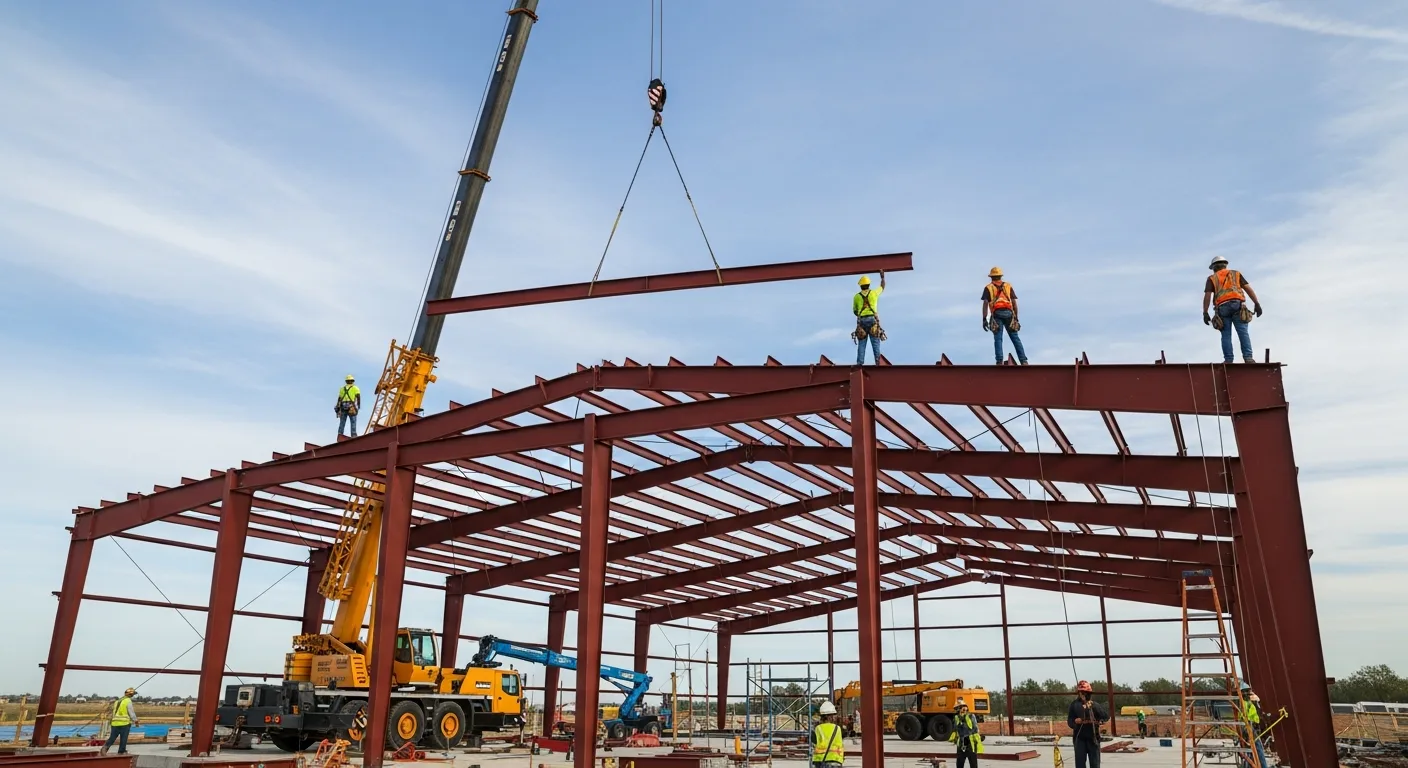
Pre-engineered metal buildings are one of the fastest and most cost-effective ways to put up commercial, industrial, and agricultural structures. But “pre-engineered” does not mean “easy to erect.” A metal building that goes up right starts with a perfect foundation and finishes with properly installed trim and flashings. Get any step wrong, and you are looking at leaks, structural problems, or expensive rework.
This guide covers the full process from foundation through final trim, with practical tips for avoiding the mistakes that cost contractors time and money.
Understanding Pre-Engineered Metal Buildings
A pre-engineered metal building (PEMB) is a steel-framed structure designed and fabricated by a manufacturer based on the specific loads, dimensions, and features of the project. The manufacturer provides all of the structural steel, wall and roof panels, trim, fasteners, and erection drawings. Your job as the erection contractor is to build the foundation, set the steel, and close in the building.
What Comes in the Package
A typical PEMB delivery includes:
- Primary framing: Rigid frame columns and rafters, endwall columns and rafters
- Secondary framing: Purlins (roof), girts (walls), eave struts
- Bracing: Rod bracing, cable bracing, or portal frames depending on the design
- Panels: Roof panels, wall panels, liner panels if specified
- Trim and flashing: Eave trim, rake trim, corner trim, base trim, ridge cap, gutter, downspouts
- Accessories: Walk doors, overhead doors, windows, louvers, ventilators
- Hardware: Structural bolts, self-drilling screws, sealant tape, closure strips
- Erection drawings: The instruction manual for your building
Before the Truck Shows Up
Before the first delivery arrives, you should have completed several critical steps:
- Read the erection drawings completely. Not skim them. Read them.
- Verify that the foundation matches the anchor bolt plan exactly.
- Prepare a staging area large enough to unload and organize the delivery.
- Have your crane or forklift on site and ready.
- Have your erection crew assembled, with the required PPE and fall protection equipment.
Foundation Work
The foundation is the most important part of a metal building project, and it is the part the building manufacturer does NOT design. They give you the loads and anchor bolt patterns. You (and your structural engineer) are responsible for the actual foundation design and construction.
Foundation Types
Slab on grade with thickened edges is the most common foundation for single-story metal buildings. The slab serves as both the structural foundation and the floor. Thickened edges at column locations carry the concentrated column loads to the soil.
Pier and grade beam foundations are used when soil conditions require deeper bearing, when the building needs a raised floor, or when the design calls for isolated column footings rather than a continuous slab edge.
Spread footings are used on some larger buildings or where soil conditions allow. Each column sits on its own isolated footing, and a separate slab is poured between footings.
Anchor Bolt Installation
This is where more metal building projects go wrong than anywhere else. Anchor bolt errors are expensive to fix and can delay erection for weeks.
Verify everything twice. Check the anchor bolt pattern against the erection drawings before you set the bolts and again before you pour concrete. Verify the pattern dimensions, the spacing between bolt groups, the bolt diameter and grade, the projection above concrete, and the embedment depth.
Use templates. Build anchor bolt templates from plywood or angle iron that match the manufacturer’s bolt pattern. Set the templates on the forms, level them, and pour around them. Do not try to freehand anchor bolt placement.
Protect the threads. After the pour, protect the bolt threads from concrete splash, rust, and damage. Wrap them with duct tape or bolt covers. Damaged threads mean you cannot get the nuts on, which means you are cutting bolts and drilling new holes in column base plates.
Check elevation. The top of the anchor bolt group at each column must be at the correct elevation relative to finished floor. If one column is set higher or lower than the others, you will fight that error through the entire erection process.
Concrete Placement
Pour the foundation slab to the correct elevation, with the correct slope (if the design calls for a slope to drains), and with the correct surface finish. A broom finish is typical. Make sure construction joints and control joints are located where shown on the drawings, not where they happen to fall.
Allow adequate cure time before beginning erection. The concrete needs to reach a minimum compressive strength before you load it with column reactions. Your structural engineer will specify the required strength; 3,000 PSI is typical, and most standard mix designs reach that in 7 days under normal conditions.
Steel Erection: Primary Framing
With the foundation complete and cured, erection begins with the primary framing. This is the skeleton of the building: the rigid frames that carry all of the loads.
Erection Sequence
The typical erection sequence for a metal building is:
- Set the first endwall columns and rafters
- Set the first interior rigid frame
- Install purlins, girts, and bracing between the endwall and the first frame
- Plumb and brace this first bay
- Continue setting frames, one bay at a time, working toward the other end
- Set the far endwall last
- Install remaining bracing and secondary framing
This bay-by-bay approach keeps the structure stable as you build. Never set frames ahead of your bracing. An unbraced rigid frame is not stable and can collapse under its own weight or a light wind.
Column Setting
Set each column on its anchor bolts, hand-tighten the nuts, and check plumb. Use shims under the base plate to bring each column to the correct elevation. Most manufacturers design for a grout pad under the base plate, so leave space for grout between the plate and the concrete.
Do not fully torque the anchor nuts until the frame is plumbed and aligned. You need the ability to make small adjustments as you connect rafters and bracing.
Rafter Connection
Rigid frame rafters are typically connected to columns with high-strength bolts at a moment connection (the knee area where the rafter meets the column top). These connections are heavily loaded and must be bolted with the correct bolt grade, quantity, and torque.
Rafter splices at the ridge are typically bolted moment connections as well. On wider buildings, rafters may have additional interior splices to keep shipping lengths manageable.
Use drift pins to align bolt holes at connections. Do not ream holes with a cutting torch. If holes do not align, figure out why before you force the connection. Misaligned holes usually mean something else is wrong, like a column that is not plumb or a rafter that is racked.
Plumbing and Bracing
After each bay is framed, plumb the columns using a transit, plumb bob, or digital level. Use come-alongs (manual cable hoists) attached to temporary cable bracing to pull frames into plumb.
Check plumb at the top of each column, measuring from the anchor bolt centerline. Manufacturers typically allow a plumb tolerance of 1/200 of the column height (about 1/4 inch per 50 inches of height). Tighter is better.
Once the frame is plumb, install the permanent bracing shown on the erection drawings. Do not remove temporary bracing until all permanent bracing in that bay is installed and tight.
Secondary Framing
Secondary framing includes purlins (roof), girts (walls), and eave struts (the transition member between roof and wall).
Purlin and Girt Installation
Purlins and girts are cold-formed Z or C shapes that bolt to the primary framing with clip angles or seated connections. They span between frames and support the roof and wall panels.
Pay attention to purlin and girt laps. Where purlins overlap at frame lines, the lap direction and length are specified on the drawings. Getting the lap direction wrong affects the structural capacity of the purlin system.
Install purlin and girt bracing (sag rods or sag angles) as you go. These members prevent the purlins and girts from rolling over under load. Without them, your secondary framing is not stable.
Eave Strut
The eave strut is the member that sits at the intersection of the roof and wall, running along the eave line. It serves as both the last roof purlin and a connection point for wall girts, roof panels, wall panels, eave trim, and gutter. Getting the eave strut straight and at the correct elevation is critical because everything else ties into it.
Roof and Wall Panels
With the framing complete, it is time to close in the building. Panels go on the roof first, then the walls.
Roof Panel Installation
Start at the correct end. Roof panels have a lap direction, and you must start at the correct end of the building so that each subsequent panel laps over the previous one. On most buildings, you start at the end opposite the prevailing wind direction so that wind does not catch under the panel laps.
Walk boards or foam closures first. Install inside closure strips at the eave and ridge before setting panels. These foam strips seal the corrugations in the panel against bugs, birds, and weather.
Set panels straight. Snap a chalk line or use a string line at the eave to keep the first panel aligned. If the first panel is crooked, every subsequent panel will drift further off.
Fasten correctly. Roof panels are typically fastened to purlins with self-drilling, self-tapping screws with EPDM washers. Do not overdrive screws (which compresses the washer too much and creates a leak path) or underdrive them (which leaves a gap under the washer). The screw should be driven until the washer just begins to bulge slightly.
Side laps. Fasten side laps between panels with stitch screws, typically every 12 to 24 inches. Apply sealant tape at side laps as specified by the manufacturer.
Wall Panel Installation
Wall panels install similarly to roof panels, but vertically. Start at one corner and work around the building, maintaining proper lap direction.
Base trim first. Install the base trim (also called rat guard or base channel) before setting wall panels. This trim seals the gap between the bottom of the wall panels and the foundation.
Plumb every panel. Check each wall panel for plumb as you install it. A panel that leans at the base will be worse at the top, and the error compounds across multiple panels.
Openings. Frame openings for walk doors, overhead doors, and windows with the manufacturer’s provided framing members. Install flashing around all openings before setting adjacent panels.
Trim and Flashing
Trim work is the detail that makes a metal building look finished and, more importantly, keeps it weathertight. Sloppy trim means leaks, and leaks mean callbacks.
Key Trim Components
Eave trim covers the joint between the roof panels and the wall panels at the eave line. It laps over the top of the wall panel and under the roof panel edge.
Rake trim covers the joint at the gable ends of the building where the roof panel edge meets the endwall.
Ridge cap covers the joint at the peak of the roof where opposing roof panels meet.
Corner trim covers the vertical joint where two wall planes meet at building corners.
Base trim seals the bottom of the wall panels to the foundation.
Gutter and downspouts collect and direct roof runoff. Gutters mount at the eave, typically on brackets attached to the eave strut.
Trim Installation Tips
- Apply sealant tape at all trim laps and joints. Butyl tape is standard.
- Fasten trim with color-matched screws. Nothing looks worse than zinc screws in a colored trim piece.
- Overlap trim pieces in the correct direction so water sheds over the lap, not into it.
- Seal around all penetrations (pipe boots, exhaust fans, conduit entries) with appropriate flashing and sealant.
- Do not skip the inside closure strips at ridge, eave, and base. They seem like a small detail but they prevent a lot of problems.
Common Erection Mistakes and How to Avoid Them
Anchor Bolt Errors
Already covered in detail above, but it bears repeating: anchor bolt mistakes are the number one cause of erection delays and cost overruns on metal building projects. Measure twice, pour once.
Not Reading the Drawings
Erection drawings are the manufacturer’s instructions for assembling their building. Every piece is marked, every connection is detailed, and every sequence note is there for a reason. Contractors who do not read the drawings before starting erection end up setting pieces in the wrong location, installing bracing incorrectly, or missing structural connections.
Skipping Temporary Bracing
Permanent bracing only works when the entire bracing system is in place and connected. During erection, you need temporary bracing to keep partially erected frames stable. A rigid frame column without any bracing is a 30-foot-tall lever with nothing stopping it from falling over. Cable bracing, come-alongs, and deadmen anchors are your friends during erection.
Ignoring Weather
Wind is the enemy of metal building erection. Large panels and framing members act as sails. A single wall panel can generate hundreds of pounds of wind force in a moderate breeze. Never erect primary framing or set panels when wind speeds exceed 25 mph. Have a plan for securing partially erected structures overnight or during weather delays.
Poor Panel Alignment
Taking the time to set the first panel perfectly straight saves hours of adjustment later. One crooked starting panel means every panel after it will be off, and by the time you reach the other end of the building, you may have inches of accumulated error.
Managing Metal Building Projects
Metal building erection projects have a lot of sequential dependencies. The foundation must be ready before steel erection starts. Steel must be complete before panels can go on. Panels must be in place before trim work begins. A delay at any stage pushes everything else back.
Keeping track of all these moving parts, plus material deliveries, crane schedules, weather delays, inspection hold points, and subcontractor coordination requires a solid project management system.
Projul is built for contractors who need to manage complex construction projects without getting buried in paperwork. You can schedule each phase of your metal building project, track material deliveries against your erection sequence, manage your crew and equipment assignments, and keep all of your project documents (erection drawings, submittals, inspection reports) in one place.
When you are juggling multiple metal building projects at different stages, having a clear view of where each project stands is the difference between staying profitable and getting behind. See Projul’s pricing or book a demo to see it in action.
Safety on Metal Building Sites
Metal building erection is one of the higher-risk activities in construction. Falls, struck-by injuries, and crane incidents are the primary hazards.
Fall protection is required for any work at heights above 6 feet in steel erection (15 feet under the OSHA steel erection standard, 29 CFR 1926 Subpart R, but many companies use the more conservative 6-foot general industry standard). Provide personal fall arrest systems, guardrails on leading edges, and safety nets where appropriate.
Crane safety starts with a competent operator and a well-maintained machine. Verify load charts for every pick. Use a signal person for blind lifts. Keep all personnel clear of suspended loads and the crane’s swing radius.
Struck-by protection means controlling the area below overhead work. Establish barricaded zones below active erection areas. Use tag lines on all loads to control swing and positioning. Never walk under a suspended load.
Tool tethering prevents dropped tools from becoming projectiles. Tether all hand tools when working at height.
Wrapping Up
Erecting a pre-engineered metal building is a straightforward process when you follow the manufacturer’s erection drawings, pay attention to the details, and do not skip steps. The foundation sets the stage for everything that follows. Clean, plumb framing makes panel and trim work go smoothly. And proper panel and trim installation keeps the building weathertight for decades.
If you are growing a metal building erection business and need a better way to keep your projects on track, give Projul a look. It is built by people who understand how construction projects actually work.
Frequently Asked Questions
How long does it take to erect a pre-engineered metal building?
What foundation is required for a pre-engineered metal building?
Can you erect a metal building in cold weather?
What equipment do you need to erect a metal building?
How do you prevent oil canning on metal building wall panels?
What is the most common mistake in metal building erection?
Do pre-engineered metal buildings need insulation?
Who is responsible for the metal building design versus the erection design?
Related Articles

BIM Clash Detection: How to Catch Conflicts Before They Cost You on the Jobsite
BIM Clash Detection: How to Catch Conflicts Before They Cost You on the Jobsite Every contractor has a story about the...
Read More →
Asphalt Paving and Compaction Guide: Mix Types, Laydown Temperatures, and Quality Testing
Asphalt paving looks straightforward from a distance. A truck dumps material, the paver lays it down, and rollers...
Read More →
Construction Jobsite Wi-Fi & Connectivity Guide: Setting Up Reliable Internet in the Field
A practical guide to getting reliable internet on construction job sites. Learn about cellular hotspots, mesh networks,...
Read More →