
Multi-Family Construction Project Management Guide
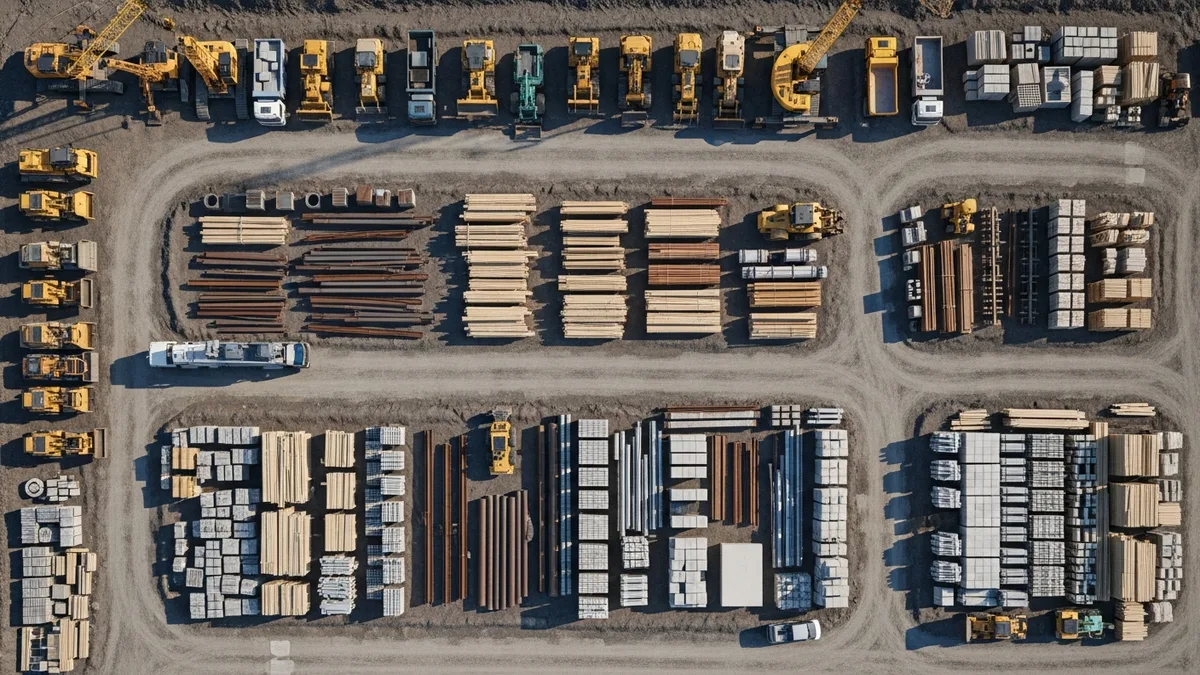
If you have only ever built single-family homes or small commercial projects, your first multi-family job will feel like stepping into a different sport. Same general skills, totally different pace and complexity. The sheer volume of units, the overlap of trades, the developer breathing down your neck for weekly photo reports, and the finish schedule that could fill a phone book all combine to create a project type that punishes disorganization faster than any other.
This guide covers the real-world challenges of multi-family project management and the systems that keep contractors from drowning in details. No theory. Just what works on the job site.
Why Multi-Family Builds Demand a Different Management Approach
The fundamental challenge of multi-family construction is multiplication. Everything you deal with on a single-family project gets multiplied by 20, 50, or 200 units. That sounds obvious, but the implications sneak up on you.
On a single-family remodel, forgetting to order one bathroom vanity is a minor headache. On a 60-unit apartment build, ordering the wrong vanity means 60 wrong vanities showing up on a truck, 60 units behind schedule, and a developer asking very pointed questions about your ability to manage the project.
Here is what changes when you move to multi-family:
- Inspection volume explodes. Each unit needs its own rough-in inspections, insulation inspections, and final inspections. A 40-unit building can require 200+ individual inspections across all trades and phases. Missing one delays that unit and can hold up the certificate of occupancy for the entire building.
- Material quantities get tricky. You are ordering in bulk, which saves money, but you need precise counts per unit and per phase. Running short on trim for the last 8 units because someone miscounted on the takeoff is a classic multi-family mistake.
- Communication channels multiply. You have your own crew, the developer’s team, the architect, multiple subcontractors, the lender’s inspector, and sometimes a property management company that is already pre-leasing units. Everyone wants updates, and everyone has opinions.
- The schedule has no slack. Developers are often working against lease-up timelines or loan maturity dates. Delivering a month late is not just inconvenient; it can cost the developer hundreds of thousands in carrying costs and lost rent.
If you are still managing projects with spreadsheets and phone calls, multi-family is where that system breaks. A construction project management platform becomes a necessity rather than a nice-to-have.
Unit Tracking: The Backbone of Multi-Family Project Management
Unit tracking is exactly what it sounds like: knowing the status of every single unit at all times. Which units have rough plumbing done? Which are waiting on drywall? Which ones passed their electrical inspection? Which are ready for paint?
On paper, this seems simple. In practice, it is the single biggest source of confusion on multi-family jobs. Here is why:
Units are at different stages simultaneously. While you are finishing flooring in Building A, Unit 204, your framers might be starting Building C, Unit 101. Multiply that across six or eight active trades and three buildings, and you have a scheduling puzzle that would make a logistics company sweat.
The “they all look the same” trap. Because units share the same floor plan, it is shockingly easy for a trade to work in the wrong unit. It happens more than anyone likes to admit. An electrician installs the wrong fixture package in Unit 305 because they grabbed the finish schedule for Unit 306. Now you have rework, wasted material, and a frustrated sub.
The best unit tracking systems share a few characteristics:
- Every unit has a unique identifier that everyone on the project uses consistently. Building letter, floor number, unit number. Not “the one on the left” or “third door down.”
- Status is updated in real time as work completes, not at the end of the week when someone remembers to fill out a spreadsheet.
- The information is accessible to everyone who needs it, from the superintendent on-site to the project manager in the office to the developer checking in remotely.
A solid job management system gives you a dashboard view of every unit’s status so you can spot bottlenecks before they become full-blown schedule problems. When a plumber tells you they cannot start Unit 410 because the HVAC ductwork is not done, you need to know immediately, not discover it three days later.
Finish Schedule Coordination: Where Details Make or Break You
The finish schedule on a multi-family project is a beast. Even when a developer tells you “all units are the same,” they rarely are. There are usually at least two or three finish packages: a standard package, a premium upgrade, and sometimes a model unit with its own unique selections.
Each finish package specifies:
- Cabinet style and color
- Countertop material and edge profile
- Paint colors for walls, trim, ceilings, and accent walls
- Flooring type and color by room
- Plumbing fixture style and finish
- Lighting fixture selections
- Appliance models
- Hardware (door handles, cabinet pulls, towel bars)
- Window treatment blocking locations
Don’t just take our word for it. See what contractors say about Projul.
Now multiply all of that by however many units you are building. A 48-unit project with three finish packages means tracking 48 individual unit assignments across dozens of selection categories. One mix-up, like installing brushed nickel fixtures in a unit that was supposed to get matte black, and you are eating the cost of swapping them out.
How to keep finish schedules under control:
Create a master matrix. Every unit gets a row. Every finish category gets a column. The intersecting cell tells the installer exactly what goes where. This document should be a living file that updates when the developer makes changes, and developers always make changes.
Distribute finish info by trade. Your cabinet installer does not need to know the paint colors. Give each sub the slice of the finish schedule that applies to their work, clearly labeled by unit number. Less information means fewer mistakes.
Verify before you install. Build a verification step into your process. Before a trade starts a unit, someone (a foreman or superintendent) confirms the finish package for that unit against the master schedule. This 30-second check prevents hours of rework.
Lock down changes with a cutoff date. Developers love to swap selections mid-project. Establish a hard cutoff date in your contract for finish changes. After that date, changes trigger a change order with associated costs and schedule impacts. This protects you from a developer who decides in month four that they want a different backsplash in 30 units.
Tracking material costs across all these selections ties directly into your job costing process. If you are not tracking actual costs against your budget per unit, you will not know you are losing money until the project is over.
Developer and Owner Reporting: Speaking Their Language
Multi-family developers are not like residential homeowners. They do not care about the details of your day-to-day operations. They care about three things: schedule, budget, and quality. Your reporting needs to hit all three clearly and consistently.
What developers typically want to see:
- Weekly progress reports with unit-by-unit status updates. Not “framing is going well” but “Building B framing complete: 24 of 24 units. Building C framing in progress: 8 of 24 units complete, on schedule for March 14 completion.”
- Progress photos organized by building and unit. Developers share these with their lenders and investors. Unorganized photo dumps are useless to them.
- Financial summaries showing percent complete vs. percent billed. Lenders compare these numbers closely, and if your billing is running ahead of your actual progress, you will get uncomfortable phone calls.
- Schedule updates showing the critical path and any items that are at risk. A two-week delay in the elevator installation affects move-in for the entire building, and the developer needs to know that as early as possible.
Tips for keeping developers happy without drowning in paperwork:
First, set the reporting template at the start of the project. Ask the developer what format they want and how often. Some developers have their own templates they require you to fill out. Knowing this upfront saves you from reformatting reports later.
Second, automate what you can. If your project management software can generate progress reports from the data you are already entering, you save hours each week. Manual report generation from scratch is a time killer.
Third, get ahead of bad news. If a material delay is going to push back six units by two weeks, tell the developer before they ask. Developers can handle problems. What they cannot handle is surprises. A proactive phone call followed by a written summary earns way more trust than a developer discovering the delay during a site walk.
Fourth, track everything in writing. Verbal approvals from developers have a way of being forgotten. Every conversation about scope changes, schedule shifts, or budget adjustments should be followed up with an email or a note in your project management tool. This is basic construction budget management, but it matters even more on multi-family where the stakes are higher.
Punch Lists by Unit: Closing Out Without Losing Your Mind
The punch list phase on a multi-family project is where good systems separate professional outfits from the crews that are still chasing open items six months after the developer moved tenants in.
On a single-family project, your punch list might be 15 to 30 items. On a 50-unit multi-family, you could easily have 500 to 1,000 individual punch items spread across every unit, common area, exterior space, and mechanical room. Managing that on paper or in a basic spreadsheet is a recipe for missed items and frustrated clients.
Building a punch list system that actually works:
Walk each unit individually. Do not try to batch punch walks across multiple units in a single pass. You will miss things. Walk Unit 101, document everything, move to Unit 102. Slow and methodical beats fast and sloppy every time.
Categorize by trade. Every punch item should be assigned to the responsible trade. Paint touch-up goes to the painter. Cabinet adjustment goes to the cabinet installer. A drywall crack goes to the drywall crew. This lets you send each sub a focused list for their scope rather than a 40-page document where they have to hunt for their items.
Include photos. A written description like “scratch on cabinet, kitchen” is ambiguous. A photo with an arrow pointing to the specific scratch is not. Photos eliminate the “I could not find it” excuse and speed up corrections. Check out our guide on punch list best practices for more on building a bulletproof process.
Track status by unit, not just by item. You need to know both how many open items Unit 305 has and how many total open items your plumber has across all units. The first view helps you close out units for occupancy. The second helps you manage your subs’ workload and hold them accountable.
Do a pre-punch before the official punch. Walk each unit yourself (or have your superintendent do it) before the developer’s punch walk. Fix everything you find first. The fewer items the developer finds on their walk, the more confidence they have in your work, and the faster you get to final completion and your retention release.
Using punch list software designed for construction makes this entire process faster. You can document items on a tablet or phone during the walk, assign them to subs with photos, and track completion in real time instead of shuffling paper lists back and forth.
Managing Multiple Trades in Tight Spaces
Multi-family buildings are, by nature, tight. You are working in hallways, stairwells, and units that might be 600 to 1,200 square feet each. Fitting multiple trades into these spaces at the same time creates conflicts, safety hazards, and a lot of frustration if you do not manage the flow carefully.
The assembly line approach:
The most effective scheduling method for multi-family interiors is the flow schedule, sometimes called a train schedule. Think of it like a manufacturing line:
- Day 1: Electricians rough in Unit 101
- Day 2: Electricians move to Unit 102. Plumbers enter Unit 101.
- Day 3: Electricians move to Unit 103. Plumbers move to Unit 102. HVAC enters Unit 101.
Each trade follows the one before it through units in sequence. Nobody is stepping over each other. Nobody is waiting for access. The schedule is predictable and repeatable once you get the rhythm dialed in.
This approach works because multi-family units are repetitive. Once your electrician figures out the rough-in for one unit, they can repeat it faster in the next one. The learning curve flattens quickly, and production speeds up as the project progresses.
Making the flow schedule work in reality:
Set clear production rates. Before you start, establish how long each trade needs per unit. If your electrician needs 1.5 days per unit for rough-in and your plumber needs 1 day, you need to stagger accordingly so the plumber is not waiting half a day for the electrician to finish.
Buffer units between trades. Do not schedule two trades in adjacent units if they share a wall where both need access. The plumber on one side of the wall and the electrician on the other side creates conflicts and potential damage to each other’s work.
Control the hallways and stairwells. Common areas are the bottleneck. Material deliveries, tool staging, and crew movement all funnel through the same corridors. Designate delivery windows so you do not have a drywall delivery blocking the hallway while the cabinet crew is trying to get sheets through the same space.
Coordinate with a weekly look-ahead schedule. The three-week look-ahead is your best friend on multi-family. It gives every trade visibility into what is coming, where they will be working, and what needs to happen before they can start. Update it every week without exception.
Material staging matters. You cannot store 50 toilets in one unit and expect trades to work around them. Designate staging areas by phase and trade. Pre-stage materials in or near the units where they will be installed, but only when that unit is close to needing them. Staging too early clutters the workspace. Staging too late delays production.
Safety in tight quarters. More people in less space means more potential for incidents. Establish traffic patterns, require tool cords to be managed (not strung across walkways), and enforce PPE in all common areas. A trip-and-fall in a stairwell packed with materials is a preventable accident that can shut down the entire project for an OSHA investigation.
Managing your subcontractors effectively is the linchpin of the whole operation. Your subs set the pace. If one trade falls behind, every trade behind them in the flow schedule is affected. Hold weekly coordination meetings (short ones, 15 minutes max) with all trade foremen present so everyone knows the plan and can flag conflicts before they blow up the schedule.
Getting It Right From Day One
Multi-family project management is not about being smarter than single-family contractors. It is about being more organized, more disciplined with systems, and more proactive about communication. The challenges are predictable: unit tracking, finish coordination, developer reporting, punch list management, and trade flow. None of them are mysteries. But all of them require intentional systems rather than winging it.
If you are stepping into multi-family for the first time, invest the time upfront to build your tracking templates, establish your reporting cadence, and set up your flow schedule before the first shovel hits dirt. The contractors who struggle with multi-family are almost always the ones who tried to figure it out on the fly.
And if you are still running your projects on spreadsheets, sticky notes, and group texts, a multi-family build will show you exactly where those systems break down. The right construction management software gives you the structure to handle the volume without losing track of the details that matter.
Book a quick demo to see how Projul handles this for real contractors.
Multi-family is demanding work, but it is also some of the most rewarding contracting you can do. The projects are bigger, the relationships with developers lead to repeat work, and the crews who get good at it build a reputation that keeps the pipeline full. Get your systems right, and the rest follows.
Frequently Asked Questions
What makes multi-family construction harder to manage than single-family?
How do you track punch list items across dozens of units?
What is a finish schedule in multi-family construction?
How often should you report to the developer or owner on a multi-family project?
What is the best way to schedule multiple trades in a multi-family building?
Related Articles

How Construction Teams Use AI to Cut Admin Time
Most contractors lose a full day every week to paperwork. AI now handles the repetitive admin work that used to eat...
Read More →
Concrete Tilt-Up Construction: A Contractor's Complete Field Guide
Tilt-up construction accounts for roughly 15 percent of all industrial and commercial buildings in North America. This...
Read More →
How to Implement Construction Software Without Losing Your Mind
Most construction software rollouts fail. Not because the software is bad, but because the rollout was rushed. Here are...
Read More →