
Construction Robotics and Automation in 2026
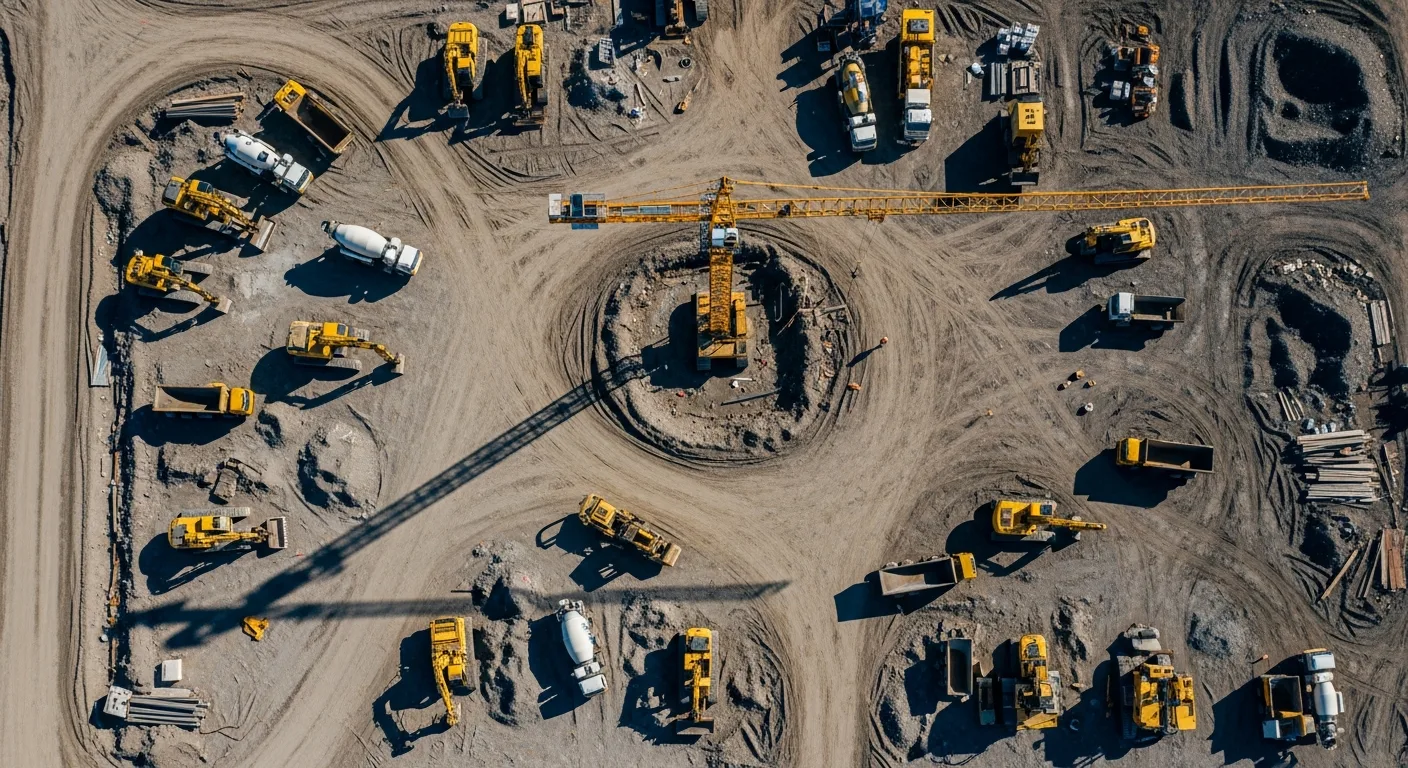
Construction Robotics and Automation: What’s Actually Working on Jobsites in 2026
Let’s be honest about construction robotics. For the past decade, the industry has been bombarded with breathless predictions about robots taking over jobsites. Fully automated buildings. 3D-printed houses. Drone swarms replacing entire construction crews.
Most of it has been hype.
But something has changed in the past two to three years. Quietly, away from the conference keynotes and press releases, a handful of construction robots and automation tools have moved from prototypes to production. They are showing up on real jobsites, operated by real construction workers, and delivering measurable results.
This guide covers the construction robots and automation tools that are actually working in 2026. Not the ones that look cool in a YouTube video. The ones that contractors are buying, leasing, and deploying on commercial projects today.
Why Now? The Forces Driving Adoption
Construction has been one of the slowest industries to adopt automation. There are good reasons for that: every jobsite is different, conditions change daily, and the work requires a level of physical dexterity and judgment that machines struggle to replicate. If you are struggling with getting your team to embrace new tools, our construction technology adoption guide breaks down the practical steps.
So what changed?
The Labor Shortage Got Worse
The construction industry has been short-staffed for years, but the numbers have reached a critical point. The Associated Builders and Contractors estimates the industry needs to attract roughly 500,000 additional workers in 2026 just to meet demand. The average age of a skilled tradesperson continues to climb. Young workers are not entering the trades at the rate needed to replace retirements.
When you cannot hire enough people, you have to find ways to do more with the people you have. That is exactly what construction robots do best: they take over the repetitive, labor-intensive tasks so your skilled workers can focus on the work that actually requires their expertise.
The Technology Matured
Early construction robots were engineering experiments. They worked in controlled environments but fell apart on messy, unpredictable jobsites. The current generation is different. These machines are designed by teams that include experienced construction professionals, not just roboticists. They account for dust, debris, uneven surfaces, and the general chaos of an active construction site.
The Business Case Became Clear
As labor costs have risen (construction wages are up over 25 percent in the past 5 years in many markets), the math on robotics has tipped. A machine that seemed expensive at $500 per day starts to look reasonable when you cannot find a worker willing to do the same task for less.
Robots That Are Working Today
Let’s look at the specific machines and systems that contractors are actually using on jobsites in 2026.
Dusty Robotics: Automated Layout
If there is one construction robot that has crossed the line from novelty to necessity on large commercial projects, it is the Dusty Robotics FieldPrinter. This machine takes the BIM model and prints full-scale layout lines directly on the concrete slab, showing exactly where every wall, door, outlet, plumbing fixture, and piece of equipment goes.
What it does: The FieldPrinter rolls across the slab on tracks and prints layout lines with 1/16-inch accuracy using the BIM model as its source. One operator can lay out an entire floor in a fraction of the time it takes a traditional layout crew.
Why contractors love it: Traditional layout requires a two-person crew with a total station, spending days marking up a floor with chalk lines and spray paint. The Dusty robot does it faster, with fewer errors, and the markings are directly tied to the coordinated model. If the model changes, you re-print. No confusion about which chalk line is current.
Real results: Contractors report 50 to 75 percent reduction in layout time and near-elimination of layout errors. On a large hospital project in California, one GC estimated that the Dusty robot saved over $200,000 in rework that would have resulted from manual layout mistakes.
Cost: Leases run approximately $5,000 to $8,000 per month, which pays for itself quickly on projects over 50,000 square feet.
SAM and MULE: Robotic Masonry
Construction Robotics (the company, not the category) has been developing masonry robots for over a decade. Their SAM100 (Semi-Automated Mason) and MULE (Material Unit Lift Enhancer) systems are the most mature robotic masonry solutions available.
What they do: SAM picks up bricks, applies mortar, and places them on the wall with precision. A human mason works alongside SAM, handling the tasks the robot cannot: corners, window openings, and quality inspection. MULE is a lift assist that picks up heavy blocks and positions them for the mason to set, reducing the physical strain of handling 50-plus-pound CMU blocks all day.
Why it matters: A mason working with SAM can lay 3 to 5 times more bricks per day than working alone. MULE reduces the physical demands that cause back injuries and career-ending strain for block masons.
Limitations: SAM works best on long, straight wall runs with standard brick patterns. Complex patterns, curves, and tight spaces still require traditional hand-laying. Setup time is significant, so the robot makes the most sense on large-scale masonry projects: schools, hospitals, warehouse facades, and similar buildings with extensive brick or block work.
Cost: The SAM100 system runs approximately $500,000. Most contractors access it through rental or service agreements with Construction Robotics rather than purchasing outright.
Spot Robot: Jobsite Monitoring
The Spot robot (made by Boston-based robotics firm BD) has found a genuine niche in construction as an autonomous site monitoring platform. Equipped with cameras and LiDAR, Spot walks the jobsite on a programmed route, capturing 360-degree photos and point cloud data that feed into progress tracking tools.
What it does: Spot navigates stairs, ramps, and rough terrain to capture visual and spatial data from every area of the building. This data gets compared against the BIM model and schedule to automatically generate progress reports showing what is installed, what is missing, and what is behind schedule.
Why contractors use it: Sending a superintendent to walk every floor and photograph every room takes hours per day. Spot does it autonomously, usually overnight or during off-hours, and the data is processed by the time the team arrives in the morning.
Real results: Hensel Phelps, Brasfield and Gorrie, and several other large GCs have deployed Spot on commercial projects. They report time savings of 60 to 80 percent on progress documentation and earlier identification of installation errors.
Cost: Spot costs approximately $75,000, plus software subscriptions for the progress monitoring platform (typically $2,000 to $5,000 per month). For projects over $50 million, the ROI is straightforward.
Brokk: Demolition Robots
Brokk has been making demolition robots for decades, but they deserve mention because they are the most mature and widely adopted construction robot category. These compact, remote-controlled machines handle demolition in spaces where full-size equipment cannot go and where human workers would face significant safety risks.
What they do: Brokk robots range from 1,100 to 24,000 pounds and can be equipped with breakers, crushers, grapples, and buckets. They fit through standard doorways, work on upper floors, and operate in confined spaces, hazardous environments, and underwater.
Why they matter: Interior demolition is one of the most dangerous construction activities. Workers face risks from falling debris, silica dust, noise, and structural collapse. A Brokk robot removes the operator from the danger zone while delivering more force than a handheld breaker.
Cost: Brokk robots range from $50,000 to $300,000 depending on size and attachments. Rental is widely available through equipment dealers.
Hilti Jaibot: Overhead Drilling
Hilti’s Jaibot is a semi-autonomous robot that drills overhead holes for MEP installations. If you have ever watched a crew of electricians spend an entire day on scissor lifts drilling hundreds of ceiling anchors, you understand the problem this solves.
What it does: The Jaibot takes a BIM model with anchor point locations, navigates to each point on the ceiling grid, and drills the hole at the correct diameter and depth. A single operator supervises the robot while it works through the layout.
Why it matters: Overhead drilling is repetitive, physically demanding, and a leading cause of shoulder and neck injuries in the electrical and mechanical trades. The Jaibot handles the drilling while workers focus on installing the actual conduit, cable tray, and hangers.
Real results: Contractors report that the Jaibot drills overhead anchors 2 to 3 times faster than manual methods, with better accuracy and zero ergonomic injuries.
Limitations: The Jaibot works on flat ceilings within its height range and requires a relatively clear floor area to navigate. It is not practical for tight mechanical rooms or areas with heavy scaffold coverage.
Canvas: Drywall Finishing Robot
Canvas (acquired by Dusty Robotics) developed a robot that applies drywall joint compound, sands, and finishes drywall surfaces. Drywall finishing is one of the construction trades with the most severe labor shortages, making it a natural candidate for automation.
What it does: The Canvas robot scans a drywall surface, identifies joints, seams, and fastener dimples, and applies compound with a mechanical arm. It can handle taping, mudding, and sanding on flat walls and ceilings.
Why it matters: Finding skilled drywall finishers is increasingly difficult, and the work is physically demanding. The robot produces consistent, high-quality finishes without the variability that comes from fatigue over a long workday.
Current status: Canvas systems are deployed on select commercial projects, primarily in markets with acute drywall labor shortages. The technology is still scaling, so availability may be limited in some regions.
Autonomous Equipment: Dozers and Compactors
Caterpillar, Komatsu, and several startups now offer autonomous or semi-autonomous earthmoving equipment. These machines use GPS, LiDAR, and machine learning to perform grading, compaction, and material movement with minimal operator intervention.
What they do: Autonomous dozers grade to design surface within fractions of an inch. Autonomous compactors run predetermined patterns with GPS-guided coverage mapping that ensures every square foot receives the specified number of passes.
Why they matter: Grading and compaction are repetitive tasks where machine precision outperforms human operation. An autonomous dozer does not get tired, does not lose focus after 8 hours, and hits the grade plane with consistency that even skilled operators cannot match over large areas.
Adoption level: Semi-autonomous features (GPS machine control, auto-grade) are widespread and used by the majority of large earthwork contractors. Fully autonomous operation is still limited to controlled environments like mining and large civil earthwork, but the gap is closing.
What Is Not Working Yet
Honesty about limitations is important. Here are the areas where construction robotics is still more promise than reality:
General-Purpose Construction Robots
The idea of a humanoid robot that can frame walls, run conduit, and install finish trim is still science fiction. Current robots are specialists. They do one or two tasks well and nothing else. A bricklaying robot cannot drill anchors. A layout robot cannot finish drywall. For the foreseeable future, construction robots will be task-specific tools, not versatile workers.
3D-Printed Buildings
Despite years of media coverage, 3D printing of buildings remains limited to simple single-story structures in controlled conditions. The technology faces significant challenges with rebar integration, multi-story construction, MEP coordination, and local building codes. A handful of demonstration projects exist, but widespread adoption for commercial construction is years away.
Fully Autonomous Cranes
Cranes remain one of the most operator-dependent machines on a jobsite. While load management systems and anti-collision technology have improved safety, fully autonomous crane operation in a busy construction environment is not practical with current technology. The variables (wind, load behavior, surrounding workers and structures) are too complex.
How to Evaluate Robotics for Your Business
If you are a contractor considering robotics, here is a practical framework:
1. Start With Your Biggest Pain Point
Do not buy a robot because it is cool. Buy one because it solves a specific, expensive problem. Ask yourself:
- Which tasks take the most labor hours relative to their complexity?
- Where do you consistently struggle to find qualified workers?
- Which activities cause the most injuries or workers’ comp claims?
- Where does rework cost you the most money?
The intersection of these questions points you toward the right application.
2. Calculate the Real Cost
Total cost of ownership includes:
- Equipment purchase or lease
- Operator training
- Maintenance and consumables
- Transport and setup time
- Downtime (robots break, just like any equipment)
- Software subscriptions and updates
Compare this to the fully loaded cost of the labor the robot replaces or augments, including wages, benefits, workers’ comp, and productivity losses from fatigue and turnover.
3. Start With a Pilot
Do not deploy new technology across your entire operation at once. Pick one project, one application, and learn from it. Document everything: setup time, production rates, problems encountered, crew feedback. Use that data to make informed decisions about broader adoption.
4. Involve Your Crews
The fastest way to kill a robotics initiative is to surprise your crews with a machine they were not consulted about. Involve field leaders in the evaluation process. Let them see the equipment, ask questions, and provide input. Workers who feel included in the decision become advocates. Workers who feel replaced become obstacles.
5. Consider the Support Infrastructure
A robot on a jobsite needs:
- Power (most run on batteries, but charge time affects scheduling)
- Clear work areas for navigation and operation
- Digital models or data to drive the work (no BIM model means no layout robot)
- Connectivity for data upload and software updates
- Trained operators or supervisors
Make sure your projects can provide these before committing to equipment.
Integrating Robots With Your Project Management Workflow
A robot on the jobsite is only as useful as the workflow around it. If the layout robot prints a floor but nobody tracks which areas are complete, you lose half the value. If the site monitoring robot captures progress data but it sits in a separate system from your schedule, the insights do not reach the people who need them.
This is where project management software plays a critical role. Tools like Projul help contractors:
- Schedule robot deployment alongside trade activities so the machine and the crew are not fighting for the same space
- Track productivity data from robotic operations in daily logs, building a performance record that informs future decisions
- Coordinate between human and robotic work through clear scheduling and task assignments
- Document ROI by comparing labor hours and rework rates on robot-assisted projects versus traditional ones
- Communicate changes to field crews when robotic operations affect sequencing or access
The contractors who get the most value from robotics are the ones who treat these machines as integrated parts of their project workflow, not standalone novelties.
What Is Coming Next
A few trends worth watching over the next 2 to 3 years:
- Prefabrication robotics: Factory-based robots assembling MEP racks, wall panels, and bathroom pods. The controlled factory environment is much better suited to robotics than the chaotic jobsite, and prefab adoption is accelerating.
- Wearable robotics (exoskeletons): Lightweight assist devices that reduce fatigue and injury risk for workers performing overhead work, heavy lifting, or repetitive motions. Several products are commercially available now, and adoption is growing.
- AI-powered scheduling: Software that uses historical project data and real-time site conditions to automatically adjust schedules, predict delays, and suggest recovery plans. Not a physical robot, but automation that directly improves project outcomes.
- Collaborative robots (cobots): Small, safe robots designed to work alongside humans rather than in isolated cells. Material handling cobots that move supplies to the point of installation are in pilot programs at several large GCs.
The Bottom Line
Construction robotics in 2026 is not about replacing your workforce. It is about making your existing workforce more productive, safer, and capable of taking on more work with the same number of people.
The machines that are succeeding are the ones that solve specific, well-defined problems: layout printing, overhead drilling, progress monitoring, demolition in hazardous spaces, and masonry on large-scale projects. They are tools, not replacements. And like any tool, they work best in the hands of contractors who understand both the technology and the craft.
If you have been watching construction robotics from the sidelines, 2026 is a reasonable time to get in. The technology is proven, the labor math supports it, and early adopters are building competitive advantages that will be hard to close. Start small, measure results, and scale what works.
Frequently Asked Questions
Are construction robots replacing workers?
What construction tasks can robots perform today?
How much do construction robots cost?
What is the ROI on construction robotics?
Do workers need special training to operate construction robots?
What are the biggest barriers to adopting construction robotics?
Which construction trades benefit most from robotics?
How does Projul help contractors manage technology adoption on projects?
Related Articles

How to Implement Construction Software Without Losing Your Mind
Most construction software rollouts fail. Not because the software is bad, but because the rollout was rushed. Here are...
Read More →
How Selections Can Pay for Themselves in Three Easy Steps
Most contractors lose thousands each year on wrong material orders, slow client decisions, and missed upsell chances....
Read More →
3 Free Concrete Estimate Templates for Every Pour Type (2026)
Three ready-to-use concrete estimate templates with realistic line items, material costs, labor rates, and markup...
Read More →