
Soffit and Fascia Installation Guide: Materials, Ventilation, and Common Mistakes | Projul
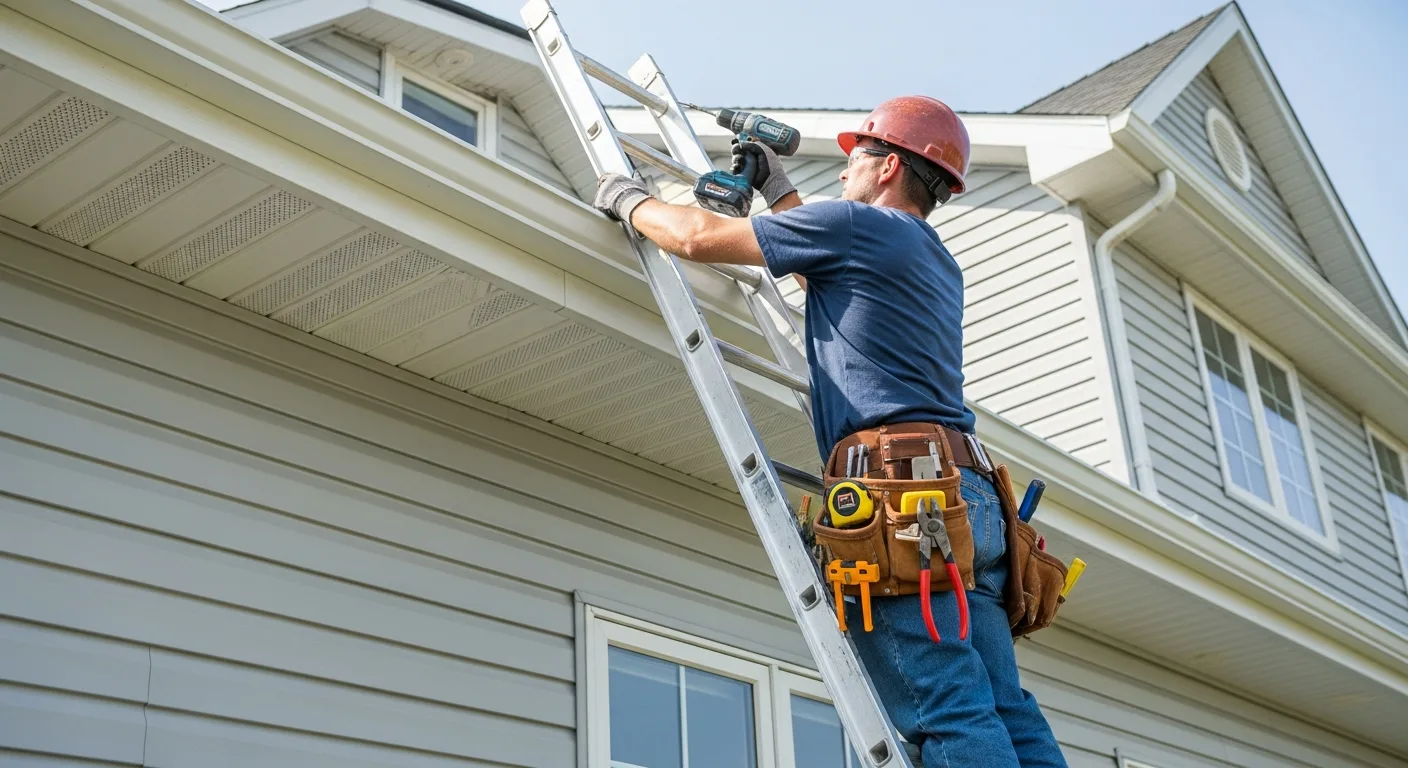
Why Soffit and Fascia Matter More Than Most People Think
If you have been in construction for any amount of time, you know that soffit and fascia are the kind of work that does not get a lot of attention until something goes wrong. A homeowner does not call you excited about their new soffit. They call you when squirrels are nesting in their attic, water is running down the inside of their walls, or their fascia boards are rotting off the house.
That is exactly why getting this work right matters. Soffit and fascia protect the roof structure, manage attic ventilation, keep pests out, and give the exterior a finished look. When installed correctly, they are invisible. When installed wrong, they create expensive callbacks and unhappy customers.
This guide covers everything you need to know about soffit and fascia installation, from material selection to ventilation calculations to the most common mistakes contractors make in the field.
Understanding the Anatomy of Soffit and Fascia
Before we get into the installation process, let us make sure we are all on the same page about what these components actually do.
Fascia
The fascia board is the long, straight board that runs along the lower edge of the roof. It is mounted directly to the rafter tails or truss ends and serves two main purposes. First, it provides a mounting surface for the gutter system. Second, it seals the end of the rafter cavity, keeping water and animals out of the roof structure.
Fascia takes a beating. It is exposed to rain, snow, sun, and wind year-round. That is why material selection and proper flashing are so important.
Soffit
The soffit is the panel that covers the underside of the roof overhang, running horizontally from the fascia back to the exterior wall. It can be solid or vented. Vented soffit panels have small perforations that allow air to flow into the attic space, which is critical for proper roof ventilation.
Drip Edge and Trim
Do not forget the supporting cast. Drip edge directs water away from the fascia and into the gutter. J-channel and F-channel create clean transitions between the soffit and the wall or fascia. These trim pieces are not optional; they are what make the installation look professional and perform correctly.
Choosing the Right Materials
Material selection depends on the project budget, the climate, and the look the homeowner is going for. Here is a breakdown of the most common options.
Aluminum Soffit and Fascia
Aluminum is the workhorse of the industry. It does not rot, it resists dents better than vinyl, and it comes in a wide range of colors with a baked-on finish. Aluminum soffit is available in solid and vented panels, usually in 12-inch or 16-inch widths.
For fascia, aluminum coil stock can be brake-bent to wrap existing wood fascia boards, giving you a maintenance-free exterior without replacing the structural board underneath.
Best for: Most residential projects, especially in areas with high humidity or heavy rainfall.
Vinyl Soffit and Fascia
Vinyl is the budget-friendly option. It is lightweight, easy to cut, and simple to install. However, it can become brittle in extreme cold and may warp in extreme heat. Color options have improved over the years, but vinyl still does not look as crisp as aluminum or fiber cement.
Best for: Budget-conscious projects in moderate climates.
Wood Soffit and Fascia
Wood gives you the most traditional look, and for historic homes or high-end custom work, nothing else will do. Cedar and redwood are the most popular choices because of their natural resistance to rot and insects. Pine and spruce work too but need more protection.
The downside is maintenance. Wood needs to be primed and painted before installation and repainted every 5 to 10 years. Skipping that step is how you end up back on the job in a few years doing a full replacement.
Best for: Historic renovations, custom homes, and projects where aesthetics are the top priority.
Fiber Cement
Fiber cement, like HardieSoffit, is a step up from vinyl and aluminum in terms of durability and appearance. It resists rot, fire, and insects, and it holds paint extremely well. The trade-off is weight. Fiber cement is heavier than other options, which means you need more support and more hands on the crew during installation.
Best for: Mid-range to high-end residential projects where durability and appearance both matter.
Composite and PVC
Composite and PVC products are gaining ground in the market. They offer the look of wood without the maintenance headaches. They are more expensive upfront but save money over the life of the building. Many composite products can be routed, mitered, and finished just like real wood.
Best for: Projects that want a wood look with zero maintenance.
Ventilation: Getting the Airflow Right
This is where a lot of contractors drop the ball. Soffit ventilation is not just a nice-to-have. It is a code requirement in most jurisdictions, and getting it wrong leads to moisture problems, ice dams, premature shingle failure, and mold in the attic.
How Attic Ventilation Works
The principle is simple. Cool outside air enters through the soffit vents at the eaves, flows up through the attic space, and exits through exhaust vents at or near the ridge. This continuous airflow removes heat and moisture from the attic.
In summer, it keeps the attic cooler, reducing the load on the air conditioning system. In winter, it keeps the roof deck cold, preventing snow from melting and refreezing at the eaves.
Calculating Ventilation Requirements
The standard formula is based on the 1:150 rule. For every 150 square feet of attic floor space, you need 1 square foot of net free ventilation area (NFVA). If you have a balanced system (roughly equal intake and exhaust), many codes allow you to use the 1:300 ratio instead.
Here is a quick example. For a 1,500 square foot attic with balanced ventilation:
- Total NFVA needed: 1,500 / 300 = 5 square feet
- Split 50/50 between intake and exhaust: 2.5 square feet of soffit ventilation
- Convert to square inches: 2.5 x 144 = 360 square inches of NFVA at the soffits
Check the NFVA rating on your soffit panels. A typical 12-inch by 12-foot vented soffit panel might provide 9 to 11 square inches of NFVA per linear foot. Do the math to make sure you are meeting the requirement.
Common Ventilation Mistakes
Blocking soffit vents with insulation. This is the number one issue. If the insulation in the attic extends all the way to the eaves and covers the soffit vents, you have zero intake ventilation. Install proper baffles (also called rafter vents or vent chutes) in every rafter bay to keep insulation from blocking airflow.
Mixing exhaust vent types. Do not combine ridge vents with gable vents or powered attic ventilators. Different exhaust types can create competing airflow patterns that actually reduce ventilation effectiveness. Pick one exhaust method and stick with it.
Skipping ventilation on enclosed soffits. If you are boxing in an open overhang that previously had no soffit, you are also enclosing the rafter bays. Install vented soffit and make sure you have a clear air path from the vents to the attic.
Step-by-Step Installation Process
Now let us walk through a typical soffit and fascia installation. This assumes aluminum materials, which is the most common scenario, but the general sequence applies to other materials as well.
Step 1: Inspect and Prep the Substrate
Before you install anything, look at what is already there. Check the rafter tails for rot. Check the existing fascia for structural integrity. If there is existing soffit, pull a section and inspect the underside of the roof deck for moisture damage or mold.
Fix any structural issues now. Do not cover up problems. If rafter tails are rotted, sister new material alongside them. If the sub-fascia is shot, replace it.
Step 2: Install or Repair the Fascia Board
The fascia goes on first because the soffit terminates at the fascia. If you are wrapping existing wood fascia with aluminum, make sure the wood is solid and straight. Shim any low spots.
For new wood fascia installation, use pressure-treated lumber or a rot-resistant species. Fasten with stainless steel or hot-dipped galvanized ring-shank nails. Pre-prime and paint all six sides of wood fascia before installation. Yes, all six sides, including the back and the cut ends.
For aluminum fascia wrap, brake-bend the coil stock to fit the profile of the fascia board and drip edge. Use aluminum trim nails in a matching color. Start at one end and work your way across, overlapping joints by at least 1 inch in the direction away from the prevailing view.
Step 3: Install the Drip Edge
If you are re-roofing at the same time, install the drip edge over the fascia and under the roofing underlayment at the eaves. The drip edge directs water into the gutter and away from the fascia.
If the roof is staying in place, make sure the existing drip edge is in good condition. A missing or damaged drip edge allows water to wick back under the shingles and rot the fascia from behind.
Step 4: Install the Receiving Channel
The soffit needs something to slide into at both the wall side and the fascia side. On the wall side, install J-channel or F-channel. On the fascia side, you can use J-channel, F-channel, or a dedicated soffit receiving channel built into the fascia cover.
Snap a chalk line to keep the channel straight. Fasten every 12 to 16 inches with screws or nails. Make sure the channel is level; a wavy channel means wavy soffit.
Step 5: Measure and Cut Soffit Panels
Measure from the back of the wall channel to the back of the fascia channel and subtract about 1/4 inch for expansion. Cut panels with tin snips or a fine-tooth circular saw blade installed backwards (for aluminum).
For vented soffit, alternate vented and solid panels as needed to meet your ventilation requirements. Some contractors run all vented panels for maximum airflow, which works fine as long as you do not mind the look.
Step 6: Install Soffit Panels
Slide the first panel into the channels on both sides and fasten through the nailing flange. Do not overdrive the fasteners. Leave about 1/32 inch of play so the panel can expand and contract with temperature changes. Interlock each subsequent panel with the previous one and continue across the span.
At corners, you will need to miter the panels or use a dedicated corner piece. Mitered corners look better but take more time.
Step 7: Final Inspection
Walk the entire perimeter and check for gaps, loose panels, and proper ventilation. Make sure all joints are tight, all channels are secured, and there are no exposed nail heads. Test a few panels by pushing on them; they should feel solid but not rigid.
Common Mistakes Contractors Make
Learning from other people’s expensive lessons is a lot cheaper than making your own. Here are the mistakes we see most often.
Not Accounting for Thermal Expansion
Aluminum and vinyl both expand and contract with temperature changes. If you install panels tight on a hot day, they will buckle. If you install them tight on a cold day, they will pull apart and leave gaps when it warms up. Always leave expansion gaps as specified by the manufacturer.
Skipping the Baffles
We mentioned this already, but it is worth repeating. If the soffit is vented and there are no baffles in the rafter bays, insulation will eventually migrate down and block the vents. This is the single most common reason for attic ventilation failure.
Using the Wrong Fasteners
Galvanic corrosion is real. Do not use steel nails on aluminum soffit. Do not use aluminum nails on steel fascia. Match your fastener material to the material you are fastening, or use stainless steel, which plays well with everything.
Ignoring Water Management
Soffit and fascia are part of the building’s water management system. If the gutter is not draining properly, water backs up behind the fascia. If there is no drip edge, water runs down the face of the fascia and behind the soffit. Think about the whole system, not just the individual component.
Poor Jointing and Overlaps
Visible seams and misaligned overlaps look amateurish. Take the time to plan your layout so joints fall in less visible areas. Overlap in a consistent direction, ideally away from the main viewing angle. A little planning up front saves you from callbacks.
Estimating and Bidding Soffit and Fascia Work
Getting your numbers right on soffit and fascia jobs means measuring carefully and accounting for waste, trim, and the time it takes to work around obstacles like gutters, downspouts, and roof penetrations.
Material Takeoff
Measure the linear footage of fascia and the square footage of soffit separately. Add 10% for waste on straightforward jobs, and up to 15% on complex rooflines with lots of corners and angles. Do not forget to count J-channel, F-channel, and any specialty trim pieces.
Labor Estimates
A two-person crew can typically install 200 to 300 linear feet of soffit and fascia per day on a standard residential job. Complex rooflines, two-story homes, and jobs requiring rot repair will slow that pace significantly.
Pricing
Material costs vary widely depending on the product. Vinyl is the cheapest at $2 to $4 per square foot installed. Aluminum runs $5 to $8. Fiber cement and composite materials can run $8 to $15 or more. These are rough ranges; always price based on your local market and supplier quotes.
Using construction management software like Projul helps you track material costs, labor hours, and profit margins across all your soffit and fascia jobs. Over time, that data makes your estimates more accurate and your bids more competitive. Check out Projul’s pricing to see how it fits your operation.
Maintenance Tips to Share with Homeowners
Part of doing good work is educating your customers on how to maintain it. Here are a few tips you can pass along at the end of every soffit and fascia job.
- Inspect twice a year. Check for cracks, gaps, peeling paint, and signs of pest entry in spring and fall.
- Keep gutters clean. Clogged gutters cause water to back up and damage the fascia.
- Trim nearby trees. Overhanging branches drop debris on the roof and provide a highway for squirrels and raccoons.
- Repaint wood fascia on schedule. Every 5 to 7 years for painted wood, or as soon as you see peeling or bare spots.
- Watch for wasp nests and bee activity. Small gaps in soffit panels are a favorite nesting spot.
Wrapping Up
Soffit and fascia installation is not the most glamorous work in construction, but it is essential. Done right, it protects the structure, improves energy efficiency, and gives the home a clean, finished appearance. Done wrong, it creates a cascade of problems that are expensive to fix.
Take the time to select the right materials, calculate your ventilation correctly, follow proper installation techniques, and avoid the common mistakes that trip up even experienced crews. Your customers will not call to thank you for their soffit; that is actually the best compliment you can get. It means the work is doing its job.
If you are looking for a better way to manage your exterior projects, from estimates to scheduling to final invoicing, schedule a demo with Projul and see how it works in the field.
Frequently Asked Questions
What is the difference between soffit and fascia?
How much ventilation does a soffit need?
Can you install new soffit over old soffit?
What is the best material for soffit and fascia?
How long does soffit and fascia last?
Do I need a permit to replace soffit and fascia?
How do you prevent ice dams with proper soffit ventilation?
What tools do I need for soffit and fascia installation?
Related Articles

BIM Clash Detection: How to Catch Conflicts Before They Cost You on the Jobsite
BIM Clash Detection: How to Catch Conflicts Before They Cost You on the Jobsite Every contractor has a story about the...
Read More →
Asphalt Paving and Compaction Guide: Mix Types, Laydown Temperatures, and Quality Testing
Asphalt paving looks straightforward from a distance. A truck dumps material, the paver lays it down, and rollers...
Read More →
Construction Jobsite Wi-Fi & Connectivity Guide: Setting Up Reliable Internet in the Field
A practical guide to getting reliable internet on construction job sites. Learn about cellular hotspots, mesh networks,...
Read More →