
Steel Erection Guide for General Contractors
Steel Erection Management for GCs: What You Need to Know Before Iron Hits the Air
If you have run a commercial project with structural steel, you know the feeling. The day the first piece of iron swings off the truck and into the air, everything changes. The pace picks up, the stakes go higher (literally), and every decision you made in preconstruction either pays off or comes back to bite you.
Steel erection is not something you can figure out on the fly. By the time the ironworkers show up, your planning window is closed. The fabrication is done, the connections are welded or bolted per the shop drawings, and the crane is on site burning money by the hour. If something is wrong, you are fixing it in real time with very little room to maneuver.
This guide is written for GCs who are either running their first steel job or looking to tighten up their process. We will walk through the planning, coordination, safety, and scheduling realities of managing structural steel erection on a commercial project.
Understanding the Steel Erection Sequence and Why It Matters
Steel erection follows a logical sequence, but that sequence is not always obvious if you have not done it before. The general flow goes like this: anchor bolt installation, base plate setting, column erection, beam and girder placement, joist and deck installation, and then connection tightening and final plumbing.
Each step depends on the one before it. You cannot hang beams until columns are plumbed and temporarily braced. You cannot lay deck until the beams are connected and the bays are squared. And you cannot release the crane from a section until everything in that area is stable enough to stand on its own.
The erection sequence also ties directly to your project schedule. If you are working with pre-engineered systems, our metal building erection guide covers the specific considerations for those projects. Steel erection is almost always on the critical path for commercial work. If you lose a week during erection, you are not getting it back without spending serious money on acceleration. That means your sequence planning needs to account for fabrication delivery order, crane reach and positioning, and the logical flow of work across the building.
Here is something a lot of newer GCs miss: the fabrication delivery sequence and the erection sequence need to match. Your steel fabricator will ship pieces in a certain order based on what fits on the trucks and what was fabricated first. If that order does not line up with how the erector plans to build, you end up with a laydown yard full of steel that cannot go up yet and nothing on the trucks that you actually need. Coordinate this early. Get the fabricator and erector in the same room during preconstruction and hash out the delivery and erection sequence together.
The erection plan itself is a document that the erector’s engineer prepares. It details the sequence of picks, temporary bracing requirements, connection procedures, and safety measures for the entire erection process. As the GC, you need to review this plan, understand it, and make sure it lines up with your overall project plan. If the erector plans to start at the north end and work south, but your site access and crane positioning favor starting at the south end, that is a conversation you need to have weeks before mobilization.
Preconstruction Planning: Where Steel Jobs Are Won or Lost
The single biggest mistake GCs make on steel jobs is not starting early enough. Steel fabrication lead times run anywhere from 12 to 20 weeks depending on the fabricator’s backlog, the complexity of the connections, and the current state of the steel market. That clock does not start until shop drawings are fully approved.
So let us do the math. If you need 16 weeks of fabrication time and it takes 4 weeks to get shop drawings through the approval cycle (and that is optimistic if the engineer is slow to review), you are looking at 20 weeks from the time the fabricator starts drawing until the first truck rolls onto your site. That is nearly five months. If you are not pushing submittals in the first few weeks of the project, you are already building schedule risk.
During preconstruction, here is what needs to happen for steel:
Shop drawing submittals. Get these to the fabricator immediately. Push the structural engineer to turn reviews around fast. Every week of delay in the approval cycle is a week added to your delivery date.
Connection design. Make sure you understand who is responsible for connection design. On many projects, the fabricator designs the connections based on the loads provided by the structural engineer. This back-and-forth can eat weeks if it is not managed.
Reading the structural drawings. Your superintendent and project manager need to understand the blueprints inside and out. Steel framing plans, connection details, and erection notes are not something you skim. Know where the moment connections are, where the braced frames go, and where the expansion joints fall.
Material procurement. In a tight steel market, the fabricator may need to order raw material before shop drawings are even approved. Talk to your fabricator about long-lead items early. Wide-flange sections in unusual sizes or heavy plates for base connections can have their own lead times on top of fabrication.
Anchor bolt coordination. Anchor bolts are placed by the concrete contractor but specified by the structural engineer and needed by the steel erector. This is a classic three-way coordination point that goes wrong constantly. Template the anchor bolts, survey them after the pour, and verify locations before the steel shows up. A misplaced anchor bolt can shut down erection for days.
Crane Logistics and Site Planning for Steel Erection
Contractors across the country trust Projul to run their businesses. Read their reviews.
Nothing about steel erection works without a crane, and crane logistics are where a lot of GCs get surprised by costs and constraints. Crane rental rates, mobilization fees, and operator costs add up fast. A 200-ton crawler crane might run $25,000 to $35,000 per week all-in. A tower crane is even more expensive to mobilize but can be more economical over a long erection period on a tight site.
The type of crane you need depends on the building footprint, the heaviest pick, the longest reach, and the site conditions. The erector will typically spec the crane, but as the GC, you need to make sure the site logistics support it. That means:
Ground conditions. Cranes need stable ground. If your site has soft soils, you may need crane pads, mats, or even a temporary crane pad poured with concrete. A crane tipping over is a catastrophic event. Do not cut corners here.
Access and positioning. The crane needs to reach every pick point from a position that is accessible and stable. Walk the site with the erector and the crane operator before mobilization. Identify every crane position, every pick zone, and every potential conflict with existing site work.
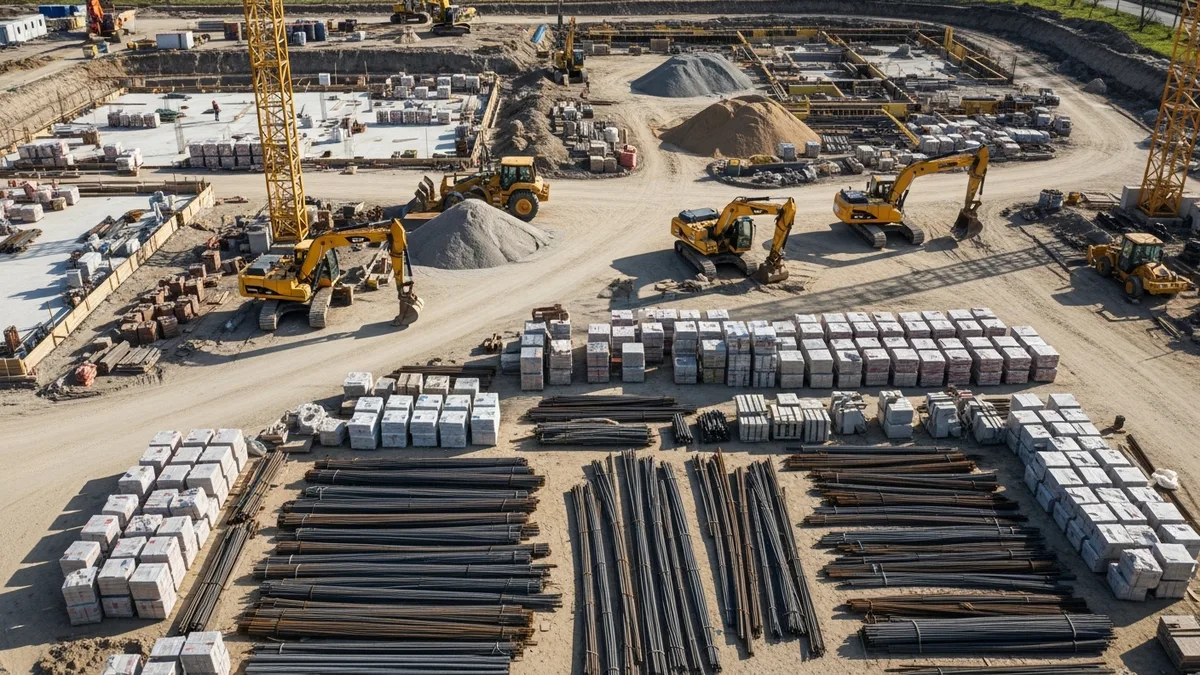
Laydown areas. Steel deliveries need somewhere to land. You need a laydown yard close enough to the crane that the erector is not spending half the day walking steel across the site. Organize the laydown by erection sequence so the next pieces needed are always accessible.
Other trades. When the crane is swinging iron overhead, nobody else should be working in the fall zone. Period. This means coordinating with every other trade on site about when and where the crane will be operating. Your daily scheduling needs to account for crane swing zones.
For a deeper look at crane safety requirements, make sure your team understands the rigging, signaling, and exclusion zone protocols before the crane ever fires up.
One more thing about cranes: weather matters more than you think. Most crane operations shut down at sustained winds of 20-25 mph. In some regions, that means you are losing days every single week during certain seasons. Build weather days into your steel erection schedule. If you planned for zero weather days, you planned to fail.
Managing Your Steel Erection Subcontractor
Your relationship with the steel erector is one of the most important sub relationships on a commercial job. These crews are specialized, they are in demand, and they know what they are doing. Your job as the GC is to keep them moving, not to tell them how to do their work.
That said, subcontractor management on a steel job requires clear expectations from day one. Here is what should be locked down in the subcontract and pre-erection meeting:
Scope of work. Be specific. Does the erector’s scope include unloading trucks? Installing metal deck? Welding shear studs? Grouting base plates? Touch-up paint? Every one of these items can fall through the cracks if the scope is vague.
Erection tolerances. AISC has published tolerances for column plumbness, beam elevation, and connection fit-up. Make sure the erector knows what tolerances you are holding them to and that these match the structural engineer’s requirements.
Temporary bracing and shoring. The erector is responsible for the stability of the structure during erection. Their erection plan should detail all temporary bracing, and it should be engineered. Do not accept “we will figure it out in the field” on a steel job.
Manpower and equipment commitments. Get a crew size commitment and a crane commitment in writing. If the erector pulls their crane to another job mid-erection, your schedule is dead. Build penalties or priority language into the subcontract if you can.
Daily coordination. Steel erection moves fast. A good crew can set 20 to 40 tons of steel per day depending on the building. That means decisions need to happen in real time. Your superintendent should be on site and accessible every minute that iron is in the air. Use project tracking tools to log daily progress, track tonnage erected, and flag issues before they snowball.
One practical tip: have your superintendent walk the steel with the erector’s foreman every morning before the first pick. Review what is going up that day, confirm the delivery schedule, check the weather forecast, and talk through any conflicts. This 15-minute meeting prevents most of the problems that blow up steel jobs.
Safety Planning for Steel Erection
Steel erection is one of the most dangerous activities on a construction site. Falls from height, struck-by incidents from dropped tools or materials, and crane accidents are the leading causes of serious injuries and fatalities during steel work. OSHA’s Steel Erection standard (Subpart R, 29 CFR 1926.750-761) exists for a reason, and as the GC, you are responsible for making sure it is followed on your site.
Your construction safety plan needs a dedicated section for steel erection. At a minimum, it should cover:
Fall protection. OSHA requires fall protection at 15 feet for steel erection (not the standard 6 feet for general construction). Connectors, the workers who make the initial bolted connections at height, have some additional flexibility up to 30 feet if certain conditions are met, but this is not a blanket exemption. Every worker on the steel needs a plan for how they are protected from falls.
Column anchorage. Before a column is released from the crane, it must have a minimum of four anchor bolts installed and tightened. Columns must be evaluated for stability before being released. This is not negotiable.
Walking and working surfaces. Metal decking must be properly secured before workers walk on it. Bundles of deck cannot just be thrown down and called a work surface. The deck must be connected to the structural framing per the erection plan.
Controlled decking zones (CDZ). If the erector uses a controlled decking zone, it must meet specific OSHA requirements including perimeter markings, limited access, and competent person oversight.
Overhead protection. Workers below the erection area need protection from falling objects. This can be barricading, netting, or simply keeping people out of the zone. Enforce this ruthlessly. A bolt dropped from 60 feet will kill someone.
Pre-shift safety meetings. Every single day before erection starts, the erector should hold a toolbox talk covering the day’s work, hazards, and safety procedures. As the GC, your superintendent should attend these meetings.
The safety piece is not optional and it is not something you can delegate entirely to the erector. You are the controlling contractor on site. OSHA will look at you first when something goes wrong.
Keeping Steel Erection on Schedule: Real-World Tips
Even with perfect planning, steel erection schedules get challenged. Here are the real-world issues that cost GCs time and money, and what you can do about them.
Fabrication errors. Pieces show up with the wrong hole pattern, wrong length, or wrong connection detail. This happens more often than anyone wants to admit. The fix is usually a field modification, which requires the structural engineer’s approval. Have a process in place for emergency RFIs during erection. If your engineer takes a week to respond to a field modification request, you will burn tens of thousands of dollars in idle crane time.
Delivery logistics. Steel comes on flatbed trucks, and those trucks need somewhere to go. If your site is in a dense urban area, you may be limited to specific delivery windows. Coordinate with the city, the trucking company, and the erector to make sure deliveries arrive when the crane is ready to pick. Back-to-back picks straight off the truck (“shaking the truck”) is the most efficient approach but requires tight coordination.
Trade stacking. During steel erection, you need to keep other trades clear of the erection zone. But you also cannot shut down the entire site for weeks. Work with your superintendent to create zone maps that show where steel is being erected on a given day and where other trades can safely work. Update these daily.
Punch list during erection. Do not wait until all the steel is up to start your punch walk. Walk completed sections as they are finished. Check column plumbness, bolt tightening (especially slip-critical connections), and weld quality as you go. Catching a problem when the crane is still on site is infinitely cheaper than bringing it back later.
Documentation. Keep detailed daily logs of what was erected, how many pieces, any field issues, weather delays, and crew size. This documentation protects you in disputes over delays or change orders. A good project management platform makes this tracking automatic rather than something your super has to remember to do at the end of a long day.
Steel erection is one of those phases where everything is connected. A late delivery throws off the crane schedule. A crane repositioning eats half a day. A rejected field modification stops work on an entire bay. The GC’s job during erection is to stay ahead of these issues, keep communication flowing between the fabricator, erector, engineer, and your own team, and make decisions fast when things go sideways.
If you are looking to tighten up how your team manages complex project phases like steel erection, from scheduling and daily tracking to subcontractor coordination, take a look at what Projul can do. It is built by contractors, for contractors, and it handles the messy reality of running jobs in the field.
Inspections, Quality Control, and Documentation During Steel Erection
Steel erection is not just about getting the iron in the air. It is about getting it in the air correctly, and proving it. Inspections and quality control during erection are where a lot of GCs drop the ball, especially on their first few steel jobs. The structural engineer, the building department, and sometimes a third-party special inspection firm will all have a stake in verifying the work.
Bolted connections. High-strength bolts are the backbone of most steel structures. There are two main categories you will deal with: snug-tight and pretensioned (slip-critical). Snug-tight connections are exactly what they sound like. You bring the plies into firm contact and tighten the bolt with a standard wrench. Pretensioned connections require a specific tension in the bolt, verified by calibrated wrenches, turn-of-nut method, direct-tension indicators (DTIs), or twist-off bolts. Your special inspector will want to see documentation on every pretensioned connection. If your crew does not understand the difference between a bearing connection and a slip-critical connection, you have a problem.
Keep a bolt installation log. Record the date, the connection location (column line and elevation), the bolt size and grade, the installation method, and the inspector’s verification. This sounds tedious, but when the engineer asks for verification six months later during a warranty issue, you will be glad you have it.
Welded connections. Field welding during erection is less common than bolted connections on most commercial jobs, but it happens. When it does, the welding procedures, welder qualifications, and inspection requirements go up significantly. Your welders need to be certified for the specific weld procedures called out in the Welding Procedure Specifications (WPS). The special inspector will perform visual inspection on all welds and may require ultrasonic testing (UT) or magnetic particle testing (MT) on critical connections like moment frame welds or column splices.
Do not let welding happen without the inspector present if the inspection plan requires it. Covering up a weld before it is inspected means tearing it open later, which nobody wants.
Plumbness and alignment. As each section of steel goes up, the erector plumbs the columns and checks the alignment of the framing. AISC tolerances allow columns to be out of plumb by 1/500 of the height, up to a maximum deviation. Your surveyor should be checking column locations and plumbness as erection progresses, not waiting until everything is up. If a column is out of tolerance, it affects every beam, joist, and piece of deck that connects to it. Catching it early means a minor adjustment. Catching it late means a potential redesign.
Structural observation. On many projects, the structural engineer will perform periodic structural observations during erection. This is not the same as special inspection. Structural observation means the engineer visits the site at key milestones to verify that the work generally conforms to the design intent. As the GC, you need to coordinate these visits so the engineer sees the work before it is covered up by deck, fireproofing, or other finishes.
Daily documentation. Every day of steel erection should produce a detailed daily report. Include what pieces were erected (mark numbers), crew size, crane downtime, weather conditions, any RFIs submitted, any field modifications, and any safety incidents. Photos are critical. Shoot wide-angle photos of each bay after erection and close-up photos of critical connections. Store all of this in your project management system so it is organized and accessible, not buried in someone’s camera roll.
The inspection and documentation piece is where the difference between a well-run steel job and a messy one really shows up. The iron may look the same from the ground, but the paperwork behind it tells you whether the job was built right.
Budgeting and Cost Control on Steel Erection Projects
Steel is one of the biggest line items on a commercial project, and cost overruns during erection can wreck your margins fast. Most GCs focus on the fabrication and erection subcontract number, but the real budget risk lives in all the things around the steel that nobody priced correctly.
Crane costs. We touched on this earlier, but it is worth spelling out the math. A 200-ton crawler crane at $30,000 per week, running for an 8-week erection period, is $240,000 just in crane rental. Add the operator, oiler, fuel, mobilization, and demobilization, and you are probably looking at $280,000 to $320,000 all-in. If you lose two weeks to weather or fabrication delays, that is another $60,000 to $70,000 that was not in anyone’s budget. The crane is the single most expensive piece of equipment on a steel job, and every day it sits idle is money gone.
Change orders during erection. Steel change orders are painful because the fabrication is already done. If the architect or engineer makes a change after fabrication, you are looking at field modifications, re-fabrication of affected pieces, or both. Field modifications require engineering approval, an ironworker with the right skills, and often additional inspection. A simple connection change that would have cost $500 during design can easily cost $5,000 to $10,000 to fix in the field. Track every change with an RFI, get direction in writing, and price the change order immediately. Do not let field modifications stack up without documentation.
Overtime and acceleration. If you fall behind on the steel schedule, the temptation is to throw overtime at it. Steel erection overtime is expensive. You are paying premium rates for the ironworkers, the crane operator, and potentially extending the crane rental. A Saturday shift on a steel job can cost $15,000 to $25,000 depending on crew size and equipment. Before you authorize overtime, do the math on whether it actually recovers enough schedule to be worth the cost. Sometimes a lost day is just a lost day, and the cheaper path is adjusting the downstream schedule rather than paying premium rates to catch up.
Misc metals and secondary steel. The main structural steel contract covers the primary framing: columns, beams, girders, and bracing. But there is a whole category of miscellaneous metals that often falls through the cracks in budgeting. Lintels, embed plates, loose angles, stair framing, handrail connections, roof equipment supports, and steel dunnage are all items that somebody needs to fabricate, deliver, and install. If these are not clearly assigned to a subcontractor, they end up as GC-furnished items that eat into your contingency.
Touch-up paint and coatings. Steel comes from the fabrication shop with a primer coat, but erection inevitably damages some of that coating. Touch-up painting after erection is a scope item that needs to be assigned. If the steel will receive fireproofing, the touch-up requirements may be minimal. If the steel is exposed in the finished building, you may need full blast and paint in the field, which is a significant cost.
Concrete for base plate grouting. After columns are set and plumbed, the gap between the base plate and the foundation needs to be grouted with non-shrink grout. This is typically a small scope item, but it needs to be assigned. Is it the steel erector’s scope? The concrete sub? Your own crew? Decide this during buyout, not when the grout trucks are needed.
Managing costs on a steel job comes down to knowing where the money goes before it goes there. Build detailed cost tracking into your workflow from day one. Use your estimating and budget tools to compare actual costs against the estimate weekly during erection. If you wait until the job is over to figure out where the money went, it is too late to do anything about it.
Common Steel Erection Mistakes GCs Make (and How to Avoid Them)
Every experienced GC has at least one steel erection horror story. Here are the mistakes that show up again and again, and what you can do differently.
Mistake #1: Not attending the pre-fabrication meeting. Most steel fabricators hold a pre-fabrication or “kick-off” meeting before they start drawing. This is where they review the structural drawings, ask questions about connections, discuss material grades, and confirm the delivery schedule. If the GC skips this meeting, you lose your chance to catch coordination issues early. Show up. Bring your superintendent and project manager. Have the structural drawings marked up with your questions before you walk in.
Mistake #2: Treating anchor bolt placement as someone else’s problem. Anchor bolts are the single most common coordination failure on steel jobs. The concrete sub pours the foundations and sets the bolts, but the bolt layout comes from the steel fabricator’s shop drawings. If nobody checks the bolt locations after the pour, you will not know about a problem until the column arrives and does not fit. Survey every anchor bolt group after the concrete pour. Check the pattern, the projection, and the location relative to the column grid. Fix problems with the concrete, not the steel.
Mistake #3: Not having a contingency plan for crane breakdowns. Cranes break. Hydraulic lines fail, swing bearings wear out, and electrical systems go down. If you have one crane on the job and it goes down for three days, your erection schedule just lost three days. On larger jobs, consider whether a backup crane is economically justified. On smaller jobs, at least have a conversation with the crane company about their response time for mechanical issues and whether a replacement crane is available in the area.
Mistake #4: Ignoring the deck installation sequence. Metal deck is not just a floor. It is a structural element that provides lateral bracing to the top flanges of the beams. Until the deck is welded to the framing, the beams can roll over under load. The deck installation sequence needs to follow immediately behind the steel erection sequence. If your decker falls behind the erector, you have an unstable structure. This is an engineering problem, not just a scheduling problem.
Mistake #5: Underestimating the impact of RFI response time. During active erection, an unanswered RFI can shut down an entire section of the building. If a piece does not fit, a connection does not match the shop drawings, or a field condition conflicts with the design, the erector needs an answer fast. Set expectations with the structural engineer before erection starts: during the erection phase, RFIs need same-day or next-day turnaround. If your engineer cannot commit to that, you need to escalate to the owner before the crane shows up, not after.
Mistake #6: Forgetting about as-built documentation. During erection, field modifications happen. Connections get changed, pieces get substituted, and holes get field-drilled. All of this needs to be captured in the as-built drawings. If you do not document these changes in real time, you will never reconstruct them accurately after the fact. Assign someone on your team to mark up a set of structural drawings daily with every deviation from the design.
Mistake #7: Starting concrete work too early below the steel. It is tempting to start pouring slabs on grade while steel erection is happening overhead. Do not do it. Freshly poured concrete in a crane swing zone is a recipe for disaster. Dropped tools, dislodged bolts, and even normal rigging drip can damage fresh concrete. Wait until the steel is up and the crane is clear before you pour below.
Learning from these mistakes before you make them is the cheapest education in the construction business. Most of them come down to the same root cause: not enough coordination, not enough communication, and not enough attention to the details that matter.
Weather, Seasonal Considerations, and Multi-Phase Steel Erection
Weather is not just a nuisance on a steel job. It is a schedule factor that deserves the same level of planning as fabrication lead times and crane logistics.
Wind. Crane operations are the most wind-sensitive activity on a construction site. Most crane manufacturers publish wind speed limits for their equipment, and those limits are typically in the 20 to 25 mph range for sustained winds. But even below those limits, wind affects steel erection. A wide-flange beam swinging from a crane acts like a sail. In 15 mph winds, a long beam can swing unpredictably, making it dangerous to guide into position. Connectors working at height are also affected by wind chill and gusting that makes footing uncertain. Your superintendent should be checking wind forecasts every morning and making the call before the crew climbs up, not after.
Rain and snow. Wet steel is slippery steel. Rain does not necessarily shut down erection, but it makes everything more dangerous. Snow and ice absolutely shut down steel work. Walking on a snow-covered beam flange is a death sentence. Beyond the safety issues, moisture affects weld quality if field welding is part of the erection scope. Welding procedures typically require the base metal to be dry and above a minimum temperature. If you are erecting in the winter months, plan for coating removal, preheating, and slower welding rates.
Temperature extremes. Cold weather affects more than just the workers. Steel becomes more brittle at low temperatures, which can affect bolted and welded connections. AISC and AWS have specific requirements for cold-weather welding, including preheat requirements that increase as the temperature drops. On the other end, extreme heat affects worker productivity and safety. An ironworker in full PPE on top of a steel structure in July, with no shade and no breeze, is at serious risk of heat illness. Build hydration stations, shade areas, and modified work schedules (early starts, midday breaks) into your summer steel erection plan.
Seasonal planning. If you have any flexibility in your project schedule, consider the erection season when you set your milestones. Steel erection in the upper Midwest during January is possible, but it is going to be slower, more expensive, and more dangerous than the same work in September. If you can sequence your early work to push steel erection into a favorable weather window, do it. The cost savings in productivity alone can be significant.
Multi-phase erection. On larger projects, steel erection may happen in multiple phases. You erect one section of the building, release the crane, and then mobilize again weeks or months later for the next section. Multi-phase erection adds complexity because you need to plan for re-mobilization costs, temporary stability of the partially erected structure, and coordination with trades that are starting work in the completed sections while erection continues elsewhere.
If you are running a phased erection, make sure your temporary bracing plan accounts for the open boundaries of each phase. A partially erected steel frame without deck or bracing at the boundary is vulnerable to progressive collapse. The erector’s engineer needs to address this specifically, and you as the GC need to verify that the temporary bracing is in place and maintained between phases.
Weather and phasing are the kind of planning items that separate GCs who run clean steel jobs from those who are always fighting fires. You cannot control the weather, but you can plan for it. Build realistic weather contingency into your schedule, track actual weather days against your allowance, and communicate the impact to the owner before it becomes a claim.
Wrapping It Up
Steel erection is not the place to wing it. The planning starts months before the first column goes up, and the coordination does not stop until the last bolt is tightened and the crane rolls off site. As a GC, your job is to create the conditions for the erector to do their best work: clean site, materials on time, clear communication, and no surprises.
Get the fabricator and erector aligned early. Push submittals hard. Plan your crane logistics down to the specific positions and pick sequences. Hold your erector to clear scope and schedule commitments. And never, ever compromise on safety when people are working at height with thousands of pounds of steel swinging overhead.
Ready to stop guessing and start managing? Schedule a demo to see Projul in action.
The projects that go smoothly are the ones where the GC did the hard work before erection day. The ones that blow up are the ones where someone figured they would sort it out in the field. Do not be that GC.
Frequently Asked Questions
How long does structural steel erection typically take?
What certifications do steel erectors need?
Who is responsible for temporary bracing during steel erection?
What is the most common cause of steel erection delays?
How far in advance should a GC start planning for steel erection?
Related Articles
Construction Electrical Rough-In Guide for General Contractors
The electrical rough-in is where circuit layout, box placement, and wire routing all have to come together before...
Read More →
Interior Finishing for Contractors: The Complete Drywall, Paint, and Trim Guide
Interior finishing is where your project goes from bare studs to a space your client can actually picture living in....
Read More →
Helical Piles and Screw Foundations: The Contractor's Complete Guide
Helical piles are showing up on more and more project specs. This guide covers everything a contractor needs to know...
Read More →