
Wood Framing and Engineered Lumber Guide
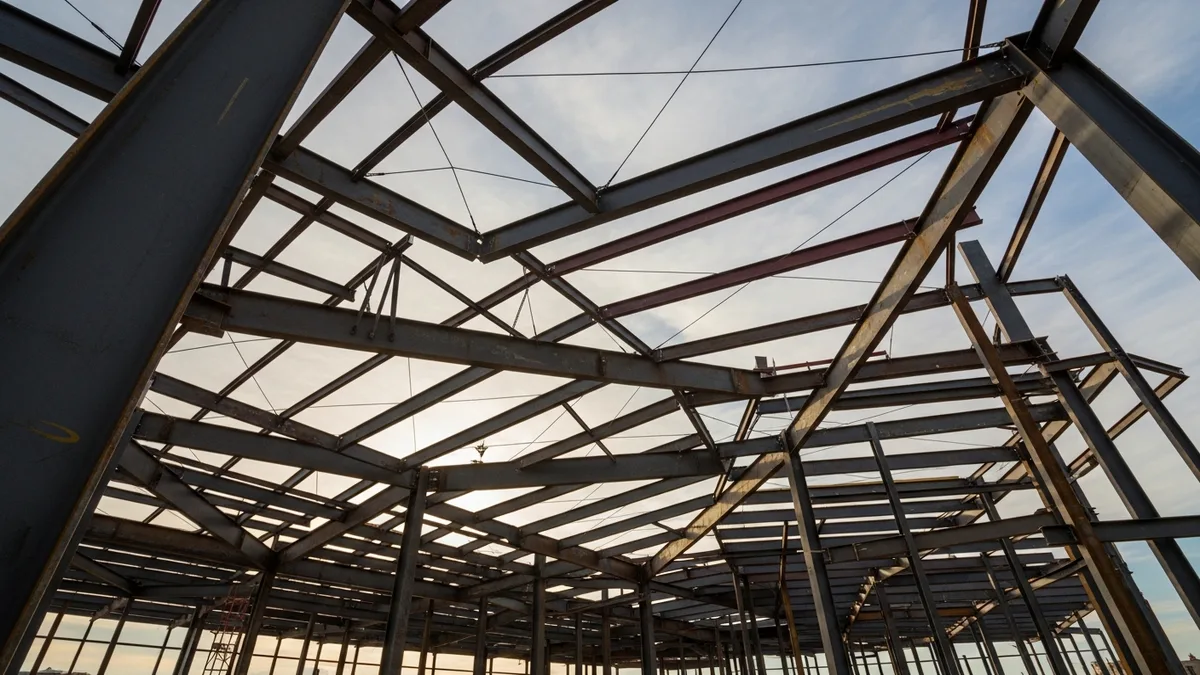
Framing is where a building project goes from lines on paper to something you can actually walk through. It is the structural skeleton that everything else hangs on, and getting it right determines whether the rest of the build goes smoothly or turns into a series of expensive fixes.
Whether you have been framing houses for twenty years or you are a general contractor who subs out framing but needs to understand what your crews are doing, this guide covers the practical side of structural wood framing and engineered lumber. We will walk through material choices, when to use engineered products versus dimensional lumber, how to keep your framing projects on schedule, and how to protect your margins from the material price swings that have hit this trade harder than almost any other in recent years.
Dimensional Lumber: The Foundation of Residential Framing
Dimensional lumber is the workhorse of residential construction. When most people picture framing a house, they are thinking about stacks of 2x4s and 2x6s, and for good reason. Solid sawn lumber has been the standard for wood-frame construction for well over a century, and it still makes up the bulk of material on most residential framing jobs.
Here is what you need to know about working with dimensional lumber on the job site:
Standard sizes and grades. Lumber is graded by strength and appearance. For structural framing, you are typically working with No. 2 or better grade SPF (spruce-pine-fir) or Doug Fir. The grade stamp on each piece tells you the species, grade, moisture content, and the grading agency. If you are building in a high-wind or seismic zone, your engineer may specify a higher grade or different species to meet the load requirements.
Moisture content matters. Green lumber (S-GRN) has a moisture content above 19 percent. Kiln-dried (KD) lumber is dried to 19 percent or below. Green lumber is cheaper but it shrinks, twists, and crowns as it dries. This is the number one source of callbacks on framing jobs. Squeaky floors, nail pops, and drywall cracks six months after move-in almost always trace back to lumber that dried out after it was installed. Whenever budget allows, use kiln-dried material for floor systems and load-bearing walls.
Crowning and culling. Every framer worth their tool belt knows to sight down each piece before it goes up. Crowning means orienting the natural bow in each joist or rafter so the crown faces up. This ensures that the weight of the structure loads the piece into a flatter position over time rather than making it sag. Culling is pulling out the pieces that are too twisted, bowed, or cracked to use. A good framing crew culls 5 to 10 percent of a lumber delivery, which is why you always order extra.
Common applications. Dimensional lumber handles wall framing (2x4 and 2x6 exterior walls), floor joists for shorter spans, ceiling joists, roof rafters on stick-framed roofs, blocking, cripples, and general rough carpentry. For longer spans or heavier loads, you move into engineered territory.
One thing that catches newer contractors off guard is how much accurate estimating matters on a framing package. Lumber is priced by the board foot or linear foot, and the difference between a tight estimate and a loose one on a 2,000 square foot house can easily be $3,000 to $5,000. That money comes straight out of your margin if you are not careful.
Engineered Lumber Products: LVLs, I-Joists, Glulam, and More
Engineered lumber has changed the way we build. These products are manufactured to deliver consistent, predictable performance that solid sawn lumber simply cannot match. If you are framing anything beyond the most basic single-story box, you are using engineered lumber somewhere in the project.
Here are the main engineered products you will encounter:
LVL (Laminated Veneer Lumber). LVL beams are made from thin wood veneers layered and bonded together with the grain running in the same direction. They are the go-to product for headers, ridge beams, hip beams, and any application where you need to carry a load across a span. LVLs come in standard widths (1-3/4 inch matching a 2x wall, 3-1/2 inch matching a 2x4 wall, and 5-1/4 inch matching a 2x6 wall) and depths from 9-1/4 inches up to 24 inches. They can be ordered in lengths up to 60 feet, though anything over 40 feet gets tricky to transport and handle on site.
I-Joists. These look like a steel I-beam made out of wood. They have LVL or solid wood flanges on top and bottom with an OSB web in between. I-joists are the standard for floor systems in modern residential construction because they span farther than dimensional lumber, they do not shrink or twist, and they are lighter to handle. The trade-off is that they require specific blocking and bearing details, and you cannot cut or notch the flanges without compromising the structural integrity. Your floor will be flatter and quieter with I-joists compared to 2x10s or 2x12s.
Glulam (Glue-Laminated Timber). Glulam beams are made from layers of dimensional lumber bonded together. They are used for large structural beams, long-span headers, and exposed beam applications where aesthetics matter. Glulam is popular in timber-frame style construction, post-and-beam designs, and commercial projects. They are heavier than LVLs of equivalent capacity but available in much larger sizes.
PSL (Parallel Strand Lumber). PSL products like Parallam are made from long wood strands bonded under pressure. They are used for posts, beams, and headers where you need high load capacity in a compact profile. PSLs are common for garage door headers and point-load columns.
LSL (Laminated Strand Lumber). LSL is made from shorter wood strands than PSL and is used for rim boards, headers, and plates. It is more dimensionally stable than dimensional lumber and works well for long wall plates and tall wall studs.
The key thing to understand about engineered lumber is that every product comes with manufacturer-specific span tables, connection details, and installation requirements. You cannot just swap an LVL for a glulam or change the depth of an I-joist without checking the engineering. This is where a lot of framing contractors get into trouble. Always reference the manufacturer technical data or get your structural engineer to sign off on any substitutions.
Roof Systems: Trusses Versus Stick Framing
The roof system is where framing contractors face one of their biggest decisions on every project: go with pre-manufactured trusses or stick-frame the roof on site. Both approaches work, but they have very different implications for your schedule, labor costs, and flexibility.
Pre-manufactured trusses are engineered and built in a factory, then delivered to the job site ready to install. A crew can set trusses on a standard rectangular house in a single day. The engineering is done by the truss manufacturer, which means you get stamped drawings and load calculations without paying a separate structural engineer for the roof design. Trusses use smaller dimensional lumber (typically 2x4s) arranged in triangulated web patterns, which means they use less total wood than a stick-framed roof.
The downsides: trusses limit your attic space because the web members run through what would otherwise be open area. Lead times can run two to four weeks depending on your market and the season. If you have a complex roof with multiple valleys, hips, and different plate heights, the truss package gets complicated and you may need crane time to set the heavier units.
Stick framing gives you maximum flexibility. You cut and assemble every rafter, ridge board, hip, valley, and jack rafter on site. This is essential for complex roof designs, cathedral ceilings, and exposed rafter tails. The labor cost is significantly higher since a skilled crew will spend several days to a week or more framing a roof that trusses could cover in hours. You also need a solid schedule because stick framing is highly weather-dependent.
For most production residential work, trusses make financial sense. For custom homes with complex rooflines or exposed structural elements, stick framing is often the only option. Many projects use a hybrid approach with trusses over the main structure and stick-framed sections for porches, dormers, and areas where the roof design gets irregular.
Your estimating approach is different for each method. Trusses come as a quoted package from the manufacturer. Stick framing requires a detailed material takeoff of every rafter, ridge, collar tie, and piece of blocking. Getting this right is where construction estimating software pays for itself quickly on framing-heavy projects.
Managing Framing Crews, Materials, and Schedules
Read real contractor reviews and see why Projul carries a 4.9/5 on G2.
Framing is one of the most labor-intensive and schedule-sensitive phases of any construction project. A framing delay ripples through every trade that follows. The plumber, electrician, HVAC crew, insulator, and drywall contractor are all waiting on you to finish. Managing a framing project well means keeping materials staged, crews moving, and inspections scheduled without gaps.
Material staging and delivery. Lumber deliveries should be coordinated so materials arrive just before the crew needs them, not two weeks early where they sit in the weather and get damaged, and not a day late where the crew stands around burning your labor budget. On a typical house, you might stage the floor system package first, then the wall package, then the roof package. Each delivery should match the production sequence. Talk to your lumber yard about split deliveries if you do not have room to store the entire package on site.
Crew management. Framing crews work best when they have a clear scope, a clean set of plans, and materials ready to go. The fastest way to kill framing productivity is having your lead carpenter stop working to figure out a plan detail or track down missing material. A quick pre-job meeting where you walk through the plans, highlight any unusual details, and confirm the material package is complete saves hours of downtime during the build.
Keep in mind that framing is physically demanding work. Hot weather, cold weather, rain delays, and altitude all affect crew output. If you are tracking labor costs per square foot on your framing jobs (and you should be), account for seasonal variations in productivity rather than using a flat rate year-round.
Inspections. Most jurisdictions require a framing inspection before you can close walls. Some require separate inspections for floor systems, shear walls, and hold-down hardware. Know your local inspection sequence and schedule your inspections early. In busy markets, you might wait two to five days for an inspector, and that dead time costs money. Building a good relationship with your local building department and having clean, organized framing that passes on the first visit is one of the most underrated business skills in contracting.
Tracking costs and progress. On framing projects, things move fast and costs can drift if you are not paying attention. Tracking labor hours daily, comparing material deliveries against your estimate, and catching overruns early is critical. Contractors who use construction management software to track job costs in real time consistently outperform those who wait until the job is done to figure out if they made money.
Estimating and Bidding Framing Projects
Framing estimates require a level of detail that a lot of general contractors underestimate. You cannot just throw a square-foot price at a framing job and expect to come out ahead consistently. The variables between projects are too significant: ceiling heights, wall configurations, window and door count, roof complexity, and engineered lumber requirements all shift the numbers.
Here is a practical approach to framing estimates:
Start with the structural plans. The floor plans, framing plans, and structural details are your blueprint for the takeoff. If you are bidding a job that only has architectural drawings and no structural, factor in the cost of engineering because someone has to produce those beam calcs and connection details before you can order material.
Break the takeoff into systems. Separate your estimate into floor framing, wall framing, roof framing, and miscellaneous items (blocking, backing, hardware). Within each system, list every component. For walls, that means plates, studs, headers, cripples, king studs, trimmers, and corners. For floors, it means rim board, joists, blocking, and subfloor sheathing. This level of detail takes more time upfront but produces estimates that are consistently within 3 to 5 percent of actual costs.
Price materials at current rates. Lumber prices have been volatile for years. The price you paid three months ago may not be what you pay today. Get current quotes from your supplier for every bid, and include a material escalation clause in your contracts if there is any gap between the bid date and the build date. A 10 percent swing in lumber prices on a $40,000 material package is $4,000 out of your pocket if you locked in a fixed price months earlier.
Labor is the other half. Framing labor rates vary by region and skill level. Track your actual labor hours on completed projects and build your own database of production rates. How many hours does your crew take to frame a linear foot of exterior wall? How long for a truss set on a standard ranch? These numbers are gold for future estimating. They beat published industry averages because they reflect your crew, your standards, and your market.
Do not forget the details. Hardware (hold-downs, straps, hangers, anchor bolts), adhesive, fasteners, sheathing, and house wrap add up. On a typical residential project, framing hardware alone can run $1,500 to $3,000. Sheathing (plywood or OSB for walls, subfloor, and roof deck) is often 15 to 20 percent of the total framing material cost. Miss these line items and you have already lost margin before the first nail gets driven.
If you are still doing takeoffs on paper or spreadsheets, consider how much time you could save with a system built for contractor estimating. Moving from manual processes to software designed for estimating not only speeds up your bids but reduces the errors that eat your profit.
Protecting Your Business on Framing Projects
Framing work ties up significant capital in materials and labor, and the risk profile is different from finish trades. A stack of lumber on site is money sitting in the weather. A framing crew working without proper fall protection is a liability event waiting to happen. Running a framing operation well means managing the business side as carefully as the construction side.
Material procurement and waste management. Buy from reliable suppliers who deliver on time and stand behind their product. If you receive a load of lumber that is garbage, send it back. Fighting with warped, wet, or undersized material wastes more in labor than you save by accepting a marginal delivery. Target a waste factor of 10 to 15 percent on dimensional lumber and less on engineered products, which are manufactured to tighter tolerances.
Safety on the framing site. Falls are the leading cause of death in construction, and framing is where most of them happen. OSHA requires fall protection at six feet in residential construction. That means guardrails, safety nets, or personal fall arrest systems on every wall top, floor opening, and roof edge. Invest in proper scaffolding and guardrail systems. Train your crew and enforce the standards every single day. One serious fall can end a career and destroy a business.
Cash flow management. Framing is front-loaded with material costs. You are buying tens of thousands of dollars in lumber before you can bill for the work. Structure your contracts with deposits or draw schedules that cover material procurement before the work starts. Waiting 30 to 60 days for payment after you have already paid for the lumber puts you in a cash flow hole that gets deeper with every project. Using construction invoicing software to send progress bills and track payments keeps cash moving and prevents the kind of shortfalls that force contractors to fund one job with another.
Documentation and communication. Keep records of everything: material deliveries, inspection reports, change orders, and daily progress. When a framing job goes sideways, the contractor with documentation has a position to stand on. The one operating on handshakes and verbal agreements has nothing. A project management system that your field team can update from the job site in real time makes this practical instead of theoretical. The best construction apps for field teams put this capability in your crew’s hands without adding paperwork to their day.
Subcontractor relationships. If you sub out framing, vet your subs carefully. Verify their insurance, check their references, and make sure they pull their own weight on quality. A bad framing sub will cost you more in repairs, delays, and customer complaints than you ever saved on their lower bid. And if things go wrong, know the proper steps for handling subcontractor issues before the situation gets out of control.
See how Projul makes this easy. Schedule a free demo to get started.
Understanding Load Paths and Structural Connections
Every framing contractor should understand load paths even if you are not the one doing the engineering. A load path is the route that gravity loads and lateral forces travel through the structure, from the roof down to the foundation. When the load path is continuous and properly connected at every point, the building performs the way it was designed. When there is a break in that path, you get settling, cracking, structural failures, and callbacks that cost far more to fix than they would have cost to get right the first time.
Gravity loads. The weight of the roof, snow, dead loads from finish materials, and live loads from occupants all need a clear path down through the structure. A point load from a beam above needs to land on a post or doubled stud below it, which needs to land on a beam or foundation below that. One of the most common mistakes on residential framing jobs is a beam that drops its load onto a floor system that was not designed to carry it. The result is a bouncy floor, a sagging ceiling below, or both. Always check that point loads stack vertically through the structure. If they cannot, the structural plans should show how the load gets transferred, and the framing needs to match those details exactly.
Lateral loads. Wind and seismic forces push sideways on a building. The framing resists these forces through shear walls, which are sections of wall with structural sheathing nailed in a specific pattern. The sheathing acts as a diaphragm, transferring lateral forces down to the foundation through hold-down hardware and anchor bolts. This is where nailing patterns matter enormously. A shear wall with 6-inch edge nailing versus 4-inch edge nailing has a dramatically different capacity. Your inspector will check this, and if the nailing does not match the plans, you are tearing off sheathing and redoing it.
Hold-downs, straps, and ties. Modern residential framing uses a lot of metal hardware to maintain the load path. Hold-down brackets at the base of shear walls resist overturning forces. Straps tie the roof framing to the wall framing to resist uplift in high winds. Hurricane ties connect rafters or trusses to the top plate. Each piece of hardware has a specific installation requirement: number of nails, nail size, embedment depth, and sometimes even the sequence of installation. Simpson Strong-Tie and MiTek publish detailed installation guides for every connector they make. Keep these on the job site and make sure your crew follows them. An improperly installed hold-down has zero structural value, and you will not know it failed until it is too late.
Bearing and transfer details. When loads change direction or transfer between different structural elements, the connection detail matters. A beam sitting on a post needs adequate bearing area. An I-joist landing on a wall plate needs the manufacturer-specified bearing length, which is typically 1-3/4 inches minimum for end bearings and 3-1/2 inches for intermediate bearings. Undersized bearing areas crush the wood fibers and cause settling. If you have ever seen a floor that slopes toward the center of the house six months after construction, chances are good that a bearing detail was missed during framing.
Understanding these principles makes you a better framer and a better general contractor. It also helps you catch problems on the job site before they become expensive repairs. When you see something in the framing that does not look right structurally, stop and check the plans before moving forward. A phone call to the engineer takes five minutes. Fixing a structural problem after drywall and finishes are in place takes days and thousands of dollars.
Framing for Energy Efficiency and Code Compliance
Building codes have pushed residential construction toward tighter, more energy-efficient envelopes over the past decade, and framing is at the center of that shift. The way you frame walls, floors, and ceilings directly affects the thermal performance of the building, and inspectors are paying closer attention to framing details that impact energy efficiency.
Advanced framing (OVE). Optimum Value Engineering, commonly called advanced framing or OVE, is a set of framing techniques designed to reduce lumber use while improving insulation coverage. The key changes include framing exterior walls with 2x6 studs at 24 inches on center instead of 2x4s at 16 inches on center, using single top plates with proper splice connections, aligning studs directly under roof trusses and over floor joists to create a direct load path, eliminating unnecessary cripple studs and jack studs where code-compliant alternatives exist, and using insulated headers instead of solid lumber headers on non-load-bearing walls.
Advanced framing reduces lumber costs by 5 to 10 percent on a typical house and dramatically improves the thermal performance of the wall assembly by reducing the number of studs that act as thermal bridges. Every stud in a wall is a pathway for heat to bypass the insulation. Fewer studs means more insulation cavity and better R-value for the overall wall assembly.
The catch is that advanced framing requires more careful layout and a crew that understands why they are doing it differently. You cannot just switch to 24-inch spacing without verifying that the wall finishes, sheathing, and structural loads support the wider spacing. Some jurisdictions require engineering approval for advanced framing details. Check with your local building department before bidding a project with OVE framing.
Air sealing at the framing stage. Many energy codes now require air barrier details that start during framing. Sealing the bottom plate to the subfloor, filling gaps around window and door rough openings, and blocking air pathways in balloon-framed sections or at floor-to-wall intersections are all framing-stage tasks. These details are easy to handle during framing but nearly impossible to fix after the building is enclosed. Spray foam at the rim joist area, caulk under bottom plates, and tape or sealant at sheathing joints are becoming standard practice rather than optional add-ons.
Insulation coordination. The framing layout determines what insulation can go where. If you are framing for spray foam, your cavity depths and stud spacing need to accommodate the specified foam thickness. If the project uses rigid exterior insulation, your window and door bucks need to account for the added wall thickness. Plumbing and electrical rough-in that runs through exterior walls reduces the insulation value at those spots, so smart framing locates plumbing walls on interior partitions whenever possible. Coordinating these details with the insulation contractor and mechanical trades before framing starts prevents rework and failed energy inspections.
Code changes to watch. The IRC and IBC update on a three-year cycle, and many jurisdictions are adopting stricter energy provisions. Higher R-value wall requirements, continuous exterior insulation mandates, and blower-door testing are becoming standard in more markets. As a framing contractor, staying current on these changes keeps you competitive and prevents the expensive surprises that come from bidding and building to outdated standards. Talk to your building department at least once a year about upcoming code changes that affect framing, and adjust your standard practices accordingly.
Common Framing Defects and How to Avoid Them
Experience teaches you what goes wrong on framing jobs, but paying tuition on your own mistakes is expensive. Here are the framing defects that generate the most callbacks, inspection failures, and warranty claims, along with practical ways to prevent them.
Out-of-plumb walls. A wall that leans even a quarter inch over its height causes problems for every finish trade that follows. Cabinets do not sit flat, doors swing open on their own, and tile lines look crooked. The fix is simple but requires discipline: check every wall for plumb before you sheathe it and again before you brace it permanently. A six-foot level and a string line are cheap insurance against rework that costs thousands.
Bouncy or squeaky floors. This is the single most common complaint from homeowners after move-in, and it almost always starts with the framing. The causes include joists that are undersized for the span, missing or improperly installed blocking at mid-span and at bearing points, subfloor panels that were not glued and screwed to the joists, and gaps between the subfloor and the joist caused by crown variations or moisture changes. To prevent bouncy floors: follow the structural plans exactly for joist size and spacing, apply construction adhesive to every joist top before laying subfloor, use the correct fastener schedule for the subfloor panels, install blocking at all bearing points and at mid-span for longer runs, and snap chalk lines on the subfloor to make sure every fastener hits the joist below.
Crown inconsistency. When joists and rafters are not crowned consistently, you get a wavy floor or roof deck. This shows through the finish and is extremely difficult to fix after the fact. Crown every single joist and rafter before installation, and mark the crown direction clearly so no one installs one upside down. If a piece has a crown greater than the allowable tolerance for the span, pull it and use it somewhere shorter.
Missed shear nailing. Shear walls are only as strong as their nailing. If the plans call for 8d nails at 4 inches on center on the edges of the sheathing panels, that is what needs to happen. Not 6 inches, not a mix of 4 and 6, not 8d nails at some spots and 6d nails at others. This is one of the most commonly failed inspection items because crews rush through sheathing without paying attention to the nailing schedule. A pneumatic nailer makes it easy to drive nails quickly, but it also makes it easy to over-drive them. An over-driven nail that breaks through the sheathing surface has reduced capacity. Set your nailer depth properly and check it throughout the day as air pressure and temperature change.
Improper notching and boring. Plumbers and electricians love to cut through your framing to run their pipes and wires, and if they do it wrong, they compromise the structural members. The building code specifies exactly where and how much you can notch or bore a joist, stud, or rafter. For dimensional lumber joists, notches are limited to the outer third of the span and cannot exceed one-sixth of the joist depth. Bore holes must be at least 2 inches from the top or bottom edge and cannot exceed one-third of the joist depth. For I-joists, the rules are completely different and manufacturer-specific. Many I-joist manufacturers allow round holes in the web within certain size and location limits but prohibit any notching of the flanges entirely. Post a copy of the notching and boring limits on the job site and make sure every sub knows the rules before they pick up a drill.
Missing blocking and backing. Blocking serves structural purposes (preventing joist rotation, transferring loads at bearing points) and practical purposes (providing a nailing surface for cabinets, handrails, towel bars, and toilet accessories). The structural blocking should be on the plans. The backing for finishes is often left to the framer to figure out, and skipping it creates problems later. Work from a backing schedule that covers grab bar locations in bathrooms, cabinet mounting areas in kitchens and baths, handrail bracket locations, heavy mirror and TV mount locations, and any specialty items the owner or designer has specified. Installing blocking during framing costs almost nothing. Adding it after drywall costs a lot and never looks as clean.
Weather Protection and Material Storage on Framing Sites
Framing lumber represents a major investment on every project, and how you handle and store that material directly affects your waste rates, your rework, and ultimately your profit. Weather damage to lumber and engineered products is one of those slow-bleed costs that many contractors never properly track, but it adds up fast over the course of a year.
Storing dimensional lumber. Stack lumber on stickers (thin strips of wood between layers) to allow air circulation and prevent moisture trapping. Keep the stack off the ground using dunnage or pallets so water does not wick up from the mud. Cover the top of the stack with tarps or plastic, but leave the sides open for airflow. A fully wrapped stack traps moisture and can actually make conditions worse than leaving it uncovered. If rain is expected and you have open wall cavities or floor systems, cover the horizontal surfaces where water will pool. Standing water on subfloor sheathing causes swelling at the panel edges, and those swollen edges telegraph through finished flooring.
Protecting engineered products. Engineered lumber is more sensitive to moisture than dimensional lumber because the adhesives and composite materials react differently to wetting and drying cycles. I-joists with OSB webs can swell and delaminate if they sit in standing water. LVL beams lose some of their structural properties if they go through repeated wet-dry cycles before being enclosed. Most engineered lumber manufacturers include handling and storage instructions with their products, and the warranty may not cover damage caused by improper storage. Take this seriously. Stack engineered products on a flat, dry surface, cover them, and install them as soon as possible after delivery.
Managing rain during framing. You cannot control the weather, but you can control how you respond to it. If a rain event is forecast, decide before you leave the site the night before whether to cover the work or not. Sending a crew back to the site at the end of the day to tarp the floor system is annoying, but it is cheaper than sanding swollen subfloor seams or replacing water-damaged I-joists. Once the roof is sheathed and dried in with felt or synthetic underlayment, rain becomes much less of a concern for the structure. Getting to dry-in as quickly as possible should be a priority on every framing schedule, especially during the wet season.
Drying before closing. Even with careful material handling, framing lumber picks up moisture during construction. Before closing walls with insulation and drywall, the framing should have a chance to dry to an acceptable moisture level. Most codes and standards call for wood framing to be at or below 19 percent moisture content before enclosure. A pin-type moisture meter costs about $30 and takes ten seconds to use. Check a few studs and joists in different areas of the building. If the readings are above 19 percent, give it more time or improve ventilation before closing the walls. Enclosing wet framing is an invitation for mold, which is a warranty claim and a health liability you do not want to deal with.
Scheduling around weather. In markets with distinct rainy or winter seasons, framing schedules need to account for weather delays realistically. Padding your schedule by 20 to 30 percent during the wet season is not pessimistic, it is honest. Promising a three-week frame during the wettest month of the year and then blaming weather when you miss the deadline does not build trust with your clients or the trades following you. Using project scheduling tools that let you adjust timelines and communicate changes to the whole team keeps everyone on the same page when weather forces a reset.
The contractors who build lasting, profitable framing operations are the ones who treat it as a real business rather than just a trade skill. They track their numbers, protect their people, manage their cash, and use the right tools to stay organized. The framing phase sets the tone for every project. Get it right and everything downstream flows. Get it wrong and you spend the rest of the build chasing problems that started with the structure.
Frequently Asked Questions
What is the difference between dimensional lumber and engineered lumber?
When should a contractor use LVL beams instead of dimensional lumber?
How do I estimate framing materials accurately for a project?
What are the most common framing mistakes that lead to callbacks?
How long does it take to frame a typical residential house?
Related Articles

School and Education Facility Construction Guide for Contractors
Education facility construction is one of the most demanding and rewarding sectors in commercial building. Between...
Read More →
Brewery, Distillery, and Winery Construction Guide for Contractors
Brewery, distillery, and winery construction is a growing niche with strong margins, but the builds are nothing like...
Read More →
Religious and Worship Facility Construction Guide for Contractors
Worship facility construction comes with unique challenges that most commercial contractors never see on other job...
Read More →