
Construction Takeoff Guide: Accurate Materials
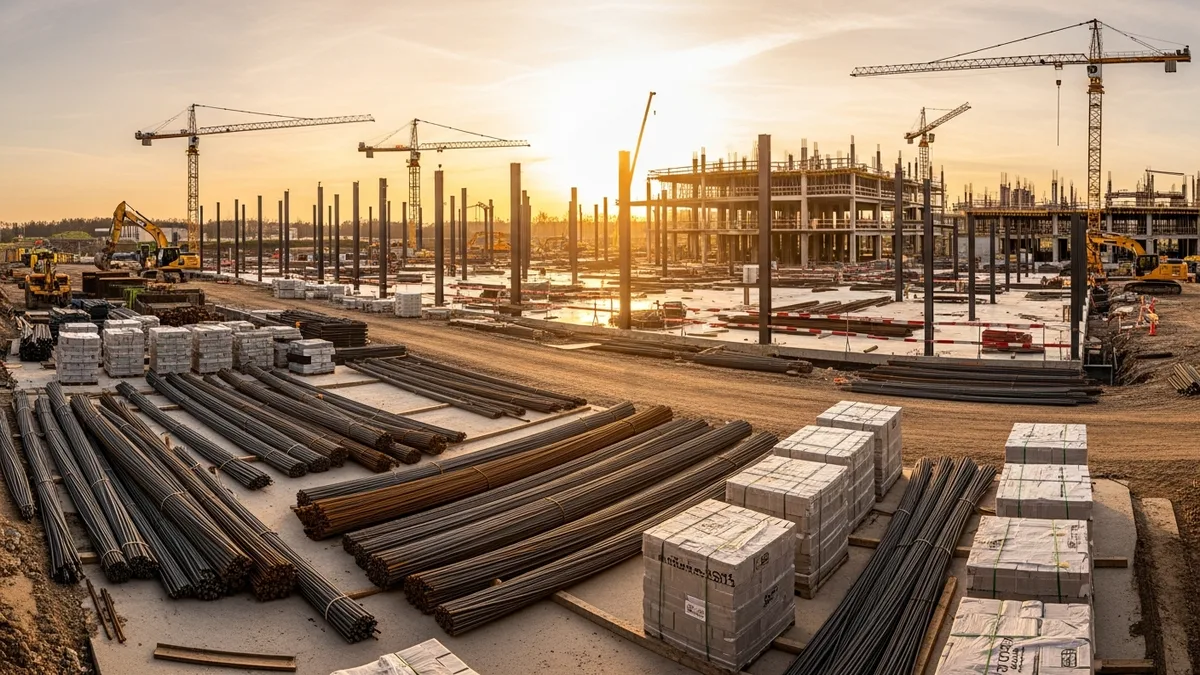
If you’ve ever shown up to a job site short on materials, or finished a project with a stack of leftover lumber you can’t return, the problem probably started with your takeoff.
Construction takeoffs are the foundation of every estimate. Get the quantities wrong, and everything downstream falls apart. Your material costs are off. Your labor hours don’t line up. Your bid is either too high to win or too low to profit. Either way, you lose.
The frustrating part is that most takeoff errors are preventable. They come from rushing, skipping steps, or using methods that haven’t kept up with the complexity of modern projects. Whether you’re still working off printed plans with a scale ruler or you’ve moved to digital tools, the fundamentals of a good takeoff stay the same.
This construction takeoff guide walks through what a takeoff actually involves, how to do one accurately, and how to avoid the mistakes that quietly eat into your margins on every bid.
What Is a Construction Takeoff and Why Accuracy Matters
A construction takeoff (also called a material takeoff or quantity takeoff) is the process of reviewing project plans and specifications to determine exactly what materials you need and how much of each. You’re literally “taking off” quantities from the blueprints.
That means counting doors and windows, measuring linear feet of framing lumber, calculating square footage of drywall, figuring out how many cubic yards of concrete you need for footings, and working through every other material that shows up on the plans.
The takeoff is the first real step in building an estimate. Before you can price anything, you need to know what you’re pricing. A takeoff gives you that list of materials and quantities so you can start attaching costs.
Here’s why accuracy matters more than most contractors realize: a takeoff error doesn’t just affect the material line on your estimate. It cascades.
If you undercount the drywall by 15%, you’re also underestimating the labor to hang and finish it. You’re underestimating the joint compound and tape. You’re underestimating the time your crew spends on that phase, which pushes out your schedule. And when you finally realize the mistake mid-project, you’re making an emergency material run and paying full price instead of the bulk rate you originally quoted.
On a $150,000 residential remodel, a 10% takeoff error means $15,000 in unexpected costs. That’s often the entire profit margin on the job. One bad takeoff, one job that breaks even instead of making money.
The contractors who consistently bid accurately and protect their margins aren’t guessing at quantities. They have a repeatable takeoff process, and they follow it on every single project. No shortcuts, no “close enough” estimates.
Manual vs Digital Takeoffs: Pros and Cons
There are two basic approaches to construction takeoffs, and most contractors fall somewhere on the spectrum between them.
Manual Takeoffs
Manual takeoffs involve printed plans, a scale ruler, a highlighter, and a calculator (or a spreadsheet). You physically measure dimensions on the drawings, calculate areas and volumes by hand, and record everything on paper or in a spreadsheet.
What works about manual takeoffs:
- Low barrier to entry. You don’t need software or training to get started.
- Full control over every measurement. You see exactly what you’re counting and why.
- No subscription costs. A scale ruler and a pad of paper don’t charge monthly fees.
- Familiar. If you’ve been doing takeoffs this way for years, the process is second nature.
Where manual takeoffs fall short:
- Slow. A manual takeoff on a mid-size commercial project can take days.
- Error-prone. It’s easy to miss a room, double-count a section, or misread a scale.
- Hard to update. When plans change (and they always change), you’re starting over on affected sections.
- No audit trail. If someone questions your numbers three weeks later, good luck reconstructing how you got them.
- Doesn’t scale. The process that works on a $50,000 bathroom remodel breaks down on a $2 million build.
Digital Takeoffs
Digital takeoffs use software to measure directly from electronic plan files (usually PDFs). You set the scale, use on-screen tools to measure lengths and areas, and the software calculates quantities automatically.
What works about digital takeoffs:
- Faster. Most contractors report cutting takeoff time by 50% or more after switching to digital.
- More accurate. The software handles the math, so calculation errors drop significantly.
- Easy to update. When plans change, you adjust the affected measurements and the totals recalculate automatically.
- Built-in documentation. Every measurement is saved, so you can go back and verify your numbers anytime.
- Easier collaboration. You can share digital takeoffs with estimators, project managers, and subs.
Where digital takeoffs fall short:
- Learning curve. It takes time to get comfortable with new software, and you’ll be slower at first.
- Cost. Takeoff software ranges from a few hundred to several thousand dollars per year.
- Requires electronic plans. If you’re still receiving paper-only drawings, you’ll need to scan them first.
- Garbage in, garbage out. Software doesn’t catch mistakes in the plans themselves. You still need to know what you’re looking at.
The honest answer is that digital takeoffs are worth it for most contractors doing regular bidding. The time savings alone usually pay for the software within the first few projects. But the tool only works if the person using it understands the fundamentals of a good takeoff, which is what we’ll cover next.
Step-by-Step: How to Do a Material Takeoff
Whether you’re working on paper or a screen, the process follows the same basic steps. Here’s how to do a construction takeoff that you can trust.
Step 1: Review the Full Plan Set
Before you measure a single thing, read through the entire set of drawings and specifications. All of them. Architectural, structural, mechanical, electrical, plumbing, site work, and any addenda or revisions.
This step is about understanding the project as a whole before you start picking it apart. You’re looking for:
- Scope of work and what’s included vs. excluded
- Material specifications called out in the drawings or spec book
- Unusual details or custom elements that will affect quantities
- Discrepancies between drawings (they happen more often than you’d think)
If you’re storing plans digitally, having solid document management makes it much easier to keep track of the latest revisions and make sure you’re always working from current drawings.
Step 2: Organize by Trade or CSI Division
Don’t try to take off everything at once. Break the project into sections by trade, building system, or CSI division. Common groupings include:
- Sitework and earthwork
- Concrete and masonry
- Structural steel and framing
- Exterior finishes (roofing, siding, windows)
- Interior finishes (drywall, flooring, paint, trim)
- Mechanical, electrical, and plumbing (if you’re a GC taking off sub work)
Working through one trade at a time keeps you organized and makes it much harder to miss something. When you jump around between trades, that’s when items fall through the cracks.
Step 3: Measure and Count
This is the core of the takeoff. For each trade section, go through the plans and:
- Count individual items: Doors, windows, fixtures, outlets, light fixtures, appliances
- Measure linear quantities: Framing lumber, piping, conduit, baseboard trim, gutters
- Calculate area quantities: Drywall, flooring, roofing, painting, insulation
- Calculate volume quantities: Concrete, fill dirt, gravel, excavation
Thousands of contractors have made the switch. See what they have to say.
Use the correct unit of measure for each material. Lumber is typically counted in board feet or linear feet. Concrete is in cubic yards. Drywall is in sheets or square feet. Using the wrong unit is a common source of errors.
Step 4: Apply Waste Factors
Raw measurements from the plans never match what you actually need to order. Every material has waste, whether it’s from cuts, damage, installation methods, or job site conditions.
Standard waste factors vary by material:
- Lumber: 5-10%
- Drywall: 10-15%
- Flooring (tile): 10-15%
- Flooring (hardwood): 5-10%
- Roofing shingles: 10-15%
- Concrete: 5-10%
- Paint: 10-15%
These aren’t arbitrary numbers. They come from years of tracking what actually gets used versus what the plans say you need. If you’re doing job costing on your projects, you can dial in waste factors specific to your crews and your typical project types.
Step 5: Create the Material List
Compile everything into a single, organized material list. For each item, include:
- Material description and specification
- Quantity needed (with waste factor applied)
- Unit of measure
- Notes on sourcing, lead times, or special requirements
This list becomes the input for your estimate. It’s also what your purchasing team or supplier will use to generate material quotes.
Step 6: Cross-Check and Verify
Never trust a takeoff you haven’t reviewed. Go back through your numbers and check them against the plans. Look for:
- Rooms or areas you might have missed
- Quantities that seem unusually high or low compared to similar projects
- Math errors in area or volume calculations
- Materials called out in the specs that didn’t make it onto your list
If possible, have a second set of eyes review the takeoff before it goes into the estimate. A fresh perspective catches things you’ll overlook after staring at the same plans for hours.
Common Takeoff Mistakes That Blow Up Budgets
These are the errors that show up again and again on takeoffs, and they’re responsible for a huge chunk of the budget overruns contractors deal with.
Missing Scope Items
The most expensive takeoff mistake is leaving something off the list entirely. It’s not that you measured the drywall wrong. It’s that you forgot to include the drywall for the mechanical room because it was on a separate drawing sheet you didn’t review.
This goes back to Step 1: review the full plan set before you start measuring. The items you miss are usually the ones that live in unexpected places in the drawings.
Using Outdated Plans
Plans get revised constantly during the bidding phase. If you’re working from Revision A and the architect issued Revision C two days ago, your takeoff is useless. Always confirm you have the latest set before you start, and double-check again before you submit the bid.
Wrong Scale
On manual takeoffs, using the wrong scale on a drawing is catastrophic. If you measure at 1/4” = 1’-0” when the drawing is actually at 1/8” = 1’-0”, every single measurement is off by a factor of two. Digital takeoff tools help with this since you can calibrate the scale against a known dimension, but you still need to verify it.
Skipping the Spec Book
The drawings show you what to build. The specifications tell you what materials to use. If the spec book calls for a specific grade of lumber, a particular type of insulation, or a brand-name fixture, and you take off a generic equivalent, your pricing will be wrong.
No Waste Factor
Taking off exactly what the plans show and ordering exactly that amount guarantees you’ll run short. Every experienced contractor knows this, but it still happens. Usually it’s because someone was in a hurry and figured they’d “add a little extra” later but never did.
Not Tracking Actual vs. Estimated
If you never compare what you estimated to what you actually used, you’re making the same mistakes on every project. Tracking actuals through job costing lets you refine your takeoff process over time. Maybe your drywall waste factor should be 12% instead of 10%. Maybe you consistently undercount electrical outlets by 5-8%. You won’t know unless you track it.
Ignoring Site Conditions
Plans don’t always account for site-specific factors that affect material quantities. Sloped terrain means more concrete for foundations. Restricted access means smaller material deliveries and more handling waste. Rocky soil means different excavation assumptions. Walk the site before you finalize your takeoff whenever possible.
Takeoff Software: Is It Worth the Investment?
If you’re bidding on more than a handful of projects per year, the answer is almost always yes.
The math is straightforward. If a manual takeoff on a mid-size project takes you 8 hours and a digital takeoff takes 4 hours, you’re saving 4 hours per bid. If you bid on 50 projects a year, that’s 200 hours saved. At a billing rate of $75/hour for your estimator’s time, that’s $15,000 in recovered productivity. Most takeoff software costs a fraction of that.
But speed isn’t the only benefit. Digital takeoffs are more consistent, easier to verify, and simpler to update when plans change. They also create a record you can reference later, which is valuable when a client disputes quantities or when you’re trying to figure out why a project went over budget.
Here’s what to look for in takeoff software:
- PDF import and scaling: You should be able to import plan files and set the scale quickly.
- Measurement tools: Linear, area, and count tools at minimum. Volume calculations are a plus.
- Custom assemblies: The ability to group related items together (like a wall assembly that includes framing, drywall, insulation, and paint) saves significant time.
- Export options: Your takeoff quantities need to flow into your estimating workflow. Look for integrations with the estimating tools you already use.
- Ease of use: The best software is the software your team will actually use. A tool with 500 features that sits on the shelf doesn’t help anyone.
The key is connecting your takeoff data to the rest of your estimating and project management workflow. Standalone takeoff numbers are just the starting point.
Connecting Takeoffs to Estimating for Faster Bids
A takeoff tells you what you need. An estimate tells you what it costs. The gap between those two steps is where a lot of time and accuracy gets lost.
Too many contractors treat the takeoff and the estimate as separate processes. They do the takeoff in one tool (or on paper), then manually re-enter quantities into a spreadsheet or estimating software to build the bid. Every time you manually transfer numbers from one place to another, you’re creating an opportunity for errors.
The most efficient estimating workflows connect the takeoff directly to the pricing. When you take off 2,400 square feet of drywall, that quantity should flow straight into your estimate with the per-unit cost already attached. When the architect revises the plans and that 2,400 becomes 2,650, you update the takeoff and the estimate recalculates automatically.
Here’s what that looks like in practice:
- Takeoff quantities feed directly into cost line items. No re-typing, no copy-paste, no manual transfer.
- Material costs stay current. Your pricing database reflects what suppliers are actually charging right now, not what they charged six months ago.
- Labor rates are tied to quantities. If you know it takes your crew 0.5 hours to hang a sheet of drywall, the labor estimate updates automatically when the sheet count changes.
- Change orders are faster. When scope changes mid-project, you can re-run the affected sections of the takeoff and generate an updated cost in minutes instead of hours.
- Historical data improves future bids. When you track actual material usage against your takeoff quantities using job costing, you build a database of real-world waste factors and production rates specific to your company.
The contractors who win more bids and protect their margins aren’t necessarily spending more time on each estimate. They’re spending less time, because their process is tight and their numbers flow from takeoff to estimate to bid without friction.
If you’re still running takeoffs on paper and typing quantities into a spreadsheet, you’re spending hours on work that should take minutes. That’s time you could be spending on the job site, meeting with clients, or bidding on the next project.
Take a look at Projul’s estimating tools to see how connected takeoffs and estimates can save you time on every bid. Or check out our pricing to find a plan that fits your operation.
Book a quick demo to see how Projul handles this for real contractors.
Frequently Asked Questions
What is the difference between a takeoff and an estimate?
A takeoff determines the quantities of materials needed for a project by measuring and counting items from the construction plans. An estimate takes those quantities and applies costs (materials, labor, equipment, overhead, and profit) to determine the total price of the project. The takeoff comes first and feeds into the estimate. You can’t build an accurate estimate without an accurate takeoff.
How long does a construction takeoff take?
It depends on the project size and complexity. A simple residential project might take 2-4 hours for a manual takeoff. A mid-size commercial project could take 1-3 days. Digital takeoff tools can cut those times roughly in half. The more organized your process and the more familiar you are with the project type, the faster it goes.
Can I do a takeoff from PDF plans?
Yes, and most contractors have moved in this direction. Digital takeoff software lets you import PDF plan files, set the scale, and measure directly on screen. This is faster and more accurate than printing plans and measuring by hand. Just make sure you have the latest revision of the plans before you start.
What waste factor should I use for my takeoffs?
Waste factors vary by material, but common ranges are 5-15% depending on the item. Lumber typically runs 5-10%, drywall 10-15%, tile flooring 10-15%, and concrete 5-10%. The best approach is to track your actual material usage on completed projects and develop waste factors specific to your crews and project types. Check out our guide on construction estimating mistakes for more on avoiding common errors with waste and other factors.
Should I do my own takeoffs or hire a takeoff service?
It depends on your volume and capacity. If you’re bidding on multiple projects simultaneously and your estimator is maxed out, a takeoff service can help you keep up. But there’s real value in doing your own takeoffs, especially when you’re the one building the estimate. You develop a feel for the project that’s hard to get from someone else’s numbers. Many contractors handle takeoffs in-house for their core trades and outsource specialty trades they’re less familiar with.
Frequently Asked Questions
What is a construction takeoff?
How accurate does a construction takeoff need to be?
Should I use digital takeoff software or stick with manual methods?
What are the most common takeoff mistakes contractors make?
How much waste factor should I add to my takeoff quantities?
Related Articles

Construction WIP Reporting: How to Know If Your Jobs Are Actually Making Money
You can be busy every day and still lose money. A WIP report shows you which jobs are profitable and which ones are...
Read More →
Construction Overhead Costs: What They Are and How to Calculate Them
Overhead is the silent killer of contractor profits. Most builders know their material and labor costs but have no idea...
Read More →
Construction Profit Margin Benchmarks: What Contractors Actually Make
Most contractors think they make more money than they actually do. Here are real profit margin benchmarks by trade,...
Read More →