
Construction Vehicle Wrap Marketing: Fleet Branding, Design Tips, and ROI for Contractors | Projul
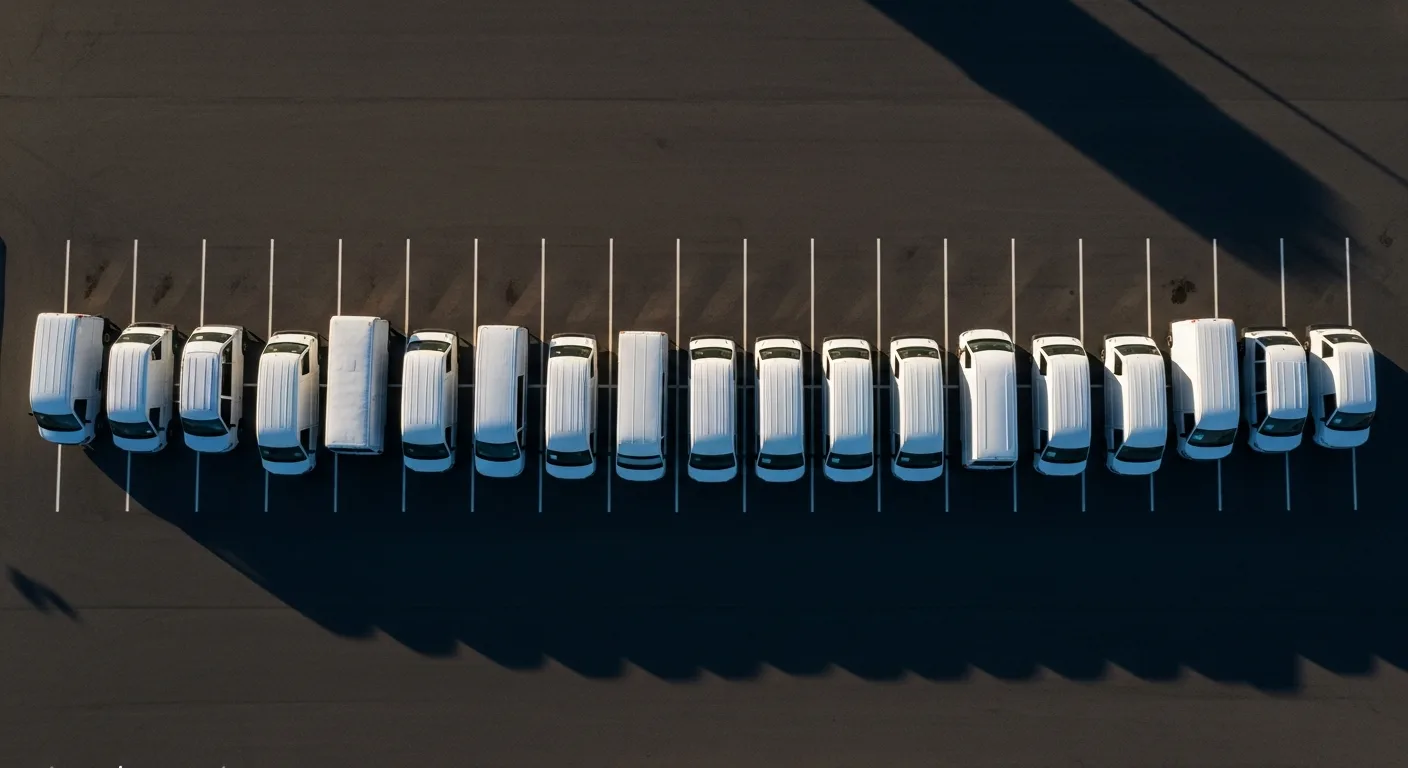
Your trucks are already on the road every day. They drive through neighborhoods where your ideal customers live, park at jobsites where neighbors watch, and sit in traffic where thousands of people stare at them. Right now, those trucks are either blank metal or faded magnetic signs. Either way, they’re wasted advertising space.
Vehicle wraps turn your fleet into a mobile marketing machine that works 24/7, costs nothing per impression after the initial investment, and reaches exactly the neighborhoods where you do business. No monthly ad spend. No click costs. No algorithms deciding who sees your brand. Just your truck, your name, and the roads you already drive.
This guide covers everything you need to know about vehicle wrap marketing for construction companies: design principles, cost breakdowns, ROI calculations, and strategies to get the most out of every mile your fleet drives.
Why Vehicle Wraps Work So Well for Contractors
Most marketing channels require you to go find your customers. Vehicle wraps flip that equation. Your customers find you because you’re already in their neighborhoods.
The Numbers
The Outdoor Advertising Association of America (OAAA) reports that a single wrapped vehicle generates between 30,000 and 70,000 daily visual impressions depending on market size and driving patterns. Over a year, that’s 10 to 25 million impressions per vehicle.
Compare the cost per thousand impressions (CPM) across marketing channels:
| Channel | Average CPM |
|---|---|
| Vehicle wrap | $0.04 to $0.15 |
| Billboard | $5 to $15 |
| Google Ads | $15 to $50 |
| Direct mail | $20 to $40 |
| Radio | $8 to $25 |
| Print advertising | $15 to $30 |
Vehicle wraps are the cheapest form of advertising that exists, and it’s not close.
Local Targeting Built In
Your trucks naturally drive through your service area. If you do residential remodeling in a specific set of neighborhoods, your wrapped truck parks in those neighborhoods every day. If you’re a commercial contractor working downtown, your fleet passes through the business district constantly.
This isn’t theoretical targeting based on demographics and zip codes. It’s real, physical presence in the exact places where your next customer lives or works.
The Credibility Factor
A clean, professionally wrapped truck signals something to potential clients: this is a real company. They invest in their image. They’re established. They’re not some guy with a beat-up pickup and a Craigslist ad.
First impressions matter in construction. When a homeowner is deciding between two contractors for a $50,000 kitchen remodel, the one with the professional fleet gets the benefit of the doubt.
Always Working
Your wrap doesn’t take days off. It doesn’t require a monthly budget. It doesn’t stop performing when you pause your ad spend. Whether your truck is driving, parked at a jobsite, sitting in your driveway, or waiting in a drive-through, it’s advertising your business.
Designing a Wrap That Actually Gets Noticed
A bad wrap is worse than no wrap at all. Cluttered designs, unreadable text, and poor color choices make your company look amateur. Here’s how to do it right.
The 3-Second Rule
Drivers see your truck for 3 to 5 seconds while passing on the road. In that window, they need to understand three things:
- What’s your company name?
- What do you do?
- How do they contact you?
Everything on your wrap should serve one of those three goals. Anything else is visual clutter that makes all three harder to read.
Text Hierarchy
Biggest: Your company name. This is what people remember.
Second biggest: Your phone number and/or website. Make the phone number large enough to read from 50 feet away.
Third: A brief service description. “Custom Homes and Renovations” or “Roofing and Siding” is enough. You don’t need to list every service you offer.
Everything else: Skip it. Your license number, your email address, your full list of 15 services, your slogan, your “family-owned since 1997” tagline: none of this is readable at driving speed. Save it for your website.
Color and Contrast
Your wrap needs to be visible in all conditions: daylight, shade, rain, and distance.
High contrast wins. White text on dark backgrounds, or dark text on light backgrounds. The most readable combinations are:
- White on black or dark blue
- Black on yellow or white
- Dark blue on white
Avoid: Red text on black backgrounds (unreadable at distance), dark text on dark backgrounds, or more than 3 colors total. Your wrap should match your brand colors, but readability comes first.
Images and Graphics
Use high-quality photos of your actual work, not stock photos. Nothing builds credibility like a beautiful finished project displayed on the side of your truck.
Tips for images:
- Use images at 150 DPI minimum at print size
- Avoid small or detailed images that blur at distance
- One or two large images beat six small ones
- Before-and-after pairs are powerful when displayed at sufficient size
Consistency Across Your Fleet
Every vehicle in your fleet should be recognizable as the same company. That doesn’t mean identical wraps (a pickup and a box truck have different layouts), but the color scheme, logo placement, font, and overall feel should be consistent.
When someone sees your truck three times in a week and it looks different each time, you’ve lost the repetition benefit that makes vehicle advertising effective.
Types of Vehicle Graphics
Not every vehicle needs a full wrap. Here’s the spectrum of options:
Magnetic Signs
- Cost: $50 to $200 per pair
- Durability: 1 to 3 years
- Pros: Removable, cheap, replaceable
- Cons: Look cheap, fall off at highway speed, fade quickly, can trap moisture and damage paint
Magnetic signs are better than nothing but shouldn’t be your long-term solution.
Vinyl Lettering and Spot Graphics
- Cost: $200 to $800
- Durability: 5 to 7 years
- Pros: Clean look, affordable, professional
- Cons: Limited visual impact, harder to update
Good for contractors who want a clean, simple look: company name, number, and logo on the doors and tailgate.
Partial Wraps
- Cost: $500 to $2,000
- Durability: 5 to 7 years
- Pros: Strong visual impact at lower cost, covers the most visible panels
- Cons: Visible paint-to-wrap transitions if not designed carefully
The sweet spot for many contractors. Cover the tailgate, side panels, and rear quarter panels where most eyes land.
Full Wraps
- Cost: $2,500 to $8,000 depending on vehicle size
- Durability: 5 to 7 years
- Pros: Maximum impact, complete brand transformation, protects paint
- Cons: Higher upfront cost, more complex installation
Full wraps turn even a plain white truck into a rolling billboard. They also protect the underlying paint, which helps resale value when you sell or trade the vehicle.
Getting Your Wrap Done Right
Finding a Wrap Shop
Not all wrap shops are equal. Look for:
- Portfolio of commercial vehicle work. Wrapping a sports car is different from wrapping a work truck with ladder racks, toolboxes, and utility bodies.
- Quality materials. Ask what vinyl they use. 3M, Avery Dennison, and Oracal are the industry standards. Cheap vinyl fades, cracks, and peels in 1 to 2 years.
- Proper installation facilities. The shop should have a clean, temperature-controlled bay. Dust, cold temperatures, and humidity all cause adhesion problems.
- Warranty. Reputable shops warranty both materials and labor for 2 to 5 years.
- Design services. Many wrap shops have in-house designers who understand the unique challenges of vehicle graphics (curves, contours, handles, gaps).
The Design and Approval Process
- Provide your brand assets: Logo files (vector format, .AI or .EPS), brand colors (with Pantone or hex codes), and any photos you want included.
- Review the mockup: The shop will produce a digital rendering showing your wrap on a template of your exact vehicle. Review it carefully. What looks good on a screen can be different at full size.
- Check text readability: Ask for a scaled printout and hold it at arm’s length. If you can’t read the phone number, nobody driving by will either.
- Approve and schedule: Most wraps take 1 to 3 days for installation. Plan for your vehicle to be out of service during that time.
Maintenance and Care
Extend your wrap’s life with basic care:
- Hand wash or use a touchless car wash. Brush washes can lift edges and cause peeling.
- Avoid parking in direct sun for extended periods when possible. UV exposure is the primary cause of fading.
- Address damage immediately. A small tear or lifted edge, if left alone, can grow into a major problem.
- Keep the wrap clean. Dirt, tree sap, and bird droppings can stain vinyl if left too long.
Calculating Your ROI
Vehicle wraps are an investment, and like any investment, you should track the return.
Cost Per Year
A full pickup wrap at $3,500 lasting 5 years costs $700 per year, or about $58 per month. That’s less than a single day’s spend on Google Ads for most contractors.
Tracking Leads
Set up tracking before your wrap goes on:
Dedicated phone number. Use a call tracking number (Google Voice, CallRail, or similar) on your wrap that’s different from the number on your website or other marketing. Every call to that number came from someone who saw your truck.
Unique URL. Put a short, memorable URL on your wrap that redirects to your main site. Track visits to that URL separately.
“How did you hear about us?” Train your team to ask every lead this question. Track “saw your truck” as a lead source in your CRM or project management software.
Sample ROI Calculation
Let’s say you wrap two trucks at $3,500 each ($7,000 total). Over one year:
- Total cost: $7,000 / 5-year life = $1,400 annual cost
- Leads generated: 30 (2 to 3 per month per truck is typical)
- Cost per lead: $47
- Close rate: 33%
- Jobs won: 10
- Average job value: $15,000
- Revenue from wrap-generated leads: $150,000
That’s a 107:1 return on your annual wrap investment. Even if your numbers are half as good, it’s still one of the best marketing investments you can make.
Maximizing Your Wrap’s Effectiveness
The wrap itself is just the beginning. How you use your wrapped fleet multiplies its impact.
Strategic Parking
Park your wrapped truck facing the street at every jobsite. If the driveway puts your truck behind the house, park on the street instead. You want maximum visibility to passing traffic and neighbors.
On weekends, park your wrapped truck in high-traffic areas: shopping centers (with permission), busy intersections, community events. Some contractors specifically park a wrapped truck near neighborhoods they want to work in.
Jobsite Signs Plus Wraps
A wrapped truck at a jobsite plus a yard sign creates a one-two punch. The yard sign tells neighbors what you’re doing. The truck reinforces your brand. Together, they generate more inquiries than either one alone.
Social Media Integration
Photograph your wrapped fleet and post it on social media. Before-and-after photos of the wrap installation make great content. Shots of your trucks lined up at a project show scale and professionalism.
Use your wrapped truck as a prop in project photos. When you photograph a completed deck, driveway, or addition, include your branded truck in the background. Every photo becomes both project documentation and marketing material.
Neighbor Marketing
When you’re working on a residential project, your wrapped truck is parked in the neighborhood for days or weeks. Take advantage of this by:
- Leaving door hangers on nearby homes introducing yourself and your current project
- Walking the neighborhood and introducing yourself to anyone outside
- Mentioning to your current client that you’d welcome introductions to their neighbors
The wrapped truck gives these conversations context. You’re not a random salesperson. You’re the contractor working right down the street.
Employee Vehicles
Consider offering a monthly stipend ($100 to $200) to employees who agree to put company graphics on their personal vehicles. Their daily commute and weekend errands become additional advertising. Make sure to address insurance implications and create a written agreement about maintenance and removal.
Fleet Branding Beyond Wraps
Your vehicles are the most visible element of your brand, but fleet branding extends further:
Trailers
Enclosed trailers are enormous, flat canvases. A wrap on a 20-foot trailer costs $2,000 to $4,000 and creates a billboard-sized display that sits at jobsites for the duration of the project.
Equipment
Branded equipment (generators, compressors, scaffolding) reinforces your presence on jobsites. Simple vinyl decals with your logo and phone number on major equipment cost almost nothing.
Uniforms and Hard Hats
Matching branded shirts and hard hat stickers complete the professional image. When your crew, your trucks, and your equipment all carry the same brand, the visual impact on clients and neighbors is significant.
The Full Package
Imagine a homeowner watching your crew arrive at their neighbor’s house. Three matching wrapped trucks pull up. A branded trailer is already on site. The crew steps out in matching shirts with your logo. They set up branded barricades and signs.
That homeowner isn’t wondering if you’re legitimate. They’re wondering how to hire you.
Common Vehicle Wrap Mistakes
Too much text. If your wrap requires reading time, it’s too busy. Simplify ruthlessly.
Cheap materials. Budget vinyl saves $500 upfront and costs $3,000 to replace when it fails in 18 months. Use quality materials from the start.
DIY installation. Wrapping a vehicle properly requires skill, tools, and a controlled environment. A poorly installed wrap looks terrible and fails quickly. Pay a professional.
Ignoring the tailgate. In traffic, the vehicle behind you stares at your tailgate for minutes. This is prime real estate. Put your company name and phone number here in the largest text on the entire vehicle.
Forgetting to update. Changed your phone number? Updated your website? Make sure your wraps reflect current information. Driving around with an old phone number is worse than having no number at all.
No call to action. “Call for a free estimate” or “Visit our website” tells people what to do next. Without a call to action, people admire your truck and then forget about you.
Getting Started This Month
Here’s a simple action plan:
- This week: Research wrap shops in your area. Get 3 quotes.
- Next week: Choose a shop and begin the design process. Provide your brand assets and discuss your goals.
- Week 3: Review and approve the design mockup. Set up your tracking phone number and URL.
- Week 4: Get your first vehicle wrapped. Start tracking leads immediately.
Within 30 days, your most visible truck will be working as a marketing machine every time it leaves the yard. Within a year, you’ll have data showing exactly how many leads and jobs that wrap generated. And every time you’re stuck in traffic, you’ll know at least your marketing is still running.
Frequently Asked Questions
How much does a vehicle wrap cost for a construction truck?
How long does a vehicle wrap last?
Are vehicle wraps worth it for small contractors?
Should I wrap my personal truck or just company vehicles?
What information should be on my truck wrap?
Full wrap or partial wrap: which is better?
Can I write off my vehicle wrap as a business expense?
How do I track leads from my vehicle wrap?
Related Articles

BIM Clash Detection: How to Catch Conflicts Before They Cost You on the Jobsite
BIM Clash Detection: How to Catch Conflicts Before They Cost You on the Jobsite Every contractor has a story about the...
Read More →
Asphalt Paving and Compaction Guide: Mix Types, Laydown Temperatures, and Quality Testing
Asphalt paving looks straightforward from a distance. A truck dumps material, the paver lays it down, and rollers...
Read More →
Construction Jobsite Wi-Fi & Connectivity Guide: Setting Up Reliable Internet in the Field
A practical guide to getting reliable internet on construction job sites. Learn about cellular hotspots, mesh networks,...
Read More →