
Construction Winter Slowdown Strategy Guide
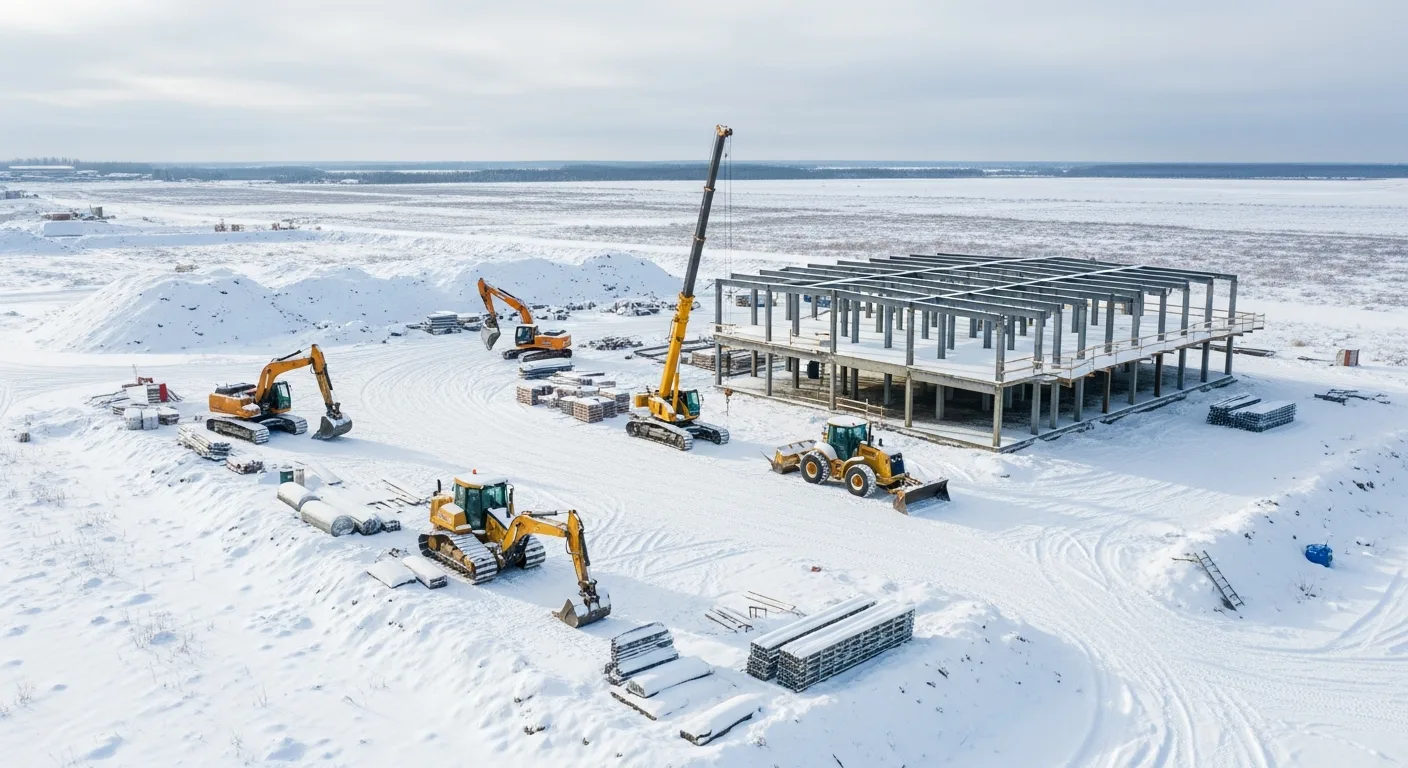
Every year it happens. The days get shorter, the weather turns, and the phone stops ringing like it did in June. For contractors in most of the country, winter means fewer projects, smaller crews, and a lot of downtime.
Most contractors treat the winter slowdown like a vacation they cannot afford. They slow down, stress about cash flow, and wait for spring to bail them out.
Smart contractors do the opposite. They treat winter as their secret weapon. While their competitors are sitting on their hands, they are sharpening every edge of their business so that when spring hits, they are not just ready. They are ahead.
Here is exactly what the best contractors do during the slower months.
1. Get Your Marketing Ready for Spring
Spring is the busiest season for most residential contractors. Homeowners who spent all winter browsing Pinterest and watching home renovation shows are ready to pull the trigger. The question is whether they will call you or your competitor.
The answer depends on what you do right now.
Update Your Website
When was the last time you updated your project portfolio? Added new testimonials? Checked that your contact forms actually work? Winter is the time to give your website the attention it deserves.
- Add your best projects from the past year with before-and-after photos
- Update your service area and service descriptions
- Make sure your site loads fast on mobile devices
- Add or refresh testimonials and case studies
- Check that your phone number, email, and contact forms are all working
Build Your Review Pipeline
Reviews drive leads. Period. If you do not have a system for collecting Google reviews, build one now.
Go through your completed projects from the past year and reach out to every happy client. A simple message works: “Hey, we really enjoyed working on your kitchen. If you have a minute, a Google review would mean the world to us. Here is the link.”
Respond to every existing review, positive and negative. Future clients read your responses as much as the reviews themselves.
Plan Your Paid Advertising
If you run Google Ads or social media ads, winter is when you plan your spring campaigns. Research your keywords, set your budgets, write your ad copy, and build your landing pages now. Our construction Google Ads strategies guide covers the specific campaign structures that work best for contractors. When March hits, you want to flip the switch and start generating leads immediately, not scramble to set things up.
Nurture Your Referral Network
Take your top referral sources to lunch. Real estate agents, architects, interior designers, insurance adjusters, whoever sends you work. Thank them for the referrals, ask what you can do better, and remind them you exist. A $50 lunch can generate $50,000 in work.
2. Clean Up Your Systems
During the busy season, systems get sloppy. Estimates pile up in your inbox. Files get saved in random folders. Your project management tool has half-finished projects nobody closed out. Winter is your chance to clean house.
Close Out Completed Projects
Go through every project in your system and close out the ones that are done. Final invoices sent? Warranties delivered? Client feedback collected? Punch lists completed? Do not carry old projects into the new year.
Organize Your Files
Set up a consistent file structure for the coming year. Every project should have the same folder layout: estimates, contracts, plans, permits, photos, change orders, invoices. If you are using construction management software like Projul, make sure your templates and workflows are set up correctly.
Review and Update Your Templates
Pull out your estimate templates, contract language, change order forms, and client welcome packets. Are they still accurate? Do your prices reflect current material costs? Is your contract language up to date with local regulations? Update everything now so you are not doing it in the middle of a busy spring.
Evaluate Your Software Stack
Is your current technology actually working for you? Winter is the best time to evaluate new tools because your team has the bandwidth to learn them.
If you are still running on spreadsheets, sticky notes, and text messages, consider a construction management platform that ties everything together. Projul gives you estimating, scheduling, job costing, client communication, and photo documentation in one system. Implementing it during winter means your team is comfortable with it before the spring rush.
3. Invest in Your Team
Your people are your most valuable asset. Winter is the time to invest in them.
Training and Certifications
Use the slower months to level up your team’s skills:
- OSHA 10 or OSHA 30 certification. If your crew members are not certified, get them certified. It reduces your liability and many commercial clients require it.
- Trade-specific training. New techniques, new materials, new code requirements. Send your leads and senior crew members to manufacturer training or trade workshops.
- Software training. If you implemented new tools during the year, winter is the time to make sure everyone actually knows how to use them. Schedule hands-on training sessions, not just “watch this video.”
- First aid and CPR. Renew certifications that have lapsed.
- Leadership development. Your foremen and project managers probably got promoted because they were good at their trade, not because they are natural managers. Invest in their leadership skills.
Team Building
Construction crews spend all year grinding through demanding physical work. Take some time to do something that is not work. A team lunch, a fishing trip, a bowling night. It sounds cheesy, but people who like working together produce better results.
Performance Reviews
Sit down with each team member one-on-one. What went well this year? Where can they improve? What do they need from you? What are their career goals? These conversations take 30 minutes each and pay dividends all year long.
Retention Planning
Your best people have options. Other companies will try to poach them. Use winter to make sure your compensation, benefits, and working conditions are competitive. Losing a skilled carpenter and replacing them costs far more than a raise.
4. Maintain Your Equipment
When was the last time you did preventive maintenance on your fleet and tools? If you are like most contractors, you fix things when they break. Winter is the time to get ahead of breakdowns.
Vehicle Maintenance
- Oil changes, tire rotations, brake inspections on every truck and van
- Check all fluid levels and top off
- Inspect and replace windshield wipers, lights, and mirrors
- Clean and organize truck beds and tool storage
- Update registration, insurance, and DOT compliance paperwork
Tool and Equipment Service
- Inspect all power tools and replace worn brushes, blades, and cords
- Calibrate laser levels, measuring tools, and testing equipment
- Service generators, compressors, and any gas-powered equipment
- Inventory your tool stock and replace missing or broken items
- Organize trailers and job boxes
Safety Equipment
- Replace hard hats older than 5 years (or 2 years if exposed to chemicals or UV)
- Inspect and replace worn harnesses and fall protection gear
- Restock first aid kits on every vehicle and job trailer
- Check fire extinguisher dates and recharge as needed
Taking care of equipment in winter prevents breakdowns during the busy season when you cannot afford the downtime.
5. Get Your Finances in Order
Winter is the time to look at your numbers honestly and plan for the year ahead.
Year-End Financial Review
Sit down with your bookkeeper or accountant and review the year:
- What was your actual gross margin by job type?
- Which project managers ran the most profitable jobs?
- Where did you lose money, and why?
- What was your overhead as a percentage of revenue?
- How did your actual revenue compare to your projections?
These answers tell you exactly where to focus next year.
Tax Planning
Meet with your CPA before year-end to discuss tax strategies. Equipment purchases, retirement contributions, entity structure changes, all of these decisions are better made before December 31 than after.
Budget for the Coming Year
Build a budget for next year based on this year’s actual numbers, not wishful thinking. Include:
- Revenue targets by month (accounting for seasonality)
- Crew labor costs based on your planned headcount
- Overhead costs including rent, insurance, vehicles, and software
- Marketing budget
- Equipment purchase or lease plans
- Cash reserve targets
Collect Outstanding Receivables
Year-end is the time to chase down every dollar owed to you. Clients are wrapping up their own budgets and may be more willing to pay. Send reminders on everything outstanding and get aggressive on anything over 60 days.
Line of Credit
If you do not have a line of credit, apply for one during winter while your books look good. You may not need it, but having it available for spring cash flow crunches is invaluable. Banks are more willing to lend when you are not desperate.
Consider using contractor software like Projul to bring all these workflows under one roof.
6. Build Your Spring Pipeline
The contractors who have the strongest springs are the ones who spent winter building their pipeline.
Follow Up on Lost Leads
Go through every lead and estimate from the past year that did not close. Send a personal follow-up. “Hi, we put together an estimate for your bathroom remodel back in August. Are you still considering that project? We have some availability this spring and would love to help.”
You will be surprised how many come back.
Reach Out to Past Clients
Your past clients are your best source of repeat business and referrals. Send a personal note or make a quick call. “Hey, it has been about two years since we finished your deck. How is it holding up? If you are thinking about any other projects, we would love to be your first call.”
Early-Bird Promotions
Offer an incentive for clients who sign contracts during winter for spring start dates. A modest discount or an included upgrade (free smart thermostat with an HVAC install, for example) can motivate fence-sitters to commit.
Pre-Construction Planning
For projects already in your pipeline, use winter to do the pre-construction work. Finalize designs, submit permits, order long-lead materials, and schedule subcontractors. When spring arrives, you can start building instead of planning.
7. Work on the Business, Not Just In It
Winter is the rare window where you can step back and think strategically. Most of the year, you are running from job to job, putting out fires. Use this time to ask the big questions:
- What type of work is most profitable, and should you focus on it?
- Are you in the right market, or should you expand your service area?
- Do you have the right people in the right roles?
- Where do you want the company to be in 3 to 5 years?
- What would need to change to get there?
Write down your answers. Set specific goals for the coming year. Share those goals with your team.
8. Financial Planning for the Slow Season
Cash flow problems kill more construction companies than bad work ever will. Winter is when those problems either get solved or get worse. The contractors who survive slow seasons without panic are the ones who plan for them before they hit.
Cash Flow Management
Revenue drops in winter, but overhead does not. Your insurance, vehicle payments, office rent, and software subscriptions keep billing whether you have active jobs or not. Smart contractors plan for this gap all year long.
Start by mapping out your monthly fixed costs. Every dollar that goes out the door regardless of revenue needs to be on paper. Then look at your projected winter revenue from maintenance contracts, interior work, and small projects. The difference is your winter cash gap, and you need a plan to cover it.
One proven approach is setting aside a percentage of every payment you collect during the busy months. Even 5% to 10% of each deposit going into a separate reserve account adds up fast over a six to eight month busy season. By the time winter hits, you have a cushion that keeps you operating without stress.
Payment Collection Strategies
Outstanding receivables are the silent killer of winter cash flow. You finished the work months ago, but the money is still sitting in someone else’s bank account.
Winter is the time to get aggressive about collections. Start with a full aging report. Sort every outstanding invoice by how old it is and prioritize accordingly:
- Under 30 days. Send a friendly reminder. Most of these will pay with a nudge.
- 30 to 60 days. Pick up the phone. A direct conversation is ten times more effective than another email.
- 60 to 90 days. Send a formal demand letter. Reference your contract terms and any late payment penalties.
- Over 90 days. Evaluate whether the amount justifies legal action, a collection agency, or a write-off. Make a decision and move on.
Going forward, tighten your payment terms. Require deposits before work starts. Bill in phases rather than waiting until project completion. Use invoicing software that sends automatic payment reminders so nothing slips through the cracks.
Building Budget Reserves
If this winter caught you off guard financially, commit to building a proper reserve for next year. The goal is three months of operating expenses in a separate savings account. That sounds like a lot, but you do not have to get there in one year.
Start with one month of expenses as your first milestone. Fund it gradually during the busy season. Do not touch it unless you truly need it. This reserve is not for buying new equipment or taking on a new project. It is your safety net for the months when work slows down and bills do not.
Talk to your accountant about the best way to structure this reserve. There may be tax advantages to certain business savings accounts, and your CPA can help you set it up correctly.
9. Marketing During the Slowdown
Most contractors stop marketing when work slows down. That is exactly backward. Winter is when your marketing efforts have the longest runway to build momentum before spring demand picks up.
Refresh Your Online Presence
Your website is your 24/7 salesperson. If it looks outdated, loads slowly, or does not clearly explain what you do and where you do it, you are losing leads every day. Winter gives you the time to fix that.
Go through every page of your site. Update project photos with your best recent work. Rewrite service descriptions that sound generic. Add location pages for every city and neighborhood you serve. Make sure your contact information is correct and that every form submission actually reaches someone who will respond.
If your site is more than three years old and has not been significantly updated, consider a full refresh. A modern, fast, mobile-friendly website with clear calls to action and strong project photos will outperform a dated site every time.
Generate Reviews Consistently
We covered reviews earlier, but it is worth emphasizing the strategy here. A steady flow of recent reviews matters more than a large total count of old ones. Google rewards recency, and potential clients trust recent feedback over reviews from two years ago.
Build a simple system: after every completed project, send a text or email with a direct link to your Google Business Profile review page. Make it as easy as possible. Some contractors include a QR code on their final invoice or warranty paperwork. The easier you make it, the more reviews you get.
Respond to every review within 48 hours. Thank positive reviewers by name and reference something specific about their project. For negative reviews, respond professionally, acknowledge the concern, and offer to resolve it offline. Your response tells future clients how you handle problems.
Referral Outreach Campaigns
Your referral network needs regular attention to produce consistent results. Winter is the perfect time to reconnect with referral partners and build new relationships.
Make a list of every professional who could send you work: real estate agents, property managers, insurance adjusters, architects, interior designers, home inspectors, and other contractors who do complementary work. Reach out to each one personally. A quick coffee meeting, a handwritten note, or even a phone call goes a long way.
Consider creating a simple referral program. Offer a gift card, a donation to their favorite charity, or a reciprocal referral commitment for every project they send your way. Formalize it so people know exactly what they get for sending you business.
Content Marketing
If you are not creating content, you are invisible to search engines. Blog posts, project spotlights, how-to guides, and FAQ pages all help your site rank higher in Google results. Winter is when you have the time to create this content.
Write about what you know. Common questions homeowners ask. Mistakes to avoid on remodeling projects. How to choose the right contractor. What a realistic timeline looks like for a kitchen renovation. Every piece of content is another door that leads potential clients to your website.
You do not need to be a professional writer. Write like you talk. Keep it practical and specific. One blog post per week through winter gives you 12 to 15 new pages on your site by the time spring arrives.
10. Technology and Systems Audit
If you have been thinking about switching software, upgrading your tools, or finally moving off spreadsheets, winter is the time to do it. Trying to implement new technology during your busiest months is a recipe for frustration and half-adoption.
Evaluate What Is Working and What Is Not
Start with an honest assessment of your current tools. For each piece of software you use, ask:
- Does my team actually use this consistently?
- Does it save time or create extra work?
- Does it integrate with the other tools we use?
- Are we paying for features we never touch?
- What are the biggest complaints from my team about this tool?
If you are using five different apps for estimating, scheduling, invoicing, and job costing, you are probably spending more time managing your tools than managing your projects. A single platform that handles all of these functions eliminates double entry, reduces errors, and gives you a complete picture of every job.
Why Winter Is the Best Time to Switch
Switching software during the busy season means your team is learning new systems while juggling active projects, tight deadlines, and demanding clients. That almost never goes well.
Winter gives you the breathing room to do it right:
- Fewer active projects means less data to migrate and fewer disruptions.
- More available time for training sessions and hands-on practice.
- Lower stakes if something goes wrong during the transition.
- Full adoption by the time spring hits, so your team is confident and efficient.
What to Look For in Construction Software
Not all project management tools are built for construction. Generic tools miss the specific workflows contractors need. When evaluating options, look for:
- Estimating tools that let you build templates, save assemblies, and send professional proposals directly to clients.
- Scheduling that gives you a clear view of crew assignments, project timelines, and resource conflicts.
- Job costing that tracks actual costs against estimates in real time so you know if a project is profitable before it is too late.
- Invoicing and payments that tie directly to project milestones and send automatic reminders.
- Mobile access that works reliably in the field, even with spotty cell service.
- Photo documentation for progress tracking and dispute prevention.
Projul was built specifically for contractors and covers all of these needs in one platform. Plans start at $2,388/year for Starter, $4,788/year for Core, $7,188/year for Core+, and $14,388/year for Pro, depending on your team size and feature needs. More importantly, the Projul team helps you set everything up and train your crew, so you are not figuring it out alone.
Run a Pilot Before Committing
Before switching your entire operation, run a small pilot. Pick two or three projects and manage them entirely through the new system. Let your team give honest feedback. Work out the kinks with low-pressure jobs before the spring rush demands perfection.
This approach builds confidence and catches problems early. By the time you go all-in, your team already knows the system and trusts it.
Get Your Systems Ready Before Spring
Winter does not last forever, and the contractors who use this time wisely will be miles ahead when the phones start ringing again. Whether you need to tighten your finances, ramp up your marketing, or finally upgrade your technology, the time to act is now.
If your current project management setup involves scattered spreadsheets, text message chains, and sticky notes on a whiteboard, you already know it is not going to scale. This is the year to fix that.
Schedule a free demo with Projul and see how the right construction management platform can help you run tighter estimates, keep your schedule organized, track job costs in real time, and get paid faster. Our team will walk you through everything and help you get set up before spring hits.
Do not wait until you are drowning in projects to figure out your systems. Get ahead of it now.
Making Winter Work for You
The winter slowdown is only a problem if you waste it. The contractors who come out of winter stronger are the ones who treat it as an investment period, not a waiting period.
Marketing. Systems. Training. Equipment. Finances. Pipeline. Strategy. Hit all seven of these areas during winter, and you will not just survive the slow months. You will set yourself up for the best spring your company has ever had.
Start this week. Pick one area from this list and take action on it today. Then work through the rest over the coming weeks. Your future self, and your bank account, will thank you.
Frequently Asked Questions
How can a construction company stay profitable during the winter slowdown?
What marketing should contractors do during winter?
Should I lay off workers during the winter slowdown?
What training should construction workers do in winter?
How do I build a spring pipeline during winter?
What equipment maintenance should contractors do in winter?
Is winter a good time to invest in construction software?
Related Articles

How Construction Teams Use AI to Cut Admin Time
Most contractors lose a full day every week to paperwork. AI now handles the repetitive admin work that used to eat...
Read More →
Concrete Tilt-Up Construction: A Contractor's Complete Field Guide
Tilt-up construction accounts for roughly 15 percent of all industrial and commercial buildings in North America. This...
Read More →
How to Implement Construction Software Without Losing Your Mind
Most construction software rollouts fail. Not because the software is bad, but because the rollout was rushed. Here are...
Read More →