
Construction Yard Organization Tips for Crews
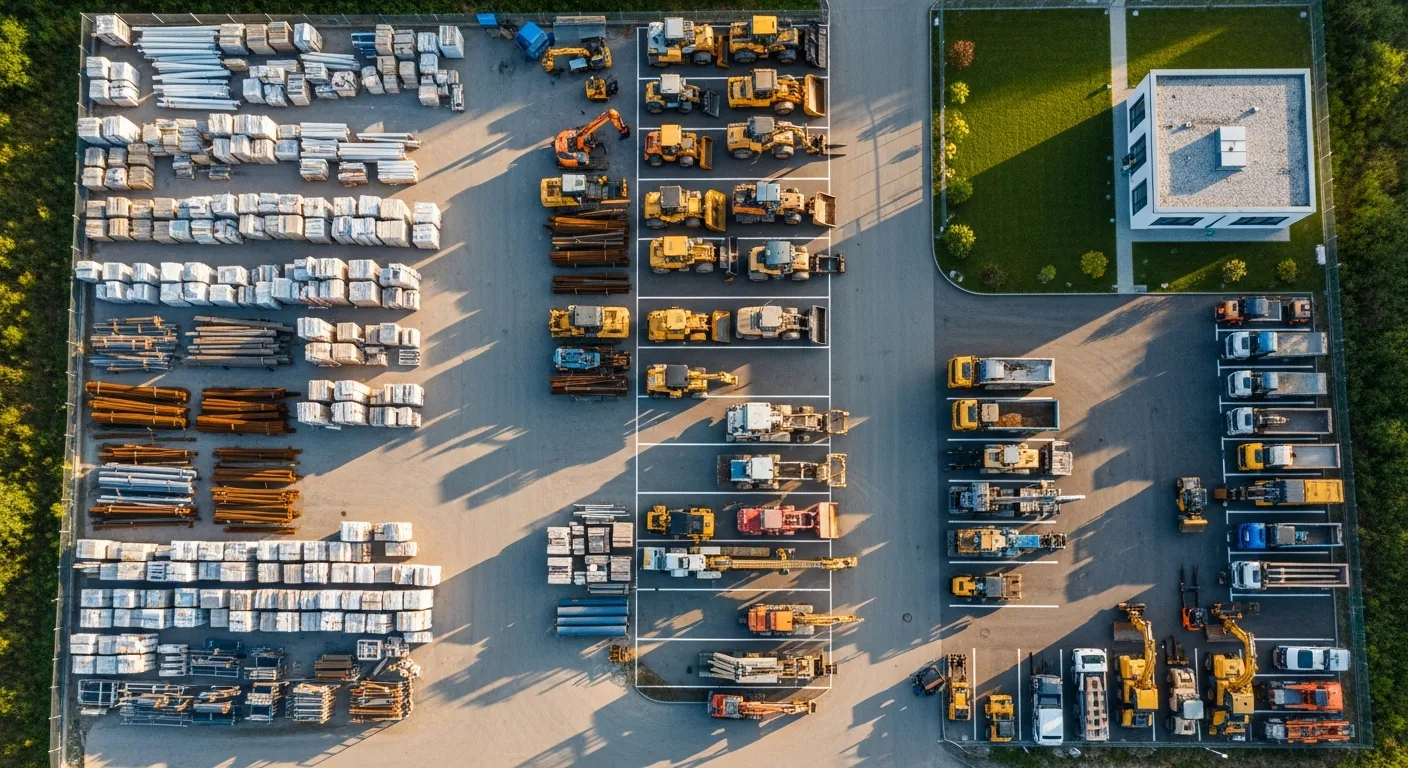
If you have ever spent 30 minutes looking for a pallet of 2x4s that someone stacked behind the excavator, you already know why yard organization matters. A messy yard does not just look bad. It costs you real money in wasted labor, damaged materials, lost tools, and delayed projects.
The best-run contracting companies treat their yard the same way they treat a jobsite: with a plan, clear systems, and accountability. This guide walks through everything you need to know about setting up and maintaining a construction yard that actually works.
Why Yard Organization Matters More Than You Think
Most contractors focus their planning energy on the jobsite. That makes sense. But the yard is where your projects start and end. It is where materials get received, stored, and loaded out. It is where equipment gets parked, fueled, and maintained. It is where your crews gather in the morning and drop off tools at night.
When the yard is disorganized, the problems ripple outward. Crews waste time searching for materials. Equipment sits idle because nobody can find the attachment they need. Deliveries get stacked in the wrong place, blocking access to other items. Materials get damaged from exposure or improper storage.
A well-organized yard, on the other hand, makes everything faster. Crews load out in minutes instead of an hour. You know exactly what you have on hand without walking the entire lot. Deliveries go to the right spot the first time. And your equipment lasts longer because it is properly stored and maintained.
Planning Your Yard Layout
The first step is creating a layout that matches how your operation actually works. Do not copy someone else’s setup. Think about the flow of materials, equipment, and people through your yard on a typical day.
Map Your Traffic Flow
Start by identifying your entry and exit points. In an ideal setup, traffic flows in one direction: in through one gate, out through another. This prevents the bottleneck of trucks trying to pass each other on a narrow lane.
If you only have one entrance, create a loop so vehicles can pull in, load or unload, and drive out without needing to back up or turn around in tight spaces. Wide lanes are not a luxury. They prevent accidents and keep things moving.
Define Your Zones
Break your yard into distinct zones, each with a clear purpose:
Receiving area. This is where deliveries arrive. It should be near the entrance with enough room for trucks to maneuver. Keep it clear so you can quickly unload and sort incoming materials.
Material storage. This is your largest zone. Organize it by material type: lumber in one section, concrete products in another, plumbing supplies in a third. Use racks, bins, and clearly marked rows. Stack materials off the ground on pallets or dunnage to prevent moisture damage.
Equipment parking. Park heavy equipment in a designated area with firm, level ground. Arrange machines so the ones used most frequently are easiest to access. Leave enough clearance between units for safe entry and exit.
Maintenance zone. Set aside space for equipment maintenance and repairs. This area needs a hard surface for catching fluids, good lighting, and storage for parts, filters, fluids, and tools. Keep it away from material storage to avoid contamination.
Waste management area. Place dumpsters and recycling containers where trucks can easily access them for pickup, but away from your main traffic flow and material storage.
Office and crew area. If your yard has a trailer or office, position it where you can see the main gate and receiving area. Crew parking should be separate from equipment and delivery traffic.
Account for Seasonal Changes
Your yard needs will shift throughout the year. In the spring, you might need more space for new project materials. In the fall, you might need covered storage for weather-sensitive items. Plan your layout with enough flexibility to adjust without a complete overhaul.
Setting Up an Inventory System
Knowing what is in your yard is just as important as knowing where it is. Without an inventory system, you end up with two common problems: ordering materials you already have, or running out of materials you thought you had.
Start Simple
If you do not have any inventory system right now, do not try to build something complicated on day one. Start with a basic check-in, check-out log. Every time something enters the yard, it gets logged. Every time something leaves, it gets logged. A clipboard and a form will work if that is all you have.
Go Digital When Ready
As your operation grows, move to a digital system. Construction management platforms like Projul let you track materials, equipment, and tools from any device. You can see what is on hand, what is committed to specific jobs, and what needs to be reordered.
Digital systems also give you historical data. You can look back and see how quickly you went through certain materials, which helps with future ordering and budgeting.
Label Everything
Labels are the backbone of any inventory system. Every rack, shelf, bin, and storage area should have a clear label. Use weatherproof signs that are large enough to read from a distance. Some contractors use color-coded systems: red for electrical, blue for plumbing, green for landscaping materials, and so on.
For high-value items, consider barcode or QR code labels that link to your digital inventory. A quick scan with a phone tells you exactly what the item is, which project it belongs to, and when it arrived.
Assign Responsibility
An inventory system only works if someone owns it. Assign a yard manager or a designated person on each shift who is responsible for logging materials in and out. Make it part of their job description, not an afterthought.
Security: Protecting Your Investment
Construction theft is a serious problem. The National Equipment Register estimates that up to $1 billion in construction equipment is stolen every year in the United States. Materials, tools, and fuel are also frequent targets. A well-secured yard protects your bottom line.
Physical Security
Fencing. A strong perimeter fence is your first line of defense. Chain-link with barbed wire or anti-climb features is standard. Make sure there are no gaps, and inspect the fence regularly for damage.
Gates. Use heavy-duty gates with commercial-grade locks. Limit the number of entry points. Every gate should have a lock, even if it is a secondary entrance you rarely use.
Lighting. A well-lit yard deters theft and makes it easier to spot problems. Install lighting along the perimeter, at all entry points, and throughout the storage areas. Motion-activated lights are especially effective because they draw attention to movement.
Electronic Security
Cameras. Install security cameras at every entrance, in the equipment parking area, and overlooking high-value material storage. Modern systems let you monitor your yard from your phone and store footage in the cloud.
Alarms. Motion sensors and intrusion alarms add another layer of protection. Connect them to a monitoring service or set them up to send alerts directly to your phone.
GPS tracking. Put GPS trackers on your most expensive equipment. If something does get stolen, you have a much better chance of recovering it quickly.
Access Control
Limit who can enter the yard and when. Use key cards, codes, or biometric systems that log every entry and exit. This not only improves security but also gives you a record of who was on-site if something goes missing.
Staging Areas: The Key to Efficient Load-Outs
A staging area is a designated space where you assemble everything needed for a specific job before it leaves the yard. Think of it like a loading dock for your projects.
How Staging Works
The day before a crew heads to a jobsite, the materials, tools, and equipment for that job get pulled from storage and placed in the staging area. The next morning, the crew can load up quickly and get on the road without searching the yard.
Benefits of Staging
Faster mornings. Crews spend less time in the yard and more time on the job. Even saving 20 minutes per crew per day adds up to significant labor savings over a year.
Fewer forgotten items. When everything is assembled in one spot, it is easy to do a visual check against the job’s material list. Forgetting a box of fittings means a trip back to the yard or a stop at the supply house, both of which waste time and money.
Better accountability. When materials are staged for a specific job, it is clear what belongs where. This reduces the “borrowing” that happens when crews grab materials from one project’s stockpile for another.
Setting Up a Staging Area
Pick a location near the main exit with enough space for multiple jobs to be staged simultaneously. Mark individual staging bays with job numbers or names. Use a whiteboard or digital display showing which bay belongs to which project and when it is scheduled to load out.
Waste Management
Construction waste adds up fast. Without a plan, it takes over your yard and creates safety hazards, environmental problems, and extra costs.
Separate Your Waste Streams
Different types of waste have different disposal requirements and costs. Set up separate containers for:
- Clean wood. Can often be recycled or used as fuel.
- Metal. Scrap metal has resale value. Keep it separated and sell it to a recycler.
- Concrete and masonry. Can be crushed and reused as aggregate.
- General construction debris. Mixed waste that goes to a landfill.
- Hazardous materials. Paint, solvents, adhesives, and other chemicals need special disposal.
Location and Access
Place waste containers where pickup trucks can reach them easily without blocking traffic. Keep them away from material storage so waste does not contaminate clean materials. Put them on a hard, level surface that can handle the weight of a full container.
Schedule Regular Pickups
Do not wait until containers are overflowing. Set up a regular pickup schedule based on your typical waste volume. During busy periods, increase the frequency. A full dumpster sitting in your yard is a fire hazard, an eyesore, and an invitation for illegal dumping.
Equipment Maintenance Zones
Your equipment is one of your biggest investments. A dedicated maintenance zone helps keep it running and extends its lifespan.
What the Zone Needs
Hard surface. Concrete or asphalt is ideal. You need a surface that can be cleaned and that catches fluids like oil, coolant, and hydraulic fluid.
Containment. Spill containment is not optional. Use drip pans, absorbent mats, or a containment pad to prevent fluids from reaching the ground.
Lighting. Good overhead lighting is essential for maintenance work, especially during early morning or evening hours.
Storage. Keep frequently used parts, filters, fluids, and tools nearby. A small parts room or storage container saves trips to the supply store.
Power. Make sure you have adequate electrical outlets for air compressors, welders, battery chargers, and other tools.
Maintenance Scheduling
Tie your maintenance schedule to your equipment tracking system. Projul and similar platforms let you set reminders based on hours of operation or calendar intervals. Preventive maintenance is always cheaper than emergency repairs.
Keep Records
Log every maintenance action: oil changes, filter replacements, inspections, repairs. These records help you track patterns (is that excavator always needing hydraulic work?) and prove proper maintenance if you ever need to make a warranty claim.
Tips for Small Yards
Not every contractor has acres of space. If you are working with a small yard, every square foot counts.
Go vertical. Use shelving, racks, and stackable containers to store materials up instead of out. A good racking system can double your effective storage space.
Rotate stock. Use a first-in, first-out approach so materials do not sit in the back corner for months. This prevents damage and waste.
Multi-purpose zones. Your staging area can double as your receiving area if you schedule them at different times. Your maintenance zone can share space with equipment parking if you set clear boundaries.
Offsite storage. If your yard is truly maxed out, renting a nearby storage unit or lot for overflow items can be cheaper than the productivity lost from a cramped yard.
Technology and Yard Management
Modern tools make yard management significantly easier than the clipboard-and-whiteboard approach.
Equipment Tracking
GPS and telematics systems show you exactly where every piece of equipment is, whether it is in the yard or on a jobsite. You can also monitor fuel levels, engine hours, and maintenance alerts remotely.
Digital Inventory
Cloud-based inventory systems let anyone on your team check stock levels from their phone. When a foreman needs to know if you have enough rebar for tomorrow’s pour, they can look it up without calling the office.
Delivery Scheduling
Coordinating deliveries is critical for yard management. When multiple deliveries arrive at the same time, chaos follows. Use scheduling tools to space out deliveries and assign receiving times so your team is ready.
Drone Surveys
Some larger contractors use drones to photograph their yard from above on a regular basis. These images help with layout planning, tracking material quantities, and spotting problems like ponding water or encroachment.
Building a Culture of Organization
The best systems in the world will not help if your team does not follow them. Building a culture of organization takes time, but it starts with a few simple steps.
Lead by example. If the owner’s truck is always parked in the wrong spot, nobody else will follow the rules either.
Make it easy. Clear signage, labeled storage, and simple check-in procedures reduce friction. The easier it is to do the right thing, the more likely people will do it.
Hold people accountable. When something is out of place, address it immediately. Small problems left unchecked become big problems.
Recognize good work. When the yard looks great and load-outs are running smoothly, acknowledge the team responsible. Positive reinforcement works.
Final Thoughts
A well-organized construction yard is not a nice-to-have. It is a competitive advantage. The contractors who run the tightest operations are the ones who win more bids, finish more projects on time, and hold onto their best people.
Start with the basics: map your layout, define your zones, set up an inventory system, and secure your perimeter. Then build from there. Every improvement you make in the yard pays dividends on every project you run.
If you are looking for a construction management platform that helps you manage equipment, materials, scheduling, and more from one place, take a look at Projul. It is built by contractors, for contractors, and it might be the missing piece in your operation.
Frequently Asked Questions
How much space do I need for a construction yard?
What is the best layout for a construction yard?
How do I keep track of materials in my yard?
What security measures should a construction yard have?
How often should I reorganize my construction yard?
Can construction management software help with yard organization?
How do I manage waste in my construction yard?
Related Articles

How to Implement Construction Software Without Losing Your Mind
Most construction software rollouts fail. Not because the software is bad, but because the rollout was rushed. Here are...
Read More →
How Selections Can Pay for Themselves in Three Easy Steps
Most contractors lose thousands each year on wrong material orders, slow client decisions, and missed upsell chances....
Read More →
3 Free Concrete Estimate Templates for Every Pour Type (2026)
Three ready-to-use concrete estimate templates with realistic line items, material costs, labor rates, and markup...
Read More →