
The Design-Build Model: Why More Contractors Are Making the Switch | Projul
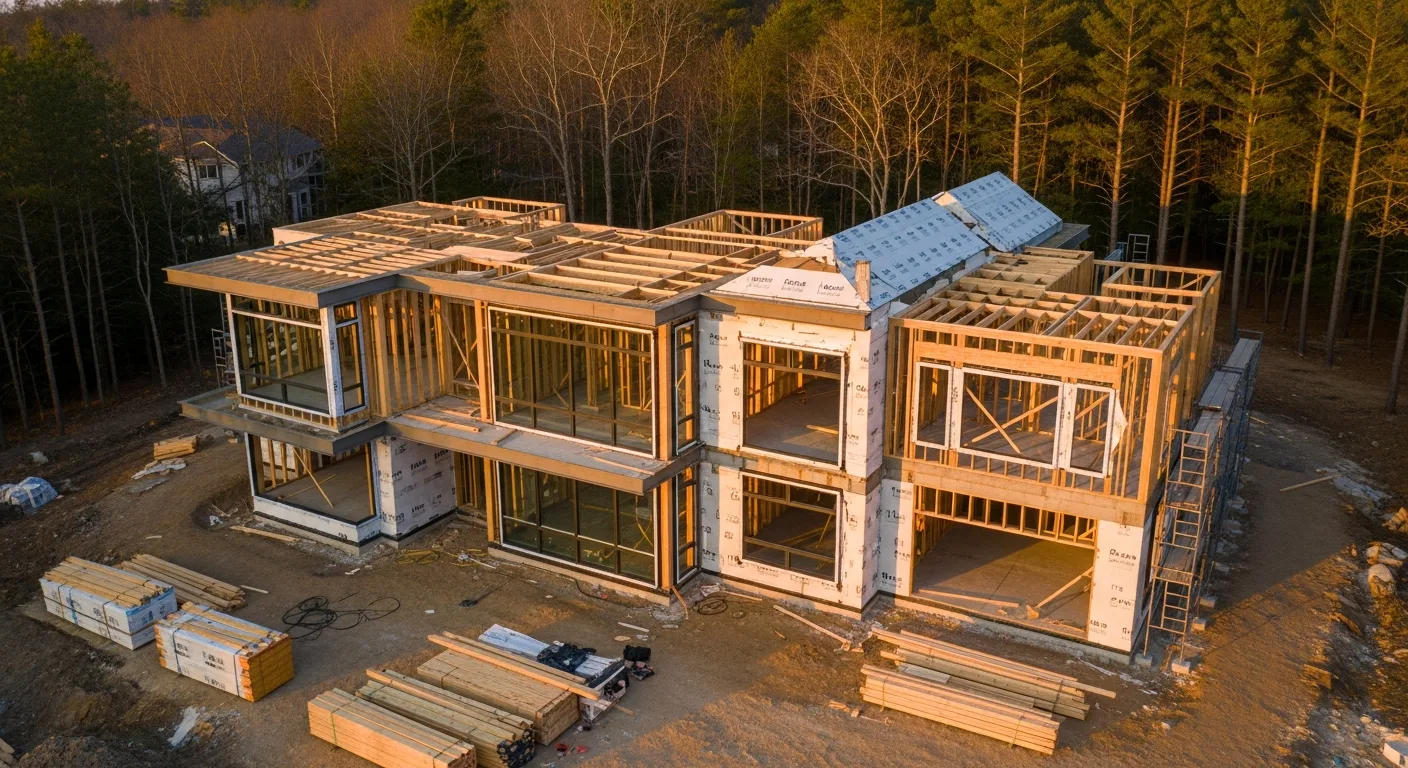
If you have been in construction long enough, you know the traditional process: owner hires an architect, architect draws up plans, plans go out to bid, lowest bidder wins, and then everyone spends the next six months arguing about change orders.
That is design-bid-build. It has been the default for decades, and it still dominates certain sectors. But a growing number of contractors are walking away from it in favor of design-build, and the reasons go way beyond just “it’s faster.”
This guide breaks down what design-build actually looks like from the contractor’s side, how to structure your team and pricing, what clients expect, and how to decide if it is the right move for your business.
What Is Design-Build, Exactly?
Design-build is a project delivery method where one entity provides both design and construction services under a single contract. Instead of the owner managing separate relationships with an architect and a general contractor, they work with one team from start to finish.
For the contractor, this means you are involved from day one. You are not waiting for a set of plans to land on your desk. You are helping shape those plans, providing cost input during design, and building a project you actually had a hand in creating.
The result, when done well, is fewer surprises, fewer change orders, and a client who feels like they have one throat to choke instead of two.
Design-Build vs. Design-Bid-Build: The Real Differences
On paper, the difference is simple: one contract versus two. In practice, the differences run much deeper.
Timeline
Design-bid-build is sequential. Design has to be 100% complete before bidding starts, and construction cannot begin until a contractor is selected. Design-build allows overlap. Construction on early phases can begin while later phases are still being designed. This alone can shave weeks or months off a project.
Cost Control
In design-bid-build, the owner often does not know the true construction cost until bids come back. By then, the design may be over budget, leading to painful value engineering. In design-build, the contractor provides cost feedback throughout design, so the budget stays realistic from the start.
Communication
Design-bid-build creates a triangle: owner, architect, contractor. When something goes wrong, the architect blames the contractor, the contractor blames the architect, and the owner is stuck in the middle. Design-build collapses that triangle into a straight line. One team, one point of contact, one source of accountability.
Change Orders
This is where contractors really feel the difference. In design-bid-build, change orders are a constant battle. Incomplete plans, conflicting details, and owner-requested changes create a never-ending stream of paperwork and negotiations. In design-build, many of those issues get resolved during design because the contractor is in the room catching problems before they become expensive.
Risk
Design-build shifts more risk to the contractor. You are responsible for both design and construction, which means design errors are your problem. This is the trade-off for the added control and profit potential.
Why Contractors Are Moving to Design-Build
The shift is not happening because design-build is trendy. It is happening because contractors are tired of the problems that come with traditional delivery.
You Stop Competing on Price Alone
In design-bid-build, you are often the lowest bidder or you are out. Design-build lets you compete on qualifications, relationships, and track record. Owners choose you because they trust you, not because you shaved 2% off someone else’s number.
You Control More of the Process
When you are involved from design through construction, you can make decisions that save money and time. You can suggest materials you know are available, construction methods your crews are efficient at, and sequencing that makes sense for the site. You are not just building someone else’s vision. You are shaping it.
Fewer Surprises, Fewer Disputes
Because you are part of the design process, you catch conflicts early. You know what the plans say because you helped write them. The result is fewer RFIs, fewer change orders, and fewer late-night phone calls from angry owners.
Higher Margins (When Done Right)
Design-build projects typically carry higher margins than hard-bid work. You are selling a service, not just a price. You are also reducing your own risk of cost overruns because you have better visibility into the design.
Repeat Business
Owners who have a good design-build experience tend to come back. They liked having one team to work with, and they do not want to go back to managing separate contracts. This creates a pipeline of negotiated work that is far more predictable than chasing bids.
How to Structure Your Design-Build Team
You do not need to hire a full architecture department to do design-build. Most contractors, especially smaller firms, partner with external design professionals. Here are the common models:
In-House Design Team
Larger design-build firms employ architects, engineers, and designers directly. This gives you maximum control but comes with significant overhead. It only makes sense if you have enough design-build volume to keep the team busy year-round.
Preferred Design Partners
This is the most common approach for mid-size contractors. You develop relationships with one or two architecture firms and bring them onto your design-build projects as subcontractors or consultants. Over time, you learn to work together efficiently, almost like an in-house team without the fixed costs.
Joint Ventures
For large or complex projects, you might form a joint venture with a design firm. Both parties share risk and reward. This works well for public sector work or projects where the owner requires specific design credentials.
Hybrid Approach
Some contractors handle simple design work in-house (basic residential plans, tenant improvements) and partner with outside firms for more complex projects. This lets you capture more margin on straightforward jobs while still taking on bigger opportunities.
Pricing Strategies for Design-Build
Pricing design-build work is fundamentally different from bidding traditional projects. Here are the most common approaches:
Guaranteed Maximum Price (GMP)
You provide a ceiling price with a defined scope. If the project comes in under the GMP, savings are typically shared with the owner. If it goes over, that is on you. GMP works well when the design is far enough along to price accurately, usually after schematic design.
Fixed Price After Preliminary Design
You charge a fee for the preliminary design phase, then provide a fixed price for construction once the design is developed enough. This protects you from pricing risk while giving the owner cost certainty before committing to the full project.
Cost-Plus with a Fee
You charge actual costs plus a fixed fee or percentage. This is the lowest risk for the contractor but requires a high level of trust from the owner. It works best with repeat clients or owners who value transparency.
Two-Phase Pricing
Phase one covers pre-construction and design for a fixed fee. Phase two is the construction contract, priced once the design is complete. This lets the owner commit in stages and gives you time to develop accurate pricing.
The right approach depends on the project, the client, and your risk tolerance. The key is to never price a design-build project the same way you would price a hard bid. You are selling a different product, and your pricing should reflect that.
What Clients Expect from Design-Build Contractors
Owners who choose design-build have different expectations than those who go the traditional route. Understanding these expectations is critical to delivering a good experience.
Single Point of Contact
The whole point of design-build, from the owner’s perspective, is simplicity. They want one person to call, one team to manage, and one entity to hold accountable. Make sure you deliver on that promise. Do not make the owner coordinate between your office and your architect.
Early Cost Visibility
Owners choose design-build partly because they want to know what things cost before the design is finished. Be prepared to provide budget estimates, cost comparisons, and value engineering options throughout the design process.
Speed
Most design-build owners expect a faster timeline than traditional delivery. They are paying a premium for efficiency, and they want to see it. Make sure your scheduling reflects the overlapping design and construction phases that make design-build faster.
Transparency
Design-build clients tend to be more engaged in the process. They want to see options, understand trade-offs, and feel involved in decisions. This is not a “sign the contract and we’ll call you when it’s done” situation. Regular updates, clear communication, and open-book accounting go a long way.
Quality
When you control both design and construction, the owner expects a higher standard. There is no one else to blame if the design does not translate well to the field. Make sure your quality control processes are solid, from design reviews through final punch list.
Software Needs for Design-Build
Running design-build projects requires more coordination than traditional construction. You are managing design documents, construction schedules, budgets, subcontractors, and client communication all under one roof. Trying to do this with spreadsheets, email, and a shared drive is a recipe for dropped balls.
You need a project management platform that can handle:
- Estimating and budgeting from early conceptual numbers through detailed construction costs
- Scheduling that accounts for overlapping design and construction phases
- Document management for drawings, specs, contracts, and submittals
- Client communication so the owner has visibility without you sending manual updates
- Change tracking to document scope changes and their cost impact
- Subcontractor coordination for both design consultants and trade contractors
Projul handles all of this in one platform, which is why design-build contractors choose it. When your design and construction teams are working from the same system, things do not fall through the cracks.
Common Mistakes to Avoid
Underpricing the Design Phase
Many contractors treat the design phase as a loss leader to win the construction contract. This is a mistake. Design takes real time and effort, and if you undercharge for it, you will either lose money or cut corners. Price the design phase fairly and separately.
Skipping Pre-Construction
Just because you are the designer and the builder does not mean you can skip pre-construction planning. Site analysis, permitting, subcontractor prequalification, and detailed scheduling are just as important in design-build as they are in traditional delivery. Maybe more so, because you are responsible for the whole thing.
Not Defining Scope Clearly
The biggest risk in design-build is scope creep. Without a clear scope definition, the owner’s expectations can expand far beyond what you priced. Use detailed scoping documents, allowances for undefined items, and a formal change order process from day one.
Ignoring Design Liability
When you take on design responsibility, you take on design liability. Make sure your insurance covers it. Professional liability (errors and omissions) insurance is essential for design-build contractors, and your policy limits should match the size of your projects.
Trying to Do Everything In-House
Not every contractor needs an in-house architect. Partnering with external design professionals is completely valid and often more cost-effective. Focus on what you do best, which is building, and bring in specialists for the design work.
Is Design-Build Right for Your Business?
Design-build is not for every contractor. Here are some honest questions to ask yourself:
- Do you have strong client relationships? Design-build is relationship-driven. If your business is built on hard bidding, the transition will take time.
- Can you manage the added complexity? Design-build requires coordinating more moving parts. Your project management systems need to be solid.
- Are you comfortable with design liability? If the idea of being responsible for design errors keeps you up at night, design-build may not be the right fit.
- Is there demand in your market? Some markets are heavily design-build. Others are still dominated by traditional delivery. Know your market before investing in the transition.
- Do you have design partners you trust? Unless you are building an in-house team, you need architects and engineers you can rely on. Those relationships take time to develop.
If you answered yes to most of these, design-build could be a profitable addition to your business. Start with smaller projects, build your processes, and grow from there.
Getting Started
The transition to design-build does not happen overnight. Here is a practical path forward:
- Identify a design partner. Find an architect or engineer who is interested in design-build and start talking about how you would work together.
- Pick a pilot project. Choose a smaller, lower-risk project to test the design-build model. A residential remodel, a small commercial buildout, or a repeat client’s next project are all good candidates.
- Set up your contracts. Work with your attorney to develop design-build contract templates. The AIA and DBIA both publish standard forms.
- Get your insurance in order. Talk to your insurance agent about professional liability coverage.
- Invest in your systems. Make sure your project management software can handle the added complexity of design-build. This is where a platform like Projul pays for itself quickly.
- Market your new capability. Update your website, tell your existing clients, and start positioning yourself as a design-build contractor.
Design-build is not just a trend. It is a fundamental shift in how construction projects are delivered, and the contractors who figure it out now will have a significant advantage in the years ahead.
Frequently Asked Questions
What is the design-build model in construction?
How is design-build different from design-bid-build?
Is design-build more profitable for contractors?
What size contractor can do design-build?
Do I need a special license for design-build?
What software do design-build contractors need?
How do you price a design-build project?
What are the risks of design-build for contractors?
Related Articles
BIM Clash Detection: How to Catch Conflicts Before They Cost You on the Jobsite
BIM Clash Detection: How to Catch Conflicts Before They Cost You on the Jobsite Every contractor has a story about the...
Read More →
Asphalt Paving and Compaction Guide: Mix Types, Laydown Temperatures, and Quality Testing
Asphalt paving looks straightforward from a distance. A truck dumps material, the paver lays it down, and rollers...
Read More →
Construction Jobsite Wi-Fi & Connectivity Guide: Setting Up Reliable Internet in the Field
A practical guide to getting reliable internet on construction job sites. Learn about cellular hotspots, mesh networks,...
Read More →