
Free Drywall Estimate Templates (2026)
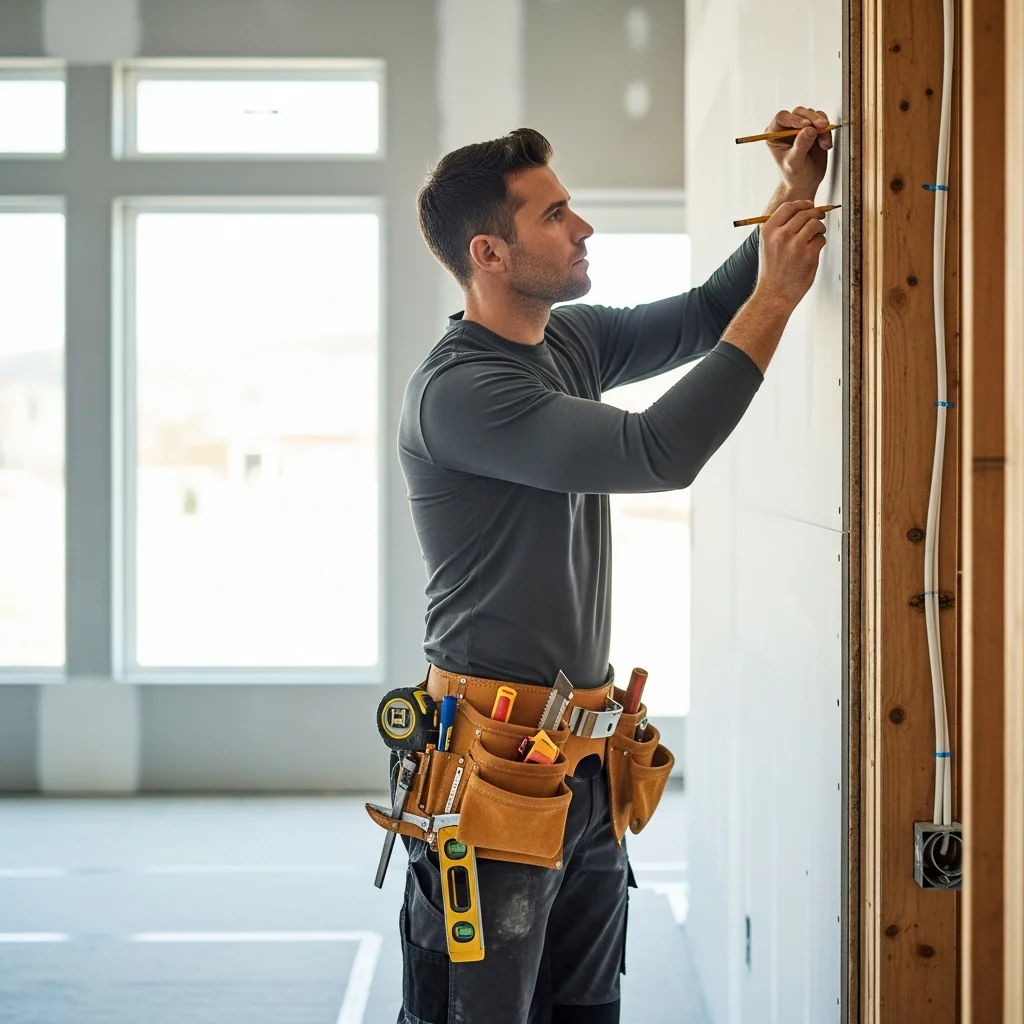
Drywall is one of those trades where the work looks simple from the outside but the pricing is anything but. A homeowner sees flat walls and smooth ceilings. They do not see the hours spent taping joints, applying multiple coats of compound, sanding dust out of every corner, and cleaning up before the painters show up.
That disconnect between what the customer sees and what the job actually costs is exactly why your estimates need to be detailed. A one-line bid that says “drywall for master bedroom, $2,800” tells the homeowner nothing. It does not explain why their neighbor’s quote was $1,500 less or $800 more. And when something changes mid-job, you have no paper trail to back up an adjustment.
Good estimate templates solve this problem. They force you to think through every line item before you commit to a price. They show the customer exactly what they are paying for. And they protect your margins when surprises pop up on the job site.
Below are three templates you can copy and start using today. One covers a standard residential drywall job, one is built for commercial tenant improvement work, and the third handles smaller repair and patching projects. Each includes realistic 2026 pricing for materials, labor, and overhead.
📥 Get Your Free Drywall Estimate Templates
Download Projul’s free drywall estimate templates as Google Sheets, ready to customize with your own pricing and branding.
Download Free Drywall Templates →
What Every Drywall Estimate Should Include
Before we get into the templates, here is a quick list of the sections every professional drywall estimate needs:
- Customer and project details. Name, address, job site location, and date.
- Scope of work. A written description of exactly what you will do and where.
- Material line items. Board type, size, quantity, and unit cost.
- Labor line items. Hanging, taping, finishing, sanding, and texturing broken out separately.
- Equipment and supplies. Scaffolding, lifts, tools, and consumables.
- Overhead and profit. Your markup applied to the direct cost subtotal.
- Payment terms. Deposit amount, progress payments, and final payment schedule.
- Timeline. Expected start date and duration with drying time accounted for.
- Exclusions. What is NOT included, such as painting, framing repairs, or insulation.
- Expiration date. Material prices shift often. A 30-day expiration is standard.
Template 1: Residential Drywall Installation (New Construction or Remodel)
This template covers a typical residential project with approximately 4,500 square feet of drywall across walls and ceilings. It uses standard 1/2-inch board on walls and 5/8-inch on ceilings, finished to Level 4 for painting.
Materials
| Line Item | Quantity | Unit | Unit Cost | Total |
|---|---|---|---|---|
| 1/2” drywall sheets (4x8) | 100 | sheets | $14.00 | $1,400.00 |
| 5/8” drywall sheets (4x12, ceilings) | 35 | sheets | $22.00 | $770.00 |
| Moisture-resistant drywall (bathrooms/kitchen) | 12 | sheets | $18.00 | $216.00 |
| Joint tape (paper) | 8 | rolls | $4.50 | $36.00 |
| All-purpose joint compound (5-gal) | 12 | buckets | $18.00 | $216.00 |
| Topping compound (5-gal) | 6 | buckets | $20.00 | $120.00 |
| Drywall screws (coarse thread, 1-1/4”) | 8 | boxes | $12.00 | $96.00 |
| Corner bead (metal) | 30 | pieces | $3.50 | $105.00 |
| Drywall adhesive | 6 | tubes | $6.00 | $36.00 |
| Sanding screens/paper | 4 | packs | $8.00 | $32.00 |
| Materials Subtotal | $3,027.00 |
Labor
| Task | Quantity | Unit | Unit Cost | Total |
|---|---|---|---|---|
| Board hanging (walls) | 3,200 | sq ft | $0.45 | $1,440.00 |
| Board hanging (ceilings) | 1,300 | sq ft | $0.55 | $715.00 |
| Taping and first coat | 4,500 | sq ft | $0.30 | $1,350.00 |
| Second coat (fill coat) | 4,500 | sq ft | $0.20 | $900.00 |
| Final coat and sanding | 4,500 | sq ft | $0.25 | $1,125.00 |
| Corner bead installation | 30 | pieces | $5.00 | $150.00 |
| Cleanup and debris removal | 1 | lot | $350.00 | $350.00 |
| Labor Subtotal | $6,030.00 |
Equipment and Other Costs
| Item | Quantity | Unit | Unit Cost | Total |
|---|---|---|---|---|
| Drywall lift rental | 3 | days | $45.00 | $135.00 |
| Scaffolding rental | 1 | week | $150.00 | $150.00 |
| Dust barrier/protection | 1 | lot | $75.00 | $75.00 |
| Dumpster rental (debris) | 1 | each | $350.00 | $350.00 |
| Equipment Subtotal | $710.00 |
Summary
| Amount | |
|---|---|
| Materials | $3,027.00 |
| Labor | $6,030.00 |
| Equipment and other | $710.00 |
| Direct Cost Subtotal | $9,767.00 |
| Overhead (15%) | $1,465.05 |
| Profit (12%) | $1,347.85 |
| Total Estimate | $12,579.90 |
Tips for This Template
- Ceiling hanging runs about 20% more per square foot than walls because of the awkward positioning and the need for lifts or extra hands. Always price ceilings separately.
- Moisture-resistant (green board or purple board) is required by code in wet areas. Do not skip it to save a few dollars on materials. If an inspector catches it, you are ripping it out and starting over.
- The waste factor is built into the sheet count above (about 12%). If the floor plan has lots of small rooms, bump to 15%.
- Level 4 finish is the standard for painted walls. If the customer wants a Level 5 skim coat, add $0.15 to $0.25 per square foot for labor.
Template 2: Commercial Drywall (Tenant Improvement / Office Buildout)
This template covers a 6,000-square-foot commercial tenant improvement with metal stud framing, fire-rated assemblies, and sound-rated partitions. Commercial drywall work typically involves higher material specs and stricter inspection requirements.
Materials
| Line Item | Quantity | Unit | Unit Cost | Total |
|---|---|---|---|---|
| 5/8” Type X fire-rated drywall (4x8) | 150 | sheets | $19.00 | $2,850.00 |
| 5/8” Type X drywall (4x12) | 40 | sheets | $28.00 | $1,120.00 |
| Sound-rated drywall (QuietRock or equiv.) | 30 | sheets | $52.00 | $1,560.00 |
| Metal corner bead (paper-faced) | 50 | pieces | $4.00 | $200.00 |
| Joint tape (paper) | 12 | rolls | $4.50 | $54.00 |
| All-purpose joint compound (5-gal) | 18 | buckets | $18.00 | $324.00 |
| Topping compound (5-gal) | 10 | buckets | $20.00 | $200.00 |
| Drywall screws (fine thread, 1”) | 10 | boxes | $14.00 | $140.00 |
| Acoustic sealant | 15 | tubes | $9.00 | $135.00 |
| Fire caulk (for penetrations) | 8 | tubes | $12.00 | $96.00 |
| Sanding supplies | 6 | packs | $8.00 | $48.00 |
| Materials Subtotal | $6,727.00 |
Labor
| Task | Quantity | Unit | Unit Cost | Total |
|---|---|---|---|---|
| Board hanging (standard walls) | 3,500 | sq ft | $0.50 | $1,750.00 |
| Board hanging (double-layer fire-rated) | 1,200 | sq ft | $0.90 | $1,080.00 |
| Board hanging (ceilings, grid or direct) | 1,300 | sq ft | $0.65 | $845.00 |
| Sound-rated wall installation | 900 | sq ft | $0.75 | $675.00 |
| Taping and first coat | 6,000 | sq ft | $0.30 | $1,800.00 |
| Second and final coat | 6,000 | sq ft | $0.25 | $1,500.00 |
| Sanding (Level 4) | 6,000 | sq ft | $0.15 | $900.00 |
| Fire-stopping and acoustic sealing | 1 | lot | $600.00 | $600.00 |
| Corner bead installation | 50 | pieces | $5.50 | $275.00 |
| Cleanup and debris removal | 1 | lot | $500.00 | $500.00 |
| Labor Subtotal | $9,925.00 |
Equipment and Other Costs
| Item | Quantity | Unit | Unit Cost | Total |
|---|---|---|---|---|
| Scissor lift rental | 2 | weeks | $550.00 | $1,100.00 |
| Scaffolding | 2 | weeks | $200.00 | $400.00 |
| Dumpster rental (30-yard) | 2 | each | $500.00 | $1,000.00 |
| Material delivery and staging | 1 | lot | $300.00 | $300.00 |
| Permit and inspection fees | 1 | lot | $400.00 | $400.00 |
| Equipment Subtotal | $3,200.00 |
Summary
| Amount | |
|---|---|
| Materials | $6,727.00 |
| Labor | $9,925.00 |
| Equipment and other | $3,200.00 |
| Direct Cost Subtotal | $19,852.00 |
| Overhead (15%) | $2,977.80 |
| Profit (10%) | $2,282.98 |
| Total Estimate | $25,112.78 |
Tips for This Template
- Double-layer fire-rated assemblies take almost twice the labor as single-layer. Do not try to estimate them at the same per-square-foot rate or you will lose money.
- Sound-rated partitions (STC 50+) require acoustic sealant at every perimeter joint. This is not optional. It is part of the assembly spec and will be inspected.
- Commercial jobs usually require fine-thread screws for metal studs (not coarse thread for wood). Make sure your screw count reflects the tighter spacing required for fire-rated assemblies (typically 8 inches on center, not 12).
- Always include permit and inspection fees as separate line items. Commercial inspections can require multiple visits, so build in a buffer.
Template 3: Drywall Repair and Patching
This template covers smaller repair jobs: water damage patches, hole repairs, crack fixes, and re-finishing after plumbing or electrical work. These jobs are quick but still need professional pricing.
Materials
| Line Item | Quantity | Unit | Unit Cost | Total |
|---|---|---|---|---|
| 1/2” drywall sheets (4x8) | 3 | sheets | $14.00 | $42.00 |
| 5/8” drywall (if matching existing) | 2 | sheets | $19.00 | $38.00 |
| Joint tape | 2 | rolls | $4.50 | $9.00 |
| All-purpose joint compound (1-gal) | 3 | buckets | $8.00 | $24.00 |
| Mesh patch kits (assorted sizes) | 4 | each | $6.00 | $24.00 |
| Drywall screws | 1 | box | $12.00 | $12.00 |
| Corner bead (if needed) | 4 | pieces | $3.50 | $14.00 |
| Sanding supplies | 1 | pack | $8.00 | $8.00 |
| Primer (repair areas) | 1 | quart | $12.00 | $12.00 |
| Materials Subtotal | $183.00 |
Labor
| Task | Quantity | Unit | Unit Cost | Total |
|---|---|---|---|---|
| Assess damage and prep area | 1 | hour | $85.00 | $85.00 |
| Cut out damaged drywall | 1 | hour | $85.00 | $85.00 |
| Install backing and new board | 1.5 | hours | $85.00 | $127.50 |
| Tape and first coat | 1 | hour | $85.00 | $85.00 |
| Second coat | 0.5 | hours | $85.00 | $42.50 |
| Final coat and sanding | 1 | hour | $85.00 | $85.00 |
| Texture matching (if needed) | 1.5 | hours | $95.00 | $142.50 |
| Primer application | 0.5 | hours | $85.00 | $42.50 |
| Cleanup | 0.5 | hours | $85.00 | $42.50 |
| Labor Subtotal | $737.50 |
Equipment and Other Costs
| Item | Quantity | Unit | Unit Cost | Total |
|---|---|---|---|---|
| Drop cloths and plastic sheeting | 1 | lot | $25.00 | $25.00 |
| Dust containment setup | 1 | lot | $40.00 | $40.00 |
| Travel/mobilization | 1 | trip | $75.00 | $75.00 |
| Equipment Subtotal | $140.00 |
Summary
| Amount | |
|---|---|
| Materials | $183.00 |
| Labor | $737.50 |
| Equipment and other | $140.00 |
| Direct Cost Subtotal | $1,060.50 |
| Overhead (15%) | $159.08 |
| Profit (15%) | $182.94 |
| Total Estimate | $1,402.52 |
Tips for This Template
- Texture matching is the hardest part of most repair jobs. If the existing walls have orange peel, knockdown, or skip trowel texture, you need to match it exactly or the patch will be visible. Charge for this skill. The higher labor rate above ($95/hour) reflects the expertise involved.
- Water damage repairs often reveal mold or structural issues behind the drywall. Include a note on your estimate: “If hidden damage is found during demo, additional work will be quoted separately before proceeding.”
- Minimum job charges matter for repair work. Even if the actual repair takes 90 minutes, you still drove to the site, set up, and cleaned up. Most drywall contractors set a minimum of $350 to $500 for any repair visit.
- Always prime the repaired area before the customer paints. Joint compound absorbs paint differently than the surrounding wall, and if you skip the primer, the patch will show through. Including primer as a line item shows professionalism.
Common Drywall Line Items and 2026 Pricing Ranges
Here is a quick reference table for the most common drywall line items. Use this to sanity-check your estimates or build your own template from scratch.
Material Costs
| Material | Unit | Low Range | Mid Range | High Range |
|---|---|---|---|---|
| 1/2” standard drywall (4x8) | sheet | $10.00 | $14.00 | $18.00 |
| 5/8” standard drywall (4x8) | sheet | $14.00 | $17.00 | $22.00 |
| 5/8” Type X fire-rated (4x8) | sheet | $16.00 | $19.00 | $24.00 |
| Moisture-resistant (green/purple) | sheet | $15.00 | $18.00 | $23.00 |
| Sound-rated (QuietRock or equiv.) | sheet | $42.00 | $52.00 | $65.00 |
| Joint compound (5-gal bucket) | bucket | $14.00 | $18.00 | $24.00 |
| Paper joint tape | roll | $3.00 | $4.50 | $6.00 |
| Metal corner bead (8 ft) | piece | $2.50 | $3.50 | $5.00 |
| Drywall screws (1 lb box) | box | $8.00 | $12.00 | $16.00 |
Labor Rates (Per Square Foot, Installed)
| Task | Low Range | Mid Range | High Range |
|---|---|---|---|
| Hang only (walls) | $0.30 | $0.45 | $0.65 |
| Hang only (ceilings) | $0.40 | $0.55 | $0.80 |
| Tape and finish (Level 4) | $0.55 | $0.75 | $1.00 |
| Tape and finish (Level 5) | $0.75 | $1.00 | $1.30 |
| Texture application | $0.20 | $0.35 | $0.55 |
| Hang + finish combined | $1.00 | $1.50 | $2.20 |
Common Add-On Costs
| Item | Typical Range |
|---|---|
| Drywall lift rental (per day) | $35 - $55 |
| Scaffolding rental (per week) | $100 - $250 |
| Scissor lift rental (per week) | $400 - $700 |
| Dumpster (20-yard) | $300 - $450 |
| Dumpster (30-yard) | $400 - $600 |
| Delivery fee | $75 - $200 |
| Dust barrier setup | $50 - $150 |
Tips for Writing Accurate Drywall Estimates
Getting your estimates right comes down to measuring carefully and knowing where the hidden costs live. Here are the most important things to watch for:
Measure Everything Twice
Drywall is sold in sheets, but you price by the square foot. Walk the job site with a tape measure and a notepad. Measure every wall height and length. Measure ceilings separately. Note window and door openings (you still need board above and below them, but the cutouts reduce your total square footage). Do not trust blueprints alone. Builders make changes on the fly, and walls end up in different spots than the plans show.
Account for Waste
A 10% waste factor is the absolute minimum for a simple rectangular room. Bump to 15% for rooms with lots of angles, arches, or built-in niches. On commercial jobs with unusual layouts, 12-15% is standard. Waste is not laziness. It is the reality of cutting board to fit around outlets, plumbing, HVAC registers, and oddly placed framing.
Know Your Drywall Types
Using the wrong board costs you money in two ways. First, you might underbid by pricing standard board when the job calls for fire-rated or moisture-resistant. Second, you might fail inspection and have to redo the work. Here is a quick guide:
- Standard 1/2” for most interior walls
- Standard 5/8” for ceilings (resists sagging between joists)
- Type X 5/8” for fire-rated assemblies (garages, shared walls, commercial)
- Moisture-resistant for bathrooms, kitchens, and laundry rooms
- Sound-rated for media rooms, offices, or commercial sound walls
Price Finishing Separately from Hanging
Hanging drywall is physically demanding but relatively fast. Finishing (taping, mudding, sanding) takes more time, more skill, and more return trips because of drying time between coats. Always break these into separate line items. This protects you if the customer changes the finish level or if you sub out the finishing to a specialist.
Do Not Forget Drying Time
Each coat of joint compound needs 24 hours to dry before the next coat goes on. A Level 4 finish requires at least three coats (tape coat, fill coat, final coat). That means three extra days minimum between hanging and sanding. Build this into your timeline and make sure the customer understands it. Rushing the process leads to cracking, bubbling, and callbacks.
Include a Mobilization or Minimum Job Fee
For repair work, your drive time and setup time might cost more than the materials. A $350 to $500 minimum covers your truck, gas, insurance, and the first hour on site. Spell this out on the estimate so the customer sees exactly why a “small patch” costs $400.
Common Mistakes in Drywall Estimates
Underestimating ceiling labor. Working overhead is slower, harder, and requires more equipment. If you price ceilings the same as walls, your margins will disappear on ceiling-heavy jobs.
Forgetting about trim and corner bead. Every outside corner needs bead, and it takes time to install and mud. Count the corners on your walk-through and include them as a separate line item.
Ignoring access issues. A 4x12 sheet of 5/8” drywall weighs about 100 pounds. If you are carrying those sheets up two flights of stairs or through narrow hallways, it takes longer. Commercial high-rise work with elevator restrictions is even worse. Add labor time for difficult access.
Using one price for all board types. Fire-rated board costs 25-40% more than standard. Sound-rated board costs three to four times as much. Do not average these together. Price each type on its own line.
Skipping the scope description. “Drywall for second floor” is not a scope of work. Write out exactly which rooms, which walls, what board type, and what finish level. This is your protection when the customer says, “I thought the closets were included.”
How to Estimate a Drywall Job Step by Step
Estimating drywall is not complicated, but skipping steps will cost you money. Here is the process that experienced drywall contractors follow on every job, whether it is a single bedroom or a full commercial buildout.
Step 1: Walk the Job Site
Never price a drywall job from blueprints alone. Walk every room. Look at ceiling heights, window placements, closet depths, and any framing that is not standard. Note areas that need moisture-resistant board (bathrooms, kitchens, laundry rooms) and fire-rated assemblies (garage walls, stairwells, commercial partitions). Take photos of anything unusual so you can reference it later when building the estimate.
Step 2: Measure All Surfaces
Measure every wall and ceiling you will be covering. Multiply wall length by height for wall square footage. Measure ceiling length by width for ceiling square footage. Subtract door and window openings only if they are large enough to save a full sheet. Small openings still require cutting and fitting, so they cost labor even if you save a little material.
Step 3: Calculate Sheet Count and Materials
Divide your total square footage by 32 (for 4x8 sheets) or 48 (for 4x12 sheets). Add 10-15% for waste. Then figure your fasteners, tape, compound, and corner bead. A typical rule of thumb: one 5-gallon bucket of compound covers about 400 square feet of finishing, and one box of screws covers roughly 300 square feet of hanging.
Step 4: Price Your Labor
Break labor into hanging, taping, coating, sanding, and texture. Use your own crew rates or subcontractor prices. Do not use a single blended rate for all tasks. Ceilings cost more than walls. Fire-rated double-layer costs more than single-layer. Projul’s estimating tools let you save labor rates by task so you can drop them into any estimate without recalculating every time.
Step 5: Add Equipment, Overhead, and Profit
Include lift rentals, scaffolding, dumpsters, dust barriers, and delivery fees. Apply your overhead percentage (most contractors run 12-18%) and profit margin (10-20%) on top of the direct cost total. Do not bury these in your labor rates. Showing them as separate lines keeps your pricing transparent and makes it easier to adjust if the scope changes.
Step 6: Write the Scope, Terms, and Exclusions
This is where a lot of contractors cut corners. Spell out exactly what rooms, surfaces, board types, and finish levels are included. List what is NOT included (painting, framing, insulation, electrical). Add your payment terms, timeline, warranty, and expiration date. A clear scope protects you from disputes and change orders you did not see coming. Use Projul’s templates feature to save your standard scope language so you do not have to rewrite it on every bid.
New Construction vs. Repair Drywall Estimates
New construction and repair work look like the same trade on paper, but they are completely different animals when it comes to estimating. Understanding the differences keeps you from underpricing repairs or overcomplicating new build bids.
New Construction Estimates
New construction drywall is high-volume, repetitive work. You are covering every wall and ceiling in the building with fresh board on clean framing. The advantages for estimating:
- Consistent framing. Studs are 16 or 24 inches on center, straight, and ready for board.
- Bulk material orders. You can order full pallets and get supplier discounts.
- Predictable scope. The plans show every wall. Surprises are rare.
- Production rates. A good crew can hang 80-100 sheets per day in new construction because there is nothing in the way.
Price new construction by the square foot using production rates. Most contractors bid hanging at $0.35-$0.55 per square foot for walls and finishing at $0.55-$0.85 per square foot for Level 4. The margins are thinner, but the volume makes up for it. Track your actual costs with Projul’s job costing to make sure your bids stay profitable.
Repair Estimates
Repair work is the opposite of production. Every job is different. You are matching existing textures, working around furniture, protecting finished floors, and dealing with whatever is hiding behind the old board. Key differences:
- Higher labor rates. Repair work takes more skill and more time per square foot. Charge by the hour, not the square foot.
- Minimum job fees. Your $350-$500 minimum covers mobilization, setup, and cleanup regardless of the patch size.
- Texture matching. Matching an existing orange peel or knockdown pattern is an art. Charge a premium for it.
- Hidden damage. Water damage patches often reveal mold, rotted framing, or bad insulation. Always include a clause that hidden damage will be quoted separately.
- Smaller material quantities. You cannot buy a single sheet at pallet pricing. Your material cost per square foot is higher on repairs.
Use Projul’s change order feature when repair jobs grow beyond the original scope. A signed change order protects both you and the customer.
Related Estimate Templates
Building drywall estimates is just one piece of the puzzle. Most drywall contractors also handle or coordinate with trades that need their own estimates. Here are related templates you can download and use:
- Painting Estimate Templates - Painting follows drywall on almost every job. These templates cover interior and exterior with real line items.
- Framing and Carpentry Estimate Templates - Framing comes before drywall. If you handle both, these templates save you time.
- Insulation Estimate Templates - Insulation goes in after framing and before drywall. Coordinate these bids on full-scope jobs.
- Bathroom Remodel Estimate Templates - Bathroom remodels always include drywall work. Use this template when bidding the full room.
- General Contractor Estimate Templates - GCs who sub out drywall still need to include it in their master estimate.
- Construction Change Order Templates - Handle scope changes on drywall jobs without losing money.
- Concrete Estimate Templates - For full-scope contractors who handle foundations through finishes.
- Demolition Estimate Templates - Demo old drywall before hanging new board. Price it as a separate phase.
What Every Drywall Estimate Needs Beyond the Numbers
The line items and totals form the core of your estimate, but the details around them matter just as much:
- Scope of work description. Two to three sentences explaining exactly what you will do. “Install 1/2-inch standard drywall on all walls and 5/8-inch on ceilings for the second-floor addition (4 bedrooms, 2 bathrooms, hallway). Finish to Level 4 for paint. Moisture-resistant board in both bathrooms.”
- Timeline. Give a realistic start date and duration. Use construction scheduling tools to keep crews on track. “Hanging begins Monday, March 17. Finishing and sanding complete by Friday, March 28, weather and drying conditions permitting.”
- Payment terms. Spell out your deposit, progress payments, and final payment schedule. “40% deposit due at contract signing. 30% due after hanging is complete. 30% due upon final sanding and walkthrough.”
- Warranty details. List your workmanship warranty with a specific duration. “One-year warranty on all joint cracking, nail pops, and tape failure under normal conditions.”
- Exclusions. State what is NOT included. “This estimate does not include painting, framing repairs, insulation, or electrical/plumbing rough-in. Any hidden damage discovered during demo will be quoted separately.”
- Expiration date. Material prices change frequently. A 30-day expiration is standard.
Frequently Asked Questions
Check the FAQ section above for answers to the most common questions about drywall estimates, including cost per square foot, finish levels, sheet calculation, separate pricing for hanging vs. finishing, and typical job timelines.
Start Sending Better Drywall Estimates Today
These templates give you a solid foundation for residential installations, commercial buildouts, and repair work. Customize them with your own pricing, add your branding, and start sending professional estimates that win more jobs.
If you are ready to move beyond spreadsheets, Projul’s estimating features let you build, send, and track estimates from your phone or computer. Create estimates on the job site, send them for e-signature approval with one tap, and convert accepted estimates into projects automatically.
Projul offers three plans with no per-user fees. Rated 9.8 out of 10 on G2. Check out pricing or schedule a live demo and see how it works for your crew.
📥 Get Your Free Drywall Estimate Templates
Download Projul’s free drywall estimate templates as Google Sheets, ready to customize with your own pricing and branding.
Download Free Drywall Templates →
DISCLAIMER: We make no warranty of accuracy, timeliness, and completeness of the information presented on this website. Posts are subject to change without notice and cannot be considered financial advice.
Frequently Asked Questions
How much does drywall installation cost per square foot?
What is the difference between drywall levels of finish?
How do I calculate how many sheets of drywall I need?
Should I charge separately for drywall hanging and finishing?
How long does a typical drywall job take?
What profit margin should I target on drywall jobs?
How do I estimate drywall for a room with vaulted ceilings?
Should I include texture in my drywall estimate?
Related Articles

Construction Bidding Strategies: How to Win More Jobs at Better Margins
Most contractors lose bids not because their price is wrong, but because their process is. These bidding strategies...
Read More →
Construction Estimating for Beginners: A Plain-English Guide
Construction estimating does not have to be complicated. This guide breaks it down into plain English so you can create...
Read More →
Free Cabinet and Countertop Estimate Templates
Three ready-to-use cabinet and countertop estimate templates with realistic line items, material costs, labor rates,...
Read More →