
Free Fire Sprinkler Estimate Templates (2026)
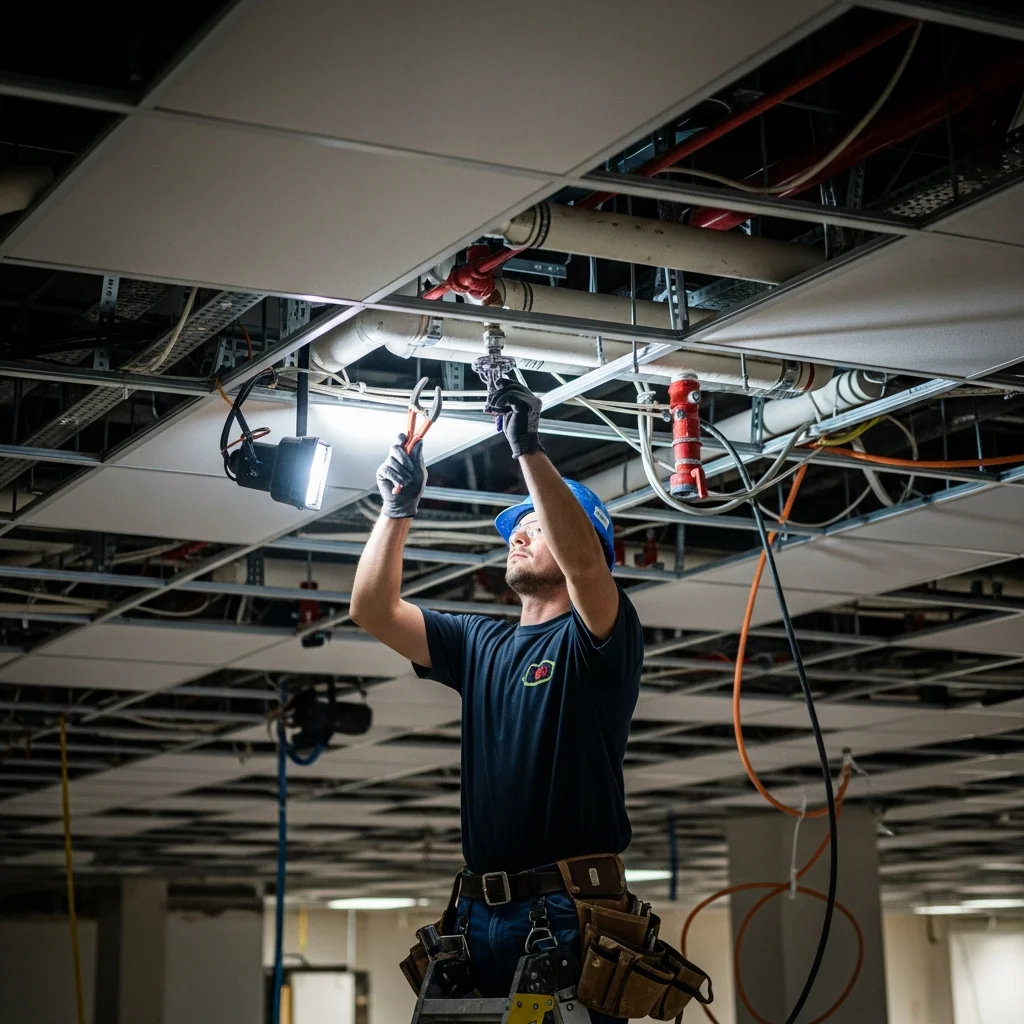
Getting fire sprinkler estimates right is not optional. Miss a line item on a commercial sprinkler bid and you could lose thousands on a single job. Price too high on residential work and the general contractor picks someone else. Either way, the estimate is where jobs are won or lost.
The challenge for most fire protection contractors is that sprinkler estimates are more complex than many other trades. You are dealing with hydraulic calculations, pipe sizing, head spacing rules from NFPA 13 or 13D, backflow requirements, fire pump sizing, and inspections from the local fire marshal. That is a lot to keep track of, and it is easy to forget a line item when you are building an estimate from scratch every time.
These three templates give you a starting point for the most common fire sprinkler jobs. Each one includes realistic material costs, labor rates, and equipment charges based on 2026 market pricing. Copy them, adjust the numbers for your local market, and start sending professional estimates that cover every cost.
Get Your Free Estimate Templates
Download Projul’s free construction estimate templates. Built by contractors, ready to customize. Create professional estimates in minutes and win more jobs.
What to Include in a Fire Sprinkler Estimate
Before diving into the templates, here is a checklist of what every fire sprinkler estimate should cover. Missing any of these items can mean eating the cost yourself or having an uncomfortable conversation with the customer later.
Project Information
Every estimate starts with the basics:
- Customer name, address, and contact information
- Project name and location (especially important for commercial work with multiple buildings)
- System type (wet, dry, pre-action, or deluge)
- Applicable code (NFPA 13, 13D, or 13R)
- Hazard classification (light, ordinary Group 1, ordinary Group 2, extra hazard)
- Design density and remote area if hydraulically calculated
- Building square footage and number of stories
- Estimated number of sprinkler heads
- Timeline and key milestones
- Permit and inspection requirements
Cost Categories
A fire sprinkler estimate should break costs into clear categories so the customer (or GC) can see exactly where the money goes:
- Materials - Pipe, fittings, hangers, sprinkler heads, valves, backflow preventers, and the fire department connection
- Labor - Rough-in, trim, testing, and punch list
- Equipment - Lifts, threading machines, and grooving tools
- Subcontractors - Fire pump installation, trenching for underground, or core drilling
- Permits and inspections - Building permit, fire marshal inspection fees, and flow test fees
- Overhead and profit - Your shop overhead, insurance (GL and workers comp for fire protection work is significant), and profit margin
Terms and Conditions
Fire sprinkler work has specific terms you should include:
- Payment schedule tied to milestones (rough-in complete, system tested, final inspection passed)
- Who provides the fire flow test data
- Responsibility for ceiling grid coordination (on commercial jobs)
- Exclusions (patching drywall, painting, concrete work for underground)
- Warranty period for workmanship and note that head manufacturers warrant their products separately
- Statement that pricing is based on current code requirements and any code changes may affect cost
How to Use These Templates
Each template below is organized into sections: materials, labor, equipment, and overhead/profit. Here is how to get the most out of them:
- Review the project plans and determine the system type, pipe material, and approximate head count.
- Adjust unit costs to match your local supplier pricing and labor rates.
- Update quantities based on the specific job scope.
- Apply your overhead and profit percentages to the subtotal.
- Add project-specific notes covering timeline, exclusions, and payment terms.
The unit costs shown are mid-range estimates for the U.S. market in 2026. Your area may run higher or lower depending on material availability, labor market conditions, and local code requirements. Always verify pricing with your supplier before sending a live estimate.
Template 1: Residential Fire Sprinkler System (New Construction)
This template covers a new-construction residential fire sprinkler system for a 2,500 square foot single-family home under NFPA 13D. The system is a standalone wet system fed from the domestic water supply with a dedicated sprinkler meter.
Materials
| Line Item | Quantity | Unit | Unit Cost | Total |
|---|---|---|---|---|
| CPVC pipe (1-inch) | 400 | lin ft | $2.80 | $1,120.00 |
| CPVC pipe (3/4-inch) | 200 | lin ft | $2.20 | $440.00 |
| CPVC fittings (tees, elbows, couplings) | 85 | each | $4.50 | $382.50 |
| CPVC solvent cement and primer | 6 | cans | $18.00 | $108.00 |
| Residential sprinkler heads (concealed pendant) | 18 | each | $28.00 | $504.00 |
| Concealed head cover plates | 18 | each | $6.50 | $117.00 |
| Sprinkler head escutcheons | 18 | each | $3.00 | $54.00 |
| Flow switch | 1 | each | $185.00 | $185.00 |
| Alarm bell (water motor gong or electronic) | 1 | each | $145.00 | $145.00 |
| Test and drain valve assembly | 1 | each | $95.00 | $95.00 |
| Backflow preventer (double check) | 1 | each | $320.00 | $320.00 |
| Pipe hangers and supports | 60 | each | $3.50 | $210.00 |
| Main control valve (butterfly) | 1 | each | $175.00 | $175.00 |
| Pressure gauge | 2 | each | $25.00 | $50.00 |
| Sprinkler riser assembly | 1 | each | $280.00 | $280.00 |
| Miscellaneous fittings and sealants | 1 | lot | $150.00 | $150.00 |
| Materials Subtotal | $4,335.50 |
Labor
| Task | Quantity | Unit | Unit Cost | Total |
|---|---|---|---|---|
| Layout and measurement | 6 | hours | $85.00 | $510.00 |
| Rough-in piping (main and branch lines) | 24 | hours | $85.00 | $2,040.00 |
| Install sprinkler heads (concealed pendant) | 18 | each | $22.00 | $396.00 |
| Install riser, valves, and backflow | 4 | hours | $95.00 | $380.00 |
| Install flow switch and alarm | 2 | hours | $95.00 | $190.00 |
| Pressure test and flush system | 4 | hours | $95.00 | $380.00 |
| Final trim (cover plates after drywall) | 6 | hours | $85.00 | $510.00 |
| Inspection coordination and walkthrough | 3 | hours | $95.00 | $285.00 |
| Labor Subtotal | $4,691.00 |
Equipment and Other Costs
| Item | Quantity | Unit | Unit Cost | Total |
|---|---|---|---|---|
| Building permit | 1 | each | $350.00 | $350.00 |
| Fire marshal inspection fee | 1 | each | $200.00 | $200.00 |
| Hydraulic calculation (if required) | 1 | each | $400.00 | $400.00 |
| Material delivery | 1 | each | $150.00 | $150.00 |
| Equipment Subtotal | $1,100.00 |
Summary
| Amount | |
|---|---|
| Materials | $4,335.50 |
| Labor | $4,691.00 |
| Equipment and other | $1,100.00 |
| Direct Cost Subtotal | $10,126.50 |
| Overhead (15%) | $1,518.98 |
| Profit (12%) | $1,397.46 |
| Total Estimate | $13,042.94 |
Tips for This Template
- CPVC is the most common pipe material for residential systems because of its lower cost and ease of installation compared to steel. Some jurisdictions require steel or copper, so confirm local code requirements before bidding.
- The 18 heads for a 2,500 square foot home is typical for NFPA 13D, which does not require sprinklers in bathrooms under 55 square feet, closets, attics, or garages in most cases. Head count will change if the local AHJ has adopted NFPA 13R instead.
- Concealed pendant heads with cover plates give the cleanest look for finished residential spaces. The cover plates pop off at a set temperature to expose the head during a fire.
- Always include a separate line for the return trip to install cover plates after drywall, painting, and ceiling finishes are complete. This is a step many estimators forget.
- Some municipalities require the homeowner to install a separate water meter for the sprinkler system. If so, add the meter cost and installation as a line item or note it as an exclusion.
Template 2: Commercial Wet Fire Sprinkler System
This template covers a new wet fire sprinkler system for a 10,000 square foot single-story commercial office building under NFPA 13, light hazard occupancy. The system connects to a municipal water supply with adequate pressure (no fire pump needed).
Materials
| Line Item | Quantity | Unit | Unit Cost | Total |
|---|---|---|---|---|
| Black steel pipe (2-inch) schedule 10 | 300 | lin ft | $6.50 | $1,950.00 |
| Black steel pipe (1.5-inch) schedule 10 | 400 | lin ft | $4.80 | $1,920.00 |
| Black steel pipe (1-inch) schedule 40 | 350 | lin ft | $3.60 | $1,260.00 |
| Grooved fittings (2-inch) | 40 | each | $18.00 | $720.00 |
| Grooved fittings (1.5-inch) | 55 | each | $14.00 | $770.00 |
| Threaded fittings (1-inch) | 80 | each | $6.50 | $520.00 |
| Grooved couplings (2-inch) | 30 | each | $12.00 | $360.00 |
| Grooved couplings (1.5-inch) | 45 | each | $9.50 | $427.50 |
| Standard pendant sprinkler heads (1/2-inch, 155F) | 50 | each | $14.00 | $700.00 |
| Upright sprinkler heads (for mechanical rooms) | 6 | each | $16.00 | $96.00 |
| Pipe hangers and trapeze assemblies | 120 | each | $8.50 | $1,020.00 |
| Sprinkler riser with trim | 1 | each | $1,800.00 | $1,800.00 |
| Alarm check valve | 1 | each | $950.00 | $950.00 |
| OS&Y gate valve (4-inch) | 1 | each | $580.00 | $580.00 |
| Backflow preventer (RPZ, 4-inch) | 1 | each | $2,200.00 | $2,200.00 |
| Fire department connection (FDC) | 1 | each | $650.00 | $650.00 |
| Flow switch | 1 | each | $195.00 | $195.00 |
| Tamper switches | 3 | each | $85.00 | $255.00 |
| Water motor gong | 1 | each | $175.00 | $175.00 |
| Inspector test connection | 1 | each | $120.00 | $120.00 |
| Fire sprinkler head cabinet and spare heads | 1 | each | $85.00 | $85.00 |
| Pipe thread sealant and supplies | 1 | lot | $200.00 | $200.00 |
| Materials Subtotal | $16,953.50 |
Labor
| Task | Quantity | Unit | Unit Cost | Total |
|---|---|---|---|---|
| Project layout and coordination | 12 | hours | $95.00 | $1,140.00 |
| Install underground service entry (4-inch) | 8 | hours | $110.00 | $880.00 |
| Install riser, valves, and backflow | 12 | hours | $110.00 | $1,320.00 |
| Rough-in main lines (2-inch) | 32 | hours | $95.00 | $3,040.00 |
| Rough-in branch lines (1.5-inch and 1-inch) | 48 | hours | $95.00 | $4,560.00 |
| Install hangers and supports | 24 | hours | $85.00 | $2,040.00 |
| Install sprinkler heads | 56 | each | $18.00 | $1,008.00 |
| Install FDC | 4 | hours | $110.00 | $440.00 |
| Pressure test and flush | 8 | hours | $110.00 | $880.00 |
| Final inspection walkthrough | 4 | hours | $110.00 | $440.00 |
| Punch list and adjustments | 6 | hours | $95.00 | $570.00 |
| Labor Subtotal | $16,318.00 |
Equipment and Other Costs
| Item | Quantity | Unit | Unit Cost | Total |
|---|---|---|---|---|
| Scissor lift rental (2 weeks) | 1 | each | $1,200.00 | $1,200.00 |
| Pipe threading machine rental | 1 | each | $450.00 | $450.00 |
| Grooving machine rental | 1 | each | $600.00 | $600.00 |
| Building permit | 1 | each | $800.00 | $800.00 |
| Fire marshal plan review | 1 | each | $500.00 | $500.00 |
| Fire marshal inspection fee | 1 | each | $350.00 | $350.00 |
| Hydraulic calculations | 1 | each | $1,200.00 | $1,200.00 |
| Stamped shop drawings | 1 | each | $1,500.00 | $1,500.00 |
| Material delivery | 2 | each | $250.00 | $500.00 |
| Equipment Subtotal | $7,100.00 |
Summary
| Amount | |
|---|---|
| Materials | $16,953.50 |
| Labor | $16,318.00 |
| Equipment and other | $7,100.00 |
| Direct Cost Subtotal | $40,371.50 |
| Overhead (15%) | $6,055.73 |
| Profit (10%) | $4,642.72 |
| Total Estimate | $51,069.95 |
Tips for This Template
- Commercial sprinkler estimates almost always require stamped shop drawings and hydraulic calculations. These can be done in-house if you have a NICET-certified designer, or you can sub it out. Either way, include the cost in your estimate.
- The 56 heads (50 pendants plus 6 uprights) is based on light hazard spacing of roughly 200 square feet per head at standard ceiling height. If the building has open ceilings higher than 10 feet, you may need to adjust head spacing and pipe sizing.
- Grooved fittings and couplings are standard for 1.5-inch and larger commercial sprinkler pipe. They are faster to install than welded or threaded connections on larger pipe sizes, which saves labor cost.
- The RPZ (reduced pressure zone) backflow preventer is required by most water utilities for fire sprinkler connections. At 4 inches, these are expensive. Confirm the required size and type with the local water authority before bidding.
- Always include tamper switches on all control valves. These connect to the fire alarm panel and alert building management if someone shuts off the sprinkler system.
- Include a spare head cabinet with the appropriate number of spare heads (NFPA 13 requires at least 6 spare heads for systems with up to 300 heads). This is an easy line item to forget.
Template 3: Fire Sprinkler Retrofit (Existing Building)
This template covers a fire sprinkler retrofit for an existing 5,000 square foot two-story commercial building being converted to a new use that triggers sprinkler requirements. Retrofit work is always more expensive than new construction because you are working around finished spaces, existing mechanical systems, and occupied areas.
Materials
| Line Item | Quantity | Unit | Unit Cost | Total |
|---|---|---|---|---|
| CPVC pipe (1-inch) BlazeMaster | 500 | lin ft | $3.40 | $1,700.00 |
| CPVC pipe (3/4-inch) BlazeMaster | 250 | lin ft | $2.60 | $650.00 |
| CPVC fittings (tees, elbows, couplings) | 110 | each | $5.20 | $572.00 |
| CPVC solvent cement and primer | 8 | cans | $18.00 | $144.00 |
| Concealed pendant sprinkler heads | 30 | each | $32.00 | $960.00 |
| Concealed head cover plates (white) | 30 | each | $7.00 | $210.00 |
| Sidewall sprinkler heads (for areas with no ceiling access) | 8 | each | $38.00 | $304.00 |
| Pipe hangers and supports | 80 | each | $4.50 | $360.00 |
| Sprinkler riser assembly | 1 | each | $1,400.00 | $1,400.00 |
| Alarm check valve | 1 | each | $850.00 | $850.00 |
| Backflow preventer (RPZ, 2-inch) | 1 | each | $1,100.00 | $1,100.00 |
| OS&Y gate valve | 1 | each | $380.00 | $380.00 |
| Flow switch | 1 | each | $195.00 | $195.00 |
| Tamper switches | 2 | each | $85.00 | $170.00 |
| Fire department connection (FDC) | 1 | each | $650.00 | $650.00 |
| Inspector test connection | 1 | each | $120.00 | $120.00 |
| Firestop caulk and collars (floor penetrations) | 15 | each | $35.00 | $525.00 |
| Spare head cabinet and spare heads | 1 | each | $85.00 | $85.00 |
| Miscellaneous fittings and supplies | 1 | lot | $300.00 | $300.00 |
| Materials Subtotal | $10,675.00 |
Labor
| Task | Quantity | Unit | Unit Cost | Total |
|---|---|---|---|---|
| Site survey and field measurements | 8 | hours | $110.00 | $880.00 |
| Ceiling and wall opening/patching coordination | 6 | hours | $95.00 | $570.00 |
| Core drilling (floor and wall penetrations) | 12 | hours | $120.00 | $1,440.00 |
| Rough-in piping (first floor) | 20 | hours | $95.00 | $1,900.00 |
| Rough-in piping (second floor) | 24 | hours | $95.00 | $2,280.00 |
| Install riser, valves, and backflow | 10 | hours | $110.00 | $1,100.00 |
| Install sprinkler heads | 38 | each | $25.00 | $950.00 |
| Install FDC | 4 | hours | $110.00 | $440.00 |
| Firestopping at all penetrations | 15 | each | $45.00 | $675.00 |
| Pressure test and flush | 6 | hours | $110.00 | $660.00 |
| Final trim (cover plates) | 8 | hours | $85.00 | $680.00 |
| Final inspection walkthrough | 4 | hours | $110.00 | $440.00 |
| Punch list and callbacks | 8 | hours | $95.00 | $760.00 |
| Labor Subtotal | $12,775.00 |
Equipment and Other Costs
| Item | Quantity | Unit | Unit Cost | Total |
|---|---|---|---|---|
| Scissor lift rental (2 weeks) | 1 | each | $1,200.00 | $1,200.00 |
| Core drill rental | 1 | each | $350.00 | $350.00 |
| Building permit | 1 | each | $650.00 | $650.00 |
| Fire marshal plan review | 1 | each | $500.00 | $500.00 |
| Fire marshal inspection fee | 1 | each | $350.00 | $350.00 |
| Hydraulic calculations | 1 | each | $1,200.00 | $1,200.00 |
| Stamped shop drawings | 1 | each | $1,800.00 | $1,800.00 |
| Material delivery | 2 | each | $200.00 | $400.00 |
| Drywall patching (by others, allowance) | 1 | lot | $2,500.00 | $2,500.00 |
| Equipment Subtotal | $8,950.00 |
Summary
| Amount | |
|---|---|
| Materials | $10,675.00 |
| Labor | $12,775.00 |
| Equipment and other | $8,950.00 |
| Direct Cost Subtotal | $32,400.00 |
| Overhead (18%) | $5,832.00 |
| Profit (12%) | $4,587.84 |
| Total Estimate | $42,819.84 |
Tips for This Template
- Retrofit sprinkler work typically runs 30 to 50 percent more than new construction on a per-square-foot basis. The extra cost comes from working around existing finishes, limited access, core drilling, and firestopping requirements.
- CPVC (BlazeMaster) is popular for retrofits because it is lighter, easier to work with in tight spaces, and does not require hot work permits like steel pipe with welded connections.
- Sidewall heads are your best friend in retrofit work. When you cannot access the ceiling cavity from above, a sidewall head mounted on the wall eliminates the need to open and patch the ceiling in that area.
- Firestopping at every floor penetration is code-required and inspected. Budget $35 to $50 per penetration for materials and $45 per penetration for labor. Inspectors will fail you if firestopping is incomplete.
- Include a drywall patching allowance or clearly state it is excluded. This is one of the most common sources of disputes on retrofit sprinkler jobs. Either you include it and sub it out, or you make it crystal clear the building owner is responsible for patching and painting.
- The overhead percentage is higher on this template (18% vs 15%) because retrofit work has more unknowns, more coordination with other trades, and more callbacks. Do not short your overhead on retrofit bids.
Common Mistakes on Fire Sprinkler Estimates
Even experienced fire protection contractors make these errors. Review this list before you send your next estimate.
Forgetting Hydraulic Calculations and Shop Drawings
On commercial jobs, you need hydraulic calculations and stamped shop drawings before you can pull a permit. These cost $1,200 to $3,000 depending on project size and complexity. If you do not include them in the estimate, you are paying for them out of your profit.
Underestimating Inspection Time
Fire sprinkler systems get inspected multiple times: rough-in, pressure test, final, and sometimes a separate fire alarm tie-in inspection. Each inspection takes time for coordination, scheduling, and walkthrough. Budget 3 to 6 hours for inspection-related labor on residential jobs and 8 to 16 hours on commercial projects.
Missing the Backflow Preventer
The backflow preventer is one of the most expensive single items on a sprinkler system. A 4-inch RPZ assembly costs $2,000 to $3,500 installed. If you forget it in the estimate, that is a significant hit to your margin.
Not Accounting for Above-Ceiling Conditions
On retrofit and tenant improvement projects, what is above the ceiling is often a surprise. You may find ductwork, electrical conduit, plumbing, or structural members right where you planned to run pipe. Always include a contingency for rerouting or add a note that the estimate assumes clear access above the ceiling.
Ignoring Workers Compensation Costs
Fire sprinkler installation has higher workers comp rates than many other trades because of the ladder and lift work involved. Make sure your overhead percentage accounts for your actual comp rate. In many states, fire sprinkler installers carry a workers comp rate of $8 to $15 per $100 of payroll.
How Projul Helps Fire Sprinkler Contractors Build Better Estimates
Templates are a good starting point, but they still require manual work. You are copying, pasting, adjusting numbers, and formatting every time. That process works when you are bidding a few jobs a month, but it breaks down when you are juggling 10 or 15 bids at once.
Projul’s estimating tools were built for contractors who need to move fast without sacrificing accuracy. Here is how Projul makes fire sprinkler estimating easier:
Saved line item libraries. Build your own library of fire sprinkler materials, labor tasks, and equipment with your actual costs. Pull them into any estimate with a few clicks instead of retyping pipe sizes and fitting counts every time.
Automatic math. Enter quantities and unit costs, and Projul calculates totals, subtotals, overhead, and profit automatically. No more spreadsheet formula errors that cost you money on a bid.
Professional templates. Start with a clean, branded estimate template that includes your company logo, terms, and standard notes. Your estimates look professional without spending time on formatting.
Change tracking. When the scope changes mid-bid (and it always does on sprinkler work), Projul keeps a clear record of every revision. No more confusion about which version the customer approved.
Mobile access. Start an estimate on the job site from your phone or tablet while the building is fresh in your mind. Finish it at the office. Everything syncs automatically.
Quick approvals. Send estimates electronically and let customers approve with a digital signature. No more printing, mailing, and waiting for a signed copy to come back.
Stop Guessing. Start Estimating.
These templates give you a solid foundation for fire sprinkler estimates, but if you are still building bids in spreadsheets, you are spending more time than you need to. Projul gives fire protection contractors a faster way to create accurate, professional estimates that win work.
Ready to see it in action? Schedule a free demo and we will walk you through how Projul handles estimating for fire sprinkler contractors.
Projul offers three plans designed for contractors at every stage. See all plans and pick the one that fits your business.
Schedule a Demo | View Pricing | Learn About Estimating Features
Frequently Asked Questions
How much does a fire sprinkler system cost per square foot?
What is the difference between a wet and dry fire sprinkler system?
Do I need a license to install fire sprinkler systems?
How do I estimate the number of sprinkler heads needed?
Should I include the fire department connection (FDC) in my estimate?
Related Articles

Construction Bidding Strategies: How to Win More Jobs at Better Margins
Most contractors lose bids not because their price is wrong, but because their process is. These bidding strategies...
Read More →
Construction Estimating for Beginners: A Plain-English Guide
Construction estimating does not have to be complicated. This guide breaks it down into plain English so you can create...
Read More →
Free Cabinet and Countertop Estimate Templates
Three ready-to-use cabinet and countertop estimate templates with realistic line items, material costs, labor rates,...
Read More →