
Free Framing and Carpentry Estimate Templates
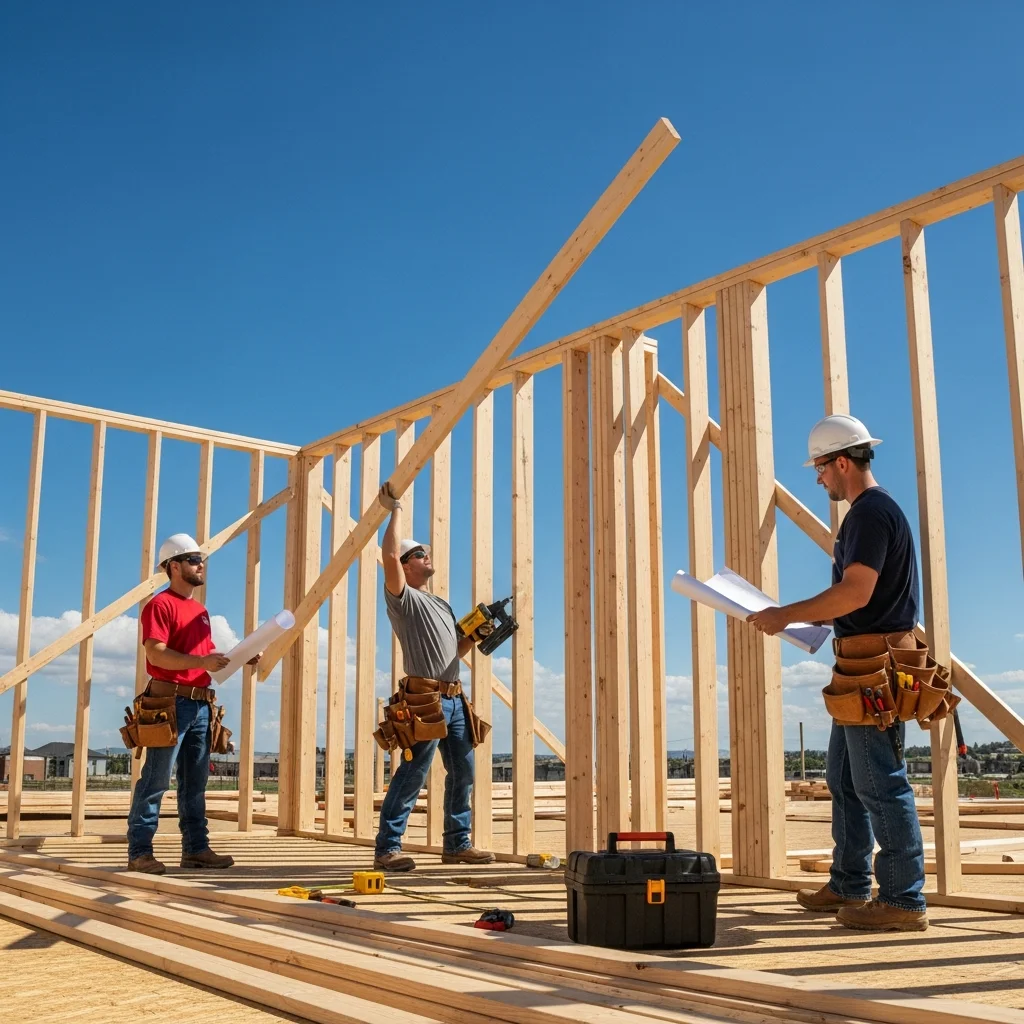
Framing is the backbone of every building project. If your estimate is off, the entire job suffers. You either eat the cost difference or have an uncomfortable conversation with the customer about change orders before the drywall even goes up.
The challenge for most framing contractors is not the physical work. It is putting together an accurate, professional estimate that wins the job without leaving money on the table. You walk the site, review the blueprints, calculate lumber needs, figure out labor hours, and then try to organize all of that into something the customer can actually understand. That process takes hours when it should take minutes.
These three templates cover the most common framing and rough carpentry scenarios you will run into: new construction, room additions, and framing repairs. Each one includes realistic line items, current 2026 material pricing, labor rates, and built-in markup formulas. Copy them, adjust the numbers for your market, and start sending professional estimates the same day you visit the job site.
📥 Get Your Free Estimate Templates
Download Projul’s free construction estimate templates - built by contractors, ready to customize. Create professional estimates in minutes and win more jobs.
Why Your Framing Estimates Matter More Than You Think
A framing estimate is usually one of the biggest line items on any residential construction project. For a typical 2,000 square foot home, the framing package alone can run $30,000 to $60,000 depending on the design and your market. When the numbers are that large, even a small percentage error creates a big dollar problem.
Homeowners and general contractors compare framing bids side by side. If your estimate looks sloppy, has vague line items, or is missing key details, you lose credibility before anyone even checks your references. On the other hand, a clean, detailed estimate shows that you know what you are doing and gives the customer confidence that there will not be ugly surprises halfway through the project.
A good framing estimate also protects you. When every line item is spelled out with quantities, unit costs, and totals, there is no room for arguments about what was included in the price. If the customer adds a window or changes a wall layout, you point to the original estimate and price the change order from there.
What to Include in Every Framing Estimate
Before we get to the templates, here is what every framing and carpentry estimate should include. Missing even one of these items is how contractors lose money on jobs.
Project Information
Start with the basics at the top of every estimate:
- Customer name and contact information
- Job site address
- Date of the estimate and expiration date (30 days is standard)
- Project description (new construction, addition, repair)
- Reference to building plans or permit numbers
- Your company name, license number, and contact information
Scope of Work
Write a clear description of exactly what your framing crew will do and, just as important, what they will not do. For example, if you are framing walls and roof but not installing sheathing, say so. If you are not responsible for the concrete foundation, make that clear. Most framing disputes come from assumptions about scope, not from the actual dollar amounts.
Material Takeoff
List every piece of lumber and hardware you need for the job. Group them into logical categories:
- Dimensional lumber (2x4, 2x6, 2x8, 2x10, 2x12)
- Engineered lumber (LVLs, I-joists, glulam beams)
- Sheathing (OSB or plywood)
- Fasteners (nails, screws, joist hangers, hurricane ties, straps)
- Adhesives and sealants
- Miscellaneous (blocking, furring strips, metal plates)
Labor
Break labor out as a separate section. Include:
- Number of crew members
- Estimated hours or days for each phase (walls, floor, roof)
- Labor rate per hour or per square foot
- Supervision and layout time
Equipment and Rentals
If the job requires rented equipment, list it separately:
- Boom lift or scaffolding
- Compressors and framing nailers (if not owned)
- Temporary bracing materials
- Crane rental for large beams or trusses
Overhead and Profit
Always include your overhead and profit as separate line items or as a combined markup percentage. Typical framing markup is 15 to 25 percent for overhead and 10 to 15 percent for profit. Never bury your profit inside inflated material costs. Keep it honest and visible.
Terms and Conditions
At the bottom of every estimate, include your payment terms, warranty information, and any exclusions. Standard framing terms include:
- Payment schedule (deposit, progress payments, final payment)
- Change order process and pricing
- Warranty period for workmanship (one year is common)
- Items not included (permits, engineering, inspections, cleanup)
Template 1: New Construction Residential Framing
This template covers a standard 2,200 square foot single-story home with a basic rectangular footprint, 8-foot walls, and a gable roof with a 6/12 pitch. Adjust quantities and rates for your specific project.
Foundation and Sill Plate
| Line Item | Quantity | Unit | Unit Cost | Total |
|---|---|---|---|---|
| Pressure-treated 2x6 sill plate | 320 | LF | $1.45 | $464 |
| Sill seal foam gasket | 320 | LF | $0.35 | $112 |
| Anchor bolt washers and nuts | 80 | EA | $1.25 | $100 |
| Sill plate installation labor | 8 | HR | $55 | $440 |
Subtotal: $1,116
Exterior Walls
| Line Item | Quantity | Unit | Unit Cost | Total |
|---|---|---|---|---|
| 2x6 studs, 8 ft (16” OC) | 420 | EA | $7.85 | $3,297 |
| 2x6 top and bottom plates | 640 | LF | $1.45 | $928 |
| 2x6 double top plate | 320 | LF | $1.45 | $464 |
| Headers (2x10 built-up) for windows and doors | 14 | EA | $48 | $672 |
| Corner assemblies and blocking | 1 | LS | $385 | $385 |
| Exterior wall sheathing (7/16” OSB, 4x8) | 88 | SHT | $28.50 | $2,508 |
| House wrap (Tyvek or equal) | 2,200 | SF | $0.22 | $484 |
| Framing nails (16d and 8d) | 8 | BX | $62 | $496 |
| Exterior wall framing labor | 120 | HR | $55 | $6,600 |
Subtotal: $15,834
Interior Walls
| Line Item | Quantity | Unit | Unit Cost | Total |
|---|---|---|---|---|
| 2x4 studs, 8 ft (16” OC) | 310 | EA | $4.95 | $1,535 |
| 2x4 plates (top, bottom, double top) | 780 | LF | $0.98 | $764 |
| Interior door headers (2x6 built-up) | 12 | EA | $32 | $384 |
| Blocking for cabinets and fixtures | 1 | LS | $280 | $280 |
| Interior wall framing labor | 64 | HR | $55 | $3,520 |
Subtotal: $6,483
Floor System
| Line Item | Quantity | Unit | Unit Cost | Total |
|---|---|---|---|---|
| 2x10 floor joists, 16” OC | 140 | EA | $18.50 | $2,590 |
| 2x10 rim board | 320 | LF | $3.25 | $1,040 |
| 3/4” tongue-and-groove OSB subfloor (4x8) | 70 | SHT | $38 | $2,660 |
| Joist hangers (2x10) | 140 | EA | $2.85 | $399 |
| Construction adhesive | 12 | TB | $6.50 | $78 |
| Floor system installation labor | 56 | HR | $55 | $3,080 |
Subtotal: $9,847
Roof Framing
| Line Item | Quantity | Unit | Unit Cost | Total |
|---|---|---|---|---|
| Pre-fabricated roof trusses (gable, 6/12 pitch) | 35 | EA | $285 | $9,975 |
| 2x6 fascia board | 320 | LF | $2.10 | $672 |
| 2x4 subfascia | 320 | LF | $0.98 | $314 |
| Roof sheathing (7/16” OSB, 4x8) | 75 | SHT | $28.50 | $2,138 |
| Hurricane ties and truss clips | 70 | EA | $2.45 | $172 |
| Ridge board or ridge beam | 55 | LF | $4.80 | $264 |
| Crane rental for truss setting | 1 | DAY | $950 | $950 |
| Roof framing labor | 72 | HR | $55 | $3,960 |
Subtotal: $18,445
Miscellaneous and Cleanup
| Line Item | Quantity | Unit | Unit Cost | Total |
|---|---|---|---|---|
| Temporary bracing materials | 1 | LS | $450 | $450 |
| Dumpster rental (framing waste) | 1 | EA | $575 | $575 |
| Layout and supervision | 16 | HR | $70 | $1,120 |
| Permits and inspections (framing only) | 1 | LS | $350 | $350 |
Subtotal: $2,495
Summary
| Category | Amount |
|---|---|
| Foundation and sill plate | $1,116 |
| Exterior walls | $15,834 |
| Interior walls | $6,483 |
| Floor system | $9,847 |
| Roof framing | $18,445 |
| Miscellaneous and cleanup | $2,495 |
| Subtotal | $54,220 |
| Overhead (18%) | $9,760 |
| Profit (12%) | $6,506 |
| Total Estimate | $70,486 |
Template 2: Room Addition Framing (16x20 Single-Story)
This template covers a 320 square foot room addition tied into an existing structure. The scope includes foundation sill work, new exterior walls, tying into the existing roof, and a new floor system. It assumes a concrete foundation is already poured.
Sill Plate and Foundation Connection
| Line Item | Quantity | Unit | Unit Cost | Total |
|---|---|---|---|---|
| Pressure-treated 2x6 sill plate | 72 | LF | $1.45 | $104 |
| Sill seal gasket | 72 | LF | $0.35 | $25 |
| Anchor bolt hardware | 18 | EA | $1.25 | $23 |
| Sill plate installation labor | 3 | HR | $55 | $165 |
Subtotal: $317
Exterior Walls (3 New Walls)
| Line Item | Quantity | Unit | Unit Cost | Total |
|---|---|---|---|---|
| 2x6 studs, 8 ft | 85 | EA | $7.85 | $667 |
| 2x6 plates (top, bottom, double top) | 168 | LF | $1.45 | $244 |
| Headers for windows and exterior door | 4 | EA | $48 | $192 |
| Corner posts and blocking | 1 | LS | $175 | $175 |
| 7/16” OSB sheathing (4x8) | 22 | SHT | $28.50 | $627 |
| House wrap | 480 | SF | $0.22 | $106 |
| Framing nails | 3 | BX | $62 | $186 |
| Wall framing labor | 32 | HR | $55 | $1,760 |
Subtotal: $3,957
Existing Wall Demolition and Tie-In
| Line Item | Quantity | Unit | Unit Cost | Total |
|---|---|---|---|---|
| Remove existing siding and sheathing section | 1 | LS | $450 | $450 |
| Temporary support and shoring | 1 | LS | $380 | $380 |
| New header for opening to existing house | 1 | EA | $285 | $285 |
| Tie-in framing and flashing prep | 8 | HR | $55 | $440 |
Subtotal: $1,555
Floor System
| Line Item | Quantity | Unit | Unit Cost | Total |
|---|---|---|---|---|
| 2x10 floor joists, 16” OC | 22 | EA | $18.50 | $407 |
| 2x10 rim board | 72 | LF | $3.25 | $234 |
| 3/4” T&G OSB subfloor (4x8) | 11 | SHT | $38 | $418 |
| Joist hangers | 22 | EA | $2.85 | $63 |
| Construction adhesive | 4 | TB | $6.50 | $26 |
| Floor framing labor | 12 | HR | $55 | $660 |
Subtotal: $1,808
Roof Extension
| Line Item | Quantity | Unit | Unit Cost | Total |
|---|---|---|---|---|
| 2x8 rafters (new section) | 18 | EA | $16.75 | $302 |
| Ridge board extension | 20 | LF | $4.80 | $96 |
| Roof sheathing (7/16” OSB) | 14 | SHT | $28.50 | $399 |
| Fascia and subfascia | 56 | LF | $3.08 | $172 |
| Hurricane ties | 18 | EA | $2.45 | $44 |
| Roof framing labor | 24 | HR | $55 | $1,320 |
Subtotal: $2,333
Miscellaneous
| Line Item | Quantity | Unit | Unit Cost | Total |
|---|---|---|---|---|
| Temporary bracing | 1 | LS | $175 | $175 |
| Debris removal | 1 | LS | $350 | $350 |
| Layout and supervision | 8 | HR | $70 | $560 |
Subtotal: $1,085
Summary
| Category | Amount |
|---|---|
| Sill plate and foundation | $317 |
| Exterior walls | $3,957 |
| Demolition and tie-in | $1,555 |
| Floor system | $1,808 |
| Roof extension | $2,333 |
| Miscellaneous | $1,085 |
| Subtotal | $11,055 |
| Overhead (18%) | $1,990 |
| Profit (12%) | $1,327 |
| Total Estimate | $14,372 |
Template 3: Framing Repair and Structural Fix
This template is for common residential framing repairs: rotted sill plates, damaged wall studs, sagging floor joists, and minor structural fixes. These jobs are smaller in scale but often more complex because you are working inside an existing structure.
Assessment and Access
| Line Item | Quantity | Unit | Unit Cost | Total |
|---|---|---|---|---|
| On-site structural assessment | 1 | EA | $250 | $250 |
| Remove drywall or finish material for access | 1 | LS | $380 | $380 |
| Temporary shoring and support | 1 | LS | $425 | $425 |
Subtotal: $1,055
Sill Plate Replacement
| Line Item | Quantity | Unit | Unit Cost | Total |
|---|---|---|---|---|
| Remove rotted sill plate section | 24 | LF | $8.50 | $204 |
| New pressure-treated 2x6 sill plate | 24 | LF | $1.45 | $35 |
| Sill seal gasket | 24 | LF | $0.35 | $8 |
| Epoxy anchors for new sill attachment | 6 | EA | $12.50 | $75 |
| Sill plate replacement labor | 8 | HR | $60 | $480 |
Subtotal: $802
Wall Stud Repair
| Line Item | Quantity | Unit | Unit Cost | Total |
|---|---|---|---|---|
| Sister or replace damaged 2x4 studs | 8 | EA | $4.95 | $40 |
| Sister or replace damaged 2x6 studs | 4 | EA | $7.85 | $31 |
| New blocking between studs | 12 | EA | $3.50 | $42 |
| Simpson Strong-Tie connectors | 12 | EA | $4.25 | $51 |
| Wall stud repair labor | 12 | HR | $60 | $720 |
Subtotal: $884
Floor Joist Repair
| Line Item | Quantity | Unit | Unit Cost | Total |
|---|---|---|---|---|
| Sister new 2x10 alongside damaged joists | 6 | EA | $18.50 | $111 |
| Joist hangers (replacement) | 6 | EA | $2.85 | $17 |
| New blocking between joists | 8 | EA | $4.50 | $36 |
| Steel jack posts (adjustable, permanent) | 2 | EA | $85 | $170 |
| LVL beam for added support (if needed) | 12 | LF | $14.50 | $174 |
| Floor joist repair labor | 16 | HR | $60 | $960 |
Subtotal: $1,468
Miscellaneous and Cleanup
| Line Item | Quantity | Unit | Unit Cost | Total |
|---|---|---|---|---|
| Debris removal and disposal | 1 | LS | $225 | $225 |
| Replace removed drywall (patch only) | 1 | LS | $320 | $320 |
| Final inspection coordination | 2 | HR | $60 | $120 |
Subtotal: $665
Summary
| Category | Amount |
|---|---|
| Assessment and access | $1,055 |
| Sill plate replacement | $802 |
| Wall stud repair | $884 |
| Floor joist repair | $1,468 |
| Miscellaneous and cleanup | $665 |
| Subtotal | $4,874 |
| Overhead (18%) | $877 |
| Profit (15%) | $731 |
| Total Estimate | $6,482 |
Tips for Accurate Framing Estimates
Getting framing estimates right takes practice, but these tips will help you avoid the most common mistakes.
Always Do a Detailed Lumber Takeoff
Never ballpark lumber quantities. Go through the plans room by room and count every stud, plate, header, joist, and rafter. A detailed takeoff takes more time upfront but saves you from expensive surprises once framing starts. If you are guessing at lumber quantities, you are guessing at your profit margin too.
Account for Lumber Waste
Even the best framing crews generate waste. Warped studs, bad cuts, and damaged boards are part of every job. Add a 10 to 15 percent waste factor to your material takeoff. For complex roofs with lots of angles and valleys, bump that up to 15 to 20 percent.
Track Lumber Prices Weekly
Lumber prices in 2026 remain unpredictable. A 2x4 stud that costs $4.95 this week might cost $5.50 next month. Build a habit of checking prices at your supplier every week and updating your template accordingly. Some contractors add a materials escalation clause to their estimates that allows for price adjustments if lumber costs change more than 10 percent between the estimate date and the start of work.
Price Complexity, Not Just Square Footage
A 2,000 square foot home with a simple rectangular footprint frames much faster than a 2,000 square foot home with bump-outs, bay windows, tray ceilings, and a complex roofline. If you price everything at the same per-square-foot rate, you will lose money on complex jobs and overprice simple ones. Create separate rate tiers for basic, moderate, and complex framing.
Include Photos and Diagrams
For repair work especially, include photos of the damaged areas in your estimate. This shows the customer exactly what you found and justifies the repair costs. For new construction, attach a copy of the relevant plan pages with your framing scope highlighted.
Set Clear Exclusions
Every framing estimate should clearly state what is not included. Common exclusions for framing contractors:
- Concrete and foundation work
- Roofing materials and installation (shingles, underlayment)
- Windows and exterior doors (supply)
- Insulation
- Electrical and plumbing rough-in
- Drywall and interior finishes
- Final cleanup beyond framing debris
Writing these out prevents scope confusion and protects you from doing work you did not price.
Use a Change Order Process
No framing job goes exactly according to plan. Walls move, windows get added, ceiling heights change. Have a written change order process in your estimate terms. When the scope changes, document it, price it, get a signature, and then do the work. This one habit will save you more money than anything else on this list.
Common Framing Estimate Mistakes to Avoid
Underestimating Labor Hours
New framers especially tend to underestimate how long each phase takes. A four-person crew can frame the walls of a 2,200 square foot home in about three to four days, but that does not include layout, plumbing, squaring, sheathing, or fixing mistakes. Always add a buffer for real-world conditions like bad weather, material delays, and inspection callbacks.
Forgetting Small Hardware Costs
Joist hangers, hurricane ties, anchor bolts, nailing plates, and construction adhesive add up fast. On a full house framing job, hardware and fasteners can easily total $1,500 to $3,000. If you do not include them in your estimate, that cost comes straight out of your profit.
Not Accounting for Site Conditions
A flat, clear lot with easy access frames differently than a hillside lot where your lumber delivery cannot get within 100 feet of the foundation. Factor in any extra labor or equipment needed for difficult site access, steep terrain, or tight lot lines next to existing structures.
Ignoring Overhead
Your overhead is real money. Truck payments, insurance, tool replacement, office expenses, and unbilled time between jobs all need to be covered by every estimate you send. If you are not adding at least 15 to 20 percent overhead to your direct costs, you are working for less than you think.
How Projul Helps Framing Contractors Build Better Estimates
Spreadsheet templates are a solid starting point, but they have limits. As your framing business grows, you need a system that can keep up with the volume of estimates you send, track which ones convert to jobs, and store your pricing so you are not rebuilding every estimate from scratch.
Projul’s estimating tools are built specifically for construction contractors. Here is how they help framing crews:
Save your framing line items as reusable templates. Build your lumber packages, labor rates, and hardware lists once, then pull them into any new estimate with a few clicks. When lumber prices change, update your template and every future estimate uses the new numbers automatically.
Send professional estimates from the field. Projul runs on your phone and tablet, so you can build and send an estimate right from the job site. No more driving back to the office to type everything into a spreadsheet. The customer gets a clean, branded PDF while you are still in their driveway.
Track every estimate from sent to signed. Projul shows you which estimates are pending, which ones the customer has opened, and which ones converted to jobs. That visibility helps you follow up at the right time instead of guessing whether the homeowner even looked at your bid.
Connect your estimate to the job. When an estimate gets approved, Projul turns it into a job with all the details already filled in. Your schedule, materials list, and budget are ready to go without re-entering anything.
Keep your pricing consistent across your crew. If you have multiple estimators or project managers, Projul makes sure everyone is using the same rates and markup formulas. No more surprises when one person prices a job at $12 per square foot and another uses $16.
Ready to Send Better Framing Estimates?
These templates will get you started, but if you are tired of copying spreadsheets and want a system that grows with your business, give Projul a try.
Projul offers three plans designed for contractors at every stage. Every plan includes estimating tools. Check out pricing to find the right fit.
📥 Get Your Free Estimate Templates
Download Projul’s free construction estimate templates - built by contractors, ready to customize. Create professional estimates in minutes and win more jobs.
Frequently Asked Questions
How much does residential framing cost per square foot in 2026?
What is the difference between a framing estimate and a framing bid?
How do I calculate how much lumber I need for a framing job?
Should I charge for framing by the square foot or by the hour?
How often should I update my framing estimate template?
Related Articles

Construction Bidding Strategies: How to Win More Jobs at Better Margins
Most contractors lose bids not because their price is wrong, but because their process is. These bidding strategies...
Read More →
Construction Estimating for Beginners: A Plain-English Guide
Construction estimating does not have to be complicated. This guide breaks it down into plain English so you can create...
Read More →
Free Cabinet and Countertop Estimate Templates
Three ready-to-use cabinet and countertop estimate templates with realistic line items, material costs, labor rates,...
Read More →