
Free Insulation Estimate Templates (2026)
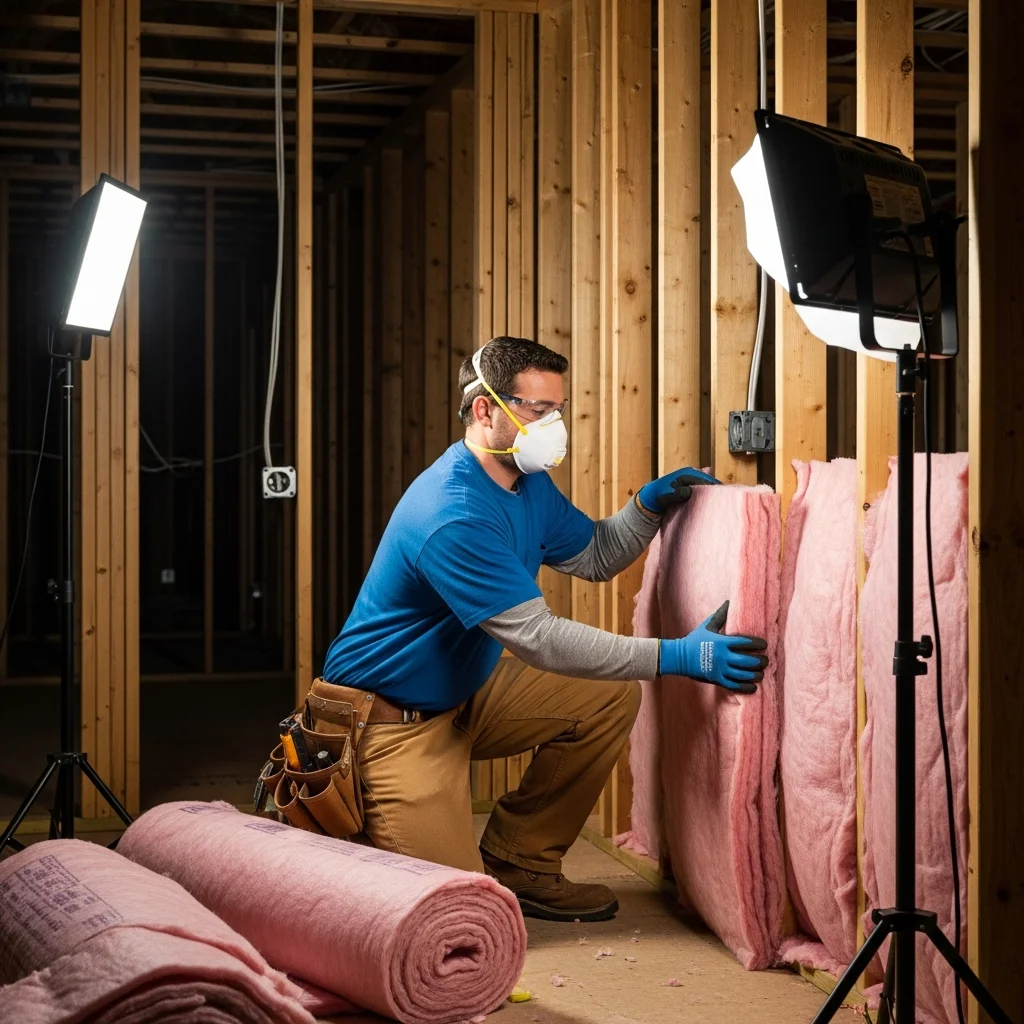
Insulation is one of those trades where the estimate can make or break your profit. The materials are relatively affordable, but the labor, access conditions, and preparation work vary wildly from one job to the next. A new construction attic with open framing is a completely different animal than a retrofit wall injection in a 1960s ranch house.
Most insulation contractors learn this the hard way. They quote a simple price-per-square-foot number over the phone, show up to find a cramped attic full of HVAC ductwork and junction boxes, and end up spending twice as long as they planned. The job that was supposed to make $2,000 in profit barely breaks even.
Templates solve this problem by forcing you to think through every category of work before you give the customer a number. When you have a checklist of line items in front of you, you are far less likely to miss the air sealing work, the vapor barrier, the ductwork rerouting, or the old insulation removal that turns a profitable job into a loss.
This guide includes three insulation estimate templates: one for residential new construction, one for residential retrofit and upgrades, and one for commercial insulation projects. Each includes 2026 pricing that you can adjust for your local market.
Get Your Free Estimate Templates
Download Projul’s free construction estimate templates, built by contractors, ready to customize. Create professional estimates in minutes and win more jobs.
What Makes Insulation Estimates Tricky
Insulation seems straightforward on the surface. Measure the area, pick the material, calculate the price. But several factors can throw off your numbers:
Access conditions. Attic work in a home with full decking, low pitch, and HVAC in the attic takes 3 to 4 times longer than the same attic with open framing and standing room. Wall injection in a brick home is harder than in a vinyl-sided home. Your estimate needs to reflect the actual working conditions, not a textbook scenario.
Existing insulation removal. Many retrofit jobs require removing old, damaged, or contaminated insulation before installing new material. Removal adds significant labor cost and disposal fees. If the old insulation contains vermiculite (which can contain asbestos), testing and abatement add thousands to the job.
Air sealing. Insulation without air sealing is like wearing a sweater full of holes. Most energy codes now require air sealing as part of insulation work. Sealing penetrations, gaps around wiring and plumbing, top plates, and recessed lights adds time and material that many contractors forget to price.
Vapor barriers. Depending on your climate zone and the insulation type, you may need a vapor barrier or vapor retarder. In cold climates, the vapor barrier goes on the warm side (interior). In hot, humid climates, it goes on the exterior or is not needed at all. Installing the wrong vapor barrier in the wrong location can cause moisture damage and mold.
Code compliance and inspections. Energy codes are getting stricter every cycle. The 2024 IECC requires higher R-values and better air sealing than previous versions. Your estimate should reflect current code requirements, not what was standard five years ago.
Template 1: Residential New Construction Insulation
This template covers insulation for a new single-family home, approximately 2,200 square feet of living space, two stories, with standard wood framing.
Attic Insulation
| Line Item | Unit | Qty | Unit Cost | Total |
|---|---|---|---|---|
| Blown-in fiberglass (R-49, 16” depth) | sq ft | 1,100 | $1.35 | $1,485 |
| Attic access insulation dam | each | 1 | $75 | $75 |
| Insulated attic hatch cover | each | 1 | $125 | $125 |
| Attic ventilation baffles (per rafter bay) | each | 40 | $3.50 | $140 |
| Air sealing (top plates, penetrations, recessed lights) | sq ft | 1,100 | $0.45 | $495 |
Subtotal: $2,320
Exterior Wall Insulation
| Line Item | Unit | Qty | Unit Cost | Total |
|---|---|---|---|---|
| Fiberglass batt insulation (R-21, 2x6 walls) | sq ft | 2,800 | $1.10 | $3,080 |
| Continuous rigid foam sheathing (R-5, 1” XPS) | sq ft | 2,800 | $1.25 | $3,500 |
| Tape and seal rigid foam seams | sq ft | 2,800 | $0.15 | $420 |
| Header and sill plate insulation | linear ft | 200 | $2.50 | $500 |
| Rim joist spray foam (closed-cell, 2”) | sq ft | 160 | $3.50 | $560 |
Subtotal: $8,060
Floor and Crawl Space
| Line Item | Unit | Qty | Unit Cost | Total |
|---|---|---|---|---|
| Crawl space encapsulation vapor barrier (20 mil) | sq ft | 1,200 | $1.00 | $1,200 |
| Crawl space wall insulation (R-10 rigid foam) | sq ft | 400 | $2.25 | $900 |
| Seal and tape vapor barrier seams | linear ft | 300 | $0.75 | $225 |
| Rim joist spray foam (crawl space) | sq ft | 80 | $3.50 | $280 |
Subtotal: $2,605
Garage and Bonus Room
| Line Item | Unit | Qty | Unit Cost | Total |
|---|---|---|---|---|
| Garage ceiling insulation (R-30 batts) | sq ft | 500 | $1.40 | $700 |
| Garage-to-house wall insulation (R-21 batts) | sq ft | 200 | $1.10 | $220 |
| Garage-to-house air sealing | sq ft | 200 | $0.50 | $100 |
| Fire-rated assembly at garage separation | linear ft | 60 | $4.00 | $240 |
Subtotal: $1,260
Miscellaneous
| Line Item | Unit | Qty | Unit Cost | Total |
|---|---|---|---|---|
| Blower door test (pre-drywall) | each | 1 | $350 | $350 |
| Energy code documentation and certificates | each | 1 | $150 | $150 |
| Material delivery | each | 1 | $200 | $200 |
| Waste removal and cleanup | each | 1 | $300 | $300 |
Subtotal: $1,000
Summary for New Construction Insulation
| Category | Total |
|---|---|
| Attic Insulation | $2,320 |
| Exterior Walls | $8,060 |
| Floor and Crawl Space | $2,605 |
| Garage and Bonus Room | $1,260 |
| Miscellaneous | $1,000 |
| Subtotal | $15,245 |
| Overhead (10%) | $1,525 |
| Profit (15%) | $2,516 |
| Total Estimate | $19,286 |
Template 2: Residential Retrofit and Upgrade
Retrofit insulation is where most insulation contractors make their money. Homeowners with high energy bills, drafty rooms, or ice dam problems are motivated buyers who will pay for a solution. This template covers a typical retrofit project on a 1,800-square-foot home built in the 1980s with insufficient insulation.
Existing Insulation Assessment and Removal
| Line Item | Unit | Qty | Unit Cost | Total |
|---|---|---|---|---|
| Home energy audit and thermal imaging | each | 1 | $400 | $400 |
| Blower door test (baseline) | each | 1 | $350 | $350 |
| Remove existing attic insulation (fiberglass batts, damaged) | sq ft | 900 | $1.25 | $1,125 |
| Bag and dispose of old insulation | bag | 30 | $15.00 | $450 |
| Hazardous material testing (if vermiculite suspected) | each | 1 | $250 | $250 |
Subtotal: $2,575
Air Sealing (Retrofit)
| Line Item | Unit | Qty | Unit Cost | Total |
|---|---|---|---|---|
| Seal electrical and plumbing penetrations | each | 45 | $12.00 | $540 |
| Seal recessed light fixtures (IC-rated covers) | each | 12 | $25.00 | $300 |
| Seal top plates and partition walls | linear ft | 250 | $3.00 | $750 |
| Seal around chimney chase (fire-rated materials) | each | 1 | $200 | $200 |
| Seal ductwork boots and connections | each | 15 | $18.00 | $270 |
| Weatherstrip attic hatch | each | 1 | $85 | $85 |
| Caulk and foam window/door frames (interior) | each | 18 | $15.00 | $270 |
Subtotal: $2,415
Attic Insulation Upgrade
| Line Item | Unit | Qty | Unit Cost | Total |
|---|---|---|---|---|
| Blown-in cellulose (R-49, 14” depth) | sq ft | 900 | $1.40 | $1,260 |
| Ventilation baffles (replace missing) | each | 24 | $3.50 | $84 |
| Insulated attic hatch | each | 1 | $125 | $125 |
| Protect junction boxes and fixtures | each | 20 | $8.00 | $160 |
Subtotal: $1,629
Wall Insulation Upgrade
| Line Item | Unit | Qty | Unit Cost | Total |
|---|---|---|---|---|
| Dense-pack cellulose injection (2x4 walls) | sq ft | 1,600 | $2.25 | $3,600 |
| Drill and patch holes (vinyl siding removal/replacement) | each | 80 | $22.00 | $1,760 |
| Drill and patch holes (interior drywall, where needed) | each | 12 | $35.00 | $420 |
| Rim joist spray foam (closed-cell, 2”) | sq ft | 120 | $3.50 | $420 |
Subtotal: $6,200
Crawl Space Improvement
| Line Item | Unit | Qty | Unit Cost | Total |
|---|---|---|---|---|
| Clean and prep crawl space | sq ft | 800 | $0.50 | $400 |
| Install vapor barrier (20 mil poly) | sq ft | 800 | $1.00 | $800 |
| Insulate crawl space walls (R-10 rigid foam) | sq ft | 300 | $2.25 | $675 |
| Seal vents (converting to sealed crawl space) | each | 6 | $45.00 | $270 |
| Dehumidifier (if needed) | each | 1 | $1,200 | $1,200 |
Subtotal: $3,345
Post-Installation Verification
| Line Item | Unit | Qty | Unit Cost | Total |
|---|---|---|---|---|
| Blower door test (post-installation) | each | 1 | $350 | $350 |
| Thermal imaging verification | each | 1 | $200 | $200 |
| Energy code compliance certificate | each | 1 | $100 | $100 |
| Customer report with before/after results | each | 1 | $0 | $0 |
Subtotal: $650
Summary for Retrofit Insulation
| Category | Total |
|---|---|
| Assessment and Removal | $2,575 |
| Air Sealing | $2,415 |
| Attic Insulation | $1,629 |
| Wall Insulation | $6,200 |
| Crawl Space | $3,345 |
| Verification | $650 |
| Subtotal | $16,814 |
| Overhead (10%) | $1,681 |
| Profit (18%) | $3,329 |
| Total Estimate | $21,824 |
Template 3: Commercial Insulation
Commercial insulation projects involve larger areas, different materials, and stricter code requirements than residential work. This template covers a typical 10,000-square-foot commercial building (office or light industrial) with steel framing and flat roof.
Roof/Ceiling Insulation
| Line Item | Unit | Qty | Unit Cost | Total |
|---|---|---|---|---|
| Rigid polyiso board (R-30, 5” total, two layers) | sq ft | 10,000 | $3.25 | $32,500 |
| Adhesive and mechanical fasteners | sq ft | 10,000 | $0.40 | $4,000 |
| Vapor retarder (if required by design) | sq ft | 10,000 | $0.35 | $3,500 |
| Labor for roof insulation installation | sq ft | 10,000 | $1.10 | $11,000 |
Subtotal: $51,000
Exterior Wall Insulation
| Line Item | Unit | Qty | Unit Cost | Total |
|---|---|---|---|---|
| Continuous insulation (CI) rigid foam (R-13, 2.5” polyiso) | sq ft | 6,000 | $2.50 | $15,000 |
| Metal Z-girt framing for CI attachment | sq ft | 6,000 | $0.85 | $5,100 |
| Cavity insulation (R-13 mineral wool batts) | sq ft | 6,000 | $1.40 | $8,400 |
| Air barrier membrane | sq ft | 6,000 | $0.90 | $5,400 |
| Sealant at joints and penetrations | linear ft | 500 | $3.50 | $1,750 |
Subtotal: $35,650
Below-Grade and Slab
| Line Item | Unit | Qty | Unit Cost | Total |
|---|---|---|---|---|
| Foundation wall insulation (R-10 XPS, 2”) | sq ft | 1,200 | $2.00 | $2,400 |
| Under-slab insulation (R-10 XPS, 2”) | sq ft | 10,000 | $1.50 | $15,000 |
| Vapor barrier below slab (15 mil) | sq ft | 10,000 | $0.25 | $2,500 |
| Slab edge insulation | linear ft | 400 | $4.00 | $1,600 |
| Protection board for below-grade | sq ft | 1,200 | $0.75 | $900 |
Subtotal: $22,400
Mechanical Room and Specialty
| Line Item | Unit | Qty | Unit Cost | Total |
|---|---|---|---|---|
| Pipe insulation (hot water, 1” fiberglass) | linear ft | 300 | $6.50 | $1,950 |
| Duct insulation (R-8 wrap) | sq ft | 2,000 | $2.25 | $4,500 |
| Duct sealing (mastic) | sq ft | 2,000 | $0.60 | $1,200 |
| Fire-stop assemblies at penetrations | each | 25 | $85.00 | $2,125 |
| Acoustic insulation (interior partition walls) | sq ft | 1,500 | $1.50 | $2,250 |
Subtotal: $12,025
Project Management and Testing
| Line Item | Unit | Qty | Unit Cost | Total |
|---|---|---|---|---|
| Submittals and shop drawings | lump sum | 1 | $1,500 | $1,500 |
| On-site supervision | days | 15 | $450 | $6,750 |
| Third-party inspection and testing | each | 3 | $500 | $1,500 |
| As-built documentation | each | 1 | $800 | $800 |
| Waste disposal and site cleanup | lump sum | 1 | $1,200 | $1,200 |
| Equipment rental (scaffolding, lifts) | weeks | 3 | $1,500 | $4,500 |
Subtotal: $16,250
Summary for Commercial Insulation
| Category | Total |
|---|---|
| Roof/Ceiling Insulation | $51,000 |
| Exterior Walls | $35,650 |
| Below-Grade and Slab | $22,400 |
| Mechanical and Specialty | $12,025 |
| Project Management | $16,250 |
| Subtotal | $137,325 |
| Overhead (8%) | $10,986 |
| Profit (12%) | $17,797 |
| Total Estimate | $166,108 |
Tips for Accurate Insulation Estimates
1. Measure everything yourself. Do not rely on blueprints or the homeowner’s square footage estimate. Measure attic floor area, wall sections, and crawl spaces. Note ceiling heights, framing type (2x4 vs 2x6), existing insulation type and depth, and any obstructions.
2. Account for waste. Batt insulation has 3% to 5% waste. Blown-in insulation has 5% to 10% waste depending on the space. Spray foam typically has 10% to 15% overspray waste. Build waste into your material quantities.
3. Price air sealing separately. Many contractors bundle air sealing with insulation and then skip it when time gets tight. By pricing it as separate line items, you commit to doing the work and the customer sees its value. Air sealing alone can reduce energy loss by 15% to 25%.
4. Know your R-value requirements. Energy codes vary by climate zone and jurisdiction. What passes in Zone 3 (Southeast) will fail an inspection in Zone 5 (Midwest). Pull the current code requirements before quoting.
5. Check for rebates and incentives. Many utility companies offer rebates for insulation upgrades. Federal tax credits under the Inflation Reduction Act cover up to $1,600 for insulation and air sealing. Mentioning available rebates in your estimate can help close the sale because the customer’s effective cost drops.
6. Photograph everything before you start. Take photos of existing conditions, especially in attics and crawl spaces. This protects you if there is pre-existing damage, mold, or code violations that the homeowner later blames on your work.
7. Include a clear scope statement. Specify exactly what is included and what is not. For example: “This estimate covers insulation of the attic floor and air sealing of attic penetrations. It does not include roof insulation, wall insulation, or HVAC modifications.” Clear scope statements prevent arguments about what was included.
8. Build in time for access preparation. Retrofit attics often have personal storage, old ductwork, and wiring that needs to be moved before you can insulate. Wall injection requires removing and replacing siding sections. If your estimate assumes a clear work area and the reality is different, you lose money.
Common Mistakes in Insulation Estimates
Quoting by phone without seeing the job. Every attic, crawl space, and wall cavity is different. A 1,200-square-foot attic with open access is not the same as a 1,200-square-foot attic with knee walls, dormers, and HVAC in the way. Visit the site before quoting.
Ignoring air sealing. Insulation without air sealing only does half the job. Modern energy codes require both. If you bid insulation only and the inspection fails for air leakage, you are going back to fix it for free.
Not checking for moisture problems. Installing insulation over a moisture problem makes things worse, not better. Check for roof leaks, plumbing leaks, and high humidity before insulating. If you find moisture issues, address them first or exclude them from your scope with clear documentation.
Using the wrong insulation for the application. Fiberglass batts in a crawl space with moisture problems will sag, compress, and grow mold. Cellulose in a damp environment absorbs water and loses R-value. Closed-cell spray foam on the wrong side of the building assembly can trap moisture. Match the material to the conditions.
Forgetting about electrical and plumbing coordination. In new construction, insulation goes in after rough-in but before drywall. If the electrician or plumber is behind schedule, your crew shows up with nothing to do. In your estimate, note that the price assumes rough-in is complete.
R-Value Requirements by Climate Zone
Understanding R-value requirements is the foundation of every insulation estimate. If you undershoot the R-value, the job fails inspection. If you overshoot it without explaining the value to the customer, you lose the bid to a cheaper competitor. The key is knowing exactly what the code requires for each climate zone and building component, then pricing accordingly.
The International Energy Conservation Code (IECC) divides the United States into eight climate zones, ranging from Zone 1 (hot and humid, like southern Florida and Hawaii) to Zone 8 (extremely cold, like northern Alaska). Most insulation contractors work primarily in Zones 3 through 6, which cover the majority of the continental U.S. Each zone has specific minimum R-value requirements for ceilings, walls, floors, and basements.
Climate Zones 1 and 2 (Hot and Humid)
These zones cover the Deep South, southern Texas, and southern Florida. The primary concern here is keeping conditioned air inside and blocking heat gain from the exterior. Under the 2024 IECC, the minimum requirements are:
- Ceiling: R-38
- Wood frame wall: R-13
- Mass wall (above grade): R-4 to R-8
- Floor over unconditioned space: R-13
- Basement wall: R-0 (not required in most cases)
- Slab edge: R-0
In these zones, air sealing and radiant barriers often matter more than raw R-value. A radiant barrier in the attic can reduce cooling costs by 5% to 10% in hot climates, and many customers in these areas will pay for one if you include it as an option in your estimate.
Climate Zones 3 and 4 (Mixed)
Zone 3 covers the Southeast and lower Midwest. Zone 4 covers the mid-Atlantic, central Midwest, and parts of the Pacific Northwest. These are transition zones where both heating and cooling matter. The 2024 IECC requirements are:
- Ceiling: R-49 (Zone 3) to R-49 (Zone 4)
- Wood frame wall: R-20 or R-13 + R-5 continuous insulation (CI)
- Mass wall: R-8 to R-13
- Floor: R-19 (Zone 3) to R-30 (Zone 4)
- Basement wall: R-5 to R-10
- Slab edge: R-0 (Zone 3) to R-10 (Zone 4)
Zone 4 is where estimates start getting more complex. Continuous insulation on exterior walls is increasingly required, which means your wall estimate needs to include both cavity insulation and a layer of rigid foam or mineral wool on the exterior. This adds material cost and labor for attachment and flashing details.
Climate Zones 5 and 6 (Cold)
Zone 5 covers the northern Midwest and Northeast. Zone 6 covers the northern tier states, parts of Montana, Wisconsin, Minnesota, and New England. Cold climate insulation is all about preventing heat loss and managing moisture. Requirements under the 2024 IECC include:
- Ceiling: R-49 to R-60
- Wood frame wall: R-20 + R-5 CI or R-13 + R-10 CI
- Mass wall: R-15 to R-19
- Floor: R-30 (Zone 5) to R-38 (Zone 6)
- Basement wall: R-15 to R-20
- Slab edge: R-10 to R-15
In Zones 5 and 6, continuous insulation on walls is essentially mandatory. Your estimates for these zones should always include a line item for CI material, attachment hardware, and the extra labor required. Basement insulation is also a major line item because uninsulated basements in cold climates account for 20% to 30% of total heat loss.
Climate Zones 7 and 8 (Very Cold and Subarctic)
Zone 7 covers parts of northern Minnesota, Wisconsin, Maine, and the upper mountain states. Zone 8 covers interior Alaska. Requirements are the most stringent:
- Ceiling: R-60
- Wood frame wall: R-20 + R-10 CI or R-13 + R-15 CI
- Mass wall: R-19 to R-25
- Floor: R-38 to R-49
- Basement wall: R-20 to R-25
- Slab edge: R-15 to R-20
Jobs in these zones have significantly higher material costs. A full home insulation estimate in Zone 7 will typically run 40% to 60% more than the same house in Zone 3, purely from the additional material thickness and CI requirements. Make sure your estimates reflect these higher material quantities.
Why This Matters for Your Estimates
Knowing your climate zone requirements lets you price accurately from the start. When a customer asks why your estimate is higher than a competitor’s, you can point to specific code requirements. If the competitor is bidding R-30 in an attic that requires R-49, either they will fail inspection or they are cutting corners. Use your knowledge of code requirements as a sales tool, not just a compliance checkbox.
Insulation Material Cost Comparison
Choosing the right insulation material for each application directly affects your estimate’s accuracy and your profit margins. Each material has different costs per square foot, different R-values per inch, and different labor requirements. Here is a detailed comparison of the most common insulation materials used in residential and commercial projects in 2026.
Fiberglass Batts
Fiberglass batts remain the most widely used insulation material in residential construction because of their low cost and ease of installation. They come in pre-cut widths designed to fit standard framing cavities.
- Material cost: $0.30 to $0.60 per square foot (varies by R-value and facing)
- Installed cost: $0.80 to $1.50 per square foot
- R-value per inch: R-3.1 to R-3.7
- Best applications: Standard wall cavities, attic floors (with air sealing), soundproofing
- Limitations: Loses effectiveness if compressed, does not stop air leakage, requires a separate vapor retarder in some climates
- Labor notes: Fast installation in open framing. Significantly slower in retrofit or around obstructions. Budget 800 to 1,200 square feet per worker per day for new construction walls.
Blown-in Fiberglass
Blown-in fiberglass uses loose fiberglass fibers installed with a blowing machine. It fills irregular spaces better than batts and provides more consistent coverage.
- Material cost: $0.40 to $0.70 per square foot (at R-38 depth)
- Installed cost: $1.00 to $1.70 per square foot
- R-value per inch: R-2.2 to R-2.7 (settled)
- Best applications: Open attic floors, topping off existing insulation
- Limitations: Settles 10% to 15% over time (install to compensate), not suitable for wall cavities without netting
- Labor notes: High production rates in open attics. A two-person crew can insulate a 1,200-square-foot attic in 2 to 3 hours.
Blown-in Cellulose
Cellulose insulation is made from recycled paper treated with fire retardants. It is denser than blown fiberglass and provides better air sealing properties.
- Material cost: $0.35 to $0.55 per square foot (at R-38 depth)
- Installed cost: $1.00 to $1.80 per square foot
- R-value per inch: R-3.2 to R-3.8
- Best applications: Attic floors, dense-pack wall cavities (retrofit), soundproofing
- Limitations: Absorbs moisture if exposed to leaks (must fix water issues first), heavier than fiberglass (check ceiling load capacity in older homes)
- Labor notes: Dense-pack wall injection is skilled work. Budget 400 to 600 square feet of wall area per worker per day for retrofit injection.
Open-Cell Spray Foam
Open-cell spray foam expands to roughly 100 times its liquid volume, filling every crack and gap in the cavity. It provides excellent air sealing but lower R-value per inch than closed-cell.
- Material cost: $0.40 to $0.70 per board foot
- Installed cost: $1.20 to $2.00 per square foot (at 3.5 inches, R-13)
- R-value per inch: R-3.5 to R-3.8
- Best applications: Wall cavities (new construction), cathedral ceilings, bonus rooms, areas where air sealing is critical
- Limitations: Not a vapor barrier (needs a separate one in cold climates), requires professional equipment and training, temperature-sensitive application
- Labor notes: Requires trained two-person spray teams. Equipment setup and cleanup add 1 to 2 hours per job. Budget 1,000 to 1,500 square feet per day for wall applications.
Closed-Cell Spray Foam
Closed-cell spray foam delivers the highest R-value per inch of any common insulation material. It also acts as a vapor barrier and adds structural rigidity to the wall assembly.
- Material cost: $0.90 to $1.50 per board foot
- Installed cost: $2.50 to $4.50 per square foot (at 2 inches, R-13)
- R-value per inch: R-6.5 to R-7.0
- Best applications: Rim joists, crawl spaces, below-grade walls, areas with severe moisture concerns, thin wall assemblies where space is limited
- Limitations: Most expensive option, requires professional equipment, off-gassing during application requires PPE and ventilation
- Labor notes: Slower application than open-cell due to multiple pass requirements (maximum 2 inches per pass to prevent overheating). Budget 600 to 1,000 square feet per day for 2-inch applications.
Rigid Foam Board (XPS, EPS, Polyiso)
Rigid foam boards come in three main types: extruded polystyrene (XPS), expanded polystyrene (EPS), and polyisocyanurate (polyiso). Each has different performance characteristics.
- XPS material cost: $0.50 to $0.90 per square foot (2 inches, R-10)
- EPS material cost: $0.35 to $0.70 per square foot (2 inches, R-8)
- Polyiso material cost: $0.55 to $1.10 per square foot (2 inches, R-12)
- Installed cost: $1.25 to $2.50 per square foot (varies by thickness and application)
- R-value per inch: XPS R-5.0, EPS R-3.8 to R-4.4, Polyiso R-5.7 to R-6.5
- Best applications: Continuous exterior insulation, below-grade foundation walls, under-slab insulation, roof insulation on flat commercial roofs
- Limitations: Polyiso loses R-value in extreme cold (below 50 degrees F, effective R-value drops). XPS has higher global warming potential than EPS. Rigid foam requires protection from UV and physical damage.
- Labor notes: Board installation is straightforward but detailing around windows, doors, and penetrations is time-consuming. Budget extra labor for flashing and taping seams.
Mineral Wool (Rockwool)
Mineral wool has gained popularity in recent years for its fire resistance, sound dampening, and moisture resistance properties. It is more expensive than fiberglass but offers advantages in specific applications.
- Material cost: $0.60 to $1.00 per square foot (batts, R-15)
- Installed cost: $1.20 to $2.20 per square foot
- R-value per inch: R-4.0 to R-4.2
- Best applications: Fire-rated assemblies, exterior continuous insulation (rigid mineral wool boards), soundproofing walls, areas with moisture exposure
- Limitations: More expensive than fiberglass, heavier and stiffer (harder to handle in tight spaces)
- Labor notes: Similar installation rates to fiberglass batts but requires different cutting tools (bread knife or insulation knife). Exterior mineral wool board requires longer fasteners and careful detailing.
Quick Reference: Material Cost Comparison Table
| Material | R-Value/Inch | Material $/SF | Installed $/SF | Vapor Barrier? | Air Seal? |
|---|---|---|---|---|---|
| Fiberglass batts | R-3.1 to R-3.7 | $0.30-$0.60 | $0.80-$1.50 | No | No |
| Blown fiberglass | R-2.2 to R-2.7 | $0.40-$0.70 | $1.00-$1.70 | No | Partial |
| Blown cellulose | R-3.2 to R-3.8 | $0.35-$0.55 | $1.00-$1.80 | No | Partial |
| Open-cell spray foam | R-3.5 to R-3.8 | $0.40-$0.70/bf | $1.20-$2.00 | No | Yes |
| Closed-cell spray foam | R-6.5 to R-7.0 | $0.90-$1.50/bf | $2.50-$4.50 | Yes | Yes |
| XPS rigid foam | R-5.0 | $0.50-$0.90 | $1.25-$2.50 | Semi | No |
| Polyiso rigid foam | R-5.7 to R-6.5 | $0.55-$1.10 | $1.25-$2.50 | Yes | No |
| Mineral wool batts | R-4.0 to R-4.2 | $0.60-$1.00 | $1.20-$2.20 | No | No |
Use this table as a starting point for your estimates. Adjust pricing based on your supplier relationships, local market conditions, and the volume discounts you receive. Keeping a current material price list is one of the most important habits for accurate estimating. With Projul’s estimating tools, you can store your material prices in a centralized library and update them as supplier costs change, so every estimate reflects your real numbers.
Measuring and Takeoff for Insulation Projects
Accurate measurements are the backbone of a profitable insulation estimate. Material costs are relatively predictable once you know the quantities. The problem is that many contractors eyeball measurements or rely on homeowner-provided square footage, which leads to over-ordering (wasting money) or under-ordering (wasting time on return trips to the supplier).
Attic Measurements
Attic takeoff is the most straightforward measurement for insulation contractors, but there are details that trip people up.
Measure the attic floor area, not the roof area. For attic floor insulation (the most common residential application), you need the footprint of the conditioned space below. Measure length times width for rectangular sections. For irregular shapes, break the attic into rectangles and triangles, measure each section, and add them together.
Account for obstructions. Subtract the area occupied by HVAC equipment, large duct runs, and other permanent obstructions that you cannot insulate over. However, do not subtract for wiring, plumbing vents, or small fixtures because you will be insulating around these items and they do not meaningfully reduce the coverage area.
Measure eave-to-eave. For blown insulation, measure from one eave to the other, not just the flat center section. The sloped areas near the eaves require ventilation baffles and typically get less insulation depth, but they still need material. Add a line item for baffles based on the number of rafter bays at each eave.
Note the pitch and access. Record the roof pitch (4/12, 6/12, 8/12, etc.) and the access point (pull-down stairs, scuttle hole, exterior gable access). Low-pitch attics (3/12 and under) are extremely difficult to work in and require premium labor pricing. Limited access means more time moving materials through a small opening.
Wall Measurements
Wall takeoff requires more detail than attic measurements because you need to account for openings and different wall sections.
Gross wall area first. Measure the perimeter of the building and multiply by the wall height. For a standard single-story home with a 160-foot perimeter and 8-foot walls, the gross wall area is 1,280 square feet.
Subtract openings. Measure and subtract all window and door openings. A typical 2,200-square-foot home has 200 to 300 square feet of window and door openings. Your net insulation area is the gross wall area minus openings.
Identify wall construction. Note whether walls are 2x4 (3.5-inch cavity) or 2x6 (5.5-inch cavity). This determines which products fit and the maximum cavity R-value. Also note any areas with steel framing, which requires different attachment methods and has higher thermal bridging.
For retrofit injection, count the cavities. Dense-pack injection requires drilling one hole per stud cavity, typically every 14.5 or 22.5 inches (for 16-inch or 24-inch on-center framing). Count the number of stud bays on each wall to estimate the number of holes you need to drill and patch. This is a major labor driver for retrofit wall insulation.
Crawl Space and Basement Measurements
Crawl space floor area. Measure length times width for the vapor barrier. Add 12 inches of overlap at seams and 6 inches of run-up at the walls to the total material quantity.
Crawl space wall area. Measure the perimeter times the wall height (foundation stem wall). Include the area from the top of the wall down to the floor, plus 2 feet of floor run-out if you are extending insulation horizontally along the floor (common in sealed crawl spaces).
Basement walls. Measure the total perimeter times the wall height. Subtract any window openings. Note whether the walls are poured concrete, block, or stone, as this affects the attachment method for rigid foam or framing.
Calculating Material Quantities
Once you have your square footage measurements, converting to material quantities depends on the insulation type:
Batts: Divide the net square footage by the coverage per bag or bundle. A standard bundle of R-19 fiberglass batts (15 inches wide) covers approximately 75 to 80 square feet. Add 5% for waste and fitting.
Blown insulation: Your supplier provides coverage charts that tell you how many bags are needed per 1,000 square feet at a given R-value. For example, blown fiberglass at R-49 typically requires 25 to 30 bags per 1,000 square feet. Add 10% for waste.
Spray foam: Calculate the board feet needed. Board feet equals the square footage times the thickness in inches. For 3.5 inches of open-cell foam in a 1,000-square-foot wall, you need 3,500 board feet. Add 15% for overspray waste.
Rigid foam: Calculate the square footage and divide by the board size (typically 4x8 or 4x10 sheets). Add 10% for cutting waste and 15% to 20% for complex facades with many windows and penetrations.
Using Technology for Faster Takeoffs
Manual measurements with a tape measure are still the gold standard for accuracy, but digital tools can speed up the process. Laser distance measurers cut attic and crawl space measurement time in half. For larger commercial projects, drone photography combined with measurement software can generate roof area calculations without anyone climbing a ladder.
Whatever method you use, document your measurements clearly and attach them to the estimate. When the customer asks why your price changed from the initial phone quote, you can show them the actual measurements. And when you build your estimates in Projul’s estimating platform, your measurements, line items, and pricing all live in one place, so nothing gets lost between the site visit and the final proposal.
Energy Code Compliance for Insulation Contractors
Energy codes are not optional, and they are getting stricter with every update cycle. For insulation contractors, code compliance is both a legal requirement and a business opportunity. Contractors who understand the current energy code can price jobs correctly, avoid failed inspections, and position themselves as experts in a market where many competitors still guess at requirements.
The 2024 IECC: What Changed
The 2024 International Energy Conservation Code (IECC) introduced several changes that directly affect insulation contractors:
Higher R-values in some assemblies. Ceiling insulation requirements increased in several climate zones. Zones 4 through 8 now specify R-49 to R-60 for ceilings, depending on the zone. This is not new for most northern states, but jurisdictions that were still on the 2015 or 2018 code may see a significant jump when they adopt the 2024 version.
Mandatory continuous insulation. The 2024 code makes continuous insulation (CI) on exterior walls effectively mandatory in Climate Zones 4 through 8. While previous code cycles allowed trade-offs (like thicker cavity insulation instead of CI), the 2024 code narrows those options. For insulation contractors, this means more line items for rigid foam or mineral wool board on the exterior of walls.
Tighter air leakage requirements. The 2024 IECC requires maximum air leakage of 3.0 ACH50 (air changes per hour at 50 pascals) in Climate Zones 3 through 8, and 5.0 ACH50 in Zones 0 through 2. Previous codes allowed 5.0 ACH50 in moderate zones. This stricter requirement means more air sealing work, which is good for insulation contractors who offer air sealing services.
Blower door testing is mandatory. Every new home must pass a blower door test in jurisdictions that adopt the 2024 IECC. This is no longer optional or subject to visual inspection alternatives. Include a blower door test line item in every new construction estimate.
Electric-ready provisions. While not directly related to insulation, the 2024 code includes provisions for electric-ready homes. This can affect insulation design when heat pump systems replace gas furnaces, because the duct layout and insulation strategy may change.
State and Local Amendments
The IECC is a model code. Each state adopts and amends it on its own timeline. Some states adopt the newest version quickly, others lag by two or three code cycles, and some create their own energy codes that exceed the IECC minimum.
States with their own energy codes: California (Title 24), Washington (WSEC), Oregon, Vermont, and Massachusetts all have state-specific energy codes that are often more stringent than the IECC. If you work in these states, check the state-specific requirements rather than defaulting to the IECC.
Local amendments matter. Even within a state, individual jurisdictions can adopt amendments. A city may require R-49 attic insulation while the surrounding county only requires R-38. Always verify with the local building department before pricing a job.
Transition periods. When a jurisdiction adopts a new code version, there is typically a transition period of 6 to 12 months. Projects permitted under the old code can be built to old requirements. Projects permitted after the effective date must meet the new code. Be aware of which code version applies to each project you estimate.
What Inspectors Look For
Understanding the inspection process helps you estimate accurately because you can price the work that passes inspection on the first try rather than budgeting for callbacks and corrections.
Insulation grade. Inspectors evaluate insulation installation quality on a grading scale. Grade I means the insulation completely fills the cavity with no gaps, voids, or compression. Grade II allows minor imperfections. Grade III means significant defects. Many energy codes now require Grade I installation for compliance. If you are bidding against contractors who stuff batts into cavities without proper fitting, your higher labor cost for Grade I installation is justified by passing inspection.
R-value verification. Inspectors check that the installed insulation meets the code-required R-value. For batts, they check the product label. For blown insulation, they measure the depth at multiple points and compare it to the manufacturer’s coverage chart. Install depth markers (ruler cards) in the attic so the inspector can verify depth without disturbing the insulation.
Air barrier continuity. The air barrier must be continuous across all six sides of the building envelope. Inspectors look for gaps at transitions between walls and ceilings, around windows and doors, at rim joists, and at any penetration through the envelope. Photograph your air sealing work before it gets covered by insulation.
Vapor retarder placement. In climate zones that require a vapor retarder, inspectors verify that it is installed on the correct side of the assembly (warm-in-winter side in cold climates). Using kraft-faced batts satisfies this requirement in most cases, but check local requirements.
Building Your Estimates for Code Compliance
Every insulation estimate should reference the applicable energy code and include line items that demonstrate compliance:
-
State the code version. At the top of your estimate, note which energy code applies: “This estimate meets the requirements of the 2024 IECC as adopted by [jurisdiction].”
-
List R-values for each assembly. Next to each insulation line item, note the installed R-value: “Blown cellulose, 14 inches, R-49.” This shows the inspector and the customer exactly what they are getting.
-
Include air sealing as a separate section. Do not bury air sealing inside other line items. A dedicated air sealing section demonstrates that you take it seriously and makes the inspection process smoother.
-
Include testing. Add line items for pre-drywall inspection coordination, blower door testing, and any required third-party energy rating (like HERS rating for programs that require it).
-
Track code changes. Energy codes update on a 3-year cycle, and jurisdictions adopt them at different times. Keep a record of which code version each jurisdiction in your service area is currently enforcing. Update your estimate templates when codes change. Projul’s invoicing and estimating tools make it easy to update templates across your entire team when requirements change, so every estimate your company sends reflects the current code.
Rebates and Incentives Tied to Code Compliance
Many utility rebate programs and federal tax credits require that insulation work meets or exceeds current energy code requirements. The Inflation Reduction Act provides tax credits of up to $1,600 for insulation and air sealing that meets the applicable IECC requirements. Some utility programs offer additional rebates of $500 to $2,000 for homes that achieve specific air leakage targets.
Including information about available rebates in your estimate is a powerful closing tool. When a homeowner sees that a $20,000 insulation retrofit has $3,000 in available rebates and tax credits, the effective cost drops to $17,000. That can be the difference between winning and losing the job.
How Projul Helps Insulation Contractors
Insulation contractors often run high-volume businesses with dozens of jobs per month. Each one needs a quick, accurate estimate. Spending an hour per estimate on a spreadsheet does not scale.
Projul’s estimating features let you build estimates fast without sacrificing accuracy. Here is how:
Line item libraries with current pricing. Set up your materials (fiberglass, cellulose, spray foam, rigid board) with your current costs and R-values. Pull them into any estimate and adjust quantities. When your supplier changes pricing, update it once in the library and every future estimate uses the new number.
Templates for common job types. Create templates for attic insulation, wall injection, crawl space encapsulation, and full home retrofits. Each template has the right line items already loaded. Adjust for the specific home and send it.
Photo documentation. Attach site photos directly to the estimate. The customer sees the existing conditions, which helps justify the price. Photos also protect you if there is ever a dispute about pre-existing conditions.
Quick turnaround. Build and send an estimate the same day you visit the site. The faster you send your estimate, the more likely you are to win the job. Homeowners who request insulation quotes usually contact 2 to 3 companies. The first professional estimate that arrives often wins.
Track your win rate. See which estimates are pending, accepted, and declined. If your close rate is below 30%, your pricing or presentation needs work. Projul gives you the data to figure out where the problem is.
Ready to Send Better Insulation Estimates?
These templates cover the most common residential and commercial insulation jobs. Copy them, adjust the pricing for your market, and start using them today. Or skip the spreadsheets entirely and build your estimates inside Projul.
Projul Plans:
- Core - Estimating, scheduling, and job management for insulation contractors
- Core+ - Everything in Core plus advanced features for growing companies
- Pro - Full platform for high-volume insulation businesses running multiple crews
Schedule a Demo and see how Projul can help your insulation company send winning estimates faster.
Frequently Asked Questions
How much does insulation cost per square foot in 2026?
What R-value do I need for my area?
How do I calculate how much insulation I need?
Is spray foam worth the extra cost?
Do insulation contractors need to be licensed?
Related Articles

Construction Bidding Strategies: How to Win More Jobs at Better Margins
Most contractors lose bids not because their price is wrong, but because their process is. These bidding strategies...
Read More →
Construction Estimating for Beginners: A Plain-English Guide
Construction estimating does not have to be complicated. This guide breaks it down into plain English so you can create...
Read More →
Free Cabinet and Countertop Estimate Templates
Three ready-to-use cabinet and countertop estimate templates with realistic line items, material costs, labor rates,...
Read More →