
Free Masonry Estimate Templates (2026)
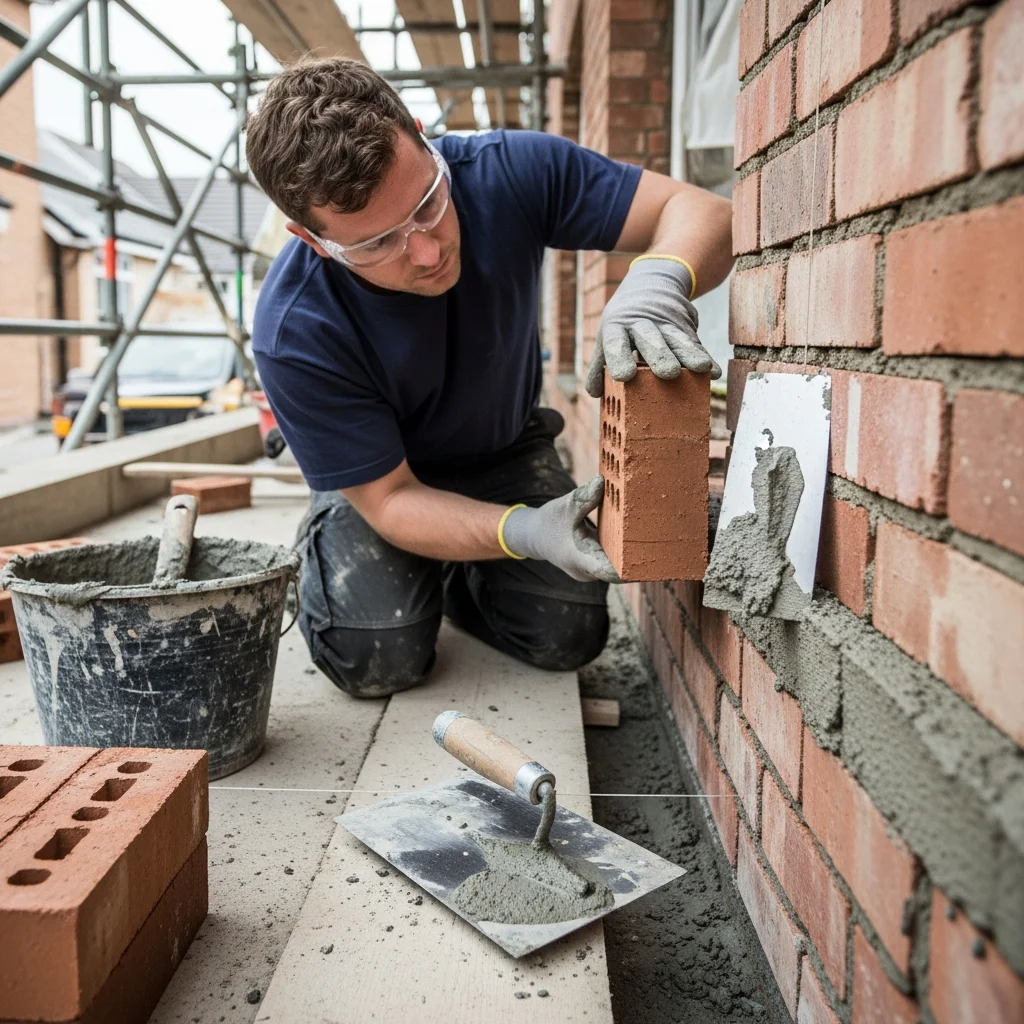
Masonry is one of the oldest trades in construction. It is also one of the hardest to estimate accurately.
Every masonry job has variables that most other trades do not deal with. The type of stone or brick, the bond pattern, the mortar mix, the height of the wall, whether you need scaffolding, the condition of the existing foundation or footing, and the local cost of sand and aggregate. Miss one variable and your profit disappears.
That is why templates matter so much for masons. A well-built estimate template forces you to account for every line item before you hand the customer a number. It keeps you from forgetting the small costs that add up fast, like joint reinforcement, flashing, lintels, and cleanup. And it gives your estimates a professional look that builds trust with homeowners and general contractors alike.
Below you will find three masonry estimate templates: one for residential brick veneer, one for natural stone walls, and one for commercial CMU block construction. Each one includes realistic pricing for the U.S. market in 2026. Adjust the numbers to match your local suppliers and labor rates, and you will have a solid starting point for any masonry job that comes your way.
📥 Get Your Free Estimate Templates
Download Projul’s free construction estimate templates, built by contractors, ready to customize. Create professional estimates in minutes and win more jobs.
How to Use These Templates
Each template is organized into sections: materials, labor, equipment, overhead, and profit. Here is how to get the most out of them:
- Visit the job site and take detailed measurements. Note the wall height, length, number of openings (doors and windows), and any curves or corners.
- Pick the right template based on the material: brick veneer, natural stone, or CMU block.
- Adjust unit costs to match your local supplier pricing and your crew’s labor rates.
- Update quantities based on your measurements and waste factors.
- Apply your overhead and profit percentages to the subtotal.
- Add notes explaining scope, timeline, payment terms, and warranty.
The unit costs shown below are mid-range estimates for the U.S. market in 2026. Your area may run higher or lower. Always verify pricing with your supplier before sending a live estimate.
Template 1: Residential Brick Veneer Estimate
This template covers a residential brick veneer project on a new construction or re-veneer job. The example assumes 1,200 square feet of brick veneer on a single-story home with standard window and door openings.
Understanding Brick Veneer Costs
Brick veneer is one of the most common residential masonry jobs. The homeowner gets the look and durability of a brick exterior without the cost of a full structural brick wall. The brick is installed over a weather barrier and attached to the framing with metal ties.
The biggest cost drivers on a brick veneer job are the type of brick (standard modular vs. specialty or oversized), the number of openings that require lintels and sills, and the height of the walls. Two-story homes add scaffolding costs and slow down production.
Materials
| Line Item | Quantity | Unit | Unit Cost | Total |
|---|---|---|---|---|
| Modular brick (standard, red blend) | 8,400 | each | $0.65 | $5,460.00 |
| Type S mortar mix (80 lb bags) | 120 | bags | $8.50 | $1,020.00 |
| Sand (masonry grade) | 4 | tons | $45.00 | $180.00 |
| Metal wall ties | 600 | each | $0.35 | $210.00 |
| Brick tie screws | 600 | each | $0.10 | $60.00 |
| House wrap / weather barrier | 1,400 | sq ft | $0.25 | $350.00 |
| Steel lintels (windows/doors) | 8 | each | $45.00 | $360.00 |
| Brick sills (window) | 6 | each | $25.00 | $150.00 |
| Weep vents | 30 | each | $1.50 | $45.00 |
| Flashing (through-wall) | 80 | lin ft | $3.50 | $280.00 |
| Joint reinforcement (ladder wire) | 40 | pieces | $4.00 | $160.00 |
| Concrete for foundation ledge (if needed) | 2 | cu yd | $165.00 | $330.00 |
| Materials Subtotal | $8,605.00 |
Labor
| Task | Quantity | Unit | Unit Cost | Total |
|---|---|---|---|---|
| Layout and prep | 8 | hours | $75.00 | $600.00 |
| Brick laying (crew of 3) | 1,200 | sq ft | $8.00 | $9,600.00 |
| Install lintels and sills | 8 | each | $65.00 | $520.00 |
| Install flashing and weep vents | 1 | lot | $400.00 | $400.00 |
| Pointing and tooling joints | 1,200 | sq ft | $1.50 | $1,800.00 |
| Scaffold setup and teardown | 1 | lot | $600.00 | $600.00 |
| Cleanup and debris removal | 1 | lot | $450.00 | $450.00 |
| Labor Subtotal | $13,970.00 |
Equipment and Other Costs
| Item | Quantity | Unit | Unit Cost | Total |
|---|---|---|---|---|
| Scaffolding rental (4 weeks) | 1 | month | $800.00 | $800.00 |
| Mortar mixer rental | 1 | month | $350.00 | $350.00 |
| Brick saw / masonry saw | 1 | month | $200.00 | $200.00 |
| Dumpster rental (10-yard) | 1 | each | $375.00 | $375.00 |
| Permit fee | 1 | each | $200.00 | $200.00 |
| Material delivery | 2 | trips | $125.00 | $250.00 |
| Equipment Subtotal | $2,175.00 |
Summary
| Amount | |
|---|---|
| Materials | $8,605.00 |
| Labor | $13,970.00 |
| Equipment and other | $2,175.00 |
| Direct Cost Subtotal | $24,750.00 |
| Overhead (15%) | $3,712.50 |
| Profit (12%) | $3,415.50 |
| Total Estimate | $31,878.00 |
Tips for This Template
- The 8,400 bricks assumes 7 bricks per square foot with a 5 percent waste factor. For running bond patterns, 7 per square foot is standard. Herringbone or soldier course patterns use more.
- Always list the specific brick manufacturer and color on your estimate. Homeowners will compare bids, and naming the exact product shows you are serious.
- The concrete line item for the foundation ledge is optional. If the home already has a brick ledge on the foundation, remove that line.
- Include a note about color variation. Natural brick has slight color differences between production runs. Recommend ordering all brick from the same lot.
Template 2: Natural Stone Wall Estimate
This template covers a natural stone retaining wall or accent wall using fieldstone or cut stone. The example assumes a 60-foot-long retaining wall, 4 feet tall, with a cap.
Understanding Stone Wall Costs
Natural stone work is the most expensive type of masonry, but it is also the most visually striking. Homeowners pay a premium for real stone because it lasts for decades and adds significant curb appeal and property value.
The cost of stone varies wildly depending on the type. Local fieldstone is the cheapest option. Imported ledgestone, bluestone, or limestone runs two to three times more. The labor is also higher than brick or block because stone requires more cutting, fitting, and artistic skill to get a natural look.
For retaining walls specifically, you also need to account for the drainage behind the wall, the gravel base, geotextile fabric, and potentially a structural engineer’s stamp if the wall exceeds 4 feet in most jurisdictions.
Materials
| Line Item | Quantity | Unit | Unit Cost | Total |
|---|---|---|---|---|
| Natural fieldstone (palletized) | 12 | tons | $280.00 | $3,360.00 |
| Stone caps (flat, 12-inch depth) | 60 | lin ft | $18.00 | $1,080.00 |
| Type S mortar mix (80 lb bags) | 80 | bags | $8.50 | $680.00 |
| Sand (masonry grade) | 3 | tons | $45.00 | $135.00 |
| Crushed gravel (drainage base) | 8 | tons | $35.00 | $280.00 |
| Geotextile fabric | 300 | sq ft | $0.45 | $135.00 |
| Perforated drain pipe (4-inch) | 70 | lin ft | $1.50 | $105.00 |
| Rebar (#4, for footing) | 20 | pieces | $12.00 | $240.00 |
| Concrete (footing) | 4 | cu yd | $165.00 | $660.00 |
| Construction adhesive | 6 | tubes | $7.00 | $42.00 |
| Materials Subtotal | $6,717.00 |
Labor
| Task | Quantity | Unit | Unit Cost | Total |
|---|---|---|---|---|
| Excavation and grading | 16 | hours | $85.00 | $1,360.00 |
| Form and pour concrete footing | 1 | lot | $1,200.00 | $1,200.00 |
| Install drainage system | 1 | lot | $800.00 | $800.00 |
| Stone wall construction (crew of 2) | 240 | sq ft | $22.00 | $5,280.00 |
| Stone cutting and fitting | 24 | hours | $85.00 | $2,040.00 |
| Install stone caps | 60 | lin ft | $12.00 | $720.00 |
| Backfill and compact | 8 | hours | $75.00 | $600.00 |
| Cleanup and site restoration | 1 | lot | $500.00 | $500.00 |
| Labor Subtotal | $12,500.00 |
Equipment and Other Costs
| Item | Quantity | Unit | Unit Cost | Total |
|---|---|---|---|---|
| Mini excavator rental (2 days) | 2 | days | $350.00 | $700.00 |
| Stone saw / wet saw | 1 | week | $250.00 | $250.00 |
| Plate compactor rental | 2 | days | $75.00 | $150.00 |
| Dumpster rental (10-yard) | 1 | each | $375.00 | $375.00 |
| Permit fee | 1 | each | $175.00 | $175.00 |
| Material delivery | 3 | trips | $150.00 | $450.00 |
| Equipment Subtotal | $2,100.00 |
Summary
| Amount | |
|---|---|
| Materials | $6,717.00 |
| Labor | $12,500.00 |
| Equipment and other | $2,100.00 |
| Direct Cost Subtotal | $21,317.00 |
| Overhead (15%) | $3,197.55 |
| Profit (12%) | $2,941.75 |
| Total Estimate | $27,456.30 |
Tips for This Template
- Stone is sold by the ton, not by the square foot. A good rule of thumb is one ton of fieldstone covers about 20 square feet of wall face at 4 inches thick. Thicker stone covers less area per ton.
- Always order 10 to 15 percent extra stone. You will lose material to cutting, breakage, and pieces that just do not fit the pattern well.
- Retaining walls over 4 feet typically require an engineer’s stamp. Add $500 to $1,500 for structural engineering if needed. List it as a separate line item.
- Dry-stack stone walls (no mortar) are popular for retaining walls under 3 feet. If the customer wants dry-stack, remove the mortar and sand line items but increase labor by about 15 percent because dry-stack fitting takes more time.
- Include drainage in every retaining wall estimate. A wall without proper drainage behind it will fail within a few years due to hydrostatic pressure.
Template 3: Commercial CMU Block Wall Estimate
This template covers a commercial concrete masonry unit (CMU) block wall. The example assumes a 100-foot-long, 8-foot-tall reinforced block wall for a commercial building or site perimeter.
Understanding CMU Block Costs
CMU block is the workhorse of commercial masonry. It is fast to install, structurally strong, and cost-effective compared to brick or stone. Most commercial buildings, warehouses, schools, and retail spaces use CMU for structural walls, partition walls, and perimeter fencing.
The main cost variables are wall height, the size and type of block (standard 8x8x16, lightweight, split-face, or specialty), the amount of reinforcement required, and whether the wall needs a special finish like paint, stucco, or split-face texture.
Reinforcement is the biggest variable on commercial block jobs. Building codes in most areas require vertical rebar at 32 to 48 inches on center and horizontal bond beam blocks at every 4 feet of height. Grouting the reinforced cells adds significant material and labor costs.
Materials
| Line Item | Quantity | Unit | Unit Cost | Total |
|---|---|---|---|---|
| Standard CMU block (8x8x16) | 900 | each | $2.25 | $2,025.00 |
| Bond beam blocks (8x8x16) | 100 | each | $3.00 | $300.00 |
| Half blocks and corner blocks | 80 | each | $2.50 | $200.00 |
| Type S mortar mix (80 lb bags) | 100 | bags | $8.50 | $850.00 |
| Sand (masonry grade) | 4 | tons | $45.00 | $180.00 |
| Rebar (#4 vertical) | 50 | pieces (20 ft) | $14.00 | $700.00 |
| Rebar (#4 horizontal, bond beam) | 25 | pieces (20 ft) | $14.00 | $350.00 |
| Grout (fine aggregate) | 6 | cu yd | $140.00 | $840.00 |
| Joint reinforcement (truss type) | 80 | pieces | $4.50 | $360.00 |
| Anchor bolts (for top plate or cap) | 25 | each | $3.50 | $87.50 |
| Block wall cap / coping | 100 | lin ft | $8.00 | $800.00 |
| Control joint material | 20 | lin ft | $6.00 | $120.00 |
| Through-wall flashing | 100 | lin ft | $4.00 | $400.00 |
| Materials Subtotal | $7,212.50 |
Labor
| Task | Quantity | Unit | Unit Cost | Total |
|---|---|---|---|---|
| Layout, string lines, and prep | 12 | hours | $80.00 | $960.00 |
| Footing (form, pour, strip) | 1 | lot | $2,800.00 | $2,800.00 |
| Block laying (crew of 3) | 800 | sq ft | $6.50 | $5,200.00 |
| Set rebar (vertical and horizontal) | 1 | lot | $1,200.00 | $1,200.00 |
| Grout cells | 6 | cu yd | $120.00 | $720.00 |
| Install bond beams | 100 | lin ft | $5.00 | $500.00 |
| Install wall caps / coping | 100 | lin ft | $6.00 | $600.00 |
| Install control joints and flashing | 1 | lot | $400.00 | $400.00 |
| Scaffold setup and teardown | 1 | lot | $800.00 | $800.00 |
| Cleanup and debris removal | 1 | lot | $600.00 | $600.00 |
| Labor Subtotal | $13,780.00 |
Equipment and Other Costs
| Item | Quantity | Unit | Unit Cost | Total |
|---|---|---|---|---|
| Scaffolding rental (6 weeks) | 1.5 | months | $1,200.00 | $1,800.00 |
| Mortar mixer rental | 1 | month | $350.00 | $350.00 |
| Block saw rental | 1 | month | $200.00 | $200.00 |
| Grout pump rental (1 day) | 1 | day | $450.00 | $450.00 |
| Dumpster rental (20-yard) | 1 | each | $450.00 | $450.00 |
| Permit fee | 1 | each | $350.00 | $350.00 |
| Material delivery | 3 | trips | $150.00 | $450.00 |
| Engineering / stamped drawings | 1 | lot | $1,200.00 | $1,200.00 |
| Equipment Subtotal | $5,250.00 |
Summary
| Amount | |
|---|---|
| Materials | $7,212.50 |
| Labor | $13,780.00 |
| Equipment and other | $5,250.00 |
| Direct Cost Subtotal | $26,242.50 |
| Overhead (15%) | $3,936.38 |
| Profit (10%) | $3,017.89 |
| Total Estimate | $33,196.77 |
Tips for This Template
- Standard CMU block count assumes 1.125 blocks per square foot of wall face. The 900 blocks here cover 800 square feet with a waste factor built in.
- Commercial walls almost always require an engineer’s stamp. Include that cost from the start rather than surprising the customer later.
- Grouting adds up fast. On a fully grouted wall, plan for about 0.007 cubic yards of grout per block. Partially grouted walls (only reinforced cells) use much less.
- Split-face block costs about 30 percent more than standard smooth block, but it eliminates the need for a finish coat. Factor that trade-off into your pricing.
- Control joints are required every 20 to 25 feet in CMU walls to prevent cracking. Do not skip them, even if the architect’s drawings are vague about placement.
Common Estimating Mistakes Masonry Contractors Make
Even experienced masons leave money on the table because of estimating habits that seemed fine when they were smaller but break down as jobs get bigger. Here are the most common mistakes and how to avoid them.
Underestimating mortar and sand. Mortar is cheap per bag, so it is easy to lowball the quantity. But a brick veneer job can burn through 100 or more bags of mortar on a 1,200 square foot wall. If you run short mid-job, the emergency trip to the supply yard costs you time and delivery fees.
Forgetting about waste. Brick waste runs 5 to 10 percent on a simple wall. Stone waste runs 10 to 15 percent or more. Block waste is usually 5 percent. If you estimate materials at exactly the area you need, you will come up short every time.
Not pricing scaffolding as a separate line item. Rolling scaffolding costs money whether you own it or rent it. If you own it, you have maintenance, transport, and depreciation. If you rent it, you have daily or monthly rental fees. Either way, it is a real cost that belongs on the estimate.
Ignoring site access and staging. Masonry materials are heavy. If the delivery truck cannot get close to the work area, you need a forklift, a telehandler, or extra labor to move pallets of brick or block by hand. That can add hours to the job.
Using one labor rate for everything. A journeyman mason lays brick faster and cleaner than an apprentice, but costs more per hour. Your estimate should reflect the actual crew mix you plan to use, not a blended rate that might be too high or too low.
Skipping the footing. On retaining walls and freestanding walls, the concrete footing is a significant cost. Some masons leave it out of the estimate assuming the GC or homeowner will handle it. If it is your responsibility, include it. If it is not, state that clearly in your exclusions.
Giving verbal estimates. Never quote a masonry job without putting it in writing. The line items, quantities, and assumptions need to be documented. Verbal estimates lead to disputes about what was included, especially on jobs with multiple phases or change orders.
What Every Masonry Estimate Needs Beyond the Numbers
The line items and totals are the core of your estimate, but the supporting details matter just as much. Here is what to include:
- Scope of work description. Write a clear summary of what you will do. “Install 1,200 sq ft of modular brick veneer in running bond pattern over existing weather barrier. Includes lintels at all window and door openings, through-wall flashing, and weep vents.”
- Timeline. Give a realistic start date and duration. “Work begins within 3 weeks of signed contract, weather permitting. Expected duration: 3 to 4 weeks.”
- Payment terms. Spell out your deposit, progress payments, and final payment. “30% deposit at contract signing, 30% at wall halfway point, 40% upon completion and final inspection.”
- Material specifications. List the exact brick, stone, or block product including manufacturer, color, size, and pattern. This protects you if the customer later claims they expected a different product.
- Warranty details. State your workmanship warranty period. “2-year workmanship warranty covering mortar joint failure, cracking due to installation defects, and water intrusion through the veneer.”
- Exclusions. State what is NOT included. “This estimate does not include foundation work, waterproofing below grade, painting or sealing, electrical or plumbing rough-in through the wall, or landscaping restoration.”
- Expiration date. Material prices change. Put a 30-day expiration on every estimate.
- Weather clause. Masonry work cannot be done in freezing temperatures without special precautions. Include a note about weather delays and winter protection costs if applicable.
How Projul Makes Masonry Estimating Faster
Building estimates in spreadsheets works when you are doing two or three jobs a month. But once your pipeline grows, the spreadsheet approach starts to break down. You forget to update pricing, you copy the wrong template, you lose track of which version you sent the customer.
Projul’s estimating tools are built for contractors who need to send professional estimates without spending half their evening at a desk. Here is what makes it different:
- Saved line item libraries. Build your masonry line items once with current pricing. Pull them into any estimate with a few taps. When your supplier changes prices, update the library and every future estimate uses the new numbers.
- Mobile-friendly. Build and send estimates from the job site. Take measurements, open Projul on your phone, and send the estimate before you leave the driveway.
- Estimate tracking. Know when the customer opens your estimate, how long they look at it, and when they accept. No more wondering if they even saw it.
- Change orders built in. Masonry jobs often have scope changes once the work begins. Projul lets you create and send change orders tied to the original estimate so everything stays organized.
- No per-user fees. Your whole crew can access Projul without you paying extra for each person. That matters when you have a foreman, an office manager, and multiple crews in the field.
Projul Pricing
Projul offers three plans built for construction businesses of every size:
| Plan | Price | Best For |
|---|---|---|
| Core | See pricing | Small crews getting organized |
| Core+ | See pricing | Growing companies that need more features |
| Pro | See pricing | Established businesses running multiple crews |
All plans include estimating, scheduling, and job management. No per-user fees. No long-term contracts.
Frequently Asked Questions
Check the FAQ section above for answers to the most common questions about masonry estimates, including cost per square foot, the difference between estimates and bids, waste factors, scaffolding costs, and how often to update your template pricing.
Start Sending Better Masonry Estimates Today
These templates give you a solid starting point for residential brick veneer, natural stone walls, and commercial block construction. Customize them with your own pricing, add your company branding, and start sending professional estimates that win more work.
If you are ready to move beyond spreadsheets, Projul’s estimating features let you build, send, and track estimates from your phone. No per-user fees. Rated 9.8 out of 10 on G2. Schedule a live demo and see how it works for your crew.
📥 Get Your Free Estimate Templates
Download Projul’s free construction estimate templates, built by contractors, for contractors. Create professional estimates in minutes and win more jobs.
DISCLAIMER: We make no warranty of accuracy, timeliness, and completeness of the information presented on this website. Posts are subject to change without notice and cannot be considered financial advice.
Frequently Asked Questions
How much does masonry work cost per square foot?
What is the difference between a masonry estimate and a masonry bid?
How do I account for waste in a masonry estimate?
Should I charge separately for scaffolding on masonry jobs?
How often should I update my masonry estimate template?
Related Articles

Construction Bidding Strategies: How to Win More Jobs at Better Margins
Most contractors lose bids not because their price is wrong, but because their process is. These bidding strategies...
Read More →
Construction Estimating for Beginners: A Plain-English Guide
Construction estimating does not have to be complicated. This guide breaks it down into plain English so you can create...
Read More →
Free Cabinet and Countertop Estimate Templates
Three ready-to-use cabinet and countertop estimate templates with realistic line items, material costs, labor rates,...
Read More →