
Free Pool and Spa Estimate Templates (2026)
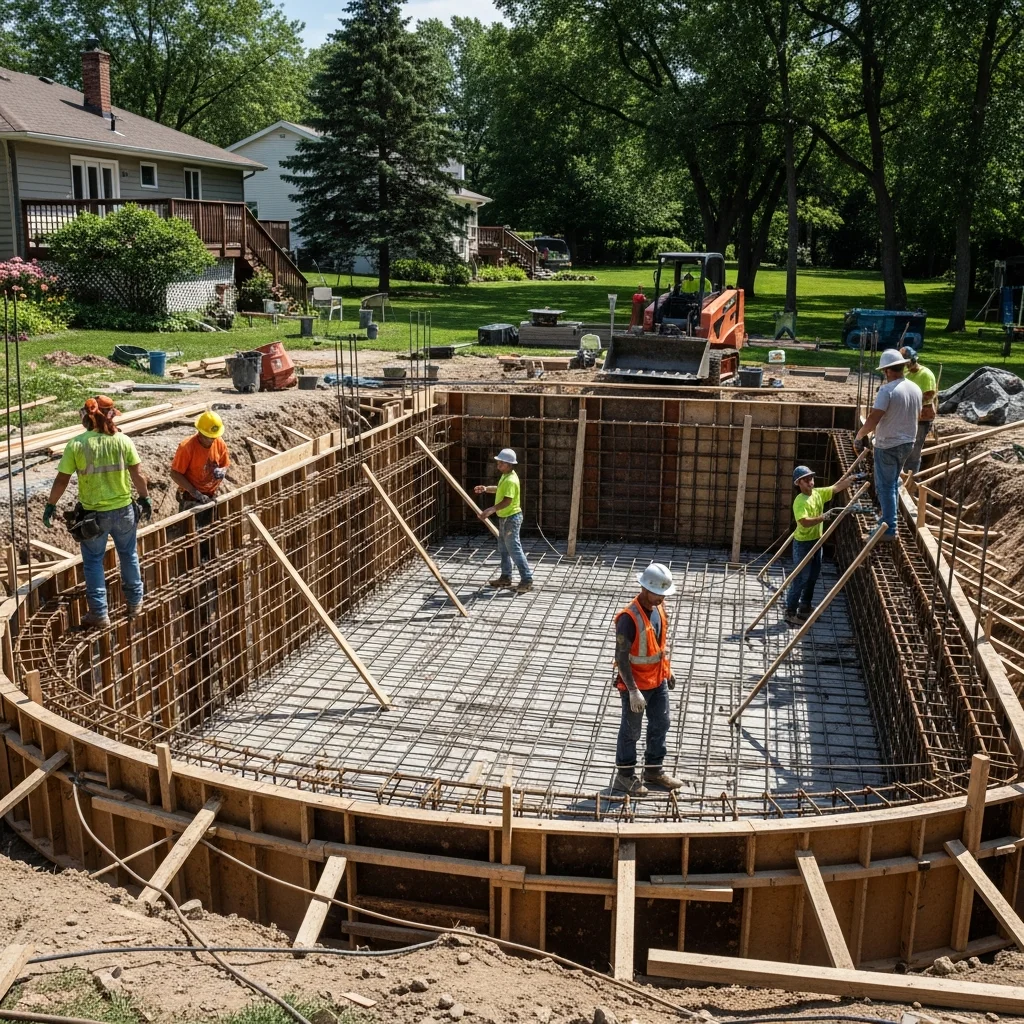
Selling a pool or spa project is exciting. The homeowner is dreaming about backyard parties, lazy weekends, and adding value to their property. But if your estimate looks sloppy, arrives late, or misses key line items, that excitement turns into doubt fast.
Pool and spa work involves dozens of moving parts. You are coordinating excavation, plumbing, electrical, concrete or fiberglass installation, decking, fencing, permits, and inspections. Forgetting even one item on your estimate can cost you thousands in profit or, worse, force an awkward change order conversation that damages the customer relationship.
That is why templates matter. A well-built estimate template gives you a starting framework that covers every category of work. You do not have to rebuild your estimate from scratch for each job. Instead, you adjust quantities, swap out materials, and update pricing for the specific project. The result is a faster, more accurate, more professional estimate that wins more jobs.
In this guide, you will find three pool and spa estimate templates. The first covers new inground pool construction. The second handles pool renovation and remodel work. The third is for hot tub and spa installations. Each template includes realistic 2026 pricing, common line items, and notes on where contractors typically make mistakes.
Get Your Free Estimate Templates
Download Projul’s free construction estimate templates, built by contractors, ready to customize. Create professional estimates in minutes and win more jobs.
Why Pool and Spa Estimates Are Different
Pool and spa projects are not like a typical home improvement job. They span multiple trades, require specific permits, and often take weeks or months to complete. This complexity makes your estimate more important, not less.
Here is what makes pool estimates unique:
Multiple phases of work. A new pool job might include demolition (if removing an old pool), excavation, steel reinforcement, plumbing rough-in, electrical rough-in, shell construction, tile and coping, decking, equipment installation, and final filling and startup. Each phase has its own materials, labor, and timeline.
Permit and code requirements. Most cities require building permits for pool construction. Many also require separate electrical permits, plumbing permits, and fencing inspections. Some municipalities require engineered drawings. All of these carry costs that belong on your estimate.
Subcontractor coordination. Unless you run a large operation, you probably subcontract at least some of the work. Excavation, electrical, and fencing are the most commonly subbed out. Your estimate needs to account for subcontractor pricing plus your markup.
Customer expectations are high. Pool buyers are spending $40,000 to $100,000 or more. They expect a detailed, professional estimate that explains every cost. A one-page estimate with three line items will not cut it at this price point.
Change orders are common. The homeowner sees the hole in the ground and suddenly wants a deeper end, a built-in bench, or upgraded tile. A detailed original estimate makes change orders easier to price because you already have a baseline cost for each item.
Template 1: New Inground Pool Construction
This template covers a standard residential inground pool project. The example uses a 16x32 gunite pool with basic features. Adjust the dimensions, materials, and pricing for your specific project.
Project Information
Every estimate starts with the basics:
- Customer name and address
- Project address (if different)
- Estimate date and expiration date (30 days is standard)
- Estimated start date and completion date
- Pool type, dimensions, and depth
- Payment terms and schedule
Excavation and Site Work
| Line Item | Unit | Qty | Unit Cost | Total |
|---|---|---|---|---|
| Site survey and layout | each | 1 | $400 | $400 |
| Excavation (16x32 pool, 3.5ft to 8ft depth) | lump sum | 1 | $4,500 | $4,500 |
| Soil hauling and disposal | load | 8 | $350 | $2,800 |
| Backfill and grading | lump sum | 1 | $1,200 | $1,200 |
| Erosion control and silt fence | linear ft | 120 | $3.50 | $420 |
Subtotal: $9,320
Notes: Excavation costs vary dramatically based on soil conditions. Rocky soil can double the excavation price. Always check soil conditions before quoting. If the access is tight (narrow side yard, existing landscaping), you may need a smaller excavator, which takes longer and costs more.
Shell Construction (Gunite/Shotcrete)
| Line Item | Unit | Qty | Unit Cost | Total |
|---|---|---|---|---|
| Steel rebar grid (#3 rebar, 12” on center) | sq ft | 700 | $4.25 | $2,975 |
| Gunite/shotcrete application | sq ft | 700 | $12.00 | $8,400 |
| Pool shaping and finishing | lump sum | 1 | $2,500 | $2,500 |
| Waterline tile (6” band) | linear ft | 96 | $18.00 | $1,728 |
| Interior finish (white plaster) | sq ft | 700 | $8.50 | $5,950 |
| Coping (precast concrete) | linear ft | 96 | $28.00 | $2,688 |
Subtotal: $24,241
Notes: Plaster is the budget option for interior finish. Pebble finishes run $12 to $18 per square foot. Quartz finishes fall in between at $10 to $14 per square foot. Tile for the waterline ranges from $12 per linear foot for basic ceramic to $45 or more for glass mosaic.
Plumbing
| Line Item | Unit | Qty | Unit Cost | Total |
|---|---|---|---|---|
| Main drain assembly (dual drain, VGB compliant) | each | 1 | $450 | $450 |
| Return fittings | each | 4 | $85 | $340 |
| Skimmer assembly | each | 2 | $275 | $550 |
| PVC plumbing (2” schedule 40) | linear ft | 180 | $6.50 | $1,170 |
| Plumbing labor | hours | 16 | $85 | $1,360 |
| Pressure test | each | 1 | $200 | $200 |
Subtotal: $4,070
Notes: Always install dual main drains to meet VGB (Virginia Graeme Baker Act) requirements. Single main drains are a code violation and a safety hazard. Return fittings should be placed to create proper circulation. For a 16x32 pool, four returns and two skimmers is standard.
Electrical
| Line Item | Unit | Qty | Unit Cost | Total |
|---|---|---|---|---|
| Equipment bonding and grounding | lump sum | 1 | $800 | $800 |
| Sub-panel installation (60A) | each | 1 | $1,200 | $1,200 |
| Wiring to pump, heater, and lights | lump sum | 1 | $1,800 | $1,800 |
| GFI protection | each | 2 | $125 | $250 |
| LED pool lights (color-changing) | each | 2 | $650 | $1,300 |
| Light niche installation | each | 2 | $175 | $350 |
| Electrical permit | each | 1 | $250 | $250 |
Subtotal: $5,950
Notes: Pool electrical work must be done by a licensed electrician in most states. All pool equipment must be bonded and grounded per NEC Article 680. Light fixtures must be listed for pool use. These are not areas to cut corners.
Equipment
| Line Item | Unit | Qty | Unit Cost | Total |
|---|---|---|---|---|
| Variable speed pump (2.0 HP) | each | 1 | $1,400 | $1,400 |
| Cartridge filter (425 sq ft) | each | 1 | $850 | $850 |
| Gas heater (400,000 BTU) | each | 1 | $3,200 | $3,200 |
| Salt chlorine generator | each | 1 | $1,600 | $1,600 |
| Automatic pool control system | each | 1 | $2,200 | $2,200 |
| Equipment pad (concrete) | each | 1 | $600 | $600 |
| Equipment installation labor | hours | 12 | $95 | $1,140 |
Subtotal: $10,990
Notes: Variable speed pumps are required by the Department of Energy in most applications as of 2021. They also save the homeowner $50 to $100 per month in energy costs compared to single-speed pumps. Salt chlorine generators are increasingly popular and justify a higher price point. Budget chlorine systems (tablet feeders) cost around $200 to $400 instead.
Decking and Hardscape
| Line Item | Unit | Qty | Unit Cost | Total |
|---|---|---|---|---|
| Concrete pool deck (brushed finish) | sq ft | 600 | $9.50 | $5,700 |
| Expansion joints | linear ft | 80 | $3.00 | $240 |
| Deck drain (linear channel) | linear ft | 20 | $45.00 | $900 |
Subtotal: $6,840
Notes: Stamped concrete runs $14 to $20 per square foot. Pavers cost $18 to $30 per square foot installed. Travertine or natural stone runs $25 to $50 per square foot. The decking is often where homeowners want to upgrade, so have pricing ready for multiple options.
Fencing and Safety
| Line Item | Unit | Qty | Unit Cost | Total |
|---|---|---|---|---|
| Aluminum pool fence (54” height, code compliant) | linear ft | 120 | $32.00 | $3,840 |
| Self-closing, self-latching gate | each | 2 | $425 | $850 |
| Gate alarm | each | 2 | $85 | $170 |
Subtotal: $4,860
Notes: Pool fencing requirements vary by jurisdiction but typically require a minimum 48-inch barrier with self-closing, self-latching gates. Some areas accept the home itself as one side of the barrier if doors have alarms. Check your local codes before quoting fencing.
Permits and Fees
| Line Item | Unit | Qty | Unit Cost | Total |
|---|---|---|---|---|
| Building permit (pool construction) | each | 1 | $1,500 | $1,500 |
| Electrical permit | each | 1 | $250 | $250 |
| Engineering drawings | each | 1 | $800 | $800 |
| Municipal inspections (included with permits) | each | 1 | $0 | $0 |
Subtotal: $2,550
Startup and Commissioning
| Line Item | Unit | Qty | Unit Cost | Total |
|---|---|---|---|---|
| Pool fill water | gallons | 18,000 | $0.01 | $180 |
| Chemical startup kit | each | 1 | $350 | $350 |
| System startup and programming | hours | 4 | $95 | $380 |
| Customer orientation and training | hours | 2 | $0 | $0 |
Subtotal: $910
Summary for New Pool Construction
| Category | Total |
|---|---|
| Excavation and Site Work | $9,320 |
| Shell Construction | $24,241 |
| Plumbing | $4,070 |
| Electrical | $5,950 |
| Equipment | $10,990 |
| Decking and Hardscape | $6,840 |
| Fencing and Safety | $4,860 |
| Permits and Fees | $2,550 |
| Startup and Commissioning | $910 |
| Subtotal | $69,731 |
| Overhead (12%) | $8,368 |
| Profit (15%) | $11,715 |
| Total Estimate | $89,814 |
Template 2: Pool Renovation and Remodel
Renovation work is bread and butter for many pool contractors. Homeowners with aging pools need resurfacing, equipment upgrades, tile replacement, and sometimes a complete remodel. These jobs carry better margins than new construction because you are working with an existing structure.
Common Renovation Line Items
| Line Item | Unit | Qty | Unit Cost | Total |
|---|---|---|---|---|
| Drain pool and acid wash | each | 1 | $450 | $450 |
| Remove existing plaster | sq ft | 550 | $3.50 | $1,925 |
| Repair cracks and spalling | lump sum | 1 | $1,200 | $1,200 |
| New interior finish (pebble) | sq ft | 550 | $14.00 | $7,700 |
| Replace waterline tile | linear ft | 80 | $22.00 | $1,760 |
| Replace coping (natural stone) | linear ft | 80 | $38.00 | $3,040 |
| Replace main drain covers (VGB compliant) | each | 2 | $125 | $250 |
| Replace return fittings | each | 4 | $65 | $260 |
| Replace skimmer lids and baskets | each | 2 | $85 | $170 |
Subtotal: $16,755
Equipment Upgrades
| Line Item | Unit | Qty | Unit Cost | Total |
|---|---|---|---|---|
| Replace single-speed with variable-speed pump | each | 1 | $1,400 | $1,400 |
| New cartridge filter | each | 1 | $850 | $850 |
| New salt chlorine generator | each | 1 | $1,600 | $1,600 |
| LED light retrofit (2 lights) | each | 2 | $550 | $1,100 |
| New automation controller | each | 1 | $2,200 | $2,200 |
| Replumb equipment pad | lump sum | 1 | $1,800 | $1,800 |
| Equipment installation labor | hours | 10 | $95 | $950 |
Subtotal: $9,900
Optional Add-Ons
| Line Item | Unit | Qty | Unit Cost | Total |
|---|---|---|---|---|
| Water feature (sheer descent) | each | 1 | $2,800 | $2,800 |
| Fire bowls (propane) | each | 2 | $1,200 | $2,400 |
| Deck resurfacing (spray deck coating) | sq ft | 500 | $7.00 | $3,500 |
| Add spa spillover to existing pool | lump sum | 1 | $15,000 | $15,000 |
Summary for Pool Renovation
| Category | Total |
|---|---|
| Surface and Tile Work | $16,755 |
| Equipment Upgrades | $9,900 |
| Subtotal | $26,655 |
| Overhead (12%) | $3,199 |
| Profit (18%) | $5,374 |
| Total Estimate | $35,228 |
Notes: Renovation work supports higher profit margins because labor is the biggest cost driver and you control the pace. Material costs are lower relative to new construction, so your markup has more room.
Template 3: Hot Tub and Spa Installation
Hot tub and spa installations range from simple drop-in acrylic units on an existing patio to custom-built in-ground spas with full plumbing and electrical. This template covers both ends of the spectrum.
Pre-Fabricated Hot Tub Installation
| Line Item | Unit | Qty | Unit Cost | Total |
|---|---|---|---|---|
| Hot tub unit (6-person, mid-range) | each | 1 | $8,500 | $8,500 |
| Delivery and crane placement | each | 1 | $600 | $600 |
| Concrete pad (10x10, 4” thick) | sq ft | 100 | $9.50 | $950 |
| Electrical sub-panel (50A, 240V) | each | 1 | $1,400 | $1,400 |
| Wiring from main panel (up to 50 ft) | lump sum | 1 | $1,200 | $1,200 |
| GFCI disconnect | each | 1 | $350 | $350 |
| Electrical permit | each | 1 | $200 | $200 |
| Gas line for heater (if gas unit) | lump sum | 1 | $800 | $800 |
| Startup and customer training | hours | 2 | $95 | $190 |
Subtotal: $14,190
Custom Built-In Spa
| Line Item | Unit | Qty | Unit Cost | Total |
|---|---|---|---|---|
| Excavation (8x8, 4ft depth) | lump sum | 1 | $1,800 | $1,800 |
| Gunite shell construction | sq ft | 180 | $14.00 | $2,520 |
| Interior finish (pebble) | sq ft | 180 | $14.00 | $2,520 |
| Tile and coping | linear ft | 32 | $28.00 | $896 |
| Spa jets (hydrotherapy) | each | 12 | $65 | $780 |
| Air blower | each | 1 | $450 | $450 |
| Dedicated spa pump (2.5 HP) | each | 1 | $900 | $900 |
| Spa heater (gas, 200,000 BTU) | each | 1 | $2,400 | $2,400 |
| Plumbing (dedicated spa loop) | lump sum | 1 | $2,200 | $2,200 |
| Electrical (spa circuits) | lump sum | 1 | $1,800 | $1,800 |
| LED spa light (color-changing) | each | 2 | $450 | $900 |
| Spillover to pool (if connected) | lump sum | 1 | $1,500 | $1,500 |
| Permits | lump sum | 1 | $1,000 | $1,000 |
Subtotal: $19,666
Summary for Hot Tub/Spa Installation
| Option | Total |
|---|---|
| Pre-Fabricated Hot Tub (installed) | $14,190 |
| Custom Built-In Spa | $19,666 |
| Overhead (12%) | Varies |
| Profit (15-20%) | Varies |
Tips for Accurate Pool and Spa Estimates
1. Always visit the site first. Pool estimates based on phone calls or satellite images are guesses. You need to see soil conditions, access points, slope, existing utilities, and the overall yard layout. A 30-minute site visit can save you from a $10,000 mistake.
2. Check soil conditions before quoting excavation. If the property has rocky soil, a high water table, or expansive clay, your excavation cost can double or triple. Some contractors include a soil contingency line item of $2,000 to $5,000 for unknown conditions.
3. Get subcontractor quotes in writing. If you are subbing out electrical, excavation, or fencing, get firm quotes before including those numbers in your estimate. Verbal estimates from subs have a way of going up when the invoice arrives.
4. Include a clear payment schedule. Pool projects are expensive and take weeks to complete. Most contractors use a milestone payment schedule: 10% at contract signing, 25% at excavation, 25% at shell completion, 25% at equipment and decking, and 15% at final completion. Put this on your estimate so the homeowner knows when money is due.
5. Price options separately. Homeowners love options. List the base pool price, then show add-ons like water features, upgraded finishes, automation, and lighting as separate line items. This lets the customer pick and choose without requiring a new estimate.
6. Account for access and logistics. Moving equipment, materials, and concrete trucks through a residential property is not always simple. If the backyard has limited access, you may need a concrete pump ($800 to $1,500), a smaller excavator (slower and more expensive), or hand-carrying of materials. Include these costs.
7. Factor in seasonal pricing. In many markets, pool construction prices drop 10% to 15% in the off-season (fall and winter). If you are bidding a project that will start in January, you may be able to pass some of those savings to the customer while maintaining your margin.
8. Do not forget the warranty. State your warranty terms on the estimate. Common coverage includes 1 year on labor, 2 to 5 years on equipment (manufacturer warranty), and 10 to 25 years on the shell structure. Clear warranty terms build trust and reduce disputes.
Common Mistakes in Pool Estimates
Underestimating excavation costs. This is the number one margin killer in pool construction. Bad soil, rock, tight access, and long haul distances can add $5,000 to $15,000 to a job. Build a buffer or specify exclusions for unknown conditions.
Forgetting about water and sewer fees. Filling a pool uses 15,000 to 25,000 gallons of water. Some municipalities charge sewer fees on all water usage. A $200 water bill can turn into an $800 surprise if the customer gets a sewer surcharge.
Not including final grading and cleanup. After the pool is installed, the yard looks like a construction zone. Grading, soil removal, and landscaping restoration can cost $2,000 to $5,000. If you do not include it, the customer will expect it for free.
Ignoring code requirements. Pool fencing, electrical bonding, drain covers, and barrier requirements vary by location. A missed code item during inspection means rework on your dime. Research local codes before you quote.
Using old pricing. Concrete, steel, PVC pipe, and pool equipment have all seen price increases in recent years. If your template still has 2023 pricing, you could be undercharging by 15% to 25%. Update your costs every quarter.
How Projul Helps Pool and Spa Contractors
Building estimates in spreadsheets works until you are juggling five or six jobs at once. Then things start falling through the cracks. You forget to follow up on an estimate. You cannot find the revision you sent two weeks ago. You have no idea which estimates are pending, accepted, or expired.
Projul’s estimating tools are built for contractors who want to spend less time on paperwork and more time building pools. Here is what that looks like in practice:
Saved line item libraries. Build your pool and spa line items once, then pull them into any estimate with a few clicks. Your excavation, plumbing, electrical, and equipment items are always ready to go with your current pricing.
Estimate templates. Create templates for your most common job types: new construction, renovation, spa installation. Start with a template, adjust quantities and pricing for the specific project, and send it to the customer the same day you visit the site.
Customer-facing proposals. Your estimates go out as clean, branded proposals that the customer can review and approve online. No more emailing PDFs back and forth.
Change order tracking. When the homeowner wants to add a water feature or upgrade the finish, create a change order tied to the original estimate. Both you and the customer can see exactly what changed and how it affects the total.
Job costing integration. Once an estimate is approved, it flows into your project. Track actual costs against your estimate throughout the job so you know if you are on budget or bleeding money.
Ready to Send Better Pool and Spa Estimates?
These templates give you a solid starting point, but manually copying and pasting line items into spreadsheets is still slow. Projul gives you the full system: estimate templates, line item libraries, customer approvals, change orders, and job costing, all in one place.
Projul Plans:
- Core - Estimating, scheduling, and job management for small pool companies
- Core+ - Everything in Core plus advanced features for growing teams
- Pro - Full platform for established pool and spa contractors running multiple crews
Schedule a Demo and see how Projul can help your pool and spa company send winning estimates in less time.
Frequently Asked Questions
How much does it cost to build an inground pool in 2026?
What should be included in a pool estimate?
How long does a pool installation take?
How much profit margin should a pool contractor target?
Should I charge separately for pool permits and inspections?
Related Articles

Construction Bidding Strategies: How to Win More Jobs at Better Margins
Most contractors lose bids not because their price is wrong, but because their process is. These bidding strategies...
Read More →
Construction Estimating for Beginners: A Plain-English Guide
Construction estimating does not have to be complicated. This guide breaks it down into plain English so you can create...
Read More →
Free Cabinet and Countertop Estimate Templates
Three ready-to-use cabinet and countertop estimate templates with realistic line items, material costs, labor rates,...
Read More →