
Free Stucco Estimate Templates (2026) - Download Now
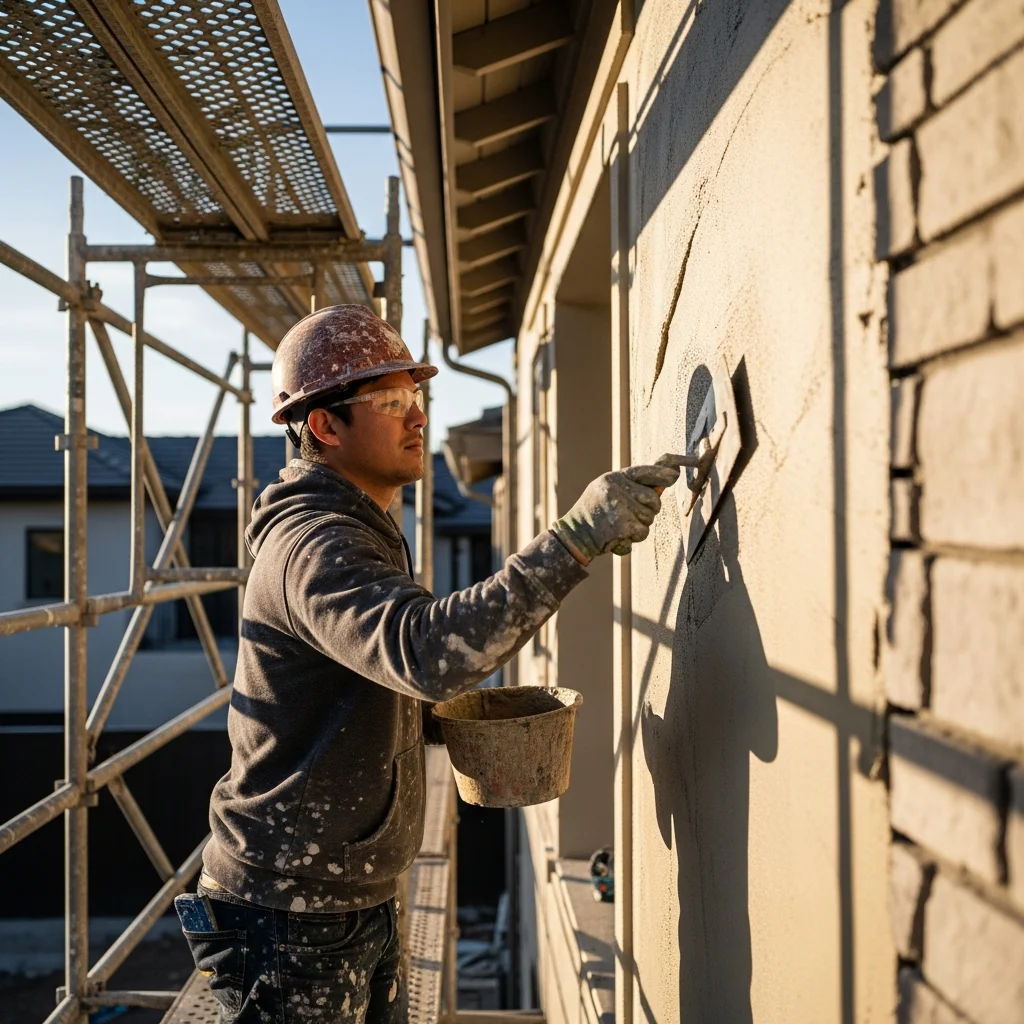
Stucco is one of those trades where a sloppy estimate causes problems long after the job is done. Underprice a three-coat application and you are working for free by the time you finish the color coat. Miss the scaffolding costs on a two-story home and your crew is setting up ladders that slow the job by days. Forget to account for lath repair and your material costs blow up on day one.
The best stucco contractors know their numbers cold. They know what a bag of base coat covers, how many square feet a crew can finish in a day, and exactly how much scaffolding they need for a given elevation. But even experienced plasterers waste hours putting those numbers into a format that looks professional and makes sense to the customer.
These three templates give you a head start. They cover new stucco application, stucco repair, and a full re-stucco job. Each one uses realistic 2026 pricing and includes every line item you need to send a complete, accurate estimate. Adjust the numbers for your market and your crew size, and send them out.
📥 Get Your Free Estimate Templates
Download Projul’s free construction estimate templates - built by contractors, ready to customize. Create professional estimates in minutes and win more jobs.
Why Detailed Stucco Estimates Win More Jobs
Homeowners hiring a stucco contractor are often choosing between three or four bids. Many of those bids are one-page documents with a single lump-sum number and no detail. When you show up with a line-by-line breakdown of materials, labor, prep work, and finish options, you immediately stand out.
A detailed estimate tells the homeowner three things:
-
You actually looked at their specific project. A generic lump sum could be copy-pasted from any job. Specific line items show you measured their walls, checked their existing substrate, and planned the work.
-
You know what you are doing. When a homeowner sees terms like “scratch coat,” “brown coat,” “finish coat,” and “control joints,” they understand they are hiring a professional, not someone who will slap mud on the wall and hope it sticks.
-
There will not be surprise charges. Every line item is visible. If they want to upgrade from a standard sand finish to a dash finish, they can see exactly how that changes the price. That transparency builds trust and closes jobs.
On the contractor side, detailed estimates protect your margin. When you know exactly what materials and labor hours are in the price, you can manage the job to that budget. If the scope changes, you have a clear baseline to price the change order from.
What to Include in Every Stucco Estimate
Project Details
Every estimate starts with the basics:
- Customer name, phone, email
- Property address
- Date of estimate and expiration date (30 days standard)
- Description of work (new application, repair, re-stucco)
- Your company name, license, and bond information
- Reference photos of existing conditions (for repair work)
Surface Measurements
Stucco is priced by the square foot, so accurate measurements are everything. Include:
- Total wall area in square feet
- Deductions for windows, doors, and other openings
- Net stucco area (wall area minus openings)
- Linear feet of control joints needed
- Square footage of soffits or overhangs (if included)
Surface Preparation
Prep work is where most stucco estimates go wrong. Be specific about what needs to happen before any plaster goes on the wall:
- Pressure washing or cleaning existing surfaces
- Removing old stucco, paint, or coatings
- Repairing substrate damage (sheathing, framing)
- Installing or replacing building paper and lath
- Masking and protecting windows, doors, landscaping, and adjacent surfaces
Materials
List every material with quantities and unit costs:
- Metal lath (self-furring or woven wire)
- Base coat mix (Portland cement, sand, lime, or pre-mixed)
- Finish coat product (acrylic, cement-based, or elastomeric)
- Control joint material
- Corner bead and trim pieces
- Fasteners (staples, nails, screws)
- Caulk and sealants
- Color pigment or integral color mix
Labor
Break down labor by phase:
- Surface preparation and masking
- Lath installation
- Scratch coat application
- Brown coat application
- Finish coat application
- Detail work (around windows, corners, architectural features)
- Cleanup
Equipment
- Scaffolding rental or setup
- Mixer rental
- Pump equipment (for large jobs)
- Protection materials (plastic sheeting, drop cloths)
Overhead and Profit
Standard stucco markup is 15 to 20 percent overhead and 10 to 15 percent profit. Always show this separately rather than hiding it in inflated material or labor costs.
Template 1: New Stucco Application (Three-Coat System)
This template covers a new three-coat Portland cement stucco application on a single-story home with approximately 1,800 square feet of net wall area. The substrate is assumed to be properly sheathed and ready for building paper and lath.
Surface Preparation
| Line Item | Quantity | Unit | Unit Cost | Total |
|---|---|---|---|---|
| Install two layers 60-minute building paper | 1,800 | SF | $0.45 | $810 |
| Install self-furring metal lath (2.5 lb diamond) | 1,800 | SF | $1.15 | $2,070 |
| Metal corner bead (outside corners) | 120 | LF | $2.25 | $270 |
| Control joint material (zinc) | 85 | LF | $2.75 | $234 |
| Weep screed at foundation line | 145 | LF | $1.85 | $268 |
| Casing bead around windows and doors | 280 | LF | $1.65 | $462 |
| Masking and protection (windows, doors, roof) | 1 | LS | $480 | $480 |
| Prep and lath installation labor | 64 | HR | $52 | $3,328 |
Subtotal: $7,922
Scratch Coat
| Line Item | Quantity | Unit | Unit Cost | Total |
|---|---|---|---|---|
| Portland cement (94 lb bags) | 45 | BAG | $15.50 | $698 |
| Plaster sand (tons) | 4.5 | TON | $52 | $234 |
| Lime (50 lb bags) | 12 | BAG | $18 | $216 |
| Fiber additive | 4 | BAG | $14 | $56 |
| Scratch coat application labor | 40 | HR | $55 | $2,200 |
Subtotal: $3,404
Brown Coat
| Line Item | Quantity | Unit | Unit Cost | Total |
|---|---|---|---|---|
| Portland cement (94 lb bags) | 45 | BAG | $15.50 | $698 |
| Plaster sand (tons) | 4.5 | TON | $52 | $234 |
| Lime (50 lb bags) | 12 | BAG | $18 | $216 |
| Brown coat application labor | 40 | HR | $55 | $2,200 |
Subtotal: $3,348
Finish Coat
| Line Item | Quantity | Unit | Unit Cost | Total |
|---|---|---|---|---|
| Acrylic finish coat (5-gal buckets) | 14 | EA | $78 | $1,092 |
| Color pigment (integral color) | 1 | LS | $165 | $165 |
| Finish coat application labor | 48 | HR | $55 | $2,640 |
| Detail work (window reveals, bands, trim) | 16 | HR | $55 | $880 |
Subtotal: $4,777
Equipment and Cleanup
| Line Item | Quantity | Unit | Unit Cost | Total |
|---|---|---|---|---|
| Scaffolding rental (2 weeks) | 1 | LS | $1,800 | $1,800 |
| Mixer rental (mortar mixer) | 10 | DAY | $85 | $850 |
| Plastic sheeting and drop cloths | 1 | LS | $175 | $175 |
| Final cleanup and debris removal | 8 | HR | $45 | $360 |
| Dumpster rental | 1 | EA | $475 | $475 |
Subtotal: $3,660
Summary
| Category | Amount |
|---|---|
| Surface preparation | $7,922 |
| Scratch coat | $3,404 |
| Brown coat | $3,348 |
| Finish coat | $4,777 |
| Equipment and cleanup | $3,660 |
| Subtotal | $23,111 |
| Overhead (17%) | $3,929 |
| Profit (12%) | $2,773 |
| Total Estimate | $29,813 |
Template 2: Stucco Repair (Crack Repair and Patch Work)
This template covers a common stucco repair job: fixing cracks, patching damaged areas, and blending the repair to match the existing finish. The scope includes about 80 square feet of patch work spread across multiple areas, plus 45 linear feet of crack repair.
Assessment and Preparation
| Line Item | Quantity | Unit | Unit Cost | Total |
|---|---|---|---|---|
| On-site assessment and documentation | 1 | EA | $175 | $175 |
| Pressure wash affected areas | 1 | LS | $225 | $225 |
| Remove loose and damaged stucco | 80 | SF | $3.50 | $280 |
| Cut back cracks to sound material | 45 | LF | $4.25 | $191 |
| Inspect and repair building paper (if exposed) | 1 | LS | $185 | $185 |
| Masking and protection | 1 | LS | $165 | $165 |
Subtotal: $1,221
Lath Repair
| Line Item | Quantity | Unit | Unit Cost | Total |
|---|---|---|---|---|
| Replace damaged metal lath sections | 40 | SF | $2.85 | $114 |
| New corner bead (where damaged) | 8 | LF | $2.25 | $18 |
| Lath fasteners and tie wire | 1 | LS | $45 | $45 |
| Lath repair labor | 6 | HR | $55 | $330 |
Subtotal: $507
Stucco Application
| Line Item | Quantity | Unit | Unit Cost | Total |
|---|---|---|---|---|
| Scratch coat (patch areas, pre-mixed) | 4 | BAG | $24 | $96 |
| Brown coat (patch areas, pre-mixed) | 4 | BAG | $24 | $96 |
| Crack filler (elastomeric) | 3 | TB | $12.50 | $38 |
| Mesh tape for crack repair | 45 | LF | $0.65 | $29 |
| Stucco application labor (all coats) | 16 | HR | $58 | $928 |
Subtotal: $1,187
Finish and Color Match
| Line Item | Quantity | Unit | Unit Cost | Total |
|---|---|---|---|---|
| Acrylic finish coat (color-matched) | 2 | GAL | $62 | $124 |
| Custom color matching (sample and blend) | 1 | LS | $150 | $150 |
| Finish application and texture matching | 8 | HR | $58 | $464 |
| Blend and feather edges to existing | 4 | HR | $58 | $232 |
Subtotal: $970
Cleanup
| Line Item | Quantity | Unit | Unit Cost | Total |
|---|---|---|---|---|
| Remove masking and protection | 2 | HR | $45 | $90 |
| Debris removal and disposal | 1 | LS | $175 | $175 |
| Final walkthrough with customer | 1 | EA | $0 | $0 |
Subtotal: $265
Summary
| Category | Amount |
|---|---|
| Assessment and preparation | $1,221 |
| Lath repair | $507 |
| Stucco application | $1,187 |
| Finish and color match | $970 |
| Cleanup | $265 |
| Subtotal | $4,150 |
| Overhead (18%) | $747 |
| Profit (15%) | $623 |
| Total Estimate | $5,520 |
Template 3: Full Re-Stucco (Remove and Replace)
This template covers removing all existing stucco from a single-story home (approximately 1,600 square feet of wall area) and applying a completely new three-coat system. Re-stucco jobs are more expensive than new application because of the demolition and disposal costs.
Demolition and Removal
| Line Item | Quantity | Unit | Unit Cost | Total |
|---|---|---|---|---|
| Remove existing stucco (all coats) | 1,600 | SF | $3.75 | $6,000 |
| Remove existing metal lath | 1,600 | SF | $1.25 | $2,000 |
| Remove and dispose of building paper | 1,600 | SF | $0.45 | $720 |
| Inspect sheathing and framing for damage | 1 | LS | $350 | $350 |
| Repair damaged sheathing (allowance) | 1 | LS | $850 | $850 |
| Dumpster rental (stucco debris, heavy) | 2 | EA | $650 | $1,300 |
| Demolition labor | 80 | HR | $48 | $3,840 |
Subtotal: $15,060
New Stucco Application
| Line Item | Quantity | Unit | Unit Cost | Total |
|---|---|---|---|---|
| Two layers 60-minute building paper | 1,600 | SF | $0.45 | $720 |
| Self-furring metal lath (2.5 lb diamond) | 1,600 | SF | $1.15 | $1,840 |
| Metal corner bead | 95 | LF | $2.25 | $214 |
| Control joints | 72 | LF | $2.75 | $198 |
| Weep screed | 130 | LF | $1.85 | $241 |
| Casing bead (windows and doors) | 240 | LF | $1.65 | $396 |
| Lath and prep labor | 56 | HR | $52 | $2,912 |
| Scratch coat materials (cement, sand, lime) | 1 | LS | $1,050 | $1,050 |
| Scratch coat labor | 36 | HR | $55 | $1,980 |
| Brown coat materials | 1 | LS | $1,050 | $1,050 |
| Brown coat labor | 36 | HR | $55 | $1,980 |
| Finish coat (acrylic, color selected by owner) | 12 | EA | $78 | $936 |
| Color pigment | 1 | LS | $165 | $165 |
| Finish coat labor | 44 | HR | $55 | $2,420 |
| Detail work and trim | 12 | HR | $55 | $660 |
Subtotal: $16,762
Equipment and Protection
| Line Item | Quantity | Unit | Unit Cost | Total |
|---|---|---|---|---|
| Scaffolding rental (3 weeks) | 1 | LS | $2,400 | $2,400 |
| Mixer rental | 14 | DAY | $85 | $1,190 |
| Landscape and window protection | 1 | LS | $380 | $380 |
| Plastic sheeting and drop cloths | 1 | LS | $225 | $225 |
Subtotal: $4,195
Cleanup and Final
| Line Item | Quantity | Unit | Unit Cost | Total |
|---|---|---|---|---|
| Final cleanup | 8 | HR | $45 | $360 |
| Touch-up and punch list | 4 | HR | $55 | $220 |
| Final walkthrough with customer | 1 | EA | $0 | $0 |
Subtotal: $580
Summary
| Category | Amount |
|---|---|
| Demolition and removal | $15,060 |
| New stucco application | $16,762 |
| Equipment and protection | $4,195 |
| Cleanup and final | $580 |
| Subtotal | $36,597 |
| Overhead (17%) | $6,221 |
| Profit (12%) | $4,392 |
| Total Estimate | $47,210 |
Tips for Better Stucco Estimates
Measure Twice, Deduct Openings
Stucco is priced by the square foot, so sloppy measurements hit your bottom line directly. Measure every wall face and then deduct the actual square footage of every window, door, and other opening. Do not guess at deductions. A typical house has 15 to 20 percent of its wall area taken up by openings. If you skip the deductions, you are overestimating materials and padding labor for area you will never plaster.
Know Your Crew’s Production Rate
How many square feet can your crew plaster in a day? This is the single most important number for your labor estimate. A skilled three-person stucco crew can typically apply 400 to 600 square feet of scratch coat per day, depending on wall height, access, and complexity. Track your actual production rates over several jobs and use those real numbers instead of industry averages.
Price Each Coat Separately
A three-coat stucco system has different material costs and labor requirements for each coat. The scratch coat uses the most material. The brown coat requires the most skill to get flat and true. The finish coat is the slowest to apply because appearance matters. Pricing each coat separately gives you better cost control and makes it easier to adjust if the customer wants to change the finish type.
Do Not Forget Cure Time
Stucco needs time to cure between coats. The scratch coat should cure for 48 hours minimum before applying the brown coat, and the brown coat needs seven or more days of curing before the finish coat. That cure time means your scaffolding rental lasts longer, your crew needs to schedule other work in between, and the customer needs to understand why the project timeline is longer than they expect. Build that time into your estimate schedule.
Account for Weather Delays
Stucco cannot be applied in rain, and it should not be applied when temperatures drop below 40 degrees Fahrenheit. If you are estimating a job during fall or early spring, add a weather contingency to your timeline and let the customer know the schedule may shift. Some contractors add a separate line item for weather delay risk to protect their margin.
Always Include Color Matching for Repairs
Matching existing stucco color and texture is an art. It takes time to create test patches, let them dry, and compare the color in different lighting conditions. Never promise an exact match. Instead, include a color matching line item and set the expectation that repaired areas may look slightly different from the original, especially on older homes where the stucco has weathered and faded over the years.
Common Stucco Estimate Mistakes
Underpricing Scaffolding
Scaffolding is expensive. A two-story home with a perimeter of 200 feet can easily require $2,000 to $4,000 in scaffolding rental. If you price the job using ladder-based production rates but then need scaffolding for safety and quality, your labor costs will double because your crew works slower on ladders.
Ignoring Substrate Condition
Never assume the substrate behind existing stucco is in good shape. On re-stucco jobs, you will often find rotted sheathing, damaged framing, or missing building paper. Include an allowance for substrate repair in every re-stucco estimate, or you will be eating those costs when you discover problems on day one of demolition.
Quoting a Single Price for All Finishes
Not all stucco finishes take the same amount of time. A smooth trowel finish takes significantly longer to apply than a rough dash finish. If you price every job at the same per-square-foot rate regardless of finish type, you will lose money on smooth finishes and overprice rough ones. Keep separate rates for each finish type in your template.
Skipping the Site Visit
Never estimate a stucco job from photos alone. You need to see the wall conditions, check the substrate, look at the access situation, and identify any complications like electrical panels, plumbing penetrations, or decorative elements that need to be worked around. A 30-minute site visit can save you thousands of dollars in missed costs.
How Projul Helps Stucco Contractors Build Better Estimates
Spreadsheet templates work when you are doing a few jobs a month. But as your stucco business grows, the cracks start to show. You spend hours rebuilding estimates from scratch, lose track of which bids are still pending, and can not find the estimate from that job three months ago when the customer calls about warranty work.
Projul’s estimating tools are built for construction contractors, and they solve the exact problems stucco contractors deal with:
Build your stucco line items once and reuse them forever. Create standard items for lath, scratch coat, brown coat, finish coat, scaffolding, and cleanup. Pull them into any new estimate and just adjust the quantities. When material prices change, update the line item once and every future estimate uses the new price.
Create estimates on site. Projul works on your phone and tablet. Measure the walls, open the app, pull in your saved line items, adjust quantities, and send the estimate before you leave the property. The customer gets a professional, branded PDF while you are still on site.
Track every estimate in one place. See which estimates are pending, which ones have been opened by the customer, and which ones turned into signed contracts. Follow up with the right customers at the right time instead of wondering if they even got your email.
Turn approved estimates into jobs automatically. When the customer signs off, Projul converts the estimate into a job. Your schedule, material list, and budget are all set up without re-entering any data.
Keep your pricing consistent. If you have multiple crews or estimators, Projul makes sure everyone uses the same rates and markup percentages. No more finding out that one estimator priced a job at $9 per square foot while another quoted $13 for the same type of work.
Ready to Send Better Stucco Estimates?
These templates will get you started today, but if you want a system that keeps up as your business grows, Projul is built for exactly that.
Projul offers three plans designed for contractors at every stage. Every plan includes estimating tools. Check out pricing to find the right fit.
📥 Get Your Free Estimate Templates
Download Projul’s free construction estimate templates - built by contractors, ready to customize. Create professional estimates in minutes and win more jobs.
Frequently Asked Questions
How much does stucco cost per square foot in 2026?
What is the difference between traditional stucco and synthetic stucco?
How long does a stucco estimate stay valid?
Should I include scaffolding in my stucco estimate?
How do I estimate stucco repair work?
Related Articles

Construction Bidding Strategies: How to Win More Jobs at Better Margins
Most contractors lose bids not because their price is wrong, but because their process is. These bidding strategies...
Read More →
Construction Estimating for Beginners: A Plain-English Guide
Construction estimating does not have to be complicated. This guide breaks it down into plain English so you can create...
Read More →
Free Cabinet and Countertop Estimate Templates
Three ready-to-use cabinet and countertop estimate templates with realistic line items, material costs, labor rates,...
Read More →