
Free Tree Service Estimate Templates (2026)
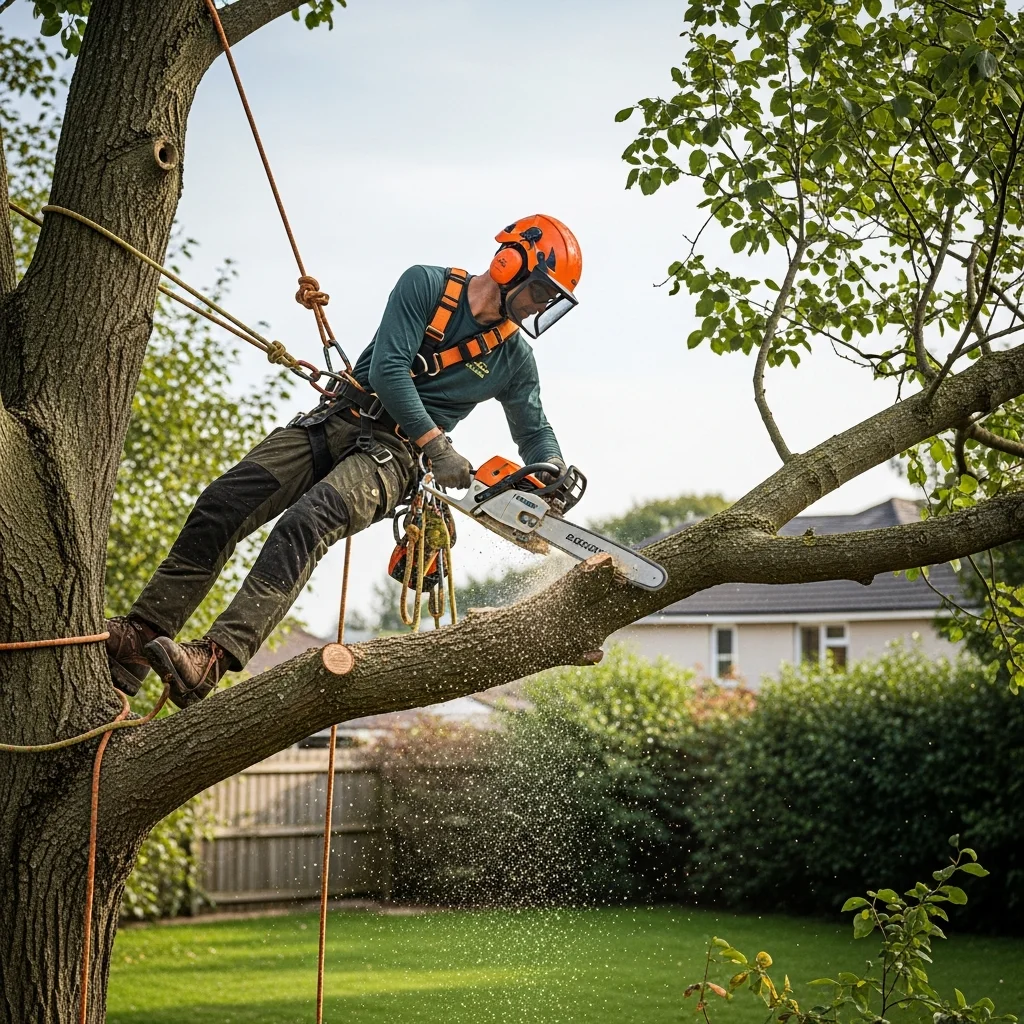
Tree work is one of those trades where a bad estimate costs you more than just money. Underbid a removal job and you are working for free. Forget to account for a crane and you are eating thousands in equipment costs. Miss the power line in your site assessment and you have got a much bigger problem.
A solid estimate protects you and builds trust with the customer. It shows them exactly what you plan to do, what equipment you are bringing, how you will handle debris, and what the whole thing costs. That kind of clarity wins jobs over the lowball competitor who shows up with a number on the back of a business card.
The challenge for most tree service companies is time. You are out on jobs all day. The last thing you want to do at 7 PM is sit at a computer building estimates. These three templates give you a framework you can fill in quickly for the most common tree service jobs: full removal, trimming and pruning, and stump grinding.
Copy the template that fits the job, plug in your numbers, and send a professional estimate the same day.
Want free estimate templates you can download and customize right now?
Projul offers free construction estimate templates built by contractors who actually do this work. Stop guessing and start sending estimates that close.
What Every Tree Service Estimate Should Include
Good tree service estimates share a few things in common. Before we get into the templates, here is what you should include on every estimate you send.
Company Information and Credentials
Tree work carries serious risk. Homeowners want to know they are hiring someone legitimate. Include:
- Company name, address, and phone number
- ISA certification number (if applicable)
- Arborist license or tree service license number
- General liability insurance carrier and policy number
- Workers compensation coverage confirmation
- Estimate date and expiration date
This information does two things. It satisfies the homeowner who does their homework, and it sets you apart from unlicensed operators who undercut the market.
Tree Identification and Location
Be specific about which trees you are working on. Homeowners with multiple trees on their property need to know exactly which ones are included. For each tree, note:
- Species (oak, maple, pine, etc.)
- Approximate height and trunk diameter (DBH)
- Location on the property (front yard, backyard, near driveway, etc.)
- Condition (dead, diseased, healthy but overgrown, storm-damaged)
If you have a site map or can mark up a photo, even better. Clarity here prevents arguments later about which tree you were supposed to remove.
Detailed Scope of Work
Spell out what you are doing and what you are not doing. For each tree:
- Type of service (full removal, crown reduction, deadwood removal, etc.)
- How far down you are cutting (flush cut, 6” above grade, etc.)
- Debris handling (chip on site, haul off, leave logs for customer)
- Stump treatment (grind, leave, apply herbicide)
- Cleanup expectations
Equipment List
Tree service jobs require specific equipment, and that equipment costs money. List what you are bringing:
- Bucket truck or crane (if needed)
- Chipper size and type
- Stump grinder
- Chainsaws and rigging gear
- Traffic control or road closure permits
Equipment costs are a big line item in tree work. Showing them separately helps the customer understand why the job costs what it does.
Template 1: Tree Removal Estimate
This template covers a full tree removal for a large residential tree. Adjust quantities and pricing for the specific job.
Job Details
- Project: Full tree removal
- Tree: Red oak, approximately 65 feet tall, 28” DBH
- Location: Backyard, 15 feet from house, no power line conflicts
- Access: Side yard gate, 10 feet wide (tight but passable for chipper)
- Condition: Dead, needs full removal
Tree Removal Labor
| Line Item | Quantity | Unit | Unit Cost | Total |
|---|---|---|---|---|
| Climber / lead arborist | 8 | HR | $75.00 | $600.00 |
| Ground crew (2 workers) | 16 | HR | $45.00 | $720.00 |
| Bucket truck operator | 4 | HR | $65.00 | $260.00 |
| Job site setup and safety prep | 1 | LS | $200.00 | $200.00 |
Labor Subtotal: $1,780.00
Equipment
| Line Item | Quantity | Unit | Unit Cost | Total |
|---|---|---|---|---|
| Bucket truck (55 ft) | 1 | DAY | $650.00 | $650.00 |
| Chipper (12” capacity) | 1 | DAY | $350.00 | $350.00 |
| Chainsaws, rigging, and hand tools | 1 | LS | $150.00 | $150.00 |
| Fuel and oil | 1 | LS | $125.00 | $125.00 |
Equipment Subtotal: $1,275.00
Debris Removal
| Line Item | Quantity | Unit | Unit Cost | Total |
|---|---|---|---|---|
| Chip brush and small limbs on site | 1 | LS | $0.00 | $0.00 |
| Haul chips and debris (dump fees) | 2 | LOAD | $175.00 | $350.00 |
| Cut trunk into manageable logs | 1 | LS | $200.00 | $200.00 |
| Haul logs off site | 1 | LOAD | $225.00 | $225.00 |
Debris Subtotal: $775.00
Site Restoration
| Line Item | Quantity | Unit | Unit Cost | Total |
|---|---|---|---|---|
| Rake and clean work area | 2 | HR | $45.00 | $90.00 |
| Fill hole from root ball (if pulled) | 1 | LS | $0.00 | $0.00 |
| Protect lawn from equipment damage | 1 | LS | $100.00 | $100.00 |
Site Restoration Subtotal: $190.00
Optional Add-Ons
| Line Item | Quantity | Unit | Unit Cost | Total |
|---|---|---|---|---|
| Stump grinding (28” stump, 6” below grade) | 1 | EA | $375.00 | $375.00 |
| Fill stump hole with topsoil and seed | 1 | EA | $125.00 | $125.00 |
Optional Subtotal: $500.00
Summary (Without Optional Add-Ons)
| Category | Amount |
|---|---|
| Tree Removal Labor | $1,780.00 |
| Equipment | $1,275.00 |
| Debris Removal | $775.00 |
| Site Restoration | $190.00 |
| Subtotal | $4,020.00 |
| Overhead (15%) | $603.00 |
| Profit (15%) | $693.45 |
| Total Estimate | $5,316.45 |
Summary (With Stump Grinding)
| Total with Stump Grinding | $5,816.45 |
Notes for This Template
The bucket truck rate of $650 per day assumes you own the truck and are covering your ownership costs. If you are renting, check current rates in your area. Bucket truck rental with an operator runs $1,000 to $1,500 per day in most markets.
For trees near structures, add rigging time and equipment. Sectional removal of a large tree next to a house takes significantly longer than felling a tree in an open yard. If you need a crane, add $1,500 to $3,000 per day depending on the crane size and operator fees.
Dead trees can be more dangerous than live ones. Dead wood is brittle and unpredictable. Factor in extra time for careful cuts and additional rigging. Some climbers charge a premium for dead tree work, and that is reasonable.
Template 2: Tree Trimming and Pruning Estimate
This template covers a multi-tree trimming job for a residential property. Trimming jobs often involve several trees at once, so this template is set up for a three-tree package.
Job Details
- Project: Tree trimming and pruning (3 trees)
- Trees:
- Tree 1: Silver maple, 45 ft, crown reduction and deadwood removal
- Tree 2: White oak, 55 ft, canopy thinning and clearance from roof
- Tree 3: Ornamental pear, 25 ft, shaping and deadwood removal
- Location: Front and side yards, good access
Trimming Labor
| Line Item | Quantity | Unit | Unit Cost | Total |
|---|---|---|---|---|
| Climber / lead arborist | 6 | HR | $75.00 | $450.00 |
| Ground crew (2 workers) | 12 | HR | $45.00 | $540.00 |
| Bucket truck operator | 3 | HR | $65.00 | $195.00 |
Labor Subtotal: $1,185.00
Equipment
| Line Item | Quantity | Unit | Unit Cost | Total |
|---|---|---|---|---|
| Bucket truck (55 ft) | 1 | DAY | $650.00 | $650.00 |
| Chipper (12” capacity) | 1 | DAY | $350.00 | $350.00 |
| Chainsaws, pole saws, hand tools | 1 | LS | $100.00 | $100.00 |
| Fuel and oil | 1 | LS | $85.00 | $85.00 |
Equipment Subtotal: $1,185.00
Debris Removal
| Line Item | Quantity | Unit | Unit Cost | Total |
|---|---|---|---|---|
| Chip all brush and small limbs | 1 | LS | $0.00 | $0.00 |
| Haul chips and debris (dump fees) | 1 | LOAD | $175.00 | $175.00 |
| Rake and blow clean all work areas | 2 | HR | $45.00 | $90.00 |
Debris Subtotal: $265.00
Per-Tree Breakdown
| Tree | Service | Estimated Time | Estimated Cost |
|---|---|---|---|
| Silver maple (45 ft) | Crown reduction, deadwood removal | 2.5 hours | $850.00 |
| White oak (55 ft) | Canopy thinning, roof clearance | 3 hours | $1,050.00 |
| Ornamental pear (25 ft) | Shaping, deadwood removal | 1 hour | $375.00 |
Summary
| Category | Amount |
|---|---|
| Trimming Labor | $1,185.00 |
| Equipment | $1,185.00 |
| Debris Removal | $265.00 |
| Subtotal | $2,635.00 |
| Overhead (15%) | $395.25 |
| Profit (15%) | $454.54 |
| Total Estimate | $3,484.79 |
Notes for This Template
The per-tree breakdown is helpful for the customer but is not how you actually price the job. You price based on total crew time and equipment cost, then allocate across trees for the customer’s benefit. This way, the customer can see what each tree costs them if they want to drop one from the scope.
Trimming near roofs and structures requires more care and takes longer. The white oak clearance from the roof will need precise cuts and possibly rigging to keep branches from falling onto shingles. Account for this in your time estimate.
Species matters for trimming. Oaks should not be pruned during the growing season in regions with oak wilt disease. Maples bleed sap heavily when pruned in late winter. Know your local species guidelines and schedule work accordingly. If you need to delay part of the job, note it in the estimate.
Always follow ANSI A300 pruning standards. This is not just best practice. It is your defense if a customer claims you damaged their tree. Document your pruning approach in the estimate scope of work.
Template 3: Stump Grinding Estimate
Stump grinding is a high-margin, fast-turnaround service. This template covers a multi-stump job, which is the most profitable way to sell stump grinding.
Job Details
- Project: Stump grinding (4 stumps)
- Stumps:
- Stump 1: Pine, 18” diameter, open yard
- Stump 2: Maple, 30” diameter, near fence
- Stump 3: Oak, 24” diameter, open yard
- Stump 4: Birch, 12” diameter, garden bed
- Access: Good, all stumps accessible by machine
Stump Grinding
| Line Item | Quantity | Unit | Unit Cost | Total |
|---|---|---|---|---|
| Pine stump (18” dia, 6” below grade) | 1 | EA | $175.00 | $175.00 |
| Maple stump (30” dia, 6” below grade) | 1 | EA | $375.00 | $375.00 |
| Oak stump (24” dia, 6” below grade) | 1 | EA | $300.00 | $300.00 |
| Birch stump (12” dia, 6” below grade) | 1 | EA | $125.00 | $125.00 |
| Surface root grinding (maple, visible roots) | 1 | LS | $150.00 | $150.00 |
Grinding Subtotal: $1,125.00
Equipment and Transport
| Line Item | Quantity | Unit | Unit Cost | Total |
|---|---|---|---|---|
| Stump grinder (self-propelled, 35 HP) | 1 | DAY | $325.00 | $325.00 |
| Transport grinder to job site | 1 | EA | $150.00 | $150.00 |
| Fuel | 1 | LS | $65.00 | $65.00 |
| Grinding teeth (wear allowance) | 1 | LS | $40.00 | $40.00 |
Equipment Subtotal: $580.00
Cleanup
| Line Item | Quantity | Unit | Unit Cost | Total |
|---|---|---|---|---|
| Rake grindings into holes | 4 | EA | $25.00 | $100.00 |
| Haul excess grindings off site | 1 | LOAD | $125.00 | $125.00 |
| Fill holes with topsoil (optional) | 4 | EA | $45.00 | $180.00 |
| Grass seed and straw (optional) | 4 | EA | $30.00 | $120.00 |
Cleanup Subtotal: $525.00
Summary
| Category | Amount |
|---|---|
| Stump Grinding | $1,125.00 |
| Equipment and Transport | $580.00 |
| Cleanup (with topsoil and seed) | $525.00 |
| Subtotal | $2,230.00 |
| Overhead (12%) | $267.60 |
| Profit (18%) | $449.27 |
| Total Estimate | $2,946.87 |
Notes for This Template
Stump grinding pricing is usually based on diameter. A common formula is $3 to $5 per inch of stump diameter for the first stump, with a discount for additional stumps on the same property. The prices above reflect a multi-stump discount.
Hard wood species like oak and maple take longer to grind than soft wood like pine and birch. Account for this in your per-stump pricing. An oak stump the same size as a pine stump will take 50 to 75 percent longer to grind.
The “6 inches below grade” spec is standard for lawn restoration. If the customer wants to plant a new tree in the same spot, you may need to grind 12 to 18 inches below grade, which doubles the time and should be priced accordingly.
Grinding teeth are a real cost. A set of carbide teeth runs $150 to $250 and lasts for 50 to 100 stumps depending on conditions. The $40 wear allowance per job is a simple way to account for this. Some contractors price teeth separately as a per-stump consumable.
Watch for underground utilities. Always call 811 before grinding. Hitting a gas line, water line, or buried electrical cable is a nightmare. The 811 call is free. Skipping it is not worth the risk.
Tips for Writing Better Tree Service Estimates
Tip 1: Price by the Job, Not by the Hour
Customers do not want to see hourly rates for tree work. They want to know the total cost. Price each tree or service as a flat rate. If the job takes less time than expected, you keep the margin. If it takes longer, you learn to estimate better next time. Hourly pricing also creates a trust problem because the customer feels like you have an incentive to work slowly.
Tip 2: Take Photos During Your Site Visit
Walk the property with the homeowner and take photos of every tree you plan to work on. Note the species, size, and any hazards. These photos become part of your estimate and your job record. If a dispute comes up later about which tree you were supposed to trim, the photos settle it.
Tip 3: Sell Multi-Tree Packages
Stump grinding and trimming are much more profitable when you sell multiple trees at once. Your setup, travel, and equipment costs are the same whether you grind one stump or four. Offer a per-tree discount for additional trees and you will increase your average ticket while the customer feels like they got a deal.
Tip 4: Address Hazards in Writing
If a tree is near power lines, a structure, a fence, or a septic system, call it out in the estimate. Explain what extra steps you are taking and why it affects the price. This protects you if something goes wrong and shows the customer you are thinking about safety.
Tip 5: Include Seasonal Timing Notes
Some tree work is best done at specific times of year. Pruning oaks in winter reduces disease risk. Removing dead trees is easier in winter when the ground is frozen and you can drive equipment without tearing up the lawn. If timing matters for the job, include a note in the estimate about when you recommend scheduling the work.
Tip 6: Separate Emergency Pricing
Emergency storm damage work should be priced differently than planned removals. Make this clear to customers. Emergency work involves after-hours labor, immediate equipment mobilization, and higher risk. A 25 to 50 percent premium on emergency work is standard in the industry. Do not apologize for it. Just explain the reason.
Tip 7: Follow Up Within 48 Hours
Tree service estimates have a short shelf life. The homeowner is thinking about the problem right now. In a week, they will forget about it until the next storm. Follow up within 48 hours of sending the estimate. A simple phone call or text asking if they have questions closes more jobs than any pricing strategy.
Common Mistakes That Cost Tree Service Companies Money
Underestimating Rigging Time
Rigging and lowering large limbs takes time, especially near structures. A 60-foot oak next to a house cannot be felled in the open. Every limb needs to be rigged, lowered, and controlled. New estimators often price a rigging job the same as an open-fell job and lose money every time.
Forgetting Stump Root Systems
Some species, especially maples and willows, have aggressive surface root systems. Grinding the stump is only part of the job. If the customer wants to plant grass or garden over the area, you may need to grind surface roots across a 10 to 15 foot radius. Price this separately.
Not Charging Enough for Small Jobs
A single stump or a small ornamental tree does not cost much in labor or materials. But it costs the same amount of drive time, setup, and equipment transport as a big job. Minimum charges of $250 to $350 protect your margins on small work.
Ignoring Access Challenges
Can your chipper get through the gate? Is the tree in a backyard with no access except through the house? Do you need to carry everything by hand? Access challenges add labor hours fast. Always assess access during your site visit and price accordingly.
Skipping the Contract
An estimate is not a contract. Once the customer approves the estimate, get a signed contract or work authorization before you start cutting. This protects both parties and gives you legal standing if a payment dispute arises.
How Projul Makes Tree Service Estimates Faster
Spreadsheets and paper estimates worked fine when you had a few jobs a week. But as your tree service grows, you need a better system for sending estimates, tracking approvals, and converting jobs. That is what Projul does.
Projul’s estimating tools were built for contractors who spend their days on job sites, not in an office. Here is how it helps tree service companies:
Build Estimates from Your Truck
Just finished a site visit? Open Projul on your phone, select your saved line items for removal, trimming, or stump grinding, adjust quantities, and send the estimate before you drive to the next job. The customer gets a professional estimate while they are still looking at the tree.
Reusable Line Item Library
Save your most common line items with current pricing. Bucket truck, chipper, climber rate, ground crew rate, stump grinding per inch. When you build a new estimate, just pick the items that apply. No retyping, no forgetting to include a cost.
Track Who Opened Your Estimate
Know the moment a customer views your estimate. If they opened it three times but have not responded, that is a hot lead. A quick follow-up call at the right time closes the deal.
Multi-Option Estimates
Give the customer options on a single estimate. Remove the tree and grind the stump? Just remove it? Trim instead of remove? Projul lets you present multiple options so the customer can choose the level of service they want.
From Estimate to Job in One Click
When the customer approves, convert the estimate to an active job with one click. Schedule the crew, assign equipment, and start work. Everything from the estimate carries over automatically.
Ready to Send Better Estimates?
Free templates get you started. Projul gets you to the next level.
If you are spending too much time building estimates and not enough time doing the work that pays, it is time for a change. Projul gives you estimating, scheduling, project tracking, and invoicing in one place. Built for contractors, by contractors.
Schedule a free demo and see how Projul works for tree service companies.
Projul offers three plans designed for contractors at every stage. Every plan includes estimating tools. Check out the full details on our pricing page.
Frequently Asked Questions
How much does tree removal cost in 2026?
What should a tree service estimate include?
How do I estimate tree trimming jobs?
Should I include stump grinding in my tree removal estimate?
What insurance do tree service companies need to show on estimates?
Related Articles

Construction Bidding Strategies: How to Win More Jobs at Better Margins
Most contractors lose bids not because their price is wrong, but because their process is. These bidding strategies...
Read More →
Construction Estimating for Beginners: A Plain-English Guide
Construction estimating does not have to be complicated. This guide breaks it down into plain English so you can create...
Read More →
Free Cabinet and Countertop Estimate Templates
Three ready-to-use cabinet and countertop estimate templates with realistic line items, material costs, labor rates,...
Read More →