
Green Building for Contractors: How to Win Sustainable Construction Projects | Projul
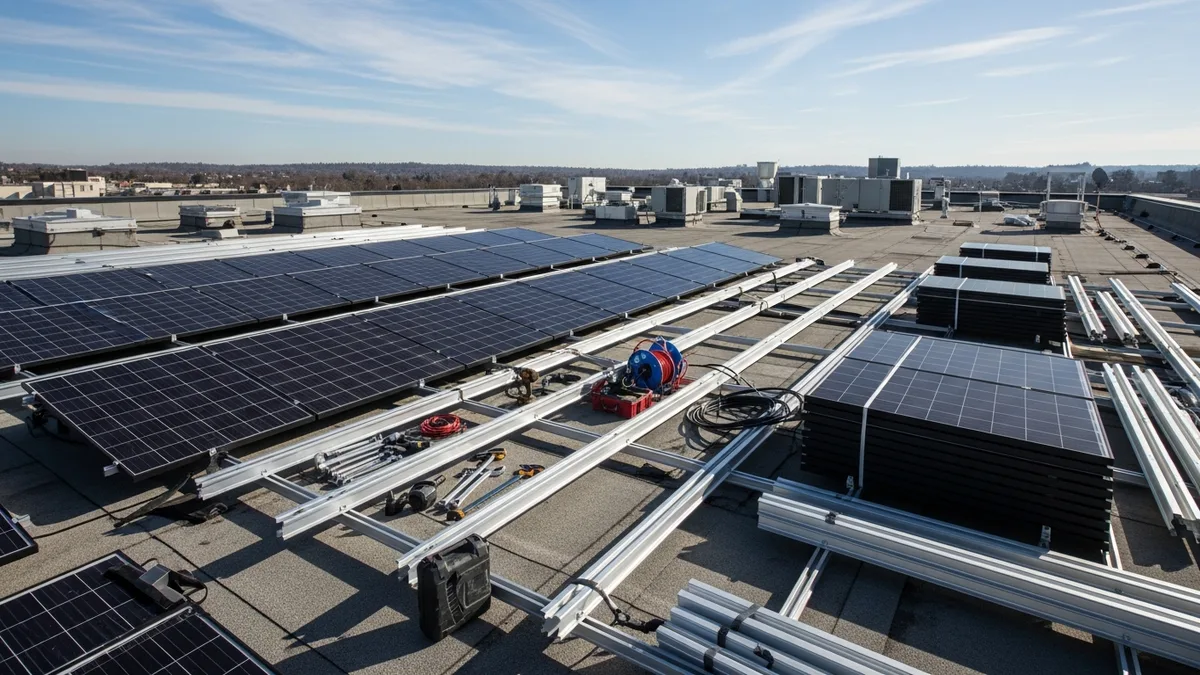
Green building isn’t a trend anymore. It’s a $400+ billion market in the U.S. alone, and property owners are actively looking for contractors who know how to build sustainably. If you’re not offering green building services, you’re handing profitable work to the contractor down the road who does.
The good news? You don’t need to rip up your business model. Most contractors can start adding sustainable practices today with skills they already have. The certification part sounds intimidating, but it’s more straightforward than you’d think.
Here’s the full breakdown: why green building matters for your bottom line, which certifications are worth pursuing, and how to market yourself as the go-to sustainable contractor in your area.
Why Green Building Is Growing (and Why Contractors Should Care)
The global green building market is expected to hit $1.3 trillion by 2030. That’s not a typo. Commercial developers, homeowners, and government agencies are all spending more on sustainable construction every year.
A few things are driving this:
Client demand is real. According to the National Association of Home Builders, over 50% of homebuyers say they’d pay more for a home with energy-efficient features. Commercial clients are even more aggressive about sustainability because it directly affects their operating costs and their ability to attract tenants.
Government incentives keep expanding. The Inflation Reduction Act alone put $370 billion toward clean energy and building efficiency. State and local programs add even more. Tax credits, rebates, and grants are available for everything from solar installs to high-efficiency HVAC systems. Your clients want to take advantage of these, and they need contractors who understand the requirements.
Building codes are tightening. Energy codes get stricter every cycle. Many states are adopting the 2021 IECC or newer, which means higher insulation requirements, better air sealing, and more efficient mechanical systems. If you’re already meeting code, you’re closer to “green” than you realize.
It’s a real competitive advantage. Most contractors in your market probably aren’t marketing green building capabilities. That means the ones who do stand out immediately. When a developer puts out a bid for a LEED-certified project, they’re not picking from 50 contractors. The pool is small, and the margins are better.
Think of it this way: green building isn’t charity work. It’s a growing segment of construction with higher margins, less competition, and more repeat business. That’s just smart positioning.
LEED, Energy Star, and Other Certifications Explained
Certifications can feel like alphabet soup. LEED, Energy Star, NGBS, Passive House, WELL, Living Building Challenge. Here’s what actually matters for most contractors and what each one costs.
LEED (Leadership in Energy and Environmental Design)
LEED is the big one. Developed by the U.S. Green Building Council (USGBC), it’s the most recognized green building certification globally. Projects earn points across categories like energy, water, materials, and indoor air quality, then receive a rating: Certified, Silver, Gold, or Platinum.
What it costs: Registration fees range from $1,200 to $60,000+ depending on project size and type. Certification review fees are separate and similar in range. The building owner typically pays these fees, not the contractor. But you need to understand the process to help your clients get there.
Why it matters for you: LEED projects often require contractors who are familiar with LEED documentation, materials tracking, and construction waste management. Getting a LEED Green Associate credential ($250 exam fee) makes you more attractive to project owners and architects who specify LEED.
Energy Star
Energy Star for buildings and homes is managed by the EPA. It’s less complex than LEED and focuses specifically on energy performance. A home or building that earns the Energy Star label meets strict energy efficiency guidelines set by the EPA.
What it costs: There’s no registration fee for Energy Star certification itself. Builders pay for a HERS (Home Energy Rating System) rater to verify compliance, which typically runs $300 to $700 per home. The cost is minimal compared to the marketing value.
Why it matters for you: Energy Star homes sell faster and for more money. If you’re a residential contractor, becoming an Energy Star partner is one of the easiest ways to differentiate yourself. The program provides marketing materials and you get listed in their partner directory.
NGBS (National Green Building Standard)
The NGBS is an ICC-approved standard specifically for residential construction. It’s often used by production builders because it’s more flexible than LEED for Homes and typically costs less to implement.
What it costs: Verification fees vary by project size but generally run $2,000 to $5,000 for single-family homes. Again, the owner or developer usually covers this.
Passive House
Passive House is the performance standard. It’s not about materials or checklists. It’s about hitting extreme energy targets: buildings that use 60-70% less energy for heating and cooling than conventional construction. The standard originated in Germany (Passivhaus) and has both European and American versions (PHIUS in the U.S.).
What it costs: Certification fees are typically $2,000 to $5,000, but the real cost is in the construction. Passive House buildings require premium windows, continuous insulation, air-tight envelopes, and heat recovery ventilation systems. Building costs run 5-15% higher than conventional, though energy savings pay that back within years.
Why it matters for you: If you can build to Passive House standards, you’re in an extremely small group of contractors. The demand for Passive House projects is growing fast, especially in the Northeast and Pacific Northwest.
Who Pays for What?
Let’s be clear: the building owner or developer pays for project certification fees in almost every case. As a contractor, your investment is in training and credentials. A LEED Green Associate costs $250 to test for. An Energy Star partnership is free. The return on these small investments can be huge when you start winning projects that your competitors can’t bid on.
Practical Sustainable Practices Any Contractor Can Start Today
You don’t need a LEED certification to start building greener. Here are things you can implement on your next project.
Construction Waste Management
Construction and demolition waste makes up about 600 million tons per year in the U.S. That’s more than twice the amount of municipal solid waste. Reducing it saves money and appeals to clients who care about sustainability.
Start here:
- Set up separate dumpsters or bins for wood, metal, concrete, and mixed waste. Recycling these materials is often cheaper than landfill disposal.
- Track your waste diversion rate. If you can tell a client “we divert 75% of construction waste from landfills,” that’s a powerful selling point.
- Use a project management tool to track waste logs and recycling receipts per job. You’ll need this documentation if you pursue LEED or similar certifications later.
- Reuse materials on-site when possible. Clean lumber cutoffs, leftover concrete, and scrap metal all have value.
Material Sourcing
The materials you spec and install have a huge impact on a project’s sustainability profile.
Quick wins:
- Source lumber from FSC-certified (Forest Stewardship Council) suppliers when possible. The price premium is often small, sometimes zero.
- Use low-VOC paints, adhesives, and sealants. They cost about the same as conventional products and they make the indoor air quality noticeably better during and after construction.
- Spec recycled-content materials: recycled steel, fly ash concrete, reclaimed wood. Many of these perform identically to virgin materials.
- Buy from local suppliers when you can. Shorter delivery distances mean lower carbon footprint, and you can usually get materials faster.
Keep records of your material choices with document management software so you can prove your sustainability practices to clients and certification bodies.
Energy-Efficient Installations
This is where most contractors already have some expertise, even if they don’t think of it as “green building.”
- Install insulation to or above code requirements. The cost difference between R-19 and R-21 in walls is minimal, but the energy savings are real.
- Focus on air sealing. Spray foam at rim joists, caulk around penetrations, use gaskets on electrical boxes. These are cheap steps that dramatically reduce air leakage.
- Spec high-efficiency HVAC systems. Heat pumps, in particular, are getting cheaper every year and often qualify for federal tax credits.
- Rough in for solar even if the client isn’t installing panels now. Running conduit from the attic to the electrical panel costs almost nothing during construction and makes future solar installation much easier.
Water Conservation
Water-efficient fixtures are standard now, but there’s more you can do:
- Install WaterSense-labeled fixtures (the water equivalent of Energy Star). Dual-flush toilets, low-flow showerheads, and efficient faucets are all simple swaps.
- Rough in for greywater systems on new builds. Even if the client doesn’t install one now, having the plumbing in place adds value.
- Grade landscaping to direct stormwater toward rain gardens or bioswales instead of storm drains. This is increasingly required by local codes in many areas.
- Use drip irrigation instead of spray systems for landscaping. It uses 30-50% less water.
The Business Case for Going Green
Curious what other contractors think? Check out Projul reviews from real users.
Let’s talk money, because that’s what matters when you’re running a business.
Premium Pricing Is Real
Green building projects consistently command higher margins. A McGraw Hill Construction study found that contractors working on green projects reported profit margins 2-5% higher than on conventional projects. On a $500,000 project, that’s $10,000 to $25,000 in additional profit.
Why? Less competition. When a project requires LEED documentation or Passive House performance, fewer contractors can bid. Less competition means better pricing power. You’re not racing to the bottom against ten other GCs.
Government Contracts Are a Goldmine
Federal buildings must meet minimum sustainability standards under executive orders that have been in place since the early 2000s. Many state and municipal governments have similar requirements. If you’re not green-certified, you’re locked out of a significant portion of government work.
The General Services Administration (GSA), the Department of Defense, and state agencies all prefer or require LEED-certified contractors for their projects. These are long-term, well-funded jobs with reliable payment.
Tax Incentives Add Up
The 179D Commercial Buildings Energy Efficiency Tax Deduction allows building owners to deduct up to $5.00 per square foot for energy-efficient improvements. As a contractor, this isn’t your deduction directly, but it’s your selling point. When you can tell a client “this upgrade qualifies you for a $50,000 tax deduction,” that changes the conversation fast.
The 25C Residential Energy Efficiency Tax Credit covers up to 30% of the cost for qualifying improvements like heat pumps, insulation, and efficient windows. Again, this is your client’s credit, but it’s your job to know about it so you can sell the work.
Reduced Waste Costs Save Real Money
Landfill tipping fees average $55 per ton nationally but can exceed $100 per ton in states like the Northeast. If you’re recycling concrete, wood, and metal instead of throwing everything in one dumpster, you can cut your waste disposal costs by 30-50% per project.
Track these savings. When you can show a client “we saved $4,200 on waste disposal on your project by recycling materials,” that builds loyalty and referrals.
Common Green Building Mistakes Contractors Make
Green building has real pitfalls. Here are the ones that trip up contractors most often.
Greenwashing Without Backing It Up
Saying you’re a “green builder” on your website without any certifications, data, or evidence to back it up will backfire. Informed clients will see through it, and you risk losing credibility. If you’re going to market green building services, have something concrete to point to: a certification, waste diversion numbers, specific material choices, or completed green projects.
Ignoring the Documentation
Green building certifications require documentation. Lots of it. Material receipts, waste logs, energy modeling reports, commissioning data. If you’re not tracking this from day one, trying to compile it at the end of a project is a nightmare.
Build documentation into your workflow from the start. Use your project management software to create templates for green building docs so nothing gets missed.
Treating It as a One-Time Thing
Some contractors pursue one green project, get frustrated with the learning curve, and go back to conventional building. The money is in making sustainability a core part of your business, not a one-off experiment. The learning curve flattens fast after your first two or three projects.
Skipping the Training
Building science matters in green construction. If you don’t understand blower door tests, thermal bridging, or moisture management in high-performance envelopes, you need to learn before you bid these projects. The Building Performance Institute (BPI) and PHIUS both offer training programs. The investment is a few thousand dollars and a few days of your time.
Over-Promising Performance
Don’t guarantee energy savings numbers you can’t deliver. Green building is science, not magic. A LEED-certified building won’t automatically cut energy bills in half. Be honest with clients about expected performance and the variables that affect it (occupant behavior, weather, maintenance).
Marketing Your Green Building Capabilities
Having green building skills is only half the equation. You need clients to know about them.
Update Your Online Presence
Your website, Google Business Profile, and social media should all mention your green building capabilities. Add a dedicated page or section about sustainable construction services. List your certifications, completed green projects, and the specific practices you follow.
If you’re not sure how to market your construction company effectively, we’ve written a full guide on how to market your construction company that covers the basics.
Get Listed in Green Directories
The USGBC has a directory of LEED professionals. Energy Star has a partner locator. Your local green building council probably has a member directory too. These are free or low-cost listings that put you in front of clients actively searching for green contractors.
Use Your Project Photos
Before and after photos of green building projects are powerful marketing tools. Solar installs, high-performance wall assemblies, waste recycling setups on jobsites, and energy-efficient mechanical systems all make great visual content. Document everything with photo management tools so you have a library of content to pull from.
Educate Your Clients
Most homeowners and even some commercial clients don’t fully understand green building. Position yourself as the expert who can explain the options, the costs, and the payback periods clearly. Write blog posts, create short videos, or host workshops. Contractors who educate their market tend to grow their business faster because they build trust before the sale.
Partner with Architects and Designers
Architects who specialize in sustainable design need contractors who can actually build what they draw. Build relationships with green-focused architects in your market. When they get asked “do you know a good contractor who can handle LEED?”, you want your name to come up first.
Price It Right
Don’t underprice green building services. Clients who care about sustainability expect to pay more and they’re willing to. Your expertise, certifications, and documentation processes all have value. Check out Projul’s pricing page to see how the right tools can help you manage green project costs without eating into your margins.
Book a quick demo to see how Projul handles this for real contractors.
Frequently Asked Questions
How much does it cost to get started in green building as a contractor?
The entry cost is low. A LEED Green Associate exam is $250. Energy Star partnership is free. BPI certification courses run $1,500 to $3,000. The real investment is time: expect to spend 40-80 hours learning building science fundamentals and certification processes. Compare that to what you spent getting your contractor’s license, and it’s a bargain for the doors it opens.
Do I need to be LEED certified to bid on green building projects?
Not always. Many green projects don’t require LEED certification specifically. But having a LEED Green Associate or LEED AP credential makes you far more competitive. Some project owners and architects require it for their teams. Even on non-LEED projects, having the credential signals that you understand sustainable building practices.
Will green building increase my project costs?
Typically by 2-8% compared to conventional construction, depending on the certification level and specific requirements. But here’s the thing: your margins are usually higher on green projects because there’s less competition. And many green building practices (like waste recycling and better air sealing) actually save money. The net impact on your bottom line is almost always positive.
What’s the fastest way to start winning green building projects?
Start with Energy Star. It’s the lowest barrier to entry for residential contractors. Get your partnership set up (it’s free), learn the HERS rating process, and start marketing Energy Star homes. For commercial work, get your LEED Green Associate and start networking with architects and developers who work on green projects. Your first project will take longer and cost more in learning time, but every one after that gets easier.
Can small contractors compete in green building, or is it just for big companies?
Small contractors actually have an advantage in certain green building segments. Passive House projects, deep energy retrofits, and custom green homes often favor small-to-mid-size contractors who can give each project more attention. Large commercial LEED projects do tend to go to bigger firms, but the residential and light commercial green market is wide open for smaller outfits. And as green building codes get stricter everywhere, knowing this stuff won’t be optional for any contractor, regardless of size.
Green building is where the construction industry is heading. You can get ahead of it now while the competition is thin, or scramble to catch up later when every project requires it. The contractors who invest in sustainability skills and certifications today will be the ones winning the best projects five years from now.
And whatever green projects you take on, make sure you have the right tools to manage them. Tracking materials, documenting waste diversion, managing certification paperwork, and keeping your team on the same page all gets a lot easier with purpose-built construction management software. See how Projul can help.
Frequently Asked Questions
Do I need a certification to do green building work?
Does green building cost more than traditional construction?
What's the easiest way for a contractor to get started with sustainable construction?
Are there government incentives for green building projects?
Is green building just a trend or is it here to stay?
Related Articles
Construction Exit Strategy: How to Sell Your Construction Company
What buyers look for in a construction company and how to get yours ready to sell at the right price.
Read More →
How to Build a Referral Program for Your Construction Business
A step-by-step guide to building a referral program that keeps qualified leads coming in from your existing network.
Read More →
How to Create a Construction Business Continuity Plan
How to keep your construction business running when things go sideways.
Read More →