
Home Addition Costs: Contractor Pricing Guide
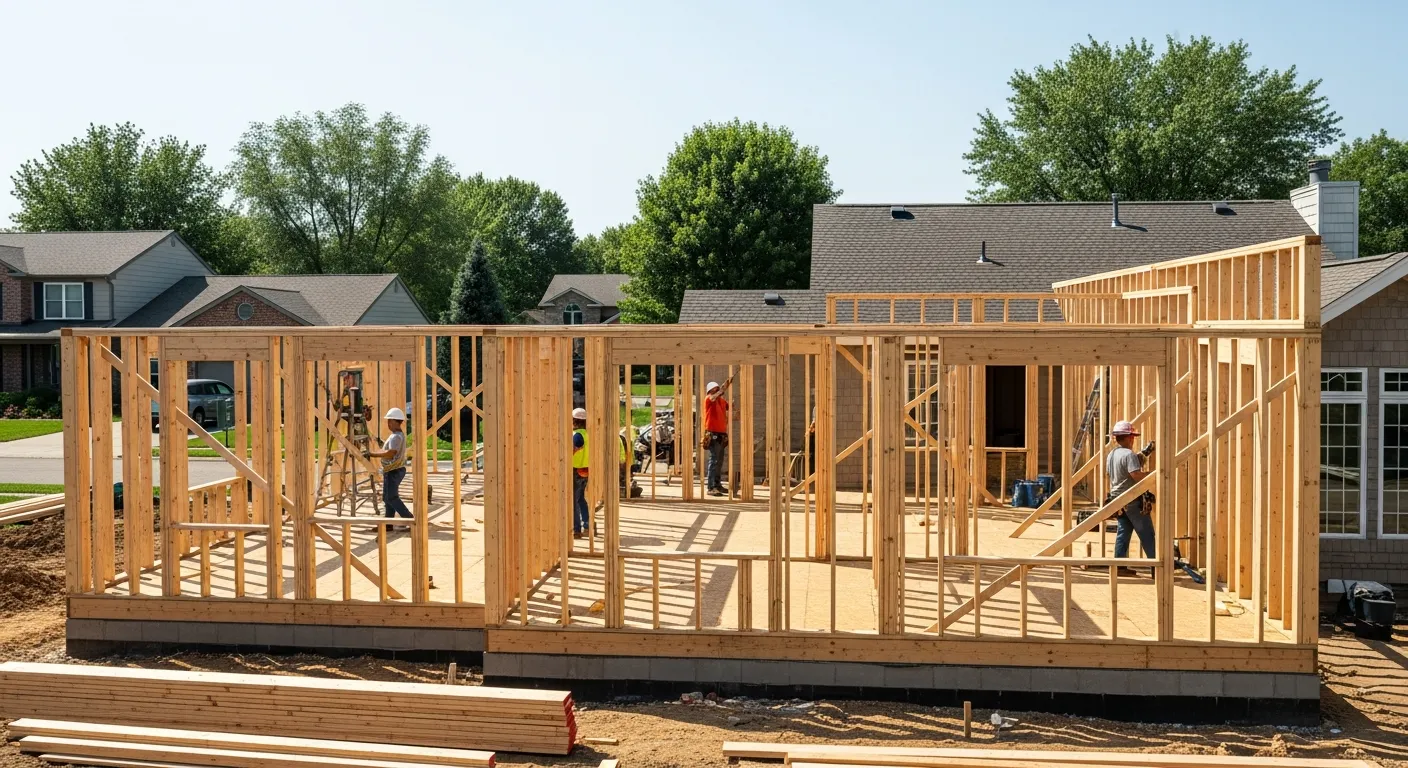
Home additions are where reputations get made or destroyed. They are the most profitable residential projects you can take on, but only if you price them right. Get the estimate wrong and you are working for free by month two.
The challenge is that no two additions are the same. You are not building from scratch on a clean slab. You are tying into an existing structure with its own quirks, its own age, and its own surprises hiding behind every wall you open up. That makes estimating additions fundamentally different from new construction or even major remodels.
This guide breaks down what you need to know about home addition costs as a contractor, from the factors that drive pricing to the tools that keep your estimates tight and your margins healthy.
Why Home Additions Are the Most Complex Residential Projects to Price
New construction is predictable. You start with a flat pad, engineered plans, and known materials. Additions throw all of that predictability out the window.
When you build an addition, you are grafting new construction onto an existing building. That means every estimate has to account for two sets of variables: the new work and the existing conditions. You are pricing the addition itself plus the cost of connecting it to a structure that may be 10, 30, or 70 years old.
Here is what makes additions so tough to bid:
You cannot see everything before you start. The framing behind the drywall, the condition of the existing foundation, the routing of mechanical systems. You can make educated guesses during the assessment, but you will not know the full picture until demo day.
Code requirements change the scope. Many jurisdictions require that when you modify a structure beyond a certain threshold, you have to bring portions of the existing home up to current code. That might mean upgrading the electrical panel, adding smoke detectors throughout, or reinforcing the existing foundation. These costs belong in your estimate, not in a surprise conversation with the homeowner three weeks into the job.
Every trade touches the existing structure. Your plumber is not just running new lines. They are tapping into existing supply and waste lines. Your electrician is not just wiring new rooms. They are tying into an existing panel that might already be at capacity. Every trade has extra complexity on an addition compared to new construction.
Finish matching is harder than it looks. Matching existing siding, roofing, flooring, and trim adds time and cost. Discontinued materials, faded colors, and odd dimensions all create headaches that do not show up on a standard square footage estimate.
The contractors who make money on additions are the ones who price all of this complexity upfront. The ones who lose money are the ones who bid additions like they bid new construction and hope the unknowns work out in their favor.
Cost Factors: Foundation, Framing, Roofline, and Tie-In Challenges
Every home addition estimate should break down into distinct cost categories. Lumping everything into a single square footage number is how margins disappear. Here are the major cost drivers you need to account for:
Foundation
The foundation type depends on the existing structure and local conditions. You might be extending a slab, adding new footings for a crawl space, or even going with a full basement to match the existing home. Each option has a dramatically different cost.
Soil conditions matter. If the existing home sits on stable ground but the addition footprint hits expansive clay or a high water table, you are looking at engineered solutions that blow up the budget. Always get a soil report on additions where the footprint extends beyond the original foundation area.
Foundation tie-ins are a common source of missed costs. Connecting a new foundation to an existing one requires doweling, proper drainage transitions, and sometimes structural engineering to make sure differential settlement does not crack the connection point over time.
Framing and Structural
Framing an addition is straightforward until you hit the tie-in wall. Removing an exterior wall to open the home into the new space often requires a structural beam, and that beam needs proper support posts and footings. An engineer will spec this, but you need to price it accurately.
Second story additions add another layer of complexity. The existing first floor framing and foundation may not be designed to carry the additional load. Structural reinforcement of the existing structure can be a six-figure line item on larger projects.
Roofline Tie-In
This is the single most underestimated cost on addition projects. The roof tie-in involves:
- Removing existing roofing and sheathing at the connection point
- Framing the transition between old and new roof planes
- Proper flashing and waterproofing at every junction
- Matching the existing roof pitch, material, and aesthetic
- Dealing with valleys, ridges, and drainage patterns that change when you add roof area
A bad roof tie-in leads to leaks, and leaks lead to callbacks that eat your profit for years. Price this right the first time.
Mechanical Systems
Every addition needs HVAC, electrical, and plumbing that connects to the existing home’s systems. Key questions to answer during estimating:
- Does the existing HVAC system have capacity for the additional square footage, or do you need a new zone or unit?
- Is the electrical panel full? A panel upgrade adds $2,000 to $4,000 or more.
- How far are the existing plumbing lines from the new fixtures? Long runs mean more cost.
- Does the water heater have capacity for additional bathrooms?
These are the details that separate a solid estimate from a number that falls apart in the field. Tools like Projul’s estimating features help you build templates that prompt you to account for each of these categories so nothing gets missed.
Permits, Engineering, and Design
Do not forget the soft costs. Addition projects typically require:
- Architectural or design plans ($2,000 to $10,000+)
- Structural engineering ($1,500 to $5,000+)
- Building permits ($500 to $5,000+ depending on jurisdiction)
- Survey and setback verification
- Energy compliance documentation
These costs add up fast, and homeowners often do not realize they exist. Include them in your estimate with clear line items so there are no surprises.
Average Home Addition Costs by Type (Room, Story, Garage, In-Law Suite)
While every project is different, having baseline numbers helps you sanity-check your estimates and set homeowner expectations early. These ranges reflect national averages as of 2026, but your local market may be higher or lower.
Single Room Addition (Bedroom, Family Room, Office)
- Cost range: $80 to $200 per square foot
- Typical project: 200 to 400 square feet
- Total range: $20,000 to $80,000
A basic room addition on a slab with standard finishes sits at the low end. Add a bathroom, higher-end finishes, or a complex roofline and you are pushing toward the top of the range. Room additions are the most common type and often the easiest to estimate because the scope is relatively contained.
Bathroom Addition
- Cost range: $150 to $300 per square foot
- Typical project: 50 to 150 square feet
- Total range: $15,000 to $50,000+
Thousands of contractors have made the switch. See what they have to say.
Bathrooms cost more per square foot than any other room because of the plumbing density, waterproofing requirements, and finish complexity. A half bath on an exterior wall near existing plumbing is far cheaper than a full bath that requires long plumbing runs and a new drain line.
Second Story Addition
- Cost range: $200 to $350 per square foot
- Typical project: 500 to 2,000 square feet
- Total range: $100,000 to $500,000+
Second story additions are the most expensive per square foot because of the structural work required. You are essentially rebuilding the roof, reinforcing the first floor and foundation, and the homeowners have to live through a period where their home has no roof. These projects require careful staging and often temporary weatherproofing.
Garage Addition
- Cost range: $40 to $100 per square foot (detached) / $60 to $150 per square foot (attached)
- Typical project: 400 to 800 square feet
- Total range: $25,000 to $80,000
Detached garages are simpler because there is no tie-in to the existing structure. Attached garages require a fire-rated wall, proper drainage away from the home, and roof integration. If the homeowner wants a finished room above the garage, treat it as a combined garage and room addition.
In-Law Suite or ADU
- Cost range: $150 to $300 per square foot
- Typical project: 400 to 1,000 square feet
- Total range: $80,000 to $250,000+
In-law suites and accessory dwelling units are essentially small apartments. They include a kitchen, bathroom, bedroom, and living space, which means every trade is heavily involved. Permitting can be complex because ADU regulations vary widely by jurisdiction. Some areas have faster ADU permits while others make you jump through significant hoops.
Track your actual costs on completed additions using job costing software so you can refine these ranges for your specific market and build type. Over time, your historical data becomes more accurate than any national average.
How to Present Addition Estimates to Homeowners
Pricing the job right is only half the battle. How you present that number determines whether you close the deal or lose it to a competitor who is either cheaper (and probably wrong) or better at communicating value.
Lead with the scope, not the price
Before showing any numbers, walk the homeowner through exactly what the project involves. Most homeowners have no idea how complex an addition is. They think it is like building a new room from scratch. They do not realize you have to tie into their existing foundation, reroute their HVAC, upgrade their electrical panel, and match their 15-year-old siding that the manufacturer does not make anymore.
When you educate them on the complexity first, the price makes sense. When you lead with the price, they get sticker shock and start shopping.
Break down the estimate into clear categories
Homeowners trust detailed estimates. A single line item that says “Home Addition: $150,000” tells them nothing and gives them every reason to question your number. Break it down:
- Site prep and demolition
- Foundation
- Framing and structural
- Roofing and exterior
- Electrical
- Plumbing
- HVAC
- Insulation and drywall
- Interior finishes (flooring, trim, paint)
- Permits and engineering
- Contingency
This level of detail shows professionalism and makes it harder for a competitor to undercut you with a vague bid that misses half the work.
Include a contingency line and explain it
Experienced homeowners expect a contingency. First-time addition clients might question it. Explain that when you tie into an existing structure, there are unknowns that only become visible once construction begins. A 10 to 15 percent contingency is standard and protects both of you.
Frame it positively: “If we do not use the full contingency, you pay less. But if we find knob-and-tube wiring behind that wall, we are covered without stopping the project to renegotiate.”
Use professional estimating tools
Hand-written estimates and spreadsheets undermine your credibility. Use estimating software that produces clean, professional proposals. Digital estimates are easier to update, track, and reference when change orders come up later in the project.
Homeowners compare your estimate to others. The contractor with the most professional, detailed, and clear estimate wins more often than the one with the lowest number. Price matters, but presentation and trust matter more on six-figure projects.
Managing Scope Creep on Addition Projects
If you want the full breakdown on scope creep, read our complete guide to construction scope creep. Here is the short version as it applies specifically to home additions.
Additions are scope creep magnets. The homeowner is living in the house while you are building. They walk through the project every day. They see possibilities. “While you have that wall open, could we add a window?” “Can we upgrade to hardwood instead of laminate?” “What about adding a closet in that corner?”
Each of those requests is reasonable on its own. Stacked together over a three-month project, they can add tens of thousands in unpriced work.
Set the scope in writing before you start
Your contract should define exactly what is included and, just as important, what is not included. List specific exclusions so there is no gray area. If the project includes painting the new addition but not the existing rooms, say that.
Use a formal change order process
Every modification to the original scope gets a written change order with a price, a timeline impact, and a signature. No exceptions. Not for small changes, not for “easy” additions, not for anything.
Contractors who handle change orders verbally are the ones who eat the cost when the homeowner says “I never agreed to pay extra for that.”
Projul’s change order feature lets you create, price, and get approval on change orders from the field, right from your phone. The homeowner signs digitally, and the change is documented before any extra work begins. That protects your margin and your relationship.
Track costs in real time
You cannot manage scope creep if you do not know where you stand financially on the job. Real-time job costing shows you exactly how much you have spent versus your budget at any point in the project. When a change order comes in, you can see immediately how it affects your overall margin.
Without real-time tracking, you might not realize the job is over budget until you are finishing up and running the final numbers. By then it is too late to do anything about it.
Using Estimating Software to Price Additions Accurately
Spreadsheets work until they do not. And on a complex project like a home addition, they usually do not. One missed formula, one line item you forgot to update, one material price that changed since your last bid, and your estimate is wrong in ways you will not catch until you are in the red.
Why purpose-built estimating software matters for additions
Home additions have more variables than almost any other residential project type. You need a system that:
- Stores templates for different addition types so you start from a proven baseline instead of a blank page
- Tracks material costs that update as prices change
- Includes labor calculations based on your actual crew rates and productivity
- Prompts you for common cost categories so you do not forget the permit fees, the engineering, or the dumpster rental
- Produces professional proposals that help you close the deal
Projul’s estimating tools are built specifically for contractors. You can create detailed estimates, save templates for different project types, and generate clean proposals that impress homeowners and stand up against competitors.
Build your own addition templates
After you have completed a few addition projects, build estimate templates based on your actual costs. Create separate templates for:
- Single room addition (slab on grade)
- Single room addition (crawl space or basement)
- Second story addition
- Garage (attached and detached)
- In-law suite / ADU
- Bathroom addition
Each template should include every line item you have encountered on that type of project. It is much easier to delete a line item that does not apply than to remember one you forgot to add.
Compare estimates to actuals
The best way to improve your estimating accuracy over time is to compare what you bid to what you actually spent. After every addition project, run a job cost report and see where you were over, where you were under, and why.
Job costing in Projul makes this comparison automatic. You can see bid versus actual for every cost category, which tells you exactly where to adjust your templates for the next project.
Over time, this feedback loop turns your estimates from educated guesses into data-driven projections. That is how you build a business that consistently makes money on additions instead of hoping each one works out.
Pricing Additions the Right Way
Home additions are high-value projects that can anchor your business with steady revenue and strong margins. But only if you estimate them properly.
Price the complexity. Account for the tie-in work. Build in contingency for the unknowns. Present your estimates professionally with clear breakdowns. Manage scope creep with formal change orders. And use estimating software that is built for how contractors actually work.
The contractors who treat addition estimating as a skill to develop, not just a number to guess at, are the ones who build profitable businesses and reputations that bring in referrals for years.
Ready to stop guessing and start managing? Schedule a demo to see Projul in action.
Ready to tighten up your estimating process? Check out Projul’s pricing and see how the right tools can help you bid additions with confidence.
Frequently Asked Questions
What is the average cost per square foot for a home addition?
How do I estimate the cost of tying a new addition into an existing roofline?
Should I use cost-plus or fixed-price contracts for home additions?
How do I handle surprises like outdated wiring or code violations during an addition project?
What is the biggest mistake contractors make when pricing home additions?
Related Articles

Construction WIP Reporting: How to Know If Your Jobs Are Actually Making Money
You can be busy every day and still lose money. A WIP report shows you which jobs are profitable and which ones are...
Read More →
Construction Overhead Costs: What They Are and How to Calculate Them
Overhead is the silent killer of contractor profits. Most builders know their material and labor costs but have no idea...
Read More →
Construction Profit Margin Benchmarks: What Contractors Actually Make
Most contractors think they make more money than they actually do. Here are real profit margin benchmarks by trade,...
Read More →