
Industrial Construction Management: What Makes It Different | Projul
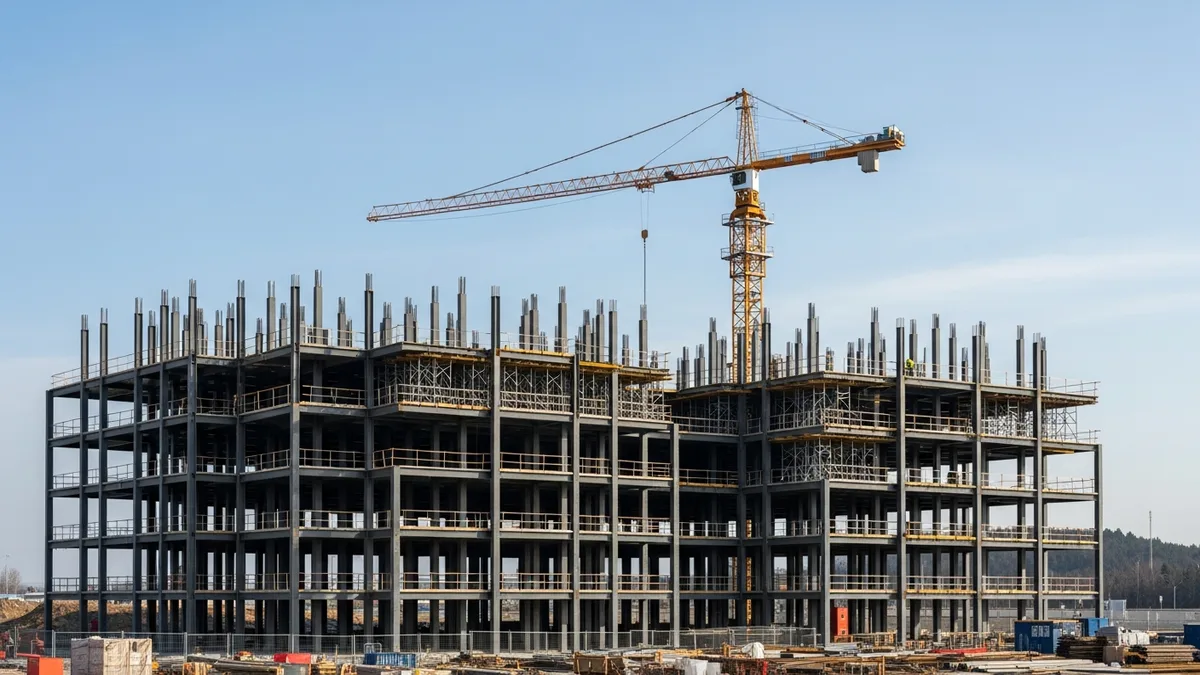
If you’ve spent your career in residential or commercial work and you’re looking at your first industrial project, here’s the honest truth: it’s a different game. The fundamentals of construction management still apply, but the scale, the stakes, and the complexity all jump by a significant margin.
Industrial construction management requires a level of planning and coordination that most contractors only encounter when they step into this sector for the first time. The budgets are bigger. The regulations are stricter. The timelines are longer. And the consequences of getting something wrong are measured in hundreds of thousands of dollars, not a few thousand.
This guide breaks down what makes industrial construction different, the types of projects you’ll encounter, the challenges you need to plan for, and how to actually manage these builds without losing your mind or your margin.
What Sets Industrial Construction Apart From Commercial and Residential
The easiest way to understand industrial construction is to compare it to what most contractors already know.
Residential construction builds places where people live. Commercial construction builds places where people work, shop, or gather. Industrial construction builds the places where things get made, processed, stored, or distributed. Factories, refineries, power plants, distribution centers, water treatment facilities. These are the buildings that keep the economy’s supply chain running.
Here’s where the differences start to stack up:
Scale and complexity. A typical commercial project might involve a few hundred thousand to a few million dollars. Industrial projects routinely run into the tens of millions, sometimes hundreds of millions. The structural requirements alone are in a different league. You’re dealing with heavy floor loads, specialized HVAC systems, process piping, and electrical systems designed to power manufacturing equipment that draws enormous amounts of energy.
Regulatory environment. Commercial and residential projects have building codes and inspections. Industrial projects have all of that plus environmental regulations, OSHA requirements specific to industrial hazards, EPA compliance, and often state or federal permitting processes that can take months before you break ground. Miss a compliance requirement and you’re not just facing a fine. You could be facing a shutdown.
Stakeholder complexity. On a residential job, you’re usually working with a homeowner or a small development team. On an industrial project, you might have the facility owner, an engineering firm, multiple specialty subcontractors, equipment vendors, regulatory agencies, and sometimes the end users of the facility all involved in decisions. Managing that many stakeholders requires a communication system that keeps everyone informed without creating chaos.
Tolerance for error. On a house, a framing mistake costs you a day and some lumber. On an industrial project, a foundation error under a piece of equipment that weighs 50 tons costs you weeks and potentially millions. The precision requirements are higher, the quality control is more rigorous, and the documentation expectations are extensive.
If you’re moving into industrial construction management, the first adjustment is mental. You have to shift from reactive problem-solving to proactive planning. By the time a problem surfaces on an industrial site, it’s already expensive.
Types of Industrial Projects: Manufacturing, Warehousing, and Process
Not all industrial construction is the same. The type of facility you’re building will dictate the complexity, the trades involved, and the management approach you need. Here are the three main categories:
Manufacturing Facilities
These are the buildings where raw materials get turned into finished products. Automotive plants, food processing facilities, electronics manufacturing, textile production. The defining characteristic of manufacturing construction is that the building is designed around the production line, not the other way around.
That means you’re working backward from equipment specs. The process engineers determine the layout, and the building gets designed to accommodate it. Floor loads, ceiling heights, utility routing, ventilation, and even column spacing all get dictated by what needs to happen inside the building after you’re done building it.
The coordination between the construction team and the equipment installation team is critical. If the slab is off by two inches in the wrong direction, a piece of machinery that costs more than the building’s framing package might not fit.
Warehousing and Distribution Centers
Warehouse construction has exploded over the past decade, driven by e-commerce and supply chain reshoring. These projects tend to be simpler than manufacturing facilities from a systems perspective, but the sheer size creates its own challenges.
A modern distribution center might cover 500,000 to over a million square feet. That’s a lot of concrete, a lot of steel, and a massive amount of roofing. The scheduling challenges are primarily about sequencing work across a huge footprint. You can’t wait for the entire slab to cure before you start erecting steel. You need to phase the work so multiple crews can operate simultaneously without getting in each other’s way.
Warehousing projects also involve significant site work. Truck courts, loading docks, parking areas, stormwater management, and utility connections all need to be coordinated alongside the building itself.
Process Facilities
This is the most complex category. Process facilities include refineries, chemical plants, pharmaceutical manufacturing, power generation, and water treatment plants. These projects involve process piping, specialized mechanical systems, instrumentation and controls, and often hazardous materials handling.
Process construction requires specialized trades that most general contractors don’t have on their regular roster. Pipe fitters, instrumentation technicians, boilermakers, and millwrights are standard crew members on these jobs. The engineering is more detailed, the inspections are more frequent, and the commissioning process at the end can take months.
If you’re managing a process facility build, your daily logs need to be extremely detailed. Every weld, every pressure test, every system checkout gets documented because regulators will want to see the paper trail.
Unique Challenges: Safety, Compliance, and Specialized Equipment
Every construction project has challenges. Industrial projects have challenges that can shut you down if you’re not prepared.
Safety at a Different Level
Industrial construction sites are inherently more dangerous than most commercial or residential sites. You’re working with heavier loads, higher elevations, confined spaces, and sometimes hazardous materials. The equipment is bigger, the excavations are deeper, and the consequences of a safety failure are more severe.
OSHA takes industrial sites seriously. Expect more frequent inspections and less tolerance for violations. Your safety program can’t be a binder that sits in the trailer. It needs to be a living system with daily toolbox talks, site-specific hazard assessments, regular audits, and immediate corrective action when something is wrong.
Every worker on the site needs proper training, and that training needs documentation. Hard hat, safety glasses, and steel toes are the bare minimum. Depending on the project, you might need fall protection certifications, confined space entry permits, hot work permits, and hazmat handling credentials.
Regulatory Compliance
Industrial projects often require permits and approvals from multiple agencies at the local, state, and federal levels. Environmental impact assessments, air quality permits, stormwater pollution prevention plans, and fire protection system approvals can all be on your list before you even start mobilizing equipment.
Thousands of contractors have made the switch. See what they have to say.
The key to managing compliance is treating it as a scheduling item, not an afterthought. Build permit timelines into your project schedule from day one. If an environmental review takes 90 days and you don’t submit it until month two, you just added three months to your project before a single shovel hits dirt.
Track every permit, every inspection, every approval in your project management system. When a regulator shows up on site asking for documentation, you need to have it available within minutes, not hours.
Specialized Equipment
Industrial construction often requires equipment that you don’t see on a typical commercial job. Tower cranes with 300-foot booms, heavy-lift crawler cranes, specialized welding rigs, and concrete pumping equipment designed for mass pours. Renting and mobilizing this equipment is expensive, and it needs to be scheduled precisely.
Equipment downtime on an industrial site is a budget killer. If a crane sits idle for a week because the steel delivery got delayed, that’s tens of thousands of dollars burned. Your schedule needs to account for equipment mobilization, utilization windows, and demobilization so you’re not paying for iron that isn’t working.
Scheduling Industrial Projects With Multiple Phases
Scheduling is where industrial construction management gets genuinely complex. A residential project might have a schedule with 50 to 100 line items. A commercial project might have a few hundred. An industrial project can easily have thousands of activities, many of them interdependent.
Phase-Based Scheduling
Most industrial projects break down into distinct phases:
- Site preparation and earthwork. Clearing, grading, excavation, and utility rough-ins.
- Foundation and structural work. Footings, slabs, structural steel, and building envelope.
- Mechanical, electrical, and plumbing (MEP). Process piping, power distribution, HVAC, and plumbing systems.
- Equipment installation. Setting, aligning, and connecting the production or process equipment.
- Commissioning and startup. Testing every system, training operators, and getting the facility to operational status.
Each phase has its own crew, its own material requirements, and its own inspection milestones. The challenge is that phases overlap. You can’t wait for all structural steel to be complete before starting MEP rough-in. You need to sequence the work so that crews can follow each other through the building without conflicts.
Critical Path Management
On an industrial project, understanding your critical path isn’t optional. It’s the difference between finishing on time and handing over a facility three months late with liquidated damages eating your profit.
Your scheduling tools need to handle dependencies, float calculations, and what-if scenarios. When a delay happens (and it will), you need to immediately understand the downstream impact. Does a two-week delay in steel delivery push your equipment installation back? Does that push commissioning past the owner’s operational deadline?
Build buffer into your schedule where you can, but be honest about it. Padding every activity by 20% doesn’t make your schedule conservative. It makes it unrealistic and hard to manage. Instead, put contingency where the risk actually lives. If you know the permitting process is unpredictable, that’s where the buffer goes.
Coordination Meetings
Weekly coordination meetings are the bare minimum on industrial projects. Depending on the project’s complexity, you might need daily pull-planning sessions during critical phases. Every subcontractor needs to know what’s happening in the next two weeks, what their predecessors need to finish, and what constraints might affect their work.
Document everything from these meetings. Decisions made verbally in a coordination meeting have a way of being forgotten or remembered differently by different people. Get it in writing, distribute it, and hold people accountable.
Cost Control on Large-Scale Industrial Builds
Here’s the reality of industrial construction budgets: they’re big enough that a 5% overrun can mean millions of dollars. Cost control isn’t something you think about at the end of the job when you’re doing the final accounting. It’s something you build into your daily operations from day one.
Real-Time Job Costing
The single most important cost control tool is real-time job costing. You need to know where your budget stands right now, not where it stood when you ran last month’s report.
That means tracking labor costs daily. Every hour that gets charged to the project should be categorized and compared against your estimate. If you budgeted 2,000 labor hours for structural steel erection and you’re at 1,500 hours with 60% of the work complete, you have a problem. Catch it now and you can adjust crew sizes, overtime, or scope. Catch it in month six and you’re writing a check.
Material costs need the same level of attention. Industrial projects involve large material purchases, and prices can shift between the time you bid the job and the time you actually buy. Track your committed costs (purchase orders) against your budgeted costs, and flag variances as they appear.
Change Order Management
Change orders on industrial projects tend to be larger and more frequent than on commercial or residential work. Design changes, unforeseen site conditions, owner-requested modifications, and regulatory requirements can all generate change orders.
The key is documentation speed. When a change happens, document it immediately. Get the scope defined, the cost estimated, and the approval in writing before the work begins. Contractors who perform change order work on a handshake and sort out the money later are the ones who end up in disputes.
Every change order should include the cost impact, the schedule impact, and a clear description of what’s included. Use your project management software to track change orders so nothing falls through the cracks.
Budget Reporting
Set up a budget reporting cadence and stick to it. Weekly cost reports for the project team, monthly reports for ownership. Each report should show:
- Original budget vs. current budget (including approved change orders)
- Committed costs vs. actual costs
- Projected cost at completion
- Variance explanations for anything over threshold
Don’t wait for someone to ask how the budget is doing. Proactive reporting builds trust with owners and gives you early warning when something is trending in the wrong direction. Check out our pricing page to see how Projul makes this reporting straightforward for contractors of any size.
Software Tools for Managing Industrial Construction
Let’s be direct: you cannot effectively manage an industrial construction project with spreadsheets, whiteboards, and a filing cabinet full of paper. The volume of information, the number of stakeholders, and the pace of decisions require a digital platform that keeps everything organized and accessible.
Here’s what your industrial construction management software needs to do:
Scheduling That Handles Complexity
Your scheduling tool needs to manage hundreds or thousands of activities with dependencies, milestones, and resource assignments. It needs to update in real time so that when something changes in the field, the schedule reflects it immediately. Projul’s scheduling features are built for this kind of complexity, letting you build multi-phase schedules, assign resources, and track progress from the field or the office.
Job Costing That Connects to the Field
Your cost tracking can’t live in a spreadsheet that gets updated once a week. It needs to pull data from the field in real time. Time entries, material receipts, equipment charges, and subcontractor invoices should all feed into your job costing system automatically. Projul’s job costing tools give you a live view of your budget so you can catch variances before they become overruns.
Daily Logs and Documentation
On industrial projects, documentation is not optional. Daily logs capture what happened on site, who was there, what equipment was used, and any incidents or delays. These logs serve as your project record and your legal protection if disputes arise. Projul’s daily logs make it simple for field teams to document their day without spending an hour on paperwork.
Communication and Collaboration
When you have 50 or 100 people on a site, information needs to flow without bottlenecks. Your software should allow the office and the field to share updates, photos, documents, and decisions in real time. Nobody should be waiting for an email chain to figure out what happened yesterday.
Mobile Access
Your field team isn’t sitting at a desk. They need to access schedules, submit daily reports, review plans, and communicate with the office from their phone or tablet. If your software doesn’t work well on mobile, it doesn’t work for industrial construction.
If you’re currently running industrial projects on a patchwork of different tools, it might be time to consolidate. Managing a complex build is hard enough without having to log into five different platforms to get a complete picture of your project. For a broader look at how construction project management software ties everything together, check out our complete guide to construction project management.
Wrapping It Up
Industrial construction management is not a slight variation of commercial or residential project management. It’s a discipline that demands more planning, more documentation, more coordination, and better tools. The contractors who succeed in this space are the ones who invest in systems and processes before the project starts, not the ones who try to figure it out as they go.
Whether you’re building your first warehouse or managing a multi-phase process facility, the fundamentals stay the same: plan thoroughly, track everything, communicate constantly, and use software that gives you real-time visibility into your schedule and budget.
Want to see this in action? Get a live demo of Projul and find out how it fits your workflow.
The industrial sector is growing, and the contractors who position themselves to handle this level of complexity are the ones who will capture the biggest opportunities. Start with the right systems, build the right habits, and the projects will follow.
Frequently Asked Questions
What is industrial construction?
How is industrial construction different from commercial construction?
What are the biggest challenges in industrial construction management?
What software is best for managing industrial construction projects?
How do you control costs on large industrial construction projects?
Related Articles
Best Solar Contractor Software: Managing Installations and Proposals
Solar contractors face unique challenges that generic construction software can't handle. From proposals and permits to...
Read More →
Construction Home Addition Management: What Every GC Needs to Know
Home additions are some of the most profitable and most complex residential projects a GC can take on. Here's what you...
Read More →
Construction Pool Building Guide: What Every GC Needs to Know
Pool construction is one of the most coordination-heavy projects a GC can take on. This guide breaks down what you...
Read More →