Live Construction Cost Data - Supplier-Sourced Pricing for Every U.S. County, Updated Monthly
- Real-time, reliable cost data for better database cost estimation.
- Detailed construction cost information for both new construction and renovations.
- Increased estimator productivity with quick access to construction cost estimating data.
Your Cost Book Is Costing You Money
If you’re still estimating from a printed cost book or a PDF you downloaded last year, you’re leaving money on the table. Or worse, you’re underbidding jobs and eating the difference.
Projul’s construction cost database replaces outdated cost books like RSMeans with live, supplier-sourced pricing data. Over 5,000 contractors use Projul to estimate with confidence instead of guessing from a book that’s months out of date.
Projul’s live construction cost database provides supplier-sourced pricing updated monthly for every U.S. county, replacing outdated cost books. Contractors build accurate estimates with real material, labor, and equipment costs. Projul offers flat-rate pricing with no per-user fees for construction companies of all sizes.
Why Cost Books Are Killing Your Margins
Here’s the problem with traditional construction cost data, and it’s a problem most contractors don’t even realize they have.
Prices Are Wrong Before the Ink Dries
A traditional cost book takes months to compile, edit, print, and distribute. By the time it’s on your desk, some of those prices are already wrong. Lumber can swing 20-30% in a single quarter. Steel, concrete, and electrical components aren’t much better. You’re building estimates on numbers that don’t match reality.
They Don’t Know Your Market
National averages are useless when you’re bidding a job in a specific county. Labor rates in Austin, Texas look nothing like labor rates in rural Montana. A cost book gives you a broad number and tells you to apply a “regional adjustment factor.” That’s a fancy way of saying “guess.”
You’re Paying for Guesswork
When your cost data is wrong, one of two things happens. You bid too high and lose the job. Or you bid too low, win the job, and lose money on it. Either way, bad data costs you. Contractors who switch to live construction costs stop playing that guessing game.
They Don’t Connect to Anything
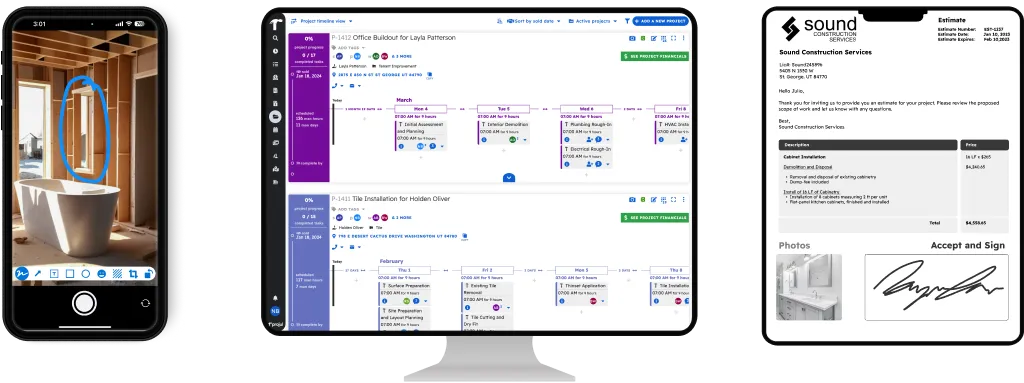
Even if your cost book had perfect numbers, you’d still be manually typing them into your estimating software. That’s slow, error-prone, and a waste of your time. Projul’s cost database feeds directly into your estimates and assemblies, so you’re working with real numbers from the start.
How Live Cost Data Changes Your Estimating
Switching from static cost books to a live construction cost database isn’t just a nice upgrade. It changes how you run your estimating process.
Faster Estimates, Better Accuracy
Instead of looking up construction estimating costs in a book, adjusting for your region, and manually entering numbers, you pull live pricing right into your estimate. The data is already localized to your county. What used to take hours takes minutes, and the numbers are better.
You Actually Know Your Margins
When your material and labor costs are accurate, your budgets are accurate. You know going in whether a job will make money. And when costs shift mid-project, you see it in real time instead of finding out at the end.
Change Orders Get Priced Right
Client wants to swap hardwood for tile? Add a bathroom? With live cost data, you price the change order in minutes with current numbers. No guessing, no “let me get back to you,” no eating the cost because you estimated wrong.
Your Team Stays Consistent
When everyone on your team pulls from the same construction cost database, your estimates are consistent. No more one estimator using last quarter’s prices while another uses numbers from a supplier call. Consistency means fewer surprises on job day.
What Makes a Good Construction Cost Database
Not all cost data is created equal. Here’s what to look for when you’re choosing a construction cost database.
Supplier-Sourced Data, Not Surveys
Some databases collect pricing through surveys, asking contractors what they paid. That data is self-reported, inconsistent, and often outdated by the time it’s compiled. The best cost databases source pricing directly from material suppliers. That’s what Projul does through its partnership with 1build.
Monthly Updates at Minimum
In a market where lumber prices can change weekly, annual cost books are a joke. Monthly updates are the bare minimum for useful construction estimating costs. Projul’s database updates every month with fresh supplier data.
Localized to Your County
National averages don’t help you bid a job. You need pricing for your specific area. Projul’s cost database covers every county in the U.S. with localized data for materials, labor, and equipment. The price of a 2x4 in Miami is different from the price in Minneapolis, and your estimates should reflect that.
Covers All Building Types
Whether you’re doing residential remodels, commercial buildouts, or new construction, your cost database should have data for all of it. Projul’s database includes millions of data points across all building types.
Includes Labor Rates, Not Just Materials
Materials are only part of the equation. A good construction cost database also tracks labor rates by trade and by region. What an electrician costs in Denver is different from what one costs in rural Georgia. If your cost data only covers materials, you’re still guessing on half the estimate.
Connects to Your Estimating Workflow
A cost database that lives in a separate tool is better than a book, but not by much. The real value comes when it’s built into your estimating workflow. In Projul, you pull live costs directly into your estimates. You can build assemblies with current pricing and reuse them across jobs. It’s all connected.
Real Contractors, Real Results
Contractors who switch from cost books to Projul’s live construction cost database see the difference on their very first estimate.
Instead of spending 30 minutes looking up material costs and adjusting for your area, you pull accurate, localized numbers in seconds. That time savings adds up fast when you’re cranking out multiple estimates per week.
And accuracy matters more than speed. When your numbers are right, you bid with confidence. You’re not padding estimates by 15% “just in case” or crossing your fingers that material prices haven’t jumped since you last checked. You know what things cost because the data is current.
The contractors who win in this business aren’t the ones who bid the lowest. They’re the ones who bid accurately, protect their margins, and deliver on budget. Live construction costs make that possible.
Accuracy in Construction Cost Estimating with Projul
Projul’s construction cost database delivers accurate, localized cost data updated monthly from suppliers nationwide. Contractors using Projul see a 32% average profit increase, and accurate estimates are a big reason why margins stop slipping.
- Access cost data from suppliers across the nation, broken down by county.
- Receive monthly database updates with current construction costs.
- Get localized data for every construction project, no matter where you’re building.
Your Go-To Source for Construction Cost Data
Projul’s construction cost database serves federal agencies, general contractors, and specialty trades with supplier-sourced pricing updated monthly. With 26+ features including assemblies and estimating tools, Projul connects your cost data directly to your estimates and budgets.
- Accurate costs and pricing data, sourced directly from suppliers and updated monthly.
- Easy requests to add line items to the product database when you need something that’s not there yet.
- Pre-set assemblies for quick and accurate cost estimating on repeat job types.
Accurate Costs Mean Accurate Budgets
Live cost data feeds into your budgeting so you can set realistic numbers before the first shovel hits the ground. No more guessing at material prices from six months ago. When your cost data is right, your budgets actually hold up.
Build Better Estimates With Real Numbers
Pull current pricing into your estimates and see how it affects your margins in reporting. When costs change, you’ll know before it eats your profit. That’s the difference between running your business and your business running you.
The Real Cost of Bad Estimates
Let’s put some numbers on this. If your cost data is off by just 5% on a $200,000 job, that’s $10,000. On the wrong side of that number, you just gave away your profit margin. Do that on three or four jobs a year and you’re talking about $30,000-$40,000 in lost profit.
Now think about it the other way. If you’re padding your estimates by 10-15% because you don’t trust your numbers, you’re pricing yourself out of jobs you should be winning. Live construction costs let you bid tighter because you know your numbers are right. You win more work at better margins. That’s the math.
How Live Cost Data Fits Into Your Estimating Workflow
The real power of a live construction cost database isn’t just having better numbers. It’s how those numbers connect to everything else you do in Projul. Here’s what that looks like in practice.
When you start a new estimate, you pull line items from the cost database instead of typing in prices from memory or flipping through a cost book. The prices are already localized to your county, so you skip the regional adjustment guesswork. If you’re a general contractor bidding a full remodel, you can price framing lumber, drywall, fixtures, and labor in minutes instead of hours.
For jobs you do repeatedly, build assemblies using live cost data. A “standard bathroom rough-in” assembly might include supply lines, drain lines, fittings, labor hours, and fixture allowances. Save it once and reuse it on every bathroom job. The costs update automatically when supplier prices change, so your assembly stays accurate without you touching it.
Live costs also connect directly to your budget. When you build an estimate with real numbers, your project budget starts on solid ground. As the job progresses, you can compare actual spend against your budgeted costs and catch overruns early. If lumber prices spike 15% after you bid the job, you’ll see it in your budget tracking and can address it with a change order before it eats your margin.
This matters for cost code tracking too. When every line item in your estimate ties to a cost code with real pricing data behind it, your job costing is accurate from day one. You’re not finding out a job lost money three months after it’s done. You’re seeing it in real time and adjusting.
If you want to go deeper on how accurate estimates protect your bottom line, read our guide on preventing construction cost overruns. And for tips on getting more from the 1build integration specifically, check out 3 ways to increase accuracy with a live cost database.
Real-Time Cost Tracking vs End-of-Job Surprises
Most contractors don’t find out a job lost money until weeks after it’s done. They tally up receipts, compare them to the original bid, and realize they went over on materials or labor. By then, it’s too late to do anything about it.
Real-time construction cost tracking flips that around. With Projul, you see what things cost as they happen - not after the fact. When material prices shift mid-project, your budget reflects it immediately. You catch problems while you can still fix them.
Here’s what that looks like in practice:
- Before the job starts: Your estimate uses live, supplier-sourced pricing. Your budget is built on real numbers, not guesses from last quarter.
- During the job: You track actual costs against your budget in real time. If drywall prices jumped 12% since you bid the job, you see it right away.
- At the end of the job: No surprises. Your reporting shows exactly where you landed versus where you planned to be.
The contractors who stay profitable are the ones who know their numbers throughout the job - not just at the beginning and end.
Budget Variance Alerts and Job Costing
Knowing your costs are off doesn’t help if you find out too late. That’s why tracking budget variance matters as much as having accurate cost data in the first place.
When your estimates are built with live construction costs and tied to your job management workflow, every dollar spent gets tracked against what you planned. If a framing crew runs over hours or material costs spike after you locked in your bid, you see the variance building before it becomes a problem.
This connects directly to job costing. Every line item in your estimate ties back to a cost code, and every expense on the job ties to the same code. You’re comparing apples to apples - what you estimated versus what you actually spent - broken down by category, by trade, by phase.
When variance shows up early, you have options. You can file a change order with the client. You can adjust labor allocation. You can source materials from a different supplier. What you can’t do is go back in time after the job is done and recover money you didn’t know you were losing.
Accurate cost data is the starting point. Tracking it against your budget throughout the job is what actually protects your margins.
Why Static Cost Data Is Costing You Money
Here’s something that might hit close to home. Lumber prices changed three times this month alone. Not over the last quarter - this month. If your estimates are still using prices from last quarter’s cost book or a spreadsheet you updated back in January, every single bid you send out is built on bad numbers.
And bad numbers only go two directions. Either you’re priced too low and you’re eating into your margins on every job you win. Or you’re priced too high and you’re losing bids to contractors who have better data than you do. Neither of those is a place you want to be.
Construction Costs Move Faster Than You Think
Most industries deal with price changes. Retail adjusts seasonally. Manufacturing negotiates annual contracts. But construction? Construction costs move faster than almost any other sector of the economy. Lumber, steel, copper, PVC, concrete - these materials are tied to global supply chains, weather events, tariffs, labor shortages, and demand cycles that shift monthly, sometimes weekly.
Think about what happened over the last few years. Lumber hit record highs, then crashed, then climbed again. Steel followed a similar pattern. Roofing materials, insulation, electrical components - all of them saw price swings that would make your head spin. Contractors who were estimating with last year’s numbers got burned. Some of them got burned badly enough to close up shop.
This isn’t a once-in-a-decade thing anymore. Price volatility is the new normal in construction. And if your cost data doesn’t keep up, you’re flying blind on every estimate.
The Spreadsheet Trap
A lot of contractors think they’ve solved this problem because they maintain their own spreadsheets. They call suppliers, jot down prices, and update their master sheet every now and then. The problem is “every now and then” isn’t often enough.
How many line items are in your average estimate? Fifty? A hundred? Two hundred? Now multiply that by the number of suppliers you’d need to call to get current pricing on every single one. That’s a full-time job just to keep your cost data current. And the minute you stop updating, your spreadsheet starts lying to you.
Even if you’re diligent about checking prices on the big-ticket items like lumber and concrete, what about the smaller stuff? Fasteners, adhesives, trim, hardware, electrical connectors - those “small” items add up fast. A 15% price increase on twenty different line items can blow a hole in your margin just as easily as a big swing on lumber.
The Real Price of “Close Enough”
Contractors are practical people. You know your numbers won’t be perfect on every line item, so you build in a buffer. Maybe you add 10% across the board. Maybe you round up on materials and hope it covers any price increases.
The problem with that approach is you’re guessing at how much to pad. If material costs went up 5% since your last update, your 10% buffer covers it - but you also just made your bid 5% higher than it needed to be. On a $300,000 job, that’s $15,000 of unnecessary padding that might cost you the contract.
And if costs went up 12% instead of 5%, your buffer didn’t cover it. Now you’re upside down on the job and you won’t know it until you’re deep into the project.
The only way out of this trap is current cost data. Not “pretty recent” data. Not “I checked lumber last week” data. Actual, current, supplier-sourced pricing that updates automatically so you’re never guessing.
What Your Competitors Already Know
The contractors who are winning work right now aren’t the cheapest bidders. They’re the most accurate bidders. They know exactly what materials and labor will cost in their specific market, so they can price jobs tightly without putting their margins at risk.
When you’re competing against someone with live cost data and you’re working from a cost book that’s three months old, you’re at a disadvantage before you even start. They can bid $5,000 lower on the same job and still make more profit than you - because their numbers are better.
Over 5,000 contractors have already moved to Projul’s live cost database. Every one of them used to estimate the old way. Every one of them can tell you the difference it made.
How Live Cost Updates Work in Projul
So how does this actually work? It’s not magic - it’s a direct pipeline from material suppliers to your estimates. Here’s what happens behind the scenes and what it looks like when you’re building a bid.
Supplier-Sourced Pricing, Updated Monthly
Projul’s construction cost database is powered by 1build, which collects pricing data directly from material suppliers across the country. Not surveys. Not contractor-reported numbers. Actual supplier pricing on millions of line items covering materials, labor, and equipment.
Every month, that data refreshes. New prices come in from suppliers nationwide, broken down by county. So when you pull a line item into your estimate, the price you see reflects what that material actually costs right now in your specific market.
This isn’t a vague “market index” or a national average with a regional multiplier tacked on. It’s real pricing data from real suppliers in your area. The price of a 2x4 in your county last month versus this month - that’s the level of detail you’re working with.
Building Estimates With Current Market Conditions
When you sit down to build an estimate in Projul, the pricing is already there. You search for a line item - say, 5/8” Type X drywall - and the price that comes up reflects current market conditions in your county. You don’t need to call your supplier first. You don’t need to check a spreadsheet. The number is current.
This matters most when you’re putting together a bid on a tight timeline. A homeowner wants a quote by Friday. A GC needs your sub bid by end of day. You can’t spend three hours price-checking every material on the list. With live cost data, you pull items into your estimate and the prices are already right. You focus on quantities, scope, and strategy instead of chasing down what a box of deck screws costs this week.
And when the client comes back two weeks later and says they want to add a deck or change the flooring spec, you price the revision with the same current data. No wondering if prices shifted between your original bid and the change order.
Assemblies That Stay Current Automatically
This is where it gets really powerful. If you do the same types of jobs regularly - bathroom remodels, kitchen renovations, framing packages, electrical rough-ins - you’ve probably built assemblies in Projul. An assembly is a pre-built collection of line items that you can drop into any estimate. A “standard bathroom rough-in” might include supply lines, drain lines, fittings, valves, labor, and fixture allowances.
When your assemblies are built with live cost data, the underlying prices update automatically when supplier pricing changes. You don’t need to go back and manually adjust every assembly every month. The next time you drop that bathroom assembly into an estimate, the prices reflect current costs. Your reusable templates stay accurate without you lifting a finger.
Think about how much time that saves. If you have twenty assemblies and each one has thirty line items, that’s 600 prices that stay current automatically. Without live data, you’d need to manually review and update every single one - or just hope they’re still close enough. Hope is not a margin strategy.
No More Supplier Price-Checking Calls
Every contractor knows the drill. You’re putting together a bid and you need to check pricing on a dozen materials. So you call your lumber yard. You call your electrical supply house. You call your plumbing distributor. You leave voicemails. You wait for callbacks. You jot down numbers on a notepad and then type them into your estimate.
That process might take half a day for a single estimate. And by the time you do it again next week, some of those prices might have already changed.
Live cost data in Projul replaces that entire process. The prices are already in the system, sourced from suppliers, and updated monthly. You still build relationships with your local suppliers - that’s important for negotiating project-specific pricing and ensuring availability. But for estimating purposes, you don’t need to make ten phone calls just to put together a bid.
When a local supplier does send you a negotiated price list, Projul Pro can save you the typing. Hand the list to ChatGPT, Claude, or Gemini, and Projul AI Connect adds the new items and updates the prices in your cost library.
The time you save on price-checking goes straight back into your business. More estimates out the door. More time on the job site. More time doing the work that actually makes you money.
Protecting Your Margins With Accurate Cost Data
Let’s talk about margins. Specifically, let’s talk about the gap between the margin you think you’re making and the margin you actually make when the job is done.
The 20% Margin That Turned Into 5%
You’ve probably lived this one. You put together an estimate with a 20% margin built in. The numbers looked good. You won the bid, started the job, and everything seemed fine. Then the invoices started coming in.
Lumber was up 8% from when you priced it. Your drywall supplier raised prices. The electrician’s rate went up $5 an hour. None of these were huge swings on their own, but together they chipped away at your margin one line item at a time.
By the time you finished the job and added up the real numbers, that 20% margin was closer to 5%. Maybe less. And the worst part? You didn’t know it was happening until it was too late to do anything about it.
This is the most common margin killer in construction: the slow bleed from outdated cost data. It doesn’t show up as one big hit. It shows up as a hundred small ones spread across every material and labor category in your estimate.
Why Outdated Costs Are a Margin Time Bomb
When you build an estimate with old pricing, you’re setting a budget based on what things used to cost. But you’re going to pay what things cost now - or worse, what they’ll cost two months from now when you’re actually buying materials.
That gap between estimated cost and actual cost is where your margin goes to die. And in a volatile market, that gap widens fast.
Let’s say you priced a job in January using December cost data. You won the bid in February and started buying materials in March. In that three-month window, steel went up 6%, lumber went up 4%, and your plumbing supplier added a fuel surcharge. Your estimate didn’t account for any of that because your cost data was already outdated when you built it.
Live cost data closes that gap. When you build an estimate with current pricing, your numbers reflect what you’ll actually pay - not what you paid six months ago, not what a cost book said last year. Your margins are based on reality.
Seeing the Truth in Your Reports
Accurate cost data doesn’t just help at the estimating stage. It flows through to your reporting too. When your estimates are built with real numbers, your budget-to-actual comparisons actually mean something.
You can look at a job report and see exactly where you hit your targets and where you didn’t. If you went over on framing materials, you can tell whether it was a quantity issue (you needed more lumber than estimated) or a pricing issue (lumber cost more than expected). That distinction matters because it tells you what to fix next time.
With outdated cost data, your reports are muddy. You can see that a job came in over budget, but you can’t tell how much of that was price movement versus scope creep versus poor estimation. Live costs give you clean data that tells a clear story.
Building Budgets You Can Actually Trust
Your budget is only as good as the cost data behind it. If your estimates are built on stale pricing, your budgets are fiction from day one. You’re managing to a number that was wrong before you started.
When you build budgets with live cost data, you start from a position of accuracy. Your budget reflects what things actually cost in your market right now. That means your cash flow projections are more reliable. Your material orders match your budget allocations. And when you track spending against the budget during the job, the variances you see are real variances - not artifacts of bad starting data.
Contractors who make the switch from static cost data to live pricing consistently say the same thing: “I finally trust my numbers.” That trust changes how you run your business. You stop over-padding bids. You stop second-guessing your estimates. You bid with confidence because your data is solid.
Margin Protection Is a Daily Practice
Protecting your margins isn’t something you do once at the estimating stage and then forget about. It’s an ongoing process that starts with accurate cost data and continues through every phase of the project.
Live costs give you the foundation. Accurate estimates. Realistic budgets. Clean reports. But the real margin protection comes from using that data actively - tracking costs during the job, catching variances early, and making adjustments before small overruns become big losses.
The contractors who protect their margins best are the ones who know their numbers at every point in the project. Live construction costs make that possible by ensuring the numbers you start with are right.
Live Costs Across the Project Lifecycle
Construction projects have a lifecycle. Pre-construction, active construction, and closeout. Most contractors think about cost data mainly during the estimating phase. But accurate, current pricing matters at every single stage.
Pre-Construction: Win the Job With Better Numbers
This is where most contractors first feel the impact of live cost data. When you’re building estimates to win work, your numbers need to be tight enough to be competitive but accurate enough to be profitable.
Live construction costs let you do both. You’re not guessing at material prices or padding your bid because you don’t trust your data. You know what a sheet of OSB costs in your county this month. You know what an electrician charges per hour in your market. You bid based on those real numbers.
The result? You win more bids because you’re not overpricing yourself with excessive buffers. And the bids you win are profitable because your numbers are grounded in reality, not guesswork. That’s the competitive edge that live data gives you at the pre-construction stage.
Active Construction: Catch Overruns Before They Bury You
Once the job starts, costs don’t stop moving. Material prices shift. Labor rates change. Suppliers adjust their pricing. A project that was perfectly budgeted at bid time can start bleeding margin the day construction begins.
This is where real-time cost tracking through your job management workflow makes the difference. When you’re tracking actual costs against a budget that was built with live data, you see variances as they develop. If your framing package is running 10% over budget because lumber prices spiked after you bid, you catch it in week two - not month three.
Early detection gives you options. You can submit a change order to the client with documentation showing the price increase. You can negotiate with a different supplier. You can adjust your schedule to prioritize purchasing materials before another increase hits. What you can’t do is fix a problem you didn’t know about.
The contractors who lose money on jobs rarely point to one big thing that went wrong. It’s usually a dozen small overruns that nobody caught because nobody was watching the numbers closely enough. Live cost data plus active budget tracking is how you watch the numbers.
Closeout: Learn From Every Job
When a job wraps up, the real education begins. Final job costing - comparing what you estimated against what you actually spent - is one of the most valuable things you can do for your business. But it only works if your starting estimates were built on accurate data.
When your estimates use live cost data, your job costing comparisons are meaningful. You can see exactly where your estimates were accurate and where they missed. Did you underestimate labor hours on the tile work? Did material costs come in higher than projected despite using current data? Was the variance driven by scope changes or by market movement?
These insights feed directly into your next estimate. Every job makes you a better estimator because you’re learning from clean data, not trying to untangle bad inputs from real performance issues.
Contractors who take job costing seriously - and who build their estimates on accurate cost data so the comparisons actually mean something - get better at bidding over time. Their estimates get tighter. Their margins get more predictable. Their businesses get more profitable.
Every Phase Benefits From Current Data
Think of live cost data as the thread that runs through your entire project lifecycle. It starts at estimating, where current prices help you build competitive and profitable bids. It continues through active construction, where budget tracking against real costs catches problems early. And it wraps up at closeout, where accurate starting data makes your job costing analysis actually useful.
Without current cost data, each of those phases suffers. Your estimates are built on old numbers, your budgets are unreliable from day one, and your closeout analysis is comparing bad estimates to actual costs - which tells you nothing useful.
With live costs, every phase works the way it should. Your estimates reflect reality. Your budgets hold up. Your job costing teaches you something. The whole project lifecycle gets better when the cost data underneath it is actually current.
Stop Guessing, Start Knowing
Every estimate you send out is a bet. You’re betting that your numbers are close enough to reality that you’ll make money on the job. With outdated cost data, that bet gets riskier every month.
Projul’s live construction cost database takes the gambling out of estimating. You get real prices from real suppliers, updated monthly, localized to your county. Your estimates reflect what things actually cost right now, not what they cost when someone published a book.
That’s how you protect your margins, win more bids at the right price, and stop losing money on jobs you should’ve made money on. Over 5,000 contractors have already made the switch. The ones still using cost books are the ones you’ll be outbidding.