
Clean Room Construction Guide for Contractors | Projul
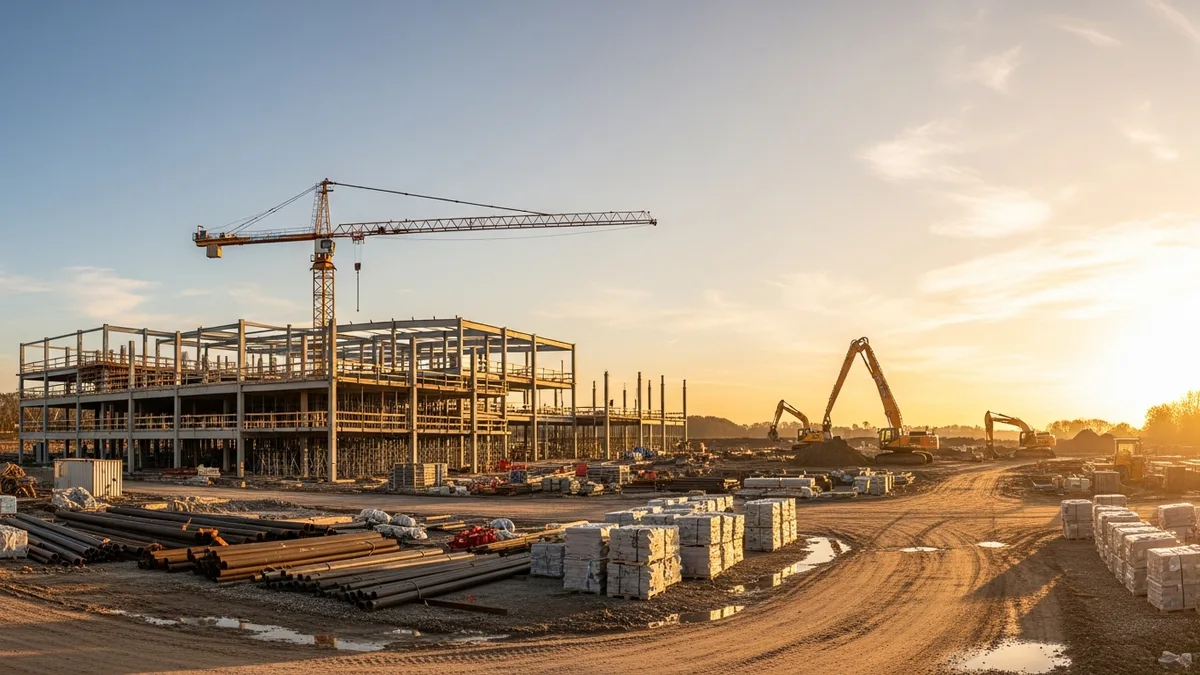
If you have been in the trades long enough, you know that not every build is the same. Most commercial projects follow a familiar rhythm: foundations, framing, mechanicals, finishes, punch list, done. But clean room and controlled environment construction is a different animal altogether. The tolerances are tighter, the coordination is more demanding, and one sloppy detail can blow your entire certification.
I have worked with contractors who walked into their first clean room project thinking it was just another tenant improvement with extra HVAC. They learned fast that controlled environment builds require a different mindset from day one. This guide breaks down what you need to know to plan, bid, build, and commission clean rooms without losing your shirt or your reputation.
Understanding Clean Room Classifications and Standards
Before you even think about bidding a clean room project, you need to understand what the owner is actually asking for. Clean rooms are classified under ISO 14644-1, which defines allowable airborne particle concentrations by class. The scale runs from ISO Class 1 (the most restrictive, used in semiconductor fabrication) down to ISO Class 9 (essentially normal room air).
Most contractors will encounter Class 5 through Class 8 projects. Here is a quick breakdown of where each class shows up in the real world:
- ISO Class 5: Pharmaceutical compounding, sterile manufacturing, some biotech labs
- ISO Class 6: Medical device assembly, optics manufacturing
- ISO Class 7: Pharmaceutical packaging, electronics assembly, hospital operating rooms
- ISO Class 8: Food processing, general laboratory work, some data centers
Each step down in classification (lower number means cleaner) roughly doubles your HVAC requirements and significantly increases your material and labor costs. A Class 7 room needs around 30 to 60 air changes per hour. A Class 5 room can require 200 to 600 air changes per hour. That is a massive difference in ductwork, air handling units, and filtration.
Beyond ISO classification, you may also need to meet Federal Standard 209E (still referenced in some older specs), USP 797 and 800 for pharmacy clean rooms, or cGMP requirements for pharmaceutical manufacturing. Read the spec package cover to cover before you price anything. Missing a single compliance requirement can turn a profitable job into a nightmare of change orders and rework.
If you are new to managing complex specs across multiple trades, having solid construction project management software in place before you start will save you headaches down the road.
Planning and Preconstruction for Controlled Environments
Read real contractor reviews and see why Projul carries a 9.8/10 on G2.
The preconstruction phase on a clean room project is where you win or lose the job, and I do not mean winning the bid. I mean winning in the sense of actually making money and delivering a quality product. Controlled environment builds demand more upfront planning than standard commercial work, and cutting corners here will cost you ten times over during construction.
Start with the end state. Work backward from the certification requirements. What particle counts need to be achieved? What temperature and humidity ranges must be maintained? What pressure differentials are required between rooms? These answers drive every design decision from wall panel selection to HVAC sizing.
Develop a detailed phasing plan. Clean room construction often happens inside occupied facilities. Pharmaceutical companies and chip manufacturers cannot shut down production for your build. You need to plan construction sequences that maintain existing clean zones while building new ones. Temporary barriers, HEPA-filtered negative air machines, and strict access protocols are not optional.
Coordinate early and often. On a typical commercial job, you might have a preconstruction meeting and then check in with subs periodically. On a clean room build, you need weekly coordination meetings starting in preconstruction. Your HVAC contractor, controls contractor, electrician, and specialty finish trades all need to understand the sequencing and the stakes. One trade stepping on another can contaminate a space that took weeks to prepare.
For HVAC coordination specifically, getting the mechanical scope locked down early is critical. If you have not handled complex mechanical coordination before, check out our guide on HVAC coordination in construction for a deeper look at the process.
Budget for commissioning from day one. Clean room commissioning and validation is not a punch list walk. It involves third-party testing firms, particle counters, air velocity measurements, pressure differential verification, and sometimes weeks of documentation. Build this time and cost into your schedule and your bid, or you will be eating it.
Material Selection and Contamination Control
Material selection on a controlled environment build is not about picking the cheapest option that meets code. Every surface, sealant, fastener, and finish in a clean room must be non-particle-shedding, cleanable, and chemically compatible with the cleaning agents the owner will use.
Wall and ceiling systems in most clean rooms use flush-mounted modular panel systems rather than standard drywall. These panels have gel-gasket seals at every joint to prevent air leakage and particle infiltration. Common options include:
- Powder-coated steel panels for Class 7 and 8 rooms
- Aluminum-framed panels with flush glazing for visibility
- FRP (fiberglass reinforced plastic) panels for wet or chemical environments
- Vinyl-clad gypsum for budget-conscious Class 8 applications
Flooring needs to be monolithic (no seams where particles can hide), static-dissipative if electronics are involved, and chemical-resistant. Epoxy flooring systems with integral cove bases are the standard. Vinyl sheet flooring with heat-welded seams is another common choice for pharmaceutical applications. Either way, the substrate prep is critical. Any cracks, pits, or moisture in the concrete will show through and potentially compromise the floor system.
Sealants and adhesives must be low-outgassing and non-particle-shedding. Standard silicone caulk is typically not acceptable in clean rooms. Specify clean room-grade sealants and make sure every trade on site understands this. I have seen electricians use standard caulk around conduit penetrations and blow a room’s certification because nobody told them otherwise.
Material handling protocols matter just as much as material selection. All materials entering the clean zone should be wiped down or removed from shipping packaging in a staging area outside the clean boundary. Cardboard is one of the worst particle generators in existence, and it has no place inside a clean room under construction. Train every person on site, including delivery drivers, on your material handling procedures.
Tracking all these material specs and costs across vendors gets complicated fast. A solid cost tracking system helps you keep material budgets in line and catch overruns before they spiral.
HVAC Systems and Environmental Controls
The mechanical system is the heart of any clean room. If you get the HVAC wrong, nothing else matters. You can have perfect walls, perfect floors, and perfect lighting, but if the air handling cannot maintain particle counts, the room fails certification.
Air handling units (AHUs) for clean rooms are not your standard rooftop package units. Clean room AHUs feature HEPA or ULPA final filters, variable frequency drives for precise airflow control, humidification and dehumidification sections, and reheat coils for tight temperature control. A Class 5 room might require a dedicated AHU delivering 400+ air changes per hour through ceiling-mounted HEPA filter modules.
Airflow patterns are classified as either unidirectional (laminar) or non-unidirectional (turbulent). Class 5 and cleaner rooms typically require unidirectional airflow, meaning air moves in a single direction from ceiling to floor through a full coverage of HEPA filters. Class 6 through 8 rooms can use non-unidirectional flow with HEPA filters covering 15 to 40 percent of the ceiling area.
Pressure cascades are essential for contamination control. Clean rooms operate at positive pressure relative to surrounding spaces, with the cleanest rooms at the highest pressure. Typical pressure differentials run 0.03 to 0.05 inches of water gauge between adjacent rooms. This ensures that when a door opens, clean air flows out rather than contaminated air flowing in. Your controls contractor needs to design and commission a building automation system that maintains these differentials under all operating conditions, including door openings.
Temperature and humidity control in clean rooms is tighter than standard commercial HVAC. Most specs call for 68 to 72 degrees Fahrenheit plus or minus 2 degrees, with relative humidity between 30 and 60 percent. Some pharmaceutical applications require even tighter ranges. Achieving this level of control requires properly sized equipment, quality controls, and careful duct design to avoid stratification and dead zones.
Ductwork in clean room projects must be sealed to SMACNA Seal Class A standards minimum. Round duct is preferred over rectangular where possible because it is easier to seal and clean. All duct interiors should be smooth and free of internal liner. Lined duct is a particle generator and has no place in a clean room supply air system.
If you are coordinating a build that involves selecting or evaluating HVAC systems for the end user, our guide on HVAC system selection for commercial projects covers the decision-making process in detail.
Scheduling, Sequencing, and Subcontractor Coordination
Clean room construction scheduling is an exercise in precision. The standard approach of letting trades stack on top of each other and sorting it out in the field does not work here. Every phase must be sequenced carefully because the environmental conditions inside the space get progressively stricter as you move toward completion.
Phase 1: Rough construction. This is your most “normal” phase. Structural work, rough mechanical, electrical, and plumbing all happen here. The space is essentially a standard construction zone with standard PPE and access rules. Get your overhead utilities, structural supports, and major penetrations done during this phase because once you seal the room, going back for a missed conduit run or pipe penetration is extremely expensive.
Phase 2: Room enclosure and sealing. Wall and ceiling panels go up, doors and windows get installed, and every penetration gets sealed. This is where your quality control program kicks into high gear. Every joint, every gasket, every penetration seal needs to be inspected and documented. A single missed seal can create a pressure leak that prevents the room from maintaining its required differential.
Phase 3: Interior finishes and equipment. Flooring, painting, light fixtures, and process equipment get installed in a space that is now sealed but not yet clean. Access protocols tighten up. Everyone entering should be wearing clean room-compatible clothing, shoe covers, and hair nets at minimum. No food, no beverages, no cardboard, no unnecessary materials.
Phase 4: Clean construction protocol. This is the final construction phase before commissioning. The space gets a thorough cleaning, HEPA filters get installed, and the air handling system runs continuously. Any remaining punch list work happens under strict clean room protocols. Workers wear full gowning, tools get wiped down before entering, and work is done in small, controlled increments.
Phase 5: Commissioning and validation. Third-party testing firms come in to verify particle counts, air changes, pressure differentials, temperature, humidity, and lighting levels. This phase typically takes 2 to 4 weeks and requires the HVAC system to run continuously. Plan for at least one round of adjustments and retesting.
Managing this level of sequencing across multiple subcontractors requires clear communication and detailed scheduling. When you have five or six trades that all need to work in a specific order within a sealed environment, the schedule is not a suggestion. It is the law.
If you are running multiple projects alongside your clean room build, keeping everything organized in your scheduling software is not optional. One missed deadline on the clean room can cascade through your entire portfolio.
Commissioning, Validation, and Handover
Commissioning is where your clean room project either crosses the finish line or gets stuck in an expensive loop of retesting and remediation. A well-built clean room should pass its initial certification with minor adjustments at most. If you are facing major failures during commissioning, something went wrong during construction that needs to be traced back and fixed.
Pre-commissioning checklist. Before you invite the testing firm on site, run through your own internal verification:
- All penetrations sealed and documented with photos
- HEPA filters installed and visually inspected for damage
- Air handling system running and balanced
- Pressure differentials reading within spec at the BAS
- Temperature and humidity stable within required ranges
- All construction debris removed, surfaces wiped with IPA or approved cleaner
- Light fixtures operational and reading at specified lux levels
- Doors closing and latching properly with sweeps and gaskets intact
Particle count testing is the headline test for clean room certification. Testing follows ISO 14644-3 protocols, with particle counters sampling air at specified locations throughout the room. The number of sample locations depends on room size, and the testing must be done under both “at rest” (room complete, HVAC running, no personnel) and “operational” (simulating normal use conditions) states.
Additional tests typically include:
- HEPA filter integrity testing (DOP or PAO challenge)
- Air velocity and uniformity measurements
- Room pressure differential verification under various door configurations
- Temperature and humidity mapping
- Sound level measurements
- Lighting level verification
- Recovery time testing (how quickly the room returns to classification after a contamination event)
Documentation is everything. Clean room owners, especially in pharmaceutical and biotech, need extensive documentation packages for regulatory compliance. Your handover package should include as-built drawings, equipment submittals, test reports, calibration certificates for all testing instruments, and a complete photo log of critical installations. This documentation is not optional and is not something you can throw together after the fact.
Training the owner’s team is the final step. Walk their maintenance staff through the HVAC system, the BAS controls, filter replacement procedures, and the cleaning protocols. A clean room is only as good as its ongoing maintenance, and setting the owner up for success protects your reputation and reduces warranty callbacks.
For keeping all your project documentation, test reports, and closeout packages organized across the whole build, a good construction management platform makes the difference between a smooth handover and a frantic scramble through filing cabinets.
Clean room and controlled environment construction is demanding work, but it is also some of the most rewarding and profitable specialty construction out there. The barriers to entry keep competition lower than standard commercial work, and owners who need clean rooms tend to be well-funded and willing to pay for quality. If you invest the time to learn the standards, build relationships with qualified specialty subs, and develop your own clean construction protocols, you can carve out a profitable niche that sets your company apart.
Ready to stop guessing and start managing? Schedule a demo to see Projul in action.
The key is preparation. Know the standards before you bid. Plan your schedule down to the day. Control your materials and your site access. And never, ever skip commissioning preparation. Do those things consistently, and you will build a reputation as the contractor who gets clean rooms right the first time.
Frequently Asked Questions
What ISO classification do most commercial clean rooms require?
How much does it cost to build a clean room per square foot?
What trades are involved in a controlled environment build?
How long does clean room construction take from start to finish?
Can you convert an existing space into a clean room?
Related Articles

BIM Clash Detection: How to Catch Conflicts Before They Cost You on the Jobsite
BIM Clash Detection: How to Catch Conflicts Before They Cost You on the Jobsite Every contractor has a story about the...
Read More →
Asphalt Paving and Compaction Guide: Mix Types, Laydown Temperatures, and Quality Testing
Asphalt paving looks straightforward from a distance. A truck dumps material, the paver lays it down, and rollers...
Read More →
Construction Jobsite Wi-Fi & Connectivity Guide: Setting Up Reliable Internet in the Field
A practical guide to getting reliable internet on construction job sites. Learn about cellular hotspots, mesh networks,...
Read More →