
HVAC Rough-In Coordination for GCs
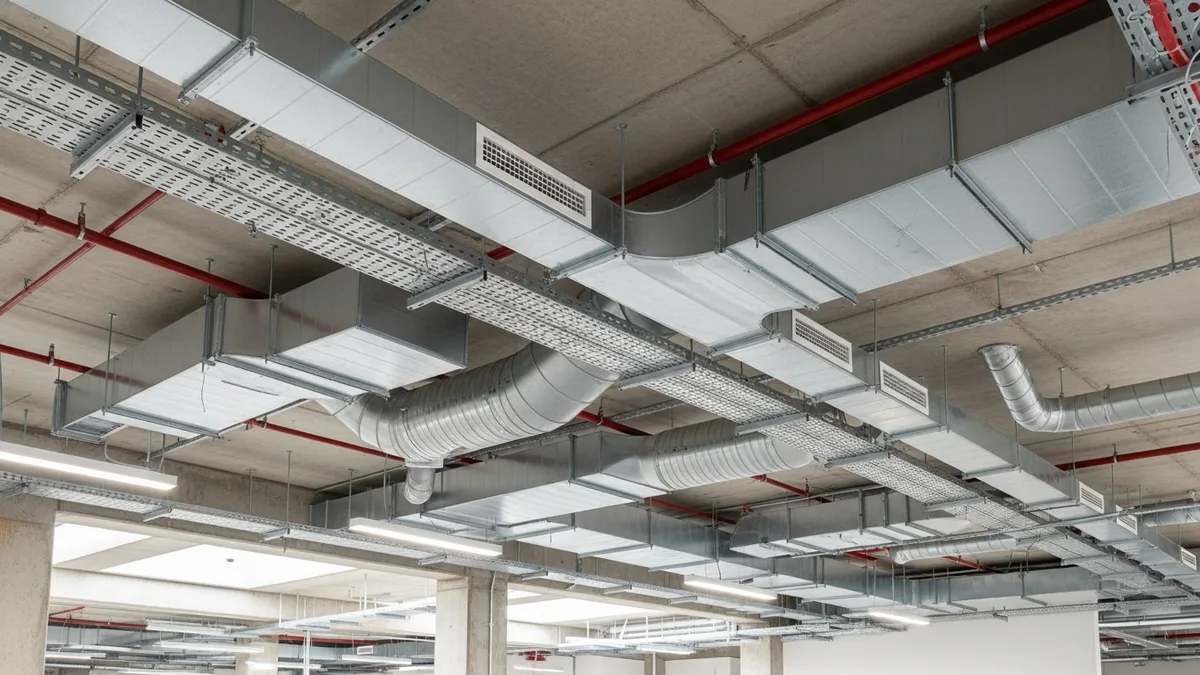
If you have been a GC for more than a few years, you already know this: HVAC rough-in is the phase that eats more ceiling space, causes more trade conflicts, and generates more heated phone calls than almost anything else on a residential or light commercial build. Ductwork is big, bulky, and unforgiving. It does not bend around obstacles the way a wire or a water line can.
And yet, a lot of general contractors treat HVAC coordination as an afterthought. They nail down the framing schedule, get plumbing and electrical dialed in, and then expect the mechanical sub to just “make it work.” That approach leads to rework, failed inspections, and the kind of delays that burn through your contingency faster than you thought possible.
This guide is written for GCs who want to get ahead of those problems. We are going to walk through how HVAC rough-in actually works on the jobsite, where the conflicts happen, and what you can do to keep your mechanical subs productive and your project on track.
Understanding What HVAC Rough-In Actually Involves
Before we talk about coordination, let’s make sure we are on the same page about what “HVAC rough-in” means in practice. It is not just running some flex duct through the attic and calling it a day.
HVAC rough-in includes all of the following:
- Supply and return ductwork. This is the main trunk lines and branch runs that distribute conditioned air throughout the building. On most residential jobs, you are looking at a mix of sheet metal trunk lines and flexible duct for branch runs. Commercial work is almost always rigid duct.
- Refrigerant lines. If the system uses a split unit (which most modern residential systems do), copper refrigerant lines run between the indoor air handler and the outdoor condensing unit. These need to be routed, insulated, and protected before walls close.
- Condensate drains. Every air handler produces condensation. That water has to go somewhere, and the drain line needs proper slope and a secondary drain or overflow switch depending on the installation location.
- Thermostat and control wiring. Low-voltage wiring for thermostats, zone dampers, and any smart controls. This often gets overlooked until the last minute.
- Flue venting. If the project includes a gas furnace or water heater that shares the mechanical system, combustion venting needs to be roughed in with proper clearances to combustible materials.
- Equipment pads and supports. Air handlers, furnaces, and any rooftop units need proper mounting, vibration isolation, and access clearances for future service.
When you look at that list, you start to see why HVAC rough-in takes more coordination than people expect. Your mechanical sub is not just running one thing through the walls and ceilings. They are installing an entire system with multiple components that all need to land in the right place.
If you want to see how this fits into the bigger picture of trade sequencing, our scheduling tools can help you map out the dependencies between trades so nothing gets missed.
Sequencing HVAC With Other Rough-In Trades
Here is where most of the headaches start. HVAC, plumbing, and electrical all need to rough in before you close walls, and they all want the same space. Joists, stud bays, soffits, and chases are shared real estate, and whoever gets there first usually wins.
The general rule of thumb is: plumbing first, HVAC second, electrical third. Here is why that order makes sense.
Plumbing is the least flexible of the three trades. Drain lines need gravity to work, which means they need specific slopes and cannot be rerouted easily. Vent stacks go straight up. Water supply lines are more flexible, but drains are locked in. So plumbing gets first crack at the framing.
HVAC goes next because ductwork is the bulkiest. A 6x12 rectangular trunk line takes up a lot more space than a 12/2 Romex cable. If you let electrical go before HVAC, your mechanical sub will be fighting around junction boxes and wire runs that could have been routed around the ductwork much more easily.
Electrical goes last because wires are the most flexible. An electrician can snake a cable around almost anything. They do not need slope, they do not need large openings, and they can drill small holes through framing members that would never be acceptable for duct or pipe.
That said, this sequence is a guideline, not a rule carved in stone. On some projects, you might run certain phases in parallel. If your plumber is only working on the first floor and your HVAC crew is starting on the second, they can overlap without stepping on each other.
The key is talking about it before anyone shows up. If you have not already read our plumbing rough-in guide, it covers the plumbing side of this sequencing question in detail. And our electrical rough-in guide walks through how electricians fit into the picture.
Reading Mechanical Plans and Catching Problems Early
One of the best things you can do as a GC is actually read the mechanical drawings before rough-in starts. I know that sounds obvious, but you would be surprised how many GCs hand the plans to the HVAC sub and never look at them again.
You do not need to be an HVAC engineer to catch the common problems. Here is what to look for:
Duct sizes vs. available space. Look at the trunk line sizes on the plans and then look at the actual framing. If the plans call for a 10x20 trunk line and you have 2x10 floor joists with 9.25 inches of actual depth, that duct is not fitting between the joists. You will need a soffit, a chase, or a redesign.
Equipment locations. Check where the plans show the air handler, furnace, or heat pump. Is there actually room for it? Does it have the required clearances for service access? Can you get the equipment into that location, or will you need to set it before framing closes off the access?
Return air paths. Undersized or poorly planned return air is one of the most common mechanical design problems in residential construction. If the plans show a single central return with no transfer grilles or jump ducts for bedrooms, you are going to have comfort complaints from the homeowner and possibly pressure imbalance issues.
Conflicts with structure. Any time a duct run crosses a beam, header, or engineered truss, you need to verify clearances. Your blueprints guide covers how to cross-reference structural and mechanical sheets to catch these early.
When you find a problem, do not just tell the sub to figure it out. Submit an RFI to the design team and get a documented answer. This protects you if the fix costs money or changes the scope. Our RFI management guide covers the process for doing this the right way.
Managing Your Mechanical Sub on the Jobsite
Let’s talk about the people side of this. Managing a mechanical sub is different from managing a framing crew or a concrete crew, and it requires a different approach.
Thousands of contractors have made the switch. See what they have to say.
First, understand that HVAC contractors are often juggling multiple jobs at once, especially during peak building season. Their best installers are in high demand, and if your job is not ready when they show up, they will pull their crew and send them somewhere else. Getting them back might take a week or more.
Here is how to keep the relationship productive:
Give them clean, ready framing. Before your HVAC sub shows up, walk the building yourself. Are all the walls framed? Are the ceiling joists or trusses in place? Is the roof dried in? If any of that is incomplete, your mechanical crew cannot start, and you have just wasted a day of their schedule.
Confirm the equipment is on site. HVAC equipment lead times have been unpredictable in recent years. If the air handler, furnace, or condenser is not on site when rough-in starts, your crew might rough in everything except the equipment connections, and then you are paying for a second mobilization to finish up. Ask your sub about equipment lead times at least 6 weeks before rough-in.
Provide clear access. Mechanical installers need room to work. They are carrying 4-foot sections of sheet metal, 25-foot rolls of flex duct, and heavy equipment. If the jobsite is cluttered with framing scraps, stacked drywall, or other materials blocking their work areas, they will slow down or stop. Keep the site clean for every trade, but especially for HVAC.
Do not let other trades mess with their work. This is a big one. After HVAC rough-in is complete, it is common for electricians or plumbers to move ductwork out of their way. Sometimes they disconnect flex duct. Sometimes they crush a branch run by stacking materials on top of it. Make it clear to every trade on the job: if you did not install it, do not touch it. If there is a conflict, come talk to the GC.
For a deeper look at how to build strong relationships with all your subs, check out our subcontractor management guide. A lot of the principles there apply directly to working with mechanical contractors.
Common HVAC Rough-In Mistakes and How to Avoid Them
After years of building, you develop a sense for what goes wrong. Here are the HVAC rough-in mistakes that cost the most time and money, and what you can do to prevent them.
Mistake 1: Not coordinating ceiling heights with duct runs
This happens all the time in basements and first floors where ductwork runs below the joists. The architect designed the space with an 8-foot ceiling, but after the trunk line, the soffit, and the drywall, you are at 7 feet 4 inches. Now you have a code issue, an unhappy owner, or both.
The fix is simple: during preconstruction, compare the mechanical plans against the architectural ceiling heights. If there is a conflict, resolve it before framing starts. Options include running smaller, higher-velocity ducts, routing trunk lines through chases instead of below joists, or adjusting the architectural design.
Mistake 2: Ignoring clearance requirements for equipment
Every piece of HVAC equipment has manufacturer-specified clearances for service access, combustion air, and safety. A furnace stuffed into a closet with 2 inches on each side might technically fit, but no technician will be able to service it, and it may not pass inspection.
Pull the installation manuals for every piece of equipment and verify clearances against the plans before rough-in. This takes 30 minutes and can save you a week of rework.
Mistake 3: Flex duct runs that are too long or have too many bends
Flex duct is cheap and fast to install, but it has significant friction loss compared to rigid duct. A 25-foot flex run with three 90-degree bends might deliver half the airflow the system was designed for. Most manufacturers and codes limit flex duct runs to 25 feet or less, and every bend reduces performance.
Make sure your sub is following the mechanical plans for duct type and routing. If you see long, kinked, or unsupported flex runs, say something before the inspector does.
Mistake 4: Forgetting about condensate drainage
Condensate drains seem minor until they fail. A clogged or improperly sloped condensate line can dump gallons of water into a ceiling, wall, or floor. On every project, verify that condensate drains have proper slope, that secondary drains or overflow switches are installed where required, and that the drain terminates in an approved location.
Mistake 5: Skipping the pre-drywall walkthrough
Before insulation and drywall go up, do a thorough walkthrough with your mechanical sub. Check every supply and return register location against the plans. Verify that all duct connections are secure and sealed. Confirm that refrigerant lines are insulated and protected. Check that thermostat wiring is in place.
This walkthrough takes an hour or two. Finding a problem after drywall is up can cost thousands and add a week to your schedule. Take photos of everything during this walkthrough using a tool like Projul’s photo documentation feature so you have a record of what is behind the walls.
Mistake 6: Not scheduling the mechanical inspection early enough
In busy building seasons, inspection departments can be backed up by a week or more. If you wait until the day before you need it to call for a mechanical rough-in inspection, you are going to be sitting idle while you wait. Schedule your inspection as soon as rough-in is substantially complete, and have your sub on standby to address any corrections the inspector calls out.
Putting It All Together: A Practical HVAC Coordination Checklist
Here is a checklist you can use on your next project. Print it out, put it on your clipboard, and work through it at each phase.
Preconstruction Phase
- Review mechanical plans for duct sizes, equipment locations, and return air paths
- Cross-reference mechanical plans with structural and architectural drawings for conflicts
- Confirm equipment selections and verify lead times with the HVAC sub
- Discuss trade sequencing with plumbing, electrical, and HVAC subs
- Submit RFIs for any design conflicts or unclear details
- Verify that ceiling heights work with planned duct routing
Pre-Rough-In (1 to 2 Weeks Before)
- Confirm framing is complete and roof is dried in
- Verify all HVAC equipment is on site or has a confirmed delivery date
- Walk the building to check for framing issues that could affect duct routing
- Confirm the HVAC sub’s crew availability and start date
- Coordinate start times with plumbing and electrical subs to avoid stacking trades
- Clear the jobsite of debris and materials blocking work areas
During Rough-In
- Check in daily to monitor progress and catch conflicts early
- Verify duct sizes and routing match the approved plans
- Watch for other trades disturbing completed HVAC work
- Confirm equipment clearances match manufacturer requirements
- Check condensate drain slope and termination
- Verify all penetrations through fire-rated assemblies are noted for firestopping
Pre-Drywall
- Complete a full walkthrough with the HVAC sub
- Photograph all ductwork, equipment, and connections
- Verify register and grille locations match the plans and the owner’s expectations
- Confirm thermostat locations with the owner or designer
- Schedule the mechanical rough-in inspection
- Address any inspection corrections before insulation begins
This is the kind of coordination work that separates GCs who build smoothly from GCs who are constantly putting out fires. It is not glamorous. It is not the fun part of construction. But it is the part that keeps your project on schedule, your subs happy, and your profit margin intact.
If you are looking for a better way to manage trade scheduling and keep all of this organized, take a look at what Projul can do. We built it specifically for contractors who are tired of managing projects through spreadsheets and text messages.
Try a live demo and see how Projul simplifies this for your team.
HVAC rough-in does not have to be the phase that derails your project. With clear plans, good communication, and a solid sequence, your mechanical sub can get in, do their work, and get out without holding up the rest of the build. That is the goal on every job, and now you have the playbook to make it happen.
If you are pricing HVAC work for an upcoming project, our free HVAC estimate template can help you build out the scope with the right line items.
Frequently Asked Questions
When should HVAC rough-in happen in the construction sequence?
How long does HVAC rough-in take on a typical residential project?
What are the most common HVAC rough-in problems that cause delays?
Does HVAC rough-in need to be inspected before closing walls?
How do I handle conflicts between HVAC ducts and structural members?
Related Articles
Construction Septic System Installation: What Every GC Needs to Know
Septic systems on rural builds bring unique scheduling, permitting, and soil challenges that can wreck your timeline if...
Read More →
Construction Painting Project Management: Coordinating Interior and Exterior Phases
Painting is one of those trades that touches every other trade on the schedule. Get the sequencing wrong, and you're...
Read More →
Epoxy Flooring and Industrial Coatings: A Contractor's Complete Guide
Epoxy flooring and industrial coatings are high-margin work when you get the process right and a fast way to lose money...
Read More →