
Concrete Sawing & Core Drilling Guide for Contractors | Projul
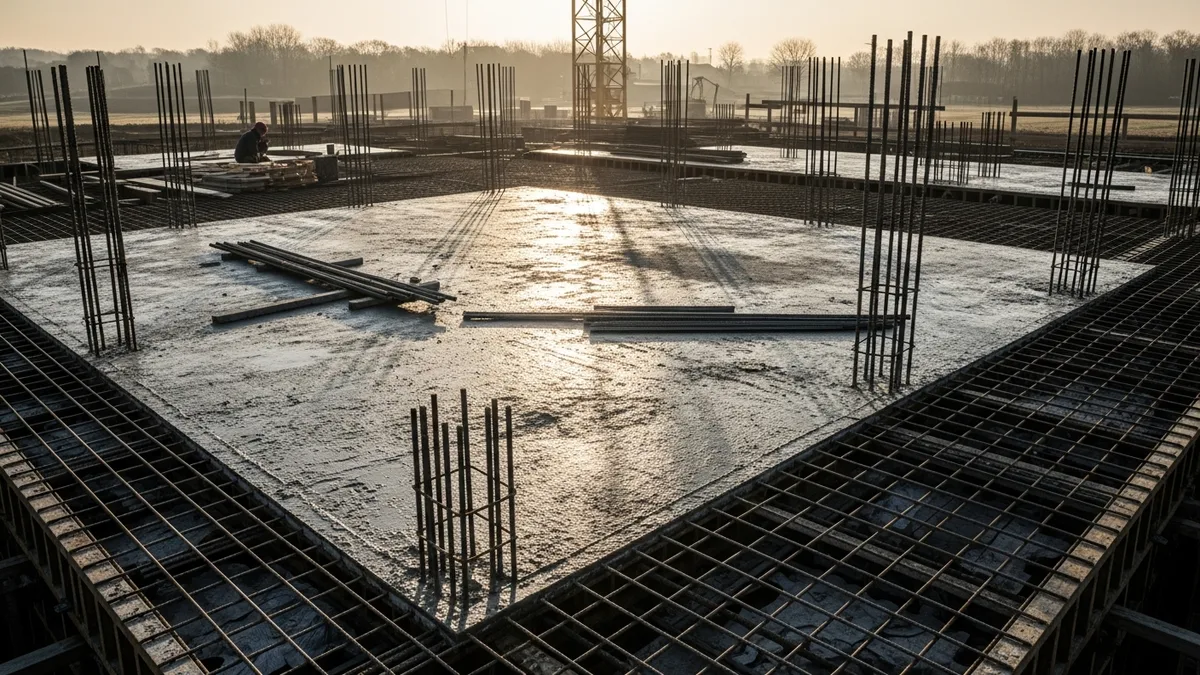
If you have been in construction long enough, you have stood on a slab and needed a hole that was not there or needed to remove a section of concrete that was very much in the way. Concrete sawing and core drilling are the tools that solve those problems, and doing them right takes more planning than most people expect.
Whether you are cutting expansion joints in a parking garage, drilling penetrations for mechanical runs, or opening up a wall for a new doorway, this guide covers the methods, equipment, safety considerations, and planning steps that separate a clean job from an expensive mess.
Understanding Concrete Sawing Methods
Concrete sawing is not one-size-fits-all. The method you choose depends on the location, depth of cut, access constraints, and what is inside the concrete you are cutting.
Flat sawing (slab sawing) is the most common method. A walk-behind saw rolls along the surface of a horizontal slab and cuts straight lines using a diamond blade. You will see this on road work, warehouse floors, sidewalk removals, and anywhere you need a clean, controlled cut on a flat surface. Blade diameters range from 12 inches for light residential work up to 60 inches or more for deep highway cuts.
Wall sawing handles vertical and overhead surfaces. A track-mounted saw rides along a rail that you bolt or anchor to the wall. Wall saws give you precise, straight cuts for door openings, window openings, and mechanical chases. They are the go-to when you need a clean rectangle cut out of a concrete wall without damaging the surrounding structure.
Wire sawing is the heavy hitter for unusual situations. A continuous loop of diamond-embedded wire wraps around the section you need to cut, and a hydraulic drive pulls it through the material. Wire saws have no depth or thickness limits, so they handle massive bridge piers, thick foundation walls, and oddly shaped cuts that no circular blade can reach.
Chain sawing works like a chainsaw but with a diamond chain. It is useful for corners and plunge cuts where a circular blade would overcut. If you need a precise opening without any overcut at the corners, a concrete chain saw finishes what a wall saw starts.
Each method requires different equipment, operator skill, and site preparation. Picking the wrong method does not just slow you down. It can damage the structure, burn through blades, and create safety problems. If you are managing multiple specialty jobs like this, keeping track of which crews have which equipment and certifications is where construction project management software pays for itself fast.
Core Drilling Equipment and Techniques
Core drilling puts round holes in concrete, and the range of applications is huge. Plumbing penetrations, electrical conduit, anchor bolts, HVAC runs, soil sampling, and structural testing all require core-drilled holes.
Handheld core drills are portable and work well for holes up to about 4 inches in diameter in walls or overhead applications. They are light enough for one operator but require a steady hand and good technique. Most handheld rigs use a water supply attachment for wet drilling.
Rig-mounted core drills bolt to a stand that anchors to the concrete surface with a vacuum pad or mechanical anchor. These handle holes from 1 inch up to 60 inches in diameter. The stand keeps the bit perfectly perpendicular to the surface, which matters when you are drilling through 12 inches of reinforced concrete and the hole needs to line up with a pipe on the other side.
Bit selection makes or breaks your productivity. Soft-bond diamond segments cut hard concrete and aggregate. Hard-bond segments work better on soft concrete and green concrete. Getting this backward means you will either glaze the bit (too hard a bond on hard material) or wear it out prematurely (too soft a bond on soft material). Talk to your bit supplier about the concrete mix and aggregate type before you order.
Drilling technique matters more than most operators admit. Start slow to establish the kerf, then increase speed and pressure gradually. Let the diamonds do the work. Forcing the bit generates heat, which damages the segments and can crack the concrete around the hole. On deep holes, pull the bit out periodically to flush debris and check for overheating.
For contractors running multiple drilling crews, tracking bit inventory, usage rates, and which bit types work on which job sites saves real money. Burning through expensive diamond bits because someone grabbed the wrong bond type is a cost that adds up. A solid estimating workflow that accounts for bit consumption by concrete type keeps your bids accurate.
Safety Requirements and OSHA Compliance
Projul is trusted by 5,000+ contractors. See their reviews to find out why.
Concrete cutting generates two serious hazards that will shut down your job site if you ignore them: silica dust and struck-by injuries. OSHA does not mess around with either one.
Respirable crystalline silica is the big one. When you cut, drill, or grind concrete, the dust contains silica particles small enough to lodge in your lungs permanently. OSHA’s permissible exposure limit (PEL) is 50 micrograms per cubic meter over an 8-hour shift. That is an incredibly small amount, and dry cutting concrete blows right past it within minutes.
Table 1 controls are the simplest path to compliance. OSHA’s Table 1 lists specific tools and the engineering controls required for each one. For concrete saws, that means using a saw with an integrated water delivery system that supplies water to the blade. For core drills, it means wet drilling or a vacuum dust collection system attached to the drill. If you follow Table 1 exactly, you do not need to do air monitoring. Deviate from it, and you need an industrial hygienist to measure exposures.
Personal protective equipment is your last line of defense, not your first. Respirators (N95 minimum, half-face with P100 filters preferred), safety glasses, hearing protection, steel-toed boots, and cut-resistant gloves are baseline PPE for cutting operations. Hard hats are mandatory any time you are doing overhead work or wall sawing.
Struck-by hazards come from blade fragments, kickback, and cut sections falling. Never remove guards from saws. Keep bystanders outside a marked exclusion zone. When cutting sections that will drop (wall openings, raised slab sections), have a rigging plan in place before you start cutting. A 4-foot by 8-foot section of 8-inch concrete weighs roughly 3,200 pounds. You do not want that falling uncontrolled.
Electrical and utility hazards require scanning before any cut. Ground-penetrating radar (GPR) identifies rebar, conduit, post-tension cables, and embedded utilities. X-ray provides higher resolution for critical applications. Hitting a live electrical conduit with a diamond blade is a bad day. Hitting a post-tension cable is worse. On post-tensioned slabs, always reference the post-tensioned concrete guide and get the tendon layout drawings before you drill a single hole.
Safety is also a scheduling problem. Coordinating scanning, getting clearance, setting up water and dust controls, and establishing exclusion zones all take time. If your scheduling system does not account for this prep work, your crews show up ready to cut and spend two hours waiting instead.
Planning and Estimating Concrete Cutting Projects
Accurate estimates for sawing and core drilling depend on details that are easy to overlook. Miss one, and your margins disappear.
Concrete composition is the starting point. What is the aggregate? River rock dulls blades differently than crushed granite. Is there rebar? How much and what size? Is it post-tensioned? Is there wire mesh? Each of these factors affects blade or bit life, cutting speed, and total cost.
Access and logistics drive costs more than most contractors realize. Can you get a walk-behind saw to the cut location, or do you need to carry a wall saw rig up three flights of stairs? Is there water available on site, or do you need to bring a tank? Where does the slurry go? Do you need traffic control for road cuts? Is there power available, or do you need a generator for electric saws?
Cut specifications need to be precise. Length of cuts, depth of cuts, number and diameter of core holes, tolerances, and surface finish requirements all factor into your bid. A 1/4-inch tolerance on a door opening is very different from a 1/16-inch tolerance on a mechanical penetration.
Waste and slurry management is a line item that catches new contractors off guard. Concrete cutting slurry (the water and ground concrete mixture) is a regulated pollutant in most jurisdictions. You cannot let it run into storm drains. You need a vacuum system, berms, or a slurry containment plan. Budget for it.
Mobilization and setup time is real cost. Setting up a wall saw track, anchoring a core drill rig, connecting water, establishing dust controls, and doing pre-cut scanning all take time. On small jobs, setup can take longer than the actual cutting. Your estimate needs to reflect that reality.
A good construction estimating tool lets you build templates for different cut types so you do not forget line items. Once you have done a few dozen sawing and drilling jobs, you will have production rates dialed in for different concrete types and conditions. Capture that data. It is your competitive advantage.
Wet Cutting vs. Dry Cutting: When to Use Each
The wet-vs-dry debate is not really a debate anymore for most applications. OSHA’s silica rule has pushed the industry heavily toward wet cutting. But there are still situations where dry cutting makes sense, and understanding both methods helps you make the right call.
Wet cutting is the standard for most concrete sawing and all core drilling. Water cools the blade or bit, extends diamond life by 2 to 4 times compared to dry cutting, suppresses silica dust to meet OSHA requirements, and gives you a cleaner cut surface. The downsides are water supply logistics, slurry management, and the mess. Indoor wet cutting requires significant containment setup.
Dry cutting works for shallow cuts, small jobs, and situations where water is not practical. Cutting a few expansion joints in an interior retail space that is already finished is a case where the water damage risk outweighs the benefits of wet cutting. Dry cutting requires a vacuum dust collection system attached to the saw and usually requires respiratory protection for the operator regardless.
Green concrete cutting is a specific application where timing matters more than method. Cutting control joints in freshly poured concrete (typically 4 to 12 hours after finishing, depending on conditions) requires an early-entry saw with a small blade. These saws can run dry with dust collection because the concrete is still soft and generates less silica. The trick is timing. Cut too early and you ravel the edges. Cut too late and you get random cracking. Experienced flatwork contractors know their concrete and their conditions. For more on getting the pour and finish right before you ever get to cutting, check out the concrete finishing guide.
Hybrid approaches are common on big jobs. Wet cut the long runs and deep cuts, then switch to dry with vacuum for short cuts in sensitive areas. The key is having a dust control plan for every cut, wet or dry, and documenting it. OSHA inspectors want to see your written exposure control plan, not just your equipment.
Regardless of which method you choose, the concrete itself needs to be right before you start cutting into it. Understanding concrete mix design helps you predict blade wear and cutting speed, which directly affects your production rates and estimates.
Managing Concrete Cutting Operations Efficiently
Running a concrete cutting operation, whether it is your specialty or an occasional part of your GC work, comes down to coordinating people, equipment, and information.
Crew qualifications matter. Concrete sawing and core drilling operators should have documented training on the specific equipment they are running. Wall sawing is not the same skill as flat sawing. Core drilling on a rig is not the same as handheld drilling. Cross-training is valuable, but putting an untrained operator on a wall saw is asking for trouble. Track certifications, training dates, and equipment qualifications for every crew member.
Equipment maintenance is non-negotiable. Diamond blades and bits are precision tools mounted on powerful machines. Worn bearings, loose arbors, damaged guards, and faulty water systems lead to poor cuts, damaged blades, and safety incidents. Build a maintenance schedule and stick to it. Check blade condition, water flow, and all safety devices before every shift.
Job documentation protects you. Photograph the work area before cutting, during cutting, and after completion. Document GPR scan results. Record blade or bit usage by job for cost tracking. Note any unexpected conditions (hitting unexpected rebar, finding voids, encountering utilities not on the drawings). This documentation supports your invoicing, helps with future estimates, and covers you if there is a dispute.
Coordination with other trades is where projects succeed or fail. Your cuts and holes need to be in the right location for the plumber, electrician, or HVAC contractor who comes after you. A 6-inch core hole drilled 3 inches off from where the mechanical drawings show it creates a cascade of problems. Verify locations with the installing contractor before you drill, not after.
Production tracking over time is how you build a profitable operation. How many linear feet per hour does your crew cut in 6-inch reinforced concrete with a 20-inch blade? How many 4-inch core holes per hour in 8-inch unreinforced slab? These numbers drive your estimates, your scheduling, and your profitability. Contractors who track this data consistently outbid competitors who guess.
For general contractors managing concrete cutting as one piece of a larger project, having all your job data, schedules, crew assignments, and documentation in a single construction management platform keeps things from falling through the cracks. When the mechanical sub calls asking if their penetrations are done, you should be able to answer without making three phone calls.
Book a quick demo to see how Projul handles this for real contractors.
Concrete sawing and core drilling are precise operations that reward preparation and punish shortcuts. Get the scanning done, pick the right method and equipment, follow OSHA’s silica rules, and track your production data. Do those things consistently and you will deliver clean work, protect your crews, and make money on every cut.
Frequently Asked Questions
What is the difference between concrete sawing and core drilling?
How deep can a concrete saw cut?
Do I need a special license to do concrete cutting?
How much water does wet cutting use?
Can you core drill through rebar?
Related Articles

Construction Loading Dock Design and Installation Guide
A practical guide for contractors on loading dock design and installation, covering dock types, structural specs,...
Read More →
Parking Garage Waterproofing and Deck Coating: A Contractor's Complete Guide
Parking garage waterproofing and deck coating work is specialized, high-stakes, and easy to get wrong. This guide...
Read More →
Construction Plaster and Specialty Wall Finishes Guide
Plaster and specialty wall finishes are making a serious comeback in both residential and commercial construction. This...
Read More →