
Construction Fleet Insurance Management Guide | Projul
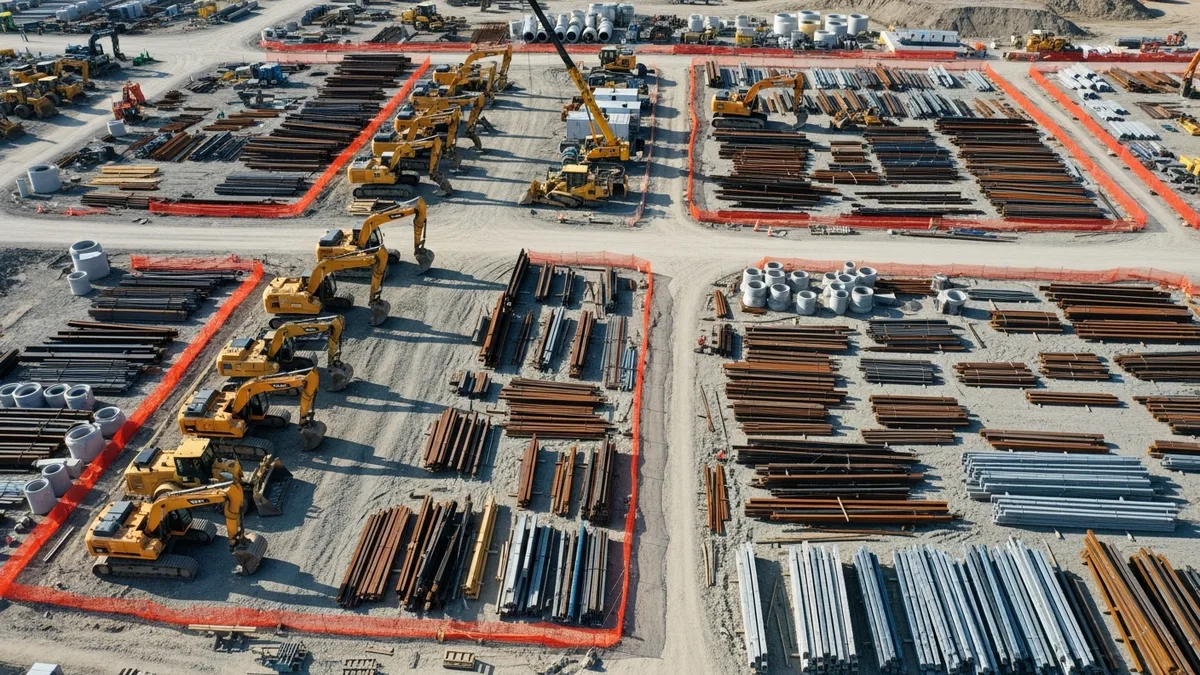
If you run a construction company, you already know that trucks, trailers, excavators, and all the equipment rolling between job sites represent a massive investment. One bad accident, one stolen skid steer, or one totaled work truck can put a serious dent in your bottom line. That is where fleet insurance comes in, and getting it right can save you tens of thousands of dollars a year.
But fleet insurance is not just about buying a policy and hoping for the best. It takes real planning, the right coverage types, and a proactive approach to safety and claims. In this guide, we will walk through everything a construction business owner needs to know about managing fleet insurance, from the basics of commercial auto policies to picking the right broker for your company.
Understanding Commercial Auto Insurance for Construction Fleets
Commercial auto insurance is the foundation of any construction fleet insurance program. If you have vehicles registered to your business, personal auto policies will not cover them. Period. Your carrier will deny the claim, and you will be stuck paying out of pocket for repairs, medical bills, and legal fees.
A commercial auto policy typically covers liability (bodily injury and property damage you cause to others), collision (damage to your own vehicles), and uninsured/underinsured motorist protection. Most states require a minimum level of liability coverage, but if you are working on commercial projects, your general contractor or project owner will almost certainly require higher limits, often $1 million or more per occurrence.
Here is what trips up a lot of contractors: the difference between owned, hired, and non-owned auto coverage. Owned auto covers vehicles titled to your company. Hired auto covers vehicles you rent or lease for short-term use. Non-owned auto covers employees driving their personal vehicles for work purposes, like running to the supply house in their own truck. If you have employees who ever use personal vehicles for company business, you need non-owned auto coverage. Without it, you are exposed to a liability gap that could cost you big.
Fleet policies (usually available once you have five or more vehicles) often come with better rates than insuring each vehicle individually. The carrier spreads risk across the whole fleet, and you get one renewal date instead of juggling multiple policies throughout the year. If you are still insuring trucks one at a time, talk to your broker about consolidating into a fleet policy. The savings can be significant.
For contractors managing a growing number of vehicles and jobs, keeping track of which trucks are assigned where is critical. A tool like construction fleet management software can help you stay organized and give your insurance company the documentation they want to see.
Inland Marine Coverage: Protecting What Moves Between Sites
Here is a coverage type that confuses a lot of people, starting with the name. Inland marine insurance has nothing to do with boats. It evolved from ocean marine policies centuries ago and now covers property in transit over land. For construction companies, it is one of the most important policies you can carry.
Think about everything that moves between your shop, your yard, and your job sites on any given day: hand tools, power tools, generators, compressors, building materials, fixtures, and specialty items. Your commercial property policy covers things at your fixed business location, but the moment those items leave your shop and hit the road, that coverage usually stops. Inland marine picks up where commercial property leaves off.
There are a few common forms of inland marine coverage contractors should know about:
Contractors equipment coverage (also called an equipment floater): This covers owned equipment and tools, whether they are on a truck, at a job site, or in temporary storage. We will dig deeper into equipment floaters in the next section.
Builders risk insurance: This covers a building or structure under construction, including materials and fixtures that have been installed. If a fire, storm, or vandal damages the project before you hand over the keys, builders risk pays for the loss.
Installation floater: This covers materials and equipment you have purchased for a specific project but have not yet installed. It fills the gap between when you take ownership of materials and when they become part of the finished structure.
Transit coverage: This specifically covers goods while they are being transported. If a load of lumber flies off your trailer on the highway, transit coverage handles the loss.
The key thing to understand is that these are not one-size-fits-all policies. Your inland marine coverage should match the way you actually operate. If you are moving $200,000 worth of equipment every week, your coverage limits and deductibles need to reflect that reality. Talk to your broker about your actual exposure, not just the minimum your contracts require.
Keeping detailed records of your equipment inventory matters here too. If you need to file a claim, your carrier will want serial numbers, purchase dates, and values. A solid equipment tracking system pays for itself the first time you need to prove what was on a stolen trailer.
Equipment Floaters: Covering Your Most Valuable Assets
Equipment floaters deserve their own section because, for most construction companies, heavy equipment represents the single largest asset class after real estate. A mid-size excavator runs $150,000 to $350,000. A concrete pump truck can cost over $500,000. Losing one of these machines to theft, fire, or a rollover without proper coverage could sink a small to mid-size contractor.
An equipment floater is a type of inland marine policy that covers specific pieces of equipment on a scheduled (listed) or blanket (unscheduled) basis. Here is the difference:
Scheduled coverage lists each piece of equipment individually with its own agreed-upon value. This is the way to go for expensive items like excavators, cranes, dozers, and specialty attachments. You know exactly what is covered and for how much.
Blanket coverage provides a pool of coverage for smaller items that would be impractical to list individually, things like hand tools, small power tools, and miscellaneous jobsite equipment. You set a total blanket limit, and any individual item under a certain threshold (often $5,000 to $10,000) is covered without being specifically listed.
Thousands of contractors have made the switch. See what they have to say.
Most contractors use a combination of both. Your big iron goes on the schedule, and your tool inventory falls under the blanket.
A few things to watch out for with equipment floaters:
Valuation method matters. Some policies pay replacement cost (what it would cost to buy a comparable new item), while others pay actual cash value (replacement cost minus depreciation). On a five-year-old excavator, the difference between those two numbers could be $80,000 or more. Push for replacement cost coverage whenever you can get it.
Pay attention to exclusions. Many equipment floaters exclude mechanical breakdown, normal wear and tear, and damage from lack of maintenance. If your engine blows because you skipped oil changes, insurance will not bail you out. This is another reason why a solid equipment maintenance program is not optional.
Understand your deductibles. Higher deductibles mean lower premiums, but make sure you can actually afford the deductible if you need to file a claim. A $10,000 deductible on a $50,000 piece of equipment might make sense. A $10,000 deductible on a $15,000 mini excavator probably does not.
Update your schedule regularly. When you buy new equipment, add it to your policy immediately. When you sell or scrap something, remove it so you are not paying premium on equipment you no longer own. A lot of contractors forget this step and end up overpaying for years.
If you are weighing whether to buy or rent heavy equipment, insurance costs should be part of that calculation. Rented equipment is typically covered by the rental company’s policy (though they will charge you for it), while owned equipment requires your own floater. Our guide on buying vs. renting construction equipment walks through the full cost comparison.
Reducing Premiums Through Safety Programs and Risk Management
Insurance carriers are in the business of pricing risk. The riskier your operation looks on paper, the more you pay. The good news is that you have direct control over many of the factors that determine your premiums. A serious, documented safety program is the single most effective way to bring your fleet insurance costs down over time.
Here is what actually moves the needle with underwriters:
Driver qualification and training. Pull MVRs (motor vehicle records) on every employee who drives a company vehicle, and do it annually. Set clear standards for what driving records are acceptable and which are not. Implement a formal driver training program that covers defensive driving, load securement, and vehicle inspection procedures. Document every training session with sign-in sheets and keep those records on file. Carriers love seeing this.
Telematics and GPS tracking. Installing GPS tracking and telematics devices in your fleet vehicles gives you real-time data on speed, hard braking, idle time, and route efficiency. More importantly, it gives your insurance carrier evidence that you are actively monitoring driver behavior. Many carriers offer premium discounts of 5% to 15% for fleets with telematics installed. Check out our guide on fleet GPS tracking for construction to see what is available.
Vehicle maintenance programs. A well-maintained vehicle is less likely to have a brake failure or tire blowout that causes an accident. Keep detailed maintenance logs for every vehicle in your fleet, and follow manufacturer-recommended service intervals. Your fleet maintenance program documentation should be something you can hand to an underwriter at renewal time.
Drug and alcohol testing. DOT-regulated drivers are already subject to testing requirements, but implementing a testing program for all drivers (including random testing) signals to carriers that you take safety seriously.
Incident reporting and root cause analysis. When accidents or near-misses happen, investigate them thoroughly. Identify what went wrong, implement corrective actions, and document everything. Carriers want to see that you learn from incidents rather than just filing claims and moving on.
Safety committee and regular meetings. Form a safety committee that meets at least monthly. Review recent incidents, discuss upcoming hazards, and update policies as needed. These meetings create a paper trail that shows your commitment to continuous improvement.
The compounding effect of these programs is real. You might not see a huge premium drop in year one, but after two to three years of clean loss history backed by documented safety programs, you will be in a much stronger negotiating position at renewal. Some contractors report premium reductions of 20% to 30% over a three-year period after implementing formal fleet safety programs.
Beyond the insurance savings, fewer accidents mean less downtime, fewer injured workers, and less time dealing with claims. It is a win across the board.
Claims Management: What to Do When Things Go Wrong
No matter how strong your safety program is, accidents will happen. How you handle claims makes a huge difference in both the financial outcome and your future premiums. A poorly managed claim can cost you far more than the incident itself.
At the scene: the first 30 minutes matter most.
When an accident involves one of your fleet vehicles, the actions taken in the first half hour set the tone for the entire claim. Train your drivers and field supervisors to follow a clear, documented procedure:
- Make sure everyone is safe. Call 911 if there are injuries.
- Do not admit fault or make statements about who caused the accident. Stick to the facts when talking to police.
- Take photos of everything: vehicle damage, road conditions, traffic signs, skid marks, and the overall scene. The more photos the better.
- Get names and contact information for all parties involved, including witnesses.
- Write down a detailed account of what happened while it is fresh. Include time, location, weather, and road conditions.
- Call your company’s designated claims contact (usually your office manager or safety director) immediately.
Reporting to your carrier: do not wait.
Most policies require you to report claims “as soon as practicable,” and many specify within 24 hours. Late reporting is one of the most common reasons claims get complicated or denied. Even if you think the damage is minor, report it. A fender bender today can turn into a $50,000 bodily injury claim six months later when the other driver’s attorney gets involved.
Working with adjusters.
Your insurance company will assign an adjuster to investigate the claim. Be cooperative but careful. Provide the facts and documentation you collected at the scene. Do not speculate about causes or accept blame. If the claim is significant, consider having your broker or an attorney involved in communications with the adjuster.
Tracking and managing open claims.
Keep a claims log that tracks every open claim, its status, reserves (the amount the carrier has set aside for the claim), and any payments made. Review this log monthly. If a claim seems to be dragging on or the reserves seem too high, push back through your broker. Inflated reserves on open claims can drive up your premiums at renewal, even if the claim ultimately settles for less.
Subrogation and recovery.
If another party was at fault for the accident, your carrier will pursue subrogation (recovering the claim costs from the at-fault party’s insurance). Follow up on subrogation efforts. Recovered dollars reduce your loss history, which helps your future premiums.
Learning from claims.
Every claim is a data point. Look for patterns. Are most of your accidents happening at the same intersection? During the same time of day? Involving the same type of vehicle? Use this information to update your safety program and training. The goal is not just to survive each claim but to prevent the next one.
Good claims management also means knowing when NOT to file a claim. If the damage is close to your deductible, it might make more financial sense to pay out of pocket and keep the incident off your loss history. Talk to your broker about the long-term premium impact before filing small claims.
Choosing the Right Insurance Broker for Your Construction Fleet
Your insurance broker is one of the most important business relationships you will have as a contractor. The right broker saves you money, protects you from coverage gaps, and advocates for you when claims get complicated. The wrong broker costs you in ways you might not realize until it is too late.
Here is what to look for:
Construction industry specialization. Insurance is complicated enough without working with a generalist who also handles restaurants, retail stores, and dental offices. You want a broker who works with construction companies every day and understands the specific risks of your trade. They should know what inland marine coverage is without you having to explain it. They should understand the difference between a contractors equipment floater and a builders risk policy. If you have to educate your broker about your industry, find a different broker.
Access to multiple carriers. An independent broker who represents multiple insurance carriers can shop your account and find the best combination of coverage and price. A captive agent (one who only sells for a single carrier) might offer great service, but they cannot show you what the rest of the market has to offer.
Claims advocacy. Ask potential brokers how they handle claims. Do they have a dedicated claims team? Will they go to bat for you when an adjuster lowballs a settlement? A broker who disappears after collecting commissions is not worth your time.
Risk management support. The best construction insurance brokers offer more than just policies. They help you build safety programs, conduct fleet assessments, review contracts for insurance requirements, and prepare you for audits. This kind of proactive support reduces your losses and premiums over time.
References from other contractors. Ask the broker for references from construction clients similar in size and scope to your company. Call those references and ask hard questions: How is their response time? Have they helped with claims? Have they found savings at renewal?
Review your coverage annually. Even with a great broker, schedule an annual coverage review. Your fleet changes, your projects change, and the insurance market changes. What was the right coverage last year might leave you exposed this year. Bring updated equipment lists, vehicle schedules, revenue projections, and your claims history to the review meeting.
Get competing quotes every two to three years. Loyalty to a good broker is fine, but complacency costs money. Ask your broker to re-market your account periodically, and consider getting an independent quote from another broker as a benchmark. If your current broker is doing their job, they will welcome the competition.
Managing your fleet insurance well is part of running a construction company that lasts. It is not the most exciting part of the business, but it is the part that keeps you solvent when something goes sideways on a Tuesday morning. Pair good coverage with strong safety habits, clean documentation, and the right broker, and you will be in a much better position than the contractor down the road who just signs whatever his agent puts in front of him.
Curious how this looks in practice? Schedule a demo and we will show you.
For more on running a tight operation, check out our guide on construction safety management and our breakdown of construction business insurance fundamentals.
Frequently Asked Questions
What types of insurance does a construction fleet need?
How can I lower my construction fleet insurance premiums?
What is inland marine insurance and why do contractors need it?
How do I file a fleet insurance claim after an accident on a job site?
Should I use one insurance broker or shop around for fleet coverage?
Related Articles

BIM Clash Detection: How to Catch Conflicts Before They Cost You on the Jobsite
BIM Clash Detection: How to Catch Conflicts Before They Cost You on the Jobsite Every contractor has a story about the...
Read More →
Asphalt Paving and Compaction Guide: Mix Types, Laydown Temperatures, and Quality Testing
Asphalt paving looks straightforward from a distance. A truck dumps material, the paver lays it down, and rollers...
Read More →
Construction Jobsite Wi-Fi & Connectivity Guide: Setting Up Reliable Internet in the Field
A practical guide to getting reliable internet on construction job sites. Learn about cellular hotspots, mesh networks,...
Read More →