
Construction Hiring Strategies for 2026
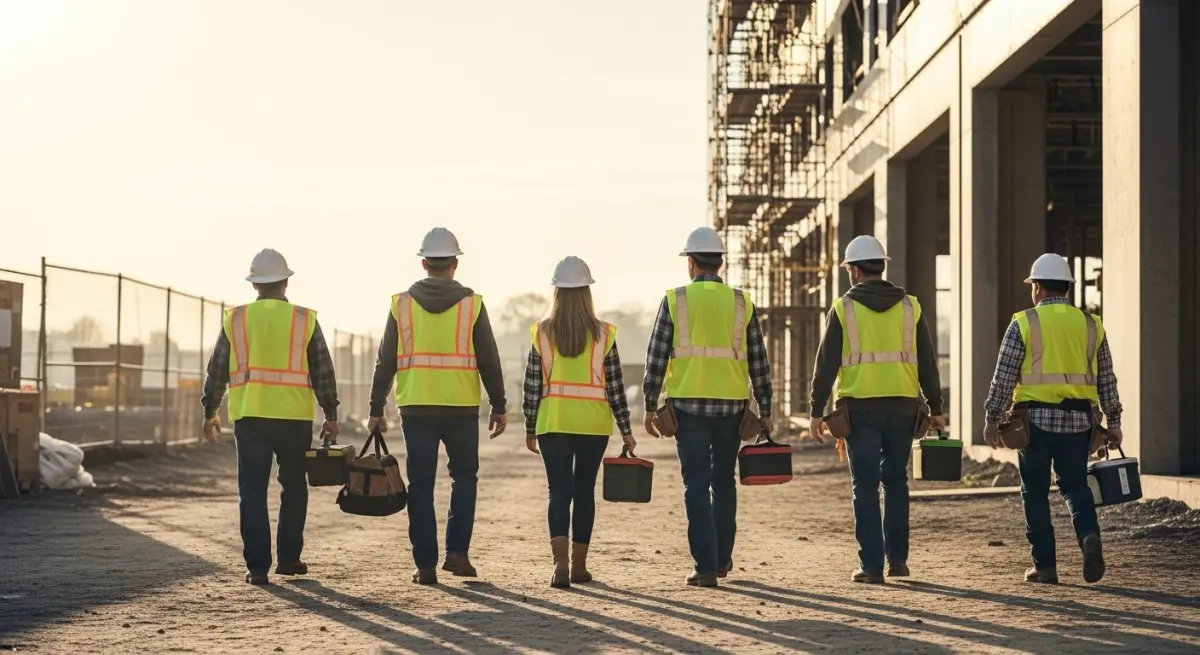
Finding good construction workers has never been harder. Between an aging workforce, fewer young people entering the trades, and every contractor in town competing for the same talent pool, construction hiring in 2026 takes real strategy.
You can’t just throw a post on Indeed and wait for resumes to roll in. That might have worked ten years ago. Today, the best workers already have jobs. They’re not scrolling job boards. And the ones who are looking have options, which means you’re competing with every other contractor in your area.
The good news? Contractors who approach construction hiring with a real plan are still building great crews. They’re just doing it differently than they used to. Here’s what’s actually working.
The Construction Labor Shortage: What’s Really Going On
You’ve heard the stats. The construction industry needs to attract roughly 500,000 new workers per year on top of normal hiring just to keep up with demand. But the numbers only tell part of the story.
The real problem is a pipeline issue. For decades, high schools pushed every student toward four-year college degrees. Shop classes disappeared. Guidance counselors stopped recommending the trades. An entire generation grew up thinking construction work was a fallback career instead of a legitimate, well-paying profession.
Meanwhile, the workers who built this industry are aging out. The average age of a construction worker in the U.S. is now over 42, and a huge chunk of the workforce is within ten years of retirement. They’re taking decades of knowledge with them, and there aren’t enough younger workers coming in to replace them.
On top of that, the demand side keeps growing. Infrastructure spending is up. Housing demand hasn’t let up in most markets. Commercial projects are stacking up. There’s more work than the current workforce can handle, and that gap keeps getting wider.
What does this mean for your company? It means construction hiring isn’t just an HR task anymore. It’s a core business function. The contractors who figure out how to consistently find, attract, and keep good workers are the ones who will grow. The ones who don’t will turn down jobs, miss deadlines, and eventually lose clients.
If you’re building a construction business plan, your hiring strategy deserves its own section. It’s that important.
Where to Find Construction Workers (Beyond Job Boards)
Job boards still have a place in construction hiring. But if that’s your only strategy, you’re fishing in a pond where every other contractor is also casting a line. Here’s where the smart operators are finding workers in 2026.
Your own crew. Your best employees know other good workers. That’s just how the trades work. People who take pride in their craft tend to hang around others who do the same. Set up a referral bonus. Pay $500 or $1,000 for a hire who makes it past 90 days. It’s cheaper than a recruiter and the quality tends to be better because your people aren’t going to vouch for someone who’ll make them look bad.
Trade schools and apprenticeship programs. This is a longer play, but it’s one of the most reliable pipelines you can build. Connect with your local trade schools, community colleges with construction programs, and union apprenticeship halls. Offer to speak to classes. Sponsor a tool scholarship. Show up at their job fairs. The students coming out of these programs are hungry, trainable, and looking for someone to give them a shot.
Social media, done right. This doesn’t mean running Facebook ads that say “Now Hiring.” It means showing what it’s actually like to work for your company. Post videos of your crew on the job. Show the finished product. Let your guys talk about what they like about working there. Younger workers especially are going to check out your social media before they ever apply. If all they see is a logo and a phone number, you’ve already lost them.
Supply houses and trade counters. Your local lumber yard, electrical supply house, or plumbing wholesaler sees tradespeople all day long. Ask if you can post a flyer. Better yet, get to know the people behind the counter and let them know you’re hiring. Word travels fast in those circles.
Military transition programs. Veterans coming out of the military often have construction-adjacent skills, a strong work ethic, and they’re used to working in tough conditions. Programs like Helmets to Hardhats specifically connect transitioning service members with construction careers. If you’re not tapping into this, you’re missing a great talent pool.
Other contractors’ layoffs. Construction is cyclical. When another company in your area slows down or loses a big contract, good workers become available fast. Pay attention to what’s happening in your local market. A phone call at the right time can land you a skilled worker who’s already proven.
Writing Job Posts That Actually Attract Good Workers
Most construction job postings are terrible. They read like they were written by someone who’s never held a hammer. “Seeking a highly motivated self-starter with excellent communication skills and a passion for excellence.” That’s not going to resonate with a framer who’s been swinging a hammer for fifteen years.
Here’s how to write a job post that actually gets responses from good workers.
Lead with the money. Skilled tradespeople want to know what the job pays. If you list “competitive wages” or “DOE,” most experienced workers will scroll right past. They assume you’re lowballing. Put the actual pay range in the post. If you’re paying $28 to $35 an hour for a journeyman carpenter, say that. The right people will apply, and the ones who want $45 will self-select out. Everyone saves time.
Be specific about the work. “General construction” doesn’t tell anyone anything. What kind of projects? Residential remodels? Ground-up commercial? Multi-family? What’s the typical crew size? Are you running one project at a time or bouncing between three? Workers want to know what their day is going to look like.
List the real benefits. If you offer health insurance, say so. If you provide tools, say so. If you have a company truck program, paid holidays, or a retirement match, put it in the post. A lot of smaller contractors think they can’t compete with the big companies on benefits, but even small perks matter. Consistent year-round work is a benefit. A company that doesn’t expect you to work every Saturday is a benefit. Be honest about what you offer.
Keep it short and direct. Your job post isn’t a legal document. Three to five short paragraphs is plenty. What the job is, what it pays, what you need from the candidate, and how to apply. That’s it. If someone has to scroll through fourteen bullet points of “minimum qualifications,” they’re going to close the tab.
Make it easy to apply. “Send your resume to careers@ourcompany.com” is fine for an office position. For field workers, make it easier. Let people text a number. Let them call and talk to someone. A lot of great construction workers don’t have a polished resume, and requiring one just filters out people who might be exactly what you need.
The Interview Process for Field Positions
Interviewing for construction positions is nothing like interviewing for a desk job. If you’re asking a potential carpenter to “describe a time when you demonstrated leadership in a challenging situation,” you’re doing it wrong.
Keep it conversational. The best interviews for field positions feel more like a job site conversation than a formal interview. Ask about their experience. What kind of work have they done? What tools do they own? What’s the biggest project they’ve worked on? Let them talk. You’ll learn more from a ten-minute conversation than from any structured interview script.
Ask about specifics. If you need someone who can read prints, ask them to walk you through a set. If you need a finish carpenter, ask about their experience with trim work, built-ins, or cabinetry. If you need someone who can run a crew, ask how many people they’ve supervised and how they handle it when someone isn’t pulling their weight. The answers will tell you everything you need to know.
Do a working interview when possible. Nothing beats seeing someone actually work. Offer to pay them for a day or half-day on a job site. You’ll see their skill level, their work ethic, how they interact with the crew, and whether they show up on time. It’s the single best predictor of how they’ll perform long-term.
Check references, but do it right. Don’t just call the numbers they give you and ask if they were a good employee. Ask the reference what kind of work the candidate did, how they handled pressure, and whether they’d hire them back. That last question is the most revealing one. A pause before answering tells you everything.
Trust your gut, but verify the skills. Personality matters in construction. You need people who can get along with the crew and handle the grind. But personality without skill is just a friendly guy who can’t frame a wall straight. Make sure you’re evaluating both.
Onboarding New Hires Without Slowing Down the Crew
You found a good worker. They accepted the offer. Now what? This is where a lot of contractors drop the ball. They throw the new hire on a crew with a vague “just follow Mike’s lead” and wonder why the person quits after two weeks.
Not sure if Projul is the right fit? Hear from contractors who use it every day.
Good onboarding doesn’t have to be complicated, but it does need to be intentional.
Day one: set expectations. Before they ever pick up a tool, make sure they know the basics. What time does the crew start? What’s the dress code? What are your safety requirements? Where do they park? Who do they report to? What do you expect from them in the first week? Cover all of this upfront so they’re not guessing.
Pair them with the right person. Not every experienced worker is a good mentor. Some guys are incredible at their trade but have zero patience for teaching. Pick someone who’s skilled AND willing to show a new person the ropes. This single decision can make or break whether a new hire sticks around.
Use technology to reduce the paperwork headache. Nobody wants to spend their first day filling out forms in a trailer. Use digital daily logs to get new hires into the workflow quickly. When your crew is already tracking their work digitally, bringing a new person into the system is painless. They can see what’s expected, log their hours, and get up to speed without a stack of paperwork.
Check in regularly. Don’t wait until the 90-day review to find out how things are going. A five-minute conversation at the end of the first day, the first week, and the first month catches problems early. Ask them how it’s going. Ask if they have what they need. Ask if anything’s confusing. Most people won’t volunteer that they’re struggling, but they’ll tell you if you ask.
Get them on the schedule fast. New hires need to feel like part of the team, not like a temporary add-on. Get them into your scheduling system right away so they can see what’s coming and plan their week. When someone knows where they need to be and what they’re doing tomorrow, they feel more settled. When they’re waiting for a text at 6 AM to find out where to show up, they feel disposable.
Using Technology to Make Your Company More Attractive
Here’s something a lot of contractors underestimate: the technology your company uses affects your ability to hire and retain workers. Especially younger workers.
Think about it from a worker’s perspective. They have two job offers. One company tracks hours on paper timesheets that the foreman collects every Friday. The other company uses a simple time tracking app where workers clock in and out from their phone, and their hours are always accurate. Which company feels more organized? Which one is more likely to get their paycheck right?
It goes deeper than just time tracking. Workers want to know that the company they’re joining has its act together. When you’re running jobs off whiteboards and text message chains, it shows. Guys show up to the wrong site. Materials don’t arrive on time. Nobody knows the schedule until the night before. That chaos drives good workers to companies that run tighter operations.
You don’t need to be some tech-obsessed company to make this work. You just need basic systems that show you respect your workers’ time and run a professional operation.
Accurate time tracking means accurate paychecks. Nothing makes a worker lose trust faster than getting shorted on hours. When your time tracking is digital and transparent, workers can see exactly what’s been logged. No disputes. No “I’ll check the timesheet” runarounds.
Clear scheduling means predictable lives. Construction workers deal with enough uncertainty. Weather, material delays, change orders. The schedule itself shouldn’t be a mystery. When your crew can check their phone and see where they’re working next week, that’s a real quality-of-life improvement.
Digital logs mean less finger-pointing. When there’s a clear record of what happened on the job site every day, it protects everyone. Workers don’t get blamed for things they didn’t do. Progress is documented. Communication is clear.
If you’re shopping for project management tools, check what’s available at different price points and pick something your crew will actually use. The fanciest software in the world is useless if your guys won’t open it. Look for something that’s simple, mobile-friendly, and built for construction.
The bottom line: your technology choices are part of your employer brand now. Workers talk. And in a tight labor market, the companies that run smooth, professional operations have a real edge in construction hiring.
Putting It All Together
Construction hiring in 2026 isn’t about posting a job and hoping for the best. It’s about building a reputation as the kind of company good workers want to join, then putting yourself in front of those workers through every channel available to you.
Start with your own network. Write job posts that speak the language of the people you want to hire. Interview in a way that respects their time and actually evaluates their skills. Onboard them properly so they stick around. And run your company in a way that makes workers proud to be there.
The labor shortage isn’t going away anytime soon. But the contractors who take construction hiring seriously, the ones who treat it like the business-critical function it actually is, will keep building great crews while their competitors scramble.
Deciding between formal training programs and on-the-job learning? Our apprenticeship vs. trade school comparison breaks down the costs, timelines, and outcomes of each path so you can build the right pipeline for your crew.
When your field teams are growing, your back office needs to keep up. Our construction office manager hiring guide covers what to look for and how to structure the role so your admin side scales with your field operations.
Want to see this in action? Get a live demo of Projul and find out how it fits your workflow.
Frequently Asked Questions
How much does it cost to hire a construction worker in 2026?
The total cost of a construction hire typically runs between $3,000 and $7,000 when you factor in recruiting, onboarding, training time, and lost productivity while the new person gets up to speed. Referral bonuses are usually the cheapest path at $500 to $1,000 per successful hire. Staffing agencies charge 15% to 25% of the worker’s annual salary, which adds up fast for skilled positions.
What’s the fastest way to find construction workers?
Your existing crew’s network is the fastest source. Employee referrals usually produce candidates within days, and the quality tends to be higher because your workers have a personal stake in the recommendation. Beyond that, posting in local trade-specific Facebook groups and contacting nearby trade schools can generate interest quickly.
How do I keep construction workers from leaving for another company?
Pay matters, but it’s not the only thing. Consistent work, fair treatment, accurate paychecks, and a professional work environment all factor in. Workers leave when they feel disrespected, when their hours get shorted, or when the company is disorganized. Running your operation well with good scheduling and time tracking tools goes a long way toward retention.
Should I hire experienced workers or train new ones?
Both, and your strategy should include a mix. Experienced workers keep your projects moving and maintain quality standards. But if you only hire experienced workers, you’re competing with every other contractor for the same shrinking pool. Training newer workers through apprenticeships or on-the-job mentoring builds a pipeline that’s more sustainable long-term.
Do I need a recruiter for construction hiring?
For most small to mid-size contractors, no. Recruiters make sense when you’re hiring for specialized or hard-to-fill positions like project managers, estimators, or superintendents. For field positions, your own network, referral programs, and direct outreach to trade schools will usually produce better results at a fraction of the cost. Save the recruiter fees for positions where you truly can’t find candidates on your own.
Frequently Asked Questions
Where are contractors finding good workers in 2026?
How do I write a construction job post that actually gets responses?
How much does it cost to replace a construction employee?
Should I hire experienced workers or train people from scratch?
What benefits do construction workers actually care about?
Related Articles
Free Construction Business Plan Template (2026)
Most contractors skip the business plan and learn as they go. That works until you need a bank loan, a bonding line, or...
Read More →
5 Free Construction Change Order Templates for 2026 (Ready to Use)
Verbal change orders cost contractors thousands every year. Use these free construction change order templates to...
Read More →
7 Free Construction Scope of Work Templates (2026) + Writing Guide
Vague scopes of work cost contractors thousands in disputes and change orders every year. Grab these free construction...
Read More →