
Historic Renovation Guide for Contractors
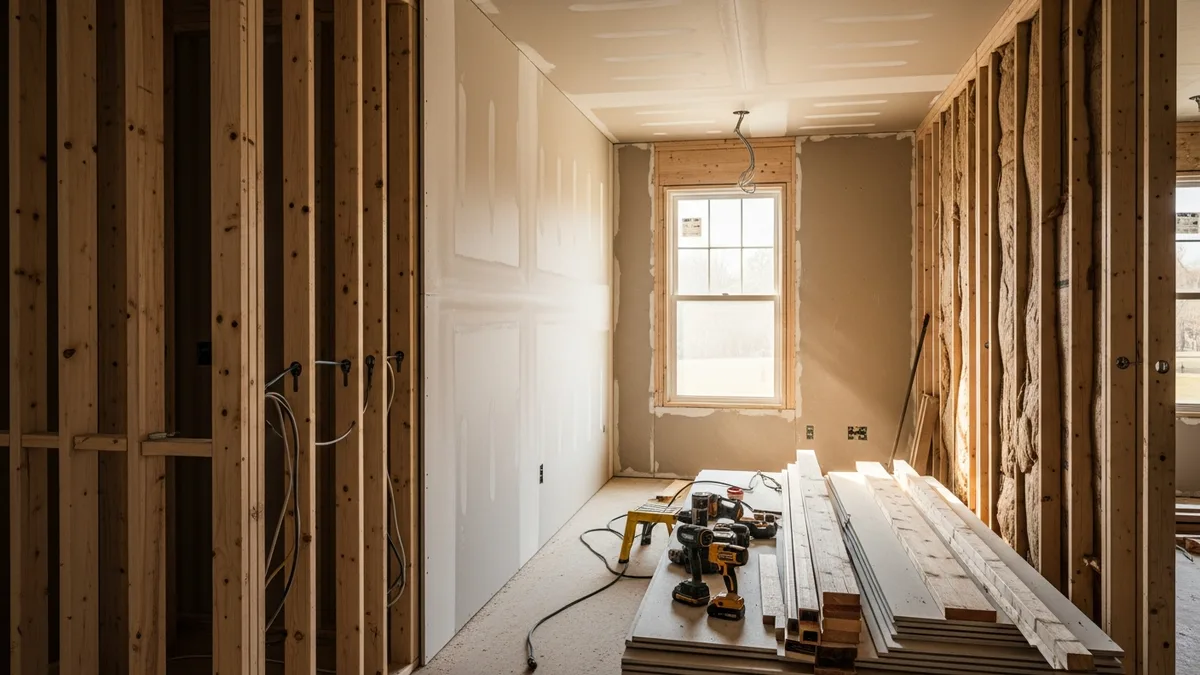
Why Historic Renovation Is a Completely Different Game
If you have been running crews on new construction or standard remodels, your first historic renovation project will feel like stepping into another world. The rules are different. The expectations are different. And the margin for error is a whole lot smaller.
Historic renovation work means you are dealing with buildings that have legal protections, community advocates watching every move, and review boards that can shut down your project if you pull the wrong molding off a wall. It is not just about building code anymore. You are also answering to preservation standards that were written specifically to keep these buildings looking and feeling the way they did decades or even centuries ago.
That said, historic work can be incredibly rewarding, both financially and professionally. These projects often carry higher margins because fewer contractors are willing to take them on. Property owners with historic buildings tend to be more invested in quality than speed. And there is something genuinely satisfying about bringing a 100-year-old building back to life instead of watching it get torn down.
But you need to go in with your eyes open. The learning curve is steep, the paperwork is heavy, and surprises are basically guaranteed once you start opening up walls. This guide walks through the biggest things you need to know before you bid your first historic project, or before you take on your next one.
Understanding Preservation Standards and Who Enforces Them
The first thing to wrap your head around is that “historic” is not just a word people throw around. It has legal meaning. A building can be listed on the National Register of Historic Places, designated as a local landmark, or located within a historic district. Each of those designations comes with its own set of rules about what you can and cannot do.
At the federal level, the Secretary of the Interior’s Standards for Rehabilitation are the baseline. These ten guidelines cover the big ideas: preserve original features, do not destroy historic materials, make sure any new work is compatible with the old but clearly distinguishable from it. If the project involves federal historic tax credits (which many do, because those credits can cover 20% of qualified rehabilitation expenses), you have to follow these standards to the letter.
At the state level, your State Historic Preservation Office (SHPO) reviews projects that involve tax credits or state funding. They will want to see your plans before you start and will inspect the work when you are done. Their approval is not optional.
At the local level, many cities and towns have their own Historic Preservation Commissions (HPCs) or Architectural Review Boards (ARBs). These groups review exterior changes, sometimes interior changes, and they meet on their own schedule, which is usually monthly. Miss a meeting deadline, and your project sits for another 30 days.
The point is this: before you price a single thing, you need to know exactly which authorities have jurisdiction over the building. Is it locally designated? State listed? On the National Register? In a historic district? Each scenario changes what approvals you need, who you need them from, and how long the process takes.
This is where your permit knowledge becomes critical. Historic permits layer on top of regular building permits, and you need to plan for both tracks running simultaneously. In some jurisdictions, you cannot even pull a building permit until the historic commission has approved your plans.
Estimating Historic Projects Without Losing Your Shirt
Estimating historic work is where a lot of contractors get burned. The temptation is to treat it like a regular remodel and add a small markup for the “historic” factor. That approach will cost you money almost every time.
Here is why. Historic buildings hide problems behind plaster, behind brick, behind layers of paint and wallpaper and floor coverings that have accumulated over a century or more. You will find knob-and-tube wiring, lead paint, asbestos insulation, structural members that have been cut, notched, or water-damaged in ways nobody documented. The building has been modified multiple times by multiple owners, and none of them left you a set of as-built drawings.
Your estimating process needs to account for this reality. A few things that help:
Do more discovery upfront. Spend time (and money, if needed) on pre-construction investigation. Selective demolition to expose conditions, material testing, structural assessments. The more you know before you bid, the tighter your numbers will be.
Build real contingencies. On new construction, you might carry 5-10% contingency. On historic work, 15-25% is more realistic, especially if you have limited access for pre-construction investigation. Talk to the owner about this honestly. They need to understand that historic projects have more unknowns, and the budget needs to reflect that.
Price materials carefully. You might need custom-milled wood profiles to match existing trim. You might need lime-based mortar instead of Portland cement for masonry repointing. You might need hand-forged hardware or specialty glass. These items take longer to source and cost significantly more than standard materials. Get real quotes from suppliers before you lock in your estimate.
Factor in the approval timeline. Every week your project sits waiting for a commission meeting or a SHPO review is a week your overhead keeps running. Build those delays into your schedule and price accordingly.
The owners who are serious about their historic properties will respect a contractor who explains these realities upfront. The ones who want historic renovation at new-construction prices are not clients you want.
Documentation: Your Best Friend on Every Historic Project
If there is one piece of advice that matters more than anything else on historic renovation work, it is this: document everything. And then document some more.
Historic projects demand a level of documentation that goes way beyond what most contractors are used to. You need it for three reasons. First, the review boards want to see proof that you followed approved plans and used approved materials. Second, the tax credit process requires extensive before, during, and after photography with written descriptions. Third, when (not if) you uncover unexpected conditions, your documentation is what supports the change order conversation.
Start with a complete photographic record of existing conditions before any work begins. Every room, every wall, every detail. Shoot wide angles for context and close-ups for condition. Date-stamp everything. This baseline documentation protects you and the owner when questions come up later about what was original and what was not.
During construction, photograph every phase of work. Demolition, rough-in, framing modifications, material installations, finished surfaces. The photo documentation practices that serve you well on standard projects become absolutely essential on historic work.
Use a system that keeps your photos organized and accessible. If you are still dumping job photos into a camera roll or a random folder on your laptop, historic work will punish you for it. A tool like Projul’s photo and document management keeps everything tied to the right project, tagged, and easy to pull up when the SHPO reviewer asks to see how you handled the window restoration six months ago.
Written documentation matters just as much. Keep a daily log that notes what work was performed, what conditions were encountered, what decisions were made, and who made them. When you find original materials behind a later addition, document what you found, photograph it, and notify the owner and the preservation consultant before you proceed. These discoveries can change the scope of work, and you need a paper trail showing you handled them properly.
Dealing with Scope Changes and the Unexpected
Scope creep is a risk on every construction project. On historic renovation, it is practically a certainty.
Here is a common scenario. You are approved to replace a deteriorated porch on a Victorian home. You start removing the existing porch decking and discover that the original porch structure underneath the later addition is still intact, just buried under layers of modifications. Now the historic commission wants you to restore the original porch instead of building the approved replacement. Your scope just changed dramatically, your timeline just extended, and the cost impact is significant.
Thousands of contractors have made the switch. See what they have to say.
Or maybe you open up a wall for electrical work and find original decorative plasterwork that nobody knew existed. The preservation consultant says it needs to be preserved and restored. That was not in your contract. That was not in your budget. But here you are.
This is why a solid change order process is not just good business practice on historic work. It is survival. Every unexpected discovery that affects your scope, schedule, or budget needs to be documented in writing with a signed change order before you proceed. No verbal approvals. No “we will figure it out later.” Get it in writing every single time.
Your original contract should include clear language about how discoveries and scope changes will be handled. Spell out that unforeseen conditions are expected on a building of this age, that they will be documented and presented to the owner with cost and schedule impacts, and that work on affected areas will pause until a change order is executed.
This protects everyone. The owner does not get surprise invoices. You do not eat costs that were never in your original scope. And the preservation authorities get proper documentation of how changes were handled. Understanding how scope creep works and having systems to manage it will save you real money on these projects.
Demolition and Selective Removal on Historic Properties
Demolition on a historic project is nothing like demolition on a standard remodel. You cannot just swing a sledgehammer and sort it out later. Every piece you remove needs to be evaluated for historical significance before it comes off the wall, and the removal process itself needs to be careful enough that you do not damage adjacent historic materials.
This is called “selective demolition” or “careful removal,” and it requires a different mindset from your crew. Pry bars instead of reciprocating saws. Hand tools instead of power tools in sensitive areas. Labeling and storing removed elements that might be reinstalled or replicated.
Before you start any demolition, have a clear plan that identifies what stays, what goes, and what gets salvaged. Your demolition planning needs to be more detailed than usual, with specific instructions for each area about how removal should proceed and what to watch for.
Some common situations you will encounter:
Plaster walls. Historic plaster, especially the original lime-based stuff, has value. If the plan calls for keeping plaster, your crew needs to know how to work around it without causing vibration damage. If plaster needs to come down, it should be removed carefully so you can assess the lath and structure behind it.
Wood trim and millwork. Original wood trim in a historic building is often irreplaceable without expensive custom milling. Remove it carefully, label each piece with its location, and store it safely. Even if the plan calls for new trim, the preservation consultant may want to compare profiles or salvage sections.
Masonry. Never use power tools to remove mortar from historic brick without checking first. Many older bricks are softer than modern brick and can be damaged by aggressive cleaning or repointing techniques. Hand-raking old mortar joints is slower, but it protects the brick.
Windows. Historic windows are one of the most common battlegrounds between owners who want energy efficiency and preservation boards who want to keep originals. Before you pull a single window, know the plan. Restoration? Storm windows? Approved replacements? This needs to be settled before your crew touches anything.
Train your crew before they set foot on a historic job site. A five-minute conversation about “be careful with the old stuff” is not enough. They need to understand why it matters, what is at stake, and what specific procedures to follow in each area of the building.
Working with Preservation Consultants, Architects, and Review Boards
One of the biggest adjustments for contractors entering historic renovation is the sheer number of people who have a say in your project. On a standard remodel, you work with the homeowner, maybe a designer, and the building inspector. On a historic project, you are also dealing with preservation consultants, historic architects, review board members, state reviewers, and sometimes even neighborhood advocacy groups who show up at commission meetings to voice their opinions about your window choices.
This is not something to fight against. It is something to get good at managing.
Preservation consultants are your translators. They speak the language of the review boards and understand the standards that apply to your project. A good preservation consultant will tell you upfront which elements of the building are character-defining features (meaning you cannot touch them without approval), which areas have more flexibility, and how to frame your proposals in a way that the commission is likely to approve. If the project owner has not hired one, strongly recommend it. The cost of a preservation consultant is a fraction of what you will spend if your plans get rejected and you have to redesign and resubmit.
Historic architects are different from regular architects in important ways. They understand how old buildings were constructed, how materials behave over time, and how to detail new work so it is compatible with what is already there. If you are working with an architect who has never done historic work before, expect friction with the review board. The architect might spec materials or details that do not meet preservation standards, and you will be the one dealing with the fallout on site.
Review boards are volunteer committees made up of local residents, architects, historians, and preservation professionals. They meet on a set schedule, usually once a month, and they review applications for exterior changes (and sometimes interior changes) to designated properties. Here is what you need to know about working with them:
They are not trying to make your life difficult. They are trying to protect buildings they care about from changes that would diminish their historic character. If you approach them as adversaries, you will have a miserable experience. If you approach them as partners who share your interest in doing good work on an important building, things go much more smoothly.
Come prepared. When you present to a review board, bring clear drawings, material samples, photographs of existing conditions, and a written narrative explaining what you plan to do and why. Show them you understand the building’s history and significance. Show them you have thought about how your proposed work fits within the preservation standards. Board members can tell the difference between a contractor who has done their homework and one who is winging it.
Do not argue with the board in a public meeting. If they have concerns about your proposal, listen carefully, take notes, and ask clarifying questions. You can almost always address their concerns and come back with a revised proposal at the next meeting. Getting confrontational in front of a review board is a guaranteed way to make your project harder than it needs to be.
Build the review timeline into your project schedule from the start. If the commission meets on the first Tuesday of every month and you miss the application deadline, you just added 30 days to your project. If they request revisions, that is another 30 days. Plan for at least two rounds of review in your schedule, and you will not be caught off guard.
Some contractors find it helpful to attend a few commission meetings as an observer before they ever submit their own project. You learn the board’s priorities, their common objections, and what kinds of presentations succeed. It is a few hours well spent.
Building relationships in the preservation community pays dividends over time. The preservation consultants, architects, and board members you work with on one project will recommend you for the next one if you do good work and handle the process professionally. Historic renovation is a relationship-driven niche. Your reputation in this community is your most valuable business asset.
Specialty Trades, Materials, and Sourcing for Historic Work
Finding the right materials and the right tradespeople for historic renovation is one of the most time-consuming parts of the job. You cannot just call your regular supplier and order what you need. Many of the materials used in historic buildings are no longer manufactured in standard sizes or formulations, and the skills required to work with them are not taught in most trade programs.
Masonry is a prime example. Historic brick is often softer and more porous than modern brick. The mortar used to lay it was lime-based, which is softer and more flexible than the Portland cement mortar used today. If you repoint a historic brick wall with modern high-strength mortar, the mortar will be harder than the brick itself. When the wall moves (and all walls move), the brick will crack and spall instead of the mortar. You have just caused more damage than the deterioration you were trying to fix.
Finding masons who understand historic mortar formulations is not always easy. Start with your state’s preservation office. They often maintain lists of qualified tradespeople. The National Park Service’s Technical Preservation Services also publishes detailed briefs on topics like masonry repointing that are worth reading before you hire anyone. If your mason has not worked with lime mortar before, that is a red flag.
Wood windows are another area where specialty knowledge matters. Original wood windows in historic buildings can often be restored rather than replaced, and many review boards will require restoration over replacement. Window restoration involves stripping old paint (carefully, because it is almost certainly lead paint on a pre-1978 building), repairing or replacing damaged components like sashes and sills, rehabbing the hardware, and adding weatherstripping. It is labor-intensive work that requires a patient, skilled carpenter.
The argument for restoring old-growth wood windows is not just about preservation standards. The wood used in windows built before 1940 is typically old-growth timber that is denser, more rot-resistant, and more dimensionally stable than anything you can buy at a lumberyard today. A properly restored historic window with a good storm window can perform remarkably well in terms of energy efficiency, and it will outlast a vinyl replacement window by decades.
Plaster restoration is a dying art, and finding a plasterer who can do real lime plaster work is getting harder every year. If your project requires plaster restoration or new lime plaster to match existing, start sourcing your tradesperson early. Lead times for specialty plaster work can be months, not weeks. Your scheduling tools need to account for this. Block out the time early and do not assume you can slot a plasterer in at the last minute.
Specialty materials you may need to source include:
- Custom-milled lumber to match existing profiles for trim, moldings, baseboards, and other millwork. Find a local mill that does custom work, or use one of the national suppliers that specialize in historic profiles. Get samples approved before you order full quantities.
- Historic paint colors. Companies like Benjamin Moore and Sherwin-Williams have historic color palettes, and there are specialty suppliers who can match colors from original paint samples using spectral analysis. Some review boards require specific color palettes for designated properties.
- Reproduction hardware. Door knobs, hinges, window locks, shutter dogs, and other hardware in period-appropriate styles. Several national suppliers carry extensive catalogs of reproduction hardware, but lead times can be long. Order early.
- Specialty glass. Wavy glass, seeded glass, and other historically accurate glass types are available from specialty suppliers. If the review board requires historically compatible glass in restored or replacement windows, expect to pay a premium and wait for delivery.
- Roofing materials. Slate, clay tile, wood shingle, and standing seam metal (with terne or copper finishes) are all common historic roofing materials. Each requires specialized installation skills. Do not put a crew on a slate roof if they have only done asphalt shingles. The learning curve is expensive when you are working with materials that cost $15 to $30 per square foot installed.
Build a supplier and subcontractor list specifically for historic work. This is one of the most valuable assets you will develop as you take on more preservation projects. Keep track of who does good work, who delivers on time, and who understands the standards. Share this list with your project management system so your whole team knows who to call when a historic project comes in.
One more thing on materials: always order extra. Custom-milled trim, specialty glass, and reproduction hardware cannot be reordered quickly if you come up short on site. A 10-15% overage on specialty materials is cheap insurance against project delays.
Navigating Tax Credits, Grants, and Financial Incentives
Understanding the financial incentives available for historic renovation is not just the owner’s problem. As a contractor, knowing how tax credits and grants work makes you a more valuable partner to your clients and helps you win more projects.
The Federal Historic Tax Credit (HTC) is the big one. It provides a 20% tax credit on qualified rehabilitation expenses for income-producing properties listed on the National Register of Historic Places (or contributing structures in a listed historic district). For a $500,000 rehabilitation project, that is a $100,000 tax credit. That is real money, and it is often the financial engine that makes a historic project viable.
Here is what you need to know as the contractor:
The project must follow the Secretary of the Interior’s Standards for Rehabilitation. There is no flexibility on this. If the National Park Service reviews the completed project and determines that the work does not meet the standards, the owner loses the tax credit. That means your work is directly tied to a six-figure financial outcome for your client. This is why review and documentation are so critical, and why cutting corners on historic work is a particularly bad idea.
The tax credit application is a three-part process. Part 1 confirms the building’s historic significance. Part 2 describes the proposed work in detail (this is submitted before construction and must be approved). Part 3 documents the completed work (this is where all your construction photography and documentation comes in). Your job touches Parts 2 and 3 heavily. The owner or their consultant will prepare the applications, but they will need information from you about materials, methods, and existing conditions.
Qualified rehabilitation expenses include most hard construction costs: structural work, mechanical systems, electrical, plumbing, walls, floors, ceilings, windows, and exterior restoration. They generally do not include the cost of acquiring the building, site work, or additions that increase the total volume of the building. Understanding what qualifies helps you and the owner structure the project budget to maximize the credit.
State historic tax credits exist in many states and can stack on top of the federal credit. Some states offer credits of 10-25% on top of the federal 20%, making the combined incentive substantial. Your state’s historic preservation office can tell you what programs are available and what the requirements are. Each state has its own application process and standards, so do not assume the federal approval automatically qualifies you for the state credit.
Grants and low-interest loans are also available from various sources. The National Trust for Historic Preservation offers grants through several programs. Many states have revolving loan funds for historic properties. Some cities offer facade improvement grants or tax abatements for properties in designated districts. These programs change frequently, so check with your local and state preservation offices for current offerings.
Why does any of this matter to you as a contractor? Because when you can walk a potential client through the financial incentives available for their historic property, you become more than just a builder. You become a trusted advisor. Many property owners do not realize what incentives are available or how significant they can be. When you can show them that their $400,000 renovation project might generate $80,000 or more in tax credits, you have just made their decision to hire you a lot easier.
It also matters because tax credit projects have specific requirements that affect how you run the job. Documentation standards are higher. Material and method choices are more constrained. The timeline includes review periods that are outside your control. Knowing this upfront means you can plan, price, and schedule the project correctly, which is better for everyone.
One practical tip: keep separate cost tracking for tax credit projects. Your client’s accountant or tax advisor will need detailed breakdowns of qualified versus non-qualified expenses. If your job costing system can categorize expenses by type, you will save everyone a lot of time at tax season. This is another area where a proper construction management platform earns its keep over spreadsheets and shoeboxes of receipts.
Training Your Crew and Building a Preservation-Ready Team
You can learn every preservation standard, master the permitting process, and source the perfect historically accurate materials. But none of that matters if your crew does not understand how to work on a historic building. The people swinging hammers and running saws are the ones who will either protect the historic fabric of the building or destroy it.
Training your crew for historic work is not a one-time conversation at a toolbox talk. It is an ongoing investment in their skills and their mindset.
Start with the “why.” Most field workers have spent their careers being told to work fast and efficiently. Tearing out old material and replacing it with new is the default mode. On a historic project, you are asking them to slow down, be more careful, and sometimes preserve things that look like they should be thrown away. If they do not understand why, they will fall back on old habits the moment you are not watching.
Explain what makes the building significant. Walk the site with your crew before work begins and point out the character-defining features. Show them the elements that the review board cares about. Explain what the consequences are if those elements are damaged: rejected inspections, lost tax credits, change orders, and potential liability. When your crew understands that a careless moment with a pry bar could cost the project thousands of dollars, they pay more attention.
Teach specific techniques. Historic work requires skills that are not part of standard construction training:
- Careful demolition. How to remove materials without damaging adjacent historic fabric. When to use hand tools instead of power tools. How to label and store salvaged materials for potential reuse.
- Plaster repair. How to stabilize loose plaster with adhesive injection. How to patch damaged areas with compatible materials. How to skim-coat over historic plaster without destroying the original surface.
- Wood repair. How to use epoxy consolidants to stabilize deteriorated wood instead of replacing it. How to splice in new wood that matches the grain pattern and species of the original. How to strip paint safely from detailed millwork.
- Masonry techniques. How to rake mortar joints by hand. How to mix and apply lime-based mortar. How to clean historic brick without using high-pressure water or aggressive chemicals that damage the surface.
- Window restoration. How to remove sashes safely. How to strip and reprime wood components. How to replace broken glass with historically compatible material. How to adjust weights and balances.
Bring in specialists for training. If you are taking on your first few historic projects, consider hiring experienced preservation tradespeople as subcontractors and having your crew work alongside them. The hands-on learning is invaluable. Your carpenters will pick up techniques in a week of working next to an experienced window restorer that they would never learn from a video or a manual.
Set clear expectations for site behavior. Historic job sites require a different level of care than new construction:
- No leaning ladders against historic surfaces without protection.
- No dragging materials across finished floors.
- Protective coverings on all surfaces adjacent to work areas.
- No anchoring into historic materials without approval.
- Designated storage areas for salvaged materials, clearly labeled.
- Immediate reporting of any accidental damage, no matter how minor.
Write these expectations down and include them in your site-specific safety and procedures plan. Review them with every new crew member who comes on site. Post them in the job trailer. Make it clear that historic site protocols are not suggestions. They are requirements, the same as hard hats and fall protection.
Invest in your crew’s professional development. Organizations like the National Center for Preservation Technology and Training, the Association for Preservation Technology, and various regional preservation trade programs offer workshops and certifications in historic building skills. Sending your lead carpenter to a window restoration workshop or your mason to a lime mortar training session pays for itself many times over in better work quality and fewer expensive mistakes.
The contractors who build strong preservation-capable crews find that they can charge premium rates for their work, because the supply of skilled preservation tradespeople is much smaller than the demand. Your crew becomes a competitive advantage that is difficult for other contractors to replicate. It takes time and investment to build, but once you have a team that knows how to handle historic work, you have something genuinely valuable.
Document your crew’s training and qualifications. Some tax credit reviewers and preservation consultants want to know that the people doing the work have relevant experience or training. Keeping records of workshops attended, certifications earned, and historic projects completed by your key personnel gives clients and reviewers confidence that your team is qualified for the work.
Making Historic Renovation Work for Your Business
So should you get into historic renovation? If you are willing to put in the work to learn the process, the answer is probably yes. Here is why.
Less competition. Most contractors avoid historic work because of the complexity. That means less price pressure on bids and more opportunity to build relationships with repeat clients and referral sources in the preservation community.
Higher margins. The specialized knowledge, careful execution, and documentation requirements justify higher pricing. Owners and developers who work with historic buildings understand this. They are not shopping for the lowest bid. They are looking for a contractor who will not make expensive mistakes.
Steady pipeline. Historic buildings are not going away. In fact, more properties are being designated every year. Communities are increasingly interested in preservation over demolition, and federal and state tax credit programs keep the financial incentives strong for property owners.
Professional reputation. Being known as a contractor who can handle historic work sets you apart in your market. It opens doors to commercial projects, institutional work, and government contracts that you would never see bidding on standard residential remodels.
To get started, connect with your local historic preservation community. Attend commission meetings to understand how the review process works in your area. Take a preservation trades workshop if one is available. Talk to architects and consultants who specialize in historic work, because they are the ones who recommend contractors to their clients.
On the operational side, make sure your project management systems can handle the extra documentation, the longer timelines, and the multi-phase approval processes that come with historic work. If you are still tracking projects on spreadsheets and sticky notes, historic renovation will expose those gaps fast. A purpose-built construction management platform keeps your documentation organized, your change orders tracked, and your team aligned. See how Projul handles this if your current system is falling short.
Want to put this into practice? Book a demo with Projul and see the difference.
Historic renovation is not for every contractor. It requires patience, attention to detail, and a genuine respect for the buildings you are working on. But for the contractors who commit to learning the craft, it is some of the most interesting and profitable work in the industry. These buildings have stories. Your job is to make sure they are still standing to tell them.
Frequently Asked Questions
Do I need a special license to work on historic buildings?
How much more expensive is historic renovation compared to new construction?
What are the Secretary of the Interior's Standards for Rehabilitation?
Can I use modern materials on a historic renovation project?
How long does the historic review and approval process take?
Related Articles

School and Education Facility Construction Guide for Contractors
Education facility construction is one of the most demanding and rewarding sectors in commercial building. Between...
Read More →
Brewery, Distillery, and Winery Construction Guide for Contractors
Brewery, distillery, and winery construction is a growing niche with strong margins, but the builds are nothing like...
Read More →
Religious and Worship Facility Construction Guide for Contractors
Worship facility construction comes with unique challenges that most commercial contractors never see on other job...
Read More →