
Loading Dock Design and Construction Guide
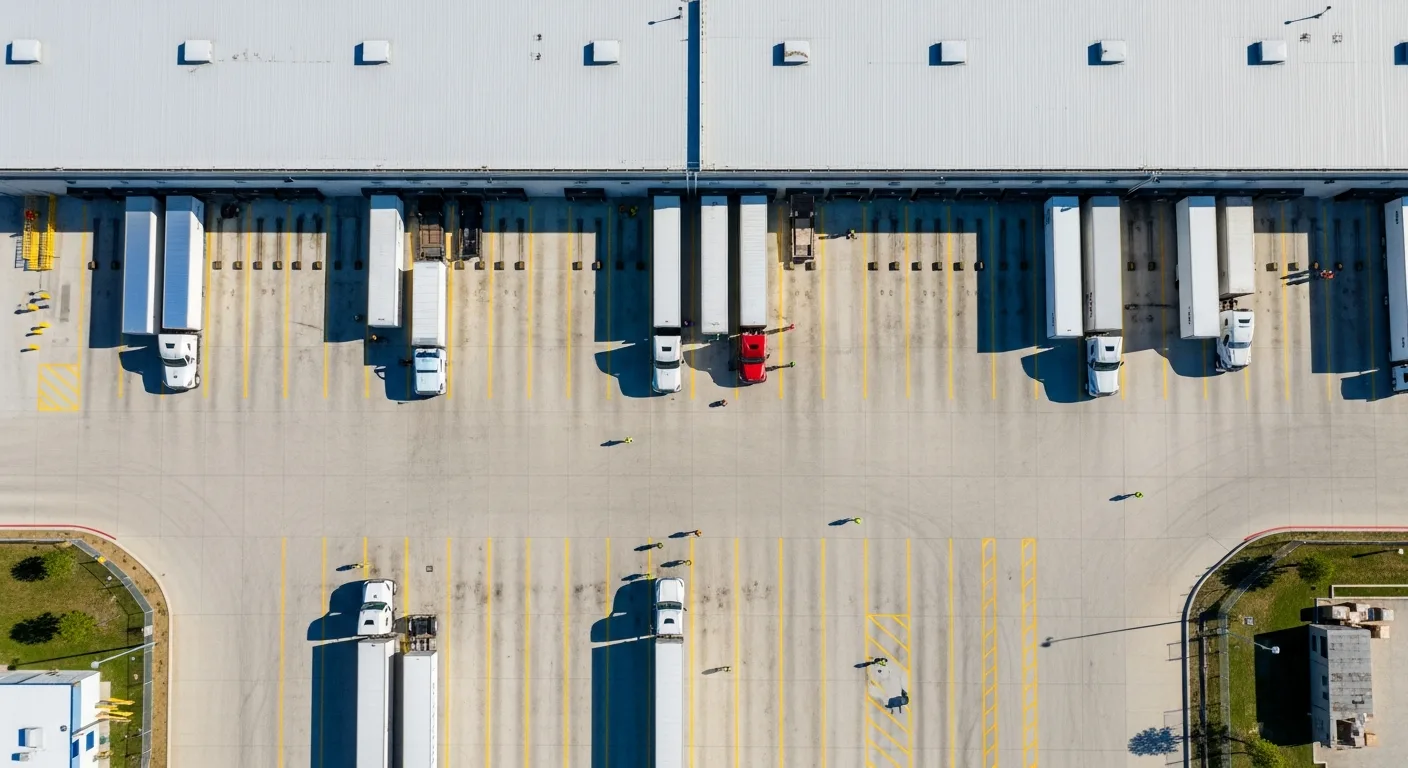
A loading dock is where the rubber meets the road for any warehouse, distribution center, or manufacturing facility. Get the design wrong and you are dealing with bottlenecks, damaged freight, safety incidents, and wasted labor every single day. Get it right and trucks cycle through efficiently, product stays protected, and your crew can focus on moving material instead of fighting the dock.
This guide covers the full scope of loading dock design and construction, from initial site planning through dock height selection, leveler types, seals, shelters, and traffic flow layout. Whether you are building new or retrofitting an existing facility, these details will help you make solid decisions that hold up for decades.
Starting With Site Planning
Before you pour a single yard of concrete, you need to understand the operation. Loading dock design starts with questions about the business, not the building.
Volume and Vehicle Types
How many trucks per day will this dock handle? What kinds of trucks? A grocery distribution center receiving 53-foot reefer trailers has very different requirements than a machine shop that gets a few flatbed deliveries per week.
Common vehicle types and their approximate bed heights:
- Over-the-road trailers (dry van and reefer): 48 to 52 inches
- Straight trucks and box trucks: 30 to 42 inches
- Flatbed trailers: 48 to 60 inches (varies with load)
- Parcel delivery vans: 20 to 30 inches
If you are serving a mix of vehicle types, you will need levelers with enough range to bridge those height differences, or you will need dedicated dock positions for different vehicle classes.
Number of Dock Positions
The number of dock positions depends on peak truck volume, average dwell time, and how much staging area you have in the yard. A common rule of thumb is one dock position for every 10,000 square feet of warehouse space, but that number varies wildly based on throughput.
For high-volume cross-dock operations, you might need a dock position for every 3,000 to 5,000 square feet. For slow-turn storage facilities, one per 20,000 square feet might be plenty.
Using construction management software like Projul helps keep these design decisions documented and tracked from preconstruction through final punch list, especially when coordinating between the general contractor, architect, and equipment suppliers.
Dock Orientation
Loading docks are typically placed on the rear or side of the building, away from public entrances and customer parking. The orientation affects truck access, site circulation, and how much yard space you need.
Key orientation considerations:
- Perpendicular docks (90 degrees) need the most apron space but provide the most efficient dock-to-dock spacing
- Angled docks (45 to 60 degrees) reduce the required apron depth but use more building wall length per position
- Drive-through docks allow trucks to pull forward after loading, reducing yard congestion
Dock Height: Getting the Numbers Right
Standard dock height in North America is 48 inches above the finished grade of the drive approach. This dimension has been the industry standard for decades because it aligns with the bed height of most over-the-road trailers.
When to Deviate From Standard
Not every operation should default to 48 inches. If your facility primarily serves straight trucks or smaller delivery vehicles, a lower dock height of 36 to 44 inches might make more sense. Some food processing and pharmaceutical facilities build docks at 52 or 54 inches to match specialized trailer types.
The key is to survey the actual vehicles that will use your dock. Measure bed heights on at least 20 representative trucks during a typical week. That data will tell you the ideal fixed dock height and the required leveler range.
Grade-Level Docks
Some operations use grade-level docks where the entire building floor is at truck bed height, built up on fill or a raised slab. Others use depressed driveways where the truck backs down a ramp to meet a lower dock. Both approaches have trade-offs in terms of site work costs, drainage, and accessibility.
Dock Levelers: Bridging the Gap
The dock leveler is the single most important piece of equipment at any loading dock. It bridges the gap between the dock floor and the trailer bed, compensating for differences in height, trailer creep, and suspension movement during loading.
Types of Dock Levelers
Mechanical levelers use a spring-loaded mechanism. The operator walks out, pulls a release chain, and the leveler rises. Then the operator walks the lip down onto the trailer bed. These are the most affordable option and work well for low to moderate use, typically rated for 10 to 30 cycles per day.
Hydraulic levelers use a push-button control to raise and lower the platform. They are smoother to operate, require less physical effort, and handle higher cycle counts. Most facilities doing more than 20 loads per day should consider hydraulic units.
Air-powered levelers use an airbag system under the deck to raise and lower the platform. They offer a good balance between the simplicity of mechanical units and the convenience of hydraulic units, with fewer maintenance requirements than hydraulic systems.
Vertical storing levelers store in a vertical position when not in use, creating a complete seal at the dock opening. They are the premium option, providing the best energy efficiency and cleanliness for climate-controlled or food-grade facilities.
Edge-of-dock levelers mount directly to the dock face and provide a short lip that reaches out to the trailer. They handle a limited height range (typically plus or minus 3 inches) and are best for facilities where trailer heights are consistent and loads are light to moderate.
Leveler Sizing
Standard dock leveler widths are 6 feet and 6 feet 6 inches, designed to fit within standard 8-foot dock door openings. Length (the distance the leveler extends from the dock) is typically 6 feet for standard applications, with 8-foot and 10-foot models available for operations that need a longer, gentler transition slope.
Capacity ratings range from 25,000 pounds for light-duty units to 80,000 pounds or more for heavy industrial applications. Always size the leveler for the heaviest loaded forklift that will cross it, not just the static load.
Leveler Pit Construction
Pit-style levelers (mechanical, hydraulic, and air-powered) require a formed concrete pit at each dock position. The pit must be accurately sized to the leveler model, with proper structural reinforcement and drainage.
Typical pit dimensions:
- Width: matches leveler width plus 1 to 2 inches on each side
- Length: matches leveler length plus 1 to 2 inches
- Depth: 12 to 16 inches below finished floor, depending on leveler model
The pit needs a drain or sump to handle rainwater infiltration. A clogged pit drain is one of the most common maintenance headaches at loading docks, so use a drain design that is easy to clean and connect it to a proper storm system.
Dock Bumpers
Dock bumpers absorb the impact of trailers backing into the dock face. They protect both the building structure and the trailer, and they set the standoff distance between the trailer and the dock wall.
Bumper Types
- Molded rubber bumpers are the most common type, available in various projection depths from 4 to 6 inches. They bolt directly to the dock face.
- Laminated rubber bumpers are built from layers of recycled rubber and fabric, offering higher energy absorption for heavy-use docks.
- Steel-face bumpers have a steel wear plate over the rubber core, extending service life in high-cycle applications.
Bumper height placement should center the bumper at the trailer’s impact point, typically 14 to 24 inches above the drive approach. Mount bumpers with through-bolts or expansion anchors into properly reinforced concrete.
Dock Seals and Shelters
The seal between the building and the trailer is critical for energy efficiency, pest control, weather protection, and maintaining interior temperatures. The two main options are dock seals and dock shelters.
Dock Seals
Dock seals consist of foam pads covered in durable fabric, mounted in a U-shape around the dock opening (two side pads and a head pad). When a trailer backs in, the foam compresses against the trailer sides and top, creating a tight seal.
Advantages of dock seals:
- Excellent energy efficiency with minimal air infiltration
- Good protection against rain, wind, and pests
- Relatively simple installation and maintenance
Limitations:
- Work best with a consistent trailer size and type
- Trailers must back in straight; angled approaches can damage the pads
- Foam pads wear out and need periodic replacement
Dock Shelters
Dock shelters use rigid or flexible curtain panels that project out from the building and drape over the top and sides of the trailer. They accommodate a wider range of trailer sizes and allow some tolerance for off-center backing.
Advantages of dock shelters:
- Accommodate varying trailer widths and heights
- Allow more flexibility in trailer positioning
- Available in rigid frame, flexible frame, and retractable configurations
Limitations:
- Less airtight than dock seals
- More exposed framework that can be damaged by impact
- Higher initial cost for premium models
Choosing Between Seals and Shelters
If your dock primarily serves one type of trailer and energy efficiency is critical (refrigerated or climate-controlled facilities), dock seals are usually the better choice. If you need to accommodate a variety of vehicle sizes, dock shelters provide more flexibility.
Some facilities use a combination, with seals at high-priority positions and shelters at general-use positions.
Dock Doors
The most common loading dock door is the sectional overhead door, available in insulated and non-insulated versions. For high-cycle docks, high-speed roll-up doors reduce energy loss and improve throughput.
Door Sizing
Standard loading dock door sizes:
- Width: 8 feet (standard), 9 feet or 10 feet (wide body)
- Height: 8 feet, 9 feet, or 10 feet
Size the door to accommodate your largest expected trailer opening plus clearance for the dock seal or shelter frame. For facilities using dock shelters, wider doors are often necessary to provide adequate clearance.
Door Operators
Motorized door operators are standard for commercial loading docks. Chain-hoist operators are the workhorse of the industry, reliable and easy to maintain. For high-cycle applications, direct-drive operators offer smoother, faster operation with less wear.
Interlocking controls that tie the dock door to the leveler and vehicle restraint are a smart safety investment. The system prevents the door from opening until the trailer is secured and the restraint is engaged.
Vehicle Restraints
Vehicle restraints prevent trailers from pulling away from the dock while forklifts are on the trailer. This is one of the most critical safety systems at any loading dock, and OSHA takes it seriously.
Types of Vehicle Restraints
- Wheel chocks are the simplest option but depend on the driver to place them correctly. They do not prevent early departure if the driver forgets or removes them.
- Mechanical hook restraints engage the trailer’s rear impact guard (RIG) with a rotating hook that locks the trailer to the dock. The dock attendant operates the restraint from inside the building.
- Automatic hook restraints detect the trailer’s presence and engage automatically when the trailer backs into position. These are the safest option because they remove human error from the equation.
Restraint Communication
A traffic signal system with interior and exterior lights communicates the dock status:
- Green exterior light: safe to back in or pull away
- Red exterior light: do not move, loading in progress
- Green interior light: safe to begin loading
- Red interior light: trailer not secured, do not enter
These lights should be interlocked with the restraint system so they change automatically based on restraint status.
Traffic Flow and Yard Layout
A well-designed yard keeps trucks moving efficiently and reduces the risk of accidents. Poor traffic flow leads to congestion, delays, and incidents that cost time and money.
Apron Space
The apron is the paved area directly in front of the dock where trucks maneuver. For 90-degree docks with standard 53-foot trailers, you need a minimum of 60 feet from the dock face to any obstruction. More is better; 70 to 80 feet gives drivers comfortable maneuvering room.
For angled docks, the required apron depth decreases:
- 60-degree angle: approximately 45 to 50 feet
- 45-degree angle: approximately 35 to 40 feet
One-Way vs. Two-Way Traffic
One-way traffic patterns are safer and more efficient for most dock layouts. Trucks enter on one side of the building, circulate around to the dock, and exit on the opposite side. This eliminates head-on conflicts and reduces the backing distance.
Trailer Staging
If trailers are dropped and staged at dock positions, you need space for the tractor to disconnect and pull away. This typically requires an additional 15 to 20 feet beyond the normal apron distance.
For facilities that use yard hostlers (spotting tractors) to move trailers, the yard layout should include staging lanes where dropped trailers wait for their dock appointment.
Pavement Design
Loading dock approaches and yards take a beating from heavy trucks. The pavement needs to handle concentrated wheel loads, repeated turning movements, and the occasional fuel or oil spill.
Concrete is the preferred material for the dock apron and approach, typically 7 to 8 inches thick with welded wire fabric or rebar reinforcement. Asphalt can work for general yard areas but tends to rut and deform under trailer stands and landing gear.
Structural Considerations
The dock area of a building sees concentrated loads that the rest of the structure might not experience. The structural design needs to account for these specific forces.
Dock Wall
The dock wall takes impact loads from backing trailers and concentrated loads from dock levelers and restraints. A minimum of 8-inch reinforced concrete masonry or 8-inch cast-in-place concrete is typical. The wall must be designed for the horizontal impact load from a backing trailer, which varies but is commonly specified at 10,000 to 20,000 pounds.
Floor Loads
The dock floor immediately inside the doors sees the heaviest forklift traffic in the building. Design for the maximum loaded forklift weight plus impact factor. Fiber-reinforced concrete or heavy rebar mats are common in this zone.
Canopy and Roof Drainage
Many loading docks include a canopy or roof overhang to protect the dock area from weather. The canopy structure often uses steel joists or pre-engineered metal building components and must be designed for snow loads, wind loads, and the weight of any dock equipment mounted to it. Drainage from the canopy should be routed away from the dock approach to prevent icing in cold climates.
Lighting and Safety
Good lighting at the loading dock is a safety and productivity requirement. The dock area should have a minimum of 10 foot-candles at floor level, with higher levels (20 to 30 foot-candles) at the dock leveler and inside the trailer.
Interior Dock Lights
Adjustable arm dock lights mount above or beside each dock door and swing out over the leveler to illuminate the trailer interior. LED models are standard now, providing bright, even light with minimal heat and long service life.
Exterior Lighting
The approach and yard area need adequate lighting for truck drivers backing in during nighttime hours. Wall-mounted LED area lights or pole-mounted fixtures should provide uniform coverage with minimal glare.
Safety Markings
Paint or apply safety striping around dock edges, leveler perimeters, and vehicle restraint areas. Yellow and black diagonal stripes are the standard for dock edges. Floor markings inside the building should define safe zones and forklift traffic lanes near the dock area.
Managing the Build With the Right Tools
Loading dock construction involves coordination between the concrete contractor, steel erector, door installer, equipment supplier, and the general contractor. Drawings, submittals, RFIs, and change orders flow back and forth throughout the project.
Keeping all of this organized in a tool like Projul means nothing falls through the cracks. Track equipment lead times, coordinate concrete pours with leveler pit dimensions, and keep the whole team aligned from groundbreaking through commissioning.
If you are planning a dock construction project and want to see how Projul handles commercial builds, schedule a demo or check out the pricing page to find the right plan for your team.
Maintenance Planning
A loading dock is a piece of production equipment, not just part of the building. It needs regular maintenance to stay safe and functional.
Routine Maintenance Items
- Dock leveler: inspect springs, hydraulic cylinders, lip hinges, and deck plates monthly
- Dock seals/shelters: check fabric for tears, inspect foam for compression set, verify frame alignment
- Vehicle restraints: test engagement and release monthly, inspect hook and mounting hardware
- Dock bumpers: check for excessive wear, loose mounting, and cracking
- Dock doors: lubricate tracks and hardware, inspect panels for damage, test operator and safety devices
- Drainage: clear pit drains and approach drains seasonally
Replacement Cycles
Plan for the following approximate replacement intervals:
- Dock seal foam pads: 3 to 7 years depending on traffic
- Dock shelter curtains: 5 to 10 years
- Dock bumpers: 5 to 15 years depending on type and usage
- Dock leveler major overhaul: 10 to 20 years
- Dock doors: 15 to 25 years
Common Design Mistakes to Avoid
After seeing hundreds of loading dock projects, here are the mistakes that come up again and again:
-
Not enough apron space. This is the number one error. Once the building is built and the parking lot is paved, there is no easy fix. Always err on the side of more apron depth.
-
Wrong dock height for the operation. Defaulting to 48 inches without surveying actual vehicle types leads to levelers working at their extreme range or being unable to reach certain trucks.
-
Skipping vehicle restraints. Wheel chocks alone are not adequate for most commercial operations. The cost of automatic restraints is a fraction of a single forklift-off-dock accident.
-
Poor drainage at the dock approach. Water pooling at the dock face causes icing, trailer hydroplaning, and accelerated concrete deterioration.
-
Undersized levelers. Specifying levelers based on product weight instead of loaded forklift weight is a common and expensive error.
-
Ignoring future growth. Building extra dock positions now costs a fraction of retrofitting them later. If there is any possibility of expansion, rough in the additional positions during initial construction.
Climate Control and Energy Efficiency at the Dock
Loading docks are the biggest energy leak in most commercial buildings. Every time a dock door opens, conditioned air pours out and outside air rushes in. For refrigerated warehouses and food distribution centers, this is not just an energy bill problem. It is a food safety and compliance issue.
Quantifying the Energy Loss
A single 8-by-9-foot dock opening with no seal or shelter can exchange as much as 16,000 cubic feet of air per minute when conditions are right. That means your HVAC system is fighting a losing battle every time a trailer is at the dock. Over the course of a year, a busy dock with 10 positions can waste tens of thousands of dollars in heating and cooling costs if the envelope is not properly sealed.
The fix starts with good dock seals or shelters (covered earlier in this guide), but it does not stop there. You also need to think about air curtains, vestibule designs, and how your HVAC zoning interacts with the dock area.
Air Curtains
Air curtains mount above the dock door opening and blow a high-velocity stream of air downward across the opening. This creates an invisible barrier that slows the exchange of inside and outside air. They work best in combination with dock seals or shelters, not as a replacement.
For heated warehouses in cold climates, heated air curtains can reduce the temperature shock when doors open. For refrigerated facilities, unheated high-velocity curtains help keep cold air inside.
Size the air curtain to match the full width of the door opening. Undersized units leave gaps at the edges that defeat the purpose. CFM ratings, discharge velocity, and mounting height all matter. Work with the manufacturer to get the right spec for your door size and ceiling height.
Dock Vestibules
Some facilities, especially those with strict temperature requirements, build an enclosed vestibule at each dock position. The vestibule creates a buffer zone between the warehouse interior and the dock opening. Trucks back into the vestibule, the exterior door closes behind them, and then the interior door opens to begin loading.
This two-door system virtually eliminates air exchange between the warehouse and the outside. It is expensive to build, requiring extra structural work, two sets of doors, and additional controls. But for pharmaceutical cold chain facilities or blast freezer operations, it is often a regulatory requirement.
HVAC Zoning Near the Dock
Keep the dock area on its own HVAC zone, separate from the main warehouse. The dock zone will see wild temperature swings every time doors open, and you do not want that affecting the storage areas. Use strip curtains or high-speed interior doors to create a thermal break between the dock staging area and the main warehouse floor.
When planning mechanical systems for the dock zone, account for the air infiltration loads that dock openings create. A mechanical engineer who has designed dock facilities before will know how to calculate these loads correctly. If your engineer has never done a dock project, that is a red flag.
Condensation and Moisture Control
In humid climates, cold dock floors can create condensation problems that make the surface slippery and dangerous. Insulated dock levelers and heated floor systems near the dock edge can prevent this. Dehumidification units in the dock area also help, particularly in the Southeast and Gulf Coast regions where summer humidity regularly exceeds 80 percent.
Electrical and Fire Protection at the Dock
The dock area has specific electrical and fire protection needs that differ from the rest of the building. Missing these during design means expensive change orders during construction.
Electrical Requirements
Each dock position typically needs:
- Power for the dock leveler (hydraulic units need a dedicated circuit, usually 460V 3-phase for larger levelers or 208V single-phase for smaller ones)
- Power for the vehicle restraint
- Power for the dock door operator
- A dock light circuit
- Power for the traffic signal system
- An outlet for trailer refrigeration units (if applicable)
For facilities that receive refrigerated trailers, providing shore power outlets at each dock position eliminates the need for trailers to idle their diesel refrigeration units while docked. This is increasingly required by local air quality regulations in states like California, New York, and Texas.
Run conduit and pull boxes during the rough-in phase so wiring is embedded in the dock wall before it gets finished. Retrofitting electrical into a poured concrete dock wall is miserable work and costs three times as much.
Control Panels and Integration
Modern dock equipment often ties together through a master control panel at each position. The panel integrates the leveler controls, restraint status, door operator, and traffic lights into a single interface. Some systems connect to a building management system (BMS) that tracks dock activity, energy usage, and maintenance alerts.
If the owner wants this level of integration, the control wiring and network drops need to be in the plans from day one. Running low-voltage and data cabling to each dock position during rough-in costs almost nothing. Doing it after the walls are finished is a different story.
Fire Sprinkler Considerations
Loading docks are typically classified as Ordinary Hazard Group 2 for fire sprinkler design, though the specific classification depends on what is being stored and handled in the dock area. If commodities are staged on the dock for any length of time, the sprinkler density may need to increase.
Dock canopies and covered exterior approaches may also need sprinkler protection depending on local code interpretation and the authority having jurisdiction. This comes up a lot during plan review, so address it in the design phase rather than getting hit with it during permit review.
Coordinate sprinkler head placement with dock door tracks, dock lights, and leveler equipment to avoid conflicts. This is one of those areas where a good preconstruction planning process pays for itself many times over.
Accessibility and Code Compliance
Loading docks are work areas, not public spaces, but they still fall under building codes and OSHA requirements. Cutting corners on compliance is a fast way to fail inspection or, worse, have someone get hurt.
ADA Considerations
While loading docks themselves are typically exempt from ADA accessibility requirements (they are not public-facing spaces), any adjacent offices, break rooms, or restrooms used by dock workers must be accessible. If the dock area includes a shipping office or dispatch booth, make sure the route to and from that space meets ADA path-of-travel requirements.
Some facilities include a ground-level personnel door adjacent to the loading dock for workers who need to move between the dock and the yard without using the dock leveler. This door should meet accessibility standards and include proper hardware.
OSHA Requirements
OSHA does not have a single, dedicated loading dock standard, but several general industry and construction standards apply:
- Fall protection: Open dock edges where workers could fall 4 feet or more need guardrails or other fall protection. Removable bollards and safety chains across open dock doors are common solutions.
- Forklift safety: OSHA 1910.178 covers powered industrial truck operations, including dock-to-trailer transitions. The dock leveler must be rated for the forklift and load, and the trailer must be secured before the forklift enters.
- Hazard communication: If hazardous materials are received or shipped at the dock, proper signage, spill containment, and emergency equipment must be in place.
- Lighting: OSHA requires adequate illumination for the tasks being performed. The 10 foot-candle minimum mentioned earlier in this guide meets this requirement for general dock work.
Local Building Code Items
Every jurisdiction has its quirks, but common code issues at loading docks include:
- Fire separation between the dock and the warehouse, particularly if the dock is considered a different occupancy type
- Smoke and fire dampers in ductwork that crosses the dock wall
- Rated dock doors when required by the fire separation
- Stormwater management for the dock approach and yard
- Noise ordinances that restrict dock operating hours in areas near residential zones
Get your permit reviewers involved early. A presubmittal meeting where you walk through the dock design can save weeks of back-and-forth during formal review. This is especially true for commercial construction projects where multiple agencies review the same set of plans.
Phasing and Sequencing the Dock Construction
Building a loading dock involves a dozen trades working in a tight area, and the sequence matters. Get the phasing wrong and you end up with a concrete crew waiting on the electrician, or a door installer who cannot work because the leveler pits are not ready.
Typical Construction Sequence
Here is the general order of operations for a new loading dock build:
- Sitework and grading: Establish the dock approach grade and apron elevation. This sets the datum for everything else.
- Foundation and dock wall: Pour the dock wall, including all embeds for leveler pits, restraints, bumpers, and conduit penetrations.
- Leveler pit forming and pour: Form and pour the leveler pits to the exact dimensions specified by the leveler manufacturer. Do not guess. Get the shop drawings first.
- Underslab rough-in: Install all below-slab conduit, drains, and piping before the dock floor pour.
- Dock floor pour: Place the dock floor slab with proper reinforcement, finish, and cure time.
- Structural steel and canopy: Erect any steel framing for the dock canopy and overhead support.
- Dock door frames and doors: Install door frames, tracks, panels, and operators.
- Dock equipment: Install levelers, restraints, bumpers, seals or shelters, dock lights, and traffic signals.
- Electrical and controls: Wire all dock equipment, install control panels, and program interlocks.
- Fire protection: Install sprinkler drops in the dock area and canopy.
- Paving: Pave the dock approach, apron, and yard area. Concrete approaches should be poured after the dock wall is complete to get proper joint alignment.
- Striping and signage: Apply yard markings, dock number signs, and safety striping.
Coordination Pain Points
The most common scheduling conflicts on dock builds happen between the concrete contractor and the equipment suppliers. Leveler pits have zero tolerance for dimensional errors. If the pit is even half an inch too narrow, the leveler will not fit. If it is too deep, you are shimming. Too shallow, and you are grinding.
The solution is simple but requires discipline: do not pour leveler pits until you have approved shop drawings from the leveler manufacturer in hand. Not preliminary drawings. Approved, for-construction drawings with certified dimensions. This is exactly the kind of submittal tracking that construction project management tools are built for. Log the submittal, track the review, and do not release the concrete crew until the approved drawings are on site.
Another common issue is the sequencing of dock seals or shelters with the exterior wall finish. If the building has metal wall panels, the seal or shelter mounting frame needs to be coordinated with the panel layout so fasteners hit structure, not just sheet metal.
Weather and Seasonal Timing
If you are building in a cold climate, try to schedule the dock concrete work for warmer months. Dock approach concrete needs proper curing, and cold-weather concrete placement with blankets and heaters adds cost and risk. The dock approach slab also needs adequate subgrade compaction, which is difficult when the ground is frozen.
For the dock equipment installation, most items can be installed year-round as long as the building is enclosed. But dock seals and shelters with adhesive-mounted components install better in moderate temperatures.
Track all of these dependencies in your construction scheduling software so delays in one trade do not cascade through the rest of the dock build.
Budgeting and Cost Factors for Loading Dock Construction
One of the first questions any contractor or facility owner asks is “what does a loading dock cost?” The honest answer is that it depends on a lot of variables, but having a solid framework for estimating helps you avoid sticker shock and keeps the project on budget.
Per-Position Cost Ranges
As a rough baseline, expect to spend between $15,000 and $50,000 per dock position for the equipment alone. That range covers the leveler, restraint, bumpers, seal or shelter, door, and dock light. The low end represents a basic mechanical leveler with manual restraint and a standard door. The high end includes a hydraulic or vertical-storing leveler, automatic restraint, insulated high-speed door, and a premium dock shelter.
Here is a breakdown of typical equipment costs per position:
- Mechanical dock leveler: $3,000 to $6,000
- Hydraulic dock leveler: $6,000 to $12,000
- Vertical storing leveler: $12,000 to $20,000
- Edge-of-dock leveler: $1,500 to $3,000
- Vehicle restraint (automatic): $2,500 to $5,000
- Vehicle restraint (manual hook): $1,200 to $2,500
- Dock seal: $1,200 to $2,500
- Dock shelter: $2,500 to $6,000
- Sectional overhead door (insulated): $2,000 to $5,000
- High-speed roll-up door: $8,000 to $18,000
- Dock light (LED): $300 to $800
- Traffic signal system: $400 to $1,000
These are equipment and installation costs only. They do not include the concrete work, electrical, or structural modifications.
Concrete and Sitework Costs
The concrete work for a loading dock is a significant cost driver. The dock wall itself, the leveler pits, the floor slab at the dock positions, and the exterior approach apron all add up quickly.
Expect the concrete package for a 10-position dock to run between $80,000 and $200,000, depending on your region, soil conditions, and the complexity of the design. Depressed dock approaches (where the truck drives down a ramp) add substantial cost compared to a raised dock with a standard-grade approach.
The approach apron pavement is often the single largest line item in the dock sitework budget. A concrete apron 80 feet deep across 10 dock positions at 7 inches thick is a lot of material and labor. Get competitive bids on this portion of the work because pricing can vary significantly between concrete contractors.
Contingency and Change Order Prevention
Dock construction has a higher-than-average change order rate compared to general warehouse construction. The reasons are predictable: equipment submittal delays that affect pit dimensions, field conditions that differ from the geotech report, and coordination conflicts between the dock equipment installer and other trades.
Budget a 10 to 15 percent contingency for the dock portion of the project. That might sound high, but dock work touches so many trades in a concentrated area that surprises are common.
The best way to prevent change orders is to lock down equipment selections and get approved shop drawings early. Do not leave dock equipment as an allowance in the contract. Specify exact manufacturers and models during the design phase, and submit those selections for shop drawings before you finalize the concrete package. Tracking these submittals through a system like Projul’s project management tools keeps the approval chain visible and prevents the “we were waiting on the shop drawings” excuse from delaying your pour.
Life Cycle Cost Thinking
The cheapest dock equipment up front is rarely the cheapest over 20 years. A mechanical leveler saves you $5,000 per position compared to a hydraulic unit, but if your operation runs 40 cycles per day, that mechanical leveler will need springs replaced every two years and a full rebuild by year eight. The hydraulic unit, with proper maintenance, will run for 15 years before needing major work.
The same logic applies to dock seals versus shelters, standard doors versus high-speed doors, and manual restraints versus automatic ones. Always run the total cost of ownership calculation before defaulting to the lowest bid.
Retrofit and Renovation: Adding Docks to Existing Buildings
Not every loading dock project is new construction. Plenty of contractors get called in to add dock positions to an existing building, convert a grade-level facility to a dock-height operation, or upgrade aging equipment at a facility that has been running for 20 years.
Assessing the Existing Structure
Before you start cutting into an existing building, you need to understand what you are working with. The existing dock wall may or may not be reinforced enough to support new leveler pits, restraints, or additional openings. Get a structural engineer involved early to evaluate the existing conditions.
Key items to assess:
- Wall thickness, reinforcement, and condition
- Floor slab thickness and reinforcement near the proposed dock positions
- Foundation type and bearing capacity
- Existing utility routing that may conflict with new pits or openings
- Roof and canopy structural capacity for additional loads
Cutting New Openings
Adding a dock door to an existing concrete or masonry wall is straightforward but messy work. Wall sawing with a diamond blade is the standard method for concrete walls. For masonry, you can saw or use controlled demolition depending on the wall type.
The critical detail is the lintel or header above the new opening. Existing walls were not designed for the opening you are about to cut, so you need to install a steel lintel and transfer the loads above the opening before you remove any material below it. This is a temporary shoring and sequencing exercise that needs engineering input.
Pit Cutting for Levelers
Installing a pit-style dock leveler in an existing floor slab means cutting out a section of the slab, excavating the pit, forming and pouring new concrete, and installing the leveler. The process is not complicated but it does take the dock position out of service for one to two weeks.
If downtime is a problem, edge-of-dock levelers are a good alternative. They bolt to the face of the existing dock and require no pit work at all. The trade-off is limited height range and lower capacity, but for many retrofit situations that is perfectly acceptable.
Upgrading Aging Equipment
If you are replacing dock equipment at an older facility, take the opportunity to upgrade the entire dock position rather than just swapping like for like. A 25-year-old dock position probably has a mechanical leveler with worn springs, rubber bumpers that are crumbling, and dock seals with compressed foam that stopped sealing years ago.
Replacing everything at once costs more than replacing one component, but you only disrupt the dock position once, and you end up with a fully modern, integrated system. Pitch this to the building owner as a complete dock modernization package with a clear ROI based on energy savings, reduced maintenance, and improved safety.
Working in an Active Facility
Retrofit dock work almost always happens while the rest of the facility is still operating. That means trucks are backing into adjacent positions, forklifts are running, and product is moving. Your crew needs to work within the facility’s safety protocols, coordinate with dock supervisors on scheduling, and maintain separation between the construction zone and active operations.
Dust control is a real concern when cutting concrete inside an operating warehouse, especially for food distribution or pharmaceutical facilities. Wet cutting, HEPA vacuums, and temporary dust barriers are standard practice. Do not underestimate this requirement. One dust complaint from a food safety auditor can shut down the whole dock area.
Plan the work for off-peak hours when possible. Many facilities have windows in the early morning or late evening when dock traffic drops to near zero. Working during those hours costs more in labor but avoids the constant start-and-stop of working around active dock operations.
Specialized Loading Dock Configurations
Not every loading dock follows the standard model of a raised dock with overhead doors and levelers. Some operations need specialized configurations to handle unusual cargo, vehicle types, or operational requirements.
Refrigerated and Frozen Dock Positions
Docks serving refrigerated or frozen storage areas need extra attention to thermal performance. Beyond the dock seals, air curtains, and vestibules discussed earlier, the construction details differ in important ways.
The dock floor at refrigerated positions should include insulation below the slab to prevent frost heave. Extruded polystyrene (XPS) insulation boards placed on the compacted subgrade before the vapor barrier and slab pour create a thermal break that keeps the ground beneath the slab from freezing. Without this, ice lenses form under the slab and push it upward, cracking the concrete and creating uneven surfaces that are dangerous for forklift traffic.
Floor drains at refrigerated dock positions need heat tracing to prevent freeze-up. A frozen floor drain at a refrigerated dock backs up quickly and creates an ice rink on the dock floor. Ask anyone who has worked in a freezer warehouse and they will tell you horror stories about this exact problem.
The leveler at a refrigerated position should be an insulated model with thermal breaks built into the frame. Standard levelers conduct cold right through the deck plate and into the building, creating condensation problems on the warm side.
Drive-Through Docks
Some distribution centers, particularly cross-dock operations, use a drive-through configuration where trailers pull through the building rather than backing in. The truck enters through an oversized door on one side, the load is transferred, and the truck exits through the opposite side.
Drive-through docks require significantly larger door openings (14 to 16 feet wide, 14 to 16 feet tall) and a clear-span interior with no columns in the truck path. The structural cost is higher, but for high-volume cross-dock operations the throughput gains justify the investment.
Floor-level recessed levelers work well in drive-through configurations because the truck does not need to back into a fixed position. The leveler adjusts to wherever the trailer stops.
Multi-Level Dock Facilities
Larger distribution and fulfillment centers sometimes have loading docks on multiple levels of the building. Ground-level docks serve standard trailers, while upper-level docks are accessed via elevated ramps or truck courts built on structured fill.
Multi-level docks add complexity in structural design, traffic routing, and fire separation between levels. The upper dock approach must be designed as a bridge structure capable of handling full truck loads, which is a significant structural and cost consideration. These projects benefit greatly from early coordination between the civil, structural, and dock equipment teams, and from keeping that coordination visible in your project management workflow.
Flush (Grade-Level) Docks With Pit Levelers
Some facilities build the entire floor at grade level and install pit-style levelers that drop below the floor to reach down to lower truck beds. This configuration works well for operations that receive a mix of trucks and smaller delivery vehicles, because the leveler can travel both above and below floor level.
The pit for a flush dock leveler is deeper than a standard leveler pit, typically 18 to 24 inches below finished floor. Drainage and waterproofing are even more critical because the pit is below grade on all sides, not just embedded in a raised dock wall.
Final Thoughts
Loading dock design is one of those areas where getting the details right pays dividends every single day the building operates. The difference between a well-designed dock and a poorly designed one shows up in truck turnaround times, energy costs, safety records, and crew morale.
Take the time to survey your vehicle types, model your traffic flow, and spec the right equipment for your operation. And when the project kicks off, use a purpose-built construction management platform like Projul to keep every detail tracked and every team member on the same page.
Frequently Asked Questions
What is the standard loading dock height for commercial buildings?
What is the difference between a dock leveler and a dock plate?
How wide should a loading dock door be?
What is the recommended slope for a loading dock approach?
How do dock seals differ from dock shelters?
What is the minimum turning radius needed for trucks at a loading dock?
How thick should the concrete be at a loading dock?
Can you retrofit a loading dock with a leveler after construction?
Related Articles

How Construction Teams Use AI to Cut Admin Time
Most contractors lose a full day every week to paperwork. AI now handles the repetitive admin work that used to eat...
Read More →
Concrete Tilt-Up Construction: A Contractor's Complete Field Guide
Tilt-up construction accounts for roughly 15 percent of all industrial and commercial buildings in North America. This...
Read More →
How to Implement Construction Software Without Losing Your Mind
Most construction software rollouts fail. Not because the software is bad, but because the rollout was rushed. Here are...
Read More →