
Construction Mobile Office & Trailer Setup Guide | Projul
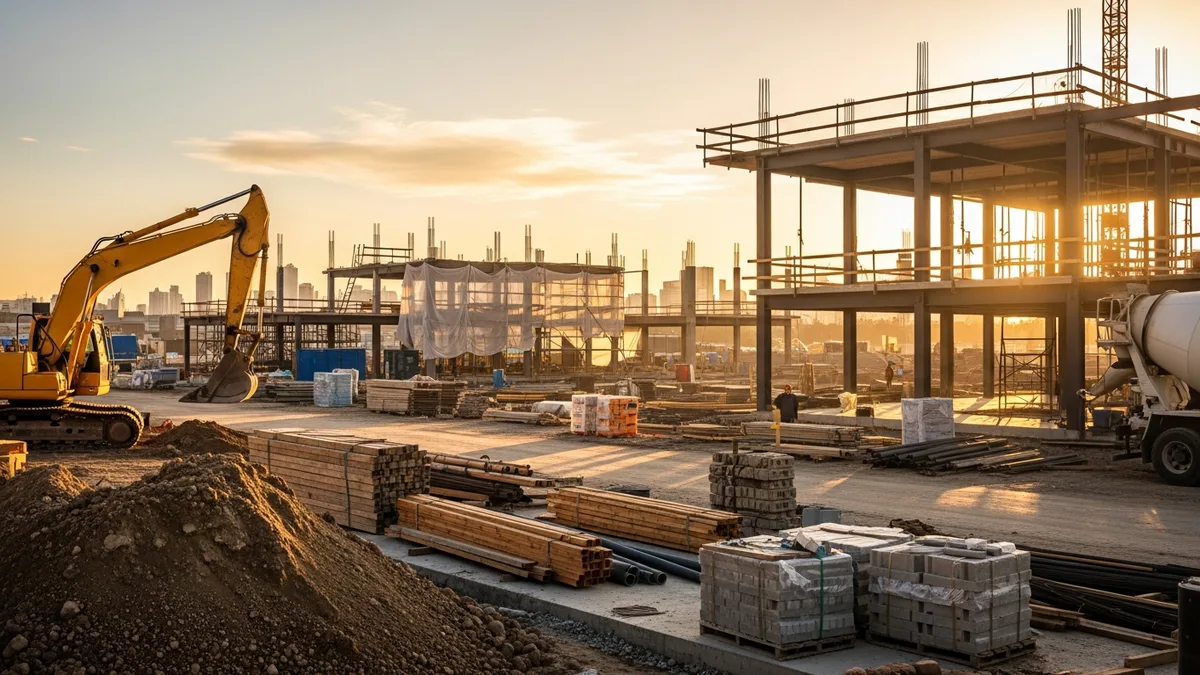
If you have spent any time running jobs out of the cab of your truck or hunched over plans on a stack of buckets, you already know the value of a proper field office. A mobile office trailer is not a luxury. On anything bigger than a simple renovation, it is the place where you run the job. It is where you hold meetings, store documents, take phone calls without a jackhammer in the background, and actually think straight for five minutes.
But setting one up wrong can cost you time and money every single day of the project. I have seen trailers that turned into saunas in July, trailers with internet so bad you could not load an email, and trailers that got broken into because nobody thought about security until it was too late.
This guide covers everything you need to know to get your mobile office set up right the first time.
Choosing the Right Trailer Size and Layout
The first decision is how much space you actually need. This depends on three things: how many people will work in the trailer daily, what functions it needs to serve, and how long the project will last.
Here is a rough sizing guide:
- 8x20 (160 sq ft): Good for a superintendent and one project engineer. Room for two desks, a small plan table, and a filing cabinet. This is your bread-and-butter size for residential and small commercial work.
- 8x40 (320 sq ft): The sweet spot for most commercial projects. Enough room for 3-4 workstations, a dedicated plan table, a small meeting area, and a restroom if needed.
- 10x50 or 12x60 (500-720 sq ft): For large commercial or civil projects with a full project team. These can hold 5-8 workstations, a conference area, a plan room, a break area, and a restroom.
- Double-wide or modular setups: For mega-projects or long-duration work where you basically need a temporary building.
When you are thinking about layout, sketch it out before the trailer shows up. I am serious. Grab a piece of graph paper and figure out where desks go, where the plan table goes, where people will walk, and where the door opens. A trailer that feels cramped from day one will drag down productivity for the entire project.
A few layout tips that come from experience:
Put the superintendent’s desk where they can see out the window toward the main work area. They need to be able to glance up and see what is happening on site without walking outside every ten minutes.
Keep the plan table near the entrance so subs and foremen can walk in, check drawings, and walk out without disrupting everyone else. If your plan table is in the back corner behind three desks, people will either stop checking plans or they will interrupt everyone every time they do.
If you are tracking daily logs and field reports, set up a dedicated station near the door with a tablet or laptop. Crews coming in at the end of the day can log their hours and notes without crowding the main workspace.
Leave room for people to stand. Trailers fill up fast with desks, chairs, filing cabinets, printers, and all the stuff that accumulates on a job. If two people cannot pass each other without doing a sideways shuffle, you need a bigger unit or less furniture.
Power, HVAC, and Electrical Setup
Nothing kills a mobile office faster than bad power. If your trailer loses electricity on a 95-degree day, you have about 30 minutes before it is completely unusable. If it goes down in January in the northern states, you have even less time than that.
Power source options:
- Temporary utility service: The best option when available. Contact the utility company early because getting a temporary meter can take 2-6 weeks depending on the area. You will need a temporary power pole with a meter base, and the utility runs service to it. From there, you run a feeder to the trailer’s panel.
- Generator: When utility power is not available yet, a towable generator is the standard fallback. Size it for your load plus 25% headroom. A typical office trailer with HVAC, lighting, computers, and a printer needs 30-50 amps of 240V service. A 15-20kW generator handles most single trailers. Make sure someone is responsible for fueling it, and keep a maintenance log.
- Solar with battery backup: Becoming more common on long-duration projects in sunny climates, but usually as a supplement rather than a primary source. Not practical as your only power for a trailer running HVAC.
HVAC considerations:
Most rental trailers come with a packaged HVAC unit, usually a heat pump or a combination unit mounted on the roof or on a stand beside the trailer. Before you sign the rental agreement, confirm the following:
- The unit actually works. Test it on delivery day.
- The BTU rating matches the trailer size. An undersized unit in a 12x60 trailer is a recipe for misery.
- Filters are clean and you have spares. Trailer HVAC units on construction sites eat filters fast because of all the dust.
- The thermostat is programmable. No reason to heat or cool the trailer at full blast on weekends.
If the trailer does not come with HVAC, you can install a portable unit, but those take up floor space and need a window or wall exhaust. For cold climates, a propane torpedo heater is a temporary fix, but it is loud, creates moisture, and is a fire risk inside a small space. Get real HVAC.
Electrical layout inside the trailer:
Run enough circuits so you are not daisy-chaining power strips across the floor. At minimum, you want dedicated circuits for the HVAC, the copier/printer, and general outlets. Surge protectors on every computer and piece of equipment are not optional on a construction site where power quality can be sketchy.
Internet, Phone, and Technology Setup
This is where a lot of contractors drop the ball. You spend thousands on a trailer, desks, and a plotter, then try to run the whole thing off someone’s cell phone hotspot. That does not work when three people are trying to use construction project management software at the same time.
Internet options ranked by reliability:
- Temporary wired service (cable or fiber): If the site is in an area where a provider can run a temporary line, this is the gold standard. Call the ISP before the trailer arrives. Lead times vary from one week to two months.
- Fixed cellular router: Devices like the Cradlepoint IBR900 or Peplink MAX Transit are purpose-built for temporary sites. They use LTE/5G with external antennas and provide a local Wi-Fi network. Expect 25-100 Mbps depending on signal strength. This is what most commercial GCs use.
- Starlink: Excellent for rural or remote sites where cell signal is weak. The flat high-performance dish handles well in most weather. Latency is higher than wired but perfectly fine for email, software, and video calls. Plan for $120-$250 per month.
- Cell phone hotspot: Only acceptable as a short-term backup. Throttling, data caps, and inconsistent speeds make this a poor primary connection for an office.
Phone service:
VoIP through your internet connection works well if your connection is solid. Otherwise, a cell phone signal booster (like a WeBoost) inside the trailer helps with dead spots. For multi-line setups, a small VoIP system through your company’s main phone provider can forward calls to the trailer easily.
Minimum tech setup for a productive trailer:
- Router with Wi-Fi (separate from personal hotspots)
- At least one large monitor (24” or bigger) at each workstation
- A networked printer/copier/scanner (black and white is fine for most daily use)
- A large-format printer or plotter if you are printing plan sets on site
- A wall-mounted TV or large monitor for schedule reviews and pull planning sessions
- Power over Ethernet (PoE) for any IP cameras you mount outside
Plan Room Organization and Document Management
The plan room is the heart of your field office. Every sub who walks through your door should be able to find the current set of drawings in under 30 seconds. If they cannot, you have a problem that will show up as RFIs, rework, and arguments about who had what revision.
Physical plan room setup:
- A plan table or counter at standing height (36-42 inches) with enough surface to fully open a set of plans. D-size drawings need a table that is at least 36x48 inches.
- A plan rack or vertical hanging system for multiple sets. Label each set clearly: current set, previous set, as-builts, shop drawings.
- A stamp or sticker system for document control. Every set should be stamped with the revision date and “CURRENT” or “SUPERSEDED.”
- A sign-in sheet for anyone who checks out or reviews plans.
Digital document management:
Most GCs are running hybrid setups now with both paper and digital plans. Your document management system should be accessible from the trailer, from the field via tablets, and from the main office. Cloud-based construction management platforms handle this well, but you need the internet connection to support it (see the section above).
Keep a backup of critical documents on a local hard drive or NAS device in the trailer. If your internet goes down, you still need access to plans and specs. This is not paranoia. It is planning for the reality of construction site connectivity.
For tracking revisions and making sure everyone in the field has the latest information, tie your document control into your daily log process. When a new revision comes in, log it, distribute it, and collect the old sets. Leaving outdated plans floating around the site is how you end up with a wall framed to the wrong dimension.
Security, Insurance, and Protecting Your Investment
Contractors across the country trust Projul to run their businesses. Read their reviews.
Construction site theft is a real and expensive problem. Your mobile office is a target because it contains computers, printers, plans, and sometimes petty cash or tools. It is also sitting on a job site that may not have permanent fencing or lighting yet.
Physical security measures:
- Doors: Commercial-grade deadbolts on every exterior door. The locks that come standard on rental trailers are often residential grade and easy to defeat. Swap them out or add a hasp and padlock as a secondary lock.
- Windows: Security film on all windows. It will not stop a determined thief, but it slows them down and makes smash-and-grab harder. For high-risk sites, consider security bars or shutters.
- Lighting: Motion-activated LED floodlights on at least two corners of the trailer. Darkness is a thief’s best friend.
- Cameras: At minimum, one exterior camera covering the trailer entrance and one covering the parking/laydown area. Cellular-connected cameras (like Reolink Go or similar) work without Wi-Fi and send alerts to your phone.
- Alarm: A cellular alarm system with door/window sensors and a loud siren. Monitored systems are better, but even an unmonitored siren and phone alert setup is a strong deterrent.
What to do with valuables:
Lock laptops in a drawer or cabinet every night. Better yet, use cable locks during the day and a locking cabinet at night. Sensitive project documents, contracts, and anything with financial information go in a locking file cabinet. If you keep petty cash on site, use a small safe bolted to the floor or wall.
Insurance:
Talk to your insurance agent before the trailer arrives. Your general liability and builder’s risk policies may or may not cover the trailer contents. Rental trailers usually come with the rental company’s insurance on the structure itself, but your equipment inside (computers, printers, plotters) may need a separate inland marine policy or a rider on your existing policy.
Document everything in the trailer with photos and serial numbers. If something does get stolen, you want to be able to file a claim quickly without trying to remember what was in there. This ties into your overall job cost tracking as well, since theft losses can blow a hole in your project budget if you are not covered.
Permits, Placement, and Making Your Field Office Productive
Permits for temporary structures:
Do not assume you can just drop a trailer on a job site without paperwork. Most municipalities require a temporary structure permit or a temporary use permit for office trailers. Some require both. Here is what you typically need:
- A temporary use permit from the planning or zoning department
- A building permit for the temporary structure (some jurisdictions waive this for short durations)
- An electrical permit if you are connecting to temporary or permanent power
- A plumbing permit if the trailer has a restroom connected to sewer or septic
- Fire department approval in some cities, especially if the trailer is close to other structures
Start this process at least 4-6 weeks before you need the trailer on site. Permit timelines vary wildly. In some small towns, you can walk in and get approval the same day. In major cities, it can take weeks. Your permit expediting process for the trailer should run in parallel with your main building permits.
Placement considerations:
Where you put the trailer matters more than most people think. Consider these factors:
- Access: The trailer entrance should face the main work area so people can get in and out quickly. Do not tuck it in a back corner where it takes five minutes to walk from the trailer to the building.
- Utilities: Place it close to the temporary power source and, if applicable, water and sewer connections. Every extra foot of cable or pipe run costs money and creates tripping hazards.
- Grading and drainage: Set the trailer on level, compacted ground. If the site is muddy, put down gravel or road plates around the entrance. Nothing kills morale like slogging through mud every time you need to check a drawing.
- Future phases: Think about where the work will be six months from now. If the trailer is sitting where a future building pad or utility trench will go, you will have to move it mid-project. Moving a trailer costs $1,000-$3,000 and kills a day of productivity.
- Parking: Leave room for the super’s truck, visiting subs, and inspectors near the trailer. If people have to park a quarter mile away, they will avoid coming to the trailer for meetings and plan reviews.
Making the field office productive:
A trailer is only as good as the systems you run inside it. Here are the habits and setups that separate a productive field office from a cluttered storage unit with desks:
Hold a daily standup meeting in the trailer every morning. Keep it to 15 minutes. Review the day’s schedule, address problems from yesterday, and confirm material deliveries. A wall-mounted whiteboard or TV showing the project schedule keeps everyone focused.
Post key information on the walls: emergency contacts, project directory, inspection schedule, and a site logistics plan. When a sub foreman walks in with a question, half the time the answer is already on the wall.
Keep the trailer clean. Seriously. A messy trailer leads to lost documents, missed messages, and a general sense of chaos that bleeds onto the job site. Spend ten minutes at the end of every day tidying up, filing loose papers, and clearing off surfaces. It makes a bigger difference than you would expect.
Set up a check-in station near the door for visitors, inspectors, and sub foremen. A simple clipboard with a sign-in sheet, a set of current plans, and a posted schedule lets people get what they need without interrupting whoever is on the phone.
Finally, do not forget about the basics of comfort. A coffee maker, a small fridge, paper towels, and a trash can with a lid. Your team spends 10-12 hours a day in this box. Making it livable is not soft. It is practical. People who are comfortable and organized do better work. That is just a fact.
Try a live demo and see how Projul simplifies this for your team.
Your mobile office is the command center of your project. Take the time to set it up right, keep it organized, and treat it like the productive workspace it is supposed to be. The effort you put into your field office setup pays back every single day of the project in fewer mistakes, faster decisions, and a team that actually has what they need to get the job done.
Frequently Asked Questions
What size trailer do I need for a construction mobile office?
How much does it cost to rent a construction office trailer?
Do I need a permit for a temporary office trailer on a job site?
What is the best internet option for a construction job site trailer?
How do I keep a construction office trailer secure after hours?
Related Articles

BIM Clash Detection: How to Catch Conflicts Before They Cost You on the Jobsite
BIM Clash Detection: How to Catch Conflicts Before They Cost You on the Jobsite Every contractor has a story about the...
Read More →
Asphalt Paving and Compaction Guide: Mix Types, Laydown Temperatures, and Quality Testing
Asphalt paving looks straightforward from a distance. A truck dumps material, the paver lays it down, and rollers...
Read More →
Construction Jobsite Wi-Fi & Connectivity Guide: Setting Up Reliable Internet in the Field
A practical guide to getting reliable internet on construction job sites. Learn about cellular hotspots, mesh networks,...
Read More →