
Multi-Family Housing Construction Guide for GCs
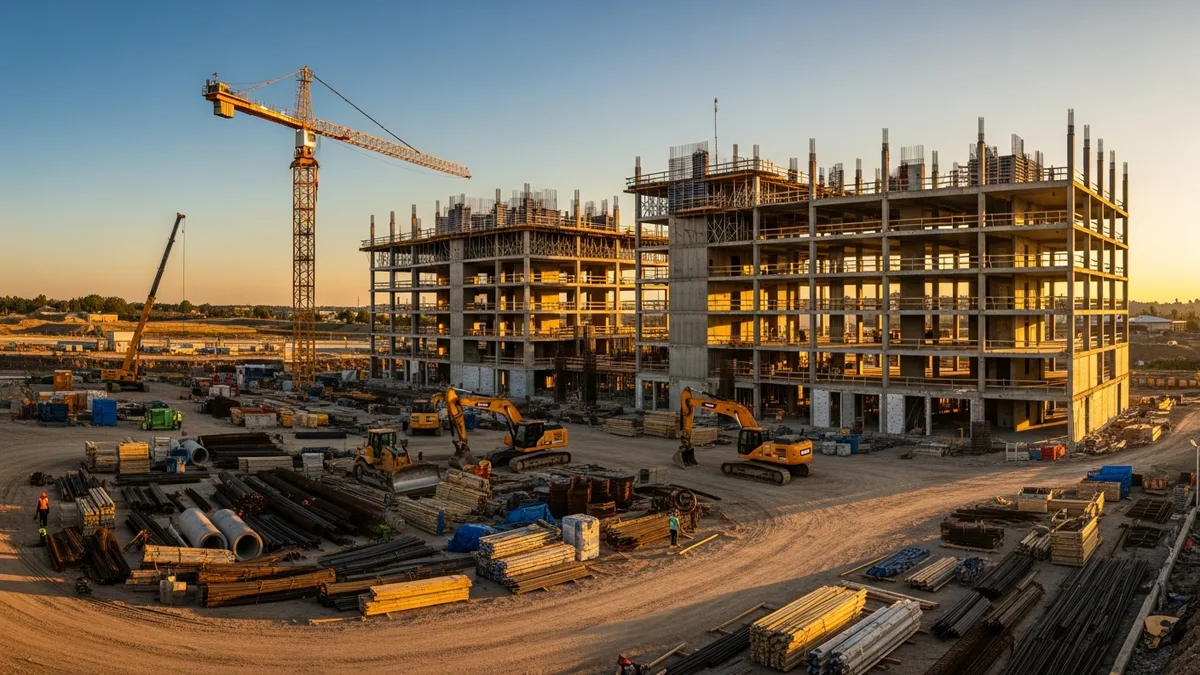
Why Multi-Family Housing Is Worth Your Attention
If you’ve been building single-family homes or doing light commercial work, you’ve probably noticed the same thing every GC in the country is seeing right now: multi-family housing demand is through the roof. Cities are pushing for density. Developers are chasing rental income. And there simply aren’t enough apartments and condos to meet demand in most markets.
That creates a massive opportunity for general contractors willing to step up and take on these projects. But here’s the thing: multi-family construction is a different animal. It’s not just “building a bunch of houses stacked on top of each other.” The codes are different. The financing is different. The coordination is on another level entirely.
I’ve seen plenty of good residential GCs get burned on their first multi-family job because they assumed their experience would translate directly. Some of it does. A lot of it doesn’t. This guide is meant to bridge that gap and give you a realistic picture of what you’re getting into.
Whether you’re looking at a 12-unit apartment building or a 150-unit condo development, the fundamentals covered here apply. And if you’re thinking about making the jump from residential to commercial-scale work, you’ll want to read our guide on transitioning from residential to commercial construction as well.
Let’s get into it.
Understanding the Building Codes and Permit Landscape
The first thing that catches residential contractors off guard with multi-family projects is the code situation. When you’re building single-family homes, you’re working under the International Residential Code (IRC) in most jurisdictions. Once you cross into multi-family territory, you’re typically operating under the International Building Code (IBC), and that’s a completely different world.
Fire Separation and Life Safety
Fire codes alone will reshape how you think about construction. Multi-family buildings require rated assemblies between dwelling units, fire-rated corridors, sprinkler systems, fire alarm systems, emergency lighting, and specific egress requirements. A two-hour fire-rated assembly between units isn’t just a suggestion. It’s the law, and inspectors will hold you to it.
You need to understand fire ratings for wall assemblies, floor-ceiling assemblies, and penetrations. Every single penetration through a rated assembly needs to be firestopped with an approved product and method. I’ve seen jobs get red-tagged over a single unsealed pipe penetration. It happens, and it’s expensive when it does.
Accessibility (ADA and Fair Housing)
Multi-family buildings with four or more units are covered by the Fair Housing Act, which means you need to meet specific accessibility requirements. Ground-floor units (or all units if there’s an elevator) need accessible routes, doorways wide enough for wheelchair access, reinforced bathroom walls for future grab bar installation, and accessible kitchens and bathrooms.
ADA compliance adds another layer if there are any public or common areas. Lobbies, fitness centers, pools, parking structures, and leasing offices all need to meet ADA standards. Getting this wrong isn’t just a code violation. It’s a federal civil rights issue, and the liability exposure is significant.
The Permitting Process
Multi-family permitting is more involved and takes longer than residential permits. Plan review alone can take weeks or months depending on the jurisdiction. You’ll likely need separate permits for building, mechanical, electrical, plumbing, fire suppression, and sometimes elevators.
Many municipalities also require a site plan review, traffic study, environmental impact assessment, and utility capacity analysis before they’ll even accept your building permit application. If you haven’t already, check out our construction permits guide for a deeper breakdown of how to manage the permitting process without losing your mind.
Start your permit applications as early as humanly possible. Build permit timelines into your schedule with a buffer, because delays happen on almost every project.
Pre-Construction Planning That Actually Works
If there’s one phase of a multi-family project where you can’t afford to cut corners, it’s pre-construction. The decisions you make (or fail to make) before you break ground will follow you for the entire project. Bad planning on a single-family home costs you a few thousand dollars. Bad planning on a 100-unit apartment complex can cost you hundreds of thousands.
Budgeting and Cost Estimation
Multi-family cost estimating requires a different approach than residential takeoffs. You’re dealing with larger quantities, but you’re also dealing with systems that don’t exist in most houses. Commercial HVAC, fire sprinkler systems, elevators, structured parking, and common area finishes all need to be accounted for. If the project includes a parking garage, our parking structure design and maintenance guide covers the unique considerations for those builds.
Get your subs involved early. The best multi-family GCs I know bring their key subcontractors into the pre-construction process to help with pricing and constructability review. Your mechanical sub can tell you if the engineer’s duct layout is going to be a nightmare before you bid it. Your electrical sub can flag panel sizing issues before they become change orders.
A solid pre-construction process is the foundation of every successful multi-family project. We put together a full pre-construction planning guide that walks through budgeting, scheduling, and risk assessment in detail.
Value Engineering
Developers love value engineering, and honestly, so should you. The goal isn’t to cheapen the building. It’s to find ways to deliver the same quality and performance for less money. Maybe that means switching from a poured concrete retaining wall to a segmental block wall. Maybe it means using a different cladding system that installs faster.
The key is doing this during pre-construction, not during construction. Value engineering during construction is just damage control. Value engineering during design is where the real savings happen.
Scheduling the Work
Multi-family scheduling is complex because you’re essentially building the same thing dozens or hundreds of times, but the sequencing matters enormously. You can’t have drywall crews in one unit while the plumber is still roughing in next door if they share a wall assembly that needs inspection.
Think about your schedule in terms of zones or phases. Most multi-family projects break the building into sections and flow trades through sequentially. Building A might be in framing while Building B is still in foundations. This keeps your trades busy without stacking on top of each other.
Good scheduling software is not optional on multi-family work. You need to see the critical path, track progress by unit or building, and adjust in real time when things shift. And things will shift.
Managing Subcontractors on Multi-Family Jobs
Your subcontractor relationships will make or break a multi-family project. This isn’t like residential work where you might have 8 or 10 subs on a job. A mid-size multi-family project can easily involve 25 to 30 subcontractors, and coordinating that many moving pieces requires a completely different management approach.
Finding the Right Subs
Not every subcontractor who does great residential work is equipped for multi-family. You need subs who understand commercial-scale projects, can staff up for the volume, and have the financial capacity to carry the work between pay applications.
When you’re vetting subs for multi-family work, ask about their experience with similar projects. How many units have they done? Can they handle the daily production rates you need? Do they have enough crews to keep pace with your schedule?
Our subcontractor management guide covers this in much more detail, including how to set expectations, manage performance, and handle the inevitable issues that come up.
Coordination and Communication
On a multi-family job, coordination meetings aren’t a luxury. They’re a necessity. Weekly subcontractor meetings should cover the two-week look-ahead schedule, identify conflicts, and address any issues before they snowball. Daily huddles with your superintendent and key trade foremen keep the day-to-day running smoothly.
The biggest coordination headaches on multi-family projects usually involve the MEP trades (mechanical, electrical, plumbing). These systems are more complex than residential, they all compete for the same ceiling and wall cavities, and conflicts between drawings are common. BIM coordination helps on larger projects, but even on smaller jobs, getting your MEP subs in a room together to talk through routing before they start installing saves enormous amounts of time.
Tracking Progress
When you’ve got 80 units in various stages of completion, you need a system to track where every unit stands. Which units have rough-in complete? Which are ready for insulation inspection? Which are waiting on a cabinet delivery that’s running two weeks late?
Spreadsheets work until they don’t, and on multi-family projects, they stop working pretty fast. Project tracking tools that let you see status by unit, by trade, and by building in real time are worth every penny on these jobs.
Financing, Bonding, and Insurance Considerations
The money side of multi-family construction works differently than residential, and if you don’t understand how it works, you’ll find yourself in trouble fast.
How Developers Finance These Projects
Most multi-family projects are funded through construction loans, and the draw process is more formal than what you’re used to on residential work. The lender will typically hire a third-party inspector who verifies the percentage of completion before releasing funds. Your pay applications need to be detailed, accurate, and submitted on time.
Late or sloppy pay apps mean late payments to you and your subs. And late payments to subs on a 100-unit project cascade into crew shortages, schedule delays, and strained relationships very quickly.
Bonding Requirements
Many multi-family developers and lenders require performance and payment bonds, especially on larger projects. If you’re coming from residential, you may not have the bonding capacity to take on a $10 million apartment project right away.
Building your bonding capacity takes time. You need clean financials, a track record of completed projects, and a good relationship with your surety. Start with smaller bonded projects and work your way up. Our bonding 101 guide walks through the entire process of how bonds work and how to build your capacity.
Insurance
Don’t just take our word for it. See what contractors say about Projul.
Your residential GL policy probably won’t cover multi-family work, or if it does, the limits won’t be adequate. You’ll need higher general liability limits (most developers require $1M per occurrence and $2M aggregate at minimum), umbrella coverage, and possibly builder’s risk insurance for the structure during construction.
Workers’ comp rates may also be different depending on the type of construction. Wood-frame multi-family is classified differently than steel or concrete, and your rates reflect that. Talk to your insurance broker early and make sure your coverage matches the work you’re taking on.
Common Mistakes GCs Make on Their First Multi-Family Project
I’ve watched a lot of contractors stumble on their first multi-family job. Here are the mistakes I see most often, and how to avoid them.
Underestimating the Complexity
This is the number one killer. A GC who’s built 500 custom homes looks at a 40-unit apartment building and thinks, “I know how to frame walls and hang drywall. How hard can it be?” Then they discover fire-rated assemblies, commercial sprinkler systems, elevator shafts, structured parking, and a 200-page specification manual. The learning curve is real, and it’s steep.
The fix: Start smaller than you think you need to. A 12-unit building is a great first multi-family project. It’s complex enough to teach you the ropes but small enough that mistakes won’t bankrupt you.
Not Staffing Up
Multi-family projects require more on-site management than residential work. One superintendent can handle a custom home. That same superintendent can’t manage 80 units across three buildings with 25 active subcontractors. You need project managers, assistant superintendents, and dedicated quality control personnel.
The fix: Budget for adequate staffing from the start. Include management labor in your overhead costs, not as an afterthought.
Ignoring the Punchlist Until the End
On residential work, you can bang out a punchlist in a day or two. On a 100-unit multi-family project, the punchlist can take weeks if you’ve let issues pile up. And every day you spend on punchlist is a day the developer isn’t collecting rent, which means it’s a day they’re breathing down your neck.
The fix: Do unit-by-unit inspections as you go. When a unit reaches substantial completion, walk it immediately. Fix issues while the trades are still on site, not three months later when you’re trying to get someone to come back for a half-day callback.
Weak Change Order Management
Multi-family projects generate more change orders than residential work because the scope is larger, the plans are more complex, and more things can change. If you’re not documenting changes in real time and getting approvals before doing the work, you’re going to eat costs that should have been covered.
The fix: Every change gets documented. Every change gets priced. Every change gets approved in writing before the work proceeds. No exceptions.
Poor Cash Flow Management
The gap between when you pay your subs and when you get paid by the developer can be wider on multi-family work due to the draw process and third-party inspections. If you’re not managing your cash flow carefully, you’ll run into trouble on month three when you’ve got $200,000 in outstanding payables and your draw hasn’t been released yet.
The fix: Build a cash flow projection for the project and update it monthly. Know exactly when money is going out and when it’s coming in. Keep a cash reserve for the gaps.
Getting Started: Your Path Into Multi-Family Construction
If you’ve read this far and you’re still interested, good. That means you’re serious about it and not just chasing a shiny object. Here’s a practical path to getting into multi-family work.
Step 1: Educate Yourself
Read your local building codes for multi-family construction. Take a course on commercial building codes if you haven’t already. Study the Fair Housing Act accessibility requirements. Talk to GCs who are already doing this work and ask them what they wish they’d known.
Step 2: Build Your Team
You’ll need people who know multi-family construction. That might mean hiring a project manager with multi-family experience, or partnering with a superintendent who’s run these jobs before. Don’t try to figure it all out from scratch with your residential crew.
Step 3: Start Small
Your first multi-family project should be manageable. Think duplexes, fourplexes, or small apartment buildings. Get comfortable with the codes, the coordination, and the pace before you take on something bigger.
Step 4: Build Relationships
Get to know multi-family developers in your market. Attend industry events. Join your local apartment association. These relationships are how you’ll find opportunities and build a reputation in the multi-family space.
Step 5: Invest in Your Systems
The tools and processes that work for residential won’t scale to multi-family. You need project management software that can handle the complexity, scheduling tools that support multi-phase work, and communication systems that keep 25+ subcontractors on the same page.
If you want to see how the right project management tools can help you handle multi-family complexity, schedule a demo with Projul and we’ll show you how GCs are managing these projects without losing their sanity.
Step 6: Grow Deliberately
Don’t jump from a 12-unit building to a 200-unit high-rise. Each project should be a step up from the last, building your experience, your team’s capabilities, and your bonding capacity incrementally. The GCs who succeed in multi-family are the ones who grow steadily, not the ones who swing for the fences on project two.
Multi-family housing construction is demanding, but it’s also rewarding. The projects are bigger, the margins (when managed well) are solid, and the demand isn’t going anywhere. If you approach it with respect for the complexity, invest in the right people and tools, and grow at a pace that matches your capabilities, there’s no reason you can’t build a successful multi-family construction business.
Curious how this looks in practice? Schedule a demo and we will show you.
The housing shortage isn’t fixing itself. Somebody’s going to build those apartments and condos. It might as well be you.
Frequently Asked Questions
What's the biggest difference between building single-family homes and multi-family housing?
Do I need special licensing or bonding to build multi-family projects?
How long does a typical multi-family housing project take from start to finish?
What kind of profit margins should I expect on multi-family work?
Can a residential GC realistically transition into multi-family construction?
Related Articles
Construction Home Addition Management: What Every GC Needs to Know
Home additions are some of the most profitable and most complex residential projects a GC can take on. Here's what you...
Read More →
Construction Pool Building Guide: What Every GC Needs to Know
Pool construction is one of the most coordination-heavy projects a GC can take on. This guide breaks down what you...
Read More →
Design-Build vs. Design-Bid-Build: A Contractor's Honest Comparison
Design-build and design-bid-build are two fundamentally different ways to deliver a construction project. This guide...
Read More →